To be clear - I'm not saying that analytics and data engineering are a fad. I'm not saying the data teams are doomed to fade away, or that the old fundamentals of data modeling are wrong, or that the urge to quantify everything is a mistake. I'm saying that things seem pretty good, right now. But, you know. Like Charles Schwab constantly says, past performance is no guarantee of future results. So someone else might say all of that in the future - because, as John Maynard Keynes said, in the long run, we are all dead.
 talk-data.com

Speaker
Benn Stancil
21
talks
President and Founder
Mode
Benn Stancil is a co-founder of Mode, a business intelligence tool acquired by ThoughtSpot in 2023. At Mode, he led the data, product, marketing, and executive teams. He writes about data and technology at benn.substack.com. Before founding Mode, he worked on analytics teams at Microsoft and Yammer.
Bio from: dbt Coalesce 2020
Frequent Collaborators
Filter by Event / Source
The Analytics Engineering Podcast
4
Making Data Simple
2
Data Engineering Podcast
2
Leaders of Analytics
1
The Analytics Power Hour
1
DataFramed
1
dbt Coalesce 2020
1
dbt Coalesce 2022
1
dbt Coalesce 2023
1
Data Council Austin 2024 - Day 1
2
Small Data SF 2025
2
Modern Data Stack Conference 2021
1
Modern Data Stack Conference 2023
1
Data Universe 2024
1
Talks & appearances
21 activities · Newest first
with
Shelby Heinecke, PhD
(Salesforce)
,
Benn Stancil
(Mode)
,
Joe Reis
(DeepLearning.AI)
,
George Fraser
(Fivetran)
If everything goes the way that the experts say it will, Generative AI will eventually be a core part of nearly every piece of technology we use. But before that happens, some organizations will likely make their current products worse, as they try to integrate GenAI functionality in their existing services. Join Benn Stancil, Field CTO at ThoughtSpot, to strategize which Generative AI dreams are worth chasing, what foundations you need to build and leverage AI, and how to take advantage of these AI developments while avoiding major disasters.
Benn Stancil, cofounder and CTO at Mode, returns to The Analytics Engineering Podcast to discuss the evolution of the term "modern data stack" and its value today. Tristan wrote on this idea for The Analytics Engineering Roundup in Is the Modern Data Stack Still a Useful Idea? For full show notes and to read 6+ years of back issues of the podcast's companion newsletter, head to https://roundup.getdbt.com. The Analytics Engineering Podcast is sponsored by dbt Labs.
One of the biggest surprises of the generative AI revolution over the past 2 years lies in the counter-intuitiveness of its most successful use cases. Counter to most predictions made about AI years ago, AI-assisted coding, specifically AI-assisted data work, has been surprisingly one of the biggest killer apps of generative AI tools and copilots. However, what happens when we take this notion even further? How will analytics workflows look like when generative AI tools can also assist us in problem-solving? What type of analytics use cases can we expect to operationalize, and what tools can we expect to work with when AI systems can provide scalable qualitative data instead of relying on imperfect quantitative proxies? Today’s guest calls this future “weird”. Benn Stancil is the Field CTO at ThoughtSpot. He joined ThoughtSpot in 2023 as part of its acquisition of Mode, where he was a Co-Founder and CTO. While at Mode, Benn held roles leading Mode’s data, product, marketing, and executive teams. He regularly writes about data and technology at benn.substack.com. Prior to founding Mode, Benn worked on analytics teams at Microsoft and Yammer. Throughout the episode, Benn and Adel talk about the nature of AI-assisted analytics workflows, the potential for generative AI in assisting problem-solving, how he imagines analytics workflows to look in the future, and a lot more. About the AI and the Modern Data Stack DataFramed Series This week we’re releasing 4 episodes focused on how AI is changing the modern data stack and the analytics profession at large. The modern data stack is often an ambiguous and all-encompassing term, so we intentionally wanted to cover the impact of AI on the modern data stack from different angles. Here’s what you can expect: Why the Future of AI in Data will be Weird with Benn Stancil, CTO at Mode & Field CTO at ThoughtSpot — Covering how AI will change analytics workflows and tools How Databricks is Transforming Data Warehousing and AI with Ari Kaplan, Head Evangelist & Robin Sutara, Field CTO at Databricks — Covering Databricks, data intelligence and how AI tools are changing data democratizationAdding AI to the Data Warehouse with Sridhar Ramaswamy, CEO at Snowflake — Covering Snowflake and its uses, how generative AI is changing the attitudes of leaders towards data, and how to improve your data managementAccelerating AI Workflows with Nuri Cankaya, VP of AI Marketing & La Tiffaney Santucci, AI Marketing Director at Intel — Covering AI’s impact on marketing analytics, how AI is being integrated into existing products, and the democratization of AI Links Mentioned in the Show: Mode AnalyticsThoughtSpot acquires Mode: Empowering data teams to bring Generative AI to BIEverybody Lies: Big Data, New Data, and What the Internet Can Tell Us About Who We Really Are[Course] Generative AI for Business[Skill Track] SQL FundamentalsRelated Episode: The Future of Marketing Analytics with Cory Munchbach, CEO at...
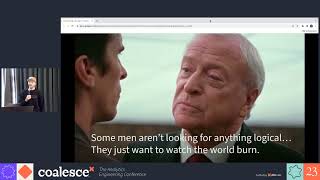
Data engineers build critical pipelines that underpin the computational infrastructure that powers our global economy. Analytics engineers translate impossibly complex business semantics into precise frameworks that give modern companies digital eyes and ears, making them the most agile and responsive organizations ever created. Data scientists find revolutionary truths among vast expanses of noise and distraction, unearthing tiny diamonds in endless mines of numerical dirt.
This talk isn’t about any of that.
This talk is about commas. It’s about capitalization. It’s about indentation. It’s about the tedious arguments that no sensible person should ever care about, but we, as data people, can’t seem to resist. It’s about indulging in our unhinged debates, analyzing data on billions of queries, and giving us all a reason to bury our flag a bit deeper into whatever petty hill we’ve each chosen to die on. Let the good times roll.
Will it tell us anything useful? No. Will there be slides that you can take pictures of to show your leadership team why your role is valuable? Absolutely not. But there will be lots of charts , graphs , and misplaced commas.
Speaker: Benn Stancil, CTO, Mode
Register for Coalesce at https://coalesce.getdbt.com
Send us a text Want to be featured as a guest on Making Data Simple? Reach out to us at [[email protected]] and tell us why you should be next.
Abstract Making Data Simple Podcast is hosted by Al Martin, VP, IBM Expert Services Delivery, where we explore trending technologies, business innovation, and leadership ... while keeping it simple & fun. This week on Making Data Simple, we have Benn Stancil, Chief Analytics Officer + Founder @ Mode. Benn is an accomplished data analyst with deep expertise in collaborative Business Intelligence and Interactive Data Science. Benn is Co-founder, President, and Chief Analytics Officer of Mode, an award-winning SaaS company that combines the best elements of Business Intelligence (ABI), Data Science (DS) and Machine Learning (ML) to empower data teams to answer impactful questions and collaborate on analysis across a range of business functions. Under Benn’s leadership, the Mode platform has evolved to enable data teams to explore, visualize, analyze and share data in a powerful end-to-end workflow. Prior to founding Mode, Benn served in senior Analytics positions at Microsoft and Yammer, and worked as a researcher for the International Economics Program at the Carnegie Endowment for International Peace. Benn also served as an Undergraduate Research Fellow at Wake Forest University, where he received his B.S. in Mathematics and Economics. Benn believes in fostering a shared sense of humility and gratitude.
Show Notes 1:22 – Benn’s history7:09 – Tell us how you got to where you are today9:14 – Tell us about Mode12:08 – What is your definition of the Chief Analytics Officer?21:53 – Why do we need another BI tool?24:09 – What’s your secret sauce?27:48 – Where did the name Mode come from?28:41 – How do we use Mode?31:08 – What is you goto market strategy? 32:38 – Any client references?34:58 – “The missing piece in the modern data stack” tell us about thisMode Email: [email protected] [email protected] Twitter: benn stancil Connect with the Team Producer Kate Brown - LinkedIn. Host Al Martin - LinkedIn and Twitter. Want to be featured as a guest on Making Data Simple? Reach out to us at [email protected] and tell us why you should be next. The Making Data Simple Podcast is hosted by Al Martin, WW VP Technical Sales, IBM, where we explore trending technologies, business innovation, and leadership ... while keeping it simple & fun.
with
Barr Moses
(Monte Carlo)
,
Kevin Petrie
(Eckerson Group)
,
Sarah Catanzaro
(Amplify Partners)
,
Benn Stancil
(Mode)
,
George Fraser
(Fivetran)
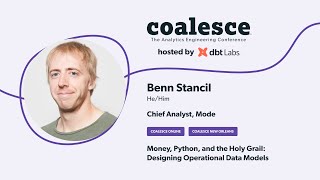
Most analysts don’t become analysts to build dashboards. We don’t become analysts to do data pulls, or clean up messy data, or put together pitch decks. We become analysts to do impactful, strategic analysis. This is our calling; it’s the most valuable work that we do; and it’s why we put up with the rest of our job—for that afternoon with nothing but a big question, a clear calendar, and a trajectory-changing aha moment buried somewhere in our well-prepped datasets.
But the rapid rise of analytics engineering should make us question all of this. Is strategic analysis actually the holy grail of analytics? Is it the most valuable thing we could do? Is it even what we want to do?
In chasing this ambition, Benn Stancil (Mode) thinks we’ve lost sight of something even more important—and potentially, more interesting: Designing operational models. These frameworks, which are a natural extension of the semantic models built by analytics engineers, are often more valuable than any dashboard, any dataset, or any deep dive analysis.
In his talk, Benn will share what these models are, why they’re valuable, and why, in our eternal quest to both quantify our value and to find work we love, they could prove to be our holy grail we’ve always been looking for.
Check the slides here: https://docs.google.com/presentation/d/1lOH6Sb8DQnnlmZkYOlqqHgQeXKkUEQCm_LOxsjBRJlM/edit?usp=sharing
Coalesce 2023 is coming! Register for free at https://coalesce.getdbt.com/.
Every company, regardless of size, is dealing with a barrage of data. In any typical organisation, there is more information on hand than we know how to use or manage. While every team in the organisation is screaming for analytics professionals to turn data into insight, a strong data and analytics tech stack is foundational to being able to make sense of it all. The need for a robust and efficient data and analytics tech stack has created a sprawling industry for new technology solutions that sell the promise of seamless integration and faster insights. Today, there are a plethora of data and analytics platforms available, most with very high valuations attached to them. But do we really need all these tools to make us super-powered data users? To answer this question and many more related to the data and analytics tech stack, I recently spoke to Benn Stancil. Benn is the co-founder and Chief Analytics Officer at Mode. Mode is a modern analytics and BI solution that combines SQL, Python, R and visual analysis to answer questions for its users. In this episode of Leaders of Analytics, you will learn: What the perfect analytics tech stack looks like and why.Programmatic automation of the analytics workflow.What will cutting-edge analytics tech be able to do 5-10 years from now.Why Been thinks the Chief Analytics Officer role should be redefined, and much more.Connect with Benn Benn on LinkedIn: https://www.linkedin.com/in/benn-stancil/ Benn on Twitter: https://twitter.com/bennstancil Benn's (brilliant) Substack blog: https://benn.substack.com/
with
Val Kroll
,
Julie Hoyer
,
Tim Wilson
(Analytics Power Hour - Columbus (OH)
,
Moe Kiss
(Canva)
,
Michael Helbling
(Search Discovery)
,
Benn Stancil
(Mode)
"Modern art" was a terrible label because, ya' know, time would pass and here we are 50 years after the end of that period shaking our heads at what a short-sighted semantic gaff that was. We share that observation for no particular reason. On this episode, we sat down with broad, deep, and entertaining thinker Benn Stancil from Mode to talk about one facet of the modern data stack: the metrics layer. What is it? Who's thinking about solving for it? What is a monthly DAU? These are questions to ponder that, hopefully, won't leave you impersonating a piece of modern art. For complete show notes, including links to items mentioned in this episode and a transcript of the show, visit the show page.
A debate has erupted on data Twitter and data Substack - should the modern data stack remain unbundled, or should it consolidate? In this conversation, Benn Stancil (Mode), David Jayatillake (Avora) and our host Tristan Handy try to make some sense of this debate, and play with various future scenarios for the modern data stack. For full show notes and to read 6+ years of back issues of the podcast's companion newsletter, head to https://roundup.getdbt.com. The Analytics Engineering Podcast is sponsored by dbt Labs.
with
Maura Church
(Patreon)
,
David Wallace
(Good Eggs)
,
Gleb Mezhanskiy
(Datafold)
,
Benn Stancil
(Mode)
,
Tobias Macey
Summary This has been an active year for the data ecosystem, with a number of new product categories and substantial growth in existing areas. In an attempt to capture the zeitgeist Maura Church, David Wallace, Benn Stancil, and Gleb Mezhanskiy join the show to reflect on the past year and share their thought son the year to come.
Announcements
Hello and welcome to the Data Engineering Podcast, the show about modern data management When you’re ready to build your next pipeline, or want to test out the projects you hear about on the show, you’ll need somewhere to deploy it, so check out our friends at Linode. With their managed Kubernetes platform it’s now even easier to deploy and scale your workflows, or try out the latest Helm charts from tools like Pulsar and Pachyderm. With simple pricing, fast networking, object storage, and worldwide data centers, you’ve got everything you need to run a bulletproof data platform. Go to dataengineeringpodcast.com/linode today and get a $100 credit to try out a Kubernetes cluster of your own. And don’t forget to thank them for their continued support of this show! Struggling with broken pipelines? Stale dashboards? Missing data? If this resonates with you, you’re not alone. Data engineers struggling with unreliable data need look no further than Monte Carlo, the world’s first end-to-end, fully automated Data Observability Platform! In the same way that application performance monitoring ensures reliable software and keeps application downtime at bay, Monte Carlo solves the costly problem of broken data pipelines. Monte Carlo monitors and alerts for data issues across your data warehouses, data lakes, ETL, and business intelligence, reducing time to detection and resolution from weeks or days to just minutes. Start trusting your data with Monte Carlo today! Visit dataengineeringpodcast.com/montecarlo to learn more. The first 10 people to request a personalized product tour will receive an exclusive Monte Carlo Swag box. Are you bored with writing scripts to move data into SaaS tools like Salesforce, Marketo, or Facebook Ads? Hightouch is the easiest way to sync data into the platforms that your business teams rely on. The data you’re looking for is already in your data warehouse and BI tools. Connect your warehouse to Hightouch, paste a SQL query, and use their visual mapper to specify how data should appear in your SaaS systems. No more scripts, just SQL. Supercharge your business teams with customer data using Hightouch for Reverse ETL today. Get started for free at dataengineeringpodcast.com/hightouch. Your host is Tobias Macey and today I’m interviewing Maura Church, David Wallace, Benn Stancil, and Gleb Mezhanskiy about the key themes of 2021 in the data ecosystem and what to expect for next year
Interview
Introduction
How did you get involved in the area of data management?
What were the main themes that you saw data practitioners and vendors focused on this year?
What is the major bottleneck for Data teams in 2021? Will it be the same in 2022? One of the ways to reason about progress in any domain is to look at what was the primary bottleneck of further progress (data adoption for decision making) at different points in time. In the data domain, we have seen a number of bottlenecks, for example, scaling data platforms, the answer to which was Hadoop and on-prem columnar stores and then cloud data warehouses such as Snowflake & BigQuery. Then the problem was data integration and transformation which was solved by data integration vendors and frameworks such as Fivetran / Airbyte, modern orchestration frameworks such as Dagster & dbt and “reverse-ETL” Hightouch. What is the main challenge now?
Will SQL be challenged as a primary interface to analytical data? In 2020 we’ve seen a few launches of post-SQL languages such as Malloy, Preql, metric layer query languages from Transform and Supergrain.
To what extent does speed matter? Over the past
Send us a text Want to be featured as a guest on Making Data Simple? Reach out to us at [[email protected]] and tell us why you should be next.
Abstract Making Data Simple Podcast is hosted by Al Martin, VP, IBM Expert Services Delivery, where we explore trending technologies, business innovation, and leadership ... while keeping it simple & fun. This week on Making Data Simple, we have Benn Stancil, Chief Analytics Officer + Founder @ Mode. Benn is an accomplished data analyst with deep expertise in collaborative Business Intelligence and Interactive Data Science. Benn is Co-founder, President, and Chief Analytics Officer of Mode, an award-winning SaaS company that combines the best elements of Business Intelligence (ABI), Data Science (DS) and Machine Learning (ML) to empower data teams to answer impactful questions and collaborate on analysis across a range of business functions. Under Benn’s leadership, the Mode platform has evolved to enable data teams to explore, visualize, analyze and share data in a powerful end-to-end workflow. Prior to founding Mode, Benn served in senior Analytics positions at Microsoft and Yammer, and worked as a researcher for the International Economics Program at the Carnegie Endowment for International Peace. Benn also served as an Undergraduate Research Fellow at Wake Forest University, where he received his B.S. in Mathematics and Economics. Benn believes in fostering a shared sense of humility and gratitude.
Show Notes 1:22 – Benn’s history 7:09 – Tell us how you got to where you are today 9:14 – Tell us about Mode 12:08 – What is your definition of the Chief Analytics Officer? 21:53 – Why do we need another BI tool? 24:09 – What’s your secret sauce? 27:48 – Where did the name Mode come from? 28:41 – How do we use Mode? 31:08 – What is you goto market strategy? 32:38 – Any client references? 34:58 – “The missing piece in the modern data stack” tell us about this Mode Email: [email protected] [email protected] Twitter: benn stancil Connect with the Team Producer Kate Brown - LinkedIn. Producer Steve Templeton - LinkedIn. Host Al Martin - LinkedIn and Twitter. Want to be featured as a guest on Making Data Simple? Reach out to us at [email protected] and tell us why you should be next. The Making Data Simple Podcast is hosted by Al Martin, WW VP Technical Sales, IBM, where we explore trending technologies, business innovation, and leadership ... while keeping it simple & fun.
In this talk, former podcast guest Benn Stancil walks through what he believe the next evolution of the modern data stack should look like - and more importantly, how those who use it should experience it. Register to catch the rest of Coalesce, the Analytics Engineering Conference, at https://coalesce.getdbt.com. The Analytics Engineering Podcast is brought to you by dbt Labs.
Benn is Chief Analytics Officer and a Co-founder at Mode Analytics, but you may know him from his Substack newsletter (benn.substack.com), where each Friday he dives into a semi-controversial topic (recent examples: "Is BI Dead?" and "BI is Dead"). In this episode, Benn, Tristan & Julia finally hash out some of these debates IRL: what is the modern data stack, why is the metrics layer important, and what's the point of all of this? For full show notes and to read 6+ years of back issues of the podcast's companion newsletter, head to https://roundup.getdbt.com. The Analytics Engineering Podcast is sponsored by dbt Labs.
with
Maura Church
(Patreon)
,
Jess Tillis
,
Sarah Catanzaro
(Amplify Partners)
,
Benn Stancil
(Mode)
In this video, President and Founder of Mode, Benn Stancil discusses new ways to align the optimal application boundaries in the modern data stack, providing a set of guidelines for determining how and where to draw the lines between your many tools. He also motivates an example of these boundaries by demonstrating how metadata surfaced in an analytics tool like Mode can increase overall data confidence.
Summary Data engineers are responsible for building tools and platforms to power the workflows of other members of the business. Each group of users has their own set of requirements for the way that they access and interact with those platforms depending on the insights they are trying to gather. Benn Stancil is the chief analyst at Mode Analytics and in this episode he explains the set of considerations and requirements that data analysts need in their tools and. He also explains useful patterns for collaboration between data engineers and data analysts, and what they can learn from each other.
Announcements
Hello and welcome to the Data Engineering Podcast, the show about modern data management When you’re ready to build your next pipeline, or want to test out the projects you hear about on the show, you’ll need somewhere to deploy it, so check out our friends at Linode. With 200Gbit private networking, scalable shared block storage, and a 40Gbit public network, you’ve got everything you need to run a fast, reliable, and bullet-proof data platform. If you need global distribution, they’ve got that covered too with world-wide datacenters including new ones in Toronto and Mumbai. And for your machine learning workloads, they just announced dedicated CPU instances. Go to dataengineeringpodcast.com/linode today to get a $20 credit and launch a new server in under a minute. And don’t forget to thank them for their continued support of this show! You listen to this show to learn and stay up to date with what’s happening in databases, streaming platforms, big data, and everything else you need to know about modern data management.For even more opportunities to meet, listen, and learn from your peers you don’t want to miss out on this year’s conference season. We have partnered with organizations such as O’Reilly Media, Dataversity, Corinium Global Intelligence, and Data Counsil. Upcoming events include the O’Reilly AI conference, the Strata Data conference, the combined events of the Data Architecture Summit and Graphorum, and Data Council in Barcelona. Go to dataengineeringpodcast.com/conferences to learn more about these and other events, and take advantage of our partner discounts to save money when you register today. Your host is Tobias Macey and today I’m interviewing Benn Stancil, chief analyst at Mode Analytics, about what data engineers need to know when building tools for analysts
Interview
Introduction How did you get involved in the area of data management? Can you start by describing some of the main features that you are looking for in the tools that you use? What are some of the common shortcomings that you have found in out-of-the-box tools that organizations use to build their data stack? What should data engineers be considering as they design and implement the foundational data platforms that higher order systems are built on, which are ultimately used by analysts and data scientists?
In terms of mindset, what are the ways that data engineers and analysts can align and where are the points of conflict?
In terms of team and organizational structure, what have you found to be useful patterns for reducing friction in the product lifecycle for data tools (internal or external)? What are some anti-patterns that data engineers can guard against as they are designing their pipelines? In your experience as an analyst, what have been the characteristics of the most seamless projects that you have been involved with? How much understanding of analytics are necessary for data engineers to be successful in their projects and careers?
Conversely, how much understanding of data management should analysts have?
What are the industry trends that you are most excited by as an analyst?
Contact Info
LinkedIn @bennstancil on Twitter Website
Parting Question
From your perspective, what is the biggest gap in the tooling or technology for data management today?
Closing Announcements
Thank you for