talk-data.com talk-data.com

Topic

data-science-tools

326

tagged

Activity Trend

1 peak/qtr
2020-Q1 2026-Q1

Activities

Showing filtered results

Filtering by: O'Reilly Data Science Books ×
Accelerating MATLAB with GPU Computing

Beyond simulation and algorithm development, many developers increasingly use MATLAB even for product deployment in computationally heavy fields. This often demands that MATLAB codes run faster by leveraging the distributed parallelism of Graphics Processing Units (GPUs). While MATLAB successfully provides high-level functions as a simulation tool for rapid prototyping, the underlying details and knowledge needed for utilizing GPUs make MATLAB users hesitate to step into it. Accelerating MATLAB with GPUs offers a primer on bridging this gap. Starting with the basics, setting up MATLAB for CUDA (in Windows, Linux and Mac OS X) and profiling, it then guides users through advanced topics such as CUDA libraries. The authors share their experience developing algorithms using MATLAB, C++ and GPUs for huge datasets, modifying MATLAB codes to better utilize the computational power of GPUs, and integrating them into commercial software products. Throughout the book, they demonstrate many example codes that can be used as templates of C-MEX and CUDA codes for readers’ projects. Download example codes from the publisher's website: http://booksite.elsevier.com/9780124080805/ Shows how to accelerate MATLAB codes through the GPU for parallel processing, with minimal hardware knowledge Explains the related background on hardware, architecture and programming for ease of use Provides simple worked examples of MATLAB and CUDA C codes as well as templates that can be reused in real-world projects
Introduction to Numerical and Analytical Methods with MATLAB® for Engineers and Scientists

Introduction to Numerical and Analytical Methods with MATLAB® for Engineers and Scientists provides the basic concepts of programming in MATLAB for engineering applications. • Teaches engineering students how to write computer programs on the MATLAB platform • Examines the selection and use of numerical and analytical methods through examples and case studies • Demonstrates mathematical concepts that can be used to help solve engineering problems, including matrices, roots of equations, integration, ordinary differential equations, curve fitting, algebraic linear equations, and more The text covers useful numerical methods, including interpolation, Simpson’s rule on integration, the Gauss elimination method for solving systems of linear algebraic equations, the Runge-Kutta method for solving ordinary differential equations, and the search method in combination with the bisection method for obtaining the roots of transcendental and polynomial equations. It also highlights MATLAB’s built-in functions. These include interp1 function, the quad and dblquad functions, the inv function, the ode45 function, the fzero function, and many others. The second half of the text covers more advanced topics, including the iteration method for solving pipe flow problems, the Hardy-Cross method for solving flow rates in a pipe network, separation of variables for solving partial differential equations, and the use of Laplace transforms to solve both ordinary and partial differential equations. This book serves as a textbook for a first course in numerical methods using MATLAB to solve problems in mechanical, civil, aeronautical, and electrical engineering. It can also be used as a textbook or as a reference book in higher level courses.

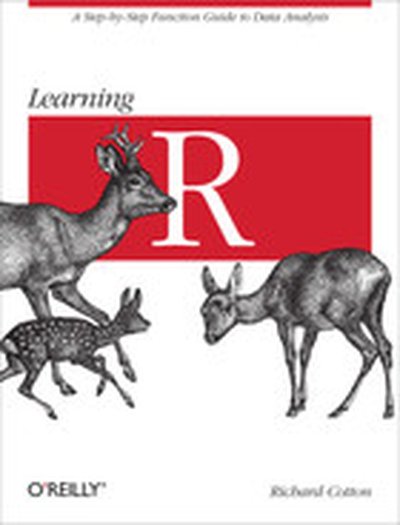
Learning R

Learn how to perform data analysis with the R language and software environment, even if you have little or no programming experience. With the tutorials in this hands-on guide, youâ??ll learn how to use the essential R tools you need to know to analyze data, including data types and programming concepts. The second half of Learning R shows you real data analysis in action by covering everything from importing data to publishing your results. Each chapter in the book includes a quiz on what youâ??ve learned, and concludes with exercises, most of which involve writing R code. Write a simple R program, and discover what the language can do Use data types such as vectors, arrays, lists, data frames, and strings Execute code conditionally or repeatedly with branches and loops Apply R add-on packages, and package your own work for others Learn how to clean data you import from a variety of sources Understand data through visualization and summary statistics Use statistical models to pass quantitative judgments about data and make predictions Learn what to do when things go wrong while writing data analysis code

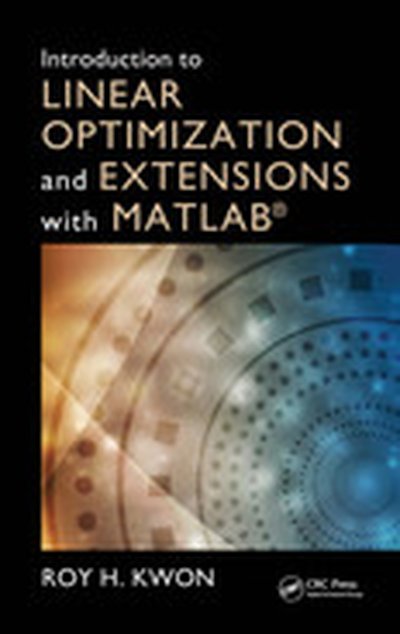
Introduction to Linear Optimization and Extensions with MATLAB®

Filling the need for an introductory book on linear programming that discusses the important ways to mitigate parameter uncertainty, Introduction to Linear Optimization and Extensions with MATLAB® provides a concrete and intuitive yet rigorous introduction to modern linear optimization. In addition to fundamental topics, the book discusses current linear optimization technologies such as predictor-path following interior point methods for both linear and quadratic optimization as well as the inclusion of linear optimization of uncertainty i.e. stochastic programming with recourse and robust optimization. The author introduces both stochastic programming and robust optimization as frameworks to deal with parameter uncertainty. The author’s unusual approach—developing these topics in an introductory book—highlights their importance. Since most applications require decisions to be made in the face of uncertainty, the early introduction of these topics facilitates decision making in real world environments. The author also includes applications and case studies from finance and supply chain management that involve the use of MATLAB. Even though there are several LP texts in the marketplace, most do not cover data uncertainty using stochastic programming and robust optimization techniques. Most emphasize the use of MS Excel, while this book uses MATLAB which is the primary tool of many engineers, including financial engineers. The book focuses on state-of-the-art methods for dealing with parameter uncertainty in linear programming, rigorously developing theory and methods. But more importantly, the author’s meticulous attention to developing intuition before presenting theory makes the material come alive.

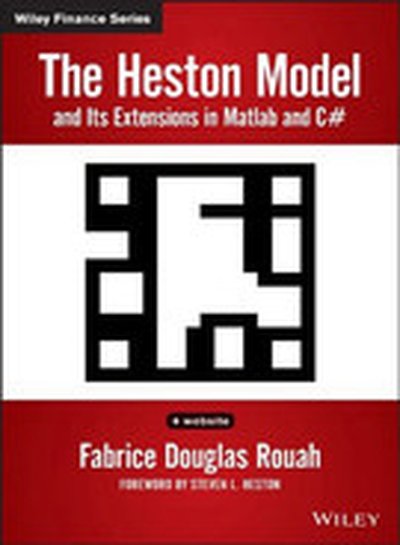
The Heston Model and its Extensions in Matlab and C#, + Website

Tap into the power of the most popular stochastic volatility model for pricing equity derivatives Since its introduction in 1993, the Heston model has become a popular model for pricing equity derivatives, and the most popular stochastic volatility model in financial engineering. This vital resource provides a thorough derivation of the original model, and includes the most important extensions and refinements that have allowed the model to produce option prices that are more accurate and volatility surfaces that better reflect market conditions. The book's material is drawn from research papers and many of the models covered and the computer codes are unavailable from other sources. The book is light on theory and instead highlights the implementation of the models. All of the models found here have been coded in Matlab and C#. This reliable resource offers an understanding of how the original model was derived from Ricatti equations, and shows how to implement implied and local volatility, Fourier methods applied to the model, numerical integration schemes, parameter estimation, simulation schemes, American options, the Heston model with time-dependent parameters, finite difference methods for the Heston PDE, the Greeks, and the double Heston model. A groundbreaking book dedicated to the exploration of the Heston model—a popular model for pricing equity derivatives Includes a companion website, which explores the Heston model and its extensions all coded in Matlab and C# Written by Fabrice Douglas Rouah a quantitative analyst who specializes in financial modeling for derivatives for pricing and risk management Engaging and informative, this is the first book to deal exclusively with the Heston Model and includes code in Matlab and C# for pricing under the model, as well as code for parameter estimation, simulation, finite difference methods, American options, and more. Note: The ebook version does not provide access to the companion files.

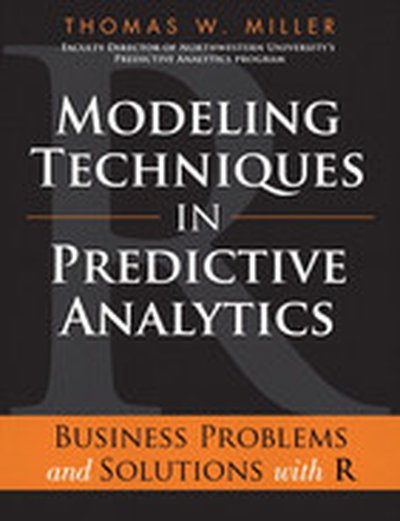
Modeling Techniques in Predictive Analytics: Business Problems and Solutions with R

Today, successful firms compete and win based on analytics. Modeling Techniques in brings together all the concepts, techniques, and R code you need to excel in any role involving analytics. Thomas W. Miller’s unique balanced approach combines business context Predictive Analytics and quantitative tools, appealing to managers, analysts, programmers, and students alike. Miller addresses multiple business challenges and business cases, including segmentation, brand positioning, product choice modeling, pricing research, finance, sports, text analytics, sentiment analysis, and social network analysis. He illuminates the use of cross-sectional data, time series, spatial, and even spatio-temporal data. For each problem, Miller explains why the problem matters, what data is relevant, how to explore your data once you’ve identified it, and then how to successfully model that data. You’ll learn how to model data conceptually, with words and figures; and then how to model it with realistic R programs that deliver actionable insights and knowledge. Miller walks you through model construction, explanatory variable subset selection, and validation, demonstrating best practices for improving out-of-sample predictive performance. He employs data visualization and statistical graphics in exploring data, presenting models, and evaluating performance. All example code is presented in R, today’s #1 system for applied statistics, statistical research, and predictive modeling; code is set apart from other text so it’s easy to find for those who want it (and easy to skip for those who don’t).

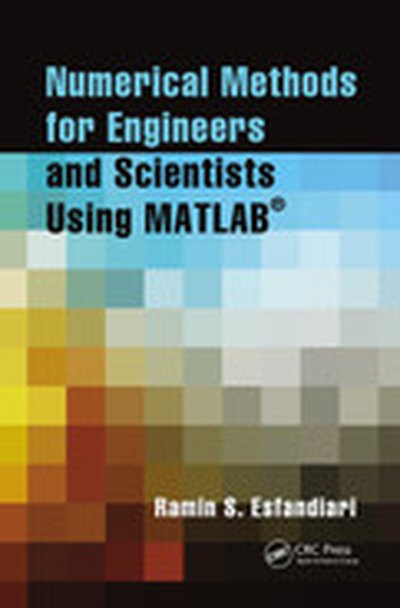
Numerical Methods for Engineers and Scientists Using MATLAB®

Designed to benefit scientific and engineering applications, Numerical Methods for Engineers and Scientists Using MATLAB® focuses on the fundamentals of numerical methods while making use of MATLAB software. The book introduces MATLAB early on and incorporates it throughout the chapters to perform symbolic, graphical, and numerical tasks. The text covers a variety of methods from curve fitting to solving ordinary and partial differential equations. Provides fully worked-out examples showing all details Confirms results through the execution of the user-defined function or the script file Executes built-in functions for re-confirmation, when available Generates plots regularly to shed light on the soundness and significance of the numerical results Created to be user-friendly and easily understandable, Numerical Methods for Engineers and Scientists Using MATLAB® provides background material and a broad introduction to the essentials of MATLAB, specifically its use with numerical methods. Building on this foundation, it introduces techniques for solving equations and focuses on curve fitting and interpolation techniques. It addresses numerical differentiation and integration methods, presents numerical methods for solving initial-value and boundary-value problems, and discusses the matrix eigenvalue problem, which entails numerical methods to approximate a few or all eigenvalues of a matrix. The book then deals with the numerical solution of partial differential equations, specifically those that frequently arise in engineering and science. The book presents a user-defined function or a MATLAB script file for each method, followed by at least one fully worked-out example. When available, MATLAB built-in functions are executed for confirmation of the results. A large set of exercises of varying levels of difficulty appears at the end of each chapter. The concise approach with strong, up-to-date MATLAB integration provided by this book affords readers a thorough knowledge of the fundamentals of numerical methods utilized in various disciplines.

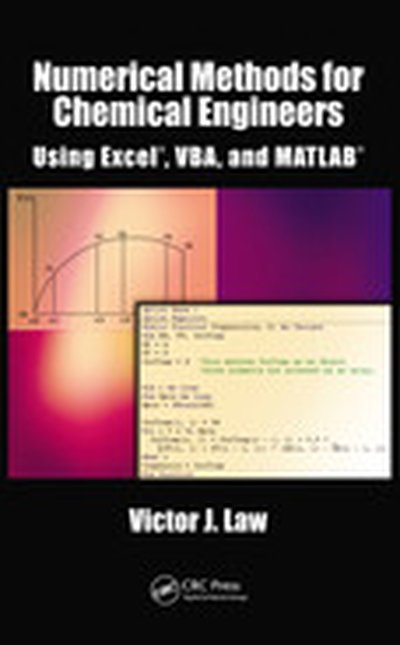
Numerical Methods for Chemical Engineers Using Excel, VBA, and MATLAB

Since many practical engineering problems must be solved numerically, this text provides instruction on using numerical methods and Excel/VBA for chemical and biomolecular engineering problems, covering a broad range of application areas. It also includes an introduction to MATLAB that is made easier to learn after studying the programming tools in previous chapters. Each chapter contains examples that show in detail how a particular numerical method or programming methodology can be implemented. The chapters also contain end-of-chapter exercises, with solutions provided.

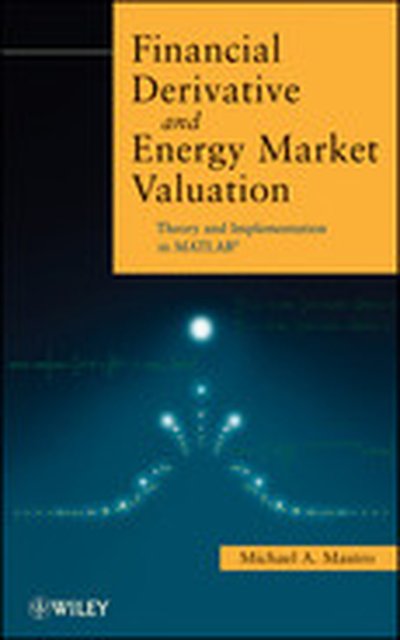
Financial Derivative and Energy Market Valuation: Theory and Implementation in MATLAB

A road map for implementing quantitative financial models Financial Derivative and Energy Market Valuation brings the application of financial models to a higher level by helping readers capture the true behavior of energy markets and related financial derivatives. The book provides readers with a range of statistical and quantitative techniques and demonstrates how to implement the presented concepts and methods in Matlab. Featuring an unparalleled level of detail, this unique work provides the underlying theory and various advanced topics without requiring a prior high-level understanding of mathematics or finance. In addition to a self-contained treatment of applied topics such as modern Fourier-based analysis and affine transforms, Financial Derivative and Energy Market Valuation also: Provides the derivation, numerical implementation, and documentation of the corresponding Matlab for each topic Extends seminal works developed over the last four decades to derive and utilize present-day financial models Shows how to use applied methods such as fast Fourier transforms to generate statistical distributions for option pricing Includes all Matlab code for readers wishing to replicate the figures found throughout the book Thorough, practical, and easy to use, Financial Derivative and Energy Market Valuation is a first-rate guide for readers who want to learn how to use advanced numerical methods to implement and apply state-of-the-art financial models. The book is also ideal for graduate-level courses in quantitative finance, mathematical finance, and financial engineering.

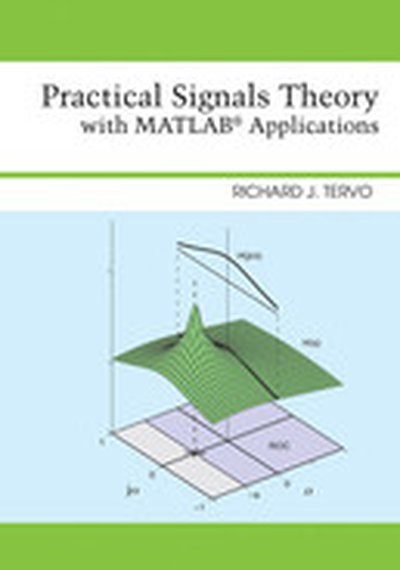
Practical Signals Theory with MATLAB Applications

is organized around applications, first introducing the actual behavior of specific signals and then using them to motivate the presentation of mathematical concepts. Tervo sequences the presentation of the major transforms by their complexity: first Fourier, then Laplace, and finally the z-transform. Practical Signals Theory with MATLAB Applications The goal is to help students who can't visualize phenomena from an equation to develop their intuition and learn to analyze signals by inspection. Finally, most examples and problems are designed to use MATLAB, making the presentation more in line with modern engineering practice.

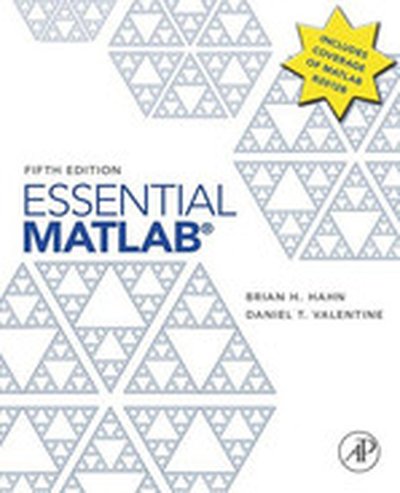
Essential MATLAB for Engineers and Scientists, 5th Edition

The fifth edition of Essential MATLAB for Engineers and Scientists provides a concise, balanced overview of MATLAB's functionality that facilitates independent learning, with coverage of both the fundamentals and applications. The essentials of MATLAB are illustrated throughout, featuring complete coverage of the software's windows and menus. Program design and algorithm development are presented clearly and intuitively, along with many examples from a wide range of familiar scientific and engineering areas. This is an ideal book for a first course on MATLAB or for an engineering problem-solving course using MATLAB, as well as a self-learning tutorial for professionals and students expected to learn and apply MATLAB. • Updated with the features of Matlab R2012b • More complete coverage of Matlab windows and menus • Expanded discussion of writing functions and scripts • Revised and expanded Part II: Applications • Expanded section on GUIs • More exercises and examples throughout • Extensive teacher support on http://textbooks.elsevier.com: solutions manual, extra problems, multiple choice questions, PowerPoint slides • Companion website for students providing M-files used within the book and selected solutions to end of chapter problems • Flexible access options: print, e-text, and e-text subscription

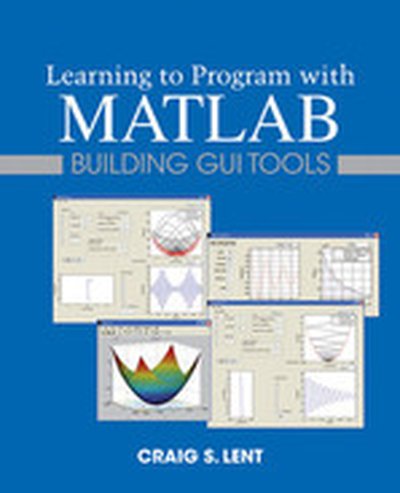
Learning to Program with MATLAB: Building GUI Tools

The text is for instructors who want to use MATLAB to teach introductory programming concepts. Since many students struggle with applying the concepts that underlie good programming practice, was designed upon the observation that student learning is enhanced if the students themselves build the GUI (graphical user interface) tool, construct the computational model, implement the visualization of results, and design the GUI. This text teaches the core concepts of computer programming—arrays, loops, functions, and basic data structures—using MATLAB. The chapter sequence covers text-based programs, then programs that produce graphics, building up to an emphasis on GUI tools. This progression unleashes the real power of MATLAB—creating visual expressions of the underlying mathematics of a problem or design. Learning to Program with MATLAB: Building GUI Tools

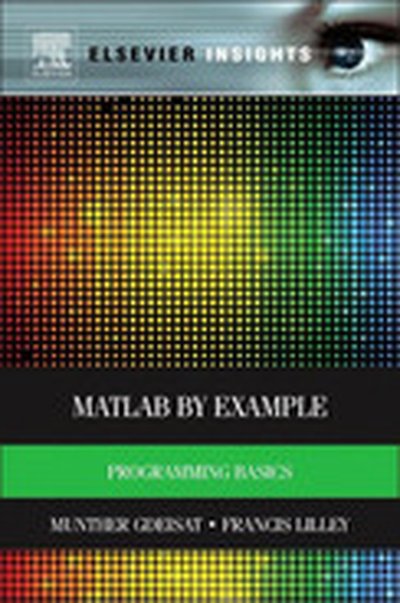
MATLAB® by Example

MATLAB By Example guides the reader through each step of writing MATLAB programs. The book assumes no previous programming experience on the part of the reader, and uses multiple examples in clear language to introduce concepts and practical tools. Straightforward and detailed instructions allow beginners to learn and develop their MATLAB skills quickly. The book consists of ten chapters, discussing in detail the integrated development environment (IDE), scalars, vectors, arrays, adopting structured programming style using functions and recursive functions, control flow, debugging, profiling, and structures. A chapter also describes Symbolic Math Toolbox, teaching readers how to solve algebraic equations, differentiation, integration, differential equations, and Laplace and Fourier transforms. Containing hundreds of examples illustrated using screen shots, hundreds of exercises, and three projects, this book can be used to complement coursework or as a self-study book, and can be used as a textbook in universities, colleges and high schools. No programming experience necessary to learn MATLAB Examples with screenshots and plentiful exercises throughout help make MATLAB easy to understand Projects enable readers to write long MATLAB programs, and take the first step toward being a professional MATLAB programmer

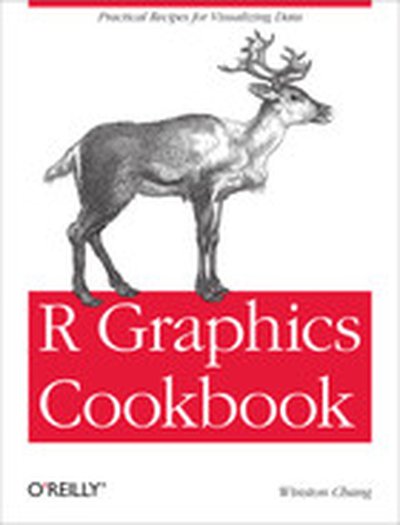
R Graphics Cookbook

This practical guide provides more than 150 recipes to help you generate high-quality graphs quickly, without having to comb through all the details of R’s graphing systems. Each recipe tackles a specific problem with a solution you can apply to your own project, and includes a discussion of how and why the recipe works. Most of the recipes use the ggplot2 package, a powerful and flexible way to make graphs in R. If you have a basic understanding of the R language, you’re ready to get started. Use R’s default graphics for quick exploration of data Create a variety of bar graphs, line graphs, and scatter plots Summarize data distributions with histograms, density curves, box plots, and other examples Provide annotations to help viewers interpret data Control the overall appearance of graphics Render data groups alongside each other for easy comparison Use colors in plots Create network graphs, heat maps, and 3D scatter plots Structure data for graphing

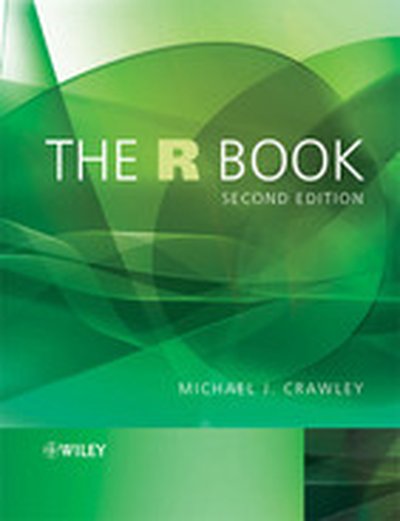
The R Book, 2nd Edition

Hugely successful and popular text presenting an extensive and comprehensive guide for all R users The R language is recognized as one of the most powerful and flexible statistical software packages, enabling users to apply many statistical techniques that would be impossible without such software to help implement such large data sets. R has become an essential tool for understanding and carrying out research. This edition: Features full colour text and extensive graphics throughout. Introduces a clear structure with numbered section headings to help readers locate information more efficiently. Looks at the evolution of R over the past five years. Features a new chapter on Bayesian Analysis and Meta-Analysis. Presents a fully revised and updated bibliography and reference section. Is supported by an accompanying website allowing examples from the text to be run by the user. Praise for the first edition: '...if you are an R user or wannabe R user, this text is the one that should be on your shelf. The breadth of topics covered is unsurpassed when it comes to texts on data analysis in R.' (The American Statistician, August 2008) 'The High-level software language of R is setting standards in quantitative analysis. And now anybody can get to grips with it thanks to The R Book...' ( Professional Pensions, July 2007)

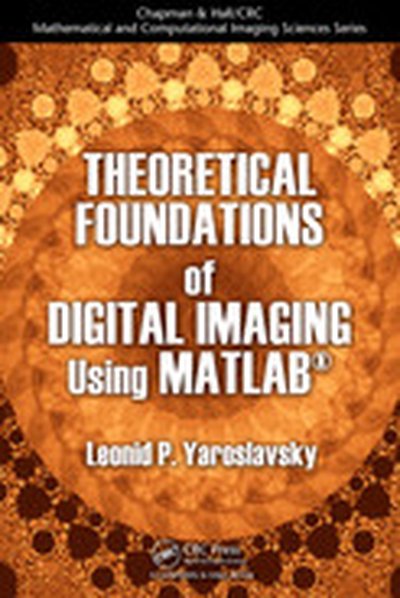
Theoretical Foundations of Digital Imaging Using MATLAB

Helping readers master digital imaging, this text presents a unified theoretical basis for understanding and designing methods of imaging and image processing. Designed for newcomers to imaging science and engineering, the book covers the subject in its entirety, from image formation to image perfecting. The author avoids using heavy mathematics and derives all formulas in full detail. To facilitate a deeper understanding of the major results, the book includes a number of exercises supported by MATLAB programs, with the code available at www.crcpress.com.

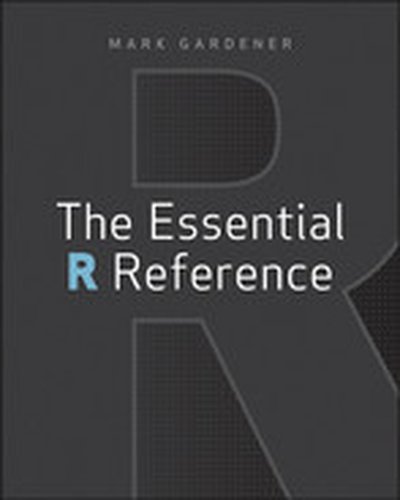
The Essential R Reference

An essential library of basic commands you can copy and paste into R The powerful and open-source statistical programming language R is rapidly growing in popularity, but it requires that you type in commands at the keyboard rather than use a mouse, so you have to learn the language of R. But there is a shortcut, and that's where this unique book comes in. A companion book to Visualize This: The FlowingData Guide to Design, Visualization, and Statistics, this practical reference is a library of basic R commands that you can copy and paste into R to perform many types of statistical analyses. Whether you're in technology, science, medicine, business, or engineering, you can quickly turn to your topic in this handy book and find the commands you need. Comprehensive command reference for the R programming language and a companion book to Visualize This: The FlowingData Guide to Design, Visualization, and Statistics Combines elements of a dictionary, glossary, and thesaurus for the R language Provides easy accessibility to the commands you need, by topic, which you can cut and paste into R as needed Covers getting, saving, examining, and manipulating data; statistical test and math; and all the things you can do with graphs Also includes a collection of utilities that you'll find useful Simplify the complex statistical R programming language with The Essential R Reference.

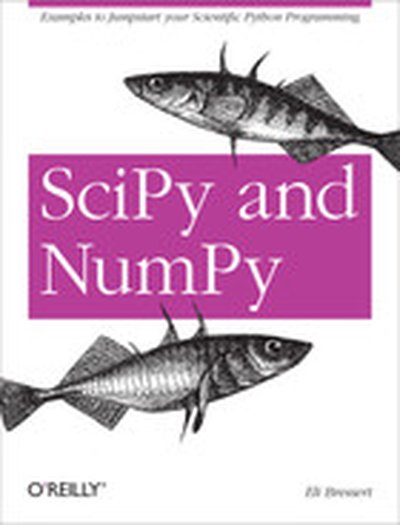
SciPy and NumPy

Are you new to SciPy and NumPy? Do you want to learn it quickly and easily through examples and a concise introduction? Then this is the book for you. You’ll cut through the complexity of online documentation and discover how easily you can get up to speed with these Python libraries. Ideal for data analysts and scientists in any field, this overview shows you how to use NumPy for numerical processing, including array indexing, math operations, and loading and saving data. You’ll learn how SciPy helps you work with advanced mathematical functions such as optimization, interpolation, integration, clustering, statistics, and other tools that take scientific programming to a whole new level. The new edition is now available, fully revised and updated in June 2013. Learn the capabilities of NumPy arrays, element-by-element operations, and core mathematical operations Solve minimization problems quickly with SciPy’s optimization package Use SciPy functions for interpolation, from simple univariate to complex multivariate cases Apply a variety of SciPy statistical tools such as distributions and functions Learn SciPy’s spatial and cluster analysis classes Save operation time and memory usage with sparse matrices

An Introduction to Analysis of Financial Data with R

A complete set of statistical tools for beginning financial analysts from a leading authority Written by one of the leading experts on the topic, An Introduction to Analysis of Financial Data with R explores basic concepts of visualization of financial data. Through a fundamental balance between theory and applications, the book supplies readers with an accessible approach to financial econometric models and their applications to real-world empirical research. The author supplies a hands-on introduction to the analysis of financial data using the freely available R software package and case studies to illustrate actual implementations of the discussed methods. The book begins with the basics of financial data, discussing their summary statistics and related visualization methods. Subsequent chapters explore basic time series analysis and simple econometric models for business, finance, and economics as well as related topics including: Linear time series analysis, with coverage of exponential smoothing for forecasting and methods for model comparison Different approaches to calculating asset volatility and various volatility models High-frequency financial data and simple models for price changes, trading intensity, and realized volatility Quantitative methods for risk management, including value at risk and conditional value at risk Econometric and statistical methods for risk assessment based on extreme value theory and quantile regression Throughout the book, the visual nature of the topic is showcased through graphical representations in R, and two detailed case studies demonstrate the relevance of statistics in finance. A related website features additional data sets and R scripts so readers can create their own simulations and test their comprehension of the presented techniques. An Introduction to Analysis of Financial Data with R is an excellent book for introductory courses on time series and business statistics at the upper-undergraduate and graduate level. The book is also an excellent resource for researchers and practitioners in the fields of business, finance, and economics who would like to enhance their understanding of financial data and today's financial markets.