talk-data.com talk-data.com

Topic

data-science

71

tagged

Activity Trend

1 peak/qtr
2020-Q1 2026-Q1

Activities

Showing filtered results

Filtering by: O'Reilly Business Intelligence Books ×
Successful Business Intelligence: Secrets to Making BI a Killer App

Praise for Successful Business Intelligence "If you want to be an analytical competitor, you've got to go well beyond business intelligence technology. Cindi Howson has wrapped up the needed advice on technology, organization, strategy, and even culture in a neat package. It's required reading for quantitatively oriented strategists and the technologists who support them." --Thomas H. Davenport, President's Distinguished Professor, Babson College and co-author, Competing on Analytics "When used strategically, business intelligence can help companies transform their organization to be more agile, more competitive, and more profitable. Successful Business Intelligence offers valuable guidance for companies looking to embark upon their first BI project as well as those hoping to maximize their current deployments." --John Schwarz, CEO, Business Objects "A thoughtful, clearly written, and carefully researched examination of all facets of business intelligence that your organization needs to know to run its business more intelligently and exploit information to its fullest extent." --Wayne Eckerson, Director, TDWI Research "Using real-world examples, Cindi Howson shows you how to use business intelligence to improve the performance, and the quality, of your company." --Bill Baker, Distinguished Engineer & GM, Business Intelligence Applications, Microsoft Corporation "This book outlines the key steps to make BI an integral part of your company's culture and demonstrates how your company can use BI as a competitive differentiator." --Robert VanHees, CFO, Corporate Express "Given the trend to expand the business analytics user base, organizations are faced with a number of challenges that affect the success rate of these projects. This insightful book provides practical advice on improving that success rate." --Dan Vesset, Vice President, Business Analytics Solution Research, IDC

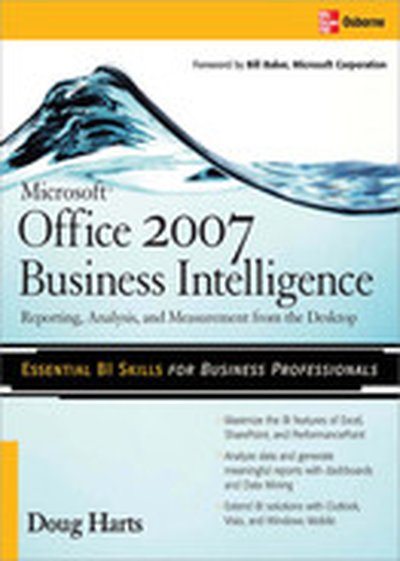
Microsoft ® Office 2007 Business Intelligence

Extract and analyze mission-critical enterprise data using Microsoft Office 2007 This authoritative volume is a practical guide to the powerful new collaborative Business Intelligence tools available in Office 2007. Using real-world examples and clear explanations, Microsoft Office 2007 Business Intelligence: Reporting, Analysis, and Measurement from the Desktop shows you how to use Excel, Excel Services, SharePoint, and PerformancePoint with a wide range of stand-alone and external data in today's networked office. You will learn how to analyze data and generate reports, scorecards, and dashboards with the Office tools you're already using to help you in your everyday work. Create Excel PivotTables and PivotCharts and apply Conditional Formatting Convert Excel spreadsheets into Excel Tables with Conditional Formatting and Charting Connect external data to Excel using Office Data Connections and SharePoint Create SharePoint dashboards that display data from multiple sources Add Key Performance Indicators and Excel Services reports to your dashboards Harness advanced SQL Server 2005 data analysis tools with the Excel Data Mining Add-In and Visio Cluster Diagrams Generate integrated PerformancePoint Scorecards Create Visio PivotDiagrams and Windows Mobile spreadsheets

Improving Business Performance Insight . . . with Business Intelligence and Business Process Management

In this IBM Redbooks publication, we describe and demonstrate how to implement enterprise performance insight. This is an initiative that has a primary focus on the integration of Business Process Management and Business Intelligence. With this capability, management has an enterprise-wide view of their business that can enable proactive business management. We discuss the techniques, architectures, and processes used to define and implement such an environment. Among the specific techniques and technologies used are key performance indicators, process alerts, management dashboards, analytic applications, application integration, process modeling and monitoring, and real-time business intelligence. The products featured are DB2 UDB, DB2 Alphablox, WebSphere Information Integrator, WebSphere Portal, WebSphere Business Monitor, and WebSphere Business Modeler. Performance insight is an element of a more global initiative called business innovation and optimization (BIO). With this, we can enable business performance management, an initiative for the effective use of people, processes, assets, and technology to proactively achieve business goals and measurements. It enables strategic alignment of business and technology, resulting in real-time access to data and continuous process and data flow, for proactive business management, and business goal attainment.

Business Intelligence Competency Centers: A Team Approach to Maximizing Competitive Advantage

Transform data into action for competitive advantage "The knowledge assets of an organization are becoming increasingly important for competitive advantage, and therefore, the way in which knowledge is created, renewed, and communicated is critical. This book provides practical insights into how this may be achieved through the establishment of a Business Intelligence Competency Centre and is a valuable read for 'information professionals.'" --Bill Sturman, Information Architecture Project Manager The Open University, United Kingdom "BI is more than technology and projects. BI must live in the organization--as a BICC. This book helps to make BI tangible and understandable, bringing it to life." --Miriam Eisenmann, Project Manager (PMP) CSC Ploenzke AG, Germany "This book is a must-read for planning and implementing your BICC. It is a pragmatic guide that addresses a lot, if not all, of the questions you'll be asking yourself. Don't miss out on getting a head start from the people who thought this through from start to finish . . . Pray your competitors don't get hold of this book!" --Claudia Imhoff, President Intelligent Solutions, Inc., USA "Creating a BICC forces the organization to focus on the importance of centralizing the gathering, interpreting, and analyzing of information to create business insight." --Anne Ulyate, Group Manager Business Intelligence Mutual & Federal, South Africa "BI is a highly visible element in the 'business value' trend for IT investments. Initiatives, such as competency centers, should empower user organizations to drive even more value out of their BI investments." --Marianne Kolding, Director, European ServicesIDC, United Kingdom

Delivering Business Intelligence with Microsoft SQL Server 2005

Transform disparate enterprise data into actionable business intelligence Put timely, mission-critical information in the hands of employees across your organization using Microsoft SQL Server 2005 and the comprehensive information in this unique resource. Delivering Business Intelligence with Microsoft SQL Server 2005 shows you, step-by-step, how to author, customize, and distribute information that will give your company the competitive edge. It's all right here--from data mining, warehousing, and scripting techniques to MDX queries, KPI analysis, and the all-new Unified Dimensional Model. Real-world examples, start-to-finish exercises, and downloadable code throughout illustrate all of the integration, analysis, and reporting capabilities of SQL Server 2005.

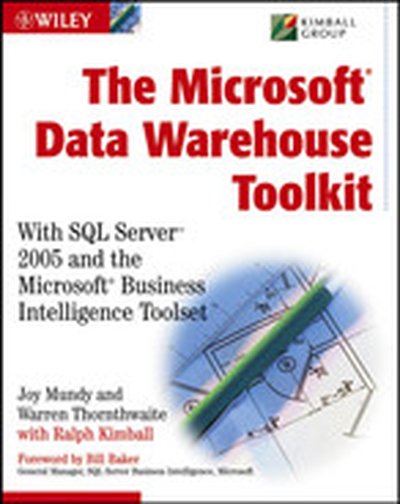
The Microsoft® Data Warehouse Toolkit: With SQL Server™ 2005 and the Microsoft® Business Intelligence Toolset

This groundbreaking book is the first in the Kimball Toolkit series to be product-specific. Microsoft’s BI toolset has undergone significant changes in the SQL Server 2005 development cycle. SQL Server 2005 is the first viable, full-functioned data warehouse and business intelligence platform to be offered at a price that will make data warehousing and business intelligence available to a broad set of organizations. This book is meant to offer practical techniques to guide those organizations through the myriad of challenges to true success as measured by contribution to business value. Building a data warehousing and business intelligence system is a complex business and engineering effort. While there are significant technical challenges to overcome in successfully deploying a data warehouse, the authors find that the most common reason for data warehouse project failure is insufficient focus on the business users and business problems. In an effort to help people gain success, this book takes the proven Business Dimensional Lifecycle approach first described in best selling The Data Warehouse Lifecycle Toolkit and applies it to the Microsoft SQL Server 2005 tool set. Beginning with a thorough description of how to gather business requirements, the book then works through the details of creating the target dimensional model, setting up the data warehouse infrastructure, creating the relational atomic database, creating the analysis services databases, designing and building the standard report set, implementing security, dealing with metadata, managing ongoing maintenance and growing the DW/BI system. All of these steps tie back to the business requirements. Each chapter describes the practical steps in the context of the SQL Server 2005 platform. Intended Audience The target audience for this book is the IT department or service provider (consultant) who is: Planning a small to mid-range data warehouse project; Evaluating or planning to use Microsoft technologies as the primary or exclusive data warehouse server technology; Familiar with the general concepts of data warehousing and business intelligence. The book will be directed primarily at the project leader and the warehouse developers, although everyone involved with a data warehouse project will find the book useful. Some of the book’s content will be more technical than the typical project leader will need; other chapters and sections will focus on business issues that are interesting to a database administrator or programmer as guiding information. The book is focused on the mass market, where the volume of data in a single application or data mart is less than 500 GB of raw data. While the book does discuss issues around handling larger warehouses in the Microsoft environment, it is not exclusively, or even primarily, concerned with the unusual challenges of extremely large datasets. About the Authors JOY MUNDY has focused on data warehousing and business intelligence since the early 1990s, specializing in business requirements analysis, dimensional modeling, and business intelligence systems architecture. Joy co-founded InfoDynamics LLC, a data warehouse consulting firm, then joined Microsoft WebTV to develop closed-loop analytic applications and a packaged data warehouse. Before returning to consulting with the Kimball Group in 2004, Joy worked in Microsoft SQL Server product development, managing a team that developed the best practices for building business intelligence systems on the Microsoft platform. Joy began her career as a business analyst in banking and finance. She graduated from Tufts University with a BA in Economics, and from Stanford with an MS in Engineering Economic Systems. WARREN THORNTHWAITE has been building data warehousing and business intelligence systems since 1980. Warren worked at Metaphor for eight years, where he managed the consulting organization and implemented many major data warehouse systems. After Metaphor, Warren managed the enterprise-wide data warehouse development at Stanford University. He then co-founded InfoDynamics LLC, a data warehouse consulting firm, with his co-author, Joy Mundy. Warren joined up with WebTV to help build a world class, multi-terabyte customer focused data warehouse before returning to consulting with the Kimball Group. In addition to designing data warehouses for a range of industries, Warren speaks at major industry conferences and for leading vendors, and is a long-time instructor for Kimball University. Warren holds an MBA in Decision Sciences from the University of Pennsylvania's Wharton School, and a BA in Communications Studies from the University of Michigan. RALPH KIMBALL, PH.D., has been a leading visionary in the data warehouse industry since 1982 and is one of today's most internationally well-known authors, speakers, consultants, and teachers on data warehousing. He writes the "Data Warehouse Architect" column for Intelligent Enterprise (formerly DBMS) magazine.


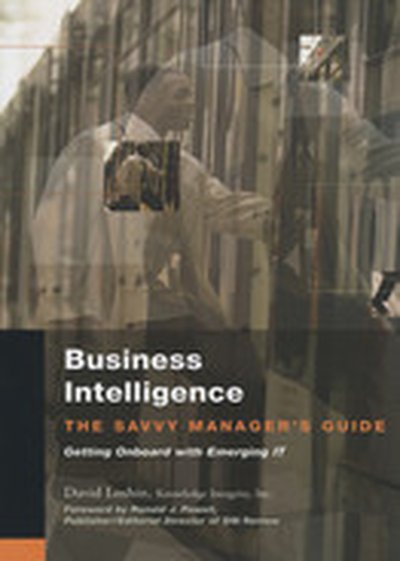
Business Intelligence

Business Intelligence describes the basic architectural components of a business intelligence environment, ranging from traditional topics such as business process modeling, data modeling, and more modern topics such as business rule systems, data profiling, information compliance and data quality, data warehousing, and data mining. This book progresses through a logical sequence, starting with data model infrastructure, then data preparation, followed by data analysis, integration, knowledge discovery, and finally the actual use of discovered knowledge. The book contains a quick reference guide for business intelligence terminology. Business Intelligence is part of Morgan Kaufmann's Savvy Manager's Guide series. * Provides clear explanations without technical jargon, followed by in-depth descriptions. * Articulates the business value of new technology, while providing relevant introductory technical background. * Contains a handy quick-reference to technologies and terminologies. * Guides managers through developing, administering, or simply understanding business intelligence technology. * Bridges the business-technical gap. * Is Web enhanced. Companion sites to the book and series provide value-added information, links, discussions, and more.

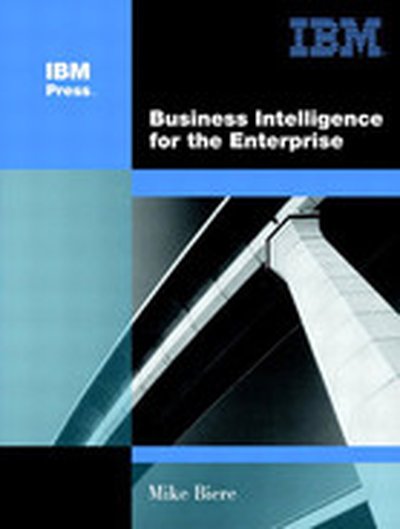
Business Intelligence for the Enterprise

Making business intelligence work: Start-to-finish guidance for managers This book offers a true enterprise view of business intelligence. IBM expert Mike Biere shows managers how to create a coherent BI plan that reflects the needs of users throughout the organization-and then implement that plan successfully. Biere explains how to objectively assess the business case for BI, and identifies proven solutions for the obstacles that lead many BI projects to fail. Coverage includes: Setting appropriate expectations and goals for your BI project Understanding how the key components of a complete BI solution fit together Designing effective BI solutions-including content management, handling unstructured data, and end-user segmentation Providing effective support for BI end users Introducing Corporate Performance Management (CPM): an executive's view of BI Previewing tomorrow's "next wave" in BI solutions Comprehensive checklists for planning your BI project

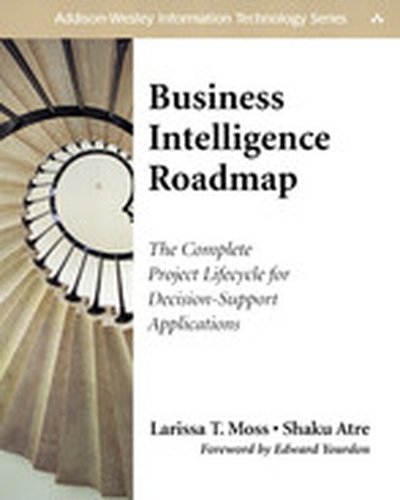
Business Intelligence Roadmap: The Complete Project Lifecycle for Decision-Support Applications

"If you are looking for a complete treatment of business intelligence, then go no further than this book. Larissa T. Moss and Shaku Atre have covered all the bases in a cohesive and logical order, making it easy for the reader to follow their line of thought. From early design to ETL to physical database design, the book ties together all the components of business intelligence." --Bill Inmon, Inmon Enterprises is a visual guide to developing an effective business intelligence (BI) decision-support application. This book outlines a methodology that takes into account the complexity of developing applications in an integrated BI environment. The authors walk readers through every step of the process--from strategic planning to the selection of new technologies and the evaluation of application releases. The book also serves as a single-source guide to the best practices of BI projects. Business Intelligence Roadmap Part I steers readers through the six stages of a BI project: justification, planning, business analysis, design, construction, and deployment. Each chapter describes one of sixteen development steps and the major activities, deliverables, roles, and responsibilities. All technical material is clearly expressed in tables, graphs, and diagrams. Part II provides five matrices that serve as references for the development process charted in Part I. Management tools, such as graphs illustrating the timing and coordination of activities, are included throughout the book. The authors conclude by crystallizing their many years of experience in a list of dos, don'ts, tips, and rules of thumb. The accompanying CD-ROM includes a complete, customizable work breakdown structure. Both the book and the methodology it describes are designed to adapt to the specific needs of individual stakeholders and organizations. The book directs business representatives, business sponsors, project managers, and technicians to the chapters that address their distinct responsibilities. The framework of the book allows organizations to begin at any step and enables projects to be scheduled and managed in a variety of ways. is a clear and comprehensive guide to negotiating the complexities inherent in the development of valuable business intelligence decision-support applications Business Intelligence Roadmap

DB2 UDB's High-Function Business Intelligence in e-business

This IBM Redbooks publication deals with exploiting DB2 UDB’s materialized views (also known as ASTs/MQTs), statistics, analytic, and OLAP functions in e-business applications to achieve superior performance and scalability. This book is aimed at a target audience of DB2 UDB application developers, database administrators (DBAs), and independent software vendors (ISVs). We provide an overview of DB2 UDB’s materialized views implementation, as well as guidelines for creating and tuning them for optimal performance. We introduce key statistics, analytic, and OLAP functions, and describe their corresponding implementation in DB2 UDB with usage examples. Finally, we describe typical business level queries that can be answered using DB2 UDB’s statistics, analytic, and OLAP functions. These business queries are categorized by industry, and describe the steps involved in resolving the query, with sample SQL and visualization of results.

Internet-Enabled Business Intelligence

Link business intelligence to the Web! Technologies, integration, and applications. Internet-enabled business intelligence: from planning to profit In-depth coverage of integration and key enabling technologies, including Java and XML Advanced analysis and profiling: understand customers better, and respond faster Clickstrean analysis: understanding how customers use your site Linking data warehouses to CRM and other enterprise/value chain systems This is the first start-to-finish guide to planning, deploying, and profiting from Internet-enabled data warehouses. Leading business intelligence specialist William Giovinazzo covers every enabling technology, every analysis approach, and every key challenge you'll face in linking business intelligence to the Web. From infrastructure integration to state-of-the-art profiling and wireless applications, Giovinazzo shows how everything fits together—and exactly how to use Web-enabled data warehouses to deliver powerful ROI in your business. How the Internet enhances your business intelligence infrastructure Leveraging key enabling technologies: Java, XML, XSL, and more Breakthrough analysis techniques: understand customers better, and respond faster! Integrating data warehouses with CRM and other enterprise and inter-enterprise systems Establishing common warehouse metadata Drawing on the clickstreams generated by your Web and e-commerce sites Personalization techniques that work