talk-data.com talk-data.com

Topic

data-science

18

tagged

Activity Trend

1 peak/qtr
2020-Q1 2026-Q1

Activities

Showing filtered results

Filtering by: O'Reilly Data Engineering Books ×
The Data Engineer's Guide to Microsoft Fabric

Modern data engineering is evolving; and with Microsoft Fabric, the entire data platform experience is being redefined. This essential book offers a fresh, hands-on approach to navigating this shift. Rather than being an introduction to features, this guide explains how Fabric's key components—Lakehouse, Warehouse, and Real-Time Intelligence—work under the hood and how to put them to use in realistic workflows. Written by Christian Henrik Reich, a data engineering expert with experience that extends from Databricks to Fabric, this book is a blend of foundational theory and practical implementation of lakehouse solutions in Fabric. You'll explore how engines like Apache Spark and Fabric Warehouse collaborate with Fabric's Real-Time Intelligence solution in an integrated platform, and how to build ETL/ELT pipelines that deliver on speed, accuracy, and scale. Ideal for both new and practicing data engineers, this is your entry point into the fabric of the modern data platform. Acquire a working knowledge of lakehouses, warehouses, and streaming in Fabric Build resilient data pipelines across real-time and batch workloads Apply Python, Spark SQL, T-SQL, and KQL within a unified platform Gain insight into architectural decisions that scale with data needs Learn actionable best practices for engineering clean, efficient, governed solutions
Practical Statistics for Data Scientists, 3rd Edition

Statistical methods are a key part of data science, yet few data scientists have formal statistical training. Courses and books on basic statistics rarely cover the topic from a data science perspective. And many data science resources incorporate statistical methods but lack a deeper statistical perspective. If you're familiar with the R or Python programming languages and have some exposure to statistics, this quick reference bridges the gap in an accessible, readable format.

Software Engineering for Data Scientists

Data science happens in code. The ability to write reproducible, robust, scaleable code is key to a data science project's success—and is absolutely essential for those working with production code. This practical book bridges the gap between data science and software engineering, and clearly explains how to apply the best practices from software engineering to data science. Examples are provided in Python, drawn from popular packages such as NumPy and pandas. If you want to write better data science code, this guide covers the essential topics that are often missing from introductory data science or coding classes, including how to: Understand data structures and object-oriented programming Clearly and skillfully document your code Package and share your code Integrate data science code with a larger code base Learn how to write APIs Create secure code Apply best practices to common tasks such as testing, error handling, and logging Work more effectively with software engineers Write more efficient, maintainable, and robust code in Python Put your data science projects into production And more

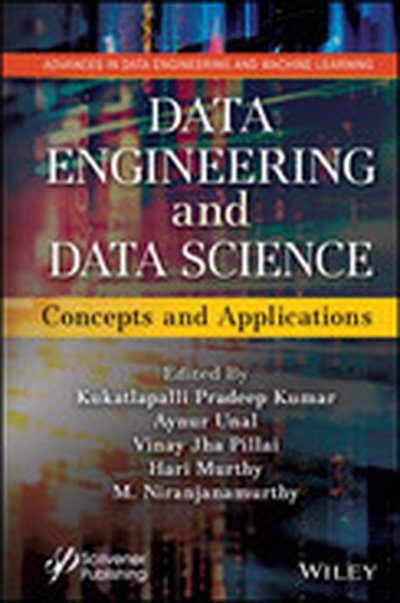
Data Engineering and Data Science

DATA ENGINEERING and DATA SCIENCE Written and edited by one of the most prolific and well-known experts in the field and his team, this exciting new volume is the “one-stop shop” for the concepts and applications of data science and engineering for data scientists across many industries. The field of data science is incredibly broad, encompassing everything from cleaning data to deploying predictive models. However, it is rare for any single data scientist to be working across the spectrum day to day. Data scientists usually focus on a few areas and are complemented by a team of other scientists and analysts. Data engineering is also a broad field, but any individual data engineer doesn’t need to know the whole spectrum of skills. Data engineering is the aspect of data science that focuses on practical applications of data collection and analysis. For all the work that data scientists do to answer questions using large sets of information, there have to be mechanisms for collecting and validating that information. In this exciting new volume, the team of editors and contributors sketch the broad outlines of data engineering, then walk through more specific descriptions that illustrate specific data engineering roles. Data-driven discovery is revolutionizing the modeling, prediction, and control of complex systems. This book brings together machine learning, engineering mathematics, and mathematical physics to integrate modeling and control of dynamical systems with modern methods in data science. It highlights many of the recent advances in scientific computing that enable data-driven methods to be applied to a diverse range of complex systems, such as turbulence, the brain, climate, epidemiology, finance, robotics, and autonomy. Whether for the veteran engineer or scientist working in the field or laboratory, or the student or academic, this is a must-have for any library.

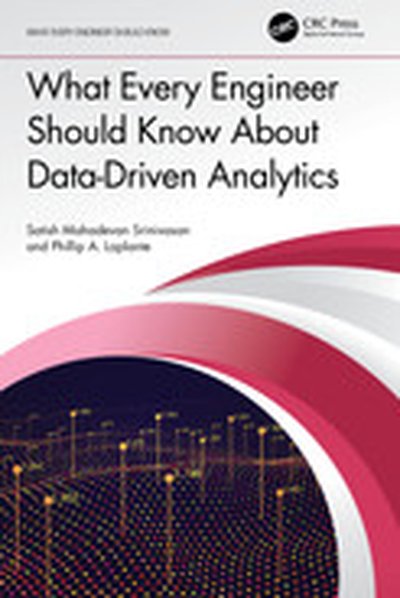
What Every Engineer Should Know About Data-Driven Analytics

What Every Engineer Should Know About Data-Driven Analytics provides a comprehensive introduction to the machine learning theoretical concepts and approaches that are used in predictive data analytics through practical applications and case studies.

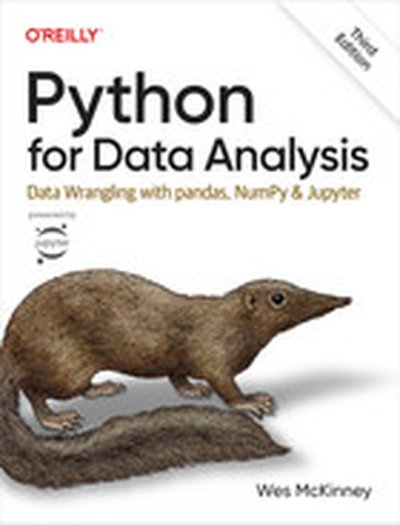
Python for Data Analysis, 3rd Edition

Get the definitive handbook for manipulating, processing, cleaning, and crunching datasets in Python. Updated for Python 3.10 and pandas 1.4, the third edition of this hands-on guide is packed with practical case studies that show you how to solve a broad set of data analysis problems effectively. You'll learn the latest versions of pandas, NumPy, and Jupyter in the process. Written by Wes McKinney, the creator of the Python pandas project, this book is a practical, modern introduction to data science tools in Python. It's ideal for analysts new to Python and for Python programmers new to data science and scientific computing. Data files and related material are available on GitHub. Use the Jupyter notebook and IPython shell for exploratory computing Learn basic and advanced features in NumPy Get started with data analysis tools in the pandas library Use flexible tools to load, clean, transform, merge, and reshape data Create informative visualizations with matplotlib Apply the pandas groupby facility to slice, dice, and summarize datasets Analyze and manipulate regular and irregular time series data Learn how to solve real-world data analysis problems with thorough, detailed examples

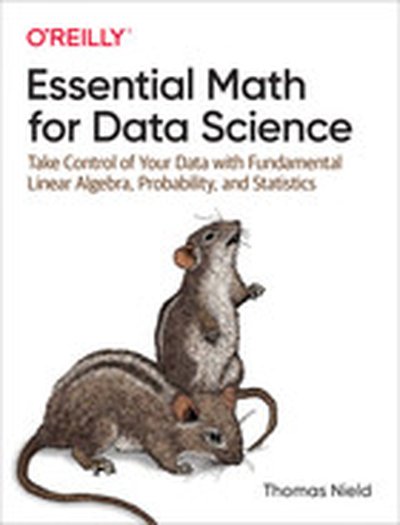
Essential Math for Data Science

Master the math needed to excel in data science, machine learning, and statistics. In this book author Thomas Nield guides you through areas like calculus, probability, linear algebra, and statistics and how they apply to techniques like linear regression, logistic regression, and neural networks. Along the way you'll also gain practical insights into the state of data science and how to use those insights to maximize your career. Learn how to: Use Python code and libraries like SymPy, NumPy, and scikit-learn to explore essential mathematical concepts like calculus, linear algebra, statistics, and machine learning Understand techniques like linear regression, logistic regression, and neural networks in plain English, with minimal mathematical notation and jargon Perform descriptive statistics and hypothesis testing on a dataset to interpret p-values and statistical significance Manipulate vectors and matrices and perform matrix decomposition Integrate and build upon incremental knowledge of calculus, probability, statistics, and linear algebra, and apply it to regression models including neural networks Navigate practically through a data science career and avoid common pitfalls, assumptions, and biases while tuning your skill set to stand out in the job market

Data Analytics, Computational Statistics, and Operations Research for Engineers

This book investigates the role of data mining in computational statistics for machine learning. It offers applications that can be used in various domains and examines the role of transformation functions in optimizing problem statements.

Data Science in Engineering and Management

This book brings insight into Data Science and offers applications and implementation strategies. It includes recent developments and future trends and covers the concept of Data Science along with its origin. It focuses on the mechanisms of extracting data along with classifications, architectural concepts, and predictive analysis.

Data Science Revealed: With Feature Engineering, Data Visualization, Pipeline Development, and Hyperparameter Tuning

Get insight into data science techniques such as data engineering and visualization, statistical modeling, machine learning, and deep learning. This book teaches you how to select variables, optimize hyper parameters, develop pipelines, and train, test, and validate machine and deep learning models. Each chapter includes a set of examples allowing you to understand the concepts, assumptions, and procedures behind each model. The book covers parametric methods or linear models that combat under- or over-fitting using techniques such as Lasso and Ridge. It includes complex regression analysis with time series smoothing, decomposition, and forecasting. It takes a fresh look at non-parametric models for binary classification (logistic regression analysis) and ensemble methods such as decision trees, support vector machines, and naive Bayes. It covers the most popular non-parametric method for time-event data (the Kaplan-Meier estimator). It also covers ways of solving classification problems using artificial neural networks such as restricted Boltzmann machines, multi-layer perceptrons, and deep belief networks. The book discusses unsupervised learning clustering techniques such as the K-means method, agglomerative and Dbscan approaches, and dimension reduction techniques such as Feature Importance, Principal Component Analysis, and Linear Discriminant Analysis. And it introduces driverless artificial intelligence using H2O. After reading this book, you will be able to develop, test, validate, and optimize statistical machine learning and deep learning models, and engineer, visualize, and interpret sets of data. What You Will Learn Design, develop, train, and validate machine learning and deep learning models Find optimal hyper parameters for superior model performance Improve model performance using techniques such as dimension reduction and regularization Extract meaningful insights for decision making using data visualization Who This Book Is For Beginning and intermediate level data scientists and machine learning engineers

Data Science from Scratch, 2nd Edition

To really learn data science, you should not only master the tools—data science libraries, frameworks, modules, and toolkits—but also understand the ideas and principles underlying them. Updated for Python 3.6, this second edition of Data Science from Scratch shows you how these tools and algorithms work by implementing them from scratch. If you have an aptitude for mathematics and some programming skills, author Joel Grus will help you get comfortable with the math and statistics at the core of data science, and with the hacking skills you need to get started as a data scientist. Packed with new material on deep learning, statistics, and natural language processing, this updated book shows you how to find the gems in today’s messy glut of data. Get a crash course in Python Learn the basics of linear algebra, statistics, and probability—and how and when they’re used in data science Collect, explore, clean, munge, and manipulate data Dive into the fundamentals of machine learning Implement models such as k-nearest neighbors, Naïve Bayes, linear and logistic regression, decision trees, neural networks, and clustering Explore recommender systems, natural language processing, network analysis, MapReduce, and databases

Data Science and Engineering at Enterprise Scale

As enterprise-scale data science sharpens its focus on data-driven decision making and machine learning, new tools have emerged to help facilitate these processes. This practical ebook shows data scientists and enterprise developers how the notebook interface, Apache Spark, and other collaboration tools are particularly well suited to bridge the communication gap between their teams. Through a series of real-world examples, author Jerome Nilmeier demonstrates how to generate a model that enables data scientists and developers to share ideas and project code. You’ll learn how data scientists can approach real-world business problems with Spark and how developers can then implement the solution in a production environment. Dive deep into data science technologies, including Spark, TensorFlow, and the Jupyter Notebook Learn how Spark and Python notebooks enable data scientists and developers to work together Explore how the notebook environment works with Spark SQL for structured data Use notebooks and Spark as a launchpad to pursue supervised, unsupervised, and deep learning data models Learn additional Spark functionality, including graph analysis and streaming Explore the use of analytics in the production environment, particularly when creating data pipelines and deploying code

Perspectives on Data Science for Software Engineering

Perspectives on Data Science for Software Engineering presents the best practices of seasoned data miners in software engineering. The idea for this book was created during the 2014 conference at Dagstuhl, an invitation-only gathering of leading computer scientists who meet to identify and discuss cutting-edge informatics topics. At the 2014 conference, the concept of how to transfer the knowledge of experts from seasoned software engineers and data scientists to newcomers in the field highlighted many discussions. While there are many books covering data mining and software engineering basics, they present only the fundamentals and lack the perspective that comes from real-world experience. This book offers unique insights into the wisdom of the community’s leaders gathered to share hard-won lessons from the trenches. Ideas are presented in digestible chapters designed to be applicable across many domains. Topics included cover data collection, data sharing, data mining, and how to utilize these techniques in successful software projects. Newcomers to software engineering data science will learn the tips and tricks of the trade, while more experienced data scientists will benefit from war stories that show what traps to avoid. Presents the wisdom of community experts, derived from a summit on software analytics Provides contributed chapters that share discrete ideas and technique from the trenches Covers top areas of concern, including mining security and social data, data visualization, and cloud-based data Presented in clear chapters designed to be applicable across many domains

Storytelling with Data: A Data Visualization Guide for Business Professionals

Don't simply show your data—tell a story with it! Storytelling with Data teaches you the fundamentals of data visualization and how to communicate effectively with data. You'll discover the power of storytelling and the way to make data a pivotal point in your story. The lessons in this illuminative text are grounded in theory, but made accessible through numerous real-world examples—ready for immediate application to your next graph or presentation. Storytelling is not an inherent skill, especially when it comes to data visualization, and the tools at our disposal don't make it any easier. This book demonstrates how to go beyond conventional tools to reach the root of your data, and how to use your data to create an engaging, informative, compelling story. Specifically, you'll learn how to: Understand the importance of context and audience Determine the appropriate type of graph for your situation Recognize and eliminate the clutter clouding your information Direct your audience's attention to the most important parts of your data Think like a designer and utilize concepts of design in data visualization Leverage the power of storytelling to help your message resonate with your audience Together, the lessons in this book will help you turn your data into high impact visual stories that stick with your audience. Rid your world of ineffective graphs, one exploding 3D pie chart at a time. There is a story in your data— Storytelling with Data will give you the skills and power to tell it!

Data Science for Business

Written by renowned data science experts Foster Provost and Tom Fawcett, Data Science for Business introduces the fundamental principles of data science, and walks you through the "data-analytic thinking" necessary for extracting useful knowledge and business value from the data you collect. This guide also helps you understand the many data-mining techniques in use today. Based on an MBA course Provost has taught at New York University over the past ten years, Data Science for Business provides examples of real-world business problems to illustrate these principles. You'll not only learn how to improve communication between business stakeholders and data scientists, but also how participate intelligently in your company's data science projects. You'll also discover how to think data-analytically, and fully appreciate how data science methods can support business decision-making. Understand how data science fits in your organization–and how you can use it for competitive advantage Treat data as a business asset that requires careful investment if you're to gain real value Approach business problems data-analytically, using the data-mining process to gather good data in the most appropriate way Learn general concepts for actually extracting knowledge from data Apply data science principles when interviewing data science job candidates

Data Analysis and Statistics for Geography, Environmental Science, and Engineering

Providing a solid foundation for twenty-first-century scientists and engineers, Data Analysis and Statistics for Geography, Environmental Science, and Engineering guides readers in learning quantitative methodology, including how to implement data analysis methods using open-source software. Given the importance of interdisciplinary work in sustainability, the book brings together principles of statistics and probability, multivariate analysis, and spatial analysis methods applicable across a variety of science and engineering disciplines. Learn How to Use a Variety of Data Analysis and Statistics Methods Based on the author’s many years of teaching graduate and undergraduate students, this textbook emphasizes hands-on learning. Organized into two parts, it allows greater flexibility using the material in various countries and types of curricula. The first part covers probability, random variables and inferential statistics, applications of regression, time series analysis, and analysis of spatial point patterns. The second part uses matrix algebra to address multidimensional problems. After a review of matrices, it delves into multiple regression, dependent random processes and autoregressive time series, spatial analysis using geostatistics and spatial regression, discriminant analysis, and a variety of multivariate analyses based on eigenvector methods. Build from Fundamental Concepts to Effective Problem Solving Each chapter starts with conceptual and theoretical material to give a firm foundation in how the methods work. Examples and exercises illustrate the applications and demonstrate how to go from concepts to problem solving. Hands-on computer sessions allow students to grasp the practical implications and learn by doing. Throughout, the computer examples and exercises use seeg and RcmdrPlugin.seeg, open-source R packages developed by the author, which help students acquire the skills to implement and conduct analysis and to analyze the results. This self-contained book offers a unified presentation of data analysis methods for more effective problem solving. With clear, easy-to-follow explanations, the book helps students to develop a solid understanding of basic statistical analysis and prepares them for learning the more advanced and specialized methods they will need in their work.