101 Career Myths Debunked is essential reading for college students, job hunters, and career changers to discover the myths holding them back and reveal the surprising truths and practical steps that will set them on the path to career success.
 talk-data.com
Topic
23
tagged
101 Career Myths Debunked is essential reading for college students, job hunters, and career changers to discover the myths holding them back and reveal the surprising truths and practical steps that will set them on the path to career success.
Curious about what technologies will have the biggest impact on salaries in the coming year? Want to determine whether a particular certification is worth going for? Looking for the most lucrative programming language to learn next? Are you hiring for a data team? Or do you just want to see how your skills and salary compare to others in the field? Get answers to your salary questions in the 2021 Data/AI Salary Survey .

Find your dream job with this handy and informative reference guide, packed with accessible advice on over 300 positions, including details on entry routes, qualifications, salary expectations and useful contacts.
Data engineers and data scientists are not interchangeable—and misperceptions of their roles can hurt teams and compromise productivity. This article clears up the differences of each role and how to best optimize these roles.
As a discipline, data science is relatively young, but the job of managing data scientists is younger still. Many people undertake this management position without the tools, mentorship, or role models they need to do it well. This report examines the steps necessary to build, manage, sustain, and retain a growing data science team. You’ll learn how data science management is similar to but distinct from other management types. Michelangelo D’Agostino, VP of Data Science and Engineering at ShopRunner, and Katie Malone, Director of Data Science at Civis Analytics, provide concrete tips for balancing and structuring a data science team. The authors provide tips for balancing and structuring a data science team, recruiting and interviewing the best candidates, and keeping them productive and happy once they're in place. In this report, you'll: Explore data scientist archetypes, such as operations and research, that fit your organization Devise a plan to recruit, interview, and hire members for your data science team Retain your hires by providing challenging work and learning opportunities Explore Agile and OKR methodology to determine how your team will work together Provide your team with a career ladder through guidance and mentorship
Get a clear picture of the salaries and bonuses data science professionals around the world receive, as well as the tools and cloud providers they use, the tasks they perform, and how interpersonal ("soft") skills might affect their pay. The fifth edition of O’Reilly’s online Data Science Salary Survey provides complete results from nearly 800 participants from 69 different countries, 42 different US states, and Washington, DC. With five years of data, the survey’s results are consistent enough to reliably identify changes and trends. The survey asked specific questions about industry, team, and company size, but also posed questions such as, "How easy is it to move to another position?" or "What is your next career step?" You can plug in your own data points to the survey model and see how you compare to other data science professionals in your industry. With this report, you’ll learn: Where data scientists make the highest salaries—by country and by US state Tools that respondents most commonly use on the job, and tools that contribute most to salary Activities that contribute to higher earnings How gender and bargaining skills affect salaries when all other factors are equal Salary differences between those using open source tools vs those using proprietary tools How the increase in respondents outside of the US signal a rise in international companies starting and growing data organizations Participate in the 2018 Survey: Spend just 5 to 10 minutes and take the anonymous salary survey here: https://www.oreilly.com/ideas/take-the-data-science-salary-survey.
Enjoy reading interviews with more than two dozen data professionals to see a picture of what it’s like to work in the industry managing and analyzing data, helping you to know what it takes to move from your current expertise into one of the fastest growing areas of technology today. Data is the hottest word of the century, and data professionals are in high demand. You may already be a data professional such as a database administrator or business intelligence analyst. Or you may be one of the many people who want to work as a data professional, and are curious how to get there. Either way, this collection helps you understand how data professionals work, what makes them successful, and what they do to keep up. You’ll find interviews in this book with database administrators, database programmers, data architects, business intelligence professionals, and analytics professionals. Interviewees work across industry sectors ranging from healthcare and banking tofinance and transportation and beyond. Each chapter illuminates a successful professional at the top of their game, who shares what helped them get to the top, and what skills and attitudes combine to make them successful in their respective fields. Interviewees in the book include: Mindy Curnutt, Julie Smith, Kenneth Fisher, Andy Leonard, Jes Borland, Kevin Feasel, Ginger Grant, Vicky Harp, Kendra Little, Jason Brimhall, Tim Costello, Andy Mallon, Steph Locke, Jonathan Stewart, Joseph Sack, John Q. Martin, John Morehouse, Kathi Kellenberger, Argenis Fernandez, Kirsten Benzel, Tracy Boggiano, Dave Walden, Matt Gordon, Jimmy May, Drew Furgiuele, Marlon Ribunal, and Joseph Fleming. All of them have been successful in their careers, and share their perspectives on working and succeeding in the field as data and database professionals. What You'll Learn Stand out as an outstanding professional in your area of data work by developing the right set of skills and attitudes that lead to success Avoid common mistakes and pitfalls, and recover from operational failures and bad technology decisions Understand current trends and best practices, and stay out in front as the field evolves Break into working with data through database administration, business intelligence, or any of the other career paths represented in this book Manage stress and develop a healthy work-life balance no matter which career path you decide upon Choose a suitable path for yourself from among the different career paths in working with data Who This Book Is For Database administrators and developers, database and business intelligence architects, consultants, and analytic professionals, as well as those intent on moving into one of those career paths. Aspiring data professionals and those in related technical fields who want to make a move toward managing or analyzing data on a full-time basis will find the book useful. Existing data professionals who want to be outstanding and successful at what they do will also appreciate the book's advice and guidance.
Explore some of the most widely-accepted myths that permeate PR with this fascinating examination of the industry.
Think Like a Data Scientist presents a step-by-step approach to data science, combining analytic, programming, and business perspectives into easy-to-digest techniques and thought processes for solving real world data-centric problems. About the Technology Data collected from customers, scientific measurements, IoT sensors, and so on is valuable only if you understand it. Data scientists revel in the interesting and rewarding challenge of observing, exploring, analyzing, and interpreting this data. Getting started with data science means more than mastering analytic tools and techniques, however; the real magic happens when you begin to think like a data scientist. This book will get you there. About the Book Think Like a Data Scientist teaches you a step-by-step approach to solving real-world data-centric problems. By breaking down carefully crafted examples, you'll learn to combine analytic, programming, and business perspectives into a repeatable process for extracting real knowledge from data. As you read, you'll discover (or remember) valuable statistical techniques and explore powerful data science software. More importantly, you'll put this knowledge together using a structured process for data science. When you've finished, you'll have a strong foundation for a lifetime of data science learning and practice. What's Inside The data science process, step-by-step How to anticipate problems Dealing with uncertainty Best practices in software and scientific thinking About the Reader Readers need beginner programming skills and knowledge of basic statistics. About the Author Brian Godsey has worked in software, academia, finance, and defense and has launched several data-centric start-ups. Quotes Explains difficult concepts and techniques concisely and approachably. - Jenice Tom, CVS Health Goes beyond simple tools and techniques and helps you to conceptualize and solve challenging, real-world data science problems. - Casimir Saternos, Synchronoss Technologies A successful attempt to put the mind of a data scientist on paper. - David Krief, Altansia The book that changed my career path! - Nicolas Boulet-Lavoie, DL Innov
How do data science salaries for people in Europe compare to their counterparts in the rest of the world? Among the more than 1000 people who responded to O’Reilly’s 2016 Data Science Salary Survey, 359 live and work in various European countries as data scientists, analysts, engineers, and related professions. This report takes a deep dive into the survey results from respondents in various regions of Europe, including the tools they use, the compensation they receive, and the roles they play in their respective organizations. Even if you didn’t take part in the survey, you can still plug your own information into the survey’s simple linear model to see where you fit. With this report, you’ll learn: How salaries vary by country and specific regions in Europe Average size of companies by region How salary is affected by a country’s GDP Top industries for data scientists, including software, banking, finance, retail, and ecommerce Most commonly used tools vs tools used by respondents with above-average salaries Primary and secondary job tasks performed by survey respondents To stay up-to-date on this research, your participation is crucial. The survey is now open for the 2017 report; please take just 5 to 10 minutes to participate in the survey here.
In this fourth edition of O’Reilly’s Data Science Salary Survey, 983 respondents working across a variety of industries answered questions about the tools they use, the tasks they engage in, and the salaries they make. This year’s survey includes data scientists, engineers, and others in the data space from 45 countries and 45 US states. The 2016 survey included new questions, most notably about specific data-related tasks that may affect salary. Plug in your own data points to the survey model and see how you compare to other data science professionals in your industry. With this report, you’ll learn: Where data scientists make the highest salaries—by country and by US state Tools that respondents most commonly use on the job, and tools that contribute most to salary Two activities that contribute to higher earnings among respondents How gender and bargaining skills affect salaries when all other factors are equal Salary differences between those using open source tools vs those using proprietary tools Salary differences between those who rely on Python vs those who use several tools Participate in the 2017 Survey The survey is now open for the 2017 report. Spend just 5 to 10 minutes and take the anonymous salary survey here: https://www.oreilly.com/ideas/take-the-2017-data-science-salary-survey.
Early this year, more than 5000 software engineers, developers, and other programming professionals participated in O’Reilly Media’s first Software Development Salary Survey. Participants included professionals from large and small companies in a variety of industries across 51 countries and all 50 US states. With the complete survey results in this in-depth report, you’ll be able to explore the world of software development—and the careers that propel it—in great detail. With this report, you’ll learn: The top programming languages that respondents currently use professionally Where programmers make the highest salaries—by country and by regions in the US Salary ranges by industry and by specific programming language The difference in earnings between programmers who work on tiny teams vs those work on larger teams The most common programming languages that respondents no longer use in their work The most common languages that respondents intend to learn within the next couple of years Pick up a copy of this report and find out where you stand in the programming world. We encourage you to plug in your own data points to our survey model to see how you compare to other programming professionals in your industry.
While big data has already made significant advances in business and government, data analytics is also beginning to transform education. This O’Reilly report explores how the use of analytics has already helped several educational programs, such as personalized learning and massive open online courses (MOOCs), for students of all ages. Of course, that’s only part of the story. As author Taylor Martin explains, researchers, educators, and private practitioners in the field have also run into several challenges in bringing the education field up to speed. Issues such as building data infrastructures, integrating data sources, and assuring student privacy still need to be resolved—as does the problem of teaching a new generation of data scientists about the challenges and opportunities unique to education. Download this report and find out what educators and analysts have accomplished so far, and how they hope data analytics will help improve outcomes for students, parents, schools, and teachers in the near future. Taylor Martin is a professor of Instructional Technology and Learning Sciences at Utah State University. She researches how people learn from active participation, both physical and social. Currently on rotation at the National Science Foundation, Dr. Martin focuses on a variety of efforts to understand how big data is impacting research in education and across the STEM disciplines.
For the third consecutive year, O’Reilly Media conducted an anonymous survey to expose the tools that successful data scientists and engineers use, and how those tool choices might relate to their salary. For the 2015 version of the Data Science Salary Survey, we heard from over 600 respondents who work in and around the data space for a variety of industries across 47 countries and 38 U.S. states. The research was based on data collected through an online 32-question survey, including demographic information, time spent on various data-related tasks, and the use or non-use of 116 software tools. Findings include: Download this free in-depth report to gain insight from these potentially career-changing findings, and plug your own variables into one of the linear models to predict your own salary. Average number of tools and median income for all respondents Distribution of responses by a variety of factors, including age, gender, location, industry, role, and cloud computing Detailed analysis of tool use, including tool clusters Correlation of tool usage and salary The survey is now open for the 2016 report, and it takes just 5 to 10 minutes to complete: http://www.oreilly.com/go/ds-salary-survey-2016.
As any child with a baseball card intuitively knows, sports and statistics go hand-in-hand. Yet, the general media disdain the flood of sports statistics available today: sports are pure and analytic tools are not. Well, if the so-called purists find tools like baseball’s sabermetrics upsetting, then they’d better brace themselves for the new wave of data analytics. In this O’Reilly report, Janine Barlow examines how advanced predictive analytics are impacting the world of sports—from the rise of tools such as Major League Baseball’s Statcast, which collects data on the movement of balls and players, to SportVU, which the National Basketball Association uses to collect spatial analysis data. You’ll also learn: How "Dance Card" makes accurate predictions about NCAA’s "March Madness" tournament Why data is crumbling long-standing myths about performance in soccer How the National Football League is using wearable devices to collect vital health data about its players It’s a new world in sports, where data analytics and related information technologies are changing the experience for teams, players, fans, and investors.
Data may indeed be the "new oil"—a seemingly inexhaustible source of fuel for spectacular economic growth—but it's also a valuable resource for humanitarian groups looking to improve and protect the lives of less fortunate people. In this O'Reilly report, you'll learn how statisticians and data scientists are volunteering their time to help a variety of nonprofit organizations around the world. Mike Barlow cites several examples of how data and the work of data scientists have made a measurable impact on organizations such as DataKind, a group that connects socially minded data scientists with organizations working to address critical humanitarian issues. There's certainly no lack of demand for data science services among nonprofits today, because these organizations, too, realize the potential of data for changing people's fortunes.
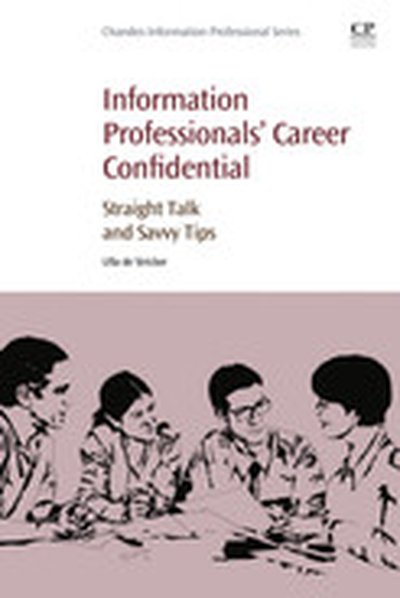
Based in part on a selection of the author's past blog postings, Information Professionals' Career Confidential is a convenient, browsable, and illuminating pocket compendium of insights on topics relevant for information and knowledge professionals at any stage of their careers. This book collects comments on matters of interest to new and experienced information professionals alike in 1-2 minute “quick takes, inviting further thought. Topics range from the value of knowledge management and effective communication in organizations to assessing employers’ perception of information professionals and how best to increase one’s value through professional organizations and volunteering. This unique resource will be illuminating for anyone in library and information science, career development, or knowledge and information management. Raises questions – in a lively and concise manner – relevant for information professionals Offers readers the opportunity to read entries one at a time for reflection, or to read the entire book and then go back to certain entries to consolidate the meaning Presents ideas and concepts from thoughtful perspectives in a style designed to make professionals and students reflect on their own careers
Our new 2015 Edition of O'Reilly's Women in Data report reveals inspiring stories of success and insights from four women working in data, across the European Union. Now featuring a total of 19 interviews with women who are central to data businesses, authors Cornelia Lévy-Bencheton and Shannon Cutt uncover strategies for success for women in the field of data, and anyone interested in pursuing or advancing their career in data. While women are still an underrepresented minority in the disciplines of science, technology, engineering, and math (STEM), women in data and technology are no longer outliers. With this report, you'll learn how a remarkable group of women in data achieved their current level of success, what motivated them to get there, and their views about opportunities for women in the field. The stories in this book are inspiring, revealing insights that will widen the path for even more women in tech. These interviews explore: The expanding role of the contemporary data scientist New attitudes towards women in data among Millennials Benefits of the data and STEM fields as a career choice for women Remedies for closing the gender gap
Data Scientists at Work is a collection of interviews with sixteen of the world's most influential and innovative data scientists from across the spectrum of this hot new profession. "Data scientist is the sexiest job in the 21st century," according to the Harvard Business Review. By 2018, the United States will experience a shortage of 190,000 skilled data scientists, according to a McKinsey report. Through incisive in-depth interviews, this book mines the what, how, and why of the practice of data science from the stories, ideas, shop talk, and forecasts of its preeminent practitioners across diverse industries: social network (Yann LeCun, Facebook); professional network (Daniel Tunkelang, LinkedIn); venture capital (Roger Ehrenberg, IA Ventures); enterprise cloud computing and neuroscience (Eric Jonas, formerly Salesforce.com); newspaper and media (Chris Wiggins, The New York Times); streaming television (Caitlin Smallwood, Netflix); music forecast (Victor Hu, Next Big Sound); strategic intelligence (Amy Heineike, Quid); environmental big data (Andre´ Karpis?ts?enkoEach of these data scientists shares how he or she tailors the torrent-taming techniques of big data, data visualization, search, and statistics to specific jobs by dint of ingenuity, imagination, patience, and passion. , Planet OS); geospatial marketing intelligence (Jonathan Lenaghan, PlaceIQ); advertising (Claudia Perlich, Dstillery); fashion e-commerce (Anna Smith, Rent the Runway); specialty retail (Erin Shellman, Nordstrom); email marketing (John Foreman, MailChimp); predictive sales intelligence (Kira Radinsky, SalesPredict); and humanitarian nonprofit (Jake Porway, DataKind). The book features a stimulating foreword by Google's Director of Research, Peter Norvig. Data Scientists at Work parts the curtain on the interviewees’ earliest data projects, how they became data scientists, their discoveries and surprises in working with data, their thoughts on the past, present, and future of the profession, their experiences of team collaboration within their organizations, and the insights they have gained as they get their hands dirty refining mountains of raw data into objects of commercial, scientific, and educational value for their organizations and clients.
Learn what it takes to succeed in the the most in-demand tech job Harvard Business Review calls it the sexiest tech job of the 21st century. Data scientists are in demand, and this unique book shows you exactly what employers want and the skill set that separates the quality data scientist from other talented IT professionals. Data science involves extracting, creating, and processing data to turn it into business value. With over 15 years of big data, predictive modeling, and business analytics experience, author Vincent Granville is no stranger to data science. In this one-of-a-kind guide, he provides insight into the essential data science skills, such as statistics and visualization techniques, and covers everything from analytical recipes and data science tricks to common job interview questions, sample resumes, and source code. The applications are endless and varied: automatically detecting spam and plagiarism, optimizing bid prices in keyword advertising, identifying new molecules to fight cancer, assessing the risk of meteorite impact. Complete with case studies, this book is a must, whether you're looking to become a data scientist or to hire one. Explains the finer points of data science, the required skills, and how to acquire them, including analytical recipes, standard rules, source code, and a dictionary of terms Shows what companies are looking for and how the growing importance of big data has increased the demand for data scientists Features job interview questions, sample resumes, salary surveys, and examples of job ads Case studies explore how data science is used on Wall Street, in botnet detection, for online advertising, and in many other business-critical situations Developing Analytic Talent: Becoming a Data Scientist is essential reading for those aspiring to this hot career choice and for employers seeking the best candidates.