talk-data.com talk-data.com

Topic

data-warehouse

43

tagged

Activity Trend

1 peak/qtr
2020-Q1 2026-Q1

Activities

43 activities · Newest first

Data Warehouse Designs

This book presents two data warehouse solutions that deliver significant ROI; market basket analysis, approached as a database design issue rather than a data model issue; and time variance or temporal data, which present past events in their historical context. The former is available to any enterprise with a data warehouse, while the latter provides a simple design that accommodates large data volumes. The text combines these two database designs into one design, which performs market basket analysis of transactions in their historical context.

Data Architecture

Data Architecture: From Zen to Reality explains the principles underlying data architecture, how data evolves with organizations, and the challenges organizations face in structuring and managing their data. Using a holistic approach to the field of data architecture, the book describes proven methods and technologies to solve the complex issues dealing with data. It covers the various applied areas of data, including data modelling and data model management, data quality, data governance, enterprise information management, database design, data warehousing, and warehouse design. This text is a core resource for anyone customizing or aligning data management systems, taking the Zen-like idea of data architecture to an attainable reality. The book presents fundamental concepts of enterprise architecture with definitions and real-world applications and scenarios. It teaches data managers and planners about the challenges of building a data architecture roadmap, structuring the right team, and building a long term set of solutions. It includes the detail needed to illustrate how the fundamental principles are used in current business practice. The book is divided into five sections, one of which addresses the software-application development process, defining tools, techniques, and methods that ensure repeatable results. Data Architecture is intended for people in business management involved with corporate data issues and information technology decisions, ranging from data architects to IT consultants, IT auditors, and data administrators. It is also an ideal reference tool for those in a higher-level education process involved in data or information technology management. Presents fundamental concepts of enterprise architecture with definitions and real-world applications and scenarios Teaches data managers and planners about the challenges of building a data architecture roadmap, structuring the right team, and building a long term set of solutions Includes the detail needed to illustrate how the fundamental principles are used in current business practice

Data Integration Blueprint and Modeling: Techniques for a Scalable and Sustainable Architecture

Making Data Integration Work: How to Systematically Reduce Cost, Improve Quality, and Enhance Effectiveness Today’s enterprises are investing massive resources in data integration. Many possess thousands of point-to-point data integration applications that are costly, undocumented, and difficult to maintain. Data integration now accounts for a major part of the expense and risk of typical data warehousing and business intelligence projects--and, as businesses increasingly rely on analytics, the need for a blueprint for data integration is increasing now more than ever. This book presents the solution: a clear, consistent approach to defining, designing, and building data integration components to reduce cost, simplify management, enhance quality, and improve effectiveness. Leading IBM data management expert Tony Giordano brings together best practices for architecture, design, and methodology, and shows how to do the disciplined work of getting data integration right. Mr. Giordano begins with an overview of the “patterns” of data integration, showing how to build blueprints that smoothly handle both operational and analytic data integration. Next, he walks through the entire project lifecycle, explaining each phase, activity, task, and deliverable through a complete case study. Finally, he shows how to integrate data integration with other information management disciplines, from data governance to metadata. The book’s appendices bring together key principles, detailed models, and a complete data integration glossary. Coverage includes Implementing repeatable, efficient, and well-documented processes for integrating data Lowering costs and improving quality by eliminating unnecessary or duplicative data integrations Managing the high levels of complexity associated with integrating business and technical data Using intuitive graphical design techniques for more effective process and data integration modeling Building end-to-end data integration applications that bring together many complex data sources

DW 2.0: The Architecture for the Next Generation of Data Warehousing

DW 2.0: The Architecture for the Next Generation of Data Warehousing is the first book on the new generation of data warehouse architecture, DW 2.0, by the father of the data warehouse. The book describes the future of data warehousing that is technologically possible today, at both an architectural level and technology level. The perspective of the book is from the top down: looking at the overall architecture and then delving into the issues underlying the components. This allows people who are building or using a data warehouse to see what lies ahead and determine what new technology to buy, how to plan extensions to the data warehouse, what can be salvaged from the current system, and how to justify the expense at the most practical level. This book gives experienced data warehouse professionals everything they need in order to implement the new generation DW 2.0. It is designed for professionals in the IT organization, including data architects, DBAs, systems design and development professionals, as well as data warehouse and knowledge management professionals. First book on the new generation of data warehouse architecture, DW 2.0 Written by the "father of the data warehouse", Bill Inmon, a columnist and newsletter editor of The Bill Inmon Channel on the Business Intelligence Network Long overdue comprehensive coverage of the implementation of technology and tools that enable the new generation of the DW: metadata, temporal data, ETL, unstructured data, and data quality control

Data Warehousing Fundamentals for IT Professionals

Cutting-edge content and guidance from a data warehousing expert—now expanded to reflect field trends Data warehousing has revolutionized the way businesses in a wide variety of industries perform analysis and make strategic decisions. Since the first edition of Data Warehousing Fundamentals, numerous enterprises have implemented data warehouse systems and reaped enormous benefits. Many more are in the process of doing so. Now, this new, revised edition covers the essential fundamentals of data warehousing and business intelligence as well as significant recent trends in the field. The author provides an enhanced, comprehensive overview of data warehousing together with in-depth explanations of critical issues in planning, design, deployment, and ongoing maintenance. IT professionals eager to get into the field will gain a clear understanding of techniques for data extraction from source systems, data cleansing, data transformations, data warehouse architecture and infrastructure, and the various methods for information delivery. This practical Second Edition highlights the areas of data warehousing and business intelligence where high-impact technological progress has been made. Discussions on developments include data marts, real-time information delivery, data visualization, requirements gathering methods, multi-tier architecture, OLAP applications, Web clickstream analysis, data warehouse appliances, and data mining techniques. The book also contains review questions and exercises for each chapter, appropriate for self-study or classroom work, industry examples of real-world situations, and several appendices with valuable information. Specifically written for professionals responsible for designing, implementing, or maintaining data warehousing systems, Data Warehousing Fundamentals presents agile, thorough, and systematic development principles for the IT professional and anyone working or researching in information management.

The Kimball Group Reader: Relentlessly Practical Tools for Data Warehousing and Business Intelligence

An unparalleled collection of recommended guidelines for data warehousing and business intelligence pioneered by Ralph Kimball and his team of colleagues from the Kimball Group. Recognized and respected throughout the world as the most influential leaders in the data warehousing industry, Ralph Kimball and the Kimball Group have written articles covering more than 250 topics that define the field of data warehousing. For the first time, the Kimball Group's incomparable advice, design tips, and best practices have been gathered in this remarkable collection of articles, which spans a decade of data warehousing innovation. Each group of articles is introduced with original commentaries that explain their role in the overall lifecycle methodology developed by the Kimball Group. These practical, hands-on articles are fully updated to reflect current practices and terminology and cover the complete lifecycle—including project planning, requirements gathering, dimensional modeling, ETL, and business intelligence and analytics. This easily referenced collection is nothing less than vital if you are involved with data warehousing or business intelligence in any capacity.

Strategic Data Warehousing

Organization of data warehouses are vital but often ignored aspects of growing enterprises. This work merges technological know-how with managerial practices to show both the business manager and the IT professional how better alignment between data warehouse plans and business strategies can lead to a successful data warehouse adoption that will support the entire infrastructure. More complete than any other text in the field, this resource also addresses the managerial and strategic aspects of data warehouses, offering doable solutions that will allow for the strategic alignment of these warehouses while building them and ensuring that this alignment is sustained.

A Manager's Guide to Data Warehousing

Aimed at helping business and IT managers clearly communicate with each other, this helpful book addresses concerns straight-on and provides practical methods to building a collaborative data warehouse. You’ll get clear explanations of the goals and objectives of each stage of the data warehouse lifecycle while learning the roles that both business managers and technicians play at each stage. Discussions of the most critical decision points for success at each phase of the data warehouse lifecycle help you understand ways in which both business and IT management can make decisions that best meet unified objectives.

Data Warehousing For Dummies®, 2nd Edition

Data warehousing is one of the hottest business topics, and there’s more to understanding data warehousing technologies than you might think. Find out the basics of data warehousing and how it facilitates data mining and business intelligence with Data Warehousing For Dummies, 2nd Edition. Data is probably your company’s most important asset, so your data warehouse should serve your needs. The fully updated Second Edition of Data Warehousing For Dummies helps you understand, develop, implement, and use data warehouses, and offers a sneak peek into their future. You’ll learn to: Analyze top-down and bottom-up data warehouse designs Understand the structure and technologies of data warehouses, operational data stores, and data marts Choose your project team and apply best development practices to your data warehousing projects Implement a data warehouse, step by step, and involve end-users in the process Review and upgrade existing data storage to make it serve your needs Comprehend OLAP, column-wise databases, hardware assisted databases, and middleware Use data mining intelligently and find what you need Make informed choices about consultants and data warehousing products Data Warehousing For Dummies, 2nd Edition also shows you how to involve users in the testing process and gain valuable feedback, what it takes to successfully manage a data warehouse project, and how to tell if your project is on track. You’ll find it’s the most useful source of data on the topic!

The Data Warehouse Lifecycle Toolkit

The world of data warehousing has changed remarkably since the first edition of The Data Warehouse Lifecycle Toolkit was published in 1998. With this new edition, Ralph Kimball and his colleagues have refined the original set of Lifecycle methods and techniques based on their consulting and training experience. They walk you through the detailed steps of designing, developing, and deploying a data warehousing/business intelligence system. With substantial new and updated content, this second edition again sets the standard in data warehousing for the next decade.

Oracle® Data Warehousing and Business Intelligence Solutions

Up-to-date, comprehensive coverage of the Oracle database and business intelligence tools Written by a team of Oracle insiders, this authoritative book provides you with the most current coverage of the Oracle data warehousing platform as well as the full suite of business intelligence tools. You'll learn how to leverage Oracle features and how those features can be used to provide solutions to a variety of needs and demands. Plus, you'll get valuable tips and insight based on the authors' real-world experiences and their own implementations. Avoid many common pitfalls while learning best practices for: Leveraging Oracle technologies to design, build, and manage data warehouses Integrating specific database and business intelligence solutions from other vendors Using the new suite of Oracle business intelligence tools to analyze data for marketing, sales, and more Handling typical data warehouse performance challenges Uncovering initiatives by your business community, security business sponsorship, project staffing, and managing risk

Leveraging DB2 Data Warehouse Edition for Business Intelligence

In this IBM Redbooks publication we describe and discuss DB2 Data Warehouse Edition (DWE) Version 9.1, a comprehensive platform offering with functionality to build a business intelligence infrastructure for analytics and Web-based applications, and best practices for deployment. DB2 DWE integrates core components for data warehouse construction and administration, data mining, OLAP, and InLine Analytics and reporting. It extends the DB2 data warehouse with design-side tooling and runtime infrastructure for OLAP, data mining, InLine Analytics, and intra-warehouse data movement and transformation, on a common platform based on DB2 and WebSphere. The platform pillars are based on the technology of DB2, Rational Data Architect (for physical data modeling only), the SQL Warehousing Tool, Intelligent Miner, DB2 Cube Views, and Alphablox. DWE includes an Eclipse-based design environment, DWE Design Studio, that integrates the DWE products (with the exception of Alphablox and Query Patroller) with a common framework and user interface. The new SQL Warehousing Tool enables visual design of intra-warehouse, table-to-table data flows and control flows using generated SQL. DB2 Alphablox is the tool for developing custom applications with embedded analytics-based visual components. DWE enables faster time-to-value for enterprise analytics, while limiting the number of vendors, tools, skill sets and licenses required.

Building the Data Warehouse

The new edition of the classic bestseller that launched the data warehousing industry covers new approaches and technologies, many of which have been pioneered by Inmon himself In addition to explaining the fundamentals of data warehouse systems, the book covers new topics such as methods for handling unstructured data in a data warehouse and storing data across multiple storage media Discusses the pros and cons of relational versus multidimensional design and how to measure return on investment in planning data warehouse projects Covers advanced topics, including data monitoring and testing Although the book includes an extra 100 pages worth of valuable content, the price has actually been reduced from $65 to $55

Moving Objects Databases

Moving Objects Databases is the first uniform treatment of moving objects databases, the technology that supports GPS and RFID. It focuses on the modeling and design of data from moving objects — such as people, animals, vehicles, hurricanes, forest fires, oil spills, armies, or other objects — as well as the storage, retrieval, and querying of that very voluminous data. It includes homework assignments at the end of each chapter, exercises throughout the text that students can complete as they read, and a solutions manual in the back of the book. This book is intended for graduate or advanced undergraduate students. It is also recommended for computer scientists and database systems engineers and programmers in government, industry and academia; professionals from other disciplines, e.g., geography, geology, soil science, hydrology, urban and regional planning, mobile computing, bioterrorism and homeland security, etc. Focuses on the modeling and design of data from moving objects--such as people, animals, vehicles, hurricanes, forest fires, oil spills, armies, or other objects--as well as the storage, retrieval, and querying of that very voluminous data. Demonstrates through many practical examples and illustrations how new concepts and techniques are used to integrate time and space in database applications. Provides exercises and solutions in each chapter to enable the reader to explore recent research results in practice.

Implementing Tivoli Data Warehouse V 1.2

With Tivoli Data Warehouse, you can analyze historical trends from various Tivoli and customer applications. The Tivoli Data Warehouse infrastructure enables a set of extract, transform, and load (ETL) utilities to extract and move data from Tivoli application data stores to a central repository. The open architecture of Tivoli Data Warehouse also enables data from non-Tivoli applications to be integrated into its central repository. Data from the central repository can be extracted into data marts that pertain to the reporting needs of selected groups. These data marts can also be used to produce cross application reports. This IBM Redbooks publication focuses on planning, installation, customization, use, maintenance, and troubleshooting topics related to the new features of the Tivoli Data Warehouse version 1.2. This is done using a number of case study scenarios and several warehouse enablement packs. The instructions given in this book are very detailed and explicit. These instructions are not the only way to install the products and related prerequisites. They are meant to be followed by anyone to successfully install, configure, and set up Tivoli Data Warehouse environments of any size.

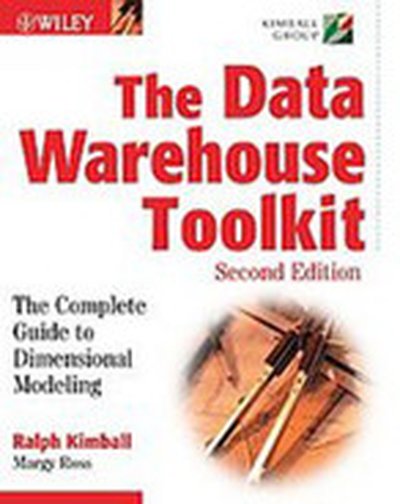
The Data Warehouse Toolkit: The Complete Guide to Dimensional Modeling

Single most authoritative guide from the inventor of the technique. Presents unique modeling techniques for e-commerce, and shows strategies for optimizing performance. Companion Web site provides updates on dimensional modeling techniques, links related to sites, and source code where appropriate.

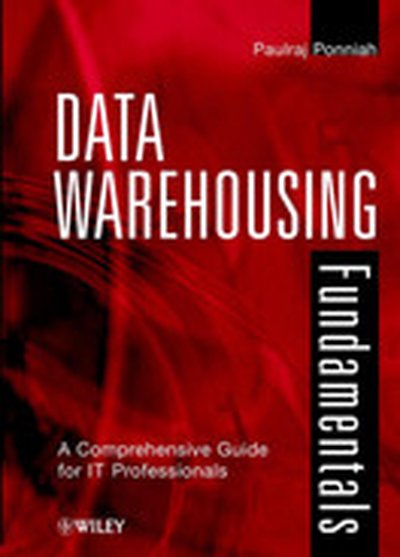
DATA WAREHOUSING FUNDAMENTALS: A Comprehensive Guide for IT Professionals

Geared to IT professionals eager to get into the all-important field of data warehousing, this book explores all topics needed by those who design and implement data warehouses. Readers will learn about planning requirements, architecture, infrastructure, data preparation, information delivery, implementation, and maintenance. They'll also find a wealth of industry examples garnered from the author's 25 years of experience in designing and implementing databases and data warehouse applications for major corporations. Market: IT Professionals, Consultants.

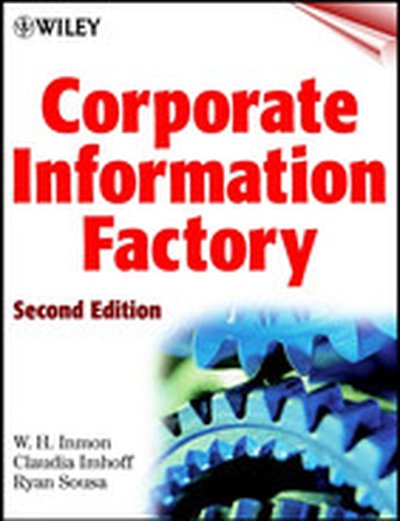
Corporate Information Factory

The "father of data warehousing" incorporates the latest technologies into his blueprint for integrated decision support systems Today's corporate IT and data warehouse managers are required to make a small army of technologies work together to ensure fast and accurate information for business managers. Bill Inmon created the to solve the needs of these managers. Since the First Edition, the design of the factory has grown and changed dramatically. This Second Edition, revised and expanded by 40% with five new chapters, incorporates these changes. This step-by-step guide will enable readers to connect their legacy systems with the data warehouse and deal with a host of new and changing technologies, including Web access mechanisms, e-commerce systems, ERP (Enterprise Resource Planning) systems. The book also looks closely at exploration and data mining servers for analyzing customer behavior and departmental data marts for finance, sales, and marketing. Corporate Information Factory

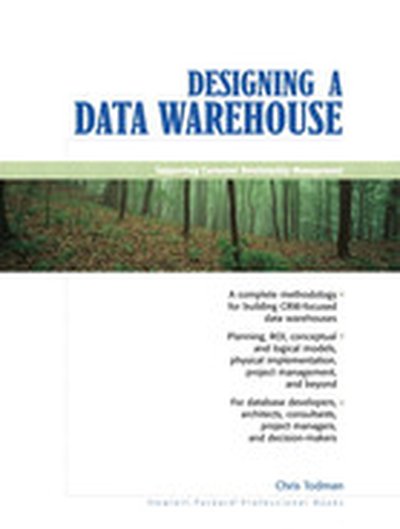
Designing a Data Warehouse: Supporting Customer Relationship Management

The complete guide to building tomorrow's CRM-focused data warehouses. A complete methodology for building CRM-focused data warehouses Planning, ROI, conceptual and logical models, physical implementation, project management, and beyond For database developers, architects, consultants, project managers, and decision-makers Today's next-generation data warehouses are being built with a clear goal: to maximize the power of Customer Relationship Management. To make CRM-focused data warehousing work, you need new techniques, and new methodologies. In this book, Dr. Chris Todman—one of the world's leading data warehouse consultants—delivers the first start-to-finish methodology for defining, designing, and implementing CRM-focused data warehouses. Todman covers all this, and more: Critical design challenges unique to CRM-focused data warehousing A new look at data warehouse conceptual models, logical models, and physical implementation The crucial implications of time in data warehouse modeling and querying Project management: deliverables, assumptions, risks, and team-building—including a full breakdown of work Estimating the ROI of CRM-focused data warehouses up front Choosing software for loading, extraction, transformation, querying, data mining, campaign management, personalization, and metadata DW futures: temporal databases, OLAP SQL extensions, active decision support, integrating external and unstructured data, search agents, and more If you want to leverage the full power of your CRM system, you need a data warehouse designed for the purpose. One book shows you exactly how to build one: Designing Data Warehouses by Dr. Chris Todman.