talk-data.com talk-data.com

Topic

RDBMS

Relational Database Management System (RDBMS)

databases sql data_storage

134

tagged

Activity Trend

5 peak/qtr
2020-Q1 2026-Q1

Activities

Showing filtered results

Filtering by: O'Reilly Data Engineering Books ×
Database Design Using Entity-Relationship Diagrams, 2nd Edition

Essential to database design, entity-relationship (ER) diagrams are known for their usefulness in mapping out clear database designs. They are also well-known for being difficult to master. With Database Design Using Entity-Relationship Diagrams, Second Edition, database designers, developers, and students preparing to enter the field can quickly learn the ins and outs of ER diagramming. Building on the success of the bestselling first edition, this accessible text includes a new chapter on the relational model and functional dependencies. It also includes expanded chapters on Enhanced Entity Relationship (EER) diagrams and reverse mapping. It uses cutting-edge case studies and examples to help readers master database development basics and defines ER and EER diagramming in terms of requirements (end user requests) and specifications (designer feedback to those requests). Describes a step-by-step approach for producing an ER diagram and developing a relational database from it Contains exercises, examples, case studies, bibliographies, and summaries in each chapter Details the rules for mapping ER diagrams to relational databases Explains how to reverse engineer a relational database back to an entity-relationship model Includes grammar for the ER diagrams that can be presented back to the user The updated exercises and chapter summaries provide the real-world understanding needed to develop ER and EER diagrams, map them to relational databases, and test the resulting relational database. Complete with a wealth of additional exercises and examples throughout, this edition should be a basic component of any database course. Its comprehensive nature and easy-to-navigate structure makes it a resource that students and professionals will turn to throughout their careers.

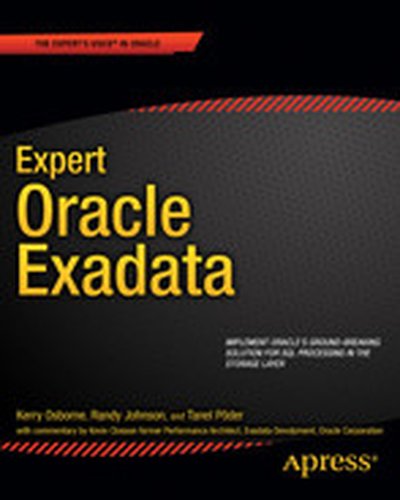
Expert Oracle Exadata

Throughout history, advances in technology have come in spurts. A single great idea can often spur rapid change as the idea takes hold and is propagated, often in totally unexpected directions. Exadata embodies such a change in how we think about and manage relational databases. The key change lies in the concept of offloading SQL processing to the storage layer. That concept is a huge win, and its implementation in the form of Exadata is truly a game changer. Expert Oracle Exadata will give you a look under the covers at how the combination of hardware and software that comprise Exadata actually work. Authors Kerry Osborne, Randy Johnson, and Tanel Pöder share their real-world experience, gained through multiple Exadata implementations with the goal of opening up the internals of the Exadata platform. This book is intended for readers who want to understand what makes the platform tick and for whom—"how" it does what it is does is as important as what it does. By being exposed to the features that are unique to Exadata, you will gain an understanding of the mechanics that will allow you to fully benefit from the advantages that the platform provides. Will changes the way you think about managing SQL performance and processing Provides a roadmap to laying out the Exadata platform to best support your existing systems Dives deeply into the internals, removing the "black box" mystique and showing how Exadata actually works What you'll learn Configure Exadata from the ground up Optimize for mixed OLTP/DW workloads Migrate large data sets from existing systems Connect Exadata to external systems Support consolidation stratigies using the Resource Manager Configure high-availability features of Exadata, including real application clusters (RAC) and automatic storage management (ASM) Apply tuning strategies utilizing the unique features of Exadata Who this book is for Expert Oracle Exadata is for database administrators and developers who want to understand what makes Exadata unique so that they can take advantage of all the platform has to offer. It is also for anyone who needs to plan and execute migrations of systems to the Exadata platform. Finally, the book will be invaluable to those who support and maintain such systems.

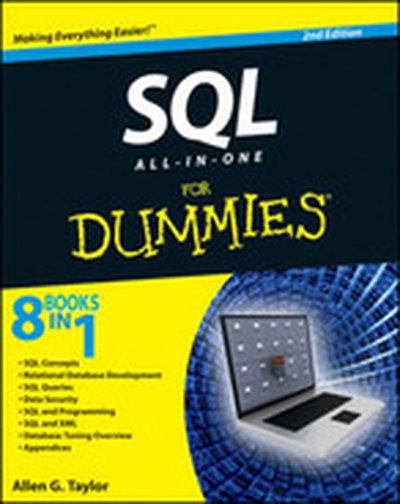
SQL All-in-One For Dummies®, 2nd Edition

The soup-to-nuts guide on all things SQL! SQL, or structured query language, is the international standard language for creating and maintaining relational databases. It is the basis of all major databases in use today and is essential for the storage and retrieval of database information. This fun and friendly guide takes SQL and all its related topics and breaks it down into easily digestible pieces for you to understand. You'll get the goods on relational database design, development, and maintenance, enabling you to start working with SQL right away! Provides an overview of the SQL language and examines how it is integral for the storage and retrieval of database information Includes updates to SQL standards as well as any new features Explores SQL concepts, relational database development, SQL queries, data security, database tuning, and more Addresses the relationship between SQL and programming as well as SQL and XML If you're looking for an up-to-date sequel to the bestelling first edition of SQL All-in-One For Dummies, then this is the book for you!

Practical Guide to using SQL in Oracle

Structured Query Language has become the standard for generating, manipulating, and retrieving database information. The dramatic increase in the popularity of relational databases, coupled with Oracle’s having the largest market share, has created a demand for programmers who can write SQL code correctly and efficiently.

This book provides a systematic approach to learning SQL in Oracle. Each chapter is written in a step-by-step manner and includes examples that can be run using Oracle. Using the sample tables and data provided, readers will be able to perform the examples to gain hands-on experience with Oracle programming.

Gain an understanding of basic SQL principles. Learn to generate, store, and edit SQL queries in Oracle. Develop joins, subqueries, and correlated subqueries. Work with XML and Oracle databases. Test your SQL knowledge with the exercises at the end of each chapter!

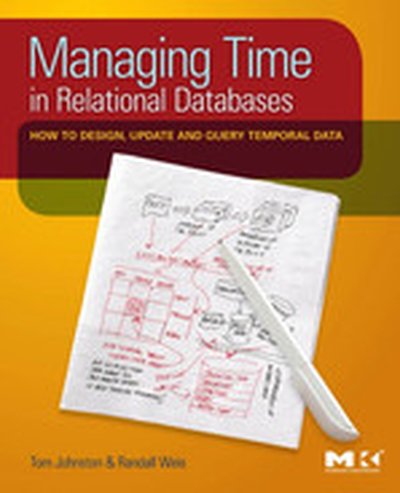
Managing Time in Relational Databases

Managing Time in Relational Databases: How to Design, Update and Query Temporal Data introduces basic concepts that will enable businesses to develop their own framework for managing temporal data. It discusses the management of uni-temporal and bi-temporal data in relational databases, so that they can be seamlessly accessed together with current data; the encapsulation of temporal data structures and processes; ways to implement temporal data management as an enterprise solution; and the internalization of pipeline datasets. The book is organized into three parts. Part 1 traces the history of temporal data management and presents a taxonomy of bi-temporal data management methods. Part 2 provides an introduction to Asserted Versioning, covering the origins of Asserted Versioning; core concepts of Asserted Versioning; the schema common to all asserted version tables, as well as the various diagrams and notations used in the rest of the book; and how the basic scenario works when the target of that activity is an asserted version table. Part 3 deals with designing, maintaining, and querying asserted version databases. It discusses the design of Asserted Versioning databases; temporal transactions; deferred assertions and other pipeline datasets; Allen relationships; and optimizing Asserted Versioning databases. Integrates an enterprise-wide viewpoint with a strong conceptual model of temporal data management allowing for realistic implementation of database application development. Provides a true practical guide to the different possible methods of time-oriented databases with techniques of using existing funtionality to solve real world problems within an enterprise data architecture environment. Written by IT professionals for IT professionals, this book employs a heavily example-driven approach which reinforces learning by showing the results of puting the techniques discussed into practice.

Information Modeling and Relational Databases, 2nd Edition

Information Modeling and Relational Databases, Second Edition, provides an introduction to ORM (Object-Role Modeling)and much more. In fact, it is the only book to go beyond introductory coverage and provide all of the in-depth instruction you need to transform knowledge from domain experts into a sound database design. This book is intended for anyone with a stake in the accuracy and efficacy of databases: systems analysts, information modelers, database designers and administrators, and programmers. Terry Halpin, a pioneer in the development of ORM, blends conceptual information with practical instruction that will let you begin using ORM effectively as soon as possible. Supported by examples, exercises, and useful background information, his step-by-step approach teaches you to develop a natural-language-based ORM model, and then, where needed, abstract ER and UML models from it. This book will quickly make you proficient in the modeling technique that is proving vital to the development of accurate and efficient databases that best meet real business objectives. Presents the most indepth coverage of Object-Role Modeling available anywhere, including a thorough update of the book for ORM2, as well as UML2 and E-R (Entity-Relationship) modeling Includes clear coverage of relational database concepts, and the latest developments in SQL and XML, including a new chapter on the impact of XML on information modeling, exchange and transformation New and improved case studies and exercises are provided for many topics

Joe Celko's Analytics and OLAP in SQL

Joe Celko's Analytics and OLAP in SQL is the first book that teaches what SQL programmers need in order to successfully make the transition from On-Line Transaction Processing (OLTP) systems into the world of On-Line Analytical Processing (OLAP). This book is not an in-depth look at particular subjects, but an overview of many subjects that will give the working RDBMS programmers a map of the terra incognita they will face — if they want to grow. It contains expert advice from a noted SQL authority and award-winning columnist, who has given ten years of service to the ANSI SQL standards committee and many more years of dependable help to readers of online forums. It offers real-world insights and lots of practical examples. It covers the OLAP extensions in SQL-99; ETL tools, OLAP features supported in DBMSs, other query tools, simple reports, and statistical software. This book is ideal for experienced SQL programmers who have worked with OLTP systems who need to learn techniques—and even some tricks—that they can use in an OLAP situation. Expert advice from a noted SQL authority and award-winning columnist, who has given ten years of service to the ANSI SQL standards committee and many more years of dependable help to readers of online forums First book that teaches what SQL programmers need in order to successfully make the transition from transactional systems (OLTP) into the world of data warehouse data and OLAP Offers real-world insights and lots of practical examples Covers the OLAP extensions in SQL-99; ETL tools, OLAP features supported in DBMSs, other query tools, simple reports, and statistical software

Physical Database Design

The rapidly increasing volume of information contained in relational databases places a strain on databases, performance, and maintainability: DBAs are under greater pressure than ever to optimize database structure for system performance and administration. Physical Database Design discusses the concept of how physical structures of databases affect performance, including specific examples, guidelines, and best and worst practices for a variety of DBMSs and configurations. Something as simple as improving the table index design has a profound impact on performance. Every form of relational database, such as Online Transaction Processing (OLTP), Enterprise Resource Management (ERP), Data Mining (DM), or Management Resource Planning (MRP), can be improved using the methods provided in the book. The first complete treatment on physical database design, written by the authors of the seminal, Database Modeling and Design: Logical Design, Fourth Edition Includes an introduction to the major concepts of physical database design as well as detailed examples, using methodologies and tools most popular for relational databases today: Oracle, DB2 (IBM), and SQL Server (Microsoft) Focuses on physical database design for exploiting B+tree indexing, clustered indexes, multidimensional clustering (MDC), range partitioning, shared nothing partitioning, shared disk data placement, materialized views, bitmap indexes, automated design tools, and more!

SQL For Dummies®, 7th Edition

Learn SQL the fun and easy way – no programming experience needed! SQL For Dummies, 7th Edition, shows programmers and web developers how to use SQL to build relational databases and get valuable information from them. This book covers the core features of the SQL language. Topics covered include how to use SQL to structure a DBMS and implement a database design; secure a database; and retrieve information from a database. This edition will be revised to reflect the new enhancements of SQL/XML:2008. The latest update of the perennial bestselling SQL For Dummies, which has sold more than 210,000 units in six editions. SQL is the most popular database language in the world Covers creating, accessing, manipulating, maintaining, and storing information in relational database management systems (DBMS) such as Access, Oracle, SQL Server, and MySQL. Includes new content on using SQL with XML to power data-driven web sites and using SQL with Access 2010 Whether you're daunted by database development or a system admin star, SQL For Dummies, 7th Dummies will have you working your web site in no time at all.

Joe Celko's Data, Measurements and Standards in SQL

Joe Celko has looked deep into the code of SQL programmers and found a consistent and troubling pattern - a frightening lack of consistency between their individual encoding schemes and those of the industries in which they operate. This translates into a series of incompatible databases, each one an island unto itself that is unable to share information with others in an age of internationalization and business interdependence. Such incompatibility severely hinders information flow and the quality of company data. Data, Measurements and Standards in SQL reveals the shift these programmers need to make to overcome this deadlock. By collecting and detailing the diverse standards of myriad industries, and then giving a declaration for the units that can be used in an SQL schema, Celko enables readers to write and implement portable data that can interface to any number of external application systems! This book doesn't limit itself to one subject, but serves as a detailed synopsis of measurement scales and data standards for all industries, thereby giving RDBMS programmers and designers the knowledge and know-how they need to communicate effectively across business boundaries. * Collects and details the diverse data standards of myriad industries under one cover, thereby creating a definitive, one-stop-shopping opportunity for database programmers. * Enables readers to write and implement portable data that can interface to any number external application systems, allowing readers to cross business boundaries and move up the career ladder. * Expert advice from one of the most-read SQL authors in the world who is well known for his ten years of service on the ANSI SQL standards committee and Readers Choice Award winning column in Intelligent Enterprise.

Microsoft® SQL Server™ 2008 Analysis Services Unleashed

As the foundation of the Microsoft Business Intelligence Strategy, Microsoft SQL Server 2008 Analysis Services provides users with faster access to data and even more tools for managing and analyzing data across multidimensional objects (databases, dimensions, cubes). Microsoft SQL Server 2008 Analysis Services Unleashed is the ultimate guide for anyone who is planning to use the latest version of Analysis Services. It gives readers insight into the way Analysis Services functions, and explains practical methods for designing and creating multidimensional objects. It also provides valuable insight into the reasons behind the design decisions taken by the product development team. The authors have been involved with Analysis Services from its earliest days. They have documented in detail the internal features of Analysis Services 2008, explaining server architecture, main data structures, data processing, and query resolution algorithms. Discover the new functionality introduced in Analysis Services 2008 including MDX enhancements and new DMV (dynamic memory views) Work with the Business Intelligence Development Studio, the new Dimension Editor, and Aggregation Designer interfaces Enjoy complete coverage of new Shared Scalable Databases scale-out infrastructure Learn the key concepts of multidimensional modeling Explore the multidimensional object model and its definition language Integrate multidimensional and relational databases Build client applications to access data in Analysis Services Unravel the inner workings of the server architecture, including main data structures, data processing, and query resolution algorithms Learn the main concepts of the MDX language and gain an in-depth understanding of advanced MDX concepts Gain a deeper understanding of the internal and external protocols for data transfer, including the XML/A protocol Discover how Analysis Services manages memory Explore the security model, including role-based security, code-access security, and data security Category: Microsoft SQL Server Covers: Microsoft SQL Server 2008 Analysis Services User Level: Intermediate-Advanced $59.99 USA / $65.99 CAN / £38.99 Net UK±

Beginning Database Design Solutions

This book is intended for IT professionals and students who want to learn how to design, analyze, and understand databases. The material will benefit those who want a better high-level understanding of databases such as proposal managers, architects, project managers, and even customers. The material will also benefit those who will actually design, build, and work with databases such as database designers, database administrators, and programmers. In many projects, these roles overlap so the same person may be responsible for working on the proposal, managing part of the project, and designing and creating the database. This book is aimed at IT professionals and students of all experience levels. It does not assume that you have any previous experience with databases or programs that use them. It doesn't even assume that you have experience with computers. All you really need is a willingness and desire to learn. This book explains database design. It tells how to plan a database's structure so the database will be robust, resistant to errors, and flexible enough to accommodate a reasonable amount of future change. It explains how to discover database requirements, build data models to study data needs, and refine those models to improve the database's effectiveness. The book solidifies these concepts by working through a detailed example that designs a realistic database. Later chapters explain how to actually build databases using two common database products: Access 2007 and MySQL. The book finishes by describing some of the topics you need to understand to keep a database running effectively such as database maintenance and security. This book explains database design. It tells how to determine what should go in a database and how the database should be structured to give the best results. This book does not focus on actually creating the database. The details of database construction are different for different database tools so, to remain as generally as useful as possible, this book doesn't concentrate on any particular database system. You can apply the techniques described here equally to whatever database tool you use whether it's Access, SQL Server, Oracle, MySQL, or some other database product. Most database products include free editions that you can use for smaller projects. For example, SQL Server Express Edition, Oracle Express Edition, and MySQL Community Server are all free. To remain database neutral, the book does not assume you are using a particular database so you don't need any particular software or hardware. To work through the Exercises, all you really need is a pencil and some paper. You are welcome to type solutions into your computer if you like but you may actually find working with pencil and paper easier than using a graphical design tool to draw pictures, at least until you are comfortable with database design and are ready to pick a computerized design tool. "Goals of Effective Database Design," explains the reasons why people and organizations use databases. It explains a database's purpose and conditions that it must satisfy to be useful. This also describes the basic ACID (Atomicity, Consistency, Isolation, Durability) and CRUD (Create, Read, Update, Delete) features that any good database should have. It explains in high-level general terms what makes a good database and what makes a bad database. "Database Types," explains some of the different types of databases that you might decide to use. These include flat files, spreadsheets, hierarchical databases (XML), object databases, and relational databases. The relational database is one of the most powerful and most commonly used forms of database so it is the focus of this book, but it is important to realize that there are alternatives that may be more appropriate under certain circumstances. This gives some tips on deciding which kind of database might be best for a particular project. "Relational Database Fundamentals," explains basic relational database concepts such as tables, rows, and columns. It explains the common usage of relational database terms in addition to the more technical terms that are sometimes used by database theorists. It describes different kinds of constraints that databases use to guarantee that the data is stored safely and consistently. "Understanding User Needs," explains how to learn about the users' needs and gather user requirements. It tells how to study the users' current operations, existing databases (if any), and desired improvements. It describes common questions that you can ask to learn about users' operations, desires, and needs, and how to build the results into requirements documents and specifications. This explains what use cases are and tells how to use them and the requirements to guide database design and to measure success. "Translating User Needs into Data Models," introduces data modeling. It explains how to translate the user's conceptual model and the requirements into other more precise models that define the database design rigorously. This describes several database modeling techniques including user-interface models, semantic object models, entity-relationship diagrams, and relational models. "Extracting Business Rules," explains how a database can handle business rules. It explains what business rules are, how they differ from database structure requirements, and how you can identify business rules. This explains the benefits of separating business rules from the database structure and tells how achieve that separation. "Normalizing Data," explains one of the biggest tools in database design: normalization. Normalization techniques allow you to restructure a database to increase its flexibility and make it more robust. This explains the various forms of normalization, emphasizing the stages that are most common and important: first, second, and third normal forms (1NF, 2NF, and 3NF). It explains how each of these kinds of normalization helps prevent errors and tells why it is sometimes better to leave a database slightly less normalized to improve performance. "Designing Databases to Support Software Applications," explains how databases fit into the larger context of application design and lifecycle. This explains how later development depends on the underlying database design. It discusses multi-tier architectures that can help decouple the application and database design so there can be at least some changes to either without requiring changes to the other. "Common Design Patterns," explains some common patterns that are useful in many applications. Some of these techniques include implementing various kinds of relationships among objects, storing hierarchical and network data, recording temporal data, and logging and locking. "Common Design Pitfalls," explains some common design mistakes that occur in database development. It describes problems that can arise from insufficient planning, incorrect normalization, and obsession with ID fields and performance. "User Needs and Requirements," walks through the steps required to analyze the users' problem, define requirements, and create use cases. It describes interviews with fictitious customers that are used to identify the application's needs and translate them into database requirements. "Building a Data Model," translates the requirements gathered in the previous into a series of data models that precisely define the database's structure. This builds user-interface models, entity-relationship diagrams, semantic object models, and relational models to refine the database's initial design. The final relational models match the structure of a relational database fairly closely so they are easy to implement. "Extracting Business Rules," identifies the business rules embedded in the relational model. It shows how to extract those rules in order to separate them logically from the database's structure. This makes the database more robust in the face of future changes to the business rules. "Normalization and Refinement," refines the relational model by normalizing it. It walks through several versions of the database that are in different normal forms. It then selects the degree of normalization that provides a reasonable tradeoff between robust design and acceptable performance. "Microsoft Access," explains how to build a database with Microsoft Access 2007. This explains enough to get started and to use Access to build non-trivial databases. You can use other versions of Access to work through this, although the locations of menus, buttons, and other Access features are different in different versions. "MySQL," explains how to build a database with MySQL. This tells where to download a free version of MySQL. It explains how to use the MySQL Command Line Client as well as some useful graphical tools including MySQL Query Browser and MySQL Workbench. "Introduction to SQL," provides an introduction to SQL (Structured Query Language). It explains how to use SQL commands to add, insert, update, and delete data. By using SQL, you can help insulate a program from the idiosyncrasies of the particular database product that it uses to store data. "Building Databases with SQL Scripts," explains how to use SQL scripts to build a database. It explains the advantages of this technique, such as the ability to create scripts to initialize a database before performing tests. It also explains some of the restrictions on this method, such as the fact that the user must create and delete tables in specific orders to satisfy table relationships. "Database Maintenance," describes some of the database maintenance issues that are part of any database application. Though performing and restoring backups, compressing tables, rebuilding indexes, and populating data warehouses are strictly not database design tasks, they are essential to any working application. "Database Security," explains database security issues. It explains the kinds of security that some database products provide. It also explains some additional techniques that can enhance database security such as using database views to appropriately restrict the users' access to data.

Oracle Database 11g The Complete Reference

The Definitive Guide to Oracle Database 11 g Get full details on the powerful features of Oracle Database 11 g from this thoroughly updated Oracle Press guide. Oracle Database 11g: The Complete Reference explains how to use all the new features and tools, execute powerful SQL queries, construct PL/SQL and SQLPlus statements, and work with large objects and object-relational databases. Learn how to implement the latest security measures, tune database performance, and deploy grid computing techniques. An invaluable cross-referenced appendix containing Oracle commands, keywords, features, and functions is also included. Install Oracle Database 11 g or upgrade from an earlier version Create database tables, sequences, indexes, views, and user accounts Construct SQL statements, procedures, queries, and subqueries Optimize security using virtual private databases and transparent data encryption Import and export data using SQLLoader and Oracle Data Pump Use SQL replay, change management, and result caching Avoid human errors using flashback and automatic undo management Build and tune PL/SQL triggers, functions, and packages Develop database applications using Java, JDBC, and XML Optimize availability and scalability with Oracle Real Application Clusters

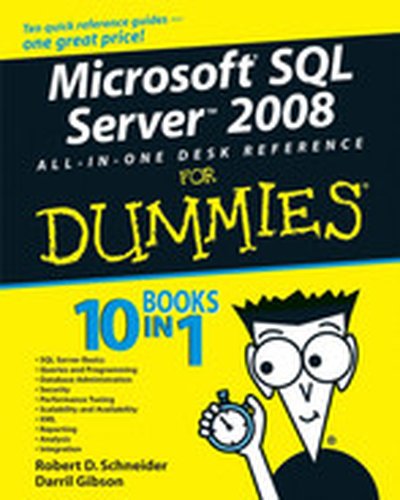
Microsoft® SQL Server™ 2008 All-In-One Desk Reference For Dummies®

If you’re in charge of database administration, developing database software, or looking for database solutions for your company, Microsoft SQL Server 2008 All-In-One Desk Reference For Dummies can help you get a handle on this extremely popular relational database management system. Here you’ll find what’s new in the latest version; how to choose and install the right variation for your needs; how to monitor, maintain, and protect your data; and what it takes to keep your database healthy. You’ll discover how to: Build and maintain tables Design a database and communicate with it Retrieve, analyze, and report data Build solid, robust database applications Use the SQL Server Optimizer and Query Designer Navigate SQL Server with Visual Studio Develop useful reports with the Report Builder and Report Designer Create Business Intelligence solutions with Business Intelligence Development Studio Configure your server and perform major administrative tasks To help you quickly find what you need, Microsoft SQL Server 2008 All-In-One Desk Reference For Dummies is divided into nine minibooks: Essential Concepts Designing and Using Databases Interacting With Your Data Database Programming Reporting Services Analysis Services Performance Tips and Tricks Database Administration Appendixes Microsoft SQL Server 2008 All-In-One Desk Reference For Dummies gets you started, helps you solve problems, and will even answer your questions down the road!

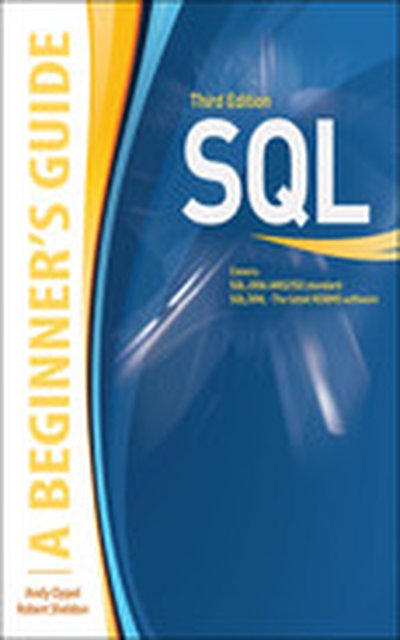
SQL: A Beginner's Guide, Third Edition, 3rd Edition

Essential Skills--Made Easy! Written to the SQL:2006 ANSI/ISO standard, this easy-to-follow guide will get you started programming in SQL right away. You will learn how to retrieve, insert, update, and delete database data, and perform management and administrative functions. SQL: A Beginner's Guide, Third Edition covers new features, including SQL/XML, and is loaded with updated SQL examples along with notes on using them with the latest RDBMS software versions such as MySQL 5.0, SQL Server 2008, and Oracle Database 11g. Designed for Easy Learning: Key Skills & Concepts--Lists of specific skills covered in the chapter Ask the Experts--Q&A sections filled with bonus information and helpful tips Try This--Hands-on exercises that show how to apply your skills Notes--Extra information related to the topic being covered Self-Tests--Chapter-ending quizzes to test your knowledge Annotated Syntax--Example code with commentary that describes the programming techniques being illustrated

MySQL®

The Definitive Guide to Using, Programming, and Administering MySQL 5.0 and 5.1 MySQL is an open source relational database management system that has experienced a phenomenal growth in popularity and use. Known for its speed and ease of use, MySQL has proven itself to be particularly well-suited for developing database-backed websites and applications. In MySQL, Paul DuBois provides a comprehensive guide to using and administering MySQL effectively and productively. He describes everything from the basics of getting information into a database and formulating queries, to using MySQL with PHP or Perl to generate dynamic web pages, to writing your own programs that access MySQL databases, to administering MySQL servers. The fourth edition of this bestselling book has been meticulously revised and updated to thoroughly cover the latest features and capabilities of MySQL 5.0, as well as to add new coverage of features introduced with MySQL 5.1. “One of the best technical books I have read on any subject.” –Gregory Haley, C Vu, The Association of C & C++ Users “A top-notch user’s guide and reference manual, and in my opinion, the only book you’ll need for the daily operation and maintenance of MySQL databases.” –Eugene Kim, Web Techniques Introduction 1 Part I: General MySQL Use Chapter 1: Getting Started with MySQL 13 Chapter 2: Using SQL to Manage Data 101 Chapter 3: Data Types 201 Chapter 4: Stored Programs 289 Chapter 5: Query Optimization 303 Part II: Using MySQL Programming Interfaces Chapter 6: Introduction to MySQL Programming 341 Chapter 7: Writing MySQL Programs Using C 359 Chapter 8: Writing MySQL Programs Using Perl DBI 435 Chapter 9: Writing MySQL Programs Using PHP 527 Part III: MySQL Administration Chapter 10: Introduction to MySQL Administration 579 Chapter 11: The MySQL Data Directory 585 Chapter 12: General MySQL Administration 609 Chapter 13: Access Control and Security 699 Chapter 14: Database Maintenance, Backups, and Replication 737 Part IV: Appendixes Appendix A: Obtaining and Installing Software 777 Appendix B: Data Type Reference 797 Appendix C: Operator and Function Reference 813 Appendix D: System, Status, and User Variable Reference 889 Appendix E: SQL Syntax Reference 937 Appendix F: MySQL Program Reference 1037 Note: Appendixes G, H, and I are located online and are accessible either by registering this book at informit.com/register or by visiting www.kitebird.com/mysql-book. Appendix G: C API Reference 1121 Appendix H: Perl DBI API Reference 1177 Appendix I: PHP API Reference 1207 Index 1225

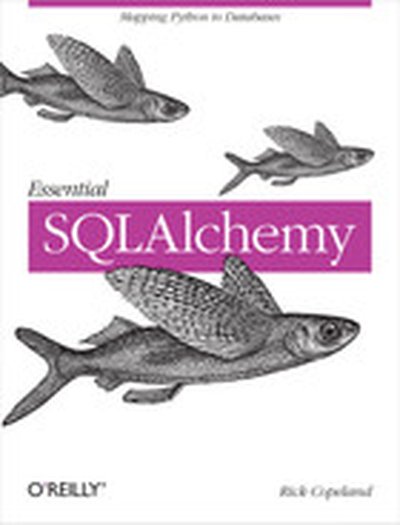
Essential SQLAlchemy

Essential SQLAlchemy introduces a high-level open-source code library that makes it easier for Python programmers to access relational databases such as Oracle, DB2, MySQL, PostgreSQL, and SQLite. SQLAlchemy has become increasingly popular since its release, but it still lacks good offline documentation. This practical book fills the gap, and because a developer wrote it, you get an objective look at SQLAlchemy's tools rather than an advocate's description of all the "cool" features. SQLAlchemy includes both a database server-independent SQL expression language and an object-relational mapper (ORM) that lets you map "plain old Python objects" (POPOs) to database tables without substantially changing your existing Python code. Essential SQLAlchemy demonstrates how to use the library to create a simple database application, walks you through simple queries, and explains how to use SQLAlchemy to connect to multiple databases simultaneously with the same Metadata. You also learn how to: Create custom types to be used in your schema, and when it's useful to use custom rather than built-in types Run queries, updates, and deletes with SQLAlchemy's SQL expression language Build an object mapper with SQLAlchemy, and understand the differences between this and active record patterns used in other ORMs Create objects, save them to a session, and flush them to the database Use SQLAlchemy to model object oriented inheritance Provide a declarative, active record pattern for use with SQLAlchemy using the Elixir extension Use the SQLSoup extension to provide an automatic metadata and object model based on database reflection In addition, you'll learn how and when to use other extensions to SQLAlchemy, including AssociationProxy, OrderingList, and more. Essential SQLAlchemy is the much-needed guide for every Python developer using this code library. Instead of a feature-by-feature documentation, this book takes an "essentials" approach that gives you exactly what you need to become productive with SQLAlchemy right away.

Oracle Automatic Storage Management: Under-the-Hood & Practical Deployment Guide

Streamline data management and provisioning Build and manage a storage infrastructure with Oracle scalable Automatic Storage Management using Oracle Automatic Storage Management (Oracle ASM) and the detailed information contained in this exclusive Oracle Press resource. Written by a team of database experts, maintain a dynamic, highly available Oracle database Oracle Automatic Storage Management: Under-the-Hood & Practical Deployment Guide explains how to build and storage environment . Inside, you'll learn how to configure storage for Oracle ASM, build disk groups, use data striping and mirroring, and optimize performance. You'll also learn how to ensure consistency across server and storage platforms, maximize data redundancy, and administer Oracle ASM from the command line. Manage Oracle ASM Instances and configure Oracle RDBMS instances to leverage Oracle ASM Define, discover, and manage disk storage under Oracle ASM Create external, normal-redundancy, and high-redundancy disk groups Add and remove Oracle ASM storage without affecting RDMS instance availability Learn how Oracle ASM provides even I/O distribution Work with Oracle ASM directories, files, templates, and aliases Improve storage performance and integrity using the ASMLIB API Simplify system administration with the Oracle ASM command line interface Understand key internal Oracle ASM structures and algorithms

Microsoft® SQL Server™ 2005 Integration Services Step by Step

Teach yourself the fundamentals of SQL Server Integration Services—one step at a time. This practical, learn-by-doing tutorial delivers the guidance you need to transform and consolidate data—and build solutions that support your business intelligence needs. Discover how to: Design and execute packages that transform data between files and relational databases Configure connection managers to access other data sources Create data flows that alter, split, match, and merge data Develop event-handlers and monitor package performance Encrypt sensitive information and control access to packages Customize script code to automate Control Flow and Data Flow tasks Debug, troubleshoot, and optimize packages CD features: All practice exercises Sample databases Fully searchable eBook For customers who purchase an ebook version of this title, instructions for downloading the CD files can be found in the ebook.

Microsoft SQL Server 2005 Analysis Services

Microsoft SQL Server Analysis Services provides fast access to data by means of multidimensional data structures and the multidimensional query languag MDX. Analysis Services provides the capability to design, create, and manage multidimensional cubes based on data warehouse tables, and it serves as the foundation for the Microsoft Business Intelligence strategy. Microsoft SQL Server 2005 Analysis Services gives the reader insight into the way Analysis Services functions. It not only explains ways to design and create multidimensional objects, databases, dimensions, and cubes, but also provides invaluable information about the reasons behind design decisions made by the development team. Here's what you will find inside: Understand the key concepts of multidimensional modeling Explore the multidimensional object model and its definition language Learn the main concepts of the MDX language and gain an in-depth understanding of advanced MDX concepts Understand the mechanisms of integrating multidimensional and relational databases Learn how to build client applications to access data in Analysis Services Examine server architecture, including main data structures, data processing, and query resolution algorithms Gain a deep understanding of the internal and external protocols for data transfer, including the XML/A protocol Explore how Analysis Services manages memory Explore the security model, including role-based security, code-access security, and data security Discover how to monitor and manage Analysis Services All the code for the sample database used in the book can be found at www.informit.com/title/0672327821.