talk-data.com talk-data.com

Topic

relational-databases

503

tagged

Activity Trend

1 peak/qtr
2020-Q1 2026-Q1

Activities

Showing filtered results

Filtering by: O'Reilly Data Engineering Books ×
DB2® Universal Database™ v8 Application Development Certification Guide, 2nd Edition

You will find every skill and technique you need to build enterprise, Web, and eBusiness applications with DB2 UDB v8. This book is IBM's official guide to becoming an IBM Certified Application Developer for the DB2 Universal Database v8 Family. New to the second edition is the inclusion of the information that you will need to prepare for the Fundamentals exam, a prerequisite to the Application Development exam. This section covers information about the DB2 products, tools, connectivity, data objects, manipulation, control, security, and concurrency. The application development section has been revised and updated to reflect new powerful features of DB2. You can review the DB2 client-server environment, the role of SQL, and the basic structure of a DB2 application; compare the programming interfaces available for DB2 application development, choosing the ones most appropriate to each project; and, of course, prepare for the Application Development Exam. As a bonus, information that is not needed to become an IBM Certified Application Developer for the DB2 Universal Database v8 Family has been provided by the authors to show you how to take advantage of IBM's powerful Extenders for DB2. Using Extenders, you can build searchable indexes to quickly find elements within text, audio, image, or XML objects stored in DB2. Section 1 covers all the fundamentals of DB2 to get you started and to prepare you for the DB2 UDB v8 Family Fundamentals Exam (test 700) Section 2 covers every DB2 v8 programming interface and strategy and will help prepare you for the DB2 UDB v8 Family Application Development Exam (test 703) Section 3 contains bonus materials including information about the many Extenders that are available to create powerful indexes for text, audio, image, and XML documents The accompanying CD-ROM contains a complete trial version of DB2 UDB v8 Personal Edition along with the Application Development Client.

DFSMStvs Application Migration Guide

This IBM Redbooks publication will help you to migrate batch VSAM applications to exploit transactional VSAM. DFSMStvs is available in a z/OS environment and offers the ability for VSAM data to be shared for both read and write operations while maintaining integrity and recoverability. DFSNStvs allows logging of changes to recoverable VSAM data sets. Batch programs can use commit and backout functions. This book assumes that you are familiar with the material in the companion book DFSMStvs Overview and Planning, SG24-6971, and refers extensively to material published in that book. We also assume some familiarity with CICS Transaction Server and z/OS. The book is intended for application developers who want to understand how to change applications to make best use of the facilities offered by DFSMStvs and to coexist well with other batch applications and with CICS systems sharing the same VSAM data sets. We assume that you are familiar with the development of batch applications and with the facilities and use of VSAM. The tasks involved in setting up DFSMStvs and the hardware and software prerequisites are not discussed in this book; they are described in DFSMStvs Overview and Planning, SG24-6971.

The Complete IMS HALDB Guide All You Need to Know to Manage HALDBs

This IBM Redbooks publication describes the High Availability Large Database (HALDB) capability available with IMS. IMS HALDB was introduced with IMS Version 7. It allows IMS databases to grow to almost unlimited sizes while providing increased availability. This book updates IMS Version 7 High Availability Large Database Guide, SG24-5751, as well as adding topics that were not covered in the previous book. This publication provides a broad explanation of HALDB and its uses. Specific areas covered include: -HALDB overview, definition, and structure This publication documents our hands-on experience in a test environment. It includes migration and administration examples. Some IBM Data Management Tools for IMS are also discussed in this publication. Special emphasis is given to the IMS HALDB Conversion and Maintenance Aid product. Examples of the use of these tools are provided.

DFSMShsm Audit and Mainstar: FastAudit/390

The DFSMShsm control data sets contain information describing the status of the DFSMShsm managed data sets and volumes. Each control data set requires regular maintenance (backup and reorganization) and auditing to ensure the integrity of the data managed by DFSMShsm. The DFSMShsm product provides the AUDIT command to detect, report, diagnose, and often provide automated correction for discrepancies between the control data set, ICF user catalog, and DFSMShsm owned volumes. Mainstar: FastAudit family of products provides the same audit capabilities as with the DFSMShsm AUDIT command, but at faster speeds. Using the FastAudit products, the audits are comprehensive (perform multiple audits with one command), flexible, and easy to use. Audits of some, or all of the z/OS and OS/390 metadata environments can now be done frequently, even daily, to identify and resolve errors before they lead to data loss or failed access. This IBM Redbooks publication outlines the tasks to use DFSMShsm Audit and the use of Mainstar's FastAudit program to manage your HSM environment.

Database Design for Mere Mortals™: A Hands-On Guide to Relational Database Design, Second Edition

“This book takes the somewhat daunting process of database design and breaks it into completely manageable and understandable components. Mike’s approach whilst simple is completely professional, and I can recommend this book to any novice database designer.” – Sandra Barker, Lecturer, University of South Australia, Australia “Databases are a critical infrastructure technology for information systems and today’s business. Mike Hernandez has written a literate explanation of database technology–a topic that is intricate and often obscure. If you design databases yourself, this book will educate you about pitfalls and show you what to do. If you purchase products that use a database, the book explains the technology so that you can understand what the vendor is doing and assess their products better.” – Michael Blaha, consultant and trainer, author of A Manager’s Guide to Database Technology “If you told me that Mike Hernandez could improve on the first edition of Database Design for Mere Mortals I wouldn’t have believed you, but he did! The second edition is packed with more real-world examples, detailed explanations, and even includes database-design tools on the CD-ROM! This is a must-read for anyone who is even remotely interested in relational database design, from the individual who is called upon occasionally to create a useful tool at work, to the seasoned professional who wants to brush up on the fundamentals. Simply put, if you want to do it right, read this book!” – Matt Greer, Process Control Development, The Dow Chemical Company “Mike’s approach to database design is totally common-sense based, yet he’s adhered to all the rules of good relational database design. I use Mike’s books in my starter database-design class, and I recommend his books to anyone who’s interested in learning how to design databases or how to write SQL queries.” – Michelle Poolet, President, MVDS, Inc. “Slapping together sophisticated applications with poorly designed data will hurt you just as much now as when Mike wrote his first edition, perhaps even more. Whether you’re just getting started developing with data or are a seasoned pro; whether you've read Mike’s previous book or this is your first; whether you're happier letting someone else design your data or you love doing it yourself–this is the book for you. Mike’s ability to explain these concepts in a way that’s not only clear, but fun, continues to amaze me.” –From the Foreword by Ken Getz, MCW Technologies, coauthor ASP.NET Developer's JumpStart “The first edition of Mike Hernandez’s book Database Design for Mere Mortals was one of the few books that survived the cut when I moved my office to smaller quarters. The second edition expands and improves on the original in so many ways. It is not only a good, clear read, but contains a remarkable quantity of clear, concise thinking on a very complex subject. It’s a must for anyone interested in the subject of database design.” – Malcolm C. Rubel, Performance Dynamics Associates “Mike’s excellent guide to relational database design deserves a second edition. His book is an essential tool for fledgling Microsoft Access and other desktop database developers, as well as for client/server pros. I recommend it highly to all my readers.” – Roger Jennings, author of Special Edition Using Access 2002 “There are no silver bullets! Database technology has advanced dramatically, the newest crop of database servers perform operations faster than anyone could have imagined six years ago, but none of these technological advances will help fix a bad database design, or capture data that you forgot to include! Database Design for Mere Mortals™, Second Edition, helps you design your database right in the first place!” – Matt Nunn, Product Manager, SQL Server, Microsoft Corporation “When my brother started his professional career as a developer, I gave him Mike’s book to help him understand database concepts and make real-world application of database technology. When I need a refresher on the finer points of database design, this is the book I pick up. I do not think that there is a better testimony to the value of a book than that it gets used. For this reason I have wholeheartedly recommended to my peers and students that they utilize this book in their day-to-day development tasks.” – Chris Kunicki, Senior Consultant, OfficeZealot.com “Mike has always had an incredible knack for taking the most complex topics, breaking them down, and explaining them so that anyone can ‘get it.’ He has honed and polished his first very, very good edition and made it even better. If you're just starting out building database applications, this book is a must-read cover to cover. Expert designers will find Mike’s approach fresh and enlightening and a source of great material for training others.” – John Viescas, President, Viescas Consulting, Inc., author of Running Microsoft Access 2000 and coauthor of SQL Queries for Mere Mortals “Whether you need to learn about relational database design in general, design a relational database, understand relational database terminology, or learn best practices for implementing a relational database, Database Design for Mere Mortals™, Second Edition, is an indispensable book that you’ll refer to often. With his many years of real-world experience designing relational databases, Michael shows you how to analyze and improve existing databases, implement keys, define table relationships and business rules, and create data views, resulting in data integrity, uniform access to data, and reduced data-entry errors.” – Paul Cornell, Site Editor, MSDN Office Developer Center Sound database design can save hours of development time and ensure functionality and reliability. is a straightforward, platform-independent tutorial on the basic principles of relational database design. It provides a commonsense design methodology for developing databases that work. Database Design for Mere Mortals™, Second Edition, Database design expert Michael J. Hernandez has expanded his best-selling first edition, maintaining its hands-on approach and accessibility while updating its coverage and including even more examples and illustrations. This edition features a CD-ROM that includes diagrams of sample databases, as well as design guidelines, documentation forms, and examples of the database design process. This book will give you the knowledge and tools you need to create efficient and effective relational databases.

Moving Data Across the DB2 Family

Moving data across different databases and even different platforms has been a common task in IT shops for quite some time. Applications may have been developed independently and over time, using packages and different technology; and data might reside on different platforms exploiting the specific platform strong points. However, there still is a growing need for applications that need to access all of this data for overall processing. While new Web related technologies are emerging with the intent to provide functions to collect and integrate information across multiple databases and applications for access in real time, moving data to one location for overall processing is still a very common requirement. This IBM Redbooks publication provides an overview of what is currently available within the DB2 Family of products (specifically DB2 for z/OS, and DB2 for UNIX and Windows) in terms of functions, tools, and utilities to satisfy the need for moving data. We focus on discussing High Performance Unload and Cross Loader; the first one is a tool, the second one is a new option of the Load utility, since they are the latest functions that IBM has released. We also introduce the concepts and some examples of using the Federated Database support.

PostgreSQL

PostgreSQL is the world¿s most advanced open-source database. PostgreSQL is the most comprehensive, in-depth, and easy-to-read guide to this award-winning database. This book starts with a thorough overview of SQL, a description of all PostgreSQL data types, and a complete explanation of PostgreSQL commands. If you are a developer or an administrator, you¿ll love the chapter that explores PostgreSQL performance. The authors explain how PostgreSQL stores data on disk (and in memory) and how to measure and influence the effectiveness of PostgreSQL¿s caching mechanisms. You¿ll also learn how PostgreSQL generates and evaluates execution plans. The authors explain all of the query operators that can appear in the results of an EXPLAIN command, describing the performance implications of each operator as well as the conditions which will cause PostgreSQL to use that operator. PostgreSQL is also a complete guide for the developer. Whether you¿re developing with C, C++, ODBC, Embedded SQL, Java, Tcl/Tk, Perl, Python or PHP, you¿ll find a comprehensive description of the PostgreSQL API for your language of choice. Easy to follow exercises will walk you through the development of working applications that fully demonstrate the features offered by each API. You will also find a chapter that describes the PL/pgSQL server-side procedural language, learning how to build triggers, functions, and stored-procedures. The authors have even included a chapter that walks you through the process of extending the PostgreSQL server with custom-written C functions and new data types. The accompanying web site, www.conjectrix.com, contains downloadable versions of all of the sample code and a wealth of PostgreSQL-related resources. The last section of PostgreSQL was written for the PostgreSQL administrator. You will learn how to install PostgreSQL on Windows, Linux, and Unix systems, from source code or from pre-compiled installers. The authors have described all of the PostgreSQL configuration options (compile-time, startup, and on-the-fly). The chapter on PostgreSQL security describes all of the authentication protocols that you can choose from and describes how to secure your database, both internally and externally. If you have to support a multi-national environment, you will find the chapter on internationalization and localization to be invaluable. You won¿t find a more complete guide to PostgreSQL anywhere. The authors have made PostgreSQL approachable by leading the reader from basic concepts to advanced features. Whether you¿re a database beginner or an advanced user, you will find this book a valuable addition to your library.

Open Source Web Development with LAMP: Using Linux, Apache, MySQL, Perl, and PHP

Open Source technologies are providing contemporary developers with a range of cost-effective and robust alternatives to commercial software for building dynamic, data-driven Web applications. This practical guide presents a comprehensive survey of LAMP (Linux, Apache, MySQL, Perl, and PHP), and it shows how these solutions can be implemented efficiently and securely while improving reliability and dramatically cutting costs. focuses on the most important core material necessary so that developers can "hit the ground running" and begin building applications right away. This book presents a balanced overview of LAMP technologies and allows the reader to decide which tool may be appropriate for the particular task at hand. After a general overview of Open Source technologies, the book presents an overview of the Web before moving on to cover structural, static, dynamic, and embedded technologies. The coverage here provides a description of the strengths and weaknesses of each Open Source technology and also acts as a reference guide for each application. Open Source Web Development with LAMP Topics covered include: A comprehensive survey of Open Source technologies Static and dynamic data and embedded HTML on the Web Linux and Unix distributions, installations, and commands Apache Web Server, Perl, and MySQL Web site META language (WML) Common gateway interface (CGI) and mod_perl Server Side Includes (SSI), Embperl, and Mason PHP syntax and functions In addition to the discussions in the book, a companion Web site--www.opensourcewebbook.com--contains supplemental information, including tools, source code, helpful links to additional resources, and errata as needed. Complete in coverage and practical in presentation, spotlights the tools and technologies today's developers need to create workable, dynamic, and secure Web sites using Open Source technologies. Open Source Web Development with LAMP 020177061XB11072002

Sams Teach Yourself MySQL in 21 Days, Second Edition

MySQL is the most widely installed open-source database. Approximately 3.5 million MySQL servers are in use and more than 45% of databases used on Linux worldwide are MySQL databases. Its latest version, MySQL 4.1 closes the gap between MySQL and other, more sophisticated databases. Version 4.1 permits the use of MySQL as an embedded database, which means it can be compiled into another application and used in a range of devices. The second edition of Sams Teach Yourself MySQL in 21 Days has been completely rewritten by a new author. The book enables a reader to create powerful databases using MySQL. He willnot only learn how to integrate MySQL into a database-driven Web site, but also how to embed MySQL into other compiled applications.

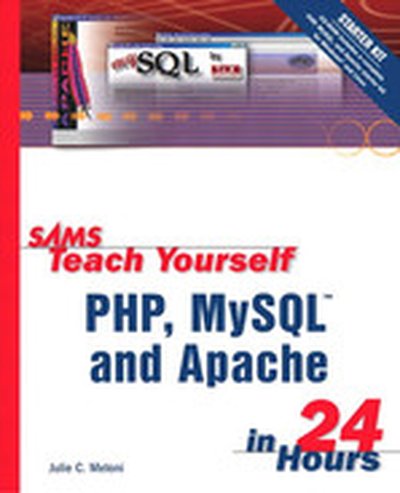
Sams Teach Yourself PHP, MySQL™ and Apache in 24 Hours

Sams Teach Yourself PHP, MySQL, and Apache in 24 Hours combines coverage of three popular open-source Web development tools into one easy-to-understand book -- and it comes with one easy-to-use Starter Kit CD-ROM for Windows or Linux. You will learn to install, configure and set up the PHP scripting language, the MySQL database system and the Apache Web server. By the end of the book, you will understand how these technologies work, and -- more importantly -- how they can work together to create a dynamic Web site. After creating a simple website using these tools, you will be able to manage a simple mailing list and create an online address book, shopping cart and storefront. You will also know how to fine tune Apache and MySQL and cover simple Web server security.

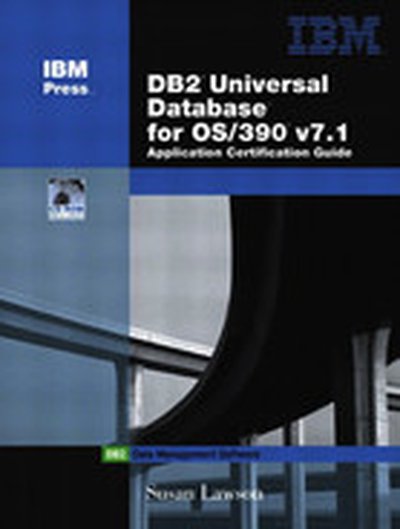
DB2® Universal Database™ for OS/390™ v7.1 Application Certification Guide

IBM's definitive DB2 UDB V7.1 application development reference and exam study guide for the OS/390 and z/OS platforms An official IBM self-study guide for the DB2 UDB V7.1 Family Application Development Exam (#514) Expert DB2 programming tips, techniques, and guidelines from application development experts Covers data structures, SQL, stored procedures, programming/language environments, debugging, tuning, and more CD-ROM contains complete DB2 application development sample exam The definitive, authoritative guide to DB2 OS/390 application development certification Covers data structures, SQL, stored procedures, programming/language environments, debugging, tuning, and much more Includes a full section on object-relational programming and other advanced techniques Sample test questions help you prepare for the IBM DB2 UDB V7.1 Family Application Development Exam (#514) About the CD The CD-ROM included with this book contains a complete DB2 UDB V7.1 Family Application Development Exam (#514) sample exam. IBM DB2 UDB Version 7.1 for OS/390 and z/OS delivers unparalleled performance, scalability, and reliability in today's enterprise business environments. Now, there's a complete, authoritative guide to developing applications with DB2 UDB V7.1 in both OS/390 and z/OS environments—and preparing for the IBM DB2 UDB V7.1 Family Application Development Exam (#514). This comprehensive day-to-day guide to DB2 UDB application development is also the only book that delivers the depth of knowledge professionals need to pass IBM's challenging application development exam for the OS/390 and z/OS platforms. IBM Gold Consultant Susan Lawson presents hundreds of useful tips, practical techniques, and expert guidelines for every facet of DB2 UDB application development and every stage of the development process for both OS/390 and z/OS platforms Coverage includes: Foundations for effective DB2 development, including an overview of the DB2 UDB product family and DB2 for OS/390 data structures SQL: basic concepts and coding techniques through advanced OLAP features, star schemas, and star joins Stored procedures, including the SQL procedure language and IBM's Stored Procedure Builder Best practices for application testing, debugging, and performance tuning The full range of DB2 development tools, including ODBC/CLI, Java(tm), COBOL, C, C++, REXX, CAF, CICS, and RRSAF Object-relational programming, including user-defined functions, user-defined data types, and triggers In-depth coverage of locking and concurrency Whether you're developing for DB2 UDB V7.1 in an OS/390 or z/OS environment, managing DB2 UDB V7.1 application development, preparing for DB2 UDB V7.1 Family Application Development, or all three, DB2 UDB for OS/390 Version 7.1 Application Certification Guide will be your single most valuable resource. IBM DB2 Series

IMS DataPropagator Implementation Guide

IMS DataPropagator (IMS DPROP) is a licensed program that maintains consistency between two copies of the same data, where one copy of the data is stored in an IMS Database Manager (IMS DB) database and the other copy is stored in a DB2 database. IMS DPROP is a key component of IBM's Data Replication Solution and IBM's Business Intelligence Solution. Please note that the additional material referenced in the text is not available from IBM.

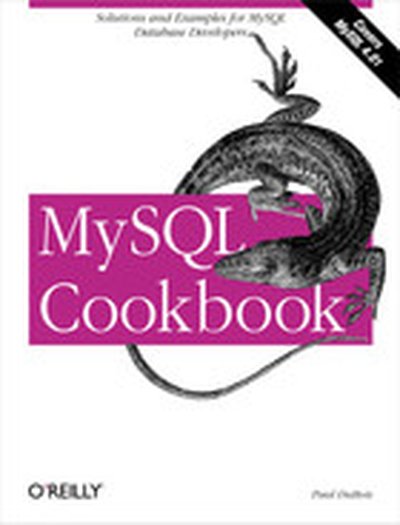
MySQL Cookbook

While MySQL has turned up among high profile users such as Yahoo!, NASA and the U.S. Census Bureau, the rising popularity of this open source database is especially keen among users with little database experience. These days, even a small organization or web site has uses for a database, and MySQL is an obvious choice. Affordable and easy to use, MySQL packs the power, speed and efficiency that enable it to rival expensive, proprietary database solutions. Yet, even if you know the basics, anyone without practical MySQL experience--novices and skilled DBAs alike--might stumble over common database-related tasks. Fortunately, there's a sensible shortcut. MySQL Cookbook provides a unique problem-and-solution format that offers practical examples for everyday programming dilemmas. For every problem addressed in the book, there's a worked-out solution or "recipe"--short, focused pieces of code that you can insert directly into your applications. But MySQL Cookbook is more than a collection of cut-and-paste code. You also get explanations of how and why the code works, so you can learn to adapt the techniques to similar situations. The book covers a lot of ground. Solutions for typical MySQL dilemmas range from simple ways to find all records that contain a given string, to more difficult problems, such as finding matching/non-matching records in two tables. Whether you use MySQL on Unix, Linux, Windows or the Mac OS X platform, the book will show you how to: Import data from external sources Export data for use by external programs Access MySQL from your web server Use scripts with MySQL to read queries from a file Access MySQL from within client programs that use Perl, PHP, Java, Python and other languages Construct queries that solve commonly-occurring questions Interact with the server This learn-as-you-go resource will help users of all levels exploit MySQL more fully. MySQL Cookbook supplies you with an armory of ready-made techniques for specific problems so that, even if you're an experienced MySQL user, you don't have to write everything from scratch.

Microsoft® SQL Server™ 2000 DBA Survival Guide, Second Edition

Microsoft SQL Server 2000 DBA Survival Guide is organized into several parts that comprise the various jobs and tasks the DBA performs. Each chapter is presented with the goal of providing knowledge and "know-how" to Database Administrators of a SQL Server database. The chapters also offer real-world insight and experience by passing on tips, tricks, and suggestions based on what the authors have learned the hard way. The book also takes time to provide checklists and examples for various SQL Server DBA tasks. The book also provides insight into the tasks that make-up a DBA's job including discussions of topics such as the creation of naming standards and conventions which are essential for efficient administration.

Database Tuning

Tuning your database for optimal performance means more than following a few short steps in a vendor-specific guide. For maximum improvement, you need a broad and deep knowledge of basic tuning principles, the ability to gather data in a systematic way, and the skill to make your system run faster. This is an art as well as a science, and Database Tuning: Principles, Experiments, and Troubleshooting Techniques will help you develop portable skills that will allow you to tune a wide variety of database systems on a multitude of hardware and operating systems. Further, these skills, combined with the scripts provided for validating results, are exactly what you need to evaluate competing database products and to choose the right one. Forward by Jim Gray, with invited chapters by Joe Celko and Alberto Lerner Includes industrial contributions by Bill McKenna (RedBrick/Informix), Hany Saleeb (Oracle), Tim Shetler (TimesTen), Judy Smith (Deutsche Bank), and Ron Yorita (IBM) Covers the entire system environment: hardware, operating system, transactions, indexes, queries, table design, and application analysis Contains experiments (scripts available on the author's site) to help you verify a system's effectiveness in your own environment Presents special topics, including data warehousing, Web support, main memory databases, specialized databases, and financial time series Describes performance-monitoring techniques that will help you recognize and troubleshoot problems

PHP and PostgreSQL: Advanced Web Programming

Sams¿ PHP and MySQL Web Development, by Luke Welling and Laura Thomson, showed that there is a strong demand for books that describe how to use PHP together with a specific open-source database to develop Web applications. While MySQL is very popular, PostgreSQL is widely considered to be the more powerful of the two open-source databases. And PostgreSQL is rapidly gaining market share large organizations are beginning to use PostgreSQL instead of Oracle; the demand for PostgreSQL training and support has increased by some accounts 50% in the last six months; and Web hosting services increasingly offer PostgreSQL along with MySQL. PHP and PostgreSQL Advanced Web Programming focuses on the specific needs of a PostgreSQL developer and will detail how to make use of PostgreSQL¿s unique, advanced features to develop high-availability, fail-safe Web applications with PHP and PostgreSQL.

MySQL Reference Manual

MySQL is the most popular SQL database in the open source community and is used almost universally by web sites running on open source systems. As powerful and flexible as it is lightweight and efficient, MySQL packs a large feature set into a very small and fast engine that now runs on more than 500,000 servers. This renowned online manual that has supported MySQL administrators and database developers for years is now available in paperback format. This book is an exact reproduction of the MySQL Reference Manual from the MySQL development team's Web site, minus some non-technical appendices. This version covers MySQL 4.0. Many sophisticated topics appear in this comprehensive manual, ranging from the hitches you may run into when first installing MySQL to internals that will help you tune your queries. MySQL Reference Manual contains all the comprehensive reference material one would expect for building the product, running administrative utilities, and using various API as well as MySQL's rich version of SQL. In addition, you can turn a page and find such unexpected riches as: A thorough comparison of MySQL with SQL standards and other databases A discussion of privileges and suggested uses of privileges to enhance security Directions for replicating a database and for running several MySQL servers on a single system Directions for initializing a database from a flat file Guidelines for estimating the performance of different queries A far-reaching discussion of optimization, with reference to the implementation of MySQL Investigations of the differences between data types and the pros and cons of each type of number, string, or timestamp An extended inquiry into the effects of using delayed inserts A candid explanation of why various errors occur and how to recover from them Tips for weighted, full-text searches Detailed descriptions of the features, strengths, and weaknesses of available table formats A guide to adding new functions to MySQL No serious MySQL user should be without this book.

Managing & Using MySQL, 2nd Edition

MySQL is a popular and robust open source database product that supports key subsets of SQL on both Linux and Unix systems. MySQL is free for nonprofit use and costs a small amount for commercial use. Unlike commercial databases, MySQL is affordable and easy to use. This book includes introductions to SQL and to relational database theory. If you plan to use MySQL to build web sites or other Linux or Unix applications, this book teaches you to do that, and it will remain useful as a reference once you understand the basics. Ample tutorial material and examples are included throughout. This book has all you need to take full advantage of this powerful database management system. It takes you through the whole process from installation and configuration to programming interfaces and database administration. This second edition has a greatly enhanced administration chapter that includes information on administrative tools, server configuration, server startup and shutdown, log file management, database backup and restore, and database administration and repair. In addition, a new chapter on security describes data, server, and client-server security, while a chapter on extending MySQL provides an overview of MySQL internals and describes the use of MySQL user-defined functions. If you know C/C++, Java, Perl, PHP, or Python, you can write programs to interact with your MySQL database. In addition, you can embed queries and updates directly in an HTML file so that a web page becomes its own interface to the database. Managing and Using MySQL includes chapters on the programming language interfaces, and it also includes a complete reference section with specific function calls for each language. Also included in the reference section are references to the SQL language, and details of the MySQL system variables, programs, and utilities. New to the second edition is a reference to the internal MySQL tables, which will be of particular interest to those who want to work extensively with MySQL security.

Transact-SQL Cookbook

This unique cookbook contains a wealth of solutions to problems that SQL programmers face all the time. The recipes inside range from how to perform simple tasks, like importing external data, to ways of handling issues that are more complicated, like set algebra. Authors Ales Spetic and Jonathan Gennick, two authorities with extensive database and SQL programming experience, include a discussion with each recipe to explain the logic and concepts underlying the solution.SQL (Structured Query Language) is the closest thing to a standard query language that currently exists, and Transact-SQL -- a full-featured programming language that dramatically extends the power of SQL -- is the procedural language of choice for both Microsoft SQL Server and Sybase SQL Server systems. The Transact-SQL Cookbook is designed so you can use the recipes directly, as a source of ideas, or as a way to learn a little more about SQL and what you can do with it. Topics covered include: With an abundance of recipes to help you get your job done more efficiently, the Audit logging. In addition to recipes for implementing an audit log, this chapter also includes recipes for: improving performance where large log tables are involved; supporting multiple-languages; and simulating server push. Hierarchies. Recipes show you how to manipulate hierarchical data using Transact-SQL. Importing data. This chapter introduces concepts like normalization and recipes useful for working with imported data tables. Sets. Recipes demonstrate different operations, such as how to find common elements, summarize the data in a set, and find the element in a set that represents an extreme. Statistics. This chapter?s recipes show you how to effectively use SQL for common statistical operations from means and standard deviations to weighted moving averages. Temporal data. Recipes demonstrate how to construct queries against time-based data. Data Structures. This chapter shows how to manipulate data structures like stacks, queues, matrices, and arrays. Transact-SQL Cookbook is sure to become an essential part of your library.

Web Database Applications with PHP, and MySQL

What do eBay, Amazon.com and CNN.com have in common? They're all applications that integrate large databases with the Web. The popularity (and power) of these applications stems from their accessibility and usability: thousands of users can access the same data at the same time without theneed to install any additional software on their computers. Web Database Applications with PHP and MySQL offers web developers a mixture of theoretical and practical information on creating web database applications. Using PHP, and MySQL, two open source technologies that are often combined to develop web applications, the book offers detailed information on designing relational databases and on web application architecture, both of which will be useful to readers who have never dealt with these issues before. The book also introduces Hugh and Dave's Online Wines, a complete (but fictional) online retail site that allows users to browse, search a database, add items to a shopping cart, manage their membership, and purchase wines. Using this site as an example, the book shows you how to implement searching and browsing, store user data, validate user input, manage transactions, and maintain security. If you want to build small to medium-scale web database applications that can run on modest hardware and process more than a million hits a day from users, this book will show you how.