talk-data.com talk-data.com

Topic

relational-databases

507

tagged

Activity Trend

1 peak/qtr
2020-Q1 2026-Q1

Activities

507 activities · Newest first

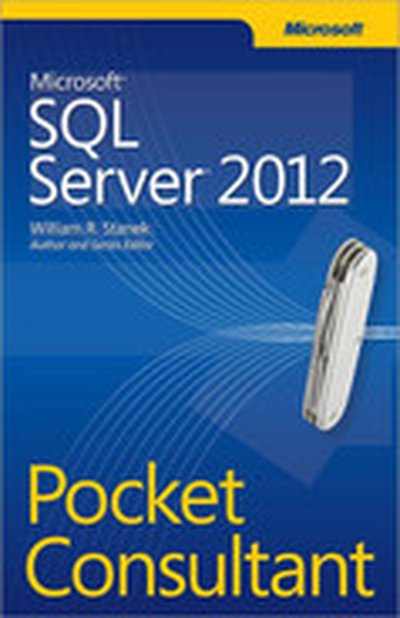
Microsoft® SQL Server® 2012: Pocket Consultant

Portable and precise, this pocket-sized guide delivers ready answers for the day-to-day administration of SQL Server. Zero in on core support and maintenance tasks using quick-reference tables, instructions, and lists. You’ll get the focused information you need to save time and get the job done—whether at your desk or in the field! Get fast facts to: Manage SQL Server services and clients Configure, manage, and tune servers Implement policy-based management Administer security and access Monitor server activity and tune performance Automate maintenance Perform backups and recovery

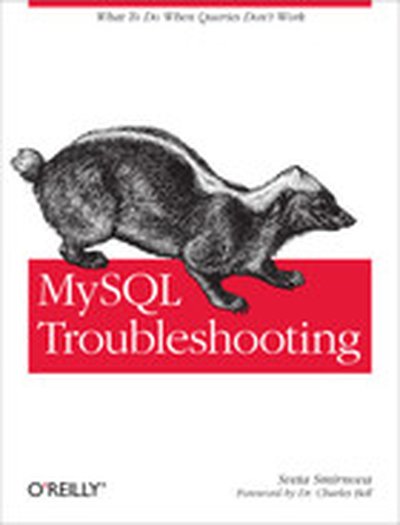
MySQL Troubleshooting

Stuck with bugs, performance problems, crashes, data corruption, and puzzling output? If you’re a database programmer or DBA, they’re part of your life. The trick is knowing how to quickly recover from them. This unique, example-packed book shows you how to handle an array of vexing problems when working with MySQL. Written by a principal technical support engineer at Oracle, MySQL Troubleshooting provides the background, tools, and expert steps for solving problems from simple to complex—whether data you thought you inserted doesn’t turn up in a query, or the entire database is corrupt because of a server failure. With this book in hand, you’ll work with more confidence. Understand the source of a problem, even when the solution is simple Handle problems that occur when applications run in multiple threads Debug and fix problems caused by configuration options Discover how operating system tuning can affect your server Use troubleshooting techniques specific to replication issues Get a reference to additional troubleshooting techniques and tools, including third-party solutions Learn best practices for safe and effective troubleshooting—and for preventing problems

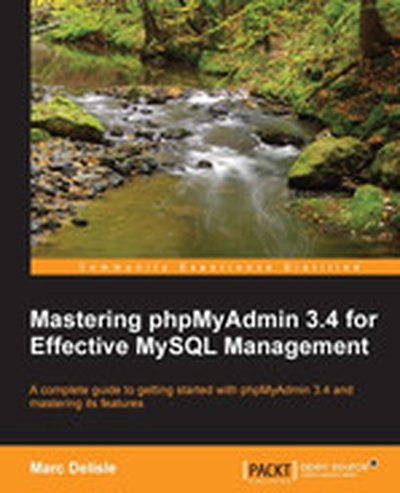
Mastering phpMyAdmin 3.4 for Effective MySQL Management

This book, 'Mastering phpMyAdmin 3.4 for Effective MySQL Management', acts as a comprehensive guide to learning phpMyAdmin 3.4 and maximizing its potential. By reading this book, you will gain a solid understanding of MySQL management via phpMyAdmin, including database setups, administration, and advanced features like performance tuning and user management. What this Book will help me do Set up and customize phpMyAdmin for your specific MySQL administrative needs. Secure your MySQL databases through robust authentication and access controls. Efficiently manage complex relational data models using advanced phpMyAdmin tools. Perform advanced MySQL operations quickly using built-in features and custom queries. Diagnose and resolve common database management issues to enhance stability and performance. Author(s) The author is an experienced software developer and database administrator with years of expertise in MySQL and its management tools. They are passionate about teaching technology in an accessible way, catering to a wide range of skill levels. Their step-by-step instructional methods make complex topics easy to understand and actionable for readers. Who is it for? This book is designed for web developers, system administrators, or anyone involved in database management looking to streamline MySQL operations. It is suitable for individuals who have a foundational understanding of MySQL and wish to leverage phpMyAdmin for more efficient and effective database administration. Whether you're working on a team or managing personal projects, this resource will be invaluable in improving your database management skills.

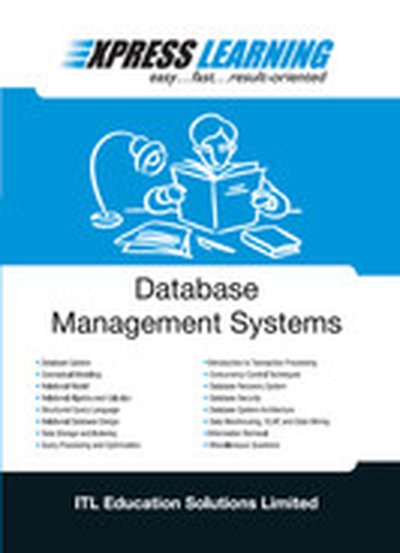
Express Learning: Database Management Systems

Express Learning is a series of books designed as quick reference guides to important undergraduate computer courses. The organized and accessible format of these books allows students to learn important concepts in an easy-to-understand, question-and-answer format. These portable learning tools have been designed as one-stop references for students to understand and master the subjects by themselves.

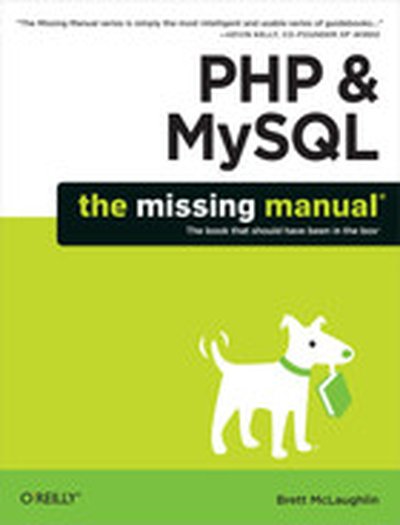
PHP & MySQL: The Missing Manual

If you can build websites with CSS and JavaScript, this book takes you to the next level—creating dynamic, database-driven websites with PHP and MySQL. Learn how to build a database, manage your content, and interact with users through queries and web forms. With step-by-step tutorials, real-world examples, and jargon-free explanations, you’ll soon discover the power of server-side programming. The important stuff you need to know: Get a running start. Write PHP scripts and create a web form right away. Learn the language. Get up to speed on PHP and SQL syntax quickly. Build a database. Use MySQL to store user information and other data. Make it dynamic. Create pages that change with each new viewing. Be ready for mistakes. Plan error messages to help direct users. Manage your content. Use the file system to access user data, including images and other binary files. Control operations. Create an administrative interface to oversee your site.

Delivering Business Intelligence with Microsoft SQL Server 2012 3/E, 3rd Edition

Implement a Robust BI Solution with Microsoft SQL Server 2012 Equip your organization for informed, timely decision making using the expert tips and best practices in this practical guide. Delivering Business Intelligence with Microsoft SQL Server 2012, Third Edition explains how to effectively develop, customize, and distribute meaningful information to users enterprise-wide. Learn how to build data marts and create BI Semantic Models, work with the MDX and DAX languages, and share insights using Microsoft client tools. Data mining and forecasting are also covered in this comprehensive resource. Understand the goals and components of successful BI Design, deploy, and manage data marts and OLAP cubes Load and cleanse data with SQL Server Integration Services Manipulate and analyze data using MDX and DAX scripts and queries Work with SQL Server Analysis Services and the BI Semantic Model Author interactive reports using SQL Server Data Tools Create KPIs and digital dashboards Use data mining to identify patterns, correlations, and clusters Implement time-based analytics Embed BI reports in custom applications using ADOMD.NET

Microsoft SQL Server 2012 A Beginners Guide 5/E, 5th Edition

Essential Microsoft SQL Server 2012 Skills Made Easy Get up and running on Microsoft SQL Server 2012 in no time with help from this thoroughly revised, practical resource. Filled with real-world examples and hands-on exercises, Microsoft SQL Server 2012: A Beginner's Guide, Fifth Edition starts by explaining fundamental relational database system concepts. Then, you'll learn how to write Transact-SQL statements, execute simple and complex database queries, handle system administration and security, and use the powerful analysis, business intelligence, and reporting tools. XML, spatial data, and full-text search are also covered in this step-by-step tutorial. Install, configure, and customize SQL Server 2012 Create and modify database objects with Transact SQL statements Write stored procedures and user-defined functions Handle backup and recovery Automate administrative tasks Tune your database system for optimal performance, availability, and reliability Implement security measures using authentication, encryption, and authorization Work with SQL Server Analysis Services, SQL Server Reporting Services, and other business intelligence tools Store, display, and query XML documents Manage spatial data Query documents using MS Full-Text Search (FTS)

PHP and MySQL® 24-Hour Trainer

Step-by-step lessons for using PHP and MySQL in a unique book-and-video combination Assuming no previous experience with PHP or MySQL, this book-and-video package is ideal reading for anyone who wants to go beyond HTML/CSS in order to provide clients with the most dynamic web sites possible. The approachable tone breaks down the basics of programming and PHP and MySQL in individual lessons starting with the installation of the programs necessary to run PHP. You begin with a static web site and then watch and learn as PHP functionality is added as you work through the lessons. When working with databases, the MySQL database is introduced with demonstrations that show how to interact with it. The accompanying videos enhance your learning experience, as each lesson in the book is portrayed in the video exercises. Lessons include: Getting started with PHP Setting up your workspace Adding PHP to a web page Learning PHP syntax Working with variables Debugging code Working with complex data Making decisions Repeating program steps Learning about scope Reusing code with functions Creating forms Introducing object-oriented programming Defining classes Using classes Using advanced techniques Handling errors Writing secure code Introducing databases Introducing MySQL Creating and connecting to the Creating tables Entering data Selecting data Using multiple tables Changing data Deleting data Preventing database security issues Creating user logins Turn the case study into a content management system Note: As part of the print version of this title, video lessons are included on DVD. For e-book versions, video lessons can be accessed at wrox.com using a link provided in the interior of the e-book.

Microsoft SQL Server 2012 Reporting Services 4/E, 4th Edition

The Definitive Guide to Microsoft SQL Server 2012 Reporting Services Create, deploy, and manage business intelligence reports using the expert tips and best practices in this hands-on resource. Written by a member of the original Reporting Services development team, Microsoft SQL Server 2012 Reporting Services, Fourth Edition covers the complete process of building and distributing reports and explains how to maximize all of the powerful, integrated SSRS capabilities, including the new and enhanced features. A detailed case study and sample reports are included in this practical reference. Plan for, install, configure, and customize SQL Server 2012 Reporting Services Retrieve data with SELECT queries Generate reports from the Report Wizard and from scratch Enhance your reports with charts, images, gauges, and maps Add value to reports through summarizing, totaling, and interactivity Build reusable report templates Embed Visual Basic, .NET functions and subreports into your reports Enable end-user access to reports via the Report Server and its Report Manager web interface Integrate SSRS reports with your own websites and custom applications Follow along with sample reports from the book's case study

Oracle Database 11g & MySQL 5.6 Developer Handbook

Master Application Development in a Mixed-Platform Environment Build powerful database applications in a mixed environment using the detailed information in this Oracle Press guide. Oracle Database 11g & MySQL 5.6 Developer Handbook lays out programming strategies and best practices for seamlessly operating between the two platforms. Find out how to migrate databases, port SQL dialects, work with Oracle MySQL databases, and configure effective queries. Security, monitoring, and tuning techniques are also covered in this comprehensive volume. Understand Oracle Database 11 g and MySQL 5.6 architecture Convert databases between platforms and ensure transactional integrity Create tables, sequences, indexes, views, and user accounts Build and debug PL/SQL, SQL*Plus, SQL/PSM, and MySQL Monitor scripts Execute complex queries and handle numeric and date mathematics Merge data from source tables and set up virtual directories

Database Design Using Entity-Relationship Diagrams, 2nd Edition

Essential to database design, entity-relationship (ER) diagrams are known for their usefulness in mapping out clear database designs. They are also well-known for being difficult to master. With Database Design Using Entity-Relationship Diagrams, Second Edition, database designers, developers, and students preparing to enter the field can quickly learn the ins and outs of ER diagramming. Building on the success of the bestselling first edition, this accessible text includes a new chapter on the relational model and functional dependencies. It also includes expanded chapters on Enhanced Entity Relationship (EER) diagrams and reverse mapping. It uses cutting-edge case studies and examples to help readers master database development basics and defines ER and EER diagramming in terms of requirements (end user requests) and specifications (designer feedback to those requests). Describes a step-by-step approach for producing an ER diagram and developing a relational database from it Contains exercises, examples, case studies, bibliographies, and summaries in each chapter Details the rules for mapping ER diagrams to relational databases Explains how to reverse engineer a relational database back to an entity-relationship model Includes grammar for the ER diagrams that can be presented back to the user The updated exercises and chapter summaries provide the real-world understanding needed to develop ER and EER diagrams, map them to relational databases, and test the resulting relational database. Complete with a wealth of additional exercises and examples throughout, this edition should be a basic component of any database course. Its comprehensive nature and easy-to-navigate structure makes it a resource that students and professionals will turn to throughout their careers.

MariaDB Crash Course

This first-to-market tutorial covers everything beginners need to succeed with MariaDB, the open, community-based branch of MySQL. Master trainer Ben Forta introduces all the essentials through a series of quick, easy-to-follow, hands-on lessons. Instead of belaboring database theory and relational design, Forta focuses on teaching solutions for the majority of SQL users who simply want to interact with data. Forta covers all this, and more: Using the MariaDB toolset * Retrieving and sorting data Filtering data using comparisons, wildcards, and full text searching Analyzing data with aggregate functions Performing insert, update, and delete operations Joining relational tables using inner, outer, and self joins Combining queries using unions * Using views Creating and modifying tables, and accessing table schemas Working with stored procedures, cursors, and other advanced database features Managing databases, users, and security privileges This book was reviewed and is supported by MariaDB's developers, Monty Program AB. It contains a foreword by project founder Monty Widenius, primary developer of the original version of MySQL.

Security Functions of IBM DB2 10 for z/OS

IBM® DB2® 9 and 10 for z/OS® have added functions in the areas of security, regulatory compliance, and audit capability that provide solutions for the most compelling requirements. DB2 10 enhances the DB2 9 role-based security with additional administrative and other finer-grained authorities and privileges. This authority granularity helps separate administration and data access that provide only the minimum appropriate authority. The authority profiles provide better separation of duties while limiting or eliminating blanket authority over all aspects of a table and its data. In addition, DB2 10 provides a set of criteria for auditing for the possible abuse and overlapping of authorities within a system. In DB2 10, improvements to security and regulatory compliance focus on data retention and protecting sensitive data from privileged users and administrators. Improvements also help to separate security administration from database administration. DB2 10 also lets administrators enable security on a particular column or particular row in the database complementing the privilege model. This IBM Redbooks® publication provides a detailed description of DB2 10 security functions from the implementation and usage point of view. It is intended to be used by database, audit, and security administrators.

Database Systems: Concepts, Design and Applications, 2nd Edition

The second edition of this bestselling title is a perfect blend of theoretical knowledge and practical application. It progresses gradually from basic to advance concepts in database management systems, with numerous solved exercises to make learning easier and interesting. New to this edition are discussions on more commercial database management systems.

Sybase to DB2 Conversion Guide

IBM® DB2® for Linux®, UNIX®, and Windows® has long been known for its technology leadership. The IBM DB2 SQL Skin feature for applications that are compatible with Sybase ASE (IBM DB2 SSacSA), offered in DB2 9.7, provides a revolutionary approach to switch to DB2. The IBM DB2 SSacSA feature is an enablement technology that immediately equips most Sybase ASE applications to run against DB2, usually with little to no up front conversion work required. This approach minimizes the costs and risks of a traditional migration. In this IBM Redbooks® publication, we discuss the considerations and methodology for transitioning from Sybase to DB2 for Linux, UNIX, and Windows, addressing the basic topic areas of data, applications, and administration. We also describe the IBM DB2 SSacSA architecture and give information about the no charge IBM Data Movement Tool that helps you move database objects and data from Sybase to DB2. This book is for anyone who is interested or will be involved in Sybase to DB2 conversion. It contains application enablement and database performance tuning considerations and tips. With this information, you can plan your transition and its requirements in an orderly and cost effective manner.

IBM z/OS V1R12 Communications Server TCP/IP Implementation: Volume 1 Base Functions, Connectivity, and Routing

For more than 40 years, IBM® mainframes have supported an extraordinary portion of the world’s computing work, providing centralized corporate databases and mission-critical enterprise-wide applications. The IBM System z®, the latest generation of the IBM distinguished family of mainframe systems, has come a long way from its IBM System/360 heritage. Likewise, its IBM z/OS® operating system is far superior to its predecessors in providing, among many other capabilities, world class and state-of-the-art support for the TCP/IP Internet protocol suite. TCP/IP is a large and evolving collection of communication protocols managed by the Internet Engineering Task Force (IETF), an open, volunteer organization. Because of its openness, the TCP/IP protocol suite has become the foundation for the set of technologies that form the basis of the Internet. The convergence of IBM mainframe capabilities with Internet technology, connectivity, and standards (particularly TCP/IP) is dramatically changing the face of information technology and driving requirements for even more secure, scalable, and highly available mainframe TCP/IP implementations. The z/OS Communications Server TCP/IP Implementation series provides understandable, step-by-step guidance about how to enable the most commonly used and important functions of z/OS Communications Server TCP/IP. In this IBM Redbooks® publication, we provide an introduction to z/OS Communications Server TCP/IP. We then discuss the system resolver, showing the implementation of global and local settings for single and multi-stack environments. We present implementation scenarios for TCP/IP Base functions, Connectivity, Routing, Virtual MAC support, and sysplex subplexing.

How to Cheat at Securing SQL Server 2005

The perfect book for multi-tasked IT managers responsible for securing the latest version of SQL Server 2005. SQL Server is the perfect product for the How to Cheat series. It is an ambitious product that, for the average SysAdmin, will present a difficult migration path from earlier versions and a vexing number of new features. How to Cheat promises help in order to get SQL Server secured as quickly and safely as possible. Provides the multi-tasked Sys Admin with the essential information needed to perform the daily tasks Covers SQL Server 2005, which is a massive product with significant challenges for IT managers Emphasizes best-practice security measures

Foundations of SQL Server 2008 R2 Business Intelligence, Second Edition

Foundations of SQL Server 2008 R2 Business Intelligence introduces the exciting gamut of business intelligence tools included with SQL Server 2008. Microsoft has designed SQL Server 2008 to be more than just a database. It's a complete business intelligence (BI) platform. The database is at the core, and surrounding the database are tools for data mining, modeling, reporting, analyzing, charting, and integration with other, enterprise-level software packages. SQL Server 2008 puts an incredible amount of BI functionality at your disposal. But how do you take advantage of it? That's what this book is all about. Authors Guy Fouché and Lynn Langit show how to implement end-to-end BI solutions using SQL Server Analysis Services (SSAS), SQL Server Integration Services (SSIS), SQL Server Reporting Services (SSRS), and other tools in the Microsoft BI toolkit. You'll learn about all-new features such as PowerPivot and Report Builder 3.0. Also provided are clear examples of predictive analysis made possible through powerful data mining features in SQL Server. If you're an analyst or developer working with SQL Server 2008 who is charged with delivering results that drive business success, you can't afford to be without this book; you can't afford to ignore the powerful BI suite that Microsoft has placed at your disposal. Provides the "big picture" of Microsoft's BI tool suite Covers PowerPivot and other game-changing technologies introduced alongside SQL Server 2008 Release 2 Gives a practical analysis of features based on real-world practices What you'll learn Apply dimensional- and fact-based modeling to create OLAP schemas Optimize data extraction and transformation with SQL Server Integration Services Develop OLAP and data-mining solutions using SQL Server Analysis Services Create compelling reports using the new Report Builder 3.0 in SQL Server Reporting Services Deliver self-service business-intelligence via Microsoft PowerPivot Manage and maintain control over your business intelligence environment Who this book is for Foundations of SQL Server 2008 R2 Business Intelligence is for business intelligence analysts and developers wanting to employ the full stack of business intelligence tools that are part of SQL Server. The book also appeals to database administrators managing databases in support of business intelligence efforts.

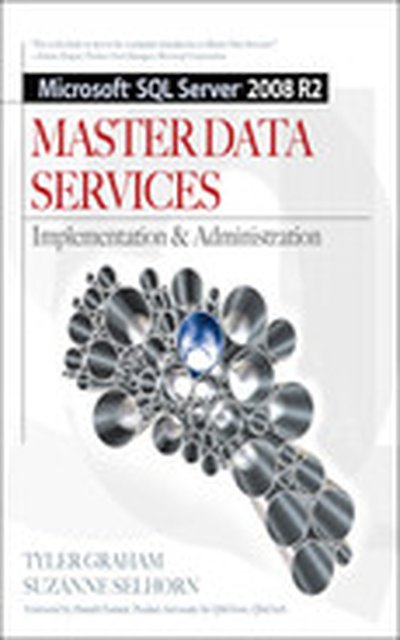
Microsoft SQL Server 2008 R2 Master Data Services

Best Practices for Deploying and Managing Master Data Services (MDS) Effectively manage master data and drive better decision making across your enterprise with detailed instruction from two MDS experts. Microsoft SQL Server 2008 R2 Master Data Services Implementation & Administration shows you how to use MDS to centralize the management of key data within your organization. Find out how to build an MDS model, establish hierarchies, govern data access, and enforce business rules. Legacy system integration and security are also covered. Real-world programming examples illustrate the material presented in this comprehensive guide. Create a process-agnostic solution for managing your business domains Learn how to take advantage of the data modeling capabilities of MDS Manage hierarchies and consolidations across your organization Import data by using SQL Server Integration Services and T-SQL statements Ensure data accuracy and completeness by using business rules and versioning Employ role-based security at functional, object, and attribute levels Design export views and publish data to subscribing systems Use Web services to progrmmatically interact with your implementation

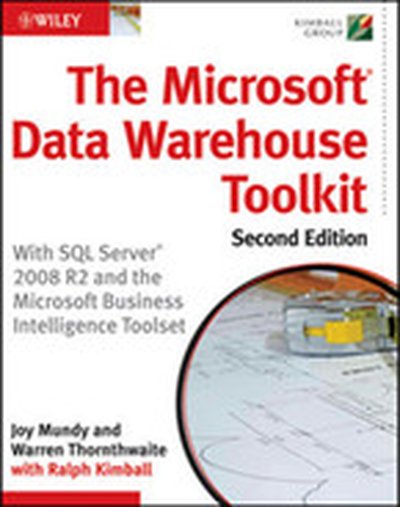
The Microsoft® Data Warehouse Toolkit: With SQL Server 2008 R2 and the Microsoft® Business Intelligence Toolset, Second Edition

Best practices and invaluable advice from world-renowned data warehouse experts In this book, leading data warehouse experts from the Kimball Group share best practices for using the upcoming "Business Intelligence release" of SQL Server, referred to as SQL Server 2008 R2. In this new edition, the authors explain how SQL Server 2008 R2 provides a collection of powerful new tools that extend the power of its BI toolset to Excel and SharePoint users and they show how to use SQL Server to build a successful data warehouse that supports the business intelligence requirements that are common to most organizations. Covering the complete suite of data warehousing and BI tools that are part of SQL Server 2008 R2, as well as Microsoft Office, the authors walk you through a full project lifecycle, including design, development, deployment and maintenance. Features more than 50 percent new and revised material that covers the rich new feature set of the SQL Server 2008 R2 release, as well as the Office 2010 release Includes brand new content that focuses on PowerPivot for Excel and SharePoint, Master Data Services, and discusses updated capabilities of SQL Server Analysis, Integration, and Reporting Services Shares detailed case examples that clearly illustrate how to best apply the techniques described in the book The accompanying Web site contains all code samples as well as the sample database used throughout the case studies The Microsoft Data Warehouse Toolkit, Second Edition provides you with the knowledge of how and when to use BI tools such as Analysis Services and Integration Services to accomplish your most essential data warehousing tasks.