talk-data.com talk-data.com

Topic

SAP

enterprise_software erp business_intelligence

135

tagged

Activity Trend

22 peak/qtr
2020-Q1 2026-Q1

Activities

Showing filtered results

Filtering by: O'Reilly Data Engineering Books ×
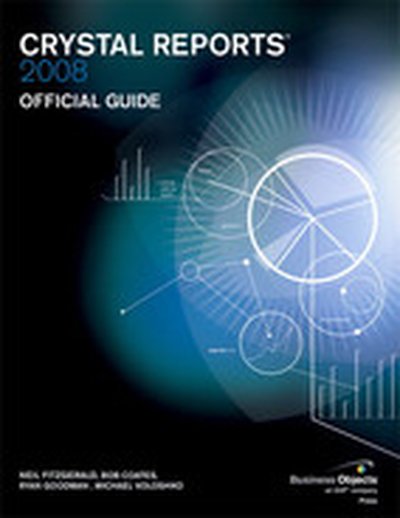
Crystal Reports® 2008 Official Guide

CRYSTAL REPORTS® 2008 OFFICIAL GUIDE Whether you’re a DBA, data warehousing or business intelligence professional, Every significant enhancement introduced in Crystal Reports 2008 is covered, including its new visualization options and more robust Web services capabilities. The book concludes by showing how to use Crystal Reports’ powerful .NET and Java SDKs to customize and extend enterprise reporting in virtually unlimited ways. • Learn hands-on, through step-by-step examples and exercises–and discover tips and tricks proven in real-world enterprise environments • Master new Crystal Reports 2008 features, including interactive report viewing, Xcelsius dashboarding, Flex, and Flash integration, Report Designer improvements, report bursting, and more • Publish professional-quality reports against virtually any data source, including relational and OLAP databases, Universes, SAP, PeopleSoft, JavaBeans, .NET/COM objects, XML, and more • Discover advanced visualization techniques using Xcelsius, charts, and maps • Learn methods for distributing reports and integrating content into other applications • Learn about the latest reporting addition to the Business Objects family–Xcelsius and begin creating dynamic and interactive dashboards NEIL FITZGERALD has spent several years working at Business Objects and with one of Business Objects’ largest providers of custom BI and enterprise reporting solutions. BOB COATES currently works as a Sales Consultant for Business Objects, an SAP company, where he has been employed for more than eleven years. RYAN GOODMAN is the founder of Centigon Solutions, Inc., and remains one of the top Xcelsius experts and evangelists in the world. MICHAEL VOLOSHKO is a senior presales consultant for the financial services team at Business Objects. ON THE WEB Find all this and more at informit.com/sams: • Java and .NET sample reports and code samples for all examples in the book • Bonus chapters, tips, tricks, and links to great reporting resources CATEGORY: Database COVERS: Crystal Reports 2008, Crystal Reports Server 2008, Crystal Reports Viewer, crystalreports.com, Xcelsius 2008 USER LEVEL: Beginning–Intermediate informit.com/sams

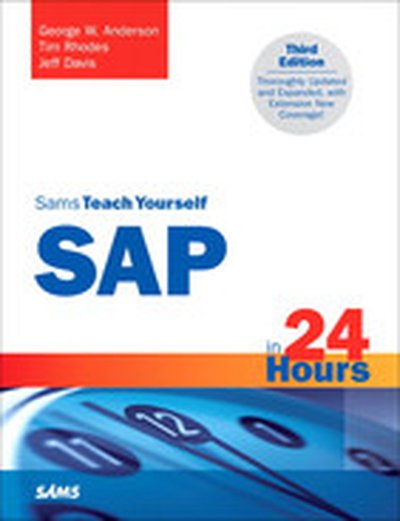
Sams Teach Yourself SAP in 24 Hours, Third Edition

Third Edition: Thoroughly Updated and Expanded, with Extensive New Coverage! In just 24 sessions of one hour or less, you’ll master the entire SAP project lifecycle, from planning through implementation and system administration through day-to-day operations. Using this book’s straightforward, step-by-step approach, you’ll gain a strong real-world foundation in both the technology and business essentials of today’s SAP products and applications— from the ground up. Step-by-step instructions walk you through the most common questions, issues, and tasks you’ll encounter with SAP. Case study-based exercises help you build and test your knowledge. By the Way notes present interesting pieces of information. Did You Know? tips offer advice or teach an easier way. Watch Out! cautions warn about potential problems. Learn how to… Understand SAP’s newest products for enterprises and small-to-midsize businesses, and choose the right solutions for your company Discover how SAP integrates with Web services and service-oriented architecture Develop an efficient roadmap for deploying SAP in your environment Plan your SAP implementation from business, functional, technical, and project management perspectives Leverage NetWeaver 7.0 features to streamline development and integration, and reduce cost Walk through a step-by-step SAP technical installation Master basic SAP system administration and operations Perform essential tasks such as logon, session management, and printing Build SAP queries and reports Prepare for SAP upgrades and enhancements Develop your own personal career as an SAP professional Register your book at informit.com/title/9780137142842 for convenient access to updates and corrections as they become available.

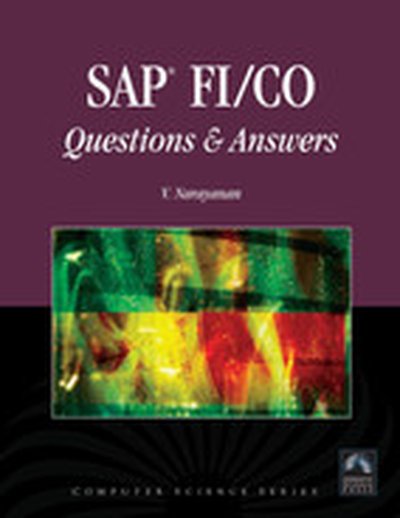
SAP® FI/CO Questions and Answers

This up-to-date “quick reference guide” is an easy, fast, and convenient way of learning SAP FI CO (including SAP R/3 4.70 Enterprise and SAP ERP(ECC)6.0); it also covers ABAP and Basis on the technical side, and MM, SD, and PP on the functional side to provide a thorough understanding of the SAP system. Separate sections on SAP Tables and SAP Transaction Codes guide you through the intricacies of the SAP modules and the 100-page section of SAP Terminology provides an excellent reference for mastering acronyms, codes, and definitions of the multiple components of this popular software.

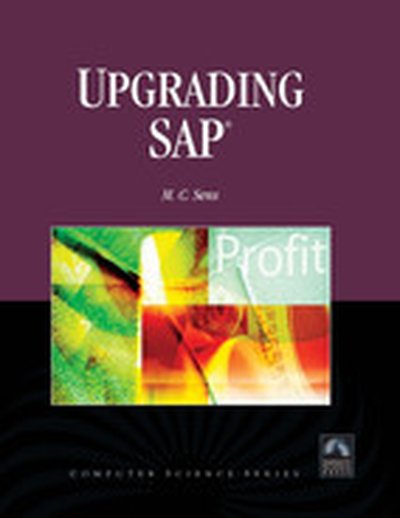
Upgrading SAP®

The purpose of this book is to remove the veil of secrecy surrounding SAP upgrade techniques and concepts, and to provide the user with a detailed description of the steps needed for a successful implementation. Today more than 12 million people in 120 countries who are working for 36,200 companies are using SAP on a regular basis. This popular, but very complex software system must be constantly reconfigured and upgraded to accommodate its latest releases. Upgrading SAP provides a complete overview of the process to upgrade from one SAP release to the next one and explains with detailed descriptions, the use of all relevant SAP upgrade tools. Along with a technical description of the SAP NetWeaver Application Server (AS), it also discusses personnel issues and the economic ramifications of such an upgrade project. Examples in this book are based on various different SAP products and releases, such as SAP NetWeaver 2004, 2004S (also known as NetWeaver 7.0 and 7.1), and SAP Business Suite 2005 with SAP ERP 6.0, BI, CRM, SCM, and SRM. Conceived as both a teaching book and as a reference manual, it covers all the techniques, background information, notes, tips, and tricks needed for any SAP upgrade project. A CD-ROM accompanies the book with templates and outlines for the upgrading process, as well as third-party SAP-related material.

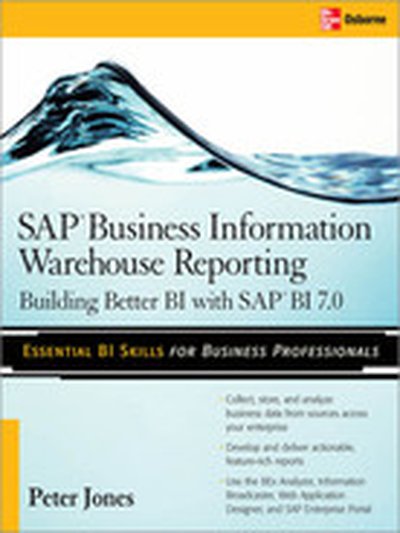
SAP Business Information Warehouse Reporting

Your Hands-On Guide to SAP Business Information Warehouse Give your company the competitive edge by delivering up-to-date, pertinent business reports to users inside and outside your enterprise. SAP Business Information Warehouse Reporting shows you how to construct Enterprise Data Warehouses, create workbooks and queries, analyze and format results, and supply meaningful reports. Learn how to use the BEx and Web Analyzers, Web Application Designer, Visual Composer, and Information Broadcaster. You will also find out how to forecast future business trends, build enterprise portals and websites, and tune performance. Group data into InfoCubes and DataStore Objects and generate reports using queries and workbooks Work with the BEx Analyzer, Web Analyzer, and Query Designer Build queries and reports using the Business Administration Workbench Add attachments and drill-through using Document Integration and RRI Format and distribute results using Report Designer and Information Broadcaster Extend functionality with Enterprise Portal, Data Modeling, and Visual Composer Deploy charts, maps, diagrams, and unit of measure conversions Predict trends and possible outcomes using SBC and Integrated Planning Generate HTML pages using Enterprise Reporting and Web Application Designer Create BI-based corporate Web and intranet sites using SAP Enterprise Portal

Infrastructure Solutions: Design, Manage, and Optimize a 60 TB SAP NetWeaver Business Intelligence Data Warehouse

In order to improve the performance and operational efficiency of businesses worldwide, a customer using SAP® wanted to establish a global business program to define and implement a standardized, group-wide business process architecture and associated master data for the parameterization of the group of software tools. The expected growth of the number of users and the size of the database would be at a level never reached by other customers, however, so IBM® was asked to undertake the following tasks: * Test the application to be sure that it can sustain such growth. This project illustrates the new near real time business intelligence (BI) context approached by customers who want the ability to rapidly analyze their business data to gain market shares. Data today comes from many diverse global sources and needs to be merged into an intelligent data warehouse. This IBM Redbooks® publication describes the testing that was done in terms of performance and manageability in an SAP NetWeaver® BI and DB2® environment on IBM System p™ when scaling a client's solution to a data warehouse of 60 terabytes (TB). This book resulted from a joint cooperative effort that included the PSSC, the IBM/SAP International Competency Center, the DB2-SAP Center of Excellence, SAP AG, and a customer. The customer involved in this project is a worldwide company employing more than 250,000 employees with factories and logistics operations in almost every country in the world. This project involved multiple technical skills and multiple products, as described here: * Chapter 1, "Project overview: business objectives, architecture, infrastructure, and results" on page 1, summarizes the entire project, starting from the business needs through the description of the environment and options used, to the results achieved. This chapter can be viewed as an executive summary from an IT specialist perspective. * Chapter 2, "The SAP NetWeaver BI perspective" on page 47; Chapter 3, "The DB2 perspective" on page 127; and Chapter 4, "The IBM System p perspective" on page 287, provide detailed views of the project from the perspectives of SAP specialists, DB2 specialists, and System p and AIX® specialists, respectively. * Chapter 5, "The system storage perspective" on page 319, and Chapter 6, "The Tivoli Storage Manager perspective" on page 349, describe the storage environment and the manageability issues in such a large environment. * Finally Appendix A, "The scripts used" on page 395, provides the scripts that we needed to develop for this project.

Implementing and Testing SOA on IBM System z: A Real Customer Case

Service-oriented architecture (SOA) is one of the most important topics on the agenda of any IT person. SOA involves a new vision of how to design, develop, and manage applications. It also has new requirements when building an architecture for the underlying infrastructure. This IBM Redbooks publication is the result of a project managed in the IBM European Design Center, based in Montpellier, France. The scope of the project involved helping a major worldwide customer in the automotive industry to validate and justify an SOA implementation. In particular, the customer wanted to add new business values to work with its partners, by adding new data models. It also wanted to modernize an infrastructure, by adding new Internet interfaces. The customer faced the need to eradicate an obsolete programming language. Furthermore, it wanted to build a smooth migration path, with as few risks and costs as possible. The thought, planning, and architecture of the new system, which included integration of the SOA concepts, was built by the customer with the participation of Atos Origin, a leading international IT services provider. The existing customer IT infrastructure was already built around UNIX systems, IBM System z, non-IBM clusters, SAP solutions, 3270 screens, IMS-DL/I databases, and specific code. SOA was the right solution to connect this existing environment to new components using Java, Web services, and DB2 in particular. This book explores the business needs and the architectural choices that were faced by the customer. It describes the mock-ups and prototypes, provides performance numbers that were used to validate the decisions, and explains how they were implemented. It also suggests a generic and riskless solution to eradicate the obsolete programming language.

Enhancing SAP by Using DB2 9 for z/OS

This IBM Redbooks publication presents many of the new and improved features and functions of DB2 V9.1 for z/OS and DB2 Connect V9.1. It explains how they complement and benefit your SAP NetWeaver environment. This book also shares some of our experiences in migrating our DB2 V8 SAP data sharing environment to DB2 9 for z/OS with a minimal amount of outage. This book is written for SAP and DB2 administrators. Knowledge of these products and of the z/OS environment is assumed.

Testing SAP R/3: A Manager's Step-by-Step Guide

Testing SAP R/3: A Manager's Step-by-Step Guide shows how to implement a disciplined, efficient, and proven approach for testing SAP R/3 correctly from the beginning of the SAP implementation through post-production support. The book also shows SAP professionals how to efficiently provide testing coverage for all SAP objects before they are moved into a production environment.

IBM System Storage N Series for SAP

This IBM Redbooks publication provides best practices for deploying IBM System Storage N series storage systems, in support of mySAP Business Suite solutions that run in UNIX and NFS environments that use a DB2 database. We address common storage infrastructure design, operation, and management challenges that are faced by businesses and IT personnel, deploying the latest generation of SAP solutions.

SAP SCM: Applications and Modeling for Supply Chain Management (with BW Primer)

SAP SCM: Applications and Modeling for Supply Chain Management empowers you to capitalize on the sophistication of SAP APO. This book provides clear advice on the inevitable, critical decisions that can lead to project success or failure and shows you, wherever you are on the supply chain management staff—buyer, planner, ground controller or analyst—to fully exploit the agility SAP APO offers.

IBM Tivoli Storage Manager for Advanced Copy Services

Backing up SAP software environments is increasingly challenging in today’s 24x7 enterprises. Even more challenging is restoring these environments. Applications and databases grow ever larger, putting increasing strain on the management infrastructure. Using hardware-assisted copy mechanisms to perform fast backups and restores is one way to address these issues. Tivoli Storage Manager, along with associated products, allows you to leverage FlashCopy to perform fast backups, almost “instant” restores, as well as database cloning for testing and other purposes. These applications are fully integrated with SAP software in DB2 UDB and Oracle environments, providing reliable, intelligent techniques for data protection. This IBM Redbooks publication will help you plan, configure, and run IBM Tivoli Storage Manager for Advanced Copy Services and associated applications in your SAP software environments.

Mastering Enterprise SOA with SAP NetWeaver® and mySAP™ ERP
  • SAP is investing billions to redesign its flagship R/3 product line based on its ESA, and that ESA will become the standard framework for developing all new SAP ERP applications with NetWeaver * This book provides an overview of the core building blocks of SAP's new ESA, and shows how ESA works with the NetWeaver platform as well as mySAP ERP * A step-by-step action plan proposes ideas for designing ESA-based SAP applications * The companion Web site contains in-depth case examples that show how to build various SAP services and applications using the NetWeaver development tools, plus third-party tools * Some of the SAP tools covered include NetWeaver Developer Studio, WebDynPro and NetWeaver Portal, NetWeaver BI, and the SAP Composite Application Framework
SAP Query Reporting

SAP Query Reporting is everything an SAP user needs to know to create your own reports in SAP using Query tools, no programming required! Designed as a hands-on learning aid, you will be able to follow along and perform each new skill learned on your own SAP system. The book's tutorial style, step-by-step instruction will teach you everything you need to know to use the SAP Query tools, including its configuration, advanced usage, and integration to Microsoft. Additionally the book gives best business practice recommendations for the technology and internal business use of the tools. Learn to: Understand query security, table reads, and table joins Perform basic and advanced calculations Incorporate pictures and graphics into reports Configure shortcuts and tran codes, schedule jobs and email PDFs Utilize SAP Reporting with Microsoft Office applications

Business Process Execution Language for Web Services - Second Edition

Key Features Architecture, syntax, development and composition of Business Processes and Services using BPEL Advanced BPEL features such as compensation, concurrency, links, scopes, events, dynamic partner links, and correlations Oracle BPEL Process Manager and BPEL Designer Microsoft BizTalk Server as a BPEL server Book Description Web services provide the basic technical platform required for application interoperability. They do not, however, provide higher level control, such as which web services need to be invoked, which operations should be called and in what sequence. Nor do they provide ways to describe the semantics of interfaces, the workflows, or e-business processes. BPEL is the missing link to assemble and integrate web services into a real business process BPEL4WS standardizes process automation between web services. This applies both within the enterprise, where BPEL4WS is used to integrate previously isolated systems, and between enterprises, where BPEL4WS enables easier and more effective integration with business partners. In providing a standard descriptive structure BPEL4WS enables enterprises to define their business processes during the design phase. Wider business benefits can flow from this through business process optimization, reengineering, and the selection of most appropriate processes . Supported by major vendors - including BEA, Hewlett-Packard, IBM, Microsoft, Novell, Oracle, SAP, Sun, and others - BPEL4WS is becoming the accepted standard for business process management. This book provides detailed coverage of BPEL4WS, its syntax, and where, and how, it is used. It begins with an overview of web services, showing both the foundation of, and need for, BPEL. The web services orchestration stack is explained, including standards such as WS-Security, WS-Coordination, WS-Transaction, WS-Addressing, and others. The BPEL language itself is explained in detail, with Code snippets and complete examples illustrating both its syntax and typical construction. Having covered BPEL itself, the book then goes on to show BPEL is used in context. by providing an overview of major BPEL4WS servers. It covers the Oracle BPEL Process Manager and Microsoft BizTalk Server 2004 in detail, and shows how to write BPEL4WS solutions using these servers. What you will learn Chapter 1 provides a detailed introduction to BPEL and Service Oriented Architecture (SOA). It discusses business processes and their automation, explains the role of BPEL, web services, and Enterprise Service Buses (ESB) in SOA, provides insight into business process composition with BPEL, explains the most important features, compares BPEL to other specifications, provides an overview of BPEL servers, and discusses the future of BPEL. Chapter 2 provides a detailed introduction to the Web Services Technology Stack. It discusses the important standards and specifications for using BPEL and implementing SOA with web services, such as WS-Security, WS-Addressing, WS-Coordination, WS-AtomicTransaction, WS-BusinessActivity, WS-Reliable Messaging, etc. Chapter 3 discusses the composition of web services with BPEL. The chapter introduces the core concepts of BPEL and explains how to define synchronous and asynchronous business processes with BPEL. The reader gets familiar with BPEL process structure, partner links, sequential and parallel service invocation, variables, conditions, etc. Chapter 4 goes deeper into the BPEL specification and covers advanced features for modeling complex business processes. Advanced activities, scopes, serialization, fault handing, compensations, event handling, correlation sets, concurrent activities and links, process lifecycle, and dynamic partner links are covered in detail. Chapter 5 explains how to use the Oracle BPEL Process Manager for deploying and executing business processes defined in BPEL. It describes the server architecture, tools, features, and common approaches for managing and debugging BPEL processes. The chapter also looks at graphical development of BPEL processes using Oracle BPEL Designer for JDeveloper and for Eclipse. Chapter 6 takes a detailed look at the advanced features of the Oracle BPEL Process Manager including extension functions, dynamic parallel flows, Web Services Invocation Framework, Java embedding, Notification service, Workflow service, Identity service, and Oracle BPEL Server APIs. Chapter 7 discusses MS BizTalk Server 2004 and its support for BPEL. It explains how to develop business processes in BizTalk and export them to BPEL. It also explains how to import BPEL processes into BizTalk and how to use the Orchestration Designer tool to define processes graphically, and compares BizTalk and BPEL constructs. Appendix A provides a syntax reference for BPEL version 1.1. The appendix covers standard BPEL activities and elements, functions, attributes, and faults. Who this book is for This book is aimed at architects and developers in the design, implementation, and integration phases of advanced information systems and e-business solutions, developing business processes and dealing with the issues of composition, orchestration, transactions, coordination, and security. The book presumes knowledge of XML and web services, web services development (either on J2EE or .NET), and multi-tier architecture

SAP R/3 Handbook, Third Edition, 3rd Edition

Implement a comprehensive, integrated application platform Take full advantage of the power, flexibility, and adaptability of SAP -- the premier solution for service-based, enterprise-scale business processes. SAP R/3 Handbook, Third Edition offers complete coverage of installation, implementation, operation, and support. You'll get full details on all the components, including SAP Web Application Server, SAP NetWeaver, the ABAP workbench, and more. Administration, security, and integration with other systems is also covered. ESSENTIAL SKILLS FOR SAP TECHNICAL CONSULTANTS Get an overview of SAP business, integration, and collaboration solutions Understand SAP Web Application Server architecture Get details on the SAP NetWeaver platform Access SAP systems through the SAP presentation interface Use the ABAP workbench development environment Handle system administration and implement security Manage system-wide changes with the Transport Management System (TMS) Analyze performance and troubleshoot SAP solutions

Sams Teach Yourself SAP™ in 24 Hours, Second Edition

A new edition of this book is now available, ISBN-10: 0137142846 ISBN:13 9780137142842 Sams Teach Yourself SAP in 24 Hours, Second Edition is the perfect tool for learning one of the most sophisticated enterprise solutions available today. Designed to being with the basics, you will become acquainted with the entire SAP system, from navigation to creating your own reports. You'll also cover: Implementation tools and methodologies NetWeaver ECC 5.0 Designing Screens and menus Reporting Integration with Microsoft Office And more Written by leading SAP consultants with over 20 years of combined experience, this easy-to-understand tutorial is ideal for getting up and running with SAP quickly and efficiently.

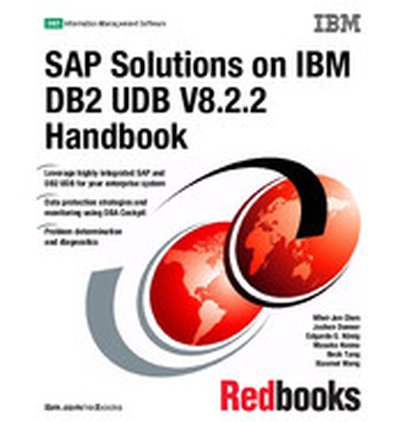
SAP Solutions on IBM DB2 UDB V8.2.2 Handbook

IBM and SAP share a vision for responding to customers' specific requirements for tighter integration, platform flexibility, lower total cost of ownership, and improved performance. DB2 UDB V8.2.2 is an SAP-optimized version that uses autonomic computing technologies specifically tuned to help SAP users streamline installation, improve performance, and increase availability. This IBM Redbooks publication provides information for SAP consultants and SAP system administrators. It includes the latest DB2 UDB architecture details, SAP-related features and functions, practical advice on SAP NetWeaver 2004 installations, and DB2 configuration in SAP environments. We describe DB2 UDB’s logical and physical database objects, storage management, SAPs data classes, and space reclamation strategies, and provide the best practices for intelligent storage subsystems. We also discuss how to use DBA Cockpit to monitor your system, DB2 UDB log file management, database backup and recovery, and high availability and clustered solutions. We introduce the Problem Description / Problem Source Identification (PD/PSI) methodology, and the troubleshooting approaches for common problems. Finally, we include a discussion of the new features of SAP NetWeaver 2004s Business Intelligence (SAP BI) with DB2 UDB V8.2.2.

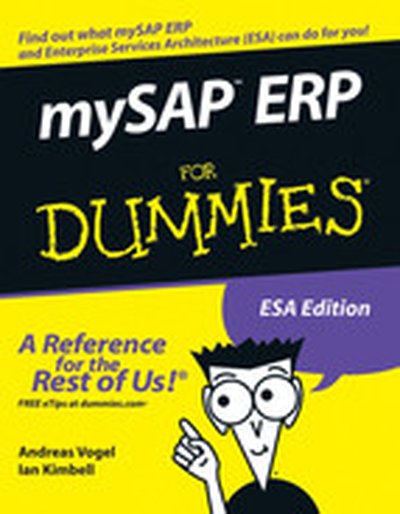
mySAP™ ERP For Dummies®

SAP is the world's leading provider of ERP software and services, with worldwide revenue in 2004 of $9.7 billion and a 57 percent market share among major business application providers; it is one of the world's largest software companies overall ERP is a flexible, open technology platform that helps businesses run more efficiently (and profitably) by providing integrated management of key operations and supply chains Written for IT professionals who find it hard to get through SAP's complex documentation, our book demonstrates how ERP can cut costs, provides a clear overview of how the ESA (enterprise service architecture) model affects ERP, and shows how to implement the new ERP in the real world Topics covered include reducing the cost of an existing IT backbone, using the new ERP to address a company's "pain points" and challenges, and proving the value of ERP through ROI (return on investment) and TCO (total cost of ownership) studies