talk-data.com talk-data.com

Topic

XML

Extensible Markup Language (XML)

markup_language data_exchange data_storage file_format

289

tagged

Activity Trend

1 peak/qtr
2020-Q1 2026-Q1

Activities

289 activities · Newest first

Guru's Guide to SQL Server™ Stored Procedures, XML, and HTML, The

"This is a book that deserves a prominent place by anyone who aspires to be a real professional developer of SQL Server applications." --from the Foreword by Ron Soukup The message of this book is that building stored procedures in Transact-SQL is very much like building programs in any other language. It requires the same type of skill, planning, attention to detail, and overall grasp of technology that successful development in other languages requires. To master Transact-SQL, one must first master the fundamental concepts of software development, then build on this foundation by embracing and studying Transact-SQL as a programming language in its own right. This book teaches you how to do that and more. More than just a catalog of coding tricks and syntax subtleties, explores the philosophy of Transact-SQL programming. It teaches readers how to apply this philosophy in order to develop their own coding techniques and discover their own solutions to real-world programming problems. A follow-up to the widely acclaimed The Guru's Guide to SQL Server(TM) Stored Procedures, XML, and HTML The Guru's Guide to Transact-SQL, this book teaches that stored procedure development does not occur in a vacuum--it involves a wide variety of skills, subjects, and technologies--and helps the reader become a better software engineer, not just a stored procedure expert. Blending theoretical detail with practical application, this comprehensive reference begins with a foundational overview of SQL Server(TM) stored procedure programming. From there, the focus moves on to best practices and design considerations before progressing to advanced topics and a general philosophy of software craftsmanship. In all, this book provides the most complete coverage of SQL Server stored procedure programming available in one source. Topics such as user-defined functions, views, triggers, extended procedures, error handling, OLE Automation, database design, and XML are covered in detail. The book spotlights undocumented language features and brings the first application of design patterns to the SQL language. The preview of .NET and a groundbreaking approach to adding arrays to Transact-SQL make for the most thorough and engaging read published to date on SQL Server programming. The accompanying CD-ROM contains the book's source code. More than 700 SQL scripts, programming utilities, and extended procedures provide a veritable treasure trove of high-quality example code. Theoretically sound, yet immensely practical, provides developers with the tools they need to become expert stored procedure programmers and better software engineers. The Guru's Guide to SQL Server(TM) Stored Procedures, XML, and HTML 0201700468B11262001
XML Companion, The, Third Edition

Building on the success of the first and second editions of The XML Companion, Neil Bradley has up-dated this accessible, in-depth reference to cover many of the new supporting standards that have emerged since XML was released in 1998. Apart from the core chapters on the XML standard itself, this book concentrates on related standards developed by the W3C and on the two most popular applications of this technology: document publishing and data exchange. The XML Companion Provides accessible, comprehensive description of each XML feature Does not assume experience of HTML or SGML Detailed study of the standard is supported by the inclusion of cross-referenced ‘roadmaps’ of the building blocks that comprise the standard. Includes an extensive glossary Related standards for cataloguing, processing, linking and styling XML are covered in detail.

XML and SQL: Developing Web Applications

"Dan's book provides something that the formal standards and development manuals sorely lack: a context that helps developers understand how to use XML in their own projects." --Tim Kientzle, Independent Software Consultant is a guide for Web developers and database programmers interested in building robust XML applications backed by SQL databases. It makes it easier than ever for Web developers to create and manage scalable database applications optimized for the Internet. XML and SQL: Developing Web Applications The author offers an understanding of the many advantages of both XML and SQL and provides practical information and techniques for utilizing the best of both systems. The book explores the stages of application development step by step, featuring a real-world perspective and many examples of when and how each technology is most effective. Specific topics covered include: Project definition for a data-oriented application Creating a bullet-proof data model DTDs (document type definitions) and the design of XML documents When to use XML, and what parts of your data should remain purely relational Related standards, such as XSLT and XML Schema How to use the XML support incorporated into Microsoft's SQL Server™ 2000 The XML-specific features of J2EE™ (Java™ 2 Enterprise Edition) Throughout this book, numerous concrete examples illustrate how to use each of these powerful technologies to circumvent the other's limitations. If you want to use the best part of XML and SQL to create robust, data-centric systems then there is no better resource than this book. 0201657961B10152001

Applied SOAP: Implementing .NET XML Web Services

This book takes the reader from the architecture of .NET to real-world techniques they can use in their own Internet applications. The reader is introduced to .NET and Web Services and explores (in detail) issues surrounding the fielding of successful Web Services. Practical guidelines as well as solutions are provided that the rader may use in their own projects. Some of the issues involve lack of specific guidance in the SOAP specification, while others transcend SOAP and involve issues Internet developers have grappled with since the inception of the World Wide Web. At this time, this book has no competition.

Strategic XML

Strategic XML analyses the IT systems of a typical large corporation and gives specific, fully-functional examples that show how XML can solve problems today while positoning your company for the demands of tomorrow. Strategic XML addresses: XML Web content publishing, a simple workflow system, an offline order processing system, SOAP client and server examples, legacy system integration (using COBOL), and a unified Web and print documentation system based on XML and XSL.

Special Edition Using SOAP

This book will introduce the reader to SOAP and serve as a comprehensive reference to both experienced and new developers in the area. Only one other book completely dedicated to SOAP is currently on the market, and it has strong sales because no other information is available. SE Using SOAP will capture more readers than the competition because it provides real-world examples and troubleshooting with complete data conversion information. The emphasis will be on getting started fast instead of reading through white paper-style theory in hopes of finding applicable information. By reading this book and working through the examples, the reader will be well versed in SOAP and its applications immediately. SE Using SOAP includes difficult to find information on how SOAP works with different languages and protocols including Visual Basic.NET, Visual Basic 6, C#, XML, HTTP, SDL, DISCO, COM, SQL Server, plus much more. Also covers how to work with PDAs, an ever-growing need in the data transfer market.

XSLT

XSLT documents a core technology for processing XML. Originally created for page layout, XSLT (Extensible Stylesheet Transformations) is now much more: a general-purpose translation tool, a system for reorganizing document content, and a way to generate multiple results-- such as HTML, WAP, and SVG--from the same content. What sets XSLT apart from other books on this critical tool is the depth of detail and breadth of knowledge that Doug Tidwell, a developer with years of XSLT experience, brings to his concise treatment of the many talents of XSLT. He covers XSLT and XPath, a critical companion standard, and addresses topics ranging from basic transformations to complex sorting and linking. He explores extension functions on a variety of different XSLT processors and shows ways to combine multiple documents using XSLT. Code examples add a real-world dimension to each technique. Useful as XSLT is, its peculiar characteristics make it difficult to get started in, and the ability to use advanced techniques depends on a clear and exact understanding of how XSLT templates work and interact. For instance, the understanding of "variables" in XSLT is deeply different from the understanding of "variables" in procedural languages. The author explains XSLT by building from the basics to its more complex and powerful possibilities, so that whether you're just starting out in XSLT or looking for advanced techniques, you'll find the level of information you need.

Java and XML, Second Edition

While the XML "buzz" still dominates talk among Internet developers, the critical need is for information that cuts through the hype and lets Java programmers put XML to work. Java & XML shows how to use the APIs, tools, and tricks of XML to build real-world applications, with the end result that both the data and the code are portable. This second edition of Java & XML adds chapters on Advanced SAX and Advanced DOM, new chapters on SOAP and data binding, and new examples throughout. A concise chapter on XML basics introduces concepts, and the rest of the book focuses on using XML from your Java applications. Java developers who need to work with XML, or think that they will in the future--as well as developers involved in the new peer-to-peer movement, messaging, or web services--will find the new Java & XML a constant companion. This book covers: The basics of XML, including DTDs, namespaces, XML Schema, XPath, and XSL The SAX API, including all handlers, the SAX 2 extensions, filters, and writers The DOM API, including DOM Level 2, Level 3, and the Traversal, Range, CSS, Events, and HTML modules. The JDOM API, including the core, a look at XPath support, and JDOM as a JSR Using web publishing frameworks like Apache Cocoon Developing applications with XML-RPC Using SOAP and UDDI for web services Data Binding, using both DTDs and XML Schema for constraints Building business-to-business applications with XML Building information channels with RSS and dynamic content with XSP Includes a quick reference on SAX 2.0, DOM Level 2, and JDOM.

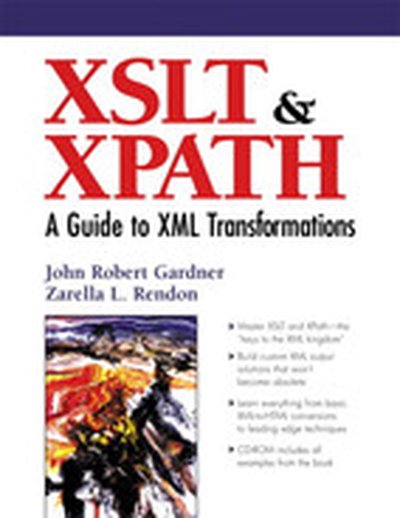
XSLT and XPATH: A Guide to XML Transformations

Gain total control over your information with XSLT and XPath! Master XSLT and XPath—the "keys to the XML kingdom" Build custom XML output solutions that won't become obsolete Learn everything from basic XML-to-HTML conversions to leading edge techniques CD-ROM includes all examples from the book Mastering XSLT and XPath gives you unprecedented control over your information—and helps you leverage virtually every new XML technology, from XLink to schemas. Discover XSLT's powerful vocabulary of easy, programming-like features, and learn how to build custom solutions that resist obsolescence. By the end of the first chapter, you'll be performing XML-to-HTML conversions for display in any Web browser. Then build on your knowledge through a series of hands-on examples that transform you into an XSLT/XPath expert! XSLT as an XML document instance: leveraging your existing XML skills XSLT stylesheet concepts and constructs: fundamental through advanced level XPath patterns and functions XSLT subroutine functions and variables XSLT processing of multiple nodes: iterative and conditional XSLT elements Controlling output options XSLT extensions, and more Whether you're an experienced programmer or a novice markup specialist, here's your chance to master XML's most potent tools for organizing, updating, and delivering digital information—any data, anywhere, any time!

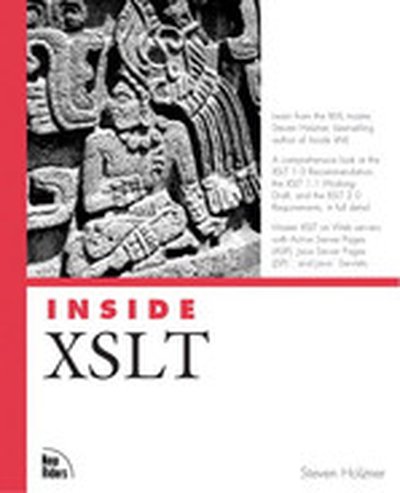
Inside XSLT

Inside XSLT is designed to be a companion guide to Inside XML. This example oriented book covers XML to HTML, XML to Music, XML with Java, style sheet creation and usage, nodes and attributes, sorting data, creating Xpath expressions, using Xpath and XSLT functions, namespaces, names templates, name variables, designing style sheets and using XSLT processor API's, the 56 XSL formatting objects, the XSLT DTD, and much much more.

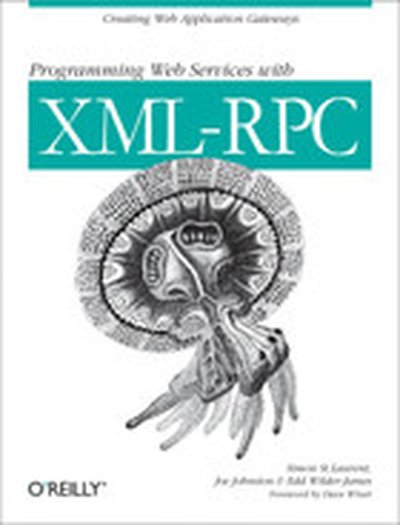
Programming Web Services with XML-RPC

Have you ever needed to share processing between two or more computers running programs written in different languages on different operating systems? Or have you ever wanted to publish information on the Web so that programs other than browsers could work with it? XML-RPC, a system for remote procedure calls built on XML and the ubiquitous HTTP protocol, is the solution you've been looking for. Programming Web Services with XML-RPC introduces the simple but powerful capabilities of XML-RPC, which lets you connect programs running on different computers with a minimum of fuss, by wrapping procedure calls in XML and establishing simple pathways for calling functions. With XML-RPC, Java programs can talk to Perl scripts, which can talk to Python programs, ASP applications, and so on. You can provide access to procedure calls without having to worry about the system on the other end, so it's easy to create services that are available on the Web.XML-RPC isn't the only solution for web services; the Simple Object Access Protocol (SOAP) is another much-hyped protocol for implementing web services. While XML-RPC provides fewer capabilities than SOAP, it also has far fewer interoperability problems and its capabilities and limitations are much better understood. XML-RPC is also stable, with over 30 implementations on a wide variety of platforms, so you can start doing real work with it immediately. Programming Web Services with XML-RPC covers the details of five XML-RPC implementations, so you can get started developing distributed applications in Java, Perl, Python, ASP, or PHP. The chapters on these implementations contain code examples that you can use as the basis for your own work. This book also provides in-depth coverage of the XML-RPC specification, which is helpful for low-level debugging of XML-RPC clients and servers. And if you want to build your own XML-RPC implementation for another environment, the detailed explanations in this book will serve as a foundation for that work.

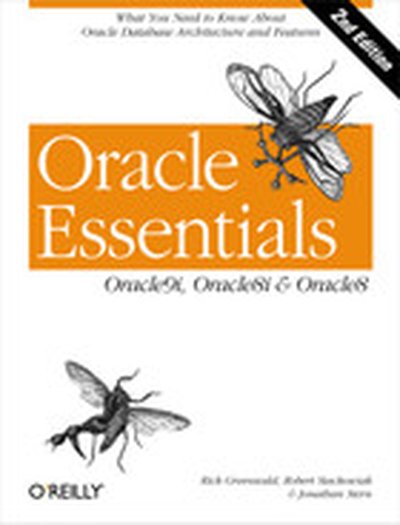
Oracle Essentials: Oracle9i, Oracle8i and Oracle8, Second Edition

The second edition of O'Reilly's bestselling Oracle Essentials has been updated to include the latest Oracle release, Oracle9 i. Oracle Essentials distills an enormous amount of information about Oracle's myriad technologies and releases into a compact, easy-to-read volume filled with focused text, illustrations, and helpful hints. Oracle9 i promises to be an even more significant upgrade than Oracle8 i, offering such major features as Real Application Clusters, flashback queries, Oracle personalization, clickstream intelligence, and Oracle Database Cache and Web Cache; it also promises significant improvements in Oracle's business intelligence, XML integration, high availability, and management capabilities. The book includes overviews of these features, as well as the new Oracle9 I Application Server (Oracle9 iAS) and Oracle9 i Portal. The book contains chapters on: Oracle products, options, and overall architecture for Oracle9 i and other recent releases Installing and running Oracle: creating databases, configuring Net8 (known as Oracle Net in Oracle9 i), starting up and shutting down Oracle Oracle data structures, datatypes, and ways of extending datatypes Managing Oracle: security, the Oracle Enterprise Manager, fragmentation and reorganization, and backup and recovery Oracle networking, monitoring, and tuning Multi-user concurrency, online transaction processing (OLTP), and high availability Hardware architectures (e.g., SMP, MPP, NUMA) and their impact on Oracle Data warehousing and distributed databases Oracle9 i, Oracle8 i, and the Web, including the latest Java, web, and XML technologies, interMedia, Oracle9 i Application Server, and Oracle9 i Portal For new Oracle users, DBAs, developers, and managers, Oracle Essentials is an all-in-one introduction to the full range of Oracle features and technologies, including the just-released Oracle9 i features. But even if you already have a library full of Oracle documentation, this compact book is the one you'll turn to, again and again, as your one-stop, truly essential reference.

XML Pocket Reference, Second Edition

XML, the Extensible Markup Language, is the next-generation markup language for the Web. It provides a more structured (and therefore more powerful) medium than HTML, allowing you to define new document types and stylesheets as needed. Although the generic tags of HTML are sufficient for everyday text, XML gives you a way to add rich, well-defined markup to electronic documents. The XML Pocket Reference is both a handy introduction to XML terminology and syntax, and a quick reference to XML instructions, attributes, entities, and datatypes. Although XML itself is complex, its basic concepts are simple. This small book combines a perfect tutorial for learning the basics of XML with a reference to the XML and XSL specifications. The new edition introduces information on XSLT (Extensible Stylesheet Language Transformations) and Xpath.

XML and Java™ from scratch

With the help of XML and Java from scratch, you will build a Web site and application for ChaseWeb Furniture-a fictitious catalog furniture company. All of the information on products, prices, vendors, and so on, is rendered in XML. You'll learn how to display products on the company Web site, take orders, produce a paper catalog, and communicate with the external databases of vendors using XML. The from scratch format is designed to teach novice programmers the hows and whys of programming in the context of creating a functioning application.

Designing SQL Server 2000 Databases

The Microsoft .NET initiative is the future of e-commerce - making it possible for organisations to build a secure, reliable e-commerce infrastructure. This is the first book to outline the capabilities of SQL Server 2000, one of the key components of .NET. SQL Server 2000 introduces powerful new data mining functionality designed specifically to capture and process customer profiles and to predict future buying patterns on e-commerce sites. Designing SQL Server 2000 Databases addresses the needs of IT professionals migrating from the popular SQL 7 databases to the new SQL 2000, as well as those who are starting from scratch. Covers all key features of SQL Server 2000 including; XML support, enhanced data-mining capabilities and integration with Windows 2000 While there are many books available on SQL 7 - this is the first to be announced for SQL 2000 Free ongoing customer support and information upgrades

Learning XML

The arrival of support for XML--the Extensible Markup Language--in browsers and authoring tools has followed a long period of intense hype. Major databases, authoring tools (including Microsoft's Office 2000), and browsers are committed to XML support. Many content creators and programmers for the Web and other media are left wondering, "What can XML and its associated standards really do for me?" Getting the most from XML requires being able to tag and transform XML documents so they can be processed by web browsers, databases, mobile phones, printers, XML processors, voice response systems, and LDAP directories, just to name a few targets. In Learning XML, the author explains XML and its capabilities succinctly and professionally, with references to real-life projects and other cogent examples. Learning XML shows the purpose of XML markup itself, the CSS and XSL styling languages, and the XLink and XPointer specifications for creating rich link structures. The basic advantages of XML over HTML are that XML lets a web designer define tags that are meaningful for the particular documents or database output to be used, and that it enforces an unambiguous structure that supports error-checking. XML supports enhanced styling and linking standards (allowing, for instance, simultaneous linking to the same document in multiple languages) and a range of new applications. For writers producing XML documents, this book demystifies files and the process of creating them with the appropriate structure and format. Designers will learn what parts of XML are most helpful to their team and will get started on creating Document Type Definitions. For programmers, the book makes syntax and structures clear It also discusses the stylesheets needed for viewing documents in the next generation of browsers, databases, and other devices.

Inside XML

The XML explosion hardly needs any introduction-it's everywhere and there just seems to be no end to what can be done with XML. While writing to the W3C standards, and keeping up with the pace for corporate implementation, you, the programmer or web developer, will need a comprehensive guide to get you started and show you what XML and its related technologies can do. A thorough guide is imperative to success because you will need to know and understand the full scope of XML from day one in order to work with it successfully. With your time constraints and impossible project schedules, you need a comprehensive guide that fulfills your needs in one complete book. Inside XML is an anchor book that covers both the Microsoft and non-Microsoft approach to XML programming. It covers in detail the hot aspects of XML; such as, DTD's vs. XML Schemas, CSS, XSL, XSLT, Xlinks, Xpointers, XHTML, RDF, CDF, parsing XML in Perl and Java, and much more.

XML Development with Java™ 2

XML Development with Java 2 provides the information and techniques a Java developer will need to integrate XML into Java-based applications. This book presents a fast-paced introduction to XML and moves quickly into the areas where XML has the biggest impact on Java Development. The book covers crucial topics such as the XML Documet Object Model (DOM), Using Java and XSL to transform and format XML data, Integrating XML into JavaBeans and EJB development, and using XML with Java Servlets. The authors also cover the impact XML has on Java database access and the way XML works with the Swing classes.

Building Oracle XML Applications

This rich and detailed look at the many Oracle tools that support XML development shows Java and PL/SQL developers how to combine the power of XML and XSLT with the speed, functionality, and reliability of the Oracle database. The nearly 800 pages of entertaining text, helpful and time-saving hints, and extensive examples can be put to use immediately to build custom XML applications. Includes a CD-ROM with JDeveloper 3.1, an integrated development environment for Java developers.

XSL companion, The

A concise, comprehensive and accessible guide to the scope, strengths and limitations of the XSL (eXtensible Stylesheet Language) family of stylesheet standards for XML, this book explains the practical ways in which XSL can be utilized for formatting and manipulating information held in the hugely popular XML data format. The huge expansion in usage of XML created the need for a powerful standard for formatting and transforming XML documents - the XSL standard, which developed into the family of three specific standards exaimned in detail in this book. XSL enables the further expansion of XML technology into new domains of content management, audience targeted presentation and distributed document processing. If you are a current or potential XML user looking for just one reference to get you up to speed on styling and manipulating your XML documents with clarity, comprehensive coverage and precision, then this book will be your essential and constant companion. This book covers in detail the family of three separate stylesheet which make up XSL: •Xpath locates specific information within XML Documents •XSLT transforms XML documents into other data formats •XSL embeds formatting information in XML documents Together these form a powerful array of tools that allow you to control and optimize the formatting of your XML documents, and thus deliver content and information in a dynamic and flexible way. 0201674874B04062001