talk-data.com talk-data.com

Topic

XML

Extensible Markup Language (XML)

markup_language data_exchange data_storage file_format

289

tagged

Activity Trend

1 peak/qtr
2020-Q1 2026-Q1

Activities

289 activities · Newest first

Sams Teach Yourself XML in 10 Minutes

XML is the de-facto standard for manipulating and sharing data among applications. It is supported by every major programming tool and language, including Java, Microsoft .NET, Oracle, SQL Server, etc. All professional developers and administrators - even those who don't intend to build XML applications - need a basic understanding of it just to read and maintain data they receive and process. Many of them don't have the time for a thick reference book or detailed tutorial. Sams Teach Yourself XML in 10 Minutes quickly covers the basics of XML and its family of related concepts, including basic syntax, DTDs, XML Schema, DOM, SAX, XSL, and XPath. Each topic is illustrated with an example to ensure readers' understanding.

Applied XML Programming for Microsoft® .NET

Get the expert advice you need to succeed in building .NET-connected applications with XML! XML is everywhere in the Microsoft .NET Framework, from Remoting to Web services, and from data access to configuration. Learn about the extensive XML core classes in .NET and find out how to program against its parser in this in-depth guide—written by an expert programming author and consultant on cutting-edge technologies such as Microsoft ASP.NET and Microsoft ADO.NET. You'll find authoritative explanations of technologies such as schemas, transformations, and XPath, plus extensive discussion of data access issues such as synchronization and serialization, the DiffGram format, and the XML extensions in Microsoft SQL Server™ 2000. Along the way, you'll learn exactly how to get the best performance out of XML in the .NET world. You'll also get answers to common questions such as, "When should I use XML Web services instead of Remoting?".

XML Schema Complete Reference, The

With the successful implementation of XML Schema, developers are learning how to increase productivity, improve software reliability, minimize development time, and decrease time to market. This in-depth reference is an all-in-one resource designed to help developers leverage the power and potential of XML schemas by offering a complete roadmap to their creation, design, and use. This authoritative reference and tutorial is filled with practical insights and detailed examples. The book begins by providing a conceptual introduction to XML Schema. From there, coverage shifts to the W3C Schema Recommendation and how to apply schemas to specific business goals. The authors provide insight and instruction throughout on integrating XML schemas into existing technologies such as .NET, Java, Visual Basic, Oracle, and more. The book concludes with a complete case study designed to reinforce and illustrate material covered. Additional topics include: Applications for schemas Simple and complex types XML schema processing and validation Namespaces in XML Using schemas with DOM and SAX XML schema document syntax XML Information Sets XML Schema applications of XPath Whether designing a schema from scratch or integrating schemas into contemporary technologies, is the most complete and definitive sourcebook available for the XML Schema environment. The XML Schema Complete Reference 0672323745B08162002

Advanced SQL:1999

Advanced SQL:1999 - Understanding Object-Relational and Other Advanced Features is the practitioner's handbook to the standard's advanced features. It is not a re-presentation of the standard, but rather an authoritative, in-depth guide to its practical application. Like its companion, SQL:1999 - Understanding Relational Language Components, which explained the standard's basic features, this book will show you how to make your applications both effective and standard-compliant. This handy reference has a modular format so you can explore specific topics with ease. It is equally useful to those upgrading from earlier versions of SQL and those with no previous experience. Written by the standard's distinguished editor, Advanced SQL:1999 will complete your knowledge and support your skills like no other book can. Focuses entirely on the issues that matter to programmers who are connecting applications to databases. Details SQL:1999's object facilities, including structured user-defined types, typed tables, user-defined routines, and routine invocation. Examines facilities new to SQL, including those relating to on-line analytical processing (OLAP), management of external data (SQL/MED), and Java support. Covers the ongoing development of XML support. Includes appendices that cover the SQL:1999 annexes, a SQL:1999 example using UDTs, status codes, and useful information on the standardization process.

Internet-Enabled Business Intelligence

Link business intelligence to the Web! Technologies, integration, and applications. Internet-enabled business intelligence: from planning to profit In-depth coverage of integration and key enabling technologies, including Java and XML Advanced analysis and profiling: understand customers better, and respond faster Clickstrean analysis: understanding how customers use your site Linking data warehouses to CRM and other enterprise/value chain systems This is the first start-to-finish guide to planning, deploying, and profiting from Internet-enabled data warehouses. Leading business intelligence specialist William Giovinazzo covers every enabling technology, every analysis approach, and every key challenge you'll face in linking business intelligence to the Web. From infrastructure integration to state-of-the-art profiling and wireless applications, Giovinazzo shows how everything fits together—and exactly how to use Web-enabled data warehouses to deliver powerful ROI in your business. How the Internet enhances your business intelligence infrastructure Leveraging key enabling technologies: Java, XML, XSL, and more Breakthrough analysis techniques: understand customers better, and respond faster! Integrating data warehouses with CRM and other enterprise and inter-enterprise systems Establishing common warehouse metadata Drawing on the clickstreams generated by your Web and e-commerce sites Personalization techniques that work

XSL-FO

No matter how flexible and convenient digital information has become, we haven't done away with the need to see information in print. Extensible Style Language-Formatting Objects, or XSL-FO, is a set of tools developers and web designers use to describe page printouts of their XML (including XHTML) documents. If you need to produce high quality printed material from your XML documents, then XSL-FO provides the bridge.XSL-FO is one of the few books to go beyond a basic introduction to the technology. While many books touch on XSL-FO in their treatment of XSLT, this book offers in-depth coverage of XSL-FO's features and strengths. Author Dave Pawson is well known in the XSLT and XSL-FO communities, and maintains the XSLT FAQ. An online version of this book has helped many developers master this technology. XSL-FO is the first time this reference is available in print.The first part of the book provides an overview of the technology and introduces the XSL-FO vocabulary. The author discusses how to choose among today's implementations, explains how to describe pages, and shows you what is going on in the processor in terms of layout. You'll learn about the basics of formatting and layout as well as readability.The second part focuses on smaller pieces: blocks, inline structures, graphics, color and character level formatting, concluding by showing how to integrate these parts into a coherent whole. XSL-FO also explores organizational aspects you'll need to consider?how to design your stylesheets strategically rather than letting them evolve on their own. XSL-FO is more than just a guide to the technology; the book teaches you how to think about the formatting of your documents and guides you through the questions you'll need to ask to ensure that your printed documents meet the same high standards as your computer-generated content. Written for experienced XML developers and web designers, no other book contains as much useful information on this practical technology.

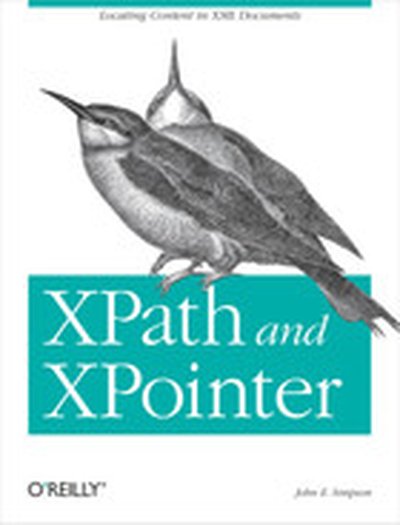
XPath and XPointer

Referring to specific information inside an XML document is a little like finding a needle in a haystack: how do you differentiate the information you need from everything else? XPath and XPointer are two closely related languages that play a key role in XML processing by allowing developers to find these needles and manipulate embedded information. XPath describes a route for finding specific items by defining a path through the hierarchy of an XML document, abstracting only the information that's relevant for identifying the data. XPointer extends XPath to identify more complex parts of documents. The two technologies are critical for developers seeking needles in haystacks in various types of processing. XPath and XPointer fills an essential need for XML developers by focusing directly on a critical topic that has been covered only briefly. Written by John Simpson, an author with considerable XML experience, the book offers practical knowledge of the two languages that underpin XML, XSLT and XLink. XPath and XPointer cuts through basic theory and provides real-world examples that you can use right away.Written for XML and XSLT developers and anyone else who needs to address information in XML documents, the book assumes a working knowledge of XML and XSLT. It begins with an introduction to XPath basics. You'll learn about location steps and paths, XPath functions and numeric operators. Once you've covered XPath in depth, you'll move on to XPointer--its background, syntax, and forms of addressing. By the time you've finished the book, you'll know how to construct a full XPointer (one that uses an XPath location path to address document content) and completely understand both the XPath and XPointer features it uses. XPath and XPointer contains material on the forthcoming XPath 2.0 spec and EXSLT extensions, as well as versions 1.0 of both XPath and XPointer. A succinct but thorough hands-on guide, no other book on the market provides comprehensive information on these two key XML technologies in one place.

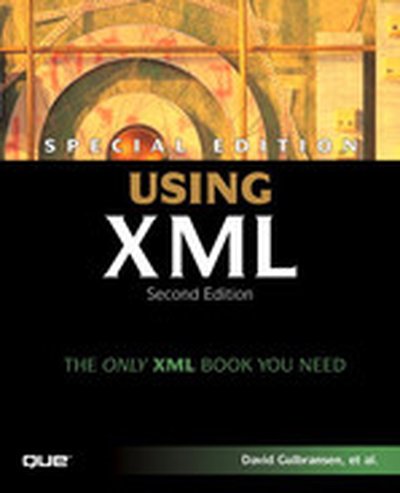
Special Edition Using XML, Second Edition

Special Edition Using XML, Second Edition gives developers a formal introduction to XML technology, starting with in-depth coverage of basic syntax and fundamental "pieces" of XML, including DTDs, Schemas, and Namespaces. The authors then cover various applications of XML, including transforming and displaying XML documents using CSS and XSL, locating data within XML documents using Xpath, Xlink and Xpointer, programming XML with SAX or DOM, including XML in Java or .NET applications, XML Scripting with Perl, XHTML and WML for presentation on traditional and hand-held Web browsers, and querying data or documents with Xquery. The final chapters cover technologies related to XML such as SVG, SMIL, and RDF, focusing on the practical features developers can put to use today.

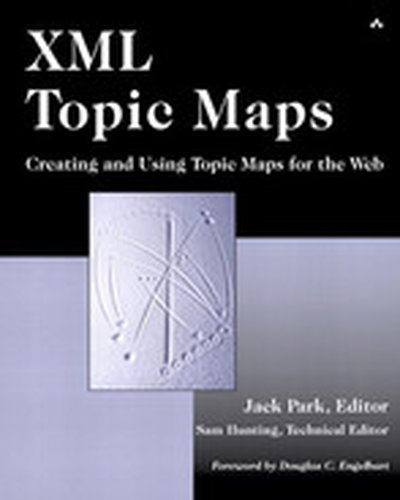
XML Topic Maps: Creating and Using Topic Maps for the Web

The explosive growth of the World Wide Web is fueling the need for a new generation of technologies for managing information flow, data, and knowledge. This developer's overview and how-to book provides a complete introduction and application guide to the world of topic maps, a powerful new means of navigating the World Wide Web's vast sea of information. With contributed chapters written by today's leading topic map experts, is designed to be a "living document" for managing information across the Web's interconnected resources. The book begins with a broad introduction and a tutorial on topic maps and XTM technology. The focus then shifts to strategies for creating and deploying the technology. Throughout, the latest theoretical perspectives are offered, alongside discussions of the challenges developers will face as the Web continues to evolve. Looking forward, the book's concluding chapters provide a road map to the future of topic map technology and the Semantic Web in general. XML Topic Maps Specific subjects explored in detail include: Topic mapping and the XTM specification Using XML Topic Maps to build knowledge repositories Knowledge Representation, ontological engineering, and topic maps Transforming an XTM document into a Web page Creating enterprise Web sites with topic maps and XSLT Open source topic map software XTM, RDF, and topic maps Semantic networks and knowledge organization Using topic maps in education Topic maps, pedagogy, and future perspectives Featuring the latest perspectives from today's leading topic map experts, provides the tools, techniques, and resources necessary to plot the changing course of information management across the World Wide Web. XML Topic Maps 0201749602B08282002

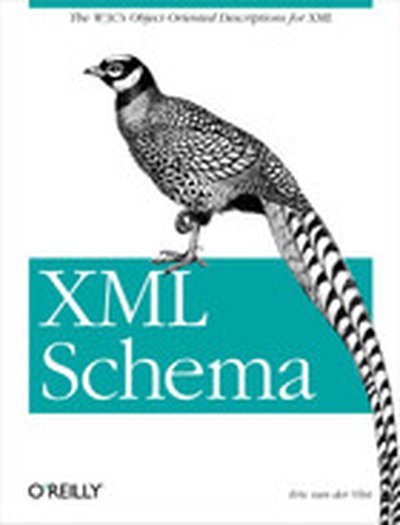
XML Schema

If you need to create or use formal descriptions of XML vocabularies, the W3C's XML Schema offers a powerful set of tools for defining acceptable document structures and content. An alternative to DTDs as the way to describe and validate data in an XML environment, XML Schema enables developers to create precise descriptions with a richer set of datatypes?such as booleans, numbers, currencies, dates and times?that are essential for today?s applications.Schemas are powerful, but that power comes with substantial complexity. This concise book explains the ins and outs of XML Schema, including design choices, best practices, and limitations. Particularly valuable are discussions of how the type structures fit with existing database and object-oriented program contexts. With XML Schema, you can define acceptable content models and annotate those models with additional type information, making them more readily bound to programs and objects. Schemas combine the easy interchange of text-based XML with the more stringent requirements of data exchange, and make it easier to validate documents based on namespaces.You?ll find plenty of examples in this book that demonstrate the details necessary for precise vocabulary definitions. Topics include: In addition to the explanatory content, Foundations of XML Schema syntax Flat, "russian-doll", and other schema approaches Working with simple and complex types in a variety of contexts The built-in datatypes provided by XML Schema Using facets to extend datatypes, including regular expression-based patterns Using keys and uniqueness rules to limit how and where information may appear Creating extensible schemas and managing extensibility Documenting schemas and extending XML Schema capabilities through annotations XML Schemaprovides a complete reference to all parts of both the XML Schema Structures and XML Schema Datatypes specifications, as well as a glossary. Appendices explore the relationships between XML Schema and other tools for describing document structures, including DTDs, RELAX NG, and Schematron, as well as work in progress at the W3C to more tightly integrate XML Schema with existing specifications.No matter how you intend to use XML Schema - for data structures or document structures, for standalone documents or part of SOAP transactions, for documentation, validation, or data binding ? all the foundations you need are outlined in XML Schema.

XML and PHP

XML and PHP is designed to introduce PHP developers to the synergies that become visible when their favorite web-scripting language is combined with one of the most talked about technologies of recent times, XML. XML and PHP teaches PHP developers how to use PHP's XML functions to develop and maintain XML-based web applications and sites, and it demonstrates the power inherent in the XML/PHP combination. This book provides information on all hte major XML technologies supported in PHP, demonstrating how the XML/PHP combination can be used to deliver cutting-edge web applications through practical examples and real-world case studies. XML and PHP serves as both an implementation guide to the topic and a handy desktop reference for quick lookups-combining all the information that developers need into a single, focused package.

Java & XML Data Binding

More Java developers today want to work with XML, the technology that enables data to be transported intact over the Internet, but they don't have time to become XML experts. If this describes you, then you'll appreciate data binding, the new way of converting XML documents into Java objects, so those documents can be worked on and manipulated like any other Java object, then converted back to XML This new title provides an in-depth technical look at XML Data Binding. The book offers complete documentation of all features in both the Sun Microsystems JAXB API and popular open source alternative implementations (Enhydra Zeus, Exolabs Castor and Quick). It also gets into significant detail about when data binding is appropriate to use, and provides numerous practical examples of using data binding in applications. As Author Brett McLaughlin says "Too many books are written about technologies by people who barely understand them. I've already written two data binding implementations (Zeus, and a previous one for IBM DeveloperWorks.) I've actually used data binding for longer than the official specification has been in existence, and I've really been able to dig into what it takes to code an effective data biding implementation, as well as use one correctly. This book is part user guide, part under-the-hood manual, and part use-case. It's a powerful combination, and one I think people need."

Understanding Web Services: XML, WSDL, SOAP, and UDDI

Web services enable the new generation of Internet-based applications. These services support application-to-application Internet communication--that is, applications at different network locations can be integrated to function as if they were part of a single, large software system. Examples of applications made possible by Web services include automated business transactions and direct (nonbrowser) desktop and handheld device access to reservations, stock trading, and order-tracking systems. Several key standards have emerged that together form the foundation for Web services: XML (Extensible Markup Language), WSDL (Web Services Definition Language), SOAP (Simple Object Access Protocol), and UDDI (Universal Description, Discovery, and Integration). In addition, ebXML (Electronic Business XML) has been specified to facilitate automated business process integration among trading partners. This book introduces the main ideas and concepts behind core and extended Web services' technologies and provides developers with a primer for each of the major technologies that have emerged in this space. In addition, summarizes the major architectural approaches to Web services, examines the role of Web services within the .NET and J2EE communities, and provides information about major product offerings from BEA, Hewlett-Packard, IBM, IONA, Microsoft, Oracle, Sun Microsystems, and others. Understanding Web Services Key topics include: XML facilities for structuring and serializing data How WSDL maps services onto communication protocols and transports WSDL support for RPC-oriented and document-oriented interactions SOAP's required and optional elements Message processing and the role of intermediaries in SOAP UDDI data formats and APIs How ebXML offers an alternative to Web services that supports reliable messaging, security, and trading-partner negotiations With , you will be well informed and well positioned to participate in this vast, emerging marketplace. Understanding Web Services

JSP™ and XML Integrating XML and Web Services in Your JSP™ Application

The first Internet revolution was all about delivering information to people. We are now in the second revolution, which focuses on delivering information to systems. XML is the tool that makes this new revolution a reality, and Web services are the methods by which businesses will drive system-to-system communication. JSP(TM) and XML takes you beyond the basics, giving you practical advice and in-depth coverage. In the book, you'll learn the technologies and techniques needed to create your own Web services for use in JSP applications. Written by programmers for programmers, the book will help you successfully utilize these exciting technologies with minimal hassle and maximum speed. In you will: JSP™ and XML Learn how to use XML, XSLT, and XPath in your JSP site Program SAX to speed up your XML document processing Understand DOM to learn the W3C standard method of working with XML Coordinate cross-browser client-side XML utilization Understand the Web services alphabet Learn how to leverage Web services to simplify access to your data Learn how SOAP, WSDL, and UDDI integrate into Web Services Use JDOM and dom4J to easily work with XML files Design a balanced JSP site using XML Expand your knowledge of JSP to add new functionality to your Web pages Learn how to practically apply Servlet filters and listeners to a Web site Build dynamic JSP pages that can self- modify, making sites easier to maintain Understand how the new JSP XML syntax works Review the basics of database access within JSP Learn JSP tag library design and how tag libraries simplify using XML and Web Services

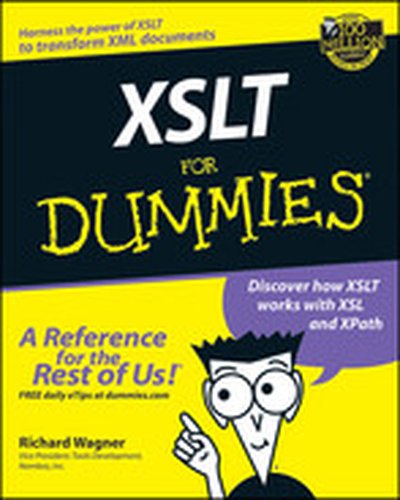
XSLT for Dummies

Restructuring information in an XML document so that it works in other formats used to be a time-consuming ordeal involving lots of blood, sweat, and tears. Now XSLT (Extensible Stylesheet Language Transformations) makes the process nearly instantaneous. Just provide an example of the kind of information you'd like to see, and XSLT does the rest. With XSLT you can effortlessly transform XML documents into virtually any kind of output, including other XML documents and HTML pages. But mastering XSLT can be tricky, especially if you've never worked with XML or HTML; and most books on the subject are written for people who have. Here comes XSLT For Dummies to the rescue! XSLT For Dummies is your ticket to quickly mastering XSLT—no matter what your prior programming experience. Writing in easygoing, plain English, XML pro Richard Wagner provides expert advice, step-by-step guidance, and tons of crystal-clear examples to help you harness the power of XSLT to transform documen ts. In no time you'll: Understand how XSLT works with XSL and XPath Experiment with templates, stylesheets, and expressions Perform HTML transformations Master XPath data types and functions Combine XSLT stylesheets Explore cool XSLT programming tricks XSLT For Dummies works from the ground up, starting with a practical introduction of the "X-Team"—XML, XSL, XSLT, and X-Path—and instructions on how to write a XSLT stylesheet. From there it quickly moves onward and upward through the whole range of important XSLT topics, including: Transforming with stylesheets Understanding and using template rules Using XPath to locate nodes in XML documents Combining XSLT stylesheets and adding processing instructions Debugging XSLT transformations Ten XSLT processors available online It doesn't matter whether you're a babe in the woods who can't tell a "tag" from an element, or you're an old pro at creating XML documents, XSLT For Dummies offers you a fun, easy way to explore and take full advantage of Extensible Stylesheet Language Transformations.

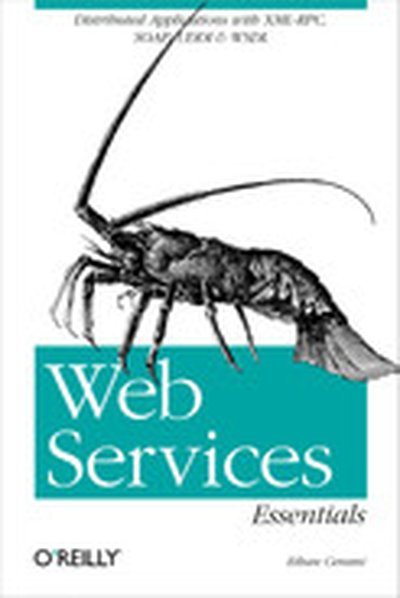
Web Services Essentials

As a developer new to Web Services, how do you make sense of thisemerging framework so you can start writing your own servicestoday? This concise book gives programmers both a concreteintroduction and a handy reference to XML web services, first byexplaining the foundations of this new breed of distributedservices, and then by demonstrating quick ways to create serviceswith open-source Java tools. Web Services make it possible fordiverse applications to discover each other and exchange dataseamlessly via the Internet. For instance, programs written in Javaand running on Solaris can find and call code written in C# thatrun on Windows XP, or programs written in Perl that run on Linux,without any concern about the details of how that service isimplemented. A common set of Web Services is at the core ofMicrosoft's new .NET strategy, Sun Microsystems's Sun One Platform,and the W3C's XML Protocol Activity Group. In this book, authorEthan Cerami explores four key emerging technologies: XML Remote Procedure Calls (XML-RPC) SOAP - The foundation for most commercial WebServices development Universal Discovery, Description and Integration(UDDI) Web Services Description Language (WSDL) For each of these topics, Web Services Essentials provides aquick overview, Java tutorials with sample code, samples of the XMLdocuments underlying the service, and explanations offreely-available Java APIs. Cerami also includes a guide to thecurrent state of Web Services, pointers to open-source tools and acomprehensive glossary of terms. If you want to break through theWeb Services hype and find useful information on these evolvingtechnologies, look no further than Web Services Essentials.

BizTalk™ Unleashed

BizTalk Unleashed covers a wide range of implementation and development tools, techniques, and technologies for use with BizTalk Server. You will learn everything from the basic foundation and history of XML to how to create, transform, process, and configure BizTalk server specifications, maps, and BizTalk Messaging. Instead of just skimming the surface of what BizTalk Server has to offer, this book provides an overarching view of how BizTalk Server impacts the traditionally difficult application integration tasks developers face. Detailed information and example code is given on the new BizTalk 2002 features as well as the correlation of BizTalk Messaging and Orchestration services, the integration of .NET, and the RosettaNet and HIPPA BizTalk Server accelerators.

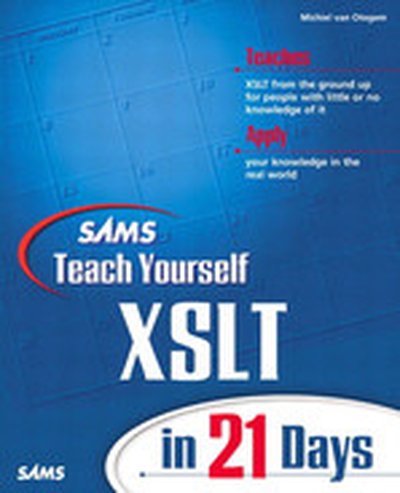
Sams Teach Yourself XSLT in 21 Days

The book covers XSLT and Xpath (as a part of XSLT), as these topics have everything to do with processing XML. It will also cover XML from an XSLT processing and design point of view. Other XML technologies will not be discussed as superset of XSLT, most notably XSL. XSL Formatting Objects alone is enough material for an entire book. Apart from that, XSLT and Xpath form the processing/programming section of the entire XSL specification. This book presents an overview of XSLT and guides readers through transforming their first XML data. In this book you will also learn: Selecting Data-Stylesheets and Xpath Basics; Inserting text and elements in output; Copying elements from the source and inserting text; Conditional processing basics and expressions; Modularizing stylesheets; Understanding, creating, and using templates; Controlling output, as well as creating more advanced output; Using multi-file stylesheets, variables, and parameters; Working with numbers, strings, multiple XML sources, and namespaces; Selecting data based upon keys; Recursion; Creating computational stylesheets; Working with parses; Designing XML and XSLT applications; Extending XSLT.

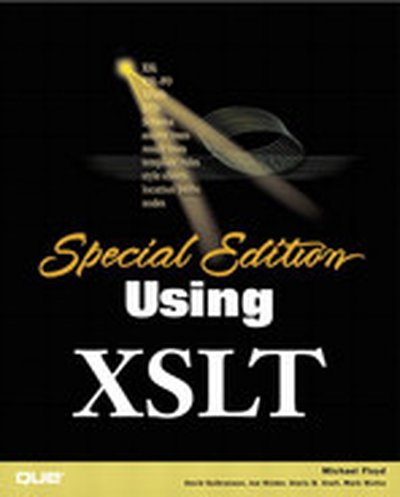
Special Edition Using XSLT

Special Edition Using XSLT starts with an overview explaining how XSLT fits into the bigger picture of the Extensible Stylesheet Language, and the differences between XSLT and XSL-FO. It then demonstrates practical examples of XSL transformations from XML to a variety of other useful formats including HTML, PDF, SVG and others. Later chapters discuss developer techniques for implementing XSLT within dynamic web environments including ASP and JSP. The author also covers debugging techniques and how XSLT relates to .NET. The book finishes with a useful reference section including detailed coverage of XSLT, XPath and XSL-FO.

SAX2

This concise book gives you the information you need to effectively use the Simple API for XML (SAX2), the dominant API for efficient XML processing with Java. With the SAX2 API, developers have access to the information in XML documents as they are read, without imposing major memory constraints or a large code footprint. SAX2 is often used by other APIs "under the covers", and provides a foundation for processing and creating both XML and non-XML information. While generally considered the most efficient approach to handling XML document parsing, SAX2 also carries a significant learning curve. In SAX2, author David Brownell explores the many details of managing XML parsers, filtering the information those parsers return, generating your own SAX2 events to convert non-XML information to an XML form, and developing strategies for using event-based parsing in a variety of application scenarios. Created in a public process by the XML-Dev mailing list, the SAX2 API is compact and highly functional. SAX2 uses callbacks to report the information in an XML document as the document is read, allowing you to create your own program structures around the content of documents. No intermediary model of an entire XML document is necessary, and the mapping from XML structures to Java structures and back is straightforward. Both developers learning about SAX2 for the first time and developers returning for reference and advanced material about SAX2 will find useful information in this book. Chapters provide detailed explanations and examples of many different aspects of SAX2 development, while appendices provide a reference to the API and an explanation of the relationships between the SAX2 API and the XML Information Set. While the core of the API is quite approachable, many of its more advanced features are both obscure and powerful. You can use SAX2 to filter, modify, and restructure information in layers of processing which make it easy to reuse generic tools. SAX2 also has some significant limitations that applications need to address in their own ways. This new book gives you the detail and examples required to use SAX2 to its full potential, taking advantage of its power while avoiding its limitations.