talk-data.com talk-data.com

Topic

XML

Extensible Markup Language (XML)

markup_language data_exchange data_storage file_format

289

tagged

Activity Trend

1 peak/qtr
2020-Q1 2026-Q1

Activities

289 activities · Newest first

Oracle 23AI & ADBS in Action: Exploring New Features with Hands-On Case Studies

Unlock the power of Oracle Database 23AI and Autonomous Database Serverless (ADB-S) with this comprehensive guide to the latest innovations in performance, security, automation, and AI-driven optimization. As enterprises embrace intelligent and autonomous data platforms, understanding these capabilities is essential for data architects, developers, and DBAs. Explore cutting-edge features such as vector data types and AI-powered vector search, revolutionizing data retrieval in modern AI applications. Learn how schema privileges and the DB_DEVELOPER_ROLE simplify access control in multi-tenant environments. Dive into advanced auditing, SQL Firewall, and data integrity constraints to strengthen security and compliance. Discover AI-driven advancements like machine learning-based query execution, customer retention prediction, and AI-powered query tuning. Additional chapters cover innovations in JSON, XML, JSON-Relational Duality Views, new indexing techniques, SQL property graphs, materialized views, partitioning, lock-free transactions, JavaScript stored procedures, blockchain tables, and automated bigfile tablespace shrinking. What sets this book apart is its practical focus—each chapter includes real-world case studies and executable scripts, enabling professionals to implement these features effectively in enterprise environments. Whether you're optimizing performance or aligning IT with business goals, this guide is your key to building scalable, secure, and AI-powered solutions with Oracle 23AI and ADB-S. What You Will Learn Explore Oracle 23AI's latest features through real-world use cases Implement AI/ML-driven optimizations for smarter, autonomous database performance Gain hands-on experience with executable scripts and practical coding examples Strengthen security and compliance using advanced auditing, SQL Firewall, and blockchain tables Master high-performance techniques for query tuning, in-memory processing, and scalability Revolutionize data access with AI-powered vector search in modern AI workloads Simplify user access in multi-tenant environments using schema privileges and DB_DEVELOPER_ROLE Model and query complex data using JSON-Relational Duality Views and SQL property graphs Who this Book is For Database architects, data engineers, Oracle developers, and IT professionals seeking to leverage Oracle 23AI’s latest features for real-world applications
The SciPy Proceedings (https://proceedings.scipy.org) have long served as a cornerstone for publishing research in the scientific python community; with over 330 peer-reviewed articles being published over the last 17 years. In 2024, the SciPy Proceedings underwent a significant transformation, adopting MyST Markdown (https://mystmd.org) and Curvenote (https://curvenote.com) to enhance accessibility, interactivity, and reproducibility — including publishing of Jupyter Notebooks. The new proceedings articles are web-first, providing features such as deep-dive links for cross-references and previews of GItHub content, interactive 3D visualizations, and rich-rendering of Jupyter Notebooks. In this talk, we will (1) present the new authoring & reading capabilities introduced in 2024; (2) highlight connections to prominent open-science initiatives and their impact on advancing computational research publishing; and (3) demonstrate the underlying technologies and how they enhance integrations with SciPy packages and how to use these tools in your own communication workflows.

Our presentation will give an overview of the revised authoring process for SciPy Proceedings; how we improve metadata standards in a similar way to code-linting and continuous integration; and the integration of live previews of the articles, including auto-generated PDFs and JATS XML (a standard used in scientific publishing). The peer-review process for the proceedings currently happens using GitHub’s peer-review commenting in a similar fashion to the Journal of Open Source Software; we will demonstrate this process as well as showcase opportunities for working with distributed review services such as PREreview (https://prereview.org). The open publishing pipeline has streamlined the submission, review, and revision processes while maintaining high scientific quality and improving the completeness of scholarly metadata. Finally, we will present how this work connects into other high-profile scientific publishing initiatives that have incorporated Jupyter Notebooks and live computational figures as well as interactive displays of large-scale data. These initiatives include Notebooks Now! by the American Geophysical Union, which is focusing on ensuring that Jupyter Notebooks can be properly integrated into the scholarly record; and the Microscopy Society of America’s work on interactive publishing and publishing of large-scale microscopy data with interactive visualizations. These initiatives and the SciPy Proceedings are enabled by recent improvements in open-source tools including MyST Markdown, JupyterLab, BinderHub, and Curvenote, which enable new ways to share executable research content. These initiatives collectively aim to improve both the reproducibility, interactivity, and the accessibility of research by providing improved connections between data, software and narrative research articles.

By embracing open science principles and modern technologies, the SciPy Proceedings exemplify how computational research can be more transparent, reproducible, and accessible. The shift to computational publishing, especially in the context of the scientific python community, opens new opportunities for researchers to publish not only their final results but also the computational workflows, datasets, and interactive visualizations that underpin them. This transformation aligns with broader efforts in open science infrastructure, such as integrating persistent identifiers (DOIs, ORCID, ROR), and adopting FAIR (Findable, Accessible, Interoperable, Reusable) principles for computational content. Building on these foundations, as well as open tools like MyST Markdown and Curvenote, provides a scalable model for open scientific publishing that bridges the gap between computational research and scholarly communication, fostering a more collaborative, iterative, and continuous approach to scientific knowledge dissemination.

As we look back at 2024, we're highlighting some of our favourite episodes of the year, and with 100 of them to choose from, it wasn't easy! The four guests we'll be recapping with are: Lea Pica - A celebrity in the data storytelling and visualisation space. Richie and Lea cover the full picture of data presentation, how to understand your audience, how to leverage hollywood storytelling and more. Out December 19.Alex Banks - Founder of Sunday Signal. Adel and Alex cover Alex’s journey into AI and what led him to create Sunday Signal, the potential of AI, prompt engineering at its most basic level, chain of thought prompting, the future of LLMs and more. Out December 23.Don Chamberlin - The renowned co-inventor of SQL. Richie and Don explore the early development of SQL, how it became standardized, the future of SQL through NoSQL and SQL++ and more. Out December 26.Tom Tunguz - general Partner at Theory Ventures, a $235m VC firm. Richie and Tom explore trends in generative AI, cloud+local hybrid workflows, data security, the future of business intelligence and data analytics, AI in the corporate sector and more. Out December 30. For our 200th episode, we bring you a special guest and taking a walk down memory lane—to the creation and development of one of the most popular programming languages in the world. Don Chamberlin is renowned as the co-inventor of SQL (Structured Query Language), the predominant database language globally, which he developed with Raymond Boyce in the mid-1970s. Chamberlin's professional career began at IBM Research in Yorktown Heights, New York, following a summer internship there during his academic years. His work on IBM's System R project led to the first SQL implementation and significantly advanced IBM’s relational database technology. His contributions were recognized when he was made an IBM Fellow in 2003 and later a Fellow of the Computer History Museum in 2009 for his pioneering work on SQL and database architectures. Chamberlin also contributed to the development of XQuery, an XML query language, as part of the W3C, which became a W3C Recommendation in January 2007. Additionally, he holds fellowships with ACM and IEEE and is a member of the National Academy of Engineering. In the episode, Richie and Don explore his early career at IBM and the development of his interest in databases alongside Ray Boyce, the database task group (DBTG), the transition to relational databases and the early development of SQL, the commercialization and adoption of SQL, how it became standardized, how it evolved and spread via open source, the future of SQL through NoSQL and SQL++ and much more.  Links Mentioned in the Show: The first-ever journal paper on SQL. SEQUEL: A Structured English Query LanguageDon’s Book: SQL++ for SQL Users: A TutorialSystem R: Relational approach to database managementSQL CoursesSQL Articles, Tutorials and Code-AlongsRelated Episode: Scaling Enterprise Analytics with...

Information Modeling and Relational Databases, 3rd Edition

Information Modeling and Relational Databases, Third Edition, provides an introduction to ORM (Object-Role Modeling) and much more. In fact, it is the only book to go beyond introductory coverage and provide all of the in-depth instruction you need to transform knowledge from domain experts into a sound database design. This book is intended for anyone with a stake in the accuracy and efficacy of databases: systems analysts, information modelers, database designers and administrators, and programmers. Dr. Terry Halpin and Dr. Tony Morgan, pioneers in the development of ORM, blend conceptual information with practical instruction that will let you begin using ORM effectively as soon as possible. The all-new Third Edition includes coverage of advances and improvements in ORM and UML, nominalization, relational mapping, SQL, XML, data interchange, NoSQL databases, ontological modeling, and post-relational databases. Supported by examples, exercises, and useful background information, the authors’ step-by-step approach teaches you to develop a natural-language-based ORM model, and then, where needed, abstract ER and UML models from it. This book will quickly make you proficient in the modeling technique that is proving vital to the development of accurate and efficient databases that best meet real business objectives. "This book is an excellent introduction to both information modeling in ORM and relational databases. The book is very clearly written in a step-by-step manner and contains an abundance of well-chosen examples illuminating practice and theory in information modeling. I strongly recommend this book to anyone interested in conceptual modeling and databases." — Dr. Herman Balsters, Director of the Faculty of Industrial Engineering, University of Groningen, The Netherlands Presents the most in-depth coverage of object-role modeling, including a thorough update of the book for the latest versions of ORM, ER, UML, OWL, and BPMN modeling. Includes clear coverage of relational database concepts as well as the latest developments in SQL, XML, information modeling, data exchange, and schema transformation. Case studies and a large number of class-tested exercises are provided for many topics. Includes all-new chapters on data file formats and NoSQL databases.

DAGify is a highly extensible, template driven, enterprise scheduler migration accelerator that helps organizations speed up their migration to Apache Airflow. While DAGify does not claim to migrate 100% of existing scheduler functionality it aims to heavily reduce the manual effort it takes for developers to convert their enterprise scheduler formats into Python Native Airflow DAGs. DAGify is an open source tool under Apache 2.0 license and available on Github ( https://github.com/GoogleCloudPlatform/dagify) . In this session we will introduce DAGify, its use cases and demo its functionality by converting Control-M XML files to Airflow DAGs. Additionally we will highlight DAGify’s “no-code” extensibility by creating custom conversion templates to map Control-M functionality to Airflow operators.

XML and Related Technologies

About The Author – Atul Kahate has over 13 years of experience in Information Technology in India and abroad in various capacities. He has done his Bachelor of Science degree in Statistics and his Master of Business Administration in Computer Systems. He has authored 17 highly acclaimed books on various areas of Information Technology. Several of his books are being used as course textbooks or sources of reference in a number of universities/colleges/IT companies all over the world. Atul has been writing articles in newspapers about cricket, since the age of 12. He has also authored two books on cricket and has written over 2000 articles on IT and cricket. He has a deep interest in teaching, music, and cricket besides technology. He has conducted several training programs, in a number of educational institutions and IT organisations, on a wide range of technologies. Some of the prestigious institutions where he has conducted training programs, include IIT, Symbiosis, I2IT, MET, Indira Institute of Management, Fergusson College, MIT, VIIT, MIT, Walchand Government Engineering College besides numerous other colleges in India.

Book Content – 1. Introduction to XML, 2. XML Syntaxes, 3. Document Type Definitions, 4. XML Schemas 5. Cascading Style Sheets, 6. Extensible Stylesheet Language, 7. XML and Java, 8. XML and ASP.NET, 9. Web Services and AJAX, 10. XML Security, Appendix – Miscellaneous Topics

Over the past 199 episodes of DataFramed, we’ve heard from people at the forefront of data and AI, and over the past year we’ve constantly looked ahead to the future AI might bring. But all of the technologies and ways of working we’ve witnessed have been built on foundations that were laid decades ago. For our 200th episode, we’re bringing you a special guest and taking a walk down memory lane—to the creation and development of one of the most popular programming languages in the world. Don Chamberlin is renowned as the co-inventor of SQL (Structured Query Language), the predominant database language globally, which he developed with Raymond Boyce in the mid-1970s. Chamberlin's professional career began at IBM Research in Yorktown Heights, New York, following a summer internship there during his academic years. His work on IBM's System R project led to the first SQL implementation and significantly advanced IBM’s relational database technology. His contributions were recognized when he was made an IBM Fellow in 2003 and later a Fellow of the Computer History Museum in 2009 for his pioneering work on SQL and database architectures. Chamberlin also contributed to the development of XQuery, an XML query language, as part of the W3C, which became a W3C Recommendation in January 2007. Additionally, he holds fellowships with ACM and IEEE and is a member of the National Academy of Engineering. In the episode, Richie and Don explore his early career at IBM and the development of his interest in databases alongside Ray Boyce, the database task group (DBTG), the transition to relational databases and the early development of SQL, the commercialization and adoption of SQL, how it became standardized, how it evolved and spread via open source, the future of SQL through NoSQL and SQL++ and much more.  Links Mentioned in the Show: The first-ever journal paper on SQL. SEQUEL: A Structured English Query LanguageDon’s Book: SQL++ for SQL Users: A TutorialSystem R: Relational approach to database managementSQL CoursesSQL Articles, Tutorials and Code-AlongsRelated Episode: Scaling Enterprise Analytics with Libby Duane Adams, Chief Advocacy Officer and Co-Founder of AlteryxRewatch sessions from RADAR: The Analytics Edition New to DataCamp? Learn on the go using the DataCamp mobile appEmpower your business with world-class data and AI skills with DataCamp for business

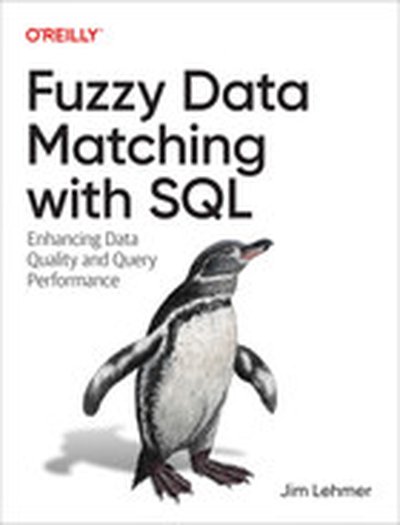
Fuzzy Data Matching with SQL

If you were handed two different but related sets of data, what tools would you use to find the matches? What if all you had was SQL SELECT access to a database? In this practical book, author Jim Lehmer provides best practices, techniques, and tricks to help you import, clean, match, score, and think about heterogeneous data using SQL. DBAs, programmers, business analysts, and data scientists will learn how to identify and remove duplicates, parse strings, extract data from XML and JSON, generate SQL using SQL, regularize data and prepare datasets, and apply data quality and ETL approaches for finding the similarities and differences between various expressions of the same data. Full of real-world techniques, the examples in the book contain working code. You'll learn how to: Identity and remove duplicates in two different datasets using SQL Regularize data and achieve data quality using SQL Extract data from XML and JSON Generate SQL using SQL to increase your productivity Prepare datasets for import, merging, and better analysis using SQL Report results using SQL Apply data quality and ETL approaches to finding similarities and differences between various expressions of the same data

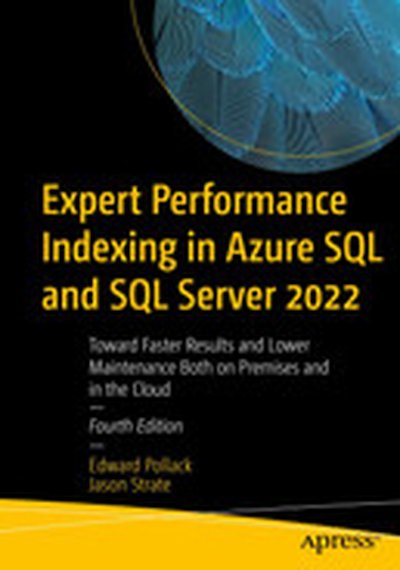
Expert Performance Indexing in Azure SQL and SQL Server 2022: Toward Faster Results and Lower Maintenance Both on Premises and in the Cloud

Take a deep dive into perhaps the single most important facet of query performance—indexes—and how to best use them. Newly updated for SQL Server 2022 and Azure SQL, this fourth edition includes new guidance and features related to columnstore indexes, improved and consolidated content on Query Store, deeper content around Intelligent Query Processing, and other updates to help you optimize query execution and make performance improvements to even the most challenging workloads. The book begins with explanations of the types of indexes and how they are stored in a database. Moving further into the book, you will learn how statistics are critical for optimal index usage and how the Index Advisor can assist in reviewing and optimizing index health. This book helps you build a clear understanding of how indexes work, how to implement and use them, and the many options available to tame even the most large and complex workloads. What You Will Learn Properly index row store, columnstore, and memory-optimized tables Make use of Intelligent Query Processing for faster query results Review statistics to understand indexing choices made by the optimizer Apply indexing strategies such as covering indexes, included columns, and index intersections Recognize and remove unnecessary indexes Design effective indexes for full-text, spatial, and XML data types Who This Book Is For Azure SQL and SQL Server administrators and developers who are ready to improve the performance of their database environment by thoughtfully building indexes to speed up queries that matter the most and make a difference to the business

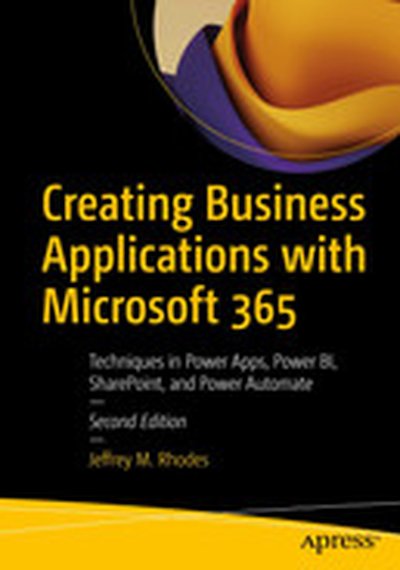
Creating Business Applications with Microsoft 365: Techniques in Power Apps, Power BI, SharePoint, and Power Automate

Learn how to automate processes, visualize your data, and improve productivity using Power Apps, Power Automate, Power BI, SharePoint, Forms, Teams, and more. This book will help you build complete solutions that often involve storing data in SharePoint, creating a front-end application in Power Apps or Forms, adding additional functionality with Power Automate, and effective reports and dashboards in Power BI. This new edition greatly expands the focus on Power Apps, Power BI, Power Automate, and Teams, along with SharePoint and Microsoft Forms. It starts with the basics of programming and shows how to build a simple email application in .NET, HTML/JavaScript, Power Apps on its own, and Power Apps and Power Automate in combination. It then covers how to connect Power Apps to SharePoint, create an approval process in Power Automate, visualize surveys in Power BI, and create your own survey solution with the combination of a number of Microsoft 365 tools. You’ll work with anextended example that shows how to use Power Apps and SharePoint together to create your own help ticketing system. This book offers a deep dive into Power BI, including working with JSON, XML, and Yes/No data, as well as visualizing learning data and using it to detect inconsistencies between Excel files. You’ll also see how to connect to Remedy and to the help system you will have created. Under author Jeffrey Rhodes’s guidance, you’ll delve into the Power Apps collection to learn how to avoid dreaded "delegation" issues with larger data sets. Back on applications, you will create a training class sign-up solution to only allow users to choose classes with available seats. Digging deeper into Teams, you’ll learn how to send chats, posts, and "adaptive cards" from Power Automate. Rounding things out, you’ll save Forms attachments to SharePoint with Power Automate, create your own "Employee Recognition" app with all of the Power Platform and Teams, add or edit weekly status reports, and learn how to create reservation and scoring applications. After reading the book, you will be able to build powerful applications using Power Apps, Power Automate, Power BI, SharePoint, Forms, and Teams. What You Will Learn Create productivity-enhancing applications with Power Apps, Power Automate, SharePoint, Forms, and/or Teams Transform and visualize data with Power BI to include custom columns, measures, and pivots Avoid delegation issues and tackle complicated Power Apps issues like complex columns, filtering, and ForAll loops Build scheduled or triggered Power Automate flows to schedule Teams Meetings, send emails, launch approvals, and much more Who This Book Is For Business and application developers.

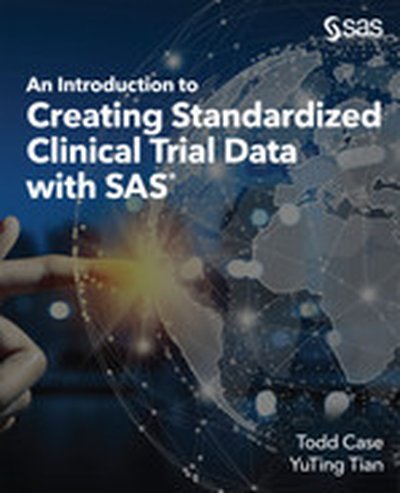
An Introduction to Creating Standardized Clinical Trial Data with SAS

An indispensable guide for statistical programmers in the pharmaceutical industry. Statistical programmers in the pharmaceutical industry need to create standardized clinical data using rules created and governed by the Clinical Data Interchange Standards Consortium (CDISC). This book introduces the basic concepts, pharmaceutical industry knowledge, and SAS programming practices that every programmer needs to know to comply with regulatory requirements. Step-by-step, you will learn how data should be structured at each stage of the process from annotating electronic Case Report Forms (eCRFs) and defining the relationship between SDTM and ADaM, to understanding how to generate a Define-XML file to transmit metadata. Filled with clear explanations and example code, this book focuses only on the essential information that entry-level programmers need to succeed.

So Fresh and So Clean: Learn How to Build Real-Time Warehouses on Lakehouse

Warehouses? Where we are going, we won't need warehouses! Join Dillon, Franco, and Shannon as they take an industry-standard Data Warehouse integration benchmark, called TPC-DI, which is a typical 80s style data warehouse, and bring it into the future. We will review how to implement standard data warehousing practices on Lakehouse, and show you how to deliver optimal price/performance in the cloud and keep your data so fresh and so clean. We will take an assortment of structured, semi-structured, and unstructured data in the form of CSV, TXT, XML, and Fixed-Width files, and transform them warehouse-style into Lakehouse with a historical load and incremental CDC loads.

Connect with us: Website: https://databricks.com Facebook: https://www.facebook.com/databricksinc Twitter: https://twitter.com/databricks LinkedIn: https://www.linkedin.com/company/data... Instagram: https://www.instagram.com/databricksinc/

Thanks for tuning in to the Data Driven Strength Podcast!

Timestamps: 

00:00 Intro/general update 

10:02 Home gym equipment and setting up weighted pushups 

23:47 Training frequency and proximity to failure 

36:14 Rate of force development discussion 

01:09:00 Minimum effective dose for strength and hypertrophy    

To learn more about 1 on 1 coaching: https://datadrivenstrength.typeform.com/to/JR3Gzm?typeform-source=linktr.ee 

If you'd like to sign up to our email list, please visit the bottom section of our website via this link: https://www.data-drivenstrength.com 

If you’d like to submit a question for a future episode please follow the link provided: https://forms.gle/c5aCswfCq6XUDTiAA 

Link to Individualized Programming + Self Coaching Toolkit Product Page: https://www.data-drivenstrength.com/individualized-programming 

Training to Failure Fatigue Meta discussed: 

  1. https://link.springer.com/article/10.1007/s40279-021-01602-x 

Links to RFD papers discussed: 

  1. https://onlinelibrary.wiley.com/doi/pdf/10.1111/sms.13775?casa_token=EkLP_ZxQKuEAAAAA:pZoYDR1zERHdyTDFJhdkxJByWY4POb2kilm1JQnhf2o4-K-wWGKwk_iPxKpYJPrIwXHfxUfC1eso4yI

  2. https://link.springer.com/content/pdf/10.1007/s00421-016-3439-2.pdf

  3. https://www.mdpi.com/2076-3417/11/1/45

  4. https://www.tandfonline.com/doi/pdf/10.1080/02640414.2015.1119299?needAccess=true

  5. https://europepmc.org/article/med/34100789

  6. https://pubmed.ncbi.nlm.nih.gov/29577974/

  7. https://www.researchgate.net/publication/325748706_Functional_and_physiological_adaptations_following_concurrent_training_using_sets_with_and_without_concentric_failure_in_elderly_men_A_randomized_clinical_trial

  8. https://pubmed.ncbi.nlm.nih.gov/32049887/

  9. https://journals.humankinetics.com/view/journals/ijspp/14/1/article-p46.xml 

Links to MED papers discussed: 

  1. https://pubmed.ncbi.nlm.nih.gov/21131862/

  2. https://www.frontiersin.org/articles/10.3389/fphys.2021.735932/full

  3. https://pubmed.ncbi.nlm.nih.gov/31373973/ 

Follow us on Instagram at: @datadrivenstrength @zac.datadrivenstrength @josh.datadrivenstrength @jake.datadrivenstrength @drake.datadrivenstrength

Snowflake Essentials: Getting Started with Big Data in the Cloud

Understand the essentials of the Snowflake Database and the overall Snowflake Data Cloud. This book covers how Snowflake’s architecture is different from prior on-premises and cloud databases. The authors also discuss, from an insider perspective, how Snowflake grew so fast to become the largest software IPO of all time. Snowflake was the first database made specifically to be optimized with a cloud architecture. This book helps you get started using Snowflake by first understanding its architecture and what separates it from other database platforms you may have used. You will learn about setting up users and accounts, and then creating database objects. You will know how to load data into Snowflake and query and analyze that data, including unstructured data such as data in XML and JSON formats. You will also learn about Snowflake’s compute platform and the different data sharing options that are available. What YouWill Learn Run analytics in the Snowflake Data Cloud Create users and roles in Snowflake Set up security in Snowflake Set up resource monitors in Snowflake Set up and optimize Snowflake Compute Load, unload, and query structured and unstructured data (JSON, XML) within Snowflake Use Snowflake Data Sharing to share data Set up a Snowflake Data Exchange Use the Snowflake Data Marketplace Who This Book Is For Database professionals or information technology professionals who want to move beyond traditional database technologies by learning Snowflake, a new and massively scalable cloud-based database solution

Developing Modern Applications with a Converged Database

Single-purpose databases were designed to address specific problems and use cases. Given this narrow focus, there are inherent tradeoffs required when trying to accommodate multiple datatypes or workloads in your enterprise environment. The result is data fragmentation that spills over into application development, IT operations, data security, system scalability, and availability. In this report, author Alice LaPlante explains why developing modern, data-driven applications may be easier and more synergistic when using a converged database. Senior developers, architects, and technical decision-makers will learn cloud-native application development techniques for working with both structured and unstructured data. You'll discover ways to run transactional and analytical workloads on a single, unified data platform. This report covers: Benefits and challenges of using a converged database to develop data-driven applications How to use one platform to work with both structured and unstructured data that includes JSON, XML, text and files, spatial and graph, Blockchain, IoT, time series, and relational data Modern development practices on a converged database, including API-driven development, containers, microservices, and event streaming Use case examples including online food delivery, real-time fraud detection, and marketing based on real-time analytics and geospatial targeting

Data Science at the Command Line, 2nd Edition

This thoroughly revised guide demonstrates how the flexibility of the command line can help you become a more efficient and productive data scientist. You'll learn how to combine small yet powerful command-line tools to quickly obtain, scrub, explore, and model your data. To get you started, author Jeroen Janssens provides a Docker image packed with over 100 Unix power tools--useful whether you work with Windows, macOS, or Linux. You'll quickly discover why the command line is an agile, scalable, and extensible technology. Even if you're comfortable processing data with Python or R, you'll learn how to greatly improve your data science workflow by leveraging the command line's power. This book is ideal for data scientists, analysts, engineers, system administrators, and researchers. Obtain data from websites, APIs, databases, and spreadsheets Perform scrub operations on text, CSV, HTML, XML, and JSON files Explore data, compute descriptive statistics, and create visualizations Manage your data science workflow Create your own tools from one-liners and existing Python or R code Parallelize and distribute data-intensive pipelines Model data with dimensionality reduction, regression, and classification algorithms Leverage the command line from Python, Jupyter, R, RStudio, and Apache Spark

SAP SuccessFactors Talent: Volume 1: A Complete Guide to Configuration, Administration, and Best Practices: Performance and Goals

Take an in-depth look at SAP SuccessFactors talent modules with this complete guide to configuration, administration, and best practices. This two-volume series follows a logical progression of SAP SuccessFactors modules that should be configured to complete a comprehensive talent management solution. The authors walk you through fully functional simple implementations in the primary chapters for each module before diving into advanced topics in subsequent chapters. In volume 1, we start with a brief introduction. The next two chapters jump into the Talent Profile and Job Profile Builder. These chapters lay the structures and data that will be utilized across the remaining chapters which detail each module. The following eight chapters walk you through building, administering, and using a goal plan in the Goal Management module as well as performance forms in the Performance Management module. The book also expands on performance topics with the 360form and continuous performance management in two additional chapters. We then dive into configuring the calibration tool and how to set up calibration sessions in the next two chapters before providing a brief conclusion. Within each topic, the book touches on the integration points with other modules as well as internationalization. The authors also provide recommendations and insights from real world experience. Having finished the book, you will have an understanding of what comprises a complete SAP SuccessFactors talent management solution and how to configure, administer, and use each module within it. You will: · Develop custom talent profile portlets · Integrate Job Profile Builder with SAP SuccessFactors talent modules · Set up security, group goals, and team goals in goals management with sample XML · Configure and launch performance forms including rating scales and route maps · Configure and administrate the calibration module and its best practices

Beginning T-SQL: A Step-by-Step Approach

Get a performance-oriented introduction to the T-SQL language underlying the Microsoft SQL Server and Azure SQL database engines. This fourth edition is updated to include SQL Notebooks as well as up-to-date syntax and features for T-SQL on-premises and in the Azure cloud. Exercises and examples now include the WideWorldImporters database, the newest sample database from Microsoft for SQL Server. Also new in this edition is coverage of JSON from T-SQL, news about performance enhancements called Intelligent Query Processing, and an appendix on running SQL Server in a container on macOS or Linux. Beginning T-SQL starts you on the path to mastering T-SQL with an emphasis on best practices. Using the sound coding techniques taught in this book will lead to excellent performance in the queries that you write in your daily work. Important techniques such as windowing functions are covered to help you write fast-executing queries that solve real business problems.The book begins with an introduction to databases, normalization, and to setting up your learning environment. You will learn about the tools you need to use such as SQL Server Management Studio, Azure Data Studio, and SQL Notebooks. Each subsequent chapter teaches an aspect of T-SQL, building on the skills learned in previous chapters. Exercises in most chapters provide an opportunity for the hands-on practice that leads to true learning and distinguishes the competent professional. A stand-out feature in this book is that most chapters end with a Thinking About Performance section. These sections cover aspects of query performance relative to the content just presented, including the new Intelligent Query Processing features that make queries faster without changing code. They will help you avoid beginner mistakes by knowing about and thinking about performance from day 1. What You Will Learn Install a sandboxed SQL Server instance for learning Understand how relational databases are designed Create objects such as tables and stored procedures Query a SQL Server table Filter and order the results of a query Query and work with specialized data types such as XML and JSON Apply modern features such as window functions Choose correct techniques so that your queries perform well Who This Book Is For Anyone who wants to learn T-SQL from the beginning or improve their T-SQL skills; those who need T-SQL as an additional skill; and those who write queries such as application developers, database administrators, business intelligence developers, and data scientists. The book is also helpful for anyone who must retrieve data from a SQL Server database.

Custom Fiori Applications in SAP HANA: Design, Develop, and Deploy Fiori Applications for the Enterprise

Get started building custom Fiori applications for your enterprise. This book teaches you how to design, build, and deploy enterprise-ready, custom Fiori applications in SAP HANA. Tips and tricks collected from projects using Fiori applications (built consuming OData models and REST APIs) and integrating third-party JS libraries are presented. Also included are examples using Fiori templates from different tools such as the SAP Web IDE and the new Visual Studio Code extensions. This book explains the 5 design principles that all Fiori applications are built upon: Role-based, Responsive, Coherent, Simple, and Delightful. The book expands on consuming OData services and REST APIs internal and external to SAP HANA. The Fiori application exercise demonstrates the use of the MVC pattern, JavaScript modularization, reuse of SAP UI5 controls, debugging, and the tools required for a complete scenario. The book closes with an exercise showcasing a finished single page application with multiple views and layouts, navigation between the views, and deployment of the application to AWS. This book is simple enough for entry-level developers getting started in web frameworks but also highlights integration points from the data models being consumed from the application, and shows how the application communicates with back-end services, resulting in a complete front-end custom Fiori application. What You Will Learn Know the 5 Fiori design principles Understand how to consume OData and REST API models Apply the MVC pattern using XML views and the SAP UI5 controls along with controller behavior in JavaScript Debug and deploy the application Who This Book is For Web developers and application leads who have some experience in JavaScript frameworks and web development and understand web protocol communication

Expert Performance Indexing in SQL Server 2019: Toward Faster Results and Lower Maintenance

Take a deep dive into perhaps the single most important facet of good performance: indexes, and how to best use them. Recent updates to SQL Server have made it possible to create indexes in situations that in the past would have prevented their use. Other improvements covered in this book include new dynamic management views, the ability to pause and resume index maintenance, and the ability to more easily recover from failures during index creation and maintenance operations. This new edition also brings new content around the indexing of columnstore and in-memory tables, showing how these new types of tables and the queries that execute against them can also benefit from good indexing practices. The book begins with explanations of the types of indexes and how they are stored in databases. Moving deeper into the topic, and further into the book, you will look at the statistics that are accumulated both by indexes and on indexes. You will better understand what indexes are doing in the database and what can be done to mitigate and improve their effect on performance. You will get a look at the Index Advisor now available in Azure SQL Database, and learn how to review and maintain the health of your indexes. The final chapters present a guided tour through a number of scenarios showing approaches you can take to investigate, mitigate, and improve the performance of your database. What You Will Learn Properly index row store, columnstore, and in-memory tables Review statistics to understand indexing choices made by the optimizer Apply indexing strategies such as covering indexes, included columns, and index intersections Recognize and remove unnecessary indexes Design effective indexes for full-text, spatial, and XML data types Manage the big picture: Encompass all indexes in adatabase, and all database instances on a server Who This Book Is For Database administrators and developers who are ready to lift the performance of their database environment by thoughtfully building indexes to speed up queries that matter the most and make a difference to the business