talk-data.com talk-data.com

Event

O'Reilly Data Engineering Books

2001-10-19 – 2027-05-25 Oreilly Visit website ↗

Activities tracked

3377

Collection of O'Reilly books on Data Engineering.

Filtering by: data-engineering ×

Sessions & talks

Showing 3076–3100 of 3377 · Newest first

Search within this event →
IBM eServer xSeries 455 Planning and Installation Guide

The IBM eServer xSeries 455 is the second-generation Enterprise X-Architecture server using the 64-bit IBM XA-64 chipset and the Intel Itanium 2 processor. Unlike the x450, its predecessor, the x455 supports the merging of four server chassis to form a single 16-way image, providing even greater expandability and investment protection. This IBM Redbooks publication is a comprehensive resource on the technical aspects of the server, and is divided into five key subject areas: --Chapter 1, “Technical description”, introduces the server and its subsystems and describes the key features and how they work.

Oracle Essentials, 3rd Edition

An enormous system comprising myriad technologies, options, and releases, Oracle's complexities have spawned numerous areas of specialization. For each area of specialization there are equally specialized how-to books and manuals. O'Reilly's Oracle Essentials claims a unique place among these books. Rather than focusing on one area, the book explains the foundational concepts of the Oracle technology and the core technical and business aspects of using it.The new edition of this classic book, Oracle Essentials, 3rd Edition: Oracle Database 10g, distills a vast amount of knowledge into an easy-to-read volume covering every aspect of the Oracle database. Readers of all levels will learn about Oracle's features and technologies, including the product line, architecture, data structures, networking, concurrency, tuning, and much more.Featuring focused text, abundant illustrations, and helpful hints, the new edition offers a valuable overview of Oracle's Database 10 g--the industry's first database to support grid computing. Recent releases such as Oracle 9 i and 8 i are also covered. The book contains chapters on: Oracle products, options, and overall architecture for Oracle 10 g and prior recent releases Installing and running Oracle: how to configure, start up, and shut down the database, and various networking issues Oracle data structures, datatypes, and ways of extending datatypes, with an introduction to Oracle objects (e.g., tables, views, indexes) Managing Oracle: security, the Oracle Enterprise Manager, fragmentation and reorganization, and backup and recovery Oracle performance: characteristics of disk, memory, and CPU tuning Multi-user concurrency, online transaction processing (OLTP), and high availability Hardware architectures (e.g., SMP, MPP, NUMA) and their impact on Oracle Data warehousing and distributed databases Network deployment: using Oracle as an Internet computing platform and for grid computing What's new in Oracle 10 g: a summary of the database changes described in the book Oracle Essentials, 3rd Edition: Oracle Database 10g was written for anyone whose job involves managing or building systems using Oracle DBMS technology or working with staff that uses Oracle technology. This book is the perfect all-in-one source for understanding the complexities and capabilities of Oracle.

Converting to DFSMSrmm from TLMS

DFSMSrmm is the IBM tape management system for OS/390 and z/OS platforms. As part of DFSMS, DFSMSrmm is completely integrated into the IBM storage management strategy. This allows easier installation and maintenance, as well as standard interfaces with other systems components, such as DFSMSdfp and DFSMShsm. DFSMSrmm provides a simple and flexible tape management environment, with support for all tape technologies, including IBM automated tape libraries, manual tapes, and other tape libraries. This IBM Redbooks publication is written for people who are planning to convert from TLMS to DFSMSrmm. We have designed this book to help you with all aspects of the conversion, from the early planning stage through implementation and customization of DFSMSrmm into your production system. We provide details on the differences between DFSMSrmm and TLMS and compare the terminology, data, and functions. We explain how to use the IBM-supplied sample conversion programs and get the converted data validated and ready for use in a production environment. Working samples that are ready for use are included.

XQuery: The XML Query Language

“An excellent, early look at the emerging XML Query standard. The chapters on surprises and gotchas alone are worth the price of admission!” — Ashok Malhotra, Architect, Microsoft “XQuery is the most important XML standard to emerge in recent years, and is a language with which anyone using XML on a regular basis should become acquainted. Michael Brundage's accessible introduction to XQuery provides enough information on all aspects of the standard, including its dark corners, to allow any XML developer to jump right in and start coding.” — Damien Fisher, Kernel Team Member, Soda Technologies Pty Ltd “This book does an excellent job of distilling the essentials of XQuery in an understandable, straightforward and easily digestable manner. This book has already become an indispensible part of my library and is a welcome addition to my XML repertoire.” — Dare Obasanjo, Program Manager, Microsoft Corporation “Simply put, the emerging XQuery standard adds enormous value to XML data and this book is your key to unlocking that value. Here in one stop you will find an accessible introduction to XQuery and a complete reference. Practitioners will particularly value the sections on XQuery idioms and surprises where Michael shares his tricks of the trade.” — Dave Van Buren, Project Manager, Jet Propulsion Laboratory “It’s both a stupendous reference on XQuery and a good read. Michael writes with verve, authority, and an eminently readable style. What a rare delight to discover all this, and in a technical book too! When the sequel comes along, sign me up.” — Howard Katz, Owner, Fatdog Software Inc., Editor, XQuery from the Experts (Addison-Wesley, 2003) From corporate IT departments to academic institutions, XML has become the language of choice for storing and transmitting data across diverse application domains. XQuery, an XML Query Language invented by the World Wide Web Consortium, offers a powerful, standardized way to query all of that XML-encapsulated information. With its ability to integrate XML and non-XML data, XQuery seems poised to do for XML what SQL has done for relational data. Written by the Technical Lead for XML query processing at Microsoft, is an invaluable resource for XQuery novices and experts alike. For those new to XQuery, this example-rich text serves as a tutorial that brings readers quickly up to speed on XQuery's data model, type system, and core language features. More experienced XML and database developers will find an excellent reference on the nuances of various expressions, as well as a guide to using XQuery to accomplish specific tasks. XQuery: The XML Query Language Drawing on his experiences using XQuery, Michael Brundage offers an objective, inside look at this emerging technology. His unique perspective translates into an accessible and authoritative guide for readers using XML for documents, Web services, or databases. Key coverage includes: Data model and type system Path navigation Iteration, construction, arithmetic, text processing, type operators and user-defined functions Information beyond the standard—such as a look at update languages, performance benchmarks, query optimization, XQuery style, and much, much more Hundreds of examples The future of XQuery The appendixes provide in-depth information on XQuery's type system, core expressions, built-in functions, regular expressions, and grammar. Meanwhile, the companion Web site offers downloadable source code for all of the examples in the book, the latest on the XQuery standard, answers to readers' questions, XQuery tips and strategies, and more. will show developers, programmers, and database administrators how a single line of this deep and powerful new language can accomplish the equivalent of hundreds of lines written in C, C#, Java, and other general-purpose programming languages. XQuery

The Software Deployment Mystery - Solved! A Customer Guide

To solve any mystery, detectives rely on their experience along with proven tools and techniques to unravel the conundrum. This IBM Redbook addresses the often illusive mystery known as software deployment success. The information, practices, and methods presented in this book have enabled many IBM customers to achieve their business and IT goals more quickly and efficiently. IBM has accumulated a wealth of knowledge and experience in software deployment. The technologies we have developed, the best practices we have authored, and the employees we have cultivated are our greatest assets. Like a detective explaining how the mystery was solved, we use this redbook to pass on to you -- our customers -- the experience, knowledge, and wisdom we have accumulated after years of solving software deployment mysteries. The primary audience for this redbook is the person who has ultimate ownership for software deployment performance. We refer to this person as the Enterprise Business Sponsor (EBS). Secondary audiences include anyone who is engaged in software deployment activities. Both audiences benefit from the practices and procedures described.

Converting to DFSMSrmm from Control-T

DFSMSrmm is the IBM tape management system for OS/390 and z/OS platforms. As part of DFSMS, DFSMSrmm is completely integrated into the IBM storage management strategy. This allows easier installation and maintenance, as well as standard interfaces with other systems components, such as DFSMSdfp and DFSMShsm. DFSMSrmm provides a simple and flexible tape management environment, with support for all tape technologies, including IBM automated tape libraries, manual tapes, and other tape libraries. This IBM Redbooks publication is written for people who are planning to convert from Control-T to DFSMSrmm. We have designed this book to help you with all aspects of the conversion, from the early planning stage through implementation and customization of DFSMSrmm into your production system.

Converting to DFSMSrmm from CA-1

DFSMSrmm is the IBM tape management system for OS/390 and z/OS platforms. As part of DFSMS, DFSMSrmm is completely integrated into the IBM storage management strategy. This allows an easier installation and maintenance, as well as standard interfaces with other systems components, such as DFSMSdfp and DFSMShsm. DFSMSrmm provides a simple and flexible tape management environment, with support for all tape technologies, including IBM automated tape libraries, manual tapes, and other tape libraries. This IBM Redbooks publication is written for people who are planning to convert from CA-1 to DFSMSrmm. We have designed this book to help you with all aspects of the conversion, from the early planning stage through implementation and customization of DFSMSrmm into your production system. We provide details on the differences between DFSMSrmm and CA-1 and compare the terminology, data, and functions. We explain how to use the IBM-supplied sample conversion programs, validate the converted data, and prepare it for use in a production environment. Working samples that are ready for use both during and after conversion are included.

Integrating Backup Recovery and Media Services and IBM Tivoli Storage Manager on the IBM eServer iSeries Server

IBM Backup Recovery and Media Services (BRMS) for the IBM eServer iSeries server is the strategic solution for managing backup, recovery, media, and storage in an iSeries-only environment. IBM Tivoli Storage Manager server and client products are the IBM tools that correspond to backup, recovery, media, and storage management functions in a heterogeneous (multiplatform) environment. IBM offers a unique integrated solution by combining the proven performance of BRMS on the iSeries server with the multiplatform capabilities of IBM Tivoli Storage Manager. In a multiplatform environment that includes iSeries servers, you can use the two products independently of each other. However, by integrating the two products, you achieve a much more powerful set of capabilities to back up and recover your mission-critical data and applications. Based on iSeries V5R2 BRMS and V5.2 of IBM Tivoli Storage Manager, this IBM Redbooks publication provides: An overview of BRMS and IBM Tivoli Storage Manager terminology, constructs, and capabilities Cookbook examples to get BRMS and IBM Tivoli Storage Manager server up and running on your iSeries server, as well as to set up your iSeries server as the BRMS Application Client to an IBM Tivoli Storage Manager server running on the iSeries server Troubleshooting guidance and tips for integrating BRMS and IBM Tivoli Storage Manager server on the iSeries server "As is" iSeries user programs and OS/400 commands to enable an iSeries system operator to manage integrated BRMS and IBM Tivoli Storage Manager server functions through a single user interface

XML in Office 2003: Information Sharing with Desktop XML

Co-authors are the world-renowned inventor of markup languages and a developer of the W3C XML Schema specification Detailed coverage of Office 2003 Professional XML features, plus all the XML knowledge you need to use them Learn to edit your XML document with Word, analyze its data with Excel, store it with Access, and publish it to the Web with FrontPage® Build dynamic custom XML forms with the remarkable new InfoPath™ 2003—structured data collection with word processing flexibility From the Foreword by Jean Paoli, Microsoft XML Architect and co-editor of the W3C XML specification: “XML enabled the transfer of information from server to server and server to client, even in cross-platform environments. But the desktop, where documents are created and analyzed by millions of information workers, could not easily participate. Business-critical information was locked inside data storage systems or individual documents, forcing companies to adopt inefficient and duplicative business processes. “This is a book on re-inventing the way millions of people write and interact with documents. It succeeds in communicating the novel underlying vision of Office 2003 XML while focusing on task-oriented, hands-on skills for using the product.” Desktop XML affects every Office 2003 Professional Edition user! It transforms millions of desktop computers from mere word processors into rich clients for Web services, editing front-ends for XML content management systems, and portals for XML-based application integration. And this book shows you how to benefit from it. You’ll learn exactly what XML can do for you, and you’ll master its key concepts, all in the context of the Office products you already know and use. With 200 tested and working code and markup examples and over 150 screenshots and illustrations from the actual shipped product (not betas), you’ll see step by step how: Office users can share documents more easily, without error-prone rework, re-keying, or cut-and-paste. Office data from your documents can be captured for enterprise databases. Office documents can be kept up-to-date with live data from Web Services and enterprise data stores. Office solutions can overcome traditional limitations by using XML and Smart Documents. BONUS XML SKILLS SECTION! All the XML expertise you’ll need, adapted for Office 2003 users from the best-selling Charles F. Goldfarb’s XML Handbook, Fifth Edition: the XML language, XML Schema, XPath, XSLT, Web services … and more! CD-ROM INCLUDED: Provides a fully functional 60-day trial version of Microsoft InfoPath 2003.

An Introduction to the New IBM eServer pSeries High Performance Switch

This IBM Redbooks publication contains information about the first official release of the pSeries High Performance Switch (HPS) and products that may benefit from this equipment. This book includes detailed information about the hardware and software configuration as well as examples of supported and potential configurations.

Provisioning On Demand Introducing IBM Tivoli Intelligent ThinkDynamic Orchestrator

IBM Tivoli Intelligent ThinkDynamic Orchestrator and IBM Tivoli Provisioning Manager automate the traditional manual provisioning process, performance measurement, capacity planning, and infrastructure deployment. IBM Tivoli Intelligent ThinkDynamic Orchestrator operates in a closed loop that performs automatic resource-requirements prediction based on predefined service level objectives and agreements, and automates infrastructure deployment. This just-in-time cycle ensures that each application has the resource it needs, when it needs it—without static overprovisioning. This book is targeted at a diverse audience but is mainly geared toward the technical professional (consultants, IT architects, and IT specialists) responsible for providing quality services in an IT organization. It can be used as reference upon the deployment of IBM Tivoli Intelligent ThinkDynamic Orchestrator and IBM Tivoli Provisioning Manager guiding throughout the planning, installation, configuration, general usage, and troubleshooting phases, with focus on effective deployment of these products in a way that quickly generates real business value for customers. Please note that the additional material referenced in the text is not available from IBM.

End-to-End e-business Transaction Management Made Easy

This IBM Redbooks publication will help you install, tailor, and configure the new IBM Tivoli Monitoring for Transaction Performance Version 5.2, which will assist you in determining the business performance of your e-business transactions in terms of responsiveness, performance, and availability. The major enhancement in Version 5.2 is the addition of state-of-the-art industry strength monitoring functions for J2EE applications hosted by WebSphere Application Server or BEA Weblogic. In addition, the architecture of Web Transaction Monitoring (WTP) has been redesigned to provide for even easier deployment, increased scalability, and better performance. Also, the reporting functions has been enhanced by the addition of ETL2s for the Tivoli Enterprise Date Warehouse. This new version of IBM Tivoli Monitoring for Transaction Performance provides all the capabilities of previous versions of IBM Tivoli Monitoring for Transaction Performance, including the Enterprise Transaction Performance (ETP) functions used to add transaction performance monitoring capabilities to the Tivoli Management Environment (with the exception of reporting through Tivoli Decision Support). The reporting functions have been migrated to the Tivoli Enterprise Date Warehouse environment. Please note that the additional material referenced in the text is not available from IBM.

XPath: Navigating XML with XPath 1.0 and 2.0 Kick Start

XPath is to XML as SQL is to databases: XML applications need XPath to locate specific data within an XML document for further processing with other XML applications such as XSLT, XQuery, XPointer, XLink and DOM level 3. With XPath, these applications offer developers a full toolkit for transforming, linking, and searching XML data. Developers need to understand XPath to fully exploit XML in their applications, and they have few resources beyond the W3C specification. XPath Kick Start will examine every aspect of XPath in detail, including its influence on and use with these other XML standards. With each technique illustrated with real-world examples, the book starts with coverage of the essentials of XPath, including nodes, expressions, functions and operators. The second half of the book details XPath in practice - from manipulating XML data to transforming, linking and querying XML documents.

Sams Teach Yourself PHP, MySQL® and Apache All in One

A new edition of the best selling book that covers three popular open-source tools in one complete Starter Kit package. Revised and updated to reflect major changes in new versions of PHP, MySQL, and PHP 5. Carefully steps the reader through the basic set up of PHP, MySQL, and Apache, and shows how to combine these technologies to quickly create simple interactive Web applications. CD-ROM allows the reader to install a safe, foolproof learning environment for either a Windows or Linux-based PC.

RELAX NG

As developers know, the beauty of XML is that it is extensible, even to the point that you can invent new elements and attributes as you write XML documents. Then, however, you need to define your changes so that applications will be able to make sense of them and this is where XML schema languages come into play. RELAX NG (pronounced relaxing), the Regular Language Description for XML Core--New Generation is quickly gaining momentum as an alternative to other schema languages. Designed to solve a variety of common problems raised in the creation and sharing of XML vocabularies, RELAX NG is less complex than The W3C's XML Schema Recommendation and much more powerful and flexible than DTDs.RELAX NG is a grammar-based schema language that's both easy to learn for schema creators and easy to implement for software developers In RELAX NG, developers are introduced to this unique language and will learn a no-nonsense method for creating XML schemas. This book offers a clear-cut explanation of RELAX NG that enables intermediate and advanced XML developers to focus on XML document structures and content rather than battle the intricacies of yet another convoluted standard. RELAX NG covers the following topics in depth: and much more.If you're looking for a schema language that's easy to use and won't leave you in a labyrinth of obscure limitations, RELAX NG is the language you should be using. And only O'Reilly's Introduction to RELAX NG Building RELAX NG schemas using XML syntax Building RELAX NG schemas using compact syntax, an alternative non-XML syntax Flattening schemas to limit depth and provide reusability Using external datatype libraries with RELAX NG W3C XML Schema regular expressions Writing extensible schemas Annotating schemas Generating schemas form different sources Determinism and datatype assignment RELAX NG gives you the straightforward information and everything else you'll need to take advantage of this powerful and intelligible language.

Implementing IBM Lotus Enterprise Integrator 6

This IBM Redbooks publication helps you to implement Lotus Enterprise Integrator (LEI) 6. It is targeted for system administrators who plan to implement or upgrade to LEI 6 in their organization. This book provides tips and techniques to help you successfully deploy and administer LEI 6. We begin by providing a brief introduction to what’s new with LEI 6 and cover some architectural scenarios of how LEI 6 infrastructure could be implemented in a customer’s environment. We then provide detailed information on how to install and administer LEI 6, as well as how to migrate or upgrade from LEI 3.x to LEI 6. Tools, techniques and utilities for debugging activities are described in depth, for testing connectivity to relational databases and testing connection documents in the LEI Administrator. Working examples are provided to illustrate how to use the Advanced RealTime activities that are new in LEI 6. It also provides examples of some of the batch activities previously available in LEI 3.x such as a scripted activity and a replication activity. Finally, the book concludes with a discussion of the LC LSX, the LotusScript programming interface to the Lotus Connectors which lets you program any functionality you need that isn’t available through the LEI forms. Please note that the additional material referenced in the text is not available from IBM.

Converting to DFSMSrmm from ASG-ZARA or AutoMedia

DFSMSrmm is the IBM tape management system for OS/390 and z/OS platforms. As part of DFSMS, DFSMSrmm is completely integrated into the IBM storage management strategy. This allows for easier installation and maintenance, as well as standard interfaces with other systems components such as DFSMSdfp and DFSMShsm. DFSMSrmm provides a simple and flexible tape management environment, with support for all tape technologies, including IBM automated tape libraries, manual tapes, and other tape libraries. This IBM Redbooks publication is written for people who are planning to convert from AutoMedia or ASG-ZARA to DFSMSrmm. We have designed this book to help you with all aspects of the conversion, from the early planning stage through implementation and customization of DFSMSrmm in your production system.

IBM eServer Certification Study Guide: Cluster 1600 Managed by PSSP

This IBM Redbooks publication is designed as a study guide for professionals wishing to prepare for the certification exam to achieve IBM Certified Specialist - Cluster 1600 managed by PSSP. The Cluster 1600 managed by PSSP certification validates the skills required to install and configure PSSP system software and to perform the administrative and diagnostic activities needed to support multiple users in an SP environment. The certification is applicable to specialists who implement and/or support Cluster 1600 managed by PSSP systems. This book helps Cluster 1600 specialists seeking a comprehensive and task-oriented guide for developing the knowledge and skills required for certification. It is designed to provide a combination of theory and practical experience needed for a general understanding of the subject matter. It also gives sample questions that will help in the evaluation of personal progress and provides familiarity with the types of questions that will be encountered in the exam.

IBM Tape Solutions for Storage Area Networks and FICON

The explosive growth of stored data, the increasing value of the data, and the fact that it is often distributed over multiple heterogeneous servers has created significant problems for backing up and archiving data. Also, the increased pressure for more productive IT time and less time for administrative tasks means that there is more data to backup in less time. This IBM Redbooks publication explains how tape drives and tape libraries can use storage area networks (SANs) to solve these problems. It explains how you can exploit SANs to attach, share, and exploit IBM tape subsystems and tape libraries. The ability to share tape libraries across many hosts creates a tremendous financial advantage that can be an immediate benefit of implementing SANs in your enterprise. You can often achieve significant cost savings and increase data security by implementing the tape sharing and extended distance capabilities of SAN. This book also includes a practical description of the products and components that were made available with the IBM SAN product rollout. For a definitive guide to SANs and their implementation, refer to the book Designing an IBM Storage Area Network, SG24-5758. Although the primary focus in this book is on SAN tape solutions, you must also understand advances in SAN-attached disk storage, advances in copy functions, and storage management software.

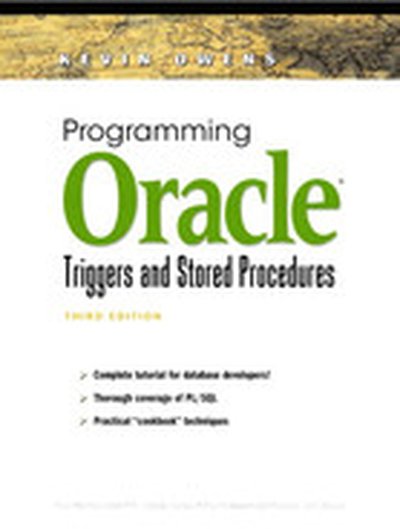
Programming Oracle® Triggers and Stored Procedures, Third Edition

Complete tutorial for database developers! Thorough coverage of PL/SQL Practical "cookbook" techniques Effectively create and manage complex databases with Oracle! Systems and database expert Kevin Owens explores PL/SQL, Oracle's answer to the Structured Query Language (SQL), and teaches you what you need to know to build robust and complex databases for your business. Using easy-to-follow instructions and examples, this book presents techniques to take advantage of Oracle features such as triggers and stored procedures-features that allow your databases to incorporate business rules which are easy to manage and modify as the business evolves. Topics covered include: Viewing constraints in the data dictionary Complex rule enforcement PL/SQL program units and language features Data types and composite structure Error handling and exceptions Inter-process communications Declarative constraints, including primary key, unique, foreign key, check, and much more Programming Oracle Triggers and Stored Procedures, Third Edition, is an invaluable resource for database developers, designers, and project leaders looking to build and maintain truly intelligent, complex databases

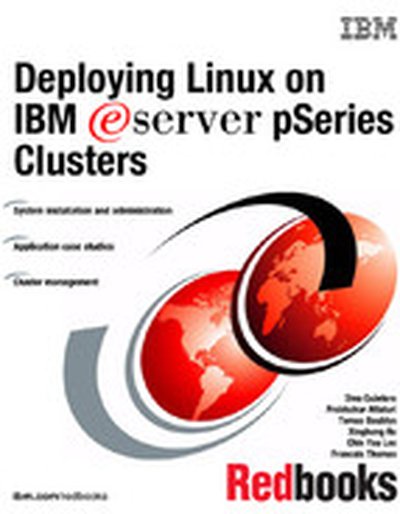
Deploying Linux on IBM eServer pSeries Clusters

System installation and administration Application case studies Cluster management For customers interested in Linux who need powerful and reliable servers to support their applications, IBM eServer pSeries offers 64-bit POWER servers to match their requirements at lower costs. Unlike other servers supporting solely high performance Linux needs, IBM eServer pSeries provides leadership price/performance with high reliability and a roadmap to provide the customer with investment protection. This IBM Redbook provides information and guidelines for how to deploy Linux on IBM eServer pSeries clusters. Topics covered include: System installation System administration Linux for pSeries RAS and problem determination Getting started with GPFS Cluster Systems Management (CSM) High Performance Computing case studies Commercial application case studies This redbook also includes hints and tips that illustrate particular observations discovered during the residency. Additional reference materials and Web sites have been included as well, to provide the reader with other sources of information necessary to implement Linux on pSeries clusters.

MySQL Tutorial

A concise introduction to the fundamentals of working with MySQL. MySQL is an open-source relational database management system that is rapidly growing in popularity. Known for its speed, reliability, and ease of use, MySQL has proven itself to be particularly well suited both for beginners and for experienced developers to create sophisticated database-backed Web sites and applications. MySQL Tutorial is a clear, concise introduction to the fundamental concepts and techniques of working with MySQL. It teaches the beginning MySQL user how to create and administer powerful databases that can be used at home, at work, and on the Web. Whether you are a novice to databases or a technical professional looking to find out more about how MySQL works, MySQL Tutorial efficiently guides you through the information you need in order to get started with MySQL and quickly become proficient.

.NET & XML

If you're seeking ways to build network-based applications or XML-based web services, Microsoft provides most of the tools you'll need. XML is integrated into the .NET Framework and Visual Studio .NET, but if you want to get a grasp on how .NET and XML actually work together, that's a different story. With .NET & XML, you can get under the hood to see how the .NET Framework implements XML, giving you the skills to write understandable XML-based code that interoperates with code written with other tools, and even other languages. .NET & XML starts by introducing XML and the .NET Framework, and then teaches you how to read and write XML before moving on to complex methods for manipulating, navigating, transforming, and constraining it. To demonstrate the power of XML in .NET, author Niel Bornstein builds a simple hardware store inventory system throughout the book. As you move from chapter to chapter, you'll absorb increasingly complex information until you have enough knowledge to successfully program your own XML-based applications. This tutorial also contains a quick reference to the API, plus appendices present additional .NET assemblies that you can use to work with XML, and how to work with the .NET XML configuration file format.One study puts the potential market for new software based on XML at or near $100 billion over the next five years. The .NET Framework gives you a way to become a part of it. But to use XML and .NET effectively, you need to understand how these two technologies work together. This book gives you the insight to take full advantage of the power the two provide.

IBM Web Infrastructure Orchestration

This IBM Redbooks publication provides the foundation for establishing an automatic provisioning environment of Web server solutions. The material discussed in this book provides detailed information on using the IBM BladeCenter platform as a building block for hosting a highly available, multi-tier application. The book also shows how the IBM Director and Remote Deployment Manager software products can be used to automate the deployment of WebSphere software, and demonstrates how these products can be scripted to provide hot-standby and hot-addition of blade servers to running WebSphere clusters.. The additional software components of IBM Web Infrastructure Orchestration are designed to respond dynamically to Web capacity needs and utilization issues. This product bundle, based on the IBM eServer BladeCenter, consists of pre-integrated versions of WebSphere Application Server, DB2, Tivoli Storage Manager, Tivoli Monitoring, and TotalStorage hardware, coordinated by defined business policies and managed by IBM Tivoli Intelligent ThinkDynamic Orchestrator. This book is intended for an audience of experienced developers, designers, planners, network specialists, and testers of the software and hardware components listed above.

Lotus Instant Messaging/Web Conferencing (Sametime): Building Sametime Enabled Applications

This IBM Redbooks publication builds upon two existing Redbooks: Working with Sametime Client Toolkits, SG24-6666 and Working with the Sametime Community Server Toolkit, SG24-6667. Focusing on the latest toolkits available for IBM Lotus Instant Messaging and Lotus Web Conferencing (Sametime) 3, it explores Sametime as a development platform, illustrating how to extend the functionality of Sametime beyond its more commonly known instant messaging and e-meeting hosting features. It provides a detailed technical discussion and examples for building and integrating Sametime real-time collaborative capabilities, presence awareness, and Web conferencing capabilities into both new and existing applications. In-depth discussions and code examples are provided for topics such as building custom bots, leveraging Sametime functionality through Web Services, and integrating Sametime into workflow applications. Additionally, this book reveals how you can customize (brand) your organization’s Sametime Meeting Center to more closely match the company’s identity. Finally, thorough analysis is given to the topics of Sametime Links and the Sametime Places architecture. Several samples of Sametime applications, with source code, are included. Ultimately, we hope this book will help you better appreciate how your organization may benefit by more effectively leveraging Sametime. Please note that the additional material referenced in the text is not available from IBM.