talk-data.com talk-data.com

Event

O'Reilly Data Engineering Books

2001-10-19 – 2027-05-25 Oreilly Visit website ↗

Activities tracked

397

Collection of O'Reilly books on Data Engineering.

Filtering by: Oracle ×

Sessions & talks

Showing 1–25 of 397 · Newest first

Search within this event →
Oracle 23AI & ADBS in Action: Exploring New Features with Hands-On Case Studies

Unlock the power of Oracle Database 23AI and Autonomous Database Serverless (ADB-S) with this comprehensive guide to the latest innovations in performance, security, automation, and AI-driven optimization. As enterprises embrace intelligent and autonomous data platforms, understanding these capabilities is essential for data architects, developers, and DBAs. Explore cutting-edge features such as vector data types and AI-powered vector search, revolutionizing data retrieval in modern AI applications. Learn how schema privileges and the DB_DEVELOPER_ROLE simplify access control in multi-tenant environments. Dive into advanced auditing, SQL Firewall, and data integrity constraints to strengthen security and compliance. Discover AI-driven advancements like machine learning-based query execution, customer retention prediction, and AI-powered query tuning. Additional chapters cover innovations in JSON, XML, JSON-Relational Duality Views, new indexing techniques, SQL property graphs, materialized views, partitioning, lock-free transactions, JavaScript stored procedures, blockchain tables, and automated bigfile tablespace shrinking. What sets this book apart is its practical focus—each chapter includes real-world case studies and executable scripts, enabling professionals to implement these features effectively in enterprise environments. Whether you're optimizing performance or aligning IT with business goals, this guide is your key to building scalable, secure, and AI-powered solutions with Oracle 23AI and ADB-S. What You Will Learn Explore Oracle 23AI's latest features through real-world use cases Implement AI/ML-driven optimizations for smarter, autonomous database performance Gain hands-on experience with executable scripts and practical coding examples Strengthen security and compliance using advanced auditing, SQL Firewall, and blockchain tables Master high-performance techniques for query tuning, in-memory processing, and scalability Revolutionize data access with AI-powered vector search in modern AI workloads Simplify user access in multi-tenant environments using schema privileges and DB_DEVELOPER_ROLE Model and query complex data using JSON-Relational Duality Views and SQL property graphs Who this Book is For Database architects, data engineers, Oracle developers, and IT professionals seeking to leverage Oracle 23AI’s latest features for real-world applications
Just Use Postgres!

You probably don’t need a collection of specialty databases. Just use Postgres instead! Written for application developers and database pros, Just Use Postgres! shows you how to get the most out of the powerful Postgres database. In Just Use Postgres! you’ll learn how to: Use Postgres as an RDBMS for transactional workloads Develop generative AI, geospatial, and time-series applications Take advantage of modern SQL including window functions and CTEs Perform full-text search and process JSON documents Use Postgres as a message queue Optimize performance with various index types including B-trees, GIN, GiST, HNSW, and more Over the decades, PostgreSQL, aka Postgres, has grown into the most powerful general-purpose database and has become the de facto standard for developers worldwide. Just Use Postgres! takes a modern look at Postgres, exploring the database’s most up-to-date features for AI, time-series, full-text search, geospatial, and other application workloads. About the Technology You know that PostgreSQL is a fast, reliable, SQL compliant RDBMS. You may not know that it’s also great for geospatial systems, time series, full-text search, JSON documents, AI vector embeddings, and many other specialty database functions. For almost any data task you can imagine, you can use Postgres. About the Book Just Use Postgres! covers recipes for using Postgres in dozens of applications normally reserved for single-purpose databases. Written for busy application developers, each chapter explores a different use case illuminating the breadth and depth of Postgres’s capabilities. Along the way, you’ll also meet an incredible ecosystem of Postgres extensions like pgvector, PostGIS, pgmq, and TimescaleDB. You’ll be amazed at everything you can accomplish with Postgres! What's Inside Generative AI, geospatial, and time-series applications Modern SQL including window functions and CTEs Full-text search and JSON B-trees, GIN, GiST, HNSW, and more About the Reader For application developers, software engineers, and architects who know the basics of SQL. About the Author Denis Magda is a recognized Postgres expert and software engineer who worked on Java at Sun Microsystems and Oracle before focusing on databases and large-scale distributed systems. Quotes I was pleasantly surprised to learn many new things from this book. - From the Afterword by Vlad Mihalcea An excellent guide covering everything from basics to cutting-edge features. - Dave Cramer, PostgreSQL JDBC Maintainer Pleasant, easy to read with tonnes of great code. - Mike McQuillan, McQTech Ltd Well-organized and easy to search. - Edward Pollack, Microsoft Data Platform MVP The missing guide to understanding and using Postgres. - Mehboob Alam, POSTGRESNX, Inc.

Pro Oracle GoldenGate 23ai for the DBA: Powering the Foundation of Data Integration and AI

Transform your data replication strategy into a competitive advantage with Oracle GoldenGate 23ai. This comprehensive guide delivers the practical knowledge DBAs and architects need to implement, optimize , and scale Oracle GoldenGate 23ai in production environments. Written by Oracle ACE Director Bobby Curtis, it blends deep technical expertise with real-world business insights from hundreds of implementations across manufacturing, financial services, and technology sectors. Beyond traditional replication, this book explores the groundbreaking capabilities that make GoldenGate 23ai essential for modern AI initiatives. Learn how to implement real-time vector replication for RAG systems, integrate with cloud platforms like GCP and Snowflake, and automate deployments using REST APIs and Python. Each chapter offers proven strategies to deliver measurable ROI while reducing operational risk. Whether you're upgrading from Classic GoldenGate , deploying your first cloud data pipeline, or building AI-ready data architectures, this book provides the strategic guidance and technical depth to succeed. With Bobby's signature direct approach, you'll avoid common pitfalls and implement best practices that scale with your business. What You Will Learn Master the microservices architecture and new capabilities of Oracle GoldenGate 23ai Implement secure, high-performance data replication across Oracle, PostgreSQL, and cloud databases Configure vector replication for AI and machine learning workloads, including RAG systems Design and build multi-master replication models with automatic conflict resolution Automate deployments and management using RESTful APIs and Python Optimize performance for sub-second replication lag in production environments Secure your replication environment with enterprise-grade features and compliance Upgrade from Classic to Microservices architecture with zero downtime Integrate with cloud platforms including OCI, GCP, AWS, and Azure Implement real-time data pipelines to BigQuery , Snowflake, and other cloud targets Navigate Oracle licensing models and optimize costs Who This Book Is For Database administrators, architects, and IT leaders working with Oracle GoldenGate —whether deploying for the first time, migrating from Classic architecture, or enabling AI-driven replication—will find actionable guidance on implementation, performance tuning, automation, and cloud integration. Covers unidirectional and multi-master replication and is packed with real-world use cases.

Mastering PostgreSQL Administration: Internals, Operations, Monitoring, and Oracle Migration Strategies

This book is your one-stop resource on PostgreSQL system architecture, installation, management, maintenance, and migration. It will help you address the critical needs driving successful database management today: reliability and availability, performance and scalability, security and compliance, cost-effectiveness and flexibility, disaster recovery, and real-time analytics—all in one volume. Each topic in the book is thoroughly explained by industry experts and includes step-by-step instructions for configuring the features, a discussion of common issues and their solutions, and an exploration of real-world scenarios and case studies that illustrate how concepts work in practice. You won't find the book's comprehensive coverage of advanced topics, including migration from Oracle to PostgreSQL, heterogeneous replication, and backup & recovery, in one place—online or anywhere else. What You Will Learn Install PostgreSQL using source code and yum installation Back up and recover Migrate from Oracle database to PostgreSQL using ora2pg utility Replicate from PostgreSQL to Oracle database and vice versa using Oracle GoldenGate Monitor using Grafana, PGAdmin, and command line tools Maintain with VACUUM, REINDEX, etc. Who This Book Is For Intermediate and advanced PostgreSQL users, including PostgreSQL administrators, architects, developers, analysts, disaster recovery system engineers, high availability engineers, and migration engineers

Concept Of Database Management System by Pearson

Concepts of Database Management System is designed to meet the syllabi requirements of undergraduate students of computer applications and computer science. It describes the concepts in an easy-to-understand language with sufficient number of examples. The overview of emerging trends in databases is thoroughly explained. A brief introduction to PL/SQL, MS-Access and Oracle is discussed to help students get a flavor of different types of database management systems.

Cyber Resiliency with IBM Storage Sentinel and IBM Storage Safeguarded Copy

IBM Storage Sentinel is a cyber resiliency solution for SAP HANA, Oracle, and Epic healthcare systems, designed to help organizations enhance ransomware detection and incident recovery. IBM Storage Sentinel automates the creation of immutable backup copies of your data, then uses machine learning to detect signs of possible corruption and generate forensic reports that help you quickly diagnose and identify the source of the attack. Because IBM Storage Sentinel can intelligently isolate infected backups, your organization can identify the most recent verified and validated backup copies, greatly accelerating your time to recovery. This IBM Redbooks publication explains how to implement a cyber resiliency solution for SAP HANA, Oracle, and Epic healthcare systems using IBM Storage Sentinel and IBM Storage Safeguarded Copy. Target audience of this document is cyber security and storage specialists.

Oracle Global Data Services for Mission-critical Systems: Maximizing Performance and Reliability in Complex Enterprise Environments

New to Oracle Global Data Services? You’ve come to the right place. This book will show you how to leverage the power of Oracle GDS to ensure runtime load balancing, region affinity, replication lag tolerance-based workload routing, and inter-database service failover. In particular, you will see how to maximize the utilization of replication investments with Oracle GDS. The book starts by guiding you through the installation and configuration of GDS and provides details for each component in the GDS framework. Next, you’ll learn how to configure various components of Oracle GDS in standalone environments. Hands-on exercises that explore the advantages of GDS with different test cases utilizing Active Data Guard (ADG), Oracle GoldenGate (OGG), and Oracle Real Application Clusters (RAC) will help you put your learning in context. The book concludes with a demonstration of how to add Oracle GDS to OEM for monitoring and troubleshooting. You’ll also see how to monitor Oracle GDS in a centralized location using Oracle Enterprise Manager Cloud Control. After completing this book, you will understand the architecture, components, and implementation strategies of GDS using ADG and OGG in mission-critical environments. What You Will Learn Understand Oracle Global Data Services architecture and its various components Install and configure Oracle Global Data Services Use Global Data Services with Active Data Guard and Oracle Golden Gate. Monitor Global Data Services using Oracle Enterprise Manager Cloud Control. Troubleshoot issues in Global Data Services Who This Book Is For Oracle database administrators, Oracle database architects, Oracle technical managers, Oracle application business analysts, and Oracle data engineers.

Resilient Oracle PL/SQL

As legacy and other critical systems continue to migrate online, the need for continuous operation is imperative. Code has to handle data issues as well as hard external problems today, including outages of networks, storage systems, power, and ancillary systems. This practical guide provides system administrators, DevSecOps engineers, and cloud architects with a concise yet comprehensive overview on how to use PL/SQL to develop resilient database solutions. Integration specialist Stephen B Morris helps you understand the language, build a PL/SQL toolkit, and collect a suite of reusable components and patterns. You'll dive into the benefits of synthesizing the toolkit with a requirements-driven, feature-oriented approach and learn how to produce resilient solutions by synthesizing the PL/SQL toolkit in conjunction with a scale of resilience. Build solid PL/SQL solutions while avoiding common PL/SQL antipatterns Learn why embedding complex business logic in SQL is often a brittle proposition Learn how to recognize and improve weak PL/SQL code Verify PL/SQL code by running data-driven, in-database tests Understand the safe operation, maintenance, and modification of complex PL/SQL systems Learn the benefits of thinking about features rather than just use cases Define good requirements for PL/SQL and hybrid solutions involving PL/SQL and high level languages

Proactive Early Threat Detection and Securing Oracle Database with IBM QRadar, IBM Security Guardium Database Protection, and IBM Copy Services Manager by using IBM FlashSystem Safeguarded Copy

This IBM® blueprint publication focuses on early threat detection within a database environment by using IBM Security® Guardium® Data Protection and IBM QRadar® . It also highlights how to proactively start a cyber resilience workflow in response to a cyberattack or potential malicious user actions. The workflow that is presented here uses IBM Copy Services Manager as orchestration software to start IBM FlashSystem® Safeguarded Copy functions. The Safeguarded Copy creates an immutable copy of the data in an air-gapped form on the same IBM FlashSystem for isolation and eventual quick recovery. This document describes how to enable and forward Oracle database user activities (by using IBM Security Guardium Data Protection) and IBM FlashSystem audit logs by using IBM FlashSystem to IBM QRadar. This document also describes how to create various rules to determine a threat, and configure and launch a suitable response to the detected threat in IBM QRadar. The document also outlines the steps that are involved to create a Scheduled Task by using IBM Copy Services Manager with various actions.

Modern Oracle Database Programming: Level Up Your Skill Set to Oracle's Latest and Most Powerful Features in SQL, PL/SQL, and JSON

Level up your skill set to the latest that Oracle Database can offer. This book introduces features that are not well known that can transform your development efforts. You’ll discover built-in functionality that can save you massive amounts of time that otherwise would be spent reinventing the wheel. You’ll find that what used to take a lot of programming some years ago can be done with less code in a more reliable way today. Anyone using Oracle Database without the knowledge in this book is leaving valuable functionality–that their company has paid for–on the table, and this book opens the door to that functionality so that you can deliver reliable and performant solutions faster and more easily than ever. Part I looks at features in SQL and PL/SQL that are underused and not well known. You’ll learn about new join types, pattern matching across rows, Top N pagination (useful in reporting!), qualified expressions, and enhancements to iterators that reduce code complexity and make your logic easier to understand. Part II covers how and when to invoke PL/SQL from SQL while maintaining performance. You'll learn about SQL macro functions for creating reusable SQL fragments, polymorphic table functions with return types determined by incoming argument types, and constructing and parsing JSON documents for data interchange with other systems. Part III introduces a vast array of built-in functionality that Oracle provides that is just waiting to be used. Edition-based redefinition enables zero-downtime application and schema upgrades. Data redaction enables easier compliance with privacy laws and similar regulations by protecting sensitive data from those who have no need to see it. Virtual private databases provide the appearance of giving each user their own database, again helping to secure sensitive data. These features are just a taste of what the book provides. Soon you’ll be improving your skillsand wondering why you ever worked so hard to solve problems that Oracle Database already solves for you. What You Will Learn Write more powerful code by incorporating underused features in SQL and PL/SQL Optimize your integration between SQL and PL/SQL for best performance Take advantage of enhanced set operators, lateral joins, row-based pattern matching, and other advanced features in SQL Make your code easier to understand through your use of newer PL/SQL features, such as qualified expressions and iterator enhancements Integrate with web services and external data sources directly from the database Create and parse JSON documents for easy data exchange and flexible schema design Who This Book Is For Any developer who is writing SQL or PL/SQL, PL/SQL experts who want to level up their knowledgeand skills to the latest features that Oracle Database provides, and developers who don’t want to write their own solutions only to find out later that they’ve wasted their time by building something that Oracle Database provides out of the box

Pro Oracle SQL Development: Best Practices for Writing Advanced Queries

Write SQL statements that are more powerful, simpler, and faster using the advanced features of Oracle SQL. This updated second edition includes the newest advanced features: improved data structures (such as more JSON support and more table options), improved automated processes (such as automatic indexing), and improved SQL language extensions (such as polymorphic table functions, SQL macros, and the multilingual engine). Pro Oracle SQL Development is for anyone who already knows Oracle SQL and is ready to take their skills to the next level. This book provides a clearer way of thinking about SQL by building sets, and it provides practical advice for using complex features while avoiding anti-patterns that lead to poor performance and wrong results. Relevant theories, real-world best practices, and style guidelines help you get the most out of Oracle SQL. Many developers, testers, analysts, and administrators use Oracle databases frequently, but their queries are limited because they do not take advantage of Oracle’s advanced features. This book inspires you to achieve more with your Oracle SQL statements by creating your own style for writing simple, yet powerful, SQL. It teaches you how to think about and solve performance problems in Oracle SQL, and it covers enough advanced topics to put you on the path to becoming an Oracle expert. What You'll Learn Solve challenging problems with declarative SQL instead of procedural languages Write SQL statements that are large and powerful, but also elegant and fast Create development environments that are simple, scalable, and conducive to learning Visualize and understand SQL more intuitively Apply advanced syntax, objects, and architecture Avoid SQL anti-patterns that accumulate technical debt Tune SQL statements with multiple strategies that can significantly improve performance Who This Book Is For Developers, testers, analysts, and administrators who want to harness the full power of Oracle SQL to solve their problems as simply and as quickly as possible; traditional database professionals looking for new ways of thinking about the language they have used for so long; and modern full stack developers who need an explanation of how a database can be much more than simply a place to store data

Oracle Autonomous Database in Enterprise Architecture

Explore the capabilities of Oracle Autonomous Database (ADB) to improve enterprise-level data management. Through this book, you will dive deep into deploying, managing, and securing ADBs using Oracle Cloud Infrastructure (OCI). Gain hands-on experience with high-availability setups, data migration methods, and advanced security measures to elevate your enterprise architecture. What this Book will help me do Understand the key considerations for planning, migrating, and maintaining Oracle Autonomous Databases. Learn to implement high availability solutions using Autonomous Data Guard in ADB environments. Master the configuration of backup, restore, and disaster recovery strategies within OCI. Implement advanced security practices including encryption and IAM policy management. Gain proficiency in leveraging ADB features like APEX, SQL Developer Web, and REST APIs for rapid application development. Author(s) The authors None Sharma, Krishnakumar KM, and None Panda are experts in database systems, particularly in Oracle technologies. With years of hands-on experience implementing enterprise solutions and training professionals, they have pooled their knowledge to craft a resource-rich guide filled with practical advice. Who is it for? This book is ideal for cloud architects, database administrators, and implementation consultants seeking to leverage Oracle's Autonomous Database for enhanced automation, security, and scalability. It is well-suited for professionals with foundational knowledge of Linux, OCI, and databases. Aspiring cloud engineers and students aiming to understand modern database management will also benefit greatly.

Trino: The Definitive Guide, 2nd Edition

Perform fast interactive analytics against different data sources using the Trino high-performance distributed SQL query engine. In the second edition of this practical guide, you'll learn how to conduct analytics on data where it lives, whether it's a data lake using Hive, a modern lakehouse with Iceberg or Delta Lake, a different system like Cassandra, Kafka, or SingleStore, or a relational database like PostgreSQL or Oracle. Analysts, software engineers, and production engineers learn how to manage, use, and even develop with Trino and make it a critical part of their data platform. Authors Matt Fuller, Manfred Moser, and Martin Traverso show you how a single Trino query can combine data from multiple sources to allow for analytics across your entire organization. Explore Trino's use cases, and learn about tools that help you connect to Trino for querying and processing huge amounts of data Learn Trino's internal workings, including how to connect to and query data sources with support for SQL statements, operators, functions, and more Deploy and secure Trino at scale, monitor workloads, tune queries, and connect more applications Learn how other organizations apply Trino successfully

Proactive EarlyThreat Detection and Securing Oracle Database with IBM QRadar, IBM Security Guardium Data Protection, and IBM Copy Services Manager by using IBM FlashSystem Safeguarded Copy

This IBM® blueprint publication focuses on early threat detection within a database environment by using IBM Security Guardium® Data Protection and IBM QRadar®. It also highlights how to proactively start a cyber resilience workflow in response to a cyberattack or potential malicious user actions. The workflow that is presented here uses IBM Copy Services Manager as orchestration software to start IBM FlashSystem® Safeguarded Copy functions. The Safeguarded Copy creates an immutable copy of the data in an air-gapped form on the same IBM FlashSystem for isolation and eventual quick recovery. This document describes how to enable and forward Oracle database user activities (by using IBM Security Guardium Data Protection) and IBM FlashSystem audit logs by using IBM FlashSystem to IBM QRadar. This document also describes how to create various rules to determine a threat, and configure and launch a suitable response to the detected threat in IBM QRadar. The document also outlines the steps that are involved to create a Scheduled Task by using IBM Copy Services Manager with various actions.

Pro Database Migration to Azure: Data Modernization for the Enterprise

Migrate your existing, on-premises applications into the Microsoft Azure cloud platform. This book covers the best practices to plan, implement, and operationalize the migration of a database application from your organization’s data center to Microsoft’s Azure cloud platform. Data modernization and migration is a technologically complex endeavor that can also be taxing from a leadership and operational standpoint. This book covers not only the technology, but also the most important aspects of organization culture, communication, and politics that so frequently derail such projects. You will learn the most important steps to ensuring a successful migration and see battle-tested wisdom from industry veterans. From executive sponsorship, to executing the migration, to the important steps following migration, you will learn how to effectively conduct future migrations and ensure that your team and your database application delivers on the expected business value of the project. This book is unlike any other currently in the market. It takes you through the most critical business and technical considerations and workflows for moving your data and databases into the cloud, with special attention paid to those who are deploying to the Microsoft Data Platform in Azure, especially SQL Server. Although this book focuses on migrating on-premises SQL Server enterprises to hybrid or fully cloud-based Azure SQL Database and Azure SQL Managed Instances, it also cover topics involving migrating non-SQL Server database platforms such as Oracle, MySQL, and PostgreSQL applications to Microsoft Azure. What You Will Learn Plan a database migration that ensures smooth project progress, optimal performance, low operating cost, and minimal downtime Properly analyze and manage non-technical considerations, such as legal compliance, privacy, and team execution Perform athorough architectural analysis to select the best Azure services, performance tiers, and cost-containment features Avoid pitfalls and common reasons for failure relating to corporate culture, intra-office politics, and poor communications Secure the proper executive champions who can execute the business planning needed for success Apply proven criteria to determine your future-state architecture and your migration method Execute your migration using a process proven by the authors over years of successful projects Who This Book Is For IT leadership, strategic IT decision makers, project owners and managers, and enterprise and application architects. For anyone looking toward cloud migration projects as the next stage of growth in their careers. Also useful for enterprise DBAs and consultants who might be involved in such projects. Readers should have experience and be competent in designing, coding, implementing, and supporting database applications in an on-premises environment.

Expert Oracle Database Architecture: Techniques and Solutions for High Performance and Productivity

Now in its fourth edition and covering Oracle Database 21c, this best-selling book continues to bring you some of the best thinking on how to apply Oracle Database to produce scalable applications that perform well and deliver correct results. Tom Kyte and Darl Kuhn share a simple philosophy: "you can treat Oracle as a black box and just stick data into it, or you can understand how it works and exploit it as a powerful computing environment." If you choose the latter, then you’ll find that there are few information management problems that you cannot solve quickly and elegantly. This fully revised fourth edition covers the developments and new features up to Oracle Database 21c. Up-to-date features are covered for tables, indexes, data types, sequences, partitioning, data loading, temporary tables, and more. All the examples are demonstrated using modern techniques and are executed in container and pluggable databases. The book’s proof-by-example approach encourages you to let evidence be your guide. Try something. See the result. Understand why the result is what it is. Apply your newfound knowledge with confidence. The book covers features by explaining how each one works, how to implement software using it, and the common pitfalls associated with it. Don’t treat Oracle Database as a black box. Get this book. Dive deeply into Oracle Database’s most powerful features that many do not invest the time to learn about. Set yourself apart from your competition and turbo-charge your career. What You Will Learn Identify and effectively resolve application performance issues and bottlenecks Architect systems to leverage the full power and feature set of Oracle’s database engine Configure a database to maximize the use of memory structures and background processes Understand internal locking and latching technology and how it impacts your system Proactively recommend best practices around performance for table and index structures Take advantage of advanced features such as table partitioning and parallel execution Who This Book Is For Oracle developers and Oracle DBAs. If you’re a developer and want a stronger understanding of Oracle features and architecture that will enable your applications to scale regardless of the workload, this book is for you. If you’re a DBA and want to intelligently work with developers to design applications that effectively leverage Oracle technology, then look no further.

IBM Spectrum Protect Plus Protecting Database Applications

IBM® Spectrum Protect Plus is a data protection solution that provides near-instant recovery, replication, retention management, and reuse for virtual machines, databases, and application backups in hybrid multicloud environments. This IBM Redpaper publication focuses on protecting database applications. IBM Spectrum® Protect Plus supports backup, restore, and data reuse for multiple databases, such as Oracle, IBM Db2®, MongoDB, Microsoft Exchange, and Microsoft SQL Server. Although other IBM Spectrum Protect Plus features focus on virtual environments, the database and application support of IBM Spectrum Protect Plus includes databases on virtual physical servers.

Storage Systems

Storage Systems: Organization, Performance, Coding, Reliability and Their Data Processing was motivated by the 1988 Redundant Array of Inexpensive/Independent Disks proposal to replace large form factor mainframe disks with an array of commodity disks. Disk loads are balanced by striping data into strips—with one strip per disk— and storage reliability is enhanced via replication or erasure coding, which at best dedicates k strips per stripe to tolerate k disk failures. Flash memories have resulted in a paradigm shift with Solid State Drives (SSDs) replacing Hard Disk Drives (HDDs) for high performance applications. RAID and Flash have resulted in the emergence of new storage companies, namely EMC, NetApp, SanDisk, and Purestorage, and a multibillion-dollar storage market. Key new conferences and publications are reviewed in this book.The goal of the book is to expose students, researchers, and IT professionals to the more important developments in storage systems, while covering the evolution of storage technologies, traditional and novel databases, and novel sources of data. We describe several prototypes: FAWN at CMU, RAMCloud at Stanford, and Lightstore at MIT; Oracle's Exadata, AWS' Aurora, Alibaba's PolarDB, Fungible Data Center; and author's paper designs for cloud storage, namely heterogeneous disk arrays and hierarchical RAID. Surveys storage technologies and lists sources of data: measurements, text, audio, images, and video Familiarizes with paradigms to improve performance: caching, prefetching, log-structured file systems, and merge-trees (LSMs) Describes RAID organizations and analyzes their performance and reliability Conserves storage via data compression, deduplication, compaction, and secures data via encryption Specifies implications of storage technologies on performance and power consumption Exemplifies database parallelism for big data, analytics, deep learning via multicore CPUs, GPUs, FPGAs, and ASICs, e.g., Google's Tensor Processing Units

Machine Learning for Oracle Database Professionals: Deploying Model-Driven Applications and Automation Pipelines

Database developers and administrators will use this book to learn how to deploy machine learning models in Oracle Database and in Oracle’s Autonomous Database cloud offering. The book covers the technologies that make up the Oracle Machine Learning (OML) platform, including OML4SQL, OML Notebooks, OML4R, and OML4Py. The book focuses on Oracle Machine Learning as part of the Oracle Autonomous Database collaborative environment. Also covered are advanced topics such as delivery and automation pipelines. Throughout the book you will find practical details and hand-on examples showing you how to implement machine learning and automate deployment of machine learning. Discussion around the examples helps you gain a conceptual understanding of machine learning. Important concepts discussed include the methods involved, the algorithms to choose from, and mechanisms for process and deployment. Seasoned database professionals looking to make the leap into machine learning as a growth path will find much to like in this book as it helps you step up and use your current knowledge of Oracle Database to transition into providing machine learning solutions. What You Will Learn Use the Oracle Machine Learning (OML) Notebooks for data visualization and machine learning model building and evaluation Understand Oracle offerings for machine learning Develop machine learning with Oracle database using the built-in machine learning packages Develop and deploy machine learning models using OML4SQL and OML4R Leverage the Oracle Autonomous Database and its collaborative environment for Oracle Machine Learning Develop and deploy machine learning projects in Oracle Autonomous Database Build an automated pipeline that can detect and handle changes in data/model performance Who This Book Is For Database developers and administrators who want to learn about machine learning, developers who want to build models and applications using Oracle Database’s built-in machine learning feature set, and administrators tasked with supporting applications on Oracle Database that make use of the Oracle Machine Learning feature set

R2DBC Revealed: Reactive Relational Database Connectivity for Java and JVM Programmers

Understand the newest trend in database programming for developers working in Java, Kotlin, Clojure, and other JVM-based languages. This book introduces Reactive Relational Database Connectivity (R2DBC), a modern way of connecting to and querying relational databases from Java and other JVM languages. The book begins by helping you understand not only what reactive programming is, but why it is necessary. Then building on those fundamentals, the book takes you into the world of databases and the newly released Reactive Relational Database Connectivity (R2DBC) specification. Examples in the book are worked using the freely available MariaDB database along with MariaDB’s vendor-implementation of the R2DBC service-provider interface (SPI). Following along with the examples and the provided example code helps prepare you to work with any of the growing number of R2DBC implementations for popular enterprise databases such as Oracle Database and SQL Server. You’ll be well prepared for what is becoming the future of database access from Java and other languages built on the JVM. What You Will Learn Understand why R2DBC was created and how it utilizes the Reactive Streams API Understand the components of the R2DBC service-provider interface Create and manage reactive database connections and connection pools using an R2DBC client Programmatically execute queries on a relational database using an R2DBC client Effectively utilize transactions using an R2DBC client Build relational database-driven applications that are event-driven and non-blocking Who This Book Is For Software developers building solutions using JVM languages and the JVM ecosystem, and developers who need an introduction to the R2DBC specification and reactive programming with relational databases and want to understand what Reactive Relational Database Connectivity is and why it came about. This book includes practical examples of using the R2DBC specification with Java and MariaDB that will provide developers with the knowledge they need to create their own solutions.

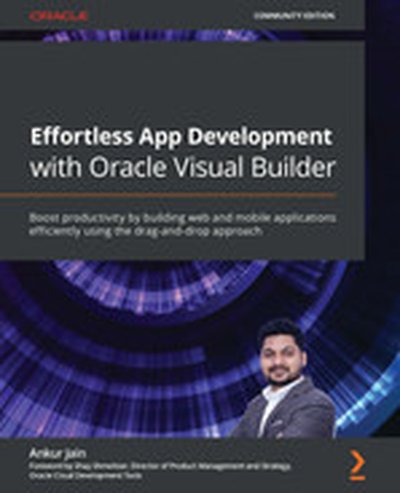
Effortless App Development with Oracle Visual Builder

In "Effortless App Development with Oracle Visual Builder," you will explore how to quickly design, develop, and deploy robust web and mobile applications using Oracle Visual Builder's intuitive drag-and-drop features. This book equips you with the know-how to simplify application development tasks, making it perfect for professionals looking to boost productivity. What this Book will help me do Master the core architecture and features of Oracle Visual Builder to develop real-world applications effectively. Learn to create, manage, and leverage business objects and connect to various SaaS APIs within your applications. Build scalable and secure web and mobile applications using practical examples and clear implementation guidelines. Discover best practices for application lifecycle management, debugging, and troubleshooting VB applications. Extend Oracle and non-Oracle SaaS applications through hands-on knowledge tailored to real-world scenarios. Author(s) None Jain is an experienced developer and technical writer specializing in Oracle Visual Builder and cloud-based application development. With years of hands-on experience building and deploying cloud applications, they bring expertise and a practical approach to education. Their engaging writing style focuses on enabling readers to learn and apply new skills confidently. Who is it for? This book is perfectly suited for developers, UI designers, and IT professionals who want to master Oracle Visual Builder for developing web and mobile applications. If you already have experience with technologies like JavaScript, UI frameworks, and REST APIs, and seek to create intuitive applications using a simplified interface, this book is for you. Whether you're in the early stages of learning VB or looking to refine your skills, this book serves as a valuable guide.
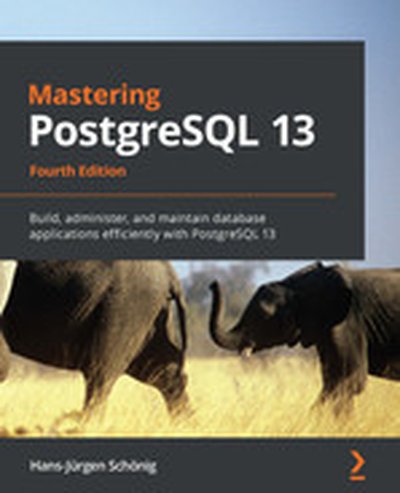
Mastering PostgreSQL 13 - Fourth Edition

Dive into PostgreSQL 13 with this comprehensive guide that equips you to build, manage, and optimize database applications using state-of-the-art features. With a strong focus on hands-on insights, this book covers everything from SQL functions to advanced replication, helping you to enhance your database management expertise. What this Book will help me do Understand and utilize advanced SQL features to increase database efficiency. Optimize your PostgreSQL queries for improved performance in applications. Implement robust backup, recovery, and replication strategies for data integrity. Migrate seamlessly from Oracle to PostgreSQL using proven strategies. Strengthen server security to safeguard sensitive data in your PostgreSQL system. Author(s) Hans-Jürgen Schönig is a renowned PostgreSQL expert with decades of experience in database administration and consulting. He has guided companies across the globe to leverage the power of PostgreSQL, achieving high performance and reliability in their applications. His clear, methodical, and practical approach makes complex topics accessible to database professionals. Who is it for? This book is crafted for PostgreSQL database administrators and developers with some prior experience. If you are looking to refine your skills and adopt advanced features in PostgreSQL 13 to enhance performance and manageability, this book is ideal for you. It is best suited for individuals who aim to make their database applications more secure and robust.

Oracle Database Transactions and Locking Revealed: Building High Performance Through Concurrency

Access much-needed information for building scalable, high-concurrency applications and deploying them against the Oracle Database. This new edition is updated to be current with Oracle Database 19. It includes a new chapter with troubleshooting recipes to help you quickly diagnose and resolve locking problems that are urgent and block production. Good transaction design is an important facet of highly-concurrent applications that are run by hundreds, even thousands, of users who are executing transactions at the same time. Transaction design, in turn, relies on a good understanding of how the database engine manages the locking of resources to prevent access conflicts and data loss that might otherwise result from concurrent access to data in the database. This book provides a solid and accurate explanation of how locking and concurrency are dealt with by Oracle Database. You will learn how the Oracle Database architecture accommodates user transactions, and how you can write code to mesh with the way in which Oracle Database is designed to operate. Oracle Database Transactions and Locking Revealed covers in detail the various lock types, and also different locking schemes such as pessimistic and optimistic locking. Then you will learn about transaction isolation and multi-version concurrency, and how the various lock types support Oracle Database’s transactional features. You will learn tips for transaction design, as well as some bad practices and habits to avoid. Coverage is also given to redo and undo, and their role in concurrency. The book is loaded with insightful code examples that drive home each concept. This is an important book that anyone developing highly-concurrent applications will want to have handy on their shelf. What You Will Learn Avoid application lockups due to conflicts over accessing the same resource Understand how Oracle prevents one application from overwriting another’s modifications Create transaction designs that mesh with how Oracle Database is designed Build high-throughput applications supporting thousands of concurrent users Design applications to take full advantage of Oracle’s powerful database engine Gain a fundamental knowledge of Oracle’s transaction and locking architecture Develop techniques to quickly diagnose and resolve common locking issues Who This Book Is For Oracle developers and database administrators faced with troubleshooting and solving deadlocks, locking contention, and similar problems that are encountered in high-concurrency environments; and application developers wanting to design their applications to excel at multi-user concurrency by taking full advantage of Oracle Database’s multi-versioning and concurrency support

Understanding Oracle APEX 20 Application Development: Think Like an Application Express Developer

This book shows developers and Oracle professionals how to build practical, non-trivial web applications using Oracle’s rapid application development environment – Application Express (APEX). This third edition Is revised to cover the new features and user interface experience found in APEX 20. Interactive grids and form regions are two of the newer aspects of APEX covered in this edition. The book is targeted at those who are new to APEX and just beginning to develop real projects for deployment, as well as those who are familiar with APEX and want a deeper understanding. The book takes you through the development of a demo web application that illustrates the concepts all APEX programmers should know. This book introduces the world of APEX properties, explaining the functionality supported by each page component as well as the techniques developers use to achieve that functionality. Topics include conditional formatting, user-customized reports, data entry forms, concurrency and lost updates, and security control. Specific attention is given in the book to the thought process involved in choosing and assembling APEX components and features to deliver a specific result. Understanding Oracle APEX 20 Application Development, 3rd Edition is the ideal book to take you from an understanding of the individual pieces of APEX to an understanding of how those pieces are assembled into polished applications. What You Will Learn Build attractive, highly functional web apps from the ground up Enhance and customize pages created by the APEX wizards Understand the security implications of page design Write PL/SQL code for process activity and verification Build complex components such as forms and interactive grids Who This Book Is For Developers new to APEXwho desire a strong fundamental understanding of how APEX applications work. For existing developers and database administrators desiring to mine the most value from APEX by improving their development techniques.

Best practices and Getting Started Guide for Oracle on IBM LinuxONE

IBM® is a Platinum level Partner in the Oracle Partner Network, which delivers the proven combination of industry insight, extensive real-world Oracle applications experience, deep technical skills, and high-performance servers and storage to create a complete business solution with a defined return on investment. From application selection, purchase, and implementation to upgrade and maintenance, we help organizations reduce the total cost of ownership and the complexity of managing their current and future applications environment while building a solid base for business growth. Oracle Database running on Linux is available for deployment on IBM LinuxONE by using Redhat Enterprise Linux (RHEL) or SUSE Linux Enterprise Server (SLES). This enterprise-grade solution is designed to add value to Oracle Database solutions. This IBM Redpaper® publication focuses on accepted good practices for installing and getting started by using Oracle Database, which provides you with an environment that is optimized for performance, scalability, flexibility, and ease-of-management.