talk-data.com talk-data.com

Event

PyData Boston 2025

2025-12-08 – 2025-12-10 PyData

Activities tracked

5

Filtering by: RAG ×

Sessions & talks

Showing 1–5 of 5 · Newest first

Search within this event →
No Cloud? No Problem. Local RAG with Embedding Gemma

No Cloud? No Problem. Local RAG with Embedding Gemma

2025-12-10 Watch
talk

Running Retrieval-Augmented Generation (RAG) pipelines often feels tied to expensive cloud APIs or large GPU clusters—but it doesn’t have to be. This session explores how Embedding Gemma, Google’s lightweight open embedding model, enables powerful RAG and text classification workflows entirely on a local machine. Using the Sentence Transformers framework with Hugging Face, high-quality embeddings can be generated efficiently for retrieval and classification tasks. Real-world examples involving call transcripts and agent remark classification illustrate how robust results can be achieved without the cloud—or the budget.
Building Production RAG Systems for Health Care Domains : Clinical Decision

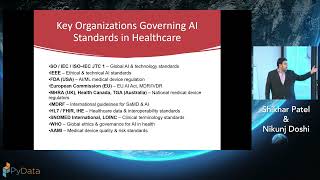
Building Production RAG Systems for Health Care Domains : Clinical Decision

2025-12-10 Watch
talk
RAG

Building on but moving far beyond the single-specialty focus of HandRAG, this session examines how Retrieval-Augmented Generation can be engineered to support clinical reasoning across multiple high stakes surgical areas, including orthopedic, cardiovascular, neurosurgical, and plastic surgery domains. Using a corpus of more than 7,800 clinical publications and cross specialty validation studies, the talk highlights practical methods for structuring heterogeneous medical data, optimizing vector retrieval with up to 35% latency gains, and designing prompts that preserve terminology accuracy across diverse subspecialties. Attendees will also learn a three-tier evaluation framework that improved critical-error detection by 2.4×, as well as deployment strategy such as automated literature refresh pipelines and cost-efficient architectures that reduced inference spending by 60% that enable RAG systems to operate reliably in real production healthcare settings.

The Boringly Simple Loop Powering GenAI Apps

The Boringly Simple Loop Powering GenAI Apps

2025-12-09 Watch
talk

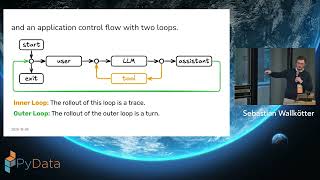
Do you feel lost in the jungle of GenAI frameworks and buzzwords? Here's a way out. Take any GenAI app, peel away the fluff, and look at its core. You'll find the same pattern: a boringly simple nested while loop. I will show you how this loop produces chat assistants, AI agents, and multi-agent systems. Then we'll cover how RAG, tool-calling, and memory are like lego bricks we add as needed. This gives you a first-principles based map. Use it to build GenAI apps from scratch; no frameworks needed.

Keynote by Lisa Amini- What’s Next in AI for Data and Data Management?

Keynote by Lisa Amini- What’s Next in AI for Data and Data Management?

2025-12-09 Watch
talk

Advances in large language models (LLMs) have propelled a recent flurry of AI tools for data management and operations. For example, AI-powered code assistants leverage LLMs to generate code for dataflow pipelines. RAG pipelines enable LLMs to ground responses with relevant information from external data sources. Data agents leverage LLMs to turn natural language questions into data-driven answers and actions. While challenges remain, these advances are opening exciting new opportunities for data scientists and engineers. In this talk, we will examine recent advances, along with some still incubating in research labs, with the goal of understanding where this is all heading, and present our perspective on what’s next for AI in data management and data operations.

Where Have All the Metrics Gone?

Where Have All the Metrics Gone?

2025-12-09 Watch
talk
RAG

How exactly does one validate the factuality of answers from a Retrieval-Augmented Generation (RAG) system? Or measure the impact of the new system prompt for your customer service agent? What do you do when stakeholders keep asking for "accuracy" metrics that you simply don't have? In this talk, we’ll learn how to define (and measure) what “good” looks like when traditional model metrics don’t apply.