talk-data.com talk-data.com

B

Speaker

Brett McLaughlin

6

talks

Chief Data Strategist Akamai

Filter by Event / Source

Talks & appearances

6 activities · Newest first

Search activities →

In this session, Brett McLaughlin, Chief Data Strategist at Akamai, discussed his journey to creating a forecasting solution. He sheds light on some limitations, some innovative thinking, and some hacks that one could use to structure a good forecasting model.

Timeline: 0:29 Brett's journey. 15:06 Data scientist fulling the vision of the CEO. 24:25 Art of doing business and science of doing business. 29:23 Data science and mathematics. 34:55 Salesforce defining the value of algorithms. 38:14 Capturing feedback to improve data models. 46:14 First steps in building a futuristic data model. 54:27 Using algorithms to forecast. 1:01 Tips for data leaders to build a team.

Podcast link: https://futureofdata.org/discussing-forecasting-brett-mclaughlin-akabret-akamai/

Here's Brett's Bio: Twenty-one years of experience transforming business operations through more intelligent use of data. Expertise in leading organizations in data transformation, predictive analytics (e.g., forecasting, linear programming, operational simulations, etc.), world-class visualizations and interfaces, and tight integration into existing operations.

About #Podcast:

FutureOfData podcast is a conversation starter to bring leaders, influencers, and lead practitioners to discuss their journey to create the data-driven future.

Wanna Join? If you or any you know wants to join in, Register your interest @ http://play.analyticsweek.com/guest/

Want to sponsor? Email us @ [email protected]

Keywords:
FutureOfData #DataAnalytics #Leadership #Podcast #BigData #Strategy

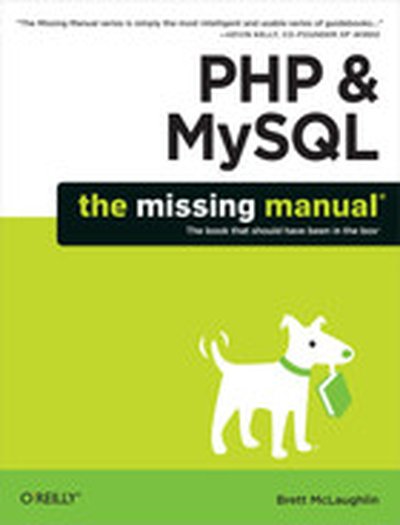
PHP & MySQL: The Missing Manual

If you can build websites with CSS and JavaScript, this book takes you to the next level—creating dynamic, database-driven websites with PHP and MySQL. Learn how to build a database, manage your content, and interact with users through queries and web forms. With step-by-step tutorials, real-world examples, and jargon-free explanations, you’ll soon discover the power of server-side programming. The important stuff you need to know: Get a running start. Write PHP scripts and create a web form right away. Learn the language. Get up to speed on PHP and SQL syntax quickly. Build a database. Use MySQL to store user information and other data. Make it dynamic. Create pages that change with each new viewing. Be ready for mistakes. Plan error messages to help direct users. Manage your content. Use the file system to access user data, including images and other binary files. Control operations. Create an administrative interface to oversee your site.

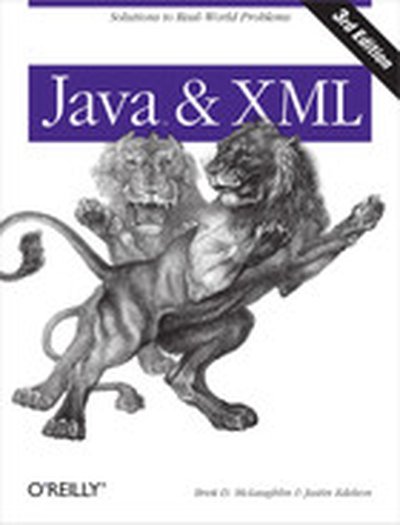
Java and XML, 3rd Edition

Java and XML, 3rd Edition, shows you how to cut through all the hype about XML and put it to work. It teaches you how to use the APIs, tools, and tricks of XML to build real-world applications. The result is a new approach to managing information that touches everything from configuration files to web sites. After two chapters on XML basics, including XPath, XSL, DTDs, and XML Schema, the rest of the book focuses on using XML from your Java applications. This third edition of Java and XML covers all major Java XML processing libraries, including full coverage of the SAX, DOM, StAX, JDOM, and dom4j APIs as well as the latest version of the Java API for XML Processing (JAXP) and Java Architecture for XML Binding (JAXB). The chapters on web technology have been entirely rewritten to focus on the today's most relevant topics: syndicating content with RSS and creating Web 2.0 applications. You'll learn how to create, read, and modify RSS feeds for syndicated content and use XML to power the next generation of websites with Ajax and Adobe Flash. Topics include: The basics of XML, including DTDs, namespaces, XML Schema, XPath, and Transformations The SAX API, including all handlers, filters, and writers The DOM API, including DOM Level 2, Level 3, and the DOM HTML module The JDOM API, including the core and a look at XPath support The StAX API, including StAX factories, producing documents and XMLPull Data Binding with JAXB, using the new JAXB 2.0 annotations Web syndication and podcasting with RSS XML on the Presentation Layer, paying attention to Ajax and Flash applications If you are developing with Java and need to use XML, or think that you will be in the future; if you're involved in the new peer-to-peer movement, messaging, or web services; or if you're developing software for electronic commerce, Java and XML will be an indispensable companion.

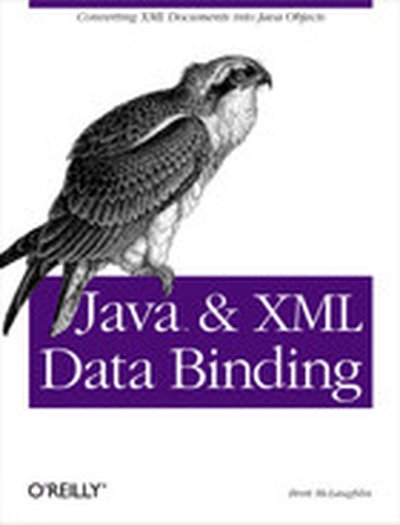
Java & XML Data Binding

More Java developers today want to work with XML, the technology that enables data to be transported intact over the Internet, but they don't have time to become XML experts. If this describes you, then you'll appreciate data binding, the new way of converting XML documents into Java objects, so those documents can be worked on and manipulated like any other Java object, then converted back to XML This new title provides an in-depth technical look at XML Data Binding. The book offers complete documentation of all features in both the Sun Microsystems JAXB API and popular open source alternative implementations (Enhydra Zeus, Exolabs Castor and Quick). It also gets into significant detail about when data binding is appropriate to use, and provides numerous practical examples of using data binding in applications. As Author Brett McLaughlin says "Too many books are written about technologies by people who barely understand them. I've already written two data binding implementations (Zeus, and a previous one for IBM DeveloperWorks.) I've actually used data binding for longer than the official specification has been in existence, and I've really been able to dig into what it takes to code an effective data biding implementation, as well as use one correctly. This book is part user guide, part under-the-hood manual, and part use-case. It's a powerful combination, and one I think people need."

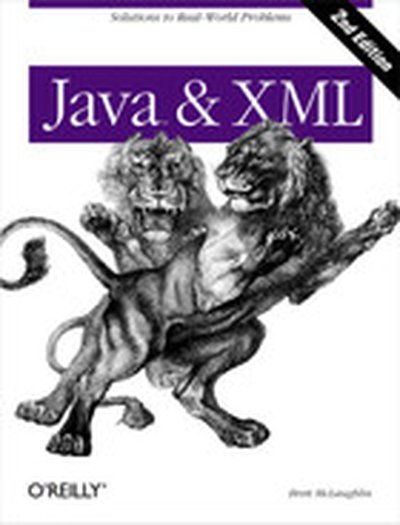
Java and XML, Second Edition

While the XML "buzz" still dominates talk among Internet developers, the critical need is for information that cuts through the hype and lets Java programmers put XML to work. Java & XML shows how to use the APIs, tools, and tricks of XML to build real-world applications, with the end result that both the data and the code are portable. This second edition of Java & XML adds chapters on Advanced SAX and Advanced DOM, new chapters on SOAP and data binding, and new examples throughout. A concise chapter on XML basics introduces concepts, and the rest of the book focuses on using XML from your Java applications. Java developers who need to work with XML, or think that they will in the future--as well as developers involved in the new peer-to-peer movement, messaging, or web services--will find the new Java & XML a constant companion. This book covers: The basics of XML, including DTDs, namespaces, XML Schema, XPath, and XSL The SAX API, including all handlers, the SAX 2 extensions, filters, and writers The DOM API, including DOM Level 2, Level 3, and the Traversal, Range, CSS, Events, and HTML modules. The JDOM API, including the core, a look at XPath support, and JDOM as a JSR Using web publishing frameworks like Apache Cocoon Developing applications with XML-RPC Using SOAP and UDDI for web services Data Binding, using both DTDs and XML Schema for constraints Building business-to-business applications with XML Building information channels with RSS and dynamic content with XSP Includes a quick reference on SAX 2.0, DOM Level 2, and JDOM.

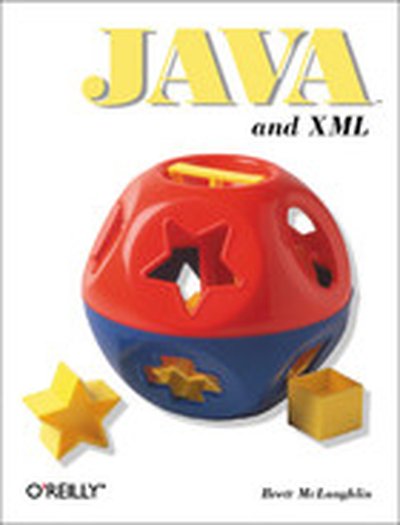
Java and XML

XML has been the biggest buzzword on the Internet community for the past year. But how do you cut through all the hype and actually put it to work? Java revolutionized the programming world by providing a platform-independent programming language. XML takes the revolution a step further with a platform-independent language for interchanging data. Java and XML share many features that are ideal for building web-based enterprise applications, such as platform-independence, extensibility, reusability, and global language (Unicode) support, and both are based on industry standards. Together Java and XML allow enterprises to simplify and lower costs of information sharing and data exchange. Java and XML shows how to put the two together, building real-world applications in which both the code and the data are truly portable. This book covers: The basics of XML Using standard Java APIs to parse XML Designing new document types using DTDs and Schemas Writing programs that generate XML data Transforming XML into different forms using XSL transformations (XSL/T) XML-RPC Using a web publishing framework like Apache-Cocoon This is the first book to cover the most recent versions of the DOM specification (DOM 2), the SAX API (SAX 2) and Sun's Java API for XML.