
talk-data.com talk-data.com

H

Speaker

Hilary Mason

4

talks

guest Hidden Door

Frequent Collaborators

Filter by Event / Source

Talks & appearances

4 activities · Newest first

Search activities →
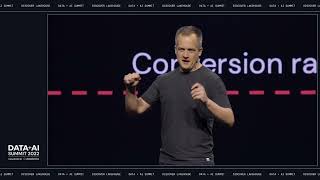
Day 2 Morning Keynote |  Data + AI Summit 2022

Day 2 Morning Keynote | Data + AI Summit 2022 Production Machine Learning | Patrick Wendell MLflow 2.0 | Kasey Uhlenhuth Revolutionizing agriculture with AI: Delivering smart industrial solutions built upon a Lakehouse architecture | Ganesh Jayaram Intuit’s Data Journey to the Lakehouse: Developing Smart, Personalized Financial Products for 100M+ Consumers & Small Businesses | Alon Amit and Manish Amde Workflows | Stacy Kerkela Delta Live Tables | Michael Armbrust AI and creativity, and building data products where there's no quantitative metric for success, such as in games, or web-scale search, or content discovery | Hilary Mason What to Know about Data Science and Machine Learning in 2022 | Peter Norvig Data-centric AI development: From Big Data to Good Data | Andrew Ng

Connect with us: Website: https://databricks.com Facebook: https://www.facebook.com/databricksinc Twitter: https://twitter.com/databricks LinkedIn: https://www.linkedin.com/company/data... Instagram: https://www.instagram.com/databricksinc/

podcast_episode
with Val Kroll , Julie Hoyer , Tim Wilson (Analytics Power Hour - Columbus (OH) , Moe Kiss (Canva) , Michael Helbling (Search Discovery) , Hilary Mason (Hidden Door)

Sure. GPT-3 and large language models in general can take a prompt and spin out in any of a million human-sounding directions. That's neat, but maybe not exactly what you'd want to turn loose as your guide through a narrative multiverse of AI-boosted creative play and community. "A what?" You say. Exactly. In this episode, we dug into Hilary Mason's latest endeavor, Hidden Door, and how she and her team are working to apply the right level of "human" to AI-driven narrative play. Intrigued? You should be! It's fascinating! For complete show notes, including links to items mentioned in this episode and a transcript of the show, visit the show page.

Ethics and Data Science

As the impact of data science continues to grow on society there is an increased need to discuss how data is appropriately used and how to address misuse. Yet, ethical principles for working with data have been available for decades. The real issue today is how to put those principles into action. With this report, authors Mike Loukides, Hilary Mason, and DJ Patil examine practical ways for making ethical data standards part of your work every day. To help you consider all of possible ramifications of your work on data projects, this report includes: A sample checklist that you can adapt for your own procedures Five framing guidelines (the Five C’s) for building data products: consent, clarity, consistency, control, and consequences Suggestions for building ethics into your data-driven culture Now is the time to invest in a deliberate practice of data ethics, for better products, better teams, and better outcomes. Get a copy of this report and learn what it takes to do good data science today.

Data Driven

Succeeding with data isn’t just a matter of putting Hadoop in your machine room, or hiring some physicists with crazy math skills. It requires you to develop a data culture that involves people throughout the organization. In this O’Reilly report, DJ Patil and Hilary Mason outline the steps you need to take if your company is to be truly data-driven—including the questions you should ask and the methods you should adopt. You’ll not only learn examples of how Google, LinkedIn, and Facebook use their data, but also how Walmart, UPS, and other organizations took advantage of this resource long before the advent of Big Data. No matter how you approach it, building a data culture is the key to success in the 21st century. You’ll explore: Data scientist skills—and why every company needs a Spock How the benefits of giving company-wide access to data outweigh the costs Why data-driven organizations use the scientific method to explore and solve data problems Key questions to help you develop a research-specific process for tackling important issues What to consider when assembling your data team Developing processes to keep your data team (and company) engaged Choosing technologies that are powerful, support teamwork, and easy to use and learn