This session will go over 4 common data engineering problems, myth busting the "ask" vs "reality" with real-life examples. Part data engineering therapy, part solving problems that "really" matter, part how to think small and deliver big.
 talk-data.com

Speaker
Scott Haines
6
talks
Databricks Beacon
Databricks
Scott Haines is a software engineer at Buf specializing in massive distributed data systems and streaming technologies. Over the past decade he has built and scaled data infrastructure at Yahoo!, Twilio, Nike, and now Buf, with deep expertise in distributed data architectures, streaming pipelines, Apache Spark, and Delta Lake. He is the author of books on Apache Spark and Delta Lake, and helps organizations adopt open-source technologies through teaching and consulting. He has over 20 years of experience across the software stack, with roles at Hitachi Data Systems, Convo Communications, Yahoo!, Twilio, and Nike.
Bio from: Databricks DATA + AI Summit 2023
Filter by Event / Source
Talks & appearances
6 activities · Newest first

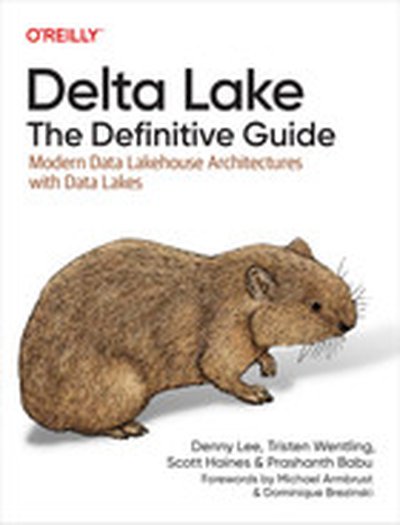
As data engineering continues to evolve the shift from batch-oriented to streaming-first has become standard across the enterprise. The reality is these changes have been taking shape for the past decade — we just now also happen to be standing on the precipice of true disruption through automation, the likes of which we could only dream about before. Yes, AI Agents and LLMs are already a large part of our daily lives, but we (as data engineers) are ultimately on the frontlines ensuring that the future of AI is powered by consistent, just-in-time data — and Delta Lake is critical to help us get there. This session will provide you with best practices learned the hard way by one of the authors of The Delta Lake Definitive Guide including: Guide to writing generic applications as components Workflow automation tips and tricks Tips and tricks for Delta clustering (liquid, z-order, and classic) Future facing: Leveraging metadata for agentic pipelines and workflow automation
with
Denny Lee
(Databricks)
,
Prashanth Babu
(Databricks)
,
Tristen Wentling
(Databricks)
,
Scott Haines
(Databricks)
Ready to simplify the process of building data lakehouses and data pipelines at scale? In this practical guide, learn how Delta Lake is helping data engineers, data scientists, and data analysts overcome key data reliability challenges with modern data engineering and management techniques. Authors Denny Lee, Tristen Wentling, Scott Haines, and Prashanth Babu (with contributions from Delta Lake maintainer R. Tyler Croy) share expert insights on all things Delta Lake--including how to run batch and streaming jobs concurrently and accelerate the usability of your data. You'll also uncover how ACID transactions bring reliability to data lakehouses at scale. This book helps you: Understand key data reliability challenges and how Delta Lake solves them Explain the critical role of Delta transaction logs as a single source of truth Learn the Delta Lake ecosystem with technologies like Apache Flink, Kafka, and Trino Architect data lakehouses with the medallion architecture Optimize Delta Lake performance with features like deletion vectors and liquid clustering
Join Scott Haines (Databricks Beacon) as he teaches you to write your own Notebook style service (like Jupyter / Zeppelin / Databricks) for both fun (and profit?). Cause haven't we all just been a little curious how Notebook environments work? From the outside things probably seem magical, however just below the surface there is a literal world of possibilities waiting to be exploited (both figuratively and literally) to assist in the building of unimaginable new creations. Curiosity is of course the foundation for creativity and novel ideation, and when armed with the knowledge you'll pick up in this session, you'll have gained an additional perspective and way of thinking (mental model) for solving complex problems using dynamic procedural (on-the-fly) code compilation.
Did I mention you'll use Spark Structured Streaming in order to generate a "live" communication channel between your Notebook service and the "outside world"?
Overview During this session you'll learn to build your own Notebook-style service on top of Apache Spark & the Scala ILoop. Along the way, you'll uncover how to harness the SparkContext to manage, drive, and scale your own procedurally defined Apache Spark applications by mixing core configuration and other "magic". As we move through the steps necessary to achieve this end result, you'll learn to run individual paragraphs, or the entire synchronous waterfall of paragraphs, leading to the dynamic generation of applications.
Deep dive into the world of possibilities that fork from a solid understanding of procedurally generated, on-the-fly, code compilation (live injection), the security ramifications (cause of course this is unsafe!), but come away with a new mental model focused on architecting composite applications, or auto-generated
Connect with us: Website: https://databricks.com Facebook: https://www.facebook.com/databricksinc Twitter: https://twitter.com/databricks LinkedIn: https://www.linkedin.com/company/data... Instagram: https://www.instagram.com/databricksinc/
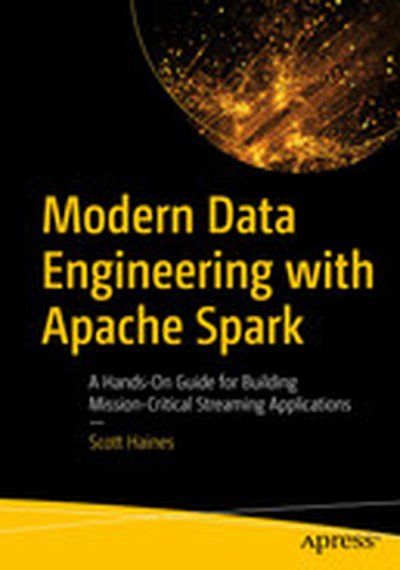
Leverage Apache Spark within a modern data engineering ecosystem. This hands-on guide will teach you how to write fully functional applications, follow industry best practices, and learn the rationale behind these decisions. With Apache Spark as the foundation, you will follow a step-by-step journey beginning with the basics of data ingestion, processing, and transformation, and ending up with an entire local data platform running Apache Spark, Apache Zeppelin, Apache Kafka, Redis, MySQL, Minio (S3), and Apache Airflow. Apache Spark applications solve a wide range of data problems from traditional data loading and processing to rich SQL-based analysis as well as complex machine learning workloads and even near real-time processing of streaming data. Spark fits well as a central foundation for any data engineering workload. This book will teach you to write interactive Spark applications using Apache Zeppelin notebooks, write and compilereusable applications and modules, and fully test both batch and streaming. You will also learn to containerize your applications using Docker and run and deploy your Spark applications using a variety of tools such as Apache Airflow, Docker and Kubernetes. Reading this book will empower you to take advantage of Apache Spark to optimize your data pipelines and teach you to craft modular and testable Spark applications. You will create and deploy mission-critical streaming spark applications in a low-stress environment that paves the way for your own path to production. What You Will Learn Simplify data transformation with Spark Pipelines and Spark SQL Bridge data engineering with machine learning Architect modular data pipeline applications Build reusable application components and libraries Containerize your Spark applications for consistency and reliability Use Docker and Kubernetes to deploy your Spark applications Speed up application experimentation using Apache Zeppelin and Docker Understand serializable structured data and data contracts Harness effective strategies for optimizing data in your data lakes Build end-to-end Spark structured streaming applications using Redis and Apache Kafka Embrace testing for your batch and streaming applications Deploy and monitor your Spark applications Who This Book Is For Professional software engineers who want to take their current skills and apply them to new and exciting opportunities within the data ecosystem, practicing data engineers who are looking for a guiding light while traversing the many challenges of moving from batch to streaming modes, data architects who wish to provide clear and concise direction for how best to harness anduse Apache Spark within their organization, and those interested in the ins and outs of becoming a modern data engineer in today's fast-paced and data-hungry world
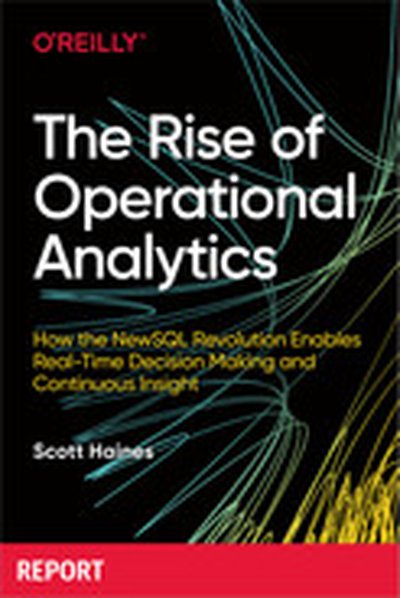
Fast access to data has become a critical game changer. Today, a new breed of company understands that the faster they can build, access, and share well-defined datasets, the more competitive they’ll be in our data-driven world. In this practical report, Scott Haines from Twilio introduces you to operational analytics, a new approach for making sense of all the data flooding into business systems. Data architects and data scientists will see how Apache Kafka and other tools and processes laid the groundwork for fast analytics on a mix of historical and near-real-time data. You’ll learn how operational analytics feeds minute-by-minute customer interactions, and how NewSQL databases have entered the scene to drive machine learning algorithms, AI programs, and ongoing decision-making within an organization. Understand the key advantages that data-driven companies have over traditional businesses Explore the rise of operational analytics—and how this method relates to current tech trends Examine the impact of can’t wait business decisions and won’t wait customer experiences Discover how NewSQL databases support cloud native architecture and set the stage for operational databases Learn how to choose the right database to support operational analytics in your organization