talk-data.com talk-data.com

Topic

data-engineering

3377

tagged

Activity Trend

1 peak/qtr
2020-Q1 2026-Q1

Activities

Showing filtered results

Filtering by: O'Reilly Data Engineering Books ×
Modern Oracle Database Programming: Level Up Your Skill Set to Oracle's Latest and Most Powerful Features in SQL, PL/SQL, and JSON

Level up your skill set to the latest that Oracle Database can offer. This book introduces features that are not well known that can transform your development efforts. You’ll discover built-in functionality that can save you massive amounts of time that otherwise would be spent reinventing the wheel. You’ll find that what used to take a lot of programming some years ago can be done with less code in a more reliable way today. Anyone using Oracle Database without the knowledge in this book is leaving valuable functionality–that their company has paid for–on the table, and this book opens the door to that functionality so that you can deliver reliable and performant solutions faster and more easily than ever. Part I looks at features in SQL and PL/SQL that are underused and not well known. You’ll learn about new join types, pattern matching across rows, Top N pagination (useful in reporting!), qualified expressions, and enhancements to iterators that reduce code complexity and make your logic easier to understand. Part II covers how and when to invoke PL/SQL from SQL while maintaining performance. You'll learn about SQL macro functions for creating reusable SQL fragments, polymorphic table functions with return types determined by incoming argument types, and constructing and parsing JSON documents for data interchange with other systems. Part III introduces a vast array of built-in functionality that Oracle provides that is just waiting to be used. Edition-based redefinition enables zero-downtime application and schema upgrades. Data redaction enables easier compliance with privacy laws and similar regulations by protecting sensitive data from those who have no need to see it. Virtual private databases provide the appearance of giving each user their own database, again helping to secure sensitive data. These features are just a taste of what the book provides. Soon you’ll be improving your skillsand wondering why you ever worked so hard to solve problems that Oracle Database already solves for you. What You Will Learn Write more powerful code by incorporating underused features in SQL and PL/SQL Optimize your integration between SQL and PL/SQL for best performance Take advantage of enhanced set operators, lateral joins, row-based pattern matching, and other advanced features in SQL Make your code easier to understand through your use of newer PL/SQL features, such as qualified expressions and iterator enhancements Integrate with web services and external data sources directly from the database Create and parse JSON documents for easy data exchange and flexible schema design Who This Book Is For Any developer who is writing SQL or PL/SQL, PL/SQL experts who want to level up their knowledgeand skills to the latest features that Oracle Database provides, and developers who don’t want to write their own solutions only to find out later that they’ve wasted their time by building something that Oracle Database provides out of the box
Policy-Based Replication with IBM Storage FlashSystem, IBM SAN Volume Controller and IBM Storage Virtualize

Policy-based replication is the successor to Remote Copy for providing replication services for IBM Storage FlashSystem, IBM SAN Volume Controller, and IBM Storage Virtualize for version 8.5.2 and later. This new management model uses volume groups and replication policies to enable the system to automatically deploy and manage replication. This significantly simplifies the tasks that are associated with configuring, managing, and monitoring replication. Compared to Remote Copy, policy-based replication replicates data between systems with minimal overhead, significantly higher throughput, and reduced latency characteristics. This IBM Redpaper publication provides a broad understanding of policy-based replication and step-by-step implementation details. This paper is intended for use by pre-sales and post-sales technical support and storage administrators.

IBM DS8000 High-Performance Flash Enclosure Gen2 (DS8000 R9.0)

This IBM® Redpaper™ publication describes the IBM DS8880 High-Performance Enclosure (HPFE) Gen2 architecture and configuration, as of DS8900 Release 9.1. The IBM® DS8000® High-Performance Flash Enclosure Gen2 (HPFE Gen2) is a 2U storage enclosure that is installed in pairs in DS8900F and DS8880 models. The flash enclosure and Flash RAID adapters are installed in pairs. Each storage enclosure pair can support 16, 32, or 48 encryption-capable flash drives (2.5-inch, 63.5 mm form factor).

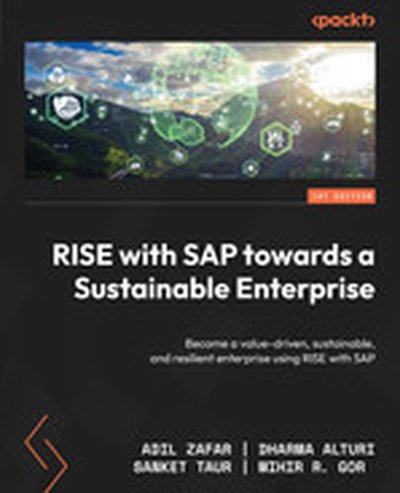
RISE with SAP towards a Sustainable Enterprise

Kickstart your journey towards becoming a sustainable and value-driven enterprise with "RISE with SAP" as your guide. This book explains how to optimize your business processes and implement S/4HANA effectively using RISE with SAP, preparing decision-makers and architects with actionable insights and strategic guidance. What this Book will help me do Understand the challenges organizations face when adopting market trends and how to address them effectively. Learn to build a robust business case for transitioning to SAP S/4HANA using RISE with SAP as the foundational framework. Gain insights into process discovery, data migration, and the best practices for the fit-to-standard approach. Develop skills to design optimized enterprise landscapes effectively on the RISE with SAP platform. Master strategies to leverage SAP tools, services, and cloud ecosystems for industry-specific transformation. Author(s) Adil Zafar, Dharma Alturi, Sanket Taur, and Mihir R. Gor bring together years of combined expertise in enterprise architecture and SAP ecosystems. They leverage their hands-on experience to provide readers with practical advice and cutting-edge insights. Their collaborative work aims to demystify complexities and guide professionals toward sustainable practices. Who is it for? This book is ideal for CXOs, enterprise architects, and solution architects operating in SAP ecosystems who seek practical guidance for transitioning to SAP S/4HANA via RISE with SAP. It caters to readers who wish to build business cases effectively and ensure sustainable and optimized implementation. Prior experience with SAP or ERP systems will enhance the learning experience.

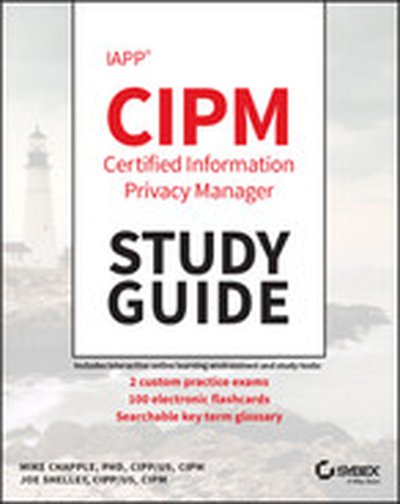
IAPP CIPM Certified Information Privacy Manager Study Guide

An essential resource for anyone preparing for the CIPM certification exam and a career in information privacy As cybersecurity and privacy become ever more important to the long-term viability and sustainability of enterprises in all sectors, employers and professionals are increasingly turning to IAPP’s trusted and recognized Certified Information Privacy Manager qualification as a tried-and-tested indicator of information privacy management expertise. In IAPP CIPM Certified Information Privacy Manager Study Guide, a team of dedicated IT and privacy management professionals delivers an intuitive roadmap to preparing for the CIPM certification exam and for a new career in the field of information privacy. Make use of pre-assessments, the Exam Essentials feature, and chapter review questions with detailed explanations to gauge your progress and determine where you’re proficient and where you need more practice. In the book, you’ll find coverage of every domain tested on the CIPM exam and those required to succeed in your first—or your next—role in a privacy-related position. You’ll learn to develop a privacy program and framework, as well as manage the full privacy program operational lifecycle, from assessing your organization’s needs to responding to threats and queries. The book also includes: A head-start to obtaining an in-demand certification used across the information privacy industry Access to essential information required to qualify for exciting new career opportunities for those with a CIPM credential Access to the online Sybex learning environment, complete with two additional practice tests, chapter review questions, an online glossary, and hundreds of electronic flashcards for efficient studying An essential blueprint for success on the CIPM certification exam, IAPP CIPM Certified Information Privacy Manager Study Guide will also ensure you hit the ground running on your first day at a new information privacy-related job.

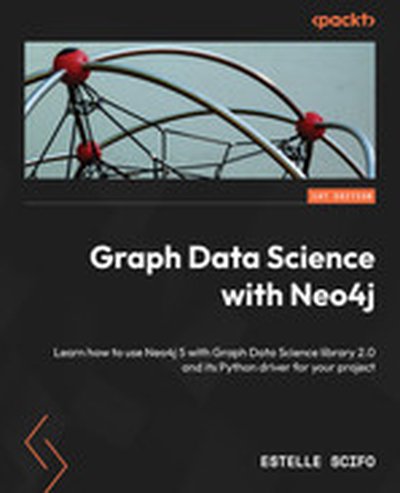
Graph Data Science with Neo4j

"Graph Data Science with Neo4j" teaches you how to utilize Neo4j 5 and its Graph Data Science Library 2.0 for analyzing and making predictions with graph data. By integrating graph algorithms into actionable machine learning pipelines using Python, you'll harness the power of graph-based data models. What this Book will help me do Query and manipulate graph data using Cypher in Neo4j. Design and implement graph datasets using your data and public sources. Utilize graph-specific algorithms for tasks such as link prediction. Integrate graph data science pipelines into machine learning projects. Understand and apply predictive modeling using the GDS Library. Author(s) None Scifo, the author of "Graph Data Science with Neo4j," is an experienced data scientist with expertise in graph databases and advanced machine learning techniques. Their technical approach combines practical implementation with clear, step-by-step guidance to provide readers the skills they need to excel. Who is it for? This book is ideal for data scientists and analysts familiar with basic Neo4j concepts and Python-based data science workflows who wish to deepen their skills in graph algorithms and machine learning integration. It is particularly suited for professionals aiming to advance their expertise in graph data science for practical applications.

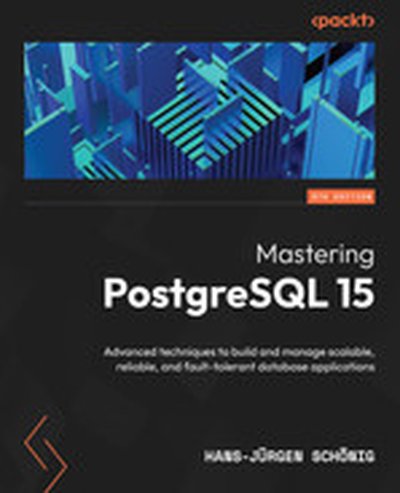
Mastering PostgreSQL 15 - Fifth Edition

Mastering PostgreSQL 15 provides a deep dive into advanced topics of PostgreSQL database systems, covering installation, configuration, optimization, and administration. By reading this book, you will gain the skills to manage, secure, and optimize PostgreSQL database instances for complex applications. What this Book will help me do Understand and utilize advanced indexing techniques in PostgreSQL to improve query performance. Perform efficient database backup and recovery processes to ensure data safety and integrity. Master replication and failover methods to achieve high availability and data consistency. Implement authentication and encryption to enhance database server security. Troubleshoot PostgreSQL to identify and resolve common operational issues. Author(s) Hans-Jürgen Schönig, the author of Mastering PostgreSQL 15, is a leading expert in PostgreSQL with decades of experience in the field. His passion for databases has driven him to deliver solutions in high-performance database management and large-scale data systems. With a thorough and approachable style, Hans-Jürgen imparts complex technical knowledge effectively to his readers. Who is it for? This book is ideal for experienced PostgreSQL developers and database administrators looking to master PostgreSQL 15. Readers should have a foundational understanding of database systems and are seeking to implement advanced features and best practices in enterprise environments. It's tailored for those aspiring to enhance their operational and architectural skills in managing PostgreSQL systems.

IBM FlashSystem 9500 Product Guide

This IBM® Redpaper® Product Guide describes the IBM FlashSystem® 9500 solution, which is a next-generation IBM FlashSystem control enclosure. It combines the performance of flash and a Non-Volatile Memory Express (NVMe)-optimized architecture with the reliability and innovation of IBM FlashCore® technology and the rich feature set and high availability (HA) of IBM Spectrum® Virtualize. Often, applications exist that are foundational to the operations and success of an enterprise. These applications might function as prime revenue generators, guide or control important tasks, or provide crucial business intelligence, among many other jobs. Whatever their purpose, they are mission critical to the organization. They demand the highest levels of performance, functionality, security, and availability. They also must be protected against the modern scourge, cyberattacks. To support such mission-critical applications, enterprises of all types and sizes turn to the IBM FlashSystem 9500. IBM FlashSystem 9500 provides a rich set of software-defined storage (SDS) features that are delivered by IBM Spectrum Virtualize, including the following examples: Data reduction and deduplication Dynamic tiering Thin-provisioning Snapshots Cloning Replication and data copy services Cyber resilience Transparent Cloud Tiering IBM HyperSwap® including 3-site replication for HA Scale-out and scale-up configurations that further enhance capacity and throughput for better availability With the release of IBM Spectrum Virtualize V8.5, extra functions and features are available, including support for new third-generation IBM FlashCore Modules NVMe-type drives within the control enclosure, and 100 Gbps Ethernet adapters that provide NVMe Remote Direct Memory Access (RDMA) options. New software features include GUI enhancements and security enhancements, including multifactor authentication (MFA) and single sign-on (SSO), and Fibre Channel (FC) portsets.

IBM Software Systems Integration: With IBM MQ Series for JMS, IBM FileNet Case Manager, and IBM Business Automation Workflow

Examine the working details for real-world Java programs used for system integration with IBM Software, applying various API libraries (as used by Banking and Insurance companies). This book includes the step-by-step procedure to use the IBM FileNet Case Manager 5.3.3 Case Builder solution and the similar IBM System, IBM Business Automation Workflow to create an Audit System. You'll learn how to implement the workflow with a client Java Message Service (JMS) java method developed with Workflow Custom Operations System Step components. Using IBM Cognos Analytics Version 11.2, you'll be able to create new views for IBM Case Manager Analytics for custom time dimensions. The book also explains the SQL code and procedures required to create example Online Analytical Processing (OLAP) cubes with multi-level time dimensions for IBM Case Manager analytics. IBM Software Systems Integration features the most up to date systems software procedures using tested API calls. What You Will Learn Review techniques for generating custom IBM JMS code Create a new custom view for a multi-level time dimension See how a java program can provide the IBM FileNet document management API calls for content store folder and document replication Configure Java components for content engine events Who This Book Is ForIT consultants, Systems and Solution Architects.

IBM SAN Volume Controller and Storwize Family Native IP Replication

IBM® has announced native Internet Protocol (IP) replication using Bridgeworks SANSlide technology with its IBM System Storage® SAN Volume Controller (SVC), IBM Storwize® V7000, IBM Storwize V5000 and Storwize V3700 virtualized storage systems. This combination of SANSlide and the SVC/Storwize family provides a powerful solution for clients who require efficient, IP-based replication over long distances. This certification gives SVC/Storwize clients a fully supported, transparent technology that includes unmatched levels of performance and reliability. With the SANSlide protocol acceleration technology, it is now possible to replicate data across continents in a cost-efficient way, with little or no loss in performance. At the same time, bandwidth usage can improve to over 95%, rather than the 1% - 5% normally achieved in long-distance IP networks. This IBM Redpaper™ publication shows the steps required to implement this solution efficiently and speedily.

IBM SANnav Management Portal v2.2.X Implementation Guide

IBM® SANnav Management Portal and IBM SANnav Global View empower IT administrators to be more efficient and productive by providing comprehensive visibility into the SAN environment. These tools transform information about SAN behavior and performance into actionable insights, allowing administrators to quickly identify, isolate, and correct problems before they impact the business. In addition, SANnav Management Portal and SANnav Global View accelerate administrative tasks by simplifying workflows and automating redundant steps, making it easier for organizations to realize their goal of an autonomous SAN. This IBM Redbooks® publication introduces IBM SANnav Management Portal and SANnav Global View, and covers the installation, customization, operation, and troubleshooting of the IBM SANnav Management Portal. This book is targeted at IT and network administrators.

Data Modeling with Tableau

"Data Modeling with Tableau" provides a comprehensive guide to effectively utilizing Tableau Prep and Tableau Desktop for building elegant data models that drive organizational insights. You'll explore robust data modeling strategies and governance practices tailored to Tableau's diverse toolset, empowering you to make faster and more informed decisions based on data. What this Book will help me do Understand the fundamentals of data modeling in Tableau using Prep Builder and Desktop. Learn to optimize data sources for performance and better query capabilities. Implement secure and scalable governance strategies with Tableau Server and Cloud. Use advanced Tableau features like Ask Data and Explain Data to enable powerful analytics. Apply best practices for sharing and extending data models within your organization. Author(s) Kirk Munroe is an experienced data professional with a deep understanding of Tableau-driven analytics. With years of in-field expertise, Kirk now dedicates his career to helping businesses unlock their data's potential through effective Tableau solutions. His hands-on approach ensures this book is practical and approachable. Who is it for? This book is ideal for data analysts and business analysts aiming to enhance their skills in data modeling. It is also valuable for professionals such as data stewards, looking to implement secure and performant data strategies. If you seek to make enterprise data more accessible and actionable, this book is for you.

Net Zeros and Ones

Design, implement, and integrate a complete data sanitization program In Net Zeros and Ones: How Data Erasure Promotes Sustainability, Privacy, and Security, a well-rounded team of accomplished industry veterans delivers a comprehensive guide to managing permanent and sustainable data erasure while complying with regulatory, legal, and industry requirements. In the book, you’ll discover the why, how, and when of data sanitization, including why it is a crucial component in achieving circularity within IT operations. You will also learn about future-proofing yourself against security breaches and data leaks involving your most sensitive information—all while being served entertaining industry anecdotes and commentary from leading industry personalities. The authors also discuss: Several new standards on data erasure, including the soon-to-be published standards by the IEEE and ISO How data sanitization strengthens a sustainability or Environmental, Social, and Governance (ESG) program How to adhere to data retention policies, litigation holds, and regulatory frameworks that require certain data to be retained for specific timeframes An ideal resource for ESG, data protection, and privacy professionals, Net Zeros and Ones will also earn a place in the libraries of application developers and IT asset managers seeking a one-stop explanation of how data erasure fits into their data and asset management programs.

Pro Oracle SQL Development: Best Practices for Writing Advanced Queries

Write SQL statements that are more powerful, simpler, and faster using the advanced features of Oracle SQL. This updated second edition includes the newest advanced features: improved data structures (such as more JSON support and more table options), improved automated processes (such as automatic indexing), and improved SQL language extensions (such as polymorphic table functions, SQL macros, and the multilingual engine). Pro Oracle SQL Development is for anyone who already knows Oracle SQL and is ready to take their skills to the next level. This book provides a clearer way of thinking about SQL by building sets, and it provides practical advice for using complex features while avoiding anti-patterns that lead to poor performance and wrong results. Relevant theories, real-world best practices, and style guidelines help you get the most out of Oracle SQL. Many developers, testers, analysts, and administrators use Oracle databases frequently, but their queries are limited because they do not take advantage of Oracle’s advanced features. This book inspires you to achieve more with your Oracle SQL statements by creating your own style for writing simple, yet powerful, SQL. It teaches you how to think about and solve performance problems in Oracle SQL, and it covers enough advanced topics to put you on the path to becoming an Oracle expert. What You'll Learn Solve challenging problems with declarative SQL instead of procedural languages Write SQL statements that are large and powerful, but also elegant and fast Create development environments that are simple, scalable, and conducive to learning Visualize and understand SQL more intuitively Apply advanced syntax, objects, and architecture Avoid SQL anti-patterns that accumulate technical debt Tune SQL statements with multiple strategies that can significantly improve performance Who This Book Is For Developers, testers, analysts, and administrators who want to harness the full power of Oracle SQL to solve their problems as simply and as quickly as possible; traditional database professionals looking for new ways of thinking about the language they have used for so long; and modern full stack developers who need an explanation of how a database can be much more than simply a place to store data

SAP S/4HANA Financial Accounting Configuration: Learn Configuration and Development on an S/4 System

Upgrade your knowledge to learn S/4HANA, the latest version of the SAP ERP system, with its built-in intelligent technologies, including AI, machine learning, and advanced analytics. Since the first edition of this book published as SAP ERP Financial and Controlling: Configuration and Use Management, the perspective has changed significantly as S/4HANA now comes with new features, such as FIORI (new GUI), which focuses on flexible app style development and interactivity with mobile phones. It also has a universal journal, which helps in data integration in a single location, such as centralized processing, and is faster than ECC S/3. It merges FI & CO efficiently, which enables document posting in the Controlling area setup. General Ledger Accounts (FI) and Cost Element (CO) are mapped together in a way that cost elements (both primary and secondary) are part of G/L accounts. And a mandatory setup of customer-vendor integration with business partners is included vs the earlier ECC creation with separate vendor master and customer master.This updated edition presents new features in SAP S/4HANA, with in-depth coverage of the FI syllabus in SAP S/4HANA. A practical and hands-on approach includes scenarios with real-life examples and practical illustrations. There is no unnecessary jargon in this configuration and end-user manual. What You Will Learn Configure SAP FI as a pro in S/4 Master core aspects of Financial Accounting and Controlling Integrate SAP Financial with other SAP modules Gain a thorough hands-on experience with IMG (Implementation Guide) Understand and explain the functionalities of SAP FI Who This Book Is For FI consultants, trainers, developers, accountants, and SAP FI support organizations will find the book an excellent reference guide. Beginners without prior FI configuration experience will find the step-by-step illustrations to be practical and great hands-on experience.

Snowflake SnowPro Core Certification Study Guide

Prepare smarter, faster, and better with the premier study guide for Snowflake SnowPro Core certification Snowflake, a cloud-based data warehousing platform, has steadily gained popularity since its 2014 launch. Snowflake offers several certification exams, of which the SnowPro Core certification is the foundational exam. The SnowPro Core Certification validates an individual's grasp of Snowflake as a cloud data warehouse, its architectural fundamentals, and the ability to design, implement, and maintain secure, scalable Snowflake systems. The Snowflake SnowPro Core Certification Study Guide delivers comprehensive coverage of every relevant exam topic on the Snowflake SnowPro Core Certification test. Prepare efficiently and effectively for the exam with online practice tests and flashcards, a digital glossary, and concise and easy-to-follow instruction from the subject-matter experts at Sybex. You'll gain the necessary knowledge to help you succeed in the exam and will be able to apply the acquired practical skills to real-world Snowflake solutions. This Study Guide includes: Comprehensive understanding of Snowflake's unique shared data, multi-cluster architecture Guidance on loading structured and semi-structured data into Snowflake Utilizing data sharing, cloning, and time travel features Managing performance through clustering keys, scaling compute up, down & across Steps to account management and security configuration including RBAC & MFA All the info you need to obtain a highly valued credential for a rapidly growing new database software solution Access to the Sybex online learning center, with chapter review questions, full-length practice exams, hundreds of electronic flashcards, and a glossary of key terms Perfect for anyone considering a new career in cloud-based data warehouse solutions and related fields, Snowflake SnowPro Core Certification Study Guide is also a must-read for veteran database professionals seeking an understanding of one of the newest and fastest-growing niches in data.

An Ethical Guide to Cyber Anonymity

"An Ethical Guide to Cyber Anonymity" is a comprehensive resource for understanding and safeguarding your privacy while navigating the internet. By the end of this book, you will have gained the skills and knowledge to maintain your cyber anonymity, ensuring your activities online remain private and secure. What this Book will help me do Understand the fundamental concepts of cyber anonymity and internet privacy. Learn practical methods to protect your identity from being compromised online. Gain expertise in configuring tools to achieve a secure and anonymous online presence. Identify and mitigate risks associated with privacy threats from various entities. Master techniques to ensure safe and private internet usage for yourself and others. Author(s) Kushantha Gunawardana is a seasoned expert in cybersecurity with years of experience in dealing with cyber anonymity and data protection. With a passion for educating others, Kushantha translates complex technical ideas into accessible and actionable knowledge. Their approach combines in-depth technical expertise with a focus on ethical practices and real-world applications. Who is it for? This book is ideal for journalists, ethical hackers, and cybersecurity professionals who are striving to protect their anonymity online. It is also a great resource for security-aware individuals looking to safeguard their personal privacy. Beginners or intermediates in the field of web privacy who aim to strengthen their understanding will find this book highly valuable. Parents wishing to protect their family's online identity can also benefit from its guidance.

Cybersecurity and Privacy Law Handbook

Cybersecurity and privacy compliance are critical to protecting organizations from data breaches and fines. In the "Cybersecurity and Privacy Law Handbook," you'll find practical, beginner-friendly guidance to understand standards, identify gaps, and implement policies to secure your workplace effectively. What this Book will help me do Understand international cybersecurity standards such as ISO27001 and NIST. Identify and analyze security gaps using gap analysis and business impact methodologies. Ensure compliance with privacy laws like GDPR, HIPAA, and FTC regulations. Develop and implement effective cybersecurity policies and procedures. Navigate complex US-specific privacy regulations and their implications. Author(s) None Rocchi is an experienced author and practitioner in cybersecurity and privacy. With extensive knowledge in international compliance standards, they excel in breaking down complex topics into digestible and actionable content. Their practical and approachable writing style makes tackling the technical and legal facets of cybersecurity straightforward and engaging. Who is it for? This book is tailored for professionals new to cybersecurity and privacy who wish to understand and implement fundamental practices in this domain. It is ideal for managers, students, or experts from other fields looking to manage security functions effectively. No prior deep technical knowledge is required, making it friendly for beginners.

Graph Data Processing with Cypher

This comprehensive guide, "Graph Data Processing with Cypher," provides a clear and practical approach to mastering Cypher for querying Neo4j graph databases. Packed with real-world examples and detailed explanations, you'll learn how to model graph data, write and optimize Cypher queries, and leverage advanced features to extract meaningful insights from your data. What this Book will help me do Master the Cypher query language, from basics to advanced graph traversal techniques. Develop graph data models based on real-world business requirements and efficiently load data. Optimize Cypher queries for performance through query profiling and tuning techniques. Enhance Cypher's capabilities using APOC utilities for advanced data processing. Create impactful visualizations of graph data using tools like Neo4j Bloom. Author(s) Ravindranatha Anthapu has vast expertise in graph databases and years of professional experience working with Cypher and Neo4j. He brings a hands-on and accessible approach to teaching technical concepts, aiming to empower developers to effectively use graph databases. Through a passion for knowledge-sharing, Ravindranatha ensures readers feel both supported and challenged in their learning journey. Who is it for? This book is ideal for database administrators, developers, and architects, especially those who work with graph databases or want to transition into this domain. Beginners with basic Cypher knowledge and professionals aiming to advance their graph modeling and query optimization skills will find this resource invaluable. It is especially beneficial for individuals seeking to harness the full potential of Neo4j graph databases through Cypher.

Oracle Autonomous Database in Enterprise Architecture

Explore the capabilities of Oracle Autonomous Database (ADB) to improve enterprise-level data management. Through this book, you will dive deep into deploying, managing, and securing ADBs using Oracle Cloud Infrastructure (OCI). Gain hands-on experience with high-availability setups, data migration methods, and advanced security measures to elevate your enterprise architecture. What this Book will help me do Understand the key considerations for planning, migrating, and maintaining Oracle Autonomous Databases. Learn to implement high availability solutions using Autonomous Data Guard in ADB environments. Master the configuration of backup, restore, and disaster recovery strategies within OCI. Implement advanced security practices including encryption and IAM policy management. Gain proficiency in leveraging ADB features like APEX, SQL Developer Web, and REST APIs for rapid application development. Author(s) The authors None Sharma, Krishnakumar KM, and None Panda are experts in database systems, particularly in Oracle technologies. With years of hands-on experience implementing enterprise solutions and training professionals, they have pooled their knowledge to craft a resource-rich guide filled with practical advice. Who is it for? This book is ideal for cloud architects, database administrators, and implementation consultants seeking to leverage Oracle's Autonomous Database for enhanced automation, security, and scalability. It is well-suited for professionals with foundational knowledge of Linux, OCI, and databases. Aspiring cloud engineers and students aiming to understand modern database management will also benefit greatly.