Drawing on the authors' extensive research in the analysis of categorical longitudinal data, this book focuses on the formulation of latent Markov models and the practical use of these models.
 talk-data.com
Topic
116
tagged
Drawing on the authors' extensive research in the analysis of categorical longitudinal data, this book focuses on the formulation of latent Markov models and the practical use of these models.
Praise for the Third Edition "This book provides in-depth coverage of modelling techniques used throughout many branches of actuarial science...The exceptional high standard of this book has made it a pleasure to read." --Annals of Actuarial Science Newly organized to focus exclusively on material tested in the Society of Actuaries' Exam C and the Casualty Actuarial Society's Exam 4, Loss Models: From Data to Decisions, Fourth Edition continues to supply actuaries with a practical approach to the key concepts and techniques needed on the job. With updated material and extensive examples, the book successfully provides the essential methods for using available data to construct models for the frequency and severity of future adverse outcomes. The book continues to equip readers with the tools needed for the construction and analysis of mathematical models that describe the process by which funds flow into and out of an insurance system. Focusing on the loss process, the authors explore key quantitative techniques including random variables, basic distributional quantities, and the recursive method, and discuss techniques for classifying and creating distributions. Parametric, non-parametric, and Bayesian estimation methods are thoroughly covered along with advice for choosing an appropriate model. New features of this Fourth Edition include: Expanded discussion of working with large data sets, now including more practical elements of constructing decrement tables Added coverage of methods for simulating several special situations An updated presentation of Bayesian estimation, outlining conjugate prior distributions and the linear exponential family as well as related computational issues Throughout the book, numerous examples showcase the real-world applications of the presented concepts, with an emphasis on calculations and spreadsheet implementation. A wealth of new exercises taken from previous Exam C/4 exams allows readers to test their comprehension of the material, and a related FTP site features the book's data sets. Loss Models, Fourth Edition is an indispensable resource for students and aspiring actuaries who are preparing to take the SOA and CAS examinations. The book is also a valuable reference for professional actuaries, actuarial students, and anyone who works with loss and risk models. To explore our additional offerings in actuarial exam preparation visit www.wiley.com/go/c4actuarial.
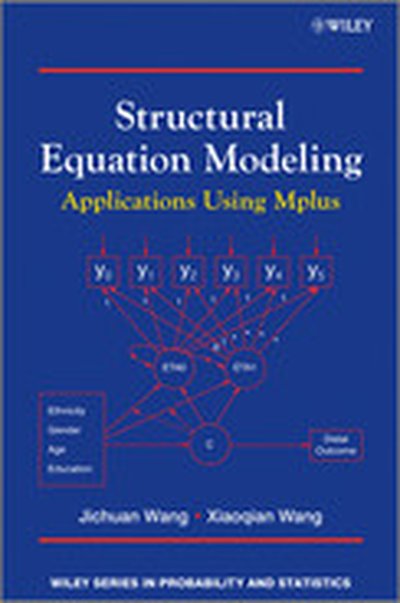
A reference guide for applications of SEM using Mplus Structural Equation Modeling: Applications Using Mplus is intended as both a teaching resource and a reference guide. Written in non-mathematical terms, this book focuses on the conceptual and practical aspects of Structural Equation Modeling (SEM). Basic concepts and examples of various SEM models are demonstrated along with recently developed advanced methods, such as mixture modeling and model-based power analysis and sample size estimate for SEM. The statistical modeling program, Mplus, is also featured and provides researchers with a flexible tool to analyze their data with an easy-to-use interface and graphical displays of data and analysis results. Key features: Presents a useful reference guide for applications of SEM whilst systematically demonstrating various advanced SEM models, such as multi-group and mixture models using Mplus. Discusses and demonstrates various SEM models using both cross-sectional and longitudinal data with both continuous and categorical outcomes. Provides step-by-step instructions of model specification and estimation, as well as detail interpretation of Mplus results. Explores different methods for sample size estimate and statistical power analysis for SEM. By following the examples provided in this book, readers will be able to build their own SEM models using Mplus. Teachers, graduate students, and researchers in social sciences and health studies will also benefit from this book.
Praise for the Third Edition "This book provides in-depth coverage of modelling techniques used throughout many branches of actuarial science. . . . The exceptional high standard of this book has made it a pleasure to read." — Annals of Actuarial Science Newly organized to focus exclusively on material tested in the Society of Actuaries' Exam C and the Casualty Actuarial Society's Exam 4, Loss Models: From Data to Decisions, Fourth Edition continues to supply actuaries with a practical approach to the key concepts and techniques needed on the job. With updated material and extensive examples, the book successfully provides the essential methods for using available data to construct models for the frequency and severity of future adverse outcomes. The book continues to equip readers with the tools needed for the construction and analysis of mathematical models that describe the process by which funds flow into and out of an insurance system. Focusing on the loss process, the authors explore key quantitative techniques including random variables, basic distributional quantities, and the recursive method, and discuss techniques for classifying and creating distributions. Parametric, non-parametric, and Bayesian estimation methods are thoroughly covered along with advice for choosing an appropriate model. New features of this Fourth Edition include: Expanded discussion of working with large data sets, now including more practical elements of constructing decrement tables Added coverage of methods for simulating several special situations An updated presentation of Bayesian estimation, outlining conjugate prior distributions and the linear exponential family as well as related computational issues Throughout the book, numerous examples showcase the real-world applications of the presented concepts, with an emphasis on calculations and spreadsheet implementation. A wealth of new exercises taken from previous Exam C/4 exams allows readers to test their comprehension of the material, and a related FTP site features the book's data sets. Loss Models, Fourth Edition is an indispensable resource for students and aspiring actuaries who are preparing to take the SOA and CAS examinations. The book is also a valuable reference for professional actuaries, actuarial students, and anyone who works with loss and risk models. To explore our additional offerings in actuarial exam preparation visit www.wiley.com/go/c4actuarial.
Edward F. Vonesh's Generalized Linear and Nonlinear Models for Correlated Data: Theory and Applications Using SAS is devoted to the analysis of correlated response data using SAS, with special emphasis on applications that require the use of generalized linear models or generalized nonlinear models. Written in a clear, easy-to-understand manner, it provides applied statisticians with the necessary theory, tools, and understanding to conduct complex analyses of continuous and/or discrete correlated data in a longitudinal or clustered data setting. Using numerous and complex examples, the book emphasizes real-world applications where the underlying model requires a nonlinear rather than linear formulation and compares and contrasts the various estimation techniques for both marginal and mixed-effects models. The SAS procedures MIXED, GENMOD, GLIMMIX, and NLMIXED as well as user-specified macros will be used extensively in these applications. In addition, the book provides detailed software code with most examples so that readers can begin applying the various techniques immediately.
Longitudinal studies often investigate how a marker that is repeatedly measured in time is associated with a time to an event of interest. An example is prostate cancer studies where longitudinal PSA level measurements are collected in conjunction with the time-to-recurrence. This book provides a full treatment of joint models for longitudinal and time-to-event data. The content is explanatory rather than mathematically rigorous and emphasizes applications. All illustrations put forward are available in the R programming language via the freely available package JM written by the author.
Introduces various modeling and simulation methods and paradigms that are used to explain and solve the predominant challenges facing society Handbook of Real-World Applications in Modeling and Simulation provides a thorough explanation of modeling and simulation in the most useful, current, and predominant applied areas of transportation, homeland security, medicine, operational research, military science, and business modeling. Offering a cutting-edge and accessible presentation, this book discusses how and why the presented domains have become leading applications of modeling and simulation techniques. Contributions from leading academics and researchers integrate modeling and simulation theories, methods, and data to analyze challenges that involve technological and social issues. The book begins with an introduction that explains why modeling and simulation is a reliable analysis assessment tool for complex systems problems. Subsequent chapters provide an orientation to various modeling and simulation methods and paradigms that are used to explain and solve the predominant challenges across real-world applied domains. Additionally, the handbook: Provides a practical one-stop reference on modeling and simulation and contains an accessible introduction to key concepts and techniques Introduces, trains, and prepares readers from statistics, mathematics, engineering, computer science, economics, and business to use modeling and simulation in their studies and research Features case studies that are representative of fundamental areas of multidisciplinary studies and provides a concise look at the key concepts of modeling and simulation Contains a collection of original ideas on modeling and simulation to help academics and practitioners develop a multifunctional perspective Self-contained chapters offer a comprehensive approach to explaining each respective domain and include sections that explore the related history, theory, modeling paradigms, and case studies. Key terms and techniques are clearly outlined, and exercise sets allow readers to test their comprehension of the presented material. Handbook of Real-World Applications in Modeling and Simulation is an essential reference for academics and practitioners in the areas of operations research, business, management science, engineering, statistics, mathematics, and computer science. The handbook is also a suitable supplement for courses on modeling and simulation at the graduate level.
Discussing fundamental modeling tools, queuing theory, and discrete event simulation for evaluating production systems, this book presents a development environment for discrete event simulation in a language easy enough to use but flexible enough to facilitate modeling complex systems. Incorporating the use of discrete simulation to statistically analyze a system and render the most efficient time sequences, designs, upgrades, and operations, this new edition develops new visualization graphics for DEEDS software, includes improvements in the optimization of the simulation algorithms, and adds a chapter on queuing models.
: Information is power in supply chain operations, negotiations, continuous improvement programs, and process improvement, and indeed in all aspects of managing an operation. Accurate and timely information can result in better decisions that translate into improvement of bottom line results. The development and effective use of cost modeling as a method to understand the cost of products, services, and processes can help drive improvements in the quality and timeliness of decision making. In the supply chain community an understanding of the actual cost structures of products and services, whether with new or non-partner suppliers, can facilitate fact-based discussions which are more likely to result in agreements that are competitively priced and with fair margins. Further, accurate cost models which are cooperatively developed between supply chain partners can form the basis for joint efforts to reduce non-value-added costs and provide additional focus towards operational improvement. While many organizations feel confident they have an understanding of the cost structure for products and services produced internally, cost modeling often uncovers areas where significant cost improvement can be obtained. Cost of quality is a particular type of internal cost model that analyzes the true costs associated with the production of less than perfect products and services. The development of a cost of quality model can provide insight into how products or services of higher quality can be produced at lower cost. This book provides the business student or professional a concise guide to the creation and effective use of both internal and external cost models. Development of internal cost models is discussed with illustrations showing how they can be deployed to assist in new product development, pricing decisions, make-or-buy decisions and the identification of opportunities for internal process improvement projects. The creation and use of external cost models are discussed providing insight into how their use can drive collaborative improvement efforts among supply chain partners, better prepare for price negotiations, and keep negotiations focused on facts rather than emotions--all while allowing for future discussions with preferred suppliers to focus on more strategic and operational improvement initiatives, and less on pricing. A number of detailed cost model examples are provided to educate on both how cost models are constructed, and to demonstrate how they have been effectively deployed
This book covers the design of business processes from a broad quantitative modeling perspective. The text presents a multitude of analytical tools that can be used to model, analyze, understand and ultimately, to design business processes. The range of topics in this text include graphical flowcharting tools, deterministic models for cycle time analysis and capacity decisions, analytical queuing methods, as well as the use of Data Envelopment Analysis (DEA) for benchmarking purposes. And a major portion of the book is devoted to simulation modeling using a state of the art discrete-event simulation package.

Most people recognize that Arthur Andersen was a great Firm. For the authors, it was perhaps the greatest. Its fulminating, unexpected and shameful collapse, with the Enron case and ensuing disappearance from the market, leaving a cloud of local professional firms, has left in the collective memory a totally negative image, erasing any earlier merits as if they never existed. After an introductory chapter, that goes briefly through the Arthur Andersen history, the book is organized in three main parts: I. The Seven Columns or Basic Principles of the Andersen Model, II. Turning Principles into Practice and III. The Decomposition of the Model.
With numerous examples and exercises throughout, this book describes the control behavior of mechanical objects, such as wave equations, plates, and shells. It presents a complete and up-to-date account of many important advances in the modeling and control of vibrational and structural dynamics. The text applies the differential geometric approach to waves, plates, shells, and quasilinear systems and describes differential geometric energy methods that are generalizations of classical energy methods. To make the book self-contained, the author gives an introduction to Riemannian geometry.
A Proven Development Methodology That Delivers On the Promise of Model-Based Approaches Software continues to grow increasingly complex, while software consumers’ expectations for performance, reliability, functionality, and speed-to-market are also growing exponentially. H. S. Lahman shows how to address all these challenges by integrating object-oriented techniques with a powerful new methodology, Model-Based Software Engineering (MBSE). represents Lahman’s half-century of experience as a pioneering software innovator. Building on Shlaer-Mellor’s work, MBSE fully delivers on the promise of models, and is firmly grounded in the realities of contemporary development, design, and architecture. Model-Based Development Lahman introduces the methodology’s core principles, showing how it separates each of a project’s concerns, enabling practitioners to optimize each domain for its unique needs and characteristics. Next, he demonstrates how to perform more effective object-oriented analysis, emphasizing abstraction, disciplined partitioning, modeling invariants, finite state machines, and efficient communications among program units. Coverage includes How we got here: a historical perspective and pragmatic review of object principles Problem space versus computing space: reflecting crucial distinctions between customer and computer environments in your designs Application partitioning: why it matters and how do it well Building static models that distinguish knowledge from behavior Modeling classes, class responsibilities, associations, and both referential and knowledge integrity Creating dynamic models that describe behavior via finite state machines Successfully using abstract action languages (AALs) and action data flow diagrams (ADFDs) Throughout, Lahman illuminates theoretical issues in practical terms, explaining why things are done as they are, without demanding rigorous math. His focus is on creating implementation-independent models that specify functional requirements completely, precisely, and unambiguously. Whether you’re a developer, team leader, architect, or designer, Lahman’s techniques will help you build software that’s more robust, easier to maintain, and supports larger-scale reuse.
Reflects the latest applied research and features state-of-the-art software for building and solving spreadsheet optimization models Thoroughly updated to reflect the latest topical and technical advances in the field, Optimization Modeling with Spreadsheets, Second Edition continues to focus on solving real-world optimization problems through the creation of mathematical models and the use of spreadsheets to represent and analyze those models. Developed and extensively classroom-tested by the author, the book features a systematic approach that equips readers with the skills to apply optimization tools effectively without the need to rely on specialized algorithms. This new edition uses the powerful software package Risk Solver Platform (RSP) for optimization, including its Evolutionary Solver, which employs many recently developed ideas for heuristic programming. The author provides expanded coverage of integer programming and discusses linear and nonlinear programming using a systematic approach that emphasizes the use of spreadsheet-based optimization tools. The Second Edition also features: Classifications for the various problem types, providing the reader with a broad framework for building and recognizing optimization models Network models that allow for a more general form of mass balance A systematic introduction to Data Envelopment Analysis (DEA) The identification of qualitative patterns in order to meaningfully interpret linear programming solutions An introduction to stochastic programming and the use of RSP to solve problems of this type Additional examples, exercises, and cases have been included throughout, allowing readers to test their comprehension of the material. In addition, a related website features Microsoft Office Excel files to accompany the figures and data sets in the book. With its accessible and comprehensive presentation, Optimization Modeling with Spreadsheets, Second Edition is an excellent book for courses on deterministic models, optimization, and spreadsheet modeling at the upper-undergraduate and graduate levels. The book can also serve as a reference for researchers, practitioners, and consultants working in business, engineering, operations research, and management science.
This book provides a complete explanation of estimation theory and application, modeling approaches, and model evaluation. Each topic starts with a clear explanation of the theory (often including historical context), followed by application issues that should be considered in the design. Different implementations designed to address specific problems are presented, and numerous examples of varying complexity are used to demonstrate the concepts. This book is intended primarily as a handbook for engineers who must design practical systems. Its primary goal is to explain all important aspects of Kalman filtering and least-squares theory and application. Discussion of estimator design and model development is emphasized so that the reader may develop an estimator that meets all application requirements and is robust to modeling assumptions. Since it is sometimes difficult to a priori determine the best model structure, use of exploratory data analysis to define model structure is discussed. Methods for deciding on the "best" model are also presented. A second goal is to present little known extensions of least squares estimation or Kalman filtering that provide guidance on model structure and parameters, or make the estimator more robust to changes in real-world behavior. A third goal is discussion of implementation issues that make the estimator more accurate or efficient, or that make it flexible so that model alternatives can be easily compared. The fourth goal is to provide the designer/analyst with guidance in evaluating estimator performance and in determining/correcting problems. The final goal is to provide a subroutine library that simplifies implementation, and flexible general purpose high-level drivers that allow both easy analysis of alternative models and access to extensions of the basic filtering.
Developing High Quality Data Models provides an introduction to the key principles of data modeling. It explains the purpose of data models in both developing an Enterprise Architecture and in supporting Information Quality; common problems in data model development; and how to develop high quality data models, in particular conceptual, integration, and enterprise data models. The book is organized into four parts. Part 1 provides an overview of data models and data modeling including the basics of data model notation; types and uses of data models; and the place of data models in enterprise architecture. Part 2 introduces some general principles for data models, including principles for developing ontologically based data models; and applications of the principles for attributes, relationship types, and entity types. Part 3 presents an ontological framework for developing consistent data models. Part 4 provides the full data model that has been in development throughout the book. The model was created using Jotne EPM Technologys EDMVisualExpress data modeling tool. This book was designed for all types of modelers: from those who understand data modeling basics but are just starting to learn about data modeling in practice, through to experienced data modelers seeking to expand their knowledge and skills and solve some of the more challenging problems of data modeling. Uses a number of common data model patterns to explain how to develop data models over a wide scope in a way that is consistent and of high quality Offers generic data model templates that are reusable in many applications and are fundamental for developing more specific templates Develops ideas for creating consistent approaches to high quality data models

This Infoline sets the stage for ISD by first explaining its origin and approach and then presenting the classic ADDIE Model, with each phase of the model discussed in turn. Then it examines the role that objectives and evaluation play in instructional design as well as new developments in emerging technologies and ISD quality control.
Database Modeling and Design, Fourth Edition, the extensively revised edition of the classic logical database design reference, explains how you can model and design your database application in consideration of new technology or new business needs. It is an ideal text for a stand-alone data management course focused on logical database design, or a supplement to an introductory text for introductory database management. This book features clear explanations, lots of terrific examples and an illustrative case, and practical advice, with design rules that are applicable to any SQL-based system. The common examples are based on real-life experiences and have been thoroughly class-tested. The text takes a detailed look at the Unified Modeling Language (UML-2) as well as the entity-relationship (ER) approach for data requirements specification and conceptual modeling - complemented with examples for both approaches. It also discusses the use of data modeling concepts in logical database design; the transformation of the conceptual model to the relational model and to SQL syntax; the fundamentals of database normalization through the fifth normal form; and the major issues in business intelligence such as data warehousing, OLAP for decision support systems, and data mining. There are examples for how to use the most popular CASE tools to handle complex data modeling problems, along with exercises that test understanding of all material, plus solutions for many exercises. Lecture notes and a solutions manual are also available. This edition will appeal to professional data modelers and database design professionals, including database application designers, and database administrators (DBAs); new/novice data management professionals, such as those working on object oriented database design; and students in second courses in database focusing on design.+ a detailed look at the Unified Modeling Language (UML-2) as well as the entity-relationship (ER) approach for data requirements specification and conceptual modeling--with examples throughout the book in both approaches! + the details and examples of how to use data modeling concepts in logical database design, and the transformation of the conceptual model to the relational model and to SQL syntax; + the fundamentals of database normalization through the fifth normal form; + practical coverage of the major issues in business intelligence--data warehousing, OLAP for decision support systems, and data mining; + examples for how to use the most popular CASE tools to handle complex data modeling problems. + Exercises that test understanding of all material, plus solutions for many exercises.
The recent financial crisis has highlighted the need for better valuation models and risk management procedures, better understanding of structured products, and has called into question the actions of many financial institutions. It has become commonplace to blame the inadequacy of credit risk models, claiming that the crisis was due to sophisticated and obscure products being traded, but practitioners have for a long time been aware of the dangers and limitations of credit models. It would seem that a lack of understanding of these models is the root cause of their failures but until now little analysis had been published on the subject and, when published, it had gained very limited attention. Credit Models and the Crisis is a succinct but technical analysis of the key aspects of the credit derivatives modeling problems, tracing the development (and flaws) of new quantitative methods for credit derivatives and CDOs up to and through the credit crisis. Responding to the immediate need for clarity in the market and academic research environments, this book follows the development of credit derivatives and CDOs at a technical level, analyzing the impact, strengths and weaknesses of methods ranging from the introduction of the Gaussian Copula model and the related implied correlations to the introduction of arbitrage-free dynamic loss models capable of calibrating all the tranches for all the maturities at the same time. It also illustrates the implied copula, a method that can consistently account for CDOs with different attachment and detachment points but not for different maturities, and explains why the Gaussian Copula model is still used in its base correlation formulation. The book reports both alarming pre-crisis research and market examples, as well as commentary through history, using data up to the end of 2009, making it an important addition to modern derivatives literature. With banks and regulators struggling to fully analyze at a technical level, many of the flaws in modern financial models, it will be indispensable for quantitative practitioners and academics who want to develop stable and functional models in the future.
Helping readers avoid common mistakes and build better models, this is one of the first books to apply the popular patterns perspective to database systems and the data models that are used to design state-of-the-art, efficient database systems. Best-selling author and database expert Dr. Michael Blaha provides detailed data model patterns as a basis for expertly building data models. Since most commercial software is built around a database, he focuses on databases rather than programming. He emphasizes how database representation sets the path for the software, determines its flexibility, affects its quality, and influences whether the software succeeds or fails.