talk-data.com talk-data.com

Topic

data-science-tools

326

tagged

Activity Trend

1 peak/qtr
2020-Q1 2026-Q1

Activities

Showing filtered results

Filtering by: O'Reilly Data Science Books ×
R Cookbook

With more than 200 practical recipes, this book helps you perform data analysis with R quickly and efficiently. The R language provides everything you need to do statistical work, but its structure can be difficult to master. This collection of concise, task-oriented recipes makes you productive with R immediately, with solutions ranging from basic tasks to input and output, general statistics, graphics, and linear regression. Each recipe addresses a specific problem, with a discussion that explains the solution and offers insight into how it works. If you’re a beginner, R Cookbook will help get you started. If you’re an experienced data programmer, it will jog your memory and expand your horizons. You’ll get the job done faster and learn more about R in the process. Create vectors, handle variables, and perform other basic functions Input and output data Tackle data structures such as matrices, lists, factors, and data frames Work with probability, probability distributions, and random variables Calculate statistics and confidence intervals, and perform statistical tests Create a variety of graphic displays Build statistical models with linear regressions and analysis of variance (ANOVA) Explore advanced statistical techniques, such as finding clusters in your data "Wonderfully readable, R Cookbook serves not only as a solutions manual of sorts, but as a truly enjoyable way to explore the R language—one practical example at a time."—Jeffrey Ryan, software consultant and R package author
Data Mashups in R

How do you use R to import, manage, visualize, and analyze real-world data? With this short, hands-on tutorial, you learn how to collect online data, massage it into a reasonable form, and work with it using R facilities to interact with web servers, parse HTML and XML, and more. Rather than use canned sample data, you'll plot and analyze current home foreclosure auctions in Philadelphia. This practical mashup exercise shows you how to access spatial data in several formats locally and over the Web to produce a map of home foreclosures. It's an excellent way to explore how the R environment works with R packages and performs statistical analysis. Parse messy data from public foreclosure auction postings Plot the data using R's PBSmapping package Import US Census data to add context to foreclosure data Use R's lattice and latticeExtra packages for data visualization Create multidimensional correlation graphs with the pairs() scatterplot matrix package

25 Recipes for Getting Started with R

R is a powerful tool for statistics and graphics, but getting started with this language can be frustrating. This short, concise book provides beginners with a selection of how-to recipes to solve simple problems with R. Each solution gives you just what you need to know to use R for basic statistics, graphics, and regression. You'll find recipes on reading data files, creating data frames, computing basic statistics, testing means and correlations, creating a scatter plot, performing simple linear regression, and many more. These solutions were selected from O'Reilly's , which contains more than 200 recipes for R that you'll find useful once you move beyond the basics. R Cookbook

MATLAB®: An Introduction with Applications, Fourth Edition

MATLAB: An Introduction with Applications 4th Edition walks readers through the ins and outs of this powerful software for technical computing. The first chapter describes basic features of the program and shows how to use it in simple arithmetic operations with scalars. The next two chapters focus on the topic of arrays (the basis of MATLAB), while the remaining text covers a wide range of other applications. MATLAB: An Introduction with Applications 4th Edition is presented gradually and in great detail, generously illustrated through computer screen shots and step-by-step tutorials, and applied in problems in mathematics, science, and engineering.

Signals and Systems using MATLAB

This new textbook in signals and systems provides a pedagogically rich approach to what can commonly be a mathematically dry subject. With features like historical notes, highlighted common mistakes, and applications in controls, communications, and signal processing, Chaparro helps students appreciate the usefulness of the techniques described in the book. Each chapter contains a section with MatLab applications. Pedagogically rich introduction to signals and systems using historical notes, pointing out "common mistakes", and relating concepts to realistic examples throughout to motivate learning the material Introduces both continuous and discrete systems early, then studies each (separately) in more depth later Extensive set of worked examples and homework assignments, with applications to controls, communications, and signal processing throughout Provides review of all the background math necessary to study the subject MatLab applications in every chapter

Mathematica Cookbook

Visit the catalog page for Mathematica CookbookVisit the errata page for Mathematica Cookbook Mathematica Cookbook helps you master the application's core principles by walking you through real-world problems. Ideal for browsing, this book includes recipes for working with numerics, data structures, algebraic equations, calculus, and statistics. You'll also venture into exotic territory with recipes for data visualization using 2D and 3D graphic tools, image processing, and music. Although Mathematica 7 is a highly advanced computational platform, the recipes in this book make it accessible to everyone -- whether you're working on high school algebra, simple graphs, PhD-level computation, financial analysis, or advanced engineering models. Learn how to use Mathematica at a higher level with functional programming and pattern matching Delve into the rich library of functions for string and structured text manipulation Learn how to apply the tools to physics and engineering problems Draw on Mathematica's access to physics, chemistry, and biology data Get techniques for solving equations in computational finance Learn how to use Mathematica for sophisticated image processing Process music and audio as musical notes, analog waveforms, or digital sound samples

R in a Nutshell

Why learn R? Because it's rapidly becoming the standard for developing statistical software. R in a Nutshell provides a quick and practical way to learn this increasingly popular open source language and environment. You'll not only learn how to program in R, but also how to find the right user-contributed R packages for statistical modeling, visualization, and bioinformatics. The author introduces you to the R environment, including the R graphical user interface and console, and takes you through the fundamentals of the object-oriented R language. Then, through a variety of practical examples from medicine, business, and sports, you'll learn how you can use this remarkable tool to solve your own data analysis problems. Understand the basics of the language, including the nature of R objects Learn how to write R functions and build your own packages Work with data through visualization, statistical analysis, and other methods Explore the wealth of packages contributed by the R community Become familiar with the lattice graphics package for high-level data visualization Learn about bioinformatics packages provided by Bioconductor "I am excited about this book. R in a Nutshell is a great introduction to R, as well as a comprehensive reference for using R in data analytics and visualization. Adler provides 'real world' examples, practical advice, and scripts, making it accessible to anyone working with data, not just professional statisticians."

Essential MATLAB for Engineers and Scientists Fourth Edition

The essential guide to MATLAB as a problem solving tool This text presents MATLAB both as a mathematical tool and a programming language, giving a concise and easy to master introduction to its potential and power. The fundamentals of MATLAB are illustrated throughout with many examples from a wide range of familiar scientific and engineering areas, as well as from everyday life. The new edition has been updated to include coverage of Symbolic Math and SIMULINK. It also adds new examples and applications, and uses the most recent release of Matlab.

Environmental Data Analysis with MatLab

Environmental Data Analysis with MatLab is for students and researchers working to analyze real data sets in the environmental sciences. One only has to consider the global warming debate to realize how critically important it is to be able to derive clear conclusions from often-noisy data drawn from a broad range of sources. This book teaches the basics of the underlying theory of data analysis, and then reinforces that knowledge with carefully chosen, realistic scenarios. MatLab, a commercial data processing environment, is used in these scenarios; significant content is devoted to teaching how it can be effectively used in an environmental data analysis setting. The book, though written in a self-contained way, is supplemented with data sets and MatLab scripts that can be used as a data analysis tutorial. Well written and outlines a clear learning path for researchers and students Uses real world environmental examples and case studies MatLab software for application in a readily-available software environment Homework problems help user follow up upon case studies with homework that expands them

Data Mashups in R

This article demonstrates how the realworld data is imported, managed, visualized, and analyzed within the R statistical framework. Presented as a spatial mashup, this tutorial introduces the user to R packages, R syntax, and data structures. The user will learn how the R environment works with R packages as well as its own capabilities in statistical analysis. We will be accessing spatial data in several formats-html, xml, shapefiles, and text-locally and over the web to produce a map of home foreclosure auctions and perform statistical analysis on these events.

ROC Curves for Continuous Data

Bringing together all the relevant material to impart a clear understanding of how to analyze ROC curves, this book covers the fundamental theory as well as various special topics. It provides illustrative examples of the major methodological developments and includes as much of the mathematical theory as necessary without making the treatment too dense. The authors survey the uses made of the methodology across a range of different areas, from atmospheric science and geoscience to experimental psychology and sociology. They also list a number of websites from which software implementing the various techniques can be downloaded.

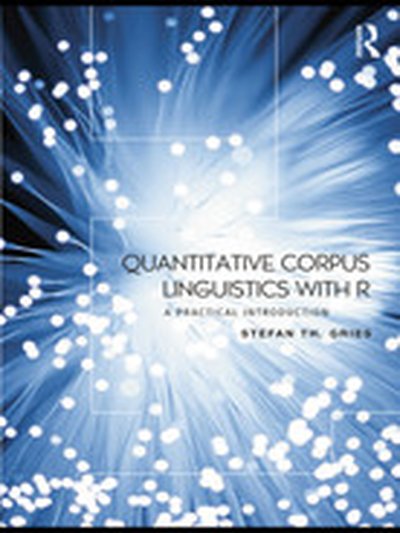
Quantitative Corpus Linguistics with R

The first textbook of its kind, Quantitative Corpus Linguistics with R demonstrates how to use the open source programming language R for corpus linguistic analyses. Computational and corpus linguists doing corpus work will find that R provides an enormous range of functions that currently require several programs to achieve – searching and processing corpora, arranging and outputting the results of corpus searches, statistical evaluation, and graphing.

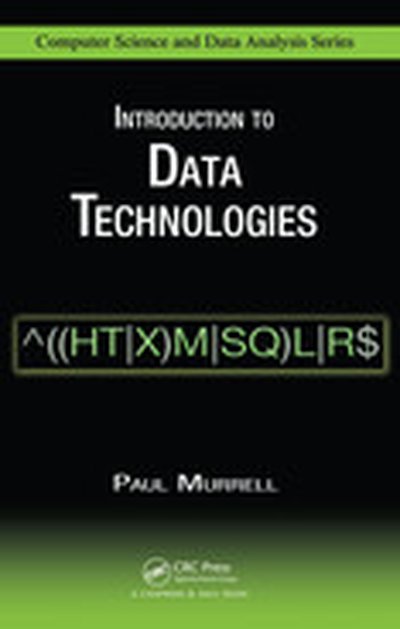
Introduction to Data Technologies

Written by a member of the R Development Core Team, this resource provides important information on how to work with research data. It contains a collection of diverse, computer-related topics, connecting them through numerous, real-world case studies. The author describes open source technologies and open standards and devotes separate chapters to each computer language, including HTML, XML, SQL, and R. Explanatory diagrams aid in understanding important concepts, helping readers perform research tasks with ease. In addition, the author's website includes a suite of exercises as well as the code and data sets used in the case studies.

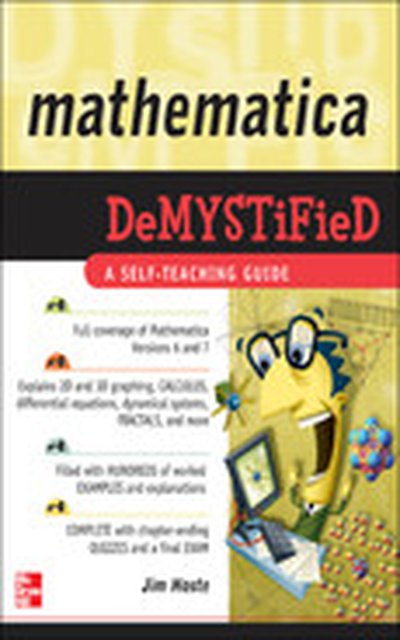
Mathematica DeMYSTiFied

Need to learn MATHEMATICA? Problem SOLVED! Take full advantage of all the powerful capabilities of Mathematica with help from this hands-on guide. Filled with examples and step-by-step explanations, Mathematica Demystified takes you from your very first calculation all the way to plotting complex fractals. Using an intuitive format, this book explains the fundamentals of Mathematica up front. Learn how to define functions, create 2-D graphs of functions, write basic programs, and use modules. You'll move on to 3-D graphics, calculus, polynomial, linear, and differential equations, dynamical systems, and fractals. Hundreds of examples with concise explanations make it easy to understand the material, and end-of-chapter quizzes and a final exam help reinforce learning. This self-teaching guide offers: A quick way to get up and running on Mathematica Coverage of Mathematica 6 and 7 Tips for avoiding and correcting syntax errors Details on creating slideshow presentations of your work No unnecessary technical jargon A time-saving approach to performing better on an exam or at work! Simple enough for a beginner, but challenging enough for an advanced user, Mathematica Demystified is your shortcut to mastering this fully integrated technical computing software.

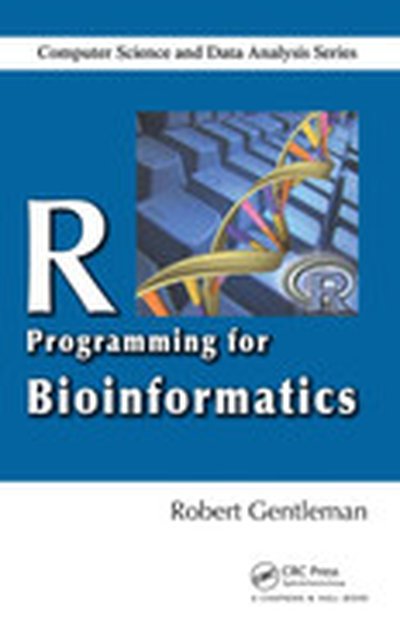
R Programming for Bioinformatics

Due to its data handling and modeling capabilities as well as its flexibility, R is becoming the most widely used software in bioinformatics. R Programming for Bioinformatics explores the programming skills needed to use this software tool for the solution of bioinformatics and computational biology problems. Drawing on the author’s first-hand experiences as an expert in R, the book begins with coverage on the general properties of the R language, several unique programming aspects of R, and object-oriented programming in R. It presents methods for data input and output as well as database interactions. The author also examines different facets of string handling and manipulations, discusses the interfacing of R with other languages, and describes how to write software packages. He concludes with a discussion on the debugging and profiling of R code. With numerous examples and exercises, this practical guide focuses on developing R programming skills in order to tackle problems encountered in bioinformatics and computational biology.

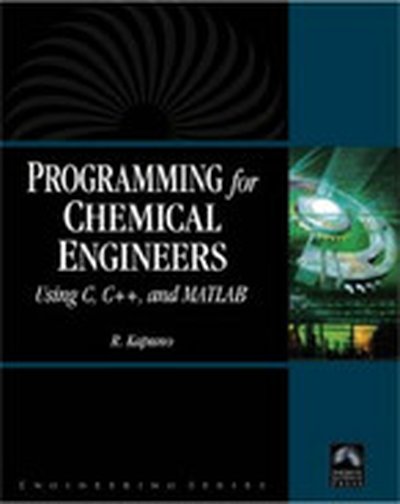
Programming for Chemical Engineers Using C, C++, and MATLAB®

Designed for chemical engineering students and industry professionals, Programming for Chemical Engineers Using C, C++, and MATLAB® shows how to write reusable computer programs by guiding the reader through the process of: establishing the theoretical concept; determining the applicable numerical methods; testing the algorithm through manual calculation; writing and debugging the computer program based on the algorithm; and validating the result, using statistical analysis. All programs in the book are written in the three most popular languages (C, C++, and MATLAB) currently used in the chemical engineering curriculum and in industry. Because the book is written by a chemical engineer, practitioners and students will learn to write programs for appropriate subject matter of interest to them.

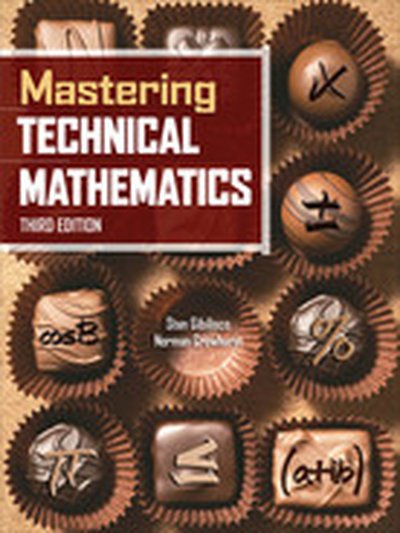
Mastering Technical Mathematics, Third Edition, 3rd Edition

A thorough revision of the classic tutorial of scientific and engineering mathematics For more than fifteen years, Mastering Technical Mathematics has been the definitive self-teaching guide for those wishing to boost their career by learning the principles of mathematics as they apply to science and engineering. Featuring the same user-friendly pedagogy, practical examples, and detailed illustrations that have made this resource a favorite of the scientific and technical communities, the new third edition delivers four entirely new chapters and expanded treatment of cutting-edge topics.

The R Book

The high-level language of R is recognized as one of the most powerful and flexible statistical software environments, and is rapidly becoming the standard setting for quantitative analysis, statistics and graphics. R provides free access to unrivalled coverage and cutting-edge applications, enabling the user to apply numerous statistical methods ranging from simple regression to time series or multivariate analysis. Building on the success of the author's bestselling Statistics: An Introduction using R, The R Book is packed with worked examples, providing an all inclusive guide to R, ideal for novice and more accomplished users alike. The book assumes no background in statistics or computing and introduces the advantages of the R environment, detailing its applications in a wide range of disciplines. Provides the first comprehensive reference manual for the R language, including practical guidance and full coverage of the graphics facilities. Introduces all the statistical models covered by R, beginning with simple classical tests such as chi-square and t-test. Proceeds to examine more advance methods, from regression and analysis of variance, through to generalized linear models, generalized mixed models, time series, spatial statistics, multivariate statistics and much more. The R Book is aimed at undergraduates, postgraduates and professionals in science, engineering and medicine. It is also ideal for students and professionals in statistics, economics, geography and the social sciences.

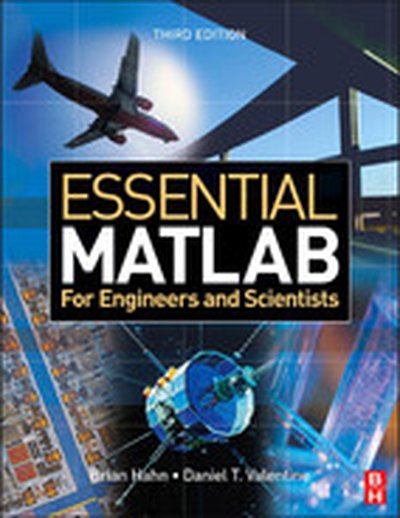
Essential MATLAB for Engineers and Scientists, 3rd Edition

Essential MATLAB for Engineers and Scientists, Third Edition, is an essential guide to MATLAB as a problem-solving tool. It presents MATLAB both as a mathematical tool and a programming language, giving a concise and easy-to-master introduction to its potential and power. Stressing the importance of a structured approach to problem solving, the text provides a step-by-step method for program design and algorithm development. It includes numerous simple exercises for hands-on learning, a chapter on algorithm development and program design, and a concise introduction to useful topics for solving problems in later engineering and science courses: vectors as arrays, arrays of characters, GUIs, advanced graphics, and simulation and numerical methods. The text is ideal for undergraduates in engineering and science taking a course on Matlab. Numerous simple exercises give hands-on learning A chapter on algorithm development and program design Common errors and pitfalls highlighted Concise introduction to useful topics for solving problems in later engineering and science courses: vectors as arrays, arrays of characters, GUIs, advanced graphics, simulation and numerical methods A new chapter on dynamical systems shows how a structured approach is used to solve more complex problems. Text and graphics in four colour