talk-data.com talk-data.com

Topic

data-visualization

162

tagged

Activity Trend

1 peak/qtr
2020-Q1 2026-Q1

Activities

Showing filtered results

Filtering by: O'Reilly Data Science Books ×
Excel Dashboards and Reports, 2nd Edition

Learn to use Excel dashboards and reports to better conceptualize data Updated for all the latest features and capabilities of Excel 2013, this go-to resource provides you with in-depth coverage of the individual functions and tools that can be used to create compelling Excel reports. Veteran author Michael Alexander walks you through the most effective ways to present and report data. Featuring a comprehensive review of a wide array of technical and analytical concepts, this essential guide helps you go from reporting data with simple tables full of dull numbers to presenting key information through the use of high-impact, meaningful reports and dashboards that will wow management both visually and substantively. Details how to analyze large amounts of data and report the results in a way that is both visually attractive and effective Describes how to use different perspectives to achieve better visibility into data, as well as how to slice data into various views on the fly Shows how to automate redundant reporting and analysis processes Walks you through creating impressive dashboards, eye-catching visualizations, and real-world What-If analyses Excel Dashboards and Reports, Second Edition is part technical manual, part analytical guidebook, and exactly what you need to become your organization's dashboard dynamo!
Microsoft Visio 2013 Step by Step

The smart way to learn Microsoft Visio 2013—one step at a time! Experience learning made easy—and quickly teach yourself how to create professional-looking business and technical diagrams with Visio 2013. With Step by Step, you set the pace—building and practicing the skills you need, just when you need them! Create dynamic organization charts with Visio Make charts with wizards or build them by hand Build drawings using Visio themes and effects Use data-driven drawings in Microsoft SharePoint Import, manipulate, and visualize business data Draw and then execute SharePoint 2013 workflows

Balanced Scorecards and Operational Dashboards with Microsoft Excel, 2nd Edition

Learn to maintain and update scorecards and dashboards with Excel Balanced Scorecards and operational dashboards measure organizational performance and Microsoft Excel is the tool used worldwide to create these scorecards and dashboards. This book covers time-proven step-by-step processes on how to guide executive teams and managers in creating scorecards and dashboards. It then shows Excel developers how to create those scorecards and dashboards. This is the only book that converts theory into practice. The author addresses the people and processes you need to identify strategy and operational metrics and then implement them in dashboards in three versions of Excel. You'll learn how balanced scorecards help organizations translate strategy into action and the ways that performance dashboards enable managers monitor operations. Covers Excel 2010 back to Excel 2003 Shows how to develop consensus on strategy and operational plans with the executive teams Details steps in creating tactical action plans Gives step-by-step guidance in creating the most powerful management dashboards Puts over ten years of experience in one book Balanced Scorecards & Operational Dashboards with Microsoft Excel, Second Edition is the ultimate resource for enhancing your strategic and operational performance.

Data Insights

Data Insights: New Ways to Visualize and Make Sense of Data offers thought-provoking insights into how visualization can foster a clearer and more comprehensive understanding of data. The book offers perspectives from people with different backgrounds, including data scientists, statisticians, painters, and writers. It argues that all data is useless, or misleading, if we do not know what it means.Organized into seven chapters, the book explores some of the ways that data visualization and other emerging approaches can make data meaningful and therefore useful. It also discusses some fundamental ideas and basic questions in the data lifecycle; the process of interactions between people, data, and displays that lead to better questions and more useful answers; and the fundamentals, origins, and purposes of the basic building blocks that are used in data visualization. The reader is introduced to tried and true approaches to understanding users in the context of user interface design, how communications can get distorted, and how data visualization is related to thinking machines. Finally, the book looks at the future of data visualization by assessing its strengths and weaknesses. Case studies from business analytics, healthcare, network monitoring, security, and games, among others, as well as illustrations, thought-provoking quotes, and real-world examples are included.This book will prove useful to computer professionals, technical marketing professionals, content strategists, Web and product designers, and researchers. Demonstrates, with a variety of case studies, how visualizations can foster a clearer and more comprehensive understanding of data Answers the question, "How can data visualization help me?" with discussions of how it fits into a wide array of purposes and situations Makes the case that data visualization is not just about technology; it also involves a deeply human process

Visual Guide to Chart Patterns

The step-by-step visual guide to spotting potential price movements and improving returns Bloomberg Visual Guide to Chart Patterns is a concise and accessible visual guide to identifying, understanding, and using chart patterns to predict the direction and extent of price moves. Packed with visual learning enhancements and exercises, this innovative book helps savvy investors and professionals alike master the essential skills of chart pattern recognition. Follow along as chart pattern expert Thomas Bulkowski teaches you to recognize important peaks and valleys that form patterns—footprints of the smart money. Nearly 200 color charts assist in providing a step-by-step approach to finding those footprints, interpreting them, and following them. Popular patterns such as head-and-shoulders, double tops and bottoms, triangles, gaps, flags, and pennants are just a few of the many patterns explored throughout the book. For the sophisticated trader or investor, the book also provides statistical research to support the claims of pattern behavior, trading signals, and setups, in an easy to understand way. Discusses chart pattern identification guidelines, psychology, variations, failures, and buy and sell signals Covers the most popular and common chart patterns as well as lesser-known ones like throwbacks, pullbacks, and busted patterns Incorporates quizzes, step-by-step exercises, enhanced graphics and video tutorials to immerse the reader in the world of chart patterns Designed for use by investors and traders, from beginners to experts looking for a practical, easy-to-use guide, comprehensive reference, Bloomberg Visual Guide to Chart Patterns provides a sophisticated introduction to the world of chart patterns.

Infographics: The Power of Visual Storytelling

Transform your marketing efforts through the power of visual content In today's fast-paced environment, you must communicate your message in a concise and engaging way that sets it apart from the noise. Visual content—such as infographics and data visualization—can accomplish this. With DIY functionality, Infographics: The Power of Visual Storytelling will teach you how to find stories in your data, and how to visually communicate and share them with your audience for maximum impact. Infographics will show you the vast potential to using the communication medium as a marketing tool by creating informative and shareable infographic content. Learn how to explain an object, idea, or process using strong illustration that captures interest and provides instant clarity Discover how to unlock interesting stories (in previously buried or boring data) and turn them into visual communications that will help build brands and increase sales Use the power of visual content to communicate with and engage your audience, capture attention, and expand your market.

The Functional Art: An introduction to information graphics and visualization

Unlike any time before in our lives, we have access to vast amounts of free information. With the right tools, we can start to make sense of all this data to see patterns and trends that would otherwise be invisible to us. By transforming numbers into graphical shapes, we allow readers to understand the stories those numbers hide. In this practical introduction to understanding and using information graphics, you’ll learn how to use data visualizations as tools to see beyond lists of numbers and variables and achieve new insights into the complex world around us. Regardless of the kind of data you’re working with–business, science, politics, sports, or even your own personal finances–this book will show you how to use statistical charts, maps, and explanation diagrams to spot the stories in the data and learn new things from it. Condé Nast Traveler’s John Grimwade , National Geographic Magazine’s Fernando Baptista, The New York Times’ Steve Duenes, The Washington Post’s Hannah Fairfield, Hans Rosling of the Gapminder Foundation, Stanford’s Geoff McGhee, and European superstars Moritz Stefaner, Jan Willem Tulp, Stefanie Posavec, and Gregor Aisch. The Functional Art reveals: In this introductory course on information graphics, Alberto Cairo goes into greater detail with even more visual examples of how to create effective information graphics that function as practical tools for aiding perception. You’ll learn how to: incorporate basic design principles in your visualizations, create simple interfaces for interactive graphics, and choose the appropriate type of graphic forms for your data. Cairo also deconstructs successful information graphics from The New York Times and National Geographic magazine with sketches and images not shown in the book.

Getting Started with D3

Learn how to create beautiful, interactive, browser-based data visualizations with the D3 JavaScript library. This hands-on book shows you how to use a combination of JavaScript and SVG to build everything from simple bar charts to complex infographics. You’ll learn how to use basic D3 tools by building visualizations based on real data from the New York Metropolitan Transit Authority. Using historical tables, geographical information, and other data, you’ll graph bus breakdowns and accidents and the percentage of subway trains running on time, among other examples. By the end of the book, you’ll be prepared to build your own web-based data visualizations with D3. Join a dataset with elements of a webpage, and modify the elements based on the data Map data values onto pixels and colors with D3’s scale objects Apply axis and line generators to simplify aspects of building visualizations Create a simple UI that allows users to investigate and compare data Use D3 transitions in your UI to animate important aspects of the data Get an introduction to D3 layout tools for building more sophisticated visualizations If you can code and manipulate data, and know how to work with JavaScript and SVG, this book is for you.

Audiovisual Archives: Digital Text and Discourse Analysis

Today, audiovisual archives and libraries have become very popular especially in the field of collecting, preserving and transmitting cultural heritage. However, the data in these archives or libraries - videos, images, soundtracks, etc. - constitute as such only potential cognitive resources for a given public (or "target community"). One of the most crucial issues of digital audiovisual libraries is indeed to enable users to actively appropriate audiovisual resources for their own concern (in research, education or any other professional or non-professional context). This means, an adaptation of the audiovisual data to the specific needs of a user or user group can be represented by small and closed "communities" as well as by networks of open communities around the globe. "Active appropriation" is, basically speaking, the use of existing digital audiovisual resources by users or user communities according to their expectations, needs, interests or desires. This process presupposes: 1) the definition and development of models or "scenarios" of cognitive processing of videos by the user; 2) the availability of tools necessary for defining, developing, reusing and sharing meta-linguistic resources such as thesauruses, ontologies or description models by users or user communities. Both aspects are central to the so-called semiotic turn in dealing with digital (audiovisual) texts, corpora of texts or again entire (audiovisual) archives and libraries. They demonstrate practically and theoretically the well-known "from data to metadata" or "from (simple) information to (relevant) knowledge" problem, which obviously directly influences the effective use, social impact and relevancy, and therefore also the future, of digital knowledge archives. This book offers a systematic, comprehensive approach to these questions from a theoretical as well as practical point of view. Contents Part 1. The Practical, Technical and Theoretical Context 1. Analysis of an Audiovisual Resource. 2. The Audiovisual Semiotic Workshop (ASW) Studio - A Brief Presentation. 3. A Concrete Example of a Model for Describing Audiovisual Content. 4. Model of Description and Task of Analysis. Part 2. Tasks in Analyzing an Audiovisual Corpus 5. The Analytical Task of "Describing the Knowledge Object". 6. The Analytical Task of "Contextualizing the Domain of Knowledge". 7. The Analytical Task of "Analyzing the Discourse Production around a Subject". Part 3. Procedures of Description 8. Definition of the Domain of Knowledge and Configuration of the Topical Structure. 9. The Procedure of Free Description of an Audiovisual Corpus. 10. The Procedure of Controlled Description of an Audiovisual Corpus. Part 4. The ASW System of Metalinguistic Resources 11. An Overview of the ASW Metalinguistic Resources. 12. The Meta-lexicon Representing the ASW Universe of Discourse.

Mind Mapping For Dummies

Unlock your brain's potential using mind mapping Mind mapping is a popular technique that can be applied in a variety of situations and settings. Students can make sense of complex topics and structure their revision with mind mapping; business people can manage projects and collaborate with colleagues using mind maps, and any creative process can be supported by using a mind map to explore ideas and build upon them. Mind maps allow for greater creativity when recording ideas and information whatever the topic, and enable the note-taker to associate words with visual representations. Mind Mapping For Dummies explains how mind mapping works, why it's so successful, and the many ways it can be used. It takes you through the wide range of approaches to mind mapping, looks at the available mind mapping software options, and investigates advanced mind mapping techniques for a range of purposes, including studying for exams, improving memory, project management, and maximizing creativity. Suitable for students of all ages and study levels An excellent resource for people working on creative projects who wish to use mind mapping to develop their ideas Shows businesspeople how to maximize their efficiency, manage projects, and brainstorm effectively If you're a student, artist, writer, or businessperson, Mind Mapping For Dummies shows you how to unlock your brain's potential.

Information Visualization, 3rd Edition

Most designers know that yellow text presented against a blue background reads clearly and easily, but how many can explain why, and what really are the best ways to help others and ourselves clearly see key patterns in a bunch of data? When we use software, access a website, or view business or scientific graphics, our understanding is greatly enhanced or impeded by the way the information is presented. This book explores the art and science of why we see objects the way we do. Based on the science of perception and vision, the author presents the key principles at work for a wide range of applications--resulting in visualization of improved clarity, utility, and persuasiveness. The book offers practical guidelines that can be applied by anyone: interaction designers, graphic designers of all kinds (including web designers), data miners, and financial analysts. Complete update of the recognized source in industry, research, and academic for applicable guidance on information visualizing Includes the latest research and state of the art information on multimedia presentation More than 160 explicit design guidelines based on vision science A new final chapter that explains the process of visual thinking and how visualizations help us to think about problems Packed with over 400 informative full color illustrations, which are key to understanding of the subject

gnuplot Cookbook

Master the art of technical plotting with 'gnuplot Cookbook'. This book serves as an indispensable guide to utilizing gnuplot's full range of capabilities for creating stunning 2D and 3D plots, interactive graphs, and seamless visual integration into programming projects. What this Book will help me do Gain precise control over the aesthetics and presentation of your graphs. Understand how to create complex graphical illustrations from multiple data sources. Learn to integrate gnuplot effectively into your programming workflows and systems. Discover how to produce professional-grade technical documents with high-quality charts and illustrations. Master interactive graph creation for engaging web content. Author(s) Lee Phillips, a seasoned expert in scientific and technical visualization, has leveraged years of practical experience to provide this comprehensive guide to gnuplot. With a sharp focus on clarity and functionality, Lee brings a hands-on approach to teaching through meticulously crafted examples and detailed explanations. Who is it for? This book is ideal for scientists, engineers, and data analysts who are either just starting or looking to deepen their expertise with gnuplot. It's perfect for those with a foundational understanding of graph plotting, aspiring to produce high-quality visualizations and integrate them effectively into diverse projects.

Visualize This: The FlowingData Guide to Design, Visualization, and Statistics

Practical data design tips from a data visualization expert of the modern age Data doesn't decrease; it is ever-increasing and can be overwhelming to organize in a way that makes sense to its intended audience. Wouldn't it be wonderful if we could actually visualize data in such a way that we could maximize its potential and tell a story in a clear, concise manner? Thanks to the creative genius of Nathan Yau, we can. With this full-color book, data visualization guru and author Nathan Yau uses step-by-step tutorials to show you how to visualize and tell stories with data. He explains how to gather, parse, and format data and then design high quality graphics that help you explore and present patterns, outliers, and relationships. Presents a unique approach to visualizing and telling stories with data, from a data visualization expert and the creator of flowingdata.com, Nathan Yau Offers step-by-step tutorials and practical design tips for creating statistical graphics, geographical maps, and information design to find meaning in the numbers Details tools that can be used to visualize data-native graphics for the Web, such as ActionScript, Flash libraries, PHP, and JavaScript and tools to design graphics for print, such as R and Illustrator Contains numerous examples and descriptions of patterns and outliers and explains how to show them Visualize This demonstrates how to explain data visually so that you can present your information in a way that is easy to understand and appealing.

Using Microsoft® Visio® 2010

Using Microsoft Visio 2010 is a customized, media-rich learning experience designed to help new users master Microsoft Visio 2010 quickly, and get the most out of it, fast! It starts with a concise, friendly, straight-to-the-point guide to Microsoft Visio 2010. This exceptional book is fully integrated with an unprecedented collection of online learning resources: online video, screencasts, podcasts, and additional web content, all designed to reinforce key concepts and help users achieve real mastery. The book and online content work together to teach everything mainstream Microsoft Visio 2010 users need to know. This practical, approachable coverage guides readers through all facets of working with Visio 2010, and adds coverage on new features and capabilities including: Visio's brand-new Ribbon interface, Live Preview, Auto size, align and adjust, Containers, status bar navigation tools, and data graphics legends. The 2010 edition also includes coverage on Visio services, processes management tools, new diagram types, and much more. Practical, approachable coverage that completely flattens the Microsoft Visio 2010 learning curve Tightly integrated with online video, screencast tutorials, podcasts, and more: the total learning experience for new Microsoft Visio 2010 users Companion website offers supplemental media including video, screencast tutorials, podcasts, and much more

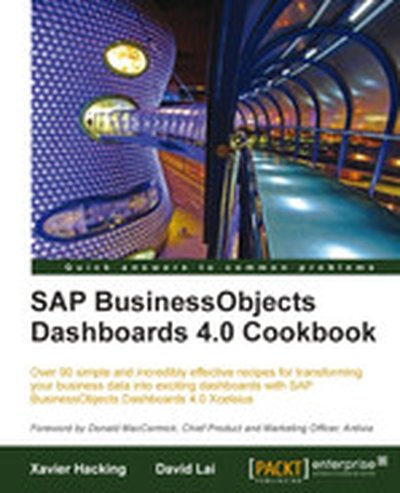
SAP BusinessObjects Dashboards 4.0 Cookbook

Discover how to create compelling, interactive dashboards efficiently using SAP BusinessObjects Dashboards 4.0 (formerly Xcelsius). In this comprehensive cookbook, learn step-by-step recipes that guide you through practical tasks leveraging the tool's advanced features like dynamic visibility and live data connections. What this Book will help me do Master the use of Dashboard Design's spreadsheet and data-driven components to efficiently create professional dashboards. Learn various data visualization techniques to present data clearly and effectively within your dashboards. Implement dynamic interactivity and control logic using features like Dynamic Visibility to enhance dashboard usability. Understand how to connect dashboards to live data sources for up-to-date and real-time business insights. Explore and utilize additional Dashboard Design features and add-ons to customize and extend the capabilities of your dashboards. Author(s) The author(s) of this book are seasoned professionals in SAP BusinessObjects Dashboards and enterprise dashboard design. With years of experience in teaching and applying these tools in practical settings, they aim to demystify complex dashboarding concepts and empower professionals to build impactful visualizations. Who is it for? This book is targeted at developers and business professionals who wish to sharpen their skills in dashboard creation using SAP BusinessObjects Dashboards 4.0. Readers should have a basic understanding of dashboards and some experience with Excel to benefit from this content. It's ideal for those new to SAP Dashboard Design seeking a comprehensive and practical guide.

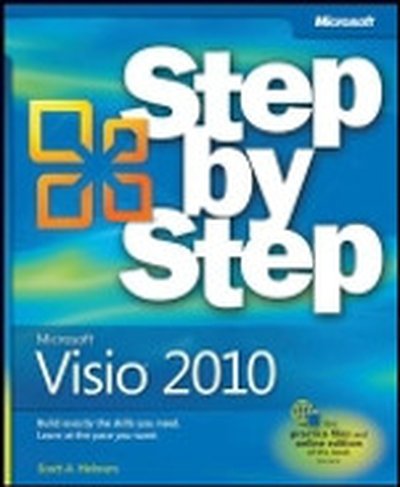
Microsoft® Visio® 2010: Step by Step

Experience learning made easy—and quickly teach yourself how to create professional-looking business and technical diagrams with Visio 2010. With Step by Step, you set the pace—building and practicing the skills you need, just when you need them! Build a variety of charts and diagrams with Visio templates Draw organization charts, floor plans, flowcharts, and more Apply color, text, and themes to your Visio diagrams Use Visio shapes to link to, store, and visualize data Collaborate on diagrams with Microsoft SharePoint 2010 Create custom diagrams with your own shapes and templates Your Step by Step digital content includes: All the book's practice files—ready to download and put to work. Fully searchable online edition of this book—with unlimited access on the Web. Free online account required.

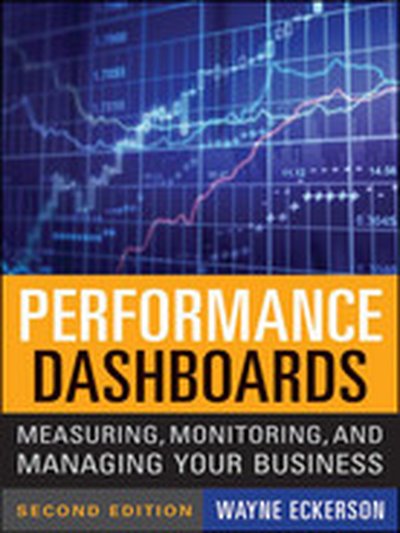
Performance Dashboards: Measuring, Monitoring, and Managing Your Business, 2nd Edition

Tips, techniques, and trends on harnessing dashboard technology to optimize business performance In Performance Dashboards, Second Edition, author Wayne Eckerson explains what dashboards are, where they can be used, and why they are important to measuring and managing performance. As Director of Research for The Data Warehousing Institute, a worldwide association of business intelligence professionals, Eckerson interviewed dozens of organizations that have built various types of performance dashboards in different industries and lines of business. Their practical insights explore how you can effectively turbo-charge performance–management initiatives with dashboard technology. Includes all-new case studies, industry research, news chapters on "Architecting Performance Dashboards" and "Launching and Managing the Project" and updated information on designing KPIs, designing dashboard displays, integrating dashboards, and types of dashboards. Provides a solid foundation for understanding performance dashboards, business intelligence, and performance management Addresses the next generation of performance dashboards, such as Mashboards and Visual Discovery tools, and including new techniques for designing dashboards and developing key performance indicators Offers guidance on how to incorporate predictive analytics, what-if modeling, collaboration, and advanced visualization techniques This updated book, which is 75% rewritten, provides a foundation for understanding performance dashboards, business intelligence, and performance management to optimize performance and accelerate results.

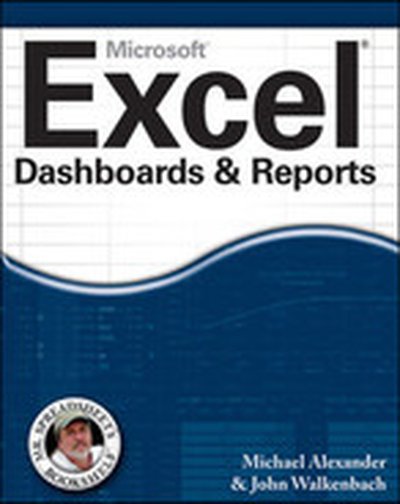
Excel® Dashboards & Reports

The go to resource for how to use Excel dashboards and reports to better conceptualize data Many Excel books do an adequate job of discussing the individual functions and tools that can be used to create an "Excel Report." What they don't offer is the most effective ways to present and report data. Offering a comprehensive review of a wide array of technical and analytical concepts, Excel Reports and Dashboards helps Excel users go from reporting data with simple tables full of dull numbers, to presenting key information through the use of high-impact, meaningful reports and dashboards that will wow management both visually and substantively. Details how to analyze large amounts of data and report the results in a meaningful, eye-catching visualization Describes how to use different perspectives to achieve better visibility into data, as well as how to slice data into various views on the fly Shows how to automate redundant reporting and analyses Part technical manual, part analytical guidebook, Excel Dashboards and Reports is the latest addition to the Mr. Spreadsheet's Bookshelf series and is the leading resource for learning to create dashboard reports in an easy-to-use format that's both visually attractive and effective.

Oracle CRM On Demand Dashboards

Design and Deliver Oracle CRM On Demand Dashboards Create custom, interactive dashboards to deliver actionable business intelligence directly to end users with help from this Oracle Press guide. Oracle CRM On Demand Dashboards provides comprehensive coverage of the versatile features available in Oracle Answers On Demand coupled with detailed planning and design strategies for building and deploying reports and dashboards with Oracle CRM On Demand. Real-world examples and time-saving formatting tips are included throughout this practical resource. Configure administrative settings to access report and dashboard development tools Take advantage of built-in dashboards Plan dashboards and reports based on business needs Create, edit, manage, save, and delete custom dashboards Configure dashboard properties and pages Add and configure dashboard objects, such as guided navigation, links, images, and folders Display and arrange reports on dashboards Develop dashboard filter prompts Deploy dashboards to Oracle CRM On Demand end users

Microsoft Visio 2010 Business Process Diagramming and Validation

In the book 'Microsoft Visio 2010 Business Process Diagramming and Validation', you'll master the specialized features of Microsoft Visio 2010 Premium. This guide focuses on creating structured diagrams and validation rules, helping you enhance the accuracy and clarity of your business data visualization. What this Book will help me do Gain expertise in leveraging Visio's structured diagram tools for business process mapping. Learn how to build, customize, and apply Validation Rules for ensuring diagram accuracy. Develop skills in using the Visio Object Model and ShapeSheet to create advanced diagramming solutions. Understand and implement enhanced diagramming templates and rules, including BPMN and custom workflows. Acquire techniques for creating add-ins and publishing templates to establish company-wide diagramming standards. Author(s) David Parker, the author of this insightful book, is a seasoned professional with extensive experience in Microsoft Visio. His expertise includes creating complex diagramming solutions and training professionals in maximizing Visio's features. David's hands-on approach and understanding of business process needs make this a practical and enriching guide. Who is it for? This book is for users and developers of Microsoft Visio 2010 Premium Edition who want to master diagram validation and structured diagrams. Beginners with basic Visio knowledge and experienced users aiming to develop advanced applications will both benefit from this resource. It is especially useful for professionals seeking to enforce accuracy and compliance in their diagrams.