talk-data.com talk-data.com

Topic

data

5765

tagged

Activity Trend

3 peak/qtr
2020-Q1 2026-Q1

Activities

5765 activities · Newest first

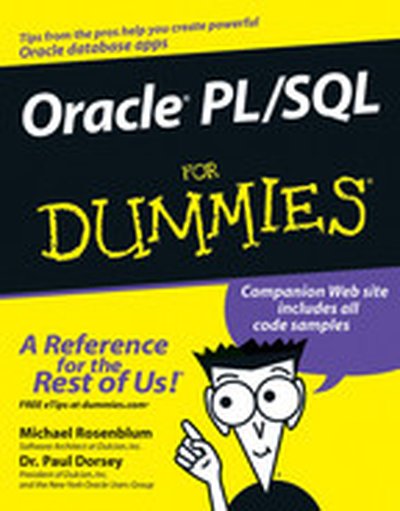
Oracle PL/SQL For Dummies

Find tips for creating efficient PL/SQL code If you know a bit about SQL, this book will make PL/SQL programming painless! The Oracle has spoken—you need to get up to speed on PL/SQL programming, right? We predict it'll be a breeze with this book! You'll find out about code structures, best practices, and code naming standards, how to use conditions and loops, where to place PL/SQL code in system projects, ways to manipulate data, and more. Discover how to Write efficient, easy-to-maintain code Test and debug PL/SQL routines Integrate SQL and PL/SQL Apply PL/SQL best practices Use new features introduced in Oracle 9i and 10g

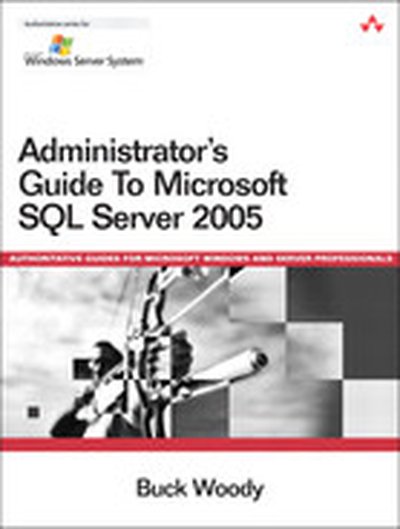
Administrator’s Guide to SQL Server 2005

“Buck Woody’s new book will help new and experienced users alike in getting productive with SQL Server 2005 quickly. His special attention to security and performance make this an exceptional reference that is sure to remain relevant for some time.” —Chip Andrews, CISSP, MCDBA, Director of Research and Development Special Ops Security, Inc. “SQL 2005 is the most exciting upgrade to come out of Redmond in years; this book will help you get up and running quickly to take full advantage of it! If you are looking for a book about upgrading to SQL 2005, look no further, this one is all you need. It gives you all you need to take advantage of everything SQL 2005 has to offer, and that is a lot!” —Doug Ellis, Area Technical Manager, Cognos “Buck Woody provides insight into administering SQL Server 2005 that all developers and database administrators will find useful; the book assumes very little knowledge by providing ‘DBA 101’ sections which will not alienate the experienced reader while providing the necessary introduction to topics for those less experienced.” —Doug Holland, Visual C# MVP, Precision Objects “SQL Server 2005 is a landmark release and this title does an awesome job of hitting everything new in SQL 2005. It covers new and improved administration tools, and contains an overview of Notification Services, SQL Server Service Broker, Reporting Services, Integration Services, and Analysis Services. As a result, you’ll be able to work on your own SQL Server 2005 solutions quickly and painlessly. Ultimately, this book provides you with a starting point, a roadmap, and then the tools and knowledge to exploit this powerful new database server to its fullest power. So, start your computer and get ready to learn SQL Server 2005!” —Alexzander N. Nepomnjashiy, SQL Server DBA, NeoSystems NorthWest “A solid introduction to administering SQL 2005. The ‘DBA 101’ sections provide useful tips for the new DBA, good review for the experienced DBA, and the 101 label enables the seasoned DBA to skip basic material and jump ahead to where the REAL action is…. Buck’s conversational writing style makes this an enjoyable and refreshing contrast to the majority of tech books written these days.” —Brad Russell, MCDBA, Visionary Integration Professionals The Complete, Practical, 100% Useful Guide for Every SQL Server 2005 DBA! This book has one goal: to help database administrators and their managers run SQL Server 2005 with maximum efficiency, reliability, and performance. Renowned SQL Server expert Buck Woody covers every facet of database administration, from installation and configuration through maintaining enterprise-class business intelligence environments. If you’re a new SQL Server administrator, Buck will help you master core tasks rapidly—and avoid costly mistakes that only show up when it’s too late. If you’re familiar with previous versions of SQL Server, he’ll get you up-to-speed fast on everything new that matters, from high availability improvements and Integration Services to the SQL Server Management Studio. Whatever your background, you’ll find best practices, real-world scenarios, and easy-to-use automation scripts—all grounded in Buck’s unsurpassed SQL Server knowledge. • Timesaving tips, practical applications, and start-to-finish examples throughout • Understand the key “decision points” at every stage of your SQL Server deployment • Perform day-to-day maintenance more efficiently, from hotfixes to backup/recovery • Automate maintenance tasks with the SQL Server Agent • Establish and audit security on SQL Server 2005 and the underlying Windows Server platform • Monitor and optimize SQL Server: baselining, profiling, index strategies, query refactoring, and more • Maximize availability using replication, clustering, mirroring, and SQL Server’s new online indexing • Leverage important new improvements in Integration Services and Reporting Services • Use Analysis Services to support enterprise-class Business Intelligence deployments • Even set up a simple configuration of SQL Server 2005 for free—legally! Foreword xviii Chapter 1: Installation and Configuration 1 Chapter 2: Architecture and Tools 35 Chapter 3: Maintenance and Automation 99 Chapter 4: Security 173 Chapter 5: Monitoring and Optimization 237 Chapter 6: High Availability 295 Chapter 7: Notification Services and the Service Broker 365 Chapter 8: Integration Services 399 Chapter 9: Reporting Services 451 Chapter 10: Analysis Services 515 Appendix A: Upgrading to SQL Server 2005 581 Index 605

Deployment Guide Series: IBM Tivoli Monitoring Express Version 6.1

IBM Tivoli Monitoring Express Version 6.1 is a powerful, affordable, and easy-to-use availability management solution designed to help small to mid-sized companies manage IT infrastructures. It offers the ability to manage bottlenecks, performance impacts, and outages across heterogeneous environments from a single, centralized portal. IBM Tivoli Monitoring Express V6.1 is easy to install, easy to deploy, and easy to use, providing rapid time to value. It provides real-time and historical data that enables you to quickly diagnose and solve issues with the new GUI through the IBM Tivoli Enterprise Portal component. This IBM Redbooks publication presents a deployment guide for IBM Tivoli Monitoring Express V6.1. We describe planning, installing, and troubleshooting IBM Tivoli Monitoring Express V6.1. In addition, we provide some case studies that you can use as part of a proof of concept or a customer demonstration. The target audience for this book is IT specialists working on new IBM Tivoli Monitoring Express V6.1 installations. Please note that the additional material referenced in the text is not available from IBM.

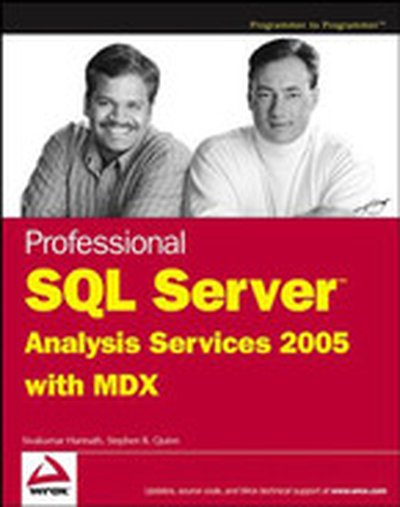
Professional SQL Server™ Analysis Services 2005 with MDX

Written by the lead developers of Analysis Services at Microsoft, this book begins with an overview showing how Analysis Services and MDX can be used to build data warehouses and multidimensional databases The authors then describe the development processes for building dimensions and cubes from various data sources Demonstrating a variety of techniques in real-world scenarios, the book shows how MDX can be used to query databases to provide sophisticated analysis of business problems Finally, the book explains how Analysis Services can be used with other components of SQL Server, including DTS, data mining, and Report Services, to provide comprehensive, end-to-end solutions

Deployment Guide Series: IBM Tivoli Provisioning Manager Express V4.1 for Software Distribution

IBM Tivoli Provisioning Manager Express Version 4.1 for Software Distribution is an easy-to-use, comprehensive solution for software distribution, patch, inventory, and asset management. This Web-based solution is designed for ease of use and implementation so that you can quickly begin to manage the PCs in your enterprise. IBM Tivoli Provisioning Manager Express V4.1 for Software Distribution is implemented with both a client agent on the managed PCs and a centralized data repository. The product is specifically targeted for the small-to-medium business (SMB) market. This IBM Redbooks publication presents a deployment guide for IBM Tivoli Provisioning Manager Express V4.1 for Software Distribution. We discuss the planning, installation, configuration, usage and troubleshooting of the operation. In addition, we provide a case study using a fictitious company, called XYZ Corporation. The target audience for this book is IT specialists working on IBM Tivoli Provisioning Manager Express V4.1 Software Distribution installations and proof of concepts.

Robust Data Synchronization with IBM Tivoli Directory Integrator

Don’t be fooled by the name; IBM Tivoli Directory Integrator integrates anything, and it is not in any way limited to directories. It is a truly generic data integration tool that is suitable for a wide range of problems that usually require custom coding and significantly more resources to address with traditional integration tools. This IBM Redbooks publication shows you how Directory Integrator can be used for a wide range of applications utilizing its unique architecture and unparalleled flexibility. We discuss the business context for this evolutionary data integration and tell you how to architect and design an enterprise data synchronization approach. By telling you everything about Directory Integrator’s component structure and then applying all the techniques in two comprehensive business scenarios, we build a formidable base for your own data integration and synchronization projects. This book is a valuable resource for security administrators and architects who want to understand and implement a directory synchronization project. Please note that the additional material referenced in the text is not available from IBM.

SQL Performance Diagnosis on IBM DB2 Universal Database for iSeries

The goal of database performance tuning is to minimize the response time of your queries. It is also to optimize your server's resources by minimizing network traffic, disk I/O, and CPU time. This IBM Redbooks publication helps you to understand the basics of identifying and tuning the performance of Structured Query Language (SQL) statements using IBM DB2 Universal Database for iSeries. DB2 Universal Database for iSeries provides a comprehensive set of tools that help technical analysts tune SQL queries. The SQL Performance Monitors are part of the set of tools that IBM i5/OS provides for assisting in SQL performance analysis since Version 3 Release 6. These monitors help to analyze database performance problems after SQL requests are run. This book also presents tips and techniques based on the SQL Performance Monitors and other tools, such as Visual Explain. You'll find this guidance helpful in gaining the most out of both DB2 Universal Database for iSeries and query optimizer when using SQL.

Visual Modeling with IBM Rational Software Architect and UML: developerWorks Series

“Terry’s style is always direct, approachable, and pragmatic. Abstraction is hard, and visualizing abstractions is as well, but here she’ll guide you in doing both using Rational Software Architect.” —From the Foreword by Grady Booch, IBM Fellow Master UML 2.0 Visual Modeling with IBM Rational Software Architect Using IBM Rational Software Architect, you can unify all aspects of software design and development. It allows you to exploit new modeling language technology to architect systems more effectively and develop them more productively. Now, two of IBM’s leading experts have written the definitive, start-to-finish guide to UML 2-based visual modeling with Rational Software Architect. You’ll learn hands-on, using a simplified case study that’s already helped thousands of professionals master analysis, design, and implementation with IBM Rational technologies. Renowned UML expert Terry Quatrani and J2EE/SOA evangelist Jim Palistrant walk you through visualizing all facets of system architecture at every stage of the project lifecycle. Whether you’re an architect, developer, or project manager, you’ll discover how to leverage IBM Rational’s latest innovations to optimize any project. Coverage includes Making the most of model-driven development with Rational Software Architect’s integrated design and development tools Understanding visual modeling: goals, techniques, language, and processes Beginning any visual modeling project: sound principles and best practices Capturing and documenting functional requirements with use case models Creating analysis models that begin to reveal your optimal system implementation Building design models that abstract your implementation model and source code Using implementation models to represent your system’s physical composition, from subsystems to executables and data Transforming these models to actual running code The IBM Press developerWorks® Series is a unique undertaking in which print books and the Web are mutually supportive. The publications in this series are complemented by resources on the developerWorks Web site on ibm.com. Icons throughout the book alert the reader to these valuable resources.

The Power of Serving Others

No one wants to end life's journey wondering: Did my life count for something? Did I have a reason for being here? The stories in this book show that for people of all ages, income levels, and expertise, the answer can be a resounding " Yes!" From extraordinary examples -- relief efforts in the aftermath of Hurricane Katrina or work in refugee camps in Afghanistan -- to localized, everyday actions, the authors demonstrate that living a life of service to others, and seeing how lives are changed as a result, establishes the meaning and significance all humans long for. Moreover, the book provides strategies for creating a purposeful life through daily service. The authors prove that the ability to find fulfillment is within reach, and that the discovery is waiting to be made in homes, workplaces, communities, neighborhoods, and schools all across America.

The Definitive Guide to SQLite

Traditional relational databases and embedded databases both have shortcomings that can leave a developer perplexed. So for many people, the solution resides in an open source embeddable database with an amazingly small footprint (less than 250 kilobytes). SQLite packs a powerful array of features and can handle databases as large as 2 terabytes. It offers a flexible set of datatypes and the ability to perform transactions, and it is supported by languages like C, PHP, Perl, and Python. And because SQLite's databases are completely file based, privileges are granted at the operating system level, allowing for easy and fast user management. The Definitive Guide to SQLite is the first book to devote complete coverage to this powerful database. It offers you a thorough overview of SQLite capabilities and APIs, while remaining cognizant of newcomers who may be making their first foray into a database environment with SQLite. This book serves as both a first-time tutorial and future reference guide.

Deploying IBM Workplace Services Express on the IBM eServer iSeries Server

IBM Workplace Services Express is software that makes it simple for you, your colleagues, your teams, and your entire organization to quickly collaborate and effectively work together. Designed specifically for small and medium-sized organizations or departmental needs in larger organizations, Workplace Services Express enables you to easily create, edit, and share documents from your own customized Workplace environment. This IBM Redbooks publication is written for administrators who want to install, configure, and administer Workplace Services Express on an IBM eServer iSeries server. It introduces you to Workplace Services Express. It shows you how to deploy and customize it on the iSeries server, as well as how to integrate with an existing IBM Lotus Domino infrastructure. In addition, this book shows you how to integrate Domino mail and applications with a Workplace Services Express environment. It explains how to enable the iSeries Web Access portlets so you can work with your iSeries server from a Workplace Services Express environment. And this book provides information about performance tuning for Workplace Services Express on the iSeries server. Please note that the additional material referenced in the text is not available from IBM.

Digital Signal and Image Processing Using MATLAB

This title provides the most important theoretical aspects of Image and Signal Processing (ISP) for both deterministic and random signals. The theory is supported by exercises and computer simulations relating to real applications. More than 200 programs and functions are provided in the MATLAB® language, with useful comments and guidance, to enable numerical experiments to be carried out, thus allowing readers to develop a deeper understanding of both the theoretical and practical aspects of this subject.

Business Intelligence Competency Centers: A Team Approach to Maximizing Competitive Advantage

Transform data into action for competitive advantage "The knowledge assets of an organization are becoming increasingly important for competitive advantage, and therefore, the way in which knowledge is created, renewed, and communicated is critical. This book provides practical insights into how this may be achieved through the establishment of a Business Intelligence Competency Centre and is a valuable read for 'information professionals.'" --Bill Sturman, Information Architecture Project Manager The Open University, United Kingdom "BI is more than technology and projects. BI must live in the organization--as a BICC. This book helps to make BI tangible and understandable, bringing it to life." --Miriam Eisenmann, Project Manager (PMP) CSC Ploenzke AG, Germany "This book is a must-read for planning and implementing your BICC. It is a pragmatic guide that addresses a lot, if not all, of the questions you'll be asking yourself. Don't miss out on getting a head start from the people who thought this through from start to finish . . . Pray your competitors don't get hold of this book!" --Claudia Imhoff, President Intelligent Solutions, Inc., USA "Creating a BICC forces the organization to focus on the importance of centralizing the gathering, interpreting, and analyzing of information to create business insight." --Anne Ulyate, Group Manager Business Intelligence Mutual & Federal, South Africa "BI is a highly visible element in the 'business value' trend for IT investments. Initiatives, such as competency centers, should empower user organizations to drive even more value out of their BI investments." --Marianne Kolding, Director, European ServicesIDC, United Kingdom

Deployment Guide Series: Tivoli Continuous Data Protection for Files

Tivoli Continuous Data Protection for Files is specifically targeted at end user computers, such as mobile computers and workstations, as well as file servers. It provides continuous data protection of files, providing the highest level of protection possible, yet is simple to use and administer. When files change, Tivoli Continuous Data Protection for Files will make up to three copies of the file (or queue copies to be made later). This IBM Redbooks publication presents a deployment guide for Tivoli Continuous Data Protection for Files. We cover planning, installing, and troubleshooting of Tivoli Continuous Data Protection for Files for several use case scenarios. In addition, we provide some case studies, including integration with IBM Tivoli Storage Manager, that can be used as a proof of concept or demonstration of the product at a client environment. The target audience for this book is IT Specialists who will be working on Tivoli Continuous Data Protection for Files installations and proof of concepts.

Implementation Best Practices for IBM Tivoli License Manager

The primary objective of this IBM Redbooks publication is to provide best practices for the implementation of a License Management solution based on IBM Tivoli License Manager V2.2. This book is divided into two main parts: In Part 1, "Business aspects and project engagement considerations" on page 1, we discuss the reasons why you should deploy a License Management solution. We also position License Management in the overall picture of the IT Service Management and describe the IBM solution in this area. We also provide best practices on how to approach and engage such a project. The high level tasks of such a project are also introduced. We emphasize the fact that you must not only realize what the key elements are that need to be managed to make your project a success, but also how you should organize your IT operations to get the highest benefit from your solution. In Part 2, "Solution design considerations" on page 57, we provide detailed information for the architecture and design of a IBM Tivoli License Manager V2.2 solution implementation. Both IT Architects and IT Specialist benefit from the information provided in this part, as it covers a great deal, from an introduction to IBM Tivoli License Manager V2.2, its components, and architecture, and solution design fundamental tasks, to detailed physical and logical design and configuration of all components of an IBM Tivoli License Manager V2.2 solution.

IBM DB2 Document Manager with IBM Records Manager Solution Guide

IBM DB2 Document Manager Version 8.3 is one of the newest members of the IBM Enterprise Content Management portfolio. Document Manager provides a secure and robust platform to manage the complete life cycle of business documents. It helps ensure accurate and up-to-date documents are available on demand. When configured with IBM DB2 Records Manager Version 4.1.2, the Document Manager solution also provide records management capability. Please note that the additional material referenced in the text is not available from IBM.

Special Edition Using FileMaker 8

If you’re looking for the inside scoop on the latest version of FileMaker, you’ve come to the right place. Authors Scott Love and Steve Lane are FileMaker experts who were involved in the development of FileMaker 8, and they bring that knowledge to you in Special Edition Using FileMaker 8. Frequent tips, case studies, and thorough examples show you how to avoid mistakes and save time in developing databases with FileMaker 8. This is the comprehensive reference that every database developer needs on their shelf.

MySQL, Second Edition: Visual Quickstart Guide

Even if you've never used MySQL before, this Visual QuickStart Guide will have you up and running with the world’s most popular open source database application in no time. In this completely updated edition of our best-selling guide to MySQL, leading technology author Larry Ullman uses his trademark crystal-clear instructions and friendly prose to introduce you to everything that’s new in MySQL. Filled with step-by-step, task-based instructions and loads of visual aids, this book explains how to interact with MySQL using SQL, the language common to all databases. The interface examples show how to use MySQL’s own tools and how to use three popular programming languages (PHP, Perl, and Java). The book covers MySQL versions 3 and 4, as well as everything new in the eagerly anticipated version 5. Along the way, you'll find extensive coverage of MySQL installation, administration, database design, as well as its use with various programming languages, database programming techniques, utilities, advanced MySQL and SQL, and more! • Takes an easy, visual approach to teaching MySQL, using pictures to guide you through the software and show you what to do. • Works like a reference book—you look up what you need and then get straight to work. • No long-winded passages—concise, straightforward commentary explains what you need to know. • Affordably priced, because buying a computer book shouldn’t be an investment in itself. • Companion Web site at www.DMCInsights.com/mysql2 contains complete source code for examples in the book, online resources, extra scripts and tutorials, updates, a reader forum, and more.

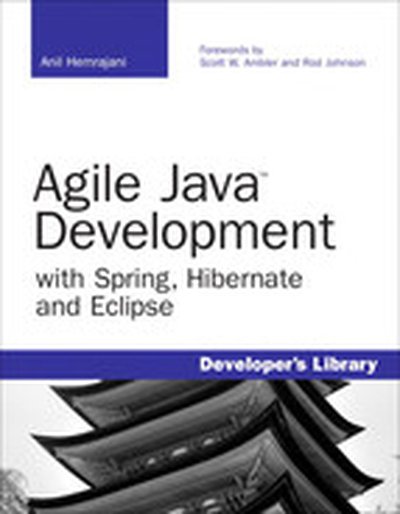
Agile Java Development with Spring, Hibernate and Eclipse

is a book about robust technologies and effective methods which help bring simplicity back into the world of enterprise Java development. The three key technologies covered in this book, the Spring Framework, Hibernate and Eclipse, help reduce the complexity of enterprise Java development significantly. Furthermore, these technologies enable plain old Java objects (POJOs) to be deployed in light-weight containers versus heavy-handed remote objects that require heavy EJB containers. This book also extensively covers technologies such as Ant, JUnit, JSP tag libraries and touches upon other areas such as such logging, GUI based debugging, monitoring using JMX, job scheduling, emailing, and more. Also, Extreme Programming (XP), Agile Model Driven Development (AMDD) and refactoring are methods that can expedite the software development projects by reducing the amount of up front requirements and design; hence these methods are embedded throughout the book but with just enough details and examples to not sidetrack the focus of this book. In addition, this book contains well separated, subjective material (opinion sidebars), comic illustrations, tips and tricks, all of which provide real-world and practical perspectives on relevant topics. Last but not least, this book demonstrates the complete lifecycle by building and following a sample application, chapter-by-chapter, starting from conceptualization to production using the technology and processes covered in this book. In summary, by using the technologies and methods covered in this book, the reader will be able to effectively develop enterprise-class Java applications, in an agile manner! Agile Java™ Development With Spring, Hibernate and Eclipse