
talk-data.com talk-data.com

Topic

GDPR/CCPA

data_privacy compliance regulations

3

tagged

Activity Trend

9 peak/qtr
2020-Q1 2026-Q1

Activities

Showing filtered results

Filtering by: Katharine Jarmul ×

We talked about:

Katharine's background Katharine's ML privacy startup GDPR, CCPA, and the “opt-in as the default” approach What is data privacy? Finding Katharine's book – Practical Data Privacy The various definitions of data privacy and “user profiles” Privacy engineering and privacy-enhancing technologies Why data privacy is important What is differential privacy? The importance of keeping privacy in mind when designing systems Data privacy on the example of ChatGPT Katharine's resource suggestions for learning about data privacy

Links:

LinkedIn: https://www.linkedin.com/in/katharinejarmul/

Twitter: https://twitter.com/kjam

Free data engineering course: https://github.com/DataTalksClub/data-engineering-zoomcamp Join DataTalks.Club: https://datatalks.club/slack.html Our events: https://datatalks.club/events.html
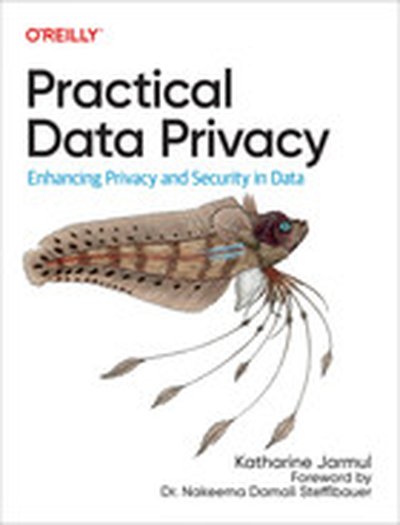
Practical Data Privacy

Between major privacy regulations like the GDPR and CCPA and expensive and notorious data breaches, there has never been so much pressure to ensure data privacy. Unfortunately, integrating privacy into data systems is still complicated. This essential guide will give you a fundamental understanding of modern privacy building blocks, like differential privacy, federated learning, and encrypted computation. Based on hard-won lessons, this book provides solid advice and best practices for integrating breakthrough privacy-enhancing technologies into production systems. Practical Data Privacy answers important questions such as: What do privacy regulations like GDPR and CCPA mean for my data workflows and data science use cases? What does "anonymized data" really mean? How do I actually anonymize data? How does federated learning and analysis work? Homomorphic encryption sounds great, but is it ready for use? How do I compare and choose the best privacy-preserving technologies and methods? Are there open-source libraries that can help? How do I ensure that my data science projects are secure by default and private by design? How do I work with governance and infosec teams to implement internal policies appropriately?

Before the COVID-19 crisis, we were already acutely aware of the need for a broader conversation around data privacy: look no further than the Snowden revelations, Cambridge Analytica, the New York Times Privacy Project, the General Data Protection Regulation (GDPR) in Europe, and the California Consumer Privacy Act (CCPA). In the age of COVID-19, these issues are far more acute. We also know that governments and businesses exploit crises to consolidate and rearrange power, claiming that citizens need to give up privacy for the sake of security. But is this tradeoff a false dichotomy? And what type of tools are being developed to help us through this crisis? In this episode, Katharine Jarmul, Head of Product at Cape Privacy, a company building systems to leverage secure, privacy-preserving machine learning and collaborative data science, will discuss all this and more, in conversation with Dr. Hugo Bowne-Anderson, data scientist and educator at DataCamp.Links from the show

FROM THE INTERVIEW

Katharine on TwitterKatharine on LinkedInContact Tracing in the Real World (By Ross Anderson)The Price of the Coronavirus Pandemic (By Nick Paumgarten)Do We Need to Give Up Privacy to Fight the Coronavirus? (By Julia Angwin)Introducing the Principles of Equitable Disaster Response (By Greg Bloom)Cybersecurity During COVID-19 ( By Bruce Schneier)