talk-data.com talk-data.com

Topic

jmp

83

tagged

Activity Trend

1 peak/qtr
2020-Q1 2026-Q1

Activities

83 activities · Newest first

JMP for Mixed Models

Discover the power of mixed models with JMP and JMP Pro. Mixed models are now the mainstream method of choice for analyzing experimental data. Why? They are arguably the most straightforward and powerful way to handle correlated observations in designed experiments. Reaching well beyond standard linear models, mixed models enable you to make accurate and precise inferences about your experiments and to gain deeper understanding of sources of signal and noise in the system under study. Well-formed fixed and random effects generalize well and help you make the best data-driven decisions. JMP for Mixed Models brings together two of the strongest traditions in SAS software: mixed models and JMP. JMP’s groundbreaking philosophy of tight integration of statistics with dynamic graphics is an ideal milieu within which to learn and apply mixed models, also known as hierarchical linear or multilevel models. If you are a scientist or engineer, the methods described herein can revolutionize how you analyze experimental data without the need to write code. Inside you’ll find a rich collection of examples and a step-by-step approach to mixed model mastery. Topics include: Learning how to appropriately recognize, set up, and interpret fixed and random effects Extending analysis of variance (ANOVA) and linear regression to numerous mixed model designs Understanding how degrees of freedom work using Skeleton ANOVA Analyzing randomized block, split-plot, longitudinal, and repeated measures designs Introducing more advanced methods such as spatial covariance and generalized linear mixed models Simulating mixed models to assess power and other important sampling characteristics Providing a solid framework for understanding statistical modeling in general Improving perspective on modern dilemmas around Bayesian methods, p-values, and causal inference
JMP Essentials, 3rd Edition

Grasp the essentials of JMP to generate rapid results. JMP Essentials: An Illustrated Guide for New Users, Third Edition, is designed for new or novice JMP users who need to generate meaningful analysis quickly. The book focuses on the most commonly used platforms and typical workflow of the user, from data importing, exploring, and visualizing to modeling and sharing results with others. Throughout the book, the authors emphasize results over theory, providing just the essential steps with corresponding screenshots. In most cases, each section completes a JMP task, which maximizes the book’s utility as a reference. This edition has new instructions and screenshots reflecting the features added to the latest release of JMP software, including updated sections on JMP Dashboard Builder, Query Builder, the Fit Model platform, JMP Public and JMP Live, and a more detailed look at the JMP website. Each chapter contains a family of features that are carefully crafted to first introduce you to basic features and then move on to more advanced topics. JMP Essentials: An Illustrated Guide for New Users, Third Edition, is the quickest and most accessible reference book available.

Practical Data Analysis with JMP, Third Edition, 3rd Edition

Master the concepts and techniques of statistical analysis using JMP Practical Data Analysis with JMP, Third Edition, highlights the powerful interactive and visual approach of JMP to introduce readers to statistical thinking and data analysis. It helps you choose the best technique for the problem at hand by using real-world cases. It also illustrates best-practice workflow throughout the entire investigative cycle, from asking valuable questions through data acquisition, preparation, analysis, interpretation, and communication of findings. The book can stand on its own as a learning resource for professionals, or it can be used to supplement a college-level textbook for an introductory statistics course. It includes varied examples and problems using real sets of data. Each chapter typically starts with an important or interesting research question that an investigator has pursued. Reflecting the broad applicability of statistical reasoning, the problems come from a wide variety of disciplines, including engineering, life sciences, business, and economics, as well as international and historical examples. Application Scenarios at the end of each chapter challenge you to use your knowledge and skills with data sets that go beyond mere repetition of chapter examples. New in the third edition, chapters have been updated to demonstrate the enhanced capabilities of JMP, including projects, Graph Builder, Query Builder, and Formula Depot.

Introduction to Biostatistics with JMP

Explore biostatistics using JMP in this refreshing introduction Presented in an easy-to-understand way, Introduction to Biostatistics with JMP introduces undergraduate students in the biological sciences to the most commonly used (and misused) statistical methods that they will need to analyze their experimental data using JMP. It covers many of the basic topics in statistics using biological examples for exercises so that the student biologists can see the relevance to future work in the problems addressed. The book starts by teaching students how to become confident in executing the right analysis by thinking like a statistician then moves into the application of specific tests. Using the powerful capabilities of JMP, the book addresses problems requiring analysis by chi-square tests, t tests, ANOVA analysis, various regression models, DOE, and survival analysis. Topics of particular interest to the biological or health science field include odds ratios, relative risk,

Jump into JMP Scripting, Second Edition, 2nd Edition

Learn the essentials of the JMP Scripting Language with this beginner’s guide. Written in an easy-to-understand style based on the authors’ extensive experience, Jump into JMP Scripting, Second Edition teaches beginner scripters how to take advantage of the robust JMP Scripting Language (JSL) using step-by-step instructions and real-world situations. The authors demonstrate how JSL offers the freedom to create scripts from the very simple and specific to the most generic and complex. With a new chapter on JSL language foundations, the first half of the book explains the fundamentals of JSL and walks you through creating your first scripts, such as opening a data table, adding columns, or selecting rows. A new chapter on the Dashboard and Application Builders provides helpful tips on creating custom dashboards and learning how to build applications. Also new to this edition, a chapter on advanced topics introduces more helpful tools and concepts in JSL. After learning the basics, you are ready to tackle specific tasks using JSL. The second half of the book provides more than 50 examples using a unique question-and-answer format. This book is part of the SAS Press program.

Pharmaceutical Quality by Design Using JMP

Solve your pharmaceutical product development and manufacturing problems using JMP . Pharmaceutical Quality by Design Using JMP : Solving Product Development and Manufacturing Problems provides broad-based techniques available in JMP to visualize data and run statistical analyses for areas common in healthcare product manufacturing. As international regulatory agencies push the concept of Quality by Design (QbD), there is a growing emphasis to optimize the processing of products. This book uses practical examples from the pharmaceutical and medical device industries to illustrate easy-to-understand ways of incorporating QbD elements using JMP. Pharmaceutical Quality by Design Using JMP opens by demonstrating the easy navigation of JMP to visualize data through the distribution function and the graph builder and then highlights the following: the powerful dynamic nature of data visualization that enables users to be able to quickly extract meaningful information tools and techniques designed for the use of structured, multivariate sets of experiments examples of complex analysis unique to healthcare products such as particle size distributions/drug dissolution, stability of drug products over time, and blend uniformity/content uniformity. Scientists, engineers, and technicians involved throughout the pharmaceutical and medical device product life cycles will find this book invaluable. This book is part of the SAS Press program.

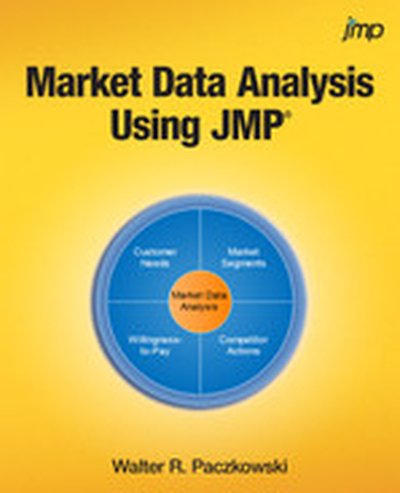
Market Data Analysis Using JMP

With the powerful interactive and visual functionality of JMP, you can dynamically analyze market data to transform it into actionable and useful information with clear, concise, and insightful reports and displays. Market Data Analysis Using JMP is a unique example-driven book because it has a specific application focus: market data analysis. A working knowledge of JMP will help you turn your market data into vital knowledge that will help you succeed in a highly competitive, fast-moving, and dynamic business world. This book can be used as a stand-alone resource for working professionals, or as a supplement to a business school course in market data research. Anyone who works with market data will benefit from reading and studying this book, then using JMP to apply the dynamic analytical concepts to their market data. After reading this book, you will be able to quickly and effortlessly use JMP to: prepare market data for analysis use and interpret sophisticated statistical methods build choice models estimate regression models to turn data into useful and actionable information Market Data Analysis Using JMP will teach you how to use dynamic graphics to illustrate your market data analysis and explore the vast possibilities that your data can offer!

JMP Connections

Achieve best-in-class metrics and get more from your data with JMP JMP Connections is the small- and medium-sized business owner's guide to exceeding customer expectations by getting more out of your data using JMP. Uniquely bifunctional, this book is divided into two parts: the first half of the book shows you what JMP can do for you. You'll discover how to wring every last drop of insight out of your data, and let JMP parse reams of raw numbers into actionable insight that leads to better strategic decisions. You'll also discover why it works so well; clear explanations break down the Connectivity platform and metrics in business terms to demystify data analysis and JMP while giving you a macro view of the benefits that come from optimal implementation. The second half of the book is for your technical team, demonstrating how to implement specific solutions relating to data set development and data virtualization. In the end, your organization reduces Full Time Equivalents while increasing productivity and competitiveness. JMP is a powerful tool for business, but many organizations aren't even scratching the surface of what their data can do for them. This book provides the information and technical guidance your business needs to achieve more. Learn what a JMP Connectivity Platform can do for your business Understand Metrics-on-Demand, Real-Time Metrics, and their implementation Delve into technical implementation with information on configuration and management, version control, data visualization, and more Make better business decisions by getting more and better information from your data Business leadership relies on good information to make good business decisions—but what if you could increase the quality of the information you receive, while getting more of what you want to know and less of what you don't need to know? How would that affect strategy, operations, customer experience, and other critical areas? JMP can help with that, and JMP Connections provides real, actionable guidance on getting more out of JMP.

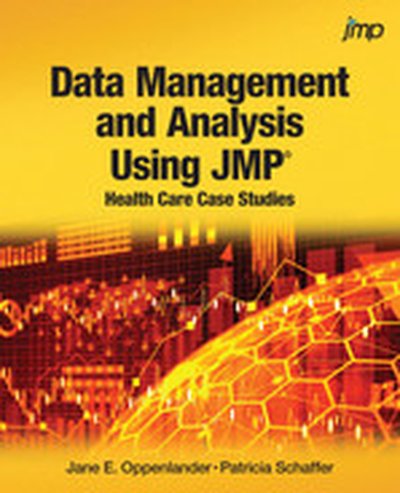
Data Management and Analysis Using JMP

A holistic, step-by-step approach to analyzing health care data! Written for both beginner and intermediate JMP users working in or studying health care, Data Management and Analysis Using JMP: Health Care Case Studies bridges the gap between taking traditional statistics courses and successfully applying statistical analysis in the workplace. Authors Jane Oppenlander and Patricia Schaffer begin by illustrating techniques to prepare data for analysis, followed by presenting effective methods to summarize, visualize, and analyze data. The statistical analysis methods covered in the book are the foundational techniques commonly applied to meet regulatory, operational, budgeting, and research needs in the health care field. This example-driven book shows practitioners how to solve real-world problems by using an approach that includes problem definition, data management, selecting the appropriate analysis methods, step-by-step JMP instructions, and interpreting statistical results in context. Practical strategies for selecting appropriate statistical methods, remediating data anomalies, and interpreting statistical results in the domain context are emphasized. The cases presented in Data Management and Analysis Using JMP use multiple statistical methods. A progression of methods--from univariate to multivariate--is employed, illustrating a logical approach to problem-solving. Much of the data used in these cases is open source and drawn from a variety of health care settings. The book offers a welcome guide to working professionals as well as students studying statistics in health care-related fields.

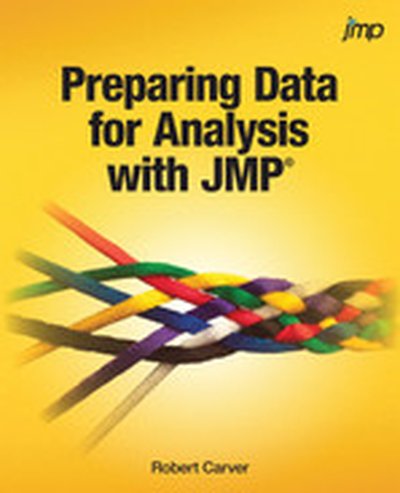
Preparing Data for Analysis with JMP

Access and clean up data easily using JMP®! Data acquisition and preparation commonly consume approximately 75% of the effort and time of total data analysis. JMP provides many visual, intuitive, and even innovative data-preparation capabilities that enable you to make the most of your organization's data. Preparing Data for Analysis with JMP® is organized within a framework of statistical investigations and model-building and illustrates the new data-handling features in JMP, such as the Query Builder. Useful to students and programmers with little or no JMP experience, or those looking to learn the new data-management features and techniques, it uses a practical approach to getting started with plenty of examples. Using step-by-step demonstrations and screenshots, this book walks you through the most commonly used data-management techniques that also include lots of tips on how to avoid common problems. With this book, you will learn how to: Manage database operations using the JMP Query Builder Get data into JMP from other formats, such as Excel, csv, SAS, HTML, JSON, and the web Identify and avoid problems with the help of JMP’s visual and automated data-exploration tools Consolidate data from multiple sources with Query Builder for tables Deal with common issues and repairs that include the following tasks: reshaping tables (stack/unstack) managing missing data with techniques such as imputation and Principal Components Analysis cleaning and correcting dirty data computing new variables transforming variables for modelling reconciling time and date Subset and filter your data Save data tables for exchange with other platforms

JMP 13 Consumer Research, Second Edition, 2nd Edition

JMP 13 Consumer Research focuses on analyses that help users observe and predict subject's behavior, particularly those in the market research field. The Uplift platform predicts consumer behavior based on shifts in marketing efforts. Learn how to tabulate and summarize categorical responses with the Categorical platform. Factor Analysis rotates principal components to help identify which directions have the most variation among the variables. The book also covers Item Analysis, a method for identifying latent traits that might affect an individual's choices. And read about the Choice platform, which market researchers use to estimate probability in consumer spending.

JMP 13 Design of Experiments Guide, Second Edition, 2nd Edition

The JMP 13 Design of Experiments Guide covers classic DOE designs (for example, full factorial, response surface, and mixture designs). Read about more flexible custom designs, which you generate to fit your particular experimental situation. And discover JMP’s definitive screening designs, an efficient way to identify important factor interactions using fewer runs than required by traditional designs. The book also provides guidance on determining an appropriate sample size for your study.

JMP 13 Fitting Linear Models, Second Edition, 2nd Edition

JMP 13 Fitting Linear Models focuses on the Fit Model platform and many of its personalities. Linear and logistic regression, analysis of variance and covariance, and stepwise procedures are covered. Also included are multivariate analysis of variance, mixed models, generalized models, and models based on penalized regression techniques.

JMP 13 Multivariate Methods, Second Edition, 2nd Edition

JMP 13 Multivariate Methods describes techniques for analyzing several variables simultaneously. The book covers descriptive measures, such as correlations. It also describes methods that give insight into the structure of the multivariate data, such as clustering, latent class analysis, principal components, discriminant analysis, and partial least squares.

JMP 13 Predictive and Specialized Modeling, Second Edition, 2nd Edition

JMP 13 Predictive and Specialized Modeling provides details about modeling techniques such as partitioning, neural networks, nonlinear regression, and time series analysis. Topics include the Gaussian platform, which is useful in analyzing computer simulation experiments. The book also covers the Response Screening platform, which is useful in testing the effect of a predictor when you have many responses.

JMP Start Statistics, 6th Edition

This book provides hands-on tutorials with just the right amount of conceptual and motivational material to illustrate how to use the intuitive interface for data analysis in JMP. Each chapter features concept-specific tutorials,

examples, brief reviews of concepts, step-by-step illustrations, and exercises.

Updated for JMP 13, JMP Start Statistics, Sixth Edition includes many new features, including:

The redesigned Formula Editor.

New and improved ways to create formulas in JMP directly from the data table or dialogs.

Interface updates, including improved menu layout.

Updates and enhancements in many analysis platforms.

New ways to get data into JMP and to save and share JMP results.

Many new features that make it easier to use JMP.

JMP 13 Basic Analysis

JMP 13 Basic Analysis covers the initial types of analyses that you often perform in JMP, such as univariate, bivariate, and oneway analyses. Creating tables of summary statistics with the Tabulate platform is included along with approximating sampling distributions using bootstrapping. Find information about how to clean up your data before performing analyses. Read about performing powerful parametric and nonparametric simulation capability using Simulation.

JMP 13 Consumer Research

JMP 13 Consumer Research focuses on analyses that help users observe and predict subject's behavior, particularly those in the market research field. The Uplift platform predicts consumer behavior based on shifts in marketing efforts. Learn how to tabulate and summarize categorical responses with the Categorical platform. Factor Analysis rotates principal components to help identify which directions have the most variation among the variables. The book also covers Item Analysis, a method for identifying latent traits that might affect an individual's choices. And read about the Choice platform, which market researchers use to estimate probability in consumer spending.