talk-data.com talk-data.com

Topic

MATLAB

numerical_computing programming_language scientific_computing

140

tagged

Activity Trend

1 peak/qtr
2020-Q1 2026-Q1

Activities

140 activities · Newest first

Network Reliability

In Engineering theory and applications, we think and operate in terms of logics and models with some acceptable and reasonable assumptions. The present text is aimed at providing modelling and analysis techniques for the evaluation of reliability measures (2-terminal, all-terminal, k-terminal reliability) for systems whose structure can be described in the form of a probabilistic graph. Among the several approaches of network reliability evaluation, the multiple-variable-inversion sum-of-disjoint product approach finds a well-deserved niche as it provides the reliability or unreliability expression in a most efficient and compact manner. However, it does require an efficiently enumerated minimal inputs (minimal path, spanning tree, minimal k-trees, minimal cut, minimal global-cut, minimal k-cut) depending on the desired reliability. The present book covers these two aspects in detail through the descriptions of several algorithms devised by the ‘reliability fraternity’ and explained through solved examples to obtain and evaluate 2-terminal, k-terminal and all-terminal network reliability/unreliability measures and could be its USP. The accompanying web-based supplementary information containing modifiable Matlab® source code for the algorithms is another feature of this book. A very concerted effort has been made to keep the book ideally suitable for first course or even for a novice stepping into the area of network reliability. The mathematical treatment is kept as minimal as possible with an assumption on the readers’ side that they have basic knowledge in graph theory, probabilities laws, Boolean laws and set theory.
Constrained Principal Component Analysis and Related Techniques

This book shows how constrained principal component analysis (CPCA) offers a unified framework for regression techniques and PCA. Keeping the use of complicated iterative methods to a minimum, the book includes implementation details and many real application examples. It also offers material for methodologically oriented readers interested in developing statistical techniques of their own. MATLAB programs as well as data to create the book's examples are available on the author's website.

Electromagnetic Waves, Materials, and Computation with MATLAB®

This book is for senior undergraduate/first-year graduate students specializing in one or more of the technologies based on electromagnetics. Composed of three parts, it begins with the electromagnetics of bounded simple media, moves on to electromagnetic equations of complex media, and then covers electromagnetic computation. The author takes a modern approach by using commercial software such as MATLAB and FDTD methods and provides a strong base of conceptual mathematical aspects. The material strikes a balance between theory, intuitive approximate solutions, and the use of commercial software and interpretation of solutions. Case studies and practical examples are presented throughout the text.

Multi-Label Dimensionality Reduction

The data mining and machine learning literature currently lacks a unified treatment of multi-label dimensionality reduction that incorporates both algorithmic developments and applications. Addressing this shortfall, this book covers the methodological developments, theoretical properties, computational aspects, and applications of many multi-label dimensionality reduction algorithms, including existing dimensionality reduction algorithms and new developments of traditional algorithms. It illustrates how to apply the algorithms to solve real-world problems. A supplementary website provides a MATLAB package for implementing popular dimensionality reduction algorithms.

Radar Systems Analysis and Design Using MATLAB, 3rd Edition

Developed from the author's graduate-level courses, the first edition of this book filled the need for a comprehensive, self-contained, and hands-on treatment of radar systems analysis and design. It quickly became a bestseller and was widely adopted by many professors. The second edition built on this successful format by rearranging and updating

Signals and Systems

This text employs MATLAB both computationally and pedagogically to provide interactive visual reinforcement of the fundamentals, including the characteristics of signals, operations used on signals, time and frequency domain analyses of systems, continuous-time and discrete-time signals and systems, and more. The book includes hands-on MATLAB modules linked to specific segments of the text to ensure seamless integration between learning and doing. A solutions manual, MATLAB code, figures, presentation slides, and other ancillary materials are available on an author-supported website or with qualifying course adoption.

Simulation of Dynamic Systems with MATLAB and Simulink, 2nd Edition

"… a seminal text covering the simulation design and analysis of a broad variety of systems using two of the most modern software packages available today. … particularly adept [at] enabling students new to the field to gain a thorough understanding of the basics of continuous simulation in a single semester, and [also provides] a more advanced treatment of the subject for researchers and simulation professionals." —From the Foreword by Chris Bauer, PhD, PE, CMSP Continuous-system simulation is an increasingly important tool for optimizing the performance of real-world systems, and a massive transformation has occurred in the application of simulation in fields ranging from engineering and physical sciences to medicine, biology, economics, and applied mathematics. As with most things, simulation is best learned through practice—but explosive growth in the field requires a new learning approach. A response to changes in the field, Simulation of Dynamic Systems with MATLAB® and Simulink®, Second Edition has been extensively updated to help readers build an in-depth and intuitive understanding of basic concepts, mathematical tools, and the common principles of various simulation models for different phenomena. Includes an abundance of case studies, real-world examples, homework problems, and equations to develop a practical understanding of concepts Accomplished experts Harold Klee and Randal Allen take readers through a gradual and natural progression of important topics in simulation, introducing advanced concepts only after they construct complete examples using fundamental methods. Presented exercises incorporate MATLAB® and Simulink®—including access to downloadable M-files and model files—enabling both students and professionals to gain experience with these industry-standard tools and more easily design, implement, and adjust simulation models in their particular field of study. More universities are offering courses—as well as masters and Ph.D programs—in both continuous-time and discrete-time simulation, promoting a new interdisciplinary focus that appeals to undergraduates and beginning graduates from a wide range of fields. Ideal for such courses, this classroom-tested introductory text presents a flexible, multifaceted approach through which simulation can play a prominent role in validating system design and training personnel involved.

Environmental Data Analysis with MatLab, 2nd Edition

Environmental Data Analysis with MatLab is a new edition that expands fundamentally on the original with an expanded tutorial approach, new crib sheets, and problem sets providing a clear learning path for students and researchers working to analyze real data sets in the environmental sciences. Since publication of the bestselling Environmental Data Analysis with MATLAB®, many advances have been made in environmental data analysis. One only has to consider the global warming debate to realize how critically important it is to be able to derive clear conclusions from often noisy data drawn from a broad range of sources. The work teaches the basics of the underlying theory of data analysis and then reinforces that knowledge with carefully chosen, realistic scenarios. MATLAB®, a commercial data processing environment, is used in these scenarios. Significant content is devoted to teaching how it can be effectively used in an environmental data analysis setting. This new edition, though written in a self-contained way, is supplemented with data and MATLAB® scripts that can be used as a data analysis tutorial. New features include boxed crib sheets to help identify major results and important formulas and give brief advice on how and when they should be used. Numerical derivatives and integrals are derived and illustrated. Includes log-log plots with further examples of their use. Discusses new datasets on precipitation and stream flow. Topical enhancement applies the chi-squared test to the results of the generalized least squares method. New coverage of cluster analysis and approximation techniques that are widely applied in data analysis, including Taylor Series and low-order polynomial approximations; non-linear least-squares with Newton’s method; and pre-calculation and updating techniques applicable to real time data acquisition. Provides a clear learning path for researchers and students using data analysis techniques which build upon one another, choosing the right order of presentation to substantially aid the reader in learning material Includes crib sheets to summarize the most important data analysis techniques, results, procedures, and formulas, serving to organize the material in such a way that its sequence is more apparent Uses real-world environmental examples and case studies formulated using the readily-available software environment in MATLAB® Includes log-log plots with further examples of their use

Dynamics of structures with MATLAB® applications

This book is designed for undergraduate and graduate students taking a first course in Dynamics of Structures, Structural Dynamics or Earthquake Engineering. It includes several topics on the theory of structural dynamics and the applications of this theory to the analysis of buildings, bridges, towers and other structures subjected to dynamic and earthquake forces. This comprehensive text demonstrates the applications of numerical solution techniques to a large variety of practical, real-world problems under dynamic loads.

Multi-Carrier Communication Systems with Examples in MATLAB

This book covers multi-carrier communication and discusses its advantages and limitations with solutions for these limitations. It addresses the two primary drawbacks of OFDM communication systems: the high sensitivity to carrier frequency offsets and phase noise, and the high peak-to-average power ratio (PAPR) of the transmitted signals. Presenting a new interleaving scheme for multicarrier communication, it discusses the application of continuous phase modulation to multi-carrier communication systems such as OFDM and SC-FDMA systems. It also discusses image transmission with Discrete Cosine Transform (DCT)-based SC-FDMA systems using continuous phase modulation.

MATLAB Recipes: A Problem-Solution Approach

Learn from state-of-the-art examples in robotics, motors, detection filters, chemical processes, aircraft, and spacecraft. This is a practical reference for industry engineers using MATLAB to solve everyday problems. With MATLAB Recipes: A Problem-Solution Approach you will review contemporary MATLAB coding including the latest language features and use MATLAB as a software development environment including code organization, GUI development, and algorithm design and testing. This book provides practical guidance for using MATLAB to build a body of code you can turn to time and again for solving technical problems in your line of work. Develop algorithms, test them, visualize the results, and pass the code along to others to create a functional code base for your firm.

Variational Methods for Engineers with Matlab

This book is issued from a 30 years’ experience on the presentation of variational methods to successive generations of students and researchers in Engineering. It gives a comprehensive, pedagogical and engineer-oriented presentation of the foundations of variational methods and of their use in numerical problems of Engineering. Particular applications to linear and nonlinear systems of equations, differential equations, optimization and control are presented. MATLAB programs illustrate the implementation and make the book suitable as a textbook and for self-study. The evolution of knowledge, of the engineering studies and of the society in general has led to a change of focus from students and researchers. New generations of students and researchers do not have the same relations to mathematics as the previous ones. In the particular case of variational methods, the presentations used in the past are not adapted to the previous knowledge, the language and the centers of interest of the new generations. Since these methods remain a core knowledge – thus essential - in many fields (Physics, Engineering, Applied Mathematics, Economics, Image analysis …), a new presentation is necessary in order to address variational methods to the actual context.

Machine Learning

This tutorial text gives a unifying perspective on machine learning by covering both probabilistic and deterministic approaches -which are based on optimization techniques – together with the Bayesian inference approach, whose essence lies in the use of a hierarchy of probabilistic models. The book presents the major machine learning methods as they have been developed in different disciplines, such as statistics, statistical and adaptive signal processing and computer science. Focusing on the physical reasoning behind the mathematics, all the various methods and techniques are explained in depth, supported by examples and problems, giving an invaluable resource to the student and researcher for understanding and applying machine learning concepts. The book builds carefully from the basic classical methods to the most recent trends, with chapters written to be as self-contained as possible, making the text suitable for different courses: pattern recognition, statistical/adaptive signal processing, statistical/Bayesian learning, as well as short courses on sparse modeling, deep learning, and probabilistic graphical models. All major classical techniques: Mean/Least-Squares regression and filtering, Kalman filtering, stochastic approximation and online learning, Bayesian classification, decision trees, logistic regression and boosting methods. The latest trends: Sparsity, convex analysis and optimization, online distributed algorithms, learning in RKH spaces, Bayesian inference, graphical and hidden Markov models, particle filtering, deep learning, dictionary learning and latent variables modeling. Case studies - protein folding prediction, optical character recognition, text authorship identification, fMRI data analysis, change point detection, hyperspectral image unmixing, target localization, channel equalization and echo cancellation, show how the theory can be applied. MATLAB code for all the main algorithms are available on an accompanying website, enabling the reader to experiment with the code.

Matlab® in Quality Assurance Sciences

MATLAB® in Quality Assurance Sciences fills a gap in the highly topical field of quality assurance (QA). It is a compact guide for students, engineers, and scientists in this field. It concentrates on MATLAB® fundamentals with examples of application to a wide range of current problems from general, nano and bio-technology, and statistical control, to medicine and industrial management. Examples cover both the school and advanced level; comprising calculations of total quality management, six sigma, time series, process improvement, metrology, quality control, human factors in quality assurance, measurement and testing techniques, quality project and function management, and customer satisfaction. This book covers key topics, including: the basics of software with examples; graphics and representations; numerical computation, scripts and functions for QA calculations; ODE and PDEPE solvers applied to QA problems; curve fitting and time series tool interfaces in calculations of quality; and statistics calculations applied to quality testing. Includes MATLAB® fundamentals, matrices, arrays, general graphics and specialized plots in quality assurance problems, script files, ordinary and partial differential equations Gives calculation of six sigma, total quality management, time series forecasting, reliability, process improvement, metrology, quality control and assurance, measurement and testing techniques Provides tools for graphical presentation, basic and special statistics and testing, ordinary and partial differential solvers, and fitting tools

MATLAB Numerical Calculations

MATLAB is a high-level language and environment for numerical computation, visualization, and programming. Using MATLAB, you can analyze data, develop algorithms, and create models and applications. The language, tools, and built-in math functions enable you to explore multiple approaches and reach a solution faster than with spreadsheets or traditional programming languages, such as C/C++ or Java. This book is designed for use as a scientific/business calculator so that you can get numerical solutions to problems involving a wide array of mathematics using MATLAB. Just look up the function you want in the book and you are ready to use it in MATLAB or use the book to learn about the enormous range of options that MATLAB offers. MATLAB Numerical Calculations focuses on MATLAB capabilities to give you numerical solutions to problems you are likely to encounter in your professional or scholastic life. It introduces you to the MATLAB language with practical hands-on instructions and results, allowing you to quickly achieve your goals. Starting with a look at basic MATLAB functionality with integers, rational numbers and real and complex numbers, and MATLAB's relationship with Maple, you will learn how to solve equations in MATLAB, and how to simplify the results. You will see how MATLAB incorporates vector, matrix and character variables, and functions thereof. MATLAB is a powerful tool used to defined, manipulate and simplify complex algebraic expressions. With MATLAB you can also work with ease in matrix algebra, making use of commands which allow you to find eigenvalues, eigenvectors, determinants, norms and various matrix decompositions, among many other features. Lastly, you will see how you can write scripts and use MATLAB to explore numerical analysis, finding approximations of integrals, derivatives and numerical solutions of differential equations.

Numerical Methods using MATLAB

Numerical Methods with MATLAB provides a highly-practical reference work to assist anyone working with numerical methods. A wide range of techniques are introduced, their merits discussed and fully working MATLAB code samples supplied to demonstrate how they can be coded and applied. Numerical methods have wide applicability across many scientific, mathematical, and engineering disciplines and are most often employed in situations where working out an exact answer to the problem by another method is impractical. Numerical Methods with MATLAB presents each topic in a concise and readable format to help you learn fast and effectively. It is not intended to be a reference work to the conceptual theory that underpins the numerical methods themselves. A wide range of reference works are readily available to supply this information. If, however, you want assistance in applying numerical methods then this is the book for you.

MATLAB Graphical Programming

MATLAB enables you to work with its graphics capabilities in almost all areas of the experimental sciences and engineering. The commands that MATLAB implements in job related graphics are quite useful and are very efficient. MATLAB has functions for working with two-dimensional and three-dimensional graphics, statistical graphs, curves and surfaces in explicit, implicit, parametric and polar coordinates. It also works perfectly with twisted curves, surfaces, volumes and graphical interpolation. MATLAB Graphical Programming addresses all these issues by developing the following topics:This book is a reference designed to give you a simple syntax example of the commands and to graph it so that you can see the result for: Two dimensional graphics Statistical graphics Curves in explicit coordinates Curves in parametric coordinates Curves in polar coordinates Logarithmic and semi-logarithmic plots Bar graphs and histograms sectors Three-dimensional graphics Twisted curves and surfaces Graphs of surfaces, meshes and contours Graphs of surfaces in explicit coordinates parametric surfaces Viewing volumes and specialized graphics Special commands for graphics

MATLAB Mathematical Analysis

MATLAB Mathematical Analysis is a reference book that presents the techniques of mathematical analysis through examples and exercises resolved with MATLAB software. The purpose is to give you examples of the mathematical analysis functions offered by MATLAB so that you can use them in your daily work regardless of the application. The book supposes proper training in the mathematics and so presents the basic knowledge required to be able to use MATLAB for calculational or symbolic solutions to your problems for a vast amount of MATLAB functions. The book begins by introducing the reader to the use of numbers, operators, variables and functions in the MATLAB environment. Then it delves into working with complex variables. A large section is devoted to working with and developing graphical representations of curves, surfaces and volumes. MATLAB functions allow working with two-dimensional and three-dimensional graphics, statistical graphs, curves and surfaces in explicit, implicit, parametric and polar coordinates. Additional work implements twisted curves, surfaces, meshes, contours, volumes and graphical interpolation. The following part covers limits, functions, continuity and numerical and power series. Then differentiation is addressed in one and several variables including differential theorems for vector fields. Thereafter the topic of integration is handled including improper integrals, definite and indefinite integration, integration in multiple variables and multiple integrals and their applications. Differential equations are exemplified in detail, Laplace transforms, Tayor series, and the Runga-Kutta method and partial differential equations.

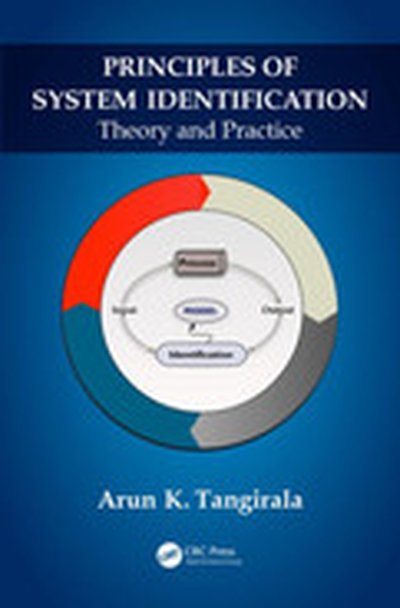
Principles of System Identification

Master Techniques and Successfully Build Models Using a Single Resource Vital to all data-driven or measurement-based process operations, system identification is an interface that is based on observational science, and centers on developing mathematical models from observed data. Principles of System Identification: Theory and Practice is an introductory-level book that presents the basic foundations and underlying methods relevant to system identification. The overall scope of the book focuses on system identification with an emphasis on practice, and concentrates most specifically on discrete-time linear system identification. Useful for Both Theory and Practice The book presents the foundational pillars of identification, namely, the theory of discrete-time LTI systems, the basics of signal processing, the theory of random processes, and estimation theory. It explains the core theoretical concepts of building (linear) dynamic models from experimental data, as well as the experimental and practical aspects of identification. The author offers glimpses of modern developments in this area, and provides numerical and simulation-based examples, case studies, end-of-chapter problems, and other ample references to code for illustration and training. Comprising 26 chapters, and ideal for coursework and self-study, this extensive text: Provides the essential concepts of identification Lays down the foundations of mathematical descriptions of systems, random processes, and estimation in the context of identification Discusses the theory pertaining to non-parametric and parametric models for deterministic-plus-stochastic LTI systems in detail Demonstrates the concepts and methods of identification on different case-studies Presents a gradual development of state-space identification and grey-box modeling Offers an overview of advanced topics of identification namely the linear time-varying (LTV), non-linear, and closed-loop identification Discusses a multivariable approach to identification using the iterative principal component analysis Embeds MATLAB® codes for illustrated examples in the text at the respective points presents a formal base in LTI deterministic and stochastic systems modeling and estimation theory; it is a one-stop reference for introductory to moderately advanced courses on system identification, as well as introductory courses on stochastic signal processing or time-series analysis.The MATLAB scripts and SIMULINK models used as examples and case studies in the book are also available on the author's website: http://arunkt.wix.com/homepage#!textbook/c397 Principles of System Identification: Theory and Practice

MATLAB Symbolic Algebra and Calculus Tools

MATLAB is a high-level language and environment for numerical computation, visualization, and programming. Using MATLAB, you can analyze data, develop algorithms, and create models and applications. The language, tools, and built-in math functions enable you to explore multiple approaches and reach a solution faster than with spreadsheets or traditional programming languages, such as C/C++ or Java. MATLAB Symbolic Algebra and Calculus Tools introduces you to the MATLAB language with practical hands-on instructions and results, allowing you to quickly achieve your goals. Starting with a look at symbolic variables and functions, you will learn how to solve equations in MATLAB, both symbolically and numerically, and how to simplify the results. Extensive coverage of polynomial solutions, inequalities and systems of equations are covered in detail. You will see how MATLAB incorporates vector, matrix and character variables, and functions thereof. MATLAB is a powerful symbolic manipulator which enables you to factorize, expand and simplify complex algebraic expressions over all common fields (including over finite fields and algebraic field extensions of the rational numbers). With MATLAB you can also work with ease in matrix algebra, making use of commands which allow you to find eigenvalues, eigenvectors, determinants, norms and various matrix decompositions, among many other features. Lastly, you will see how you can use MATLAB to explore mathematical analysis, finding limits of sequences and functions, sums of series, integrals, derivatives and solving differential equation.