talk-data.com talk-data.com

Topic

MATLAB

numerical_computing programming_language scientific_computing

139

tagged

Activity Trend

1 peak/qtr
2020-Q1 2026-Q1

Activities

139 activities · Newest first

Practical Signals Theory with MATLAB Applications, 2nd Edition

A hands-on resource designed to teach the mathematics of signals and systems with MATLAB™ In this newly revised second edition of Practical Signals Theory with MATLAB™ Applications, Richard Tervo delivers an articulate presentation of the mathematics underlying real world engineering applications and everyday electronic devices. The new edition provides extended coverage of communication systems—including digital and spread spectrum communications—as well as a new introductory chapter on using MATLAB™ as a tool to visualize the mathematics of signals and systems. The text contains numerous hands-on examples and expanded end-of-chapter exercises. It is a one-stop reference for signals and systems, explaining aspects of commonplace signal types, orthogonality and signal decomposition, transformations, and the graphical presentation of calculations and results. Readers will also find: A solid introduction to the mathematics of continuous and discrete signals represented in time and frequency domains Thorough coverage of the classic Fourier, Laplace and z-transforms, and their many applications New end-of-chapter worked exercises, a variety of in-line study questions with answers and easily reproducible MATLAB™ code demonstrations Bonus material on related applications in different fields of study and a companion website designed to support additional learning Perfect for undergraduate and graduate students of signals and systems, signals theory, and related areas of electrical engineering, Practical Signals Theory with MATLAB™ Applications will also benefit researchers and professors in the field of system design and signal processing.

Introduction to Engineering Nonlinear and Parametric Vibrations with MATLAB and Maple

Textbook on nonlinear and parametric vibrations discussing relevant terminology and analytical and computational tools for analysis, design, and troubleshooting Introduction to Engineering Nonlinear and Parametric Vibrations with MATLAB and MAPLE is a comprehensive textbook that provides theoretical breadth and depth and analytical and computational tools needed to analyze, design, and troubleshoot related engineering problems. The text begins by introducing and providing the required math and computer skills for understanding and simulating nonlinear vibration problems. This section also includes a thorough treatment of parametric vibrations. Many illustrative examples, including software examples, are included throughout the text. A companion website includes the MATLAB and MAPLE codes for examples in the textbook, and a theoretical development for a homoclinic path to chaos. Introduction to Engineering Nonlinear and Parametric Vibrations with MATLAB and MAPLE provides information on: Natural frequencies and limit cycles of nonlinear autonomous systems, covering the multiple time scale, Krylov-Bogellubov, harmonic balance, and Lindstedt-Poincare methods Co-existing fixed point equilibrium states of nonlinear systems, covering location, type, and stability, domains of attraction, and phase plane plotting Parametric and autoparametric vibration including Floquet, Mathieu and Hill theory Numerical methods including shooting, time domain collocation, arc length continuation, and Poincare plotting Chaotic motion of nonlinear systems, covering iterated maps, period doubling and homoclinic paths to chaos, and discrete and continuous time Lyapunov exponents Extensive MATLAB and MAPLE coding for the examples presented Introduction to Engineering Nonlinear and Parametric Vibrations with MATLAB and MAPLE is an essential up-to-date textbook on the subject for upper level undergraduate and graduate engineering students as well as practicing vibration engineers. Knowledge of differential equations and basic programming skills are requisites for reading.

Programming in MATLAB ®: A Problem-Solving Approach by Pearson

MATLAB provides an interactive programming interface for numerical computation and data visualization making it the default framework used for analysis, design and research in many domains of science and industry. Programming in MATLAB is intended as an aid to engineers and scientists with no prior programming expertise. The book focuses on the systematic development of practical programming skills through MATLAB language constructs, backed by several well-designed examples and exercises. Designed to be as much a MATLAB reference tool for researchers in varied fields as it is a guide for undergraduate readers, the book builds on the concepts sequentially as it progresses through the chapters. Each chapter is complete, independent of the book's remaining contents. Thus, for teaching purposes, one can suitably the relevant portions.

About The Authors –

Ramnarayan Patel did his Ph.D. in the area of power systems from Indian Institute of Technology Delhi, in 2003. He received his M.Tech. from IIT Delhi and a graduate degree in electrical engineering from SGSITS, Indore. His manifold fields of interest include power system stability, optimization in electric power systems, application of artificial intelligence techniques, design of intelligent controllers and renewable energy systems. He has over 14 years of hands-on experience working with MATLAB and Simulink, as an instructor, researcher and trainer.

Dr Patel has served as faculty in the electrical engineering department at IIT Roorkee and at the Birla Institute of Technology and Science, Pilani. Currently, he is Professorin the Department of Electrical and Electronics Engineering, Shri Shankaracharya Technical Campus (SSGI), Bhilai, and has many publications to his credit in various international journals of repute. He has presented his research at various international conferences and organized many workshops and conferences within the country. He is a recipient of the prestigious ‘Career Award for Young Teachers’ from All India Council for Technical Education (AICTE), New Delhi. Dr Patel has successfully handled many research projects funded by AICTE, New Delhi, and Department of Science and Technology, Government of India, New Delhi.

Ankush Mittal received his B.Tech. in computer science and engineering from Indian Institute of Technology Delhi in 1996, and later, his Master’s degree in 1998 from the same institute. He received his Ph.D. degree in electrical and computer engineering from the National University of Singapore in 2001 and was a faculty member in the Department of Computer Science, National University of Singapore, for two years. He has also served as Associate Professor at IIT Roorkee. Currently, he is Director (Research) at Graphic Era University, Dehradun.

Dr Mittal has contributed more than 250 research papers in journals and conferences of high repute with significant impact in academic circles. A dedicated teacher and active researcher, he is a recipient of the IIT Roorkee Outstanding Teacher Award and the IBM Faculty Award. He has taught more than 20 courses and worked on MATLAB extensively since his Ph.D.

Book Contents –

  1. Introduction to MATLAB® Desktop
  2. Matrix Operations and Applications
  3. MATLAB® Graphics and Plotting
  4. Control Structures, Loops, and File Handling
  5. Scripts and Functions
  6. Numerical Methods, Calculus, and Statistics
  7. Using Memory Efficiently
  8. Using the MATLAB® Debugger and Profiler
  9. Efficient Coding Using Vectorization Technique
  10. Precision and Errors
  11. Advanced Concepts in MATLAB®
  12. Modeling with Simulink®
  13. Digital Image Processing Index
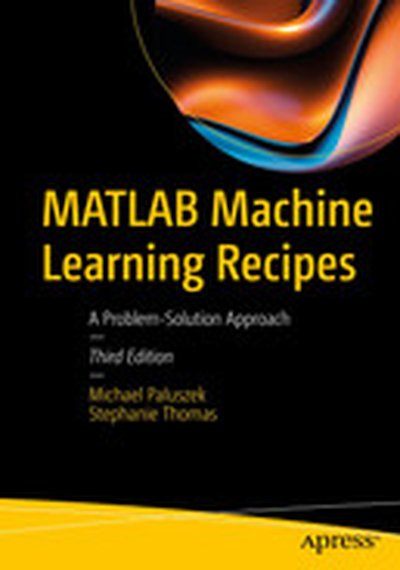
MATLAB Machine Learning Recipes: A Problem-Solution Approach

Harness the power of MATLAB to resolve a wide range of machine learning challenges. This new and updated third edition provides examples of technologies critical to machine learning. Each example solves a real-world problem, and all code provided is executable. You can easily look up a particular problem and follow the steps in the solution. This book has something for everyone interested in machine learning. It also has material that will allow those with an interest in other technology areas to see how machine learning and MATLAB can help them solve problems in their areas of expertise. The chapter on data representation and MATLAB graphics includes new data types and additional graphics. Chapters on fuzzy logic, simple neural nets, and autonomous driving have new examples added. And there is a new chapter on spacecraft attitude determination using neural nets. Authors Michael Paluszek and Stephanie Thomas show how all of these technologies allow you to build sophisticated applications to solve problems with pattern recognition, autonomous driving, expert systems, and much more. What You Will Learn Write code for machine learning, adaptive control, and estimation using MATLAB Use MATLAB graphics and visualization tools for machine learning Become familiar with neural nets Build expert systems Understand adaptive control Gain knowledge of Kalman Filters Who This Book Is For Software engineers, control engineers, university faculty, undergraduate and graduate students, hobbyists.

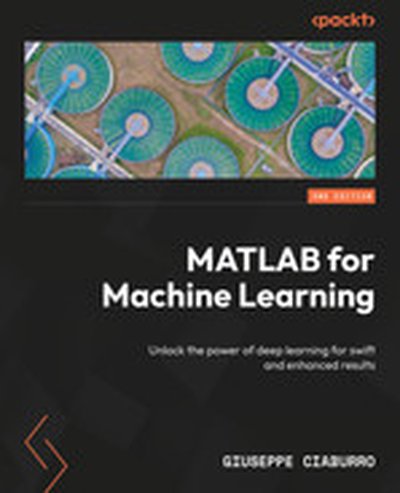
MATLAB for Machine Learning - Second Edition

"MATLAB for Machine Learning" is your comprehensive guide to leveraging MATLAB's powerful tools and toolbox for machine learning and deep learning tasks. Through this book, you will explore practical applications and processes that streamline the development of machine learning models while tackling real-world problems effectively. What this Book will help me do Gain proficiency in utilizing MATLAB's Machine Learning Toolbox for developing machine learning algorithms. Learn how to handle data preprocessing, from data cleansing to visualization, within MATLAB. Explore and implement foundational to advanced machine learning techniques, such as classification and regression models. Comprehend and apply the principles of neural networks for pattern recognition and cluster analysis. Dive into advanced concepts of deep learning, including convolutional networks, natural language processing, and time series analysis, using MATLAB's inbuilt functionality. Author(s) Giuseppe Ciaburro is an expert in the field of machine learning and MATLAB programming. With a robust academic background in data science and years of experience in applying these principles across domains, Giuseppe provides a clear and approachable pathway for learners in his writing. Who is it for? This book is ideal for machine learning professionals, data scientists, and engineers specializing in fields such as deep learning, computer vision, and natural language processing. It is suitable for those with a fundamental understanding of programming concepts who seek to apply MATLAB in solving complex learning problems. A prior familiarity with MATLAB basics will be advantageous.

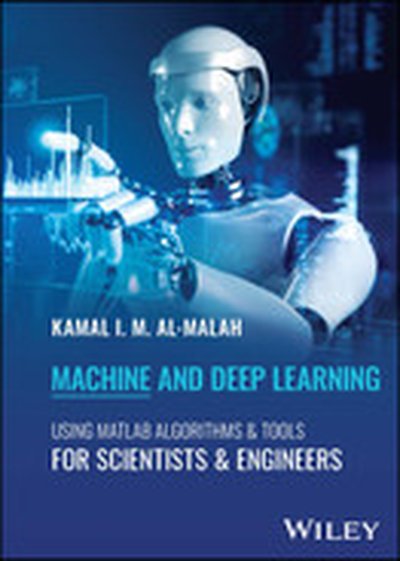
Machine and Deep Learning Using MATLAB

MACHINE AND DEEP LEARNING In-depth resource covering machine and deep learning methods using MATLAB tools and algorithms, providing insights and algorithmic decision-making processes Machine and Deep Learning Using MATLAB introduces early career professionals to the power of MATLAB to explore machine and deep learning applications by explaining the relevant MATLAB tool or app and how it is used for a given method or a collection of methods. Its properties, in terms of input and output arguments, are explained, the limitations or applicability is indicated via an accompanied text or a table, and a complete running example is shown with all needed MATLAB command prompt code. The text also presents the results, in the form of figures or tables, in parallel with the given MATLAB code, and the MATLAB written code can be later used as a template for trying to solve new cases or datasets. Throughout, the text features worked examples in each chapter for self-study with an accompanying website providing solutions and coding samples. Highlighted notes draw the attention of the user to critical points or issues. Readers will also find information on: Numeric data acquisition and analysis in the form of applying computational algorithms to predict the numeric data patterns (clustering or unsupervised learning) Relationships between predictors and response variable (supervised), categorically sub-divided into classification (discrete response) and regression (continuous response) Image acquisition and analysis in the form of applying one of neural networks, and estimating net accuracy, net loss, and/or RMSE for the successive training, validation, and testing steps Retraining and creation for image labeling, object identification, regression classification, and text recognition Machine and Deep Learning Using MATLAB is a useful and highly comprehensive resource on the subject for professionals, advanced students, and researchers who have some familiarity with MATLAB and are situated in engineering and scientific fields, who wish to gain mastery over the software and its numerous applications.

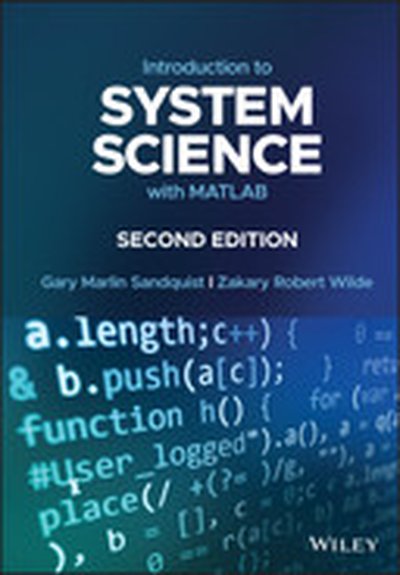
Introduction to System Science with MATLAB, 2nd Edition

Introduction to SYSTEM SCIENCE with MATLAB Explores the mathematical basis for developing and evaluating continuous and discrete systems In this revised Second Edition of Introduction to System Science with MATLAB®, the authors Gary Sandquist and Zakary Wilde provide a comprehensive exploration of essential concepts, mathematical framework, analytical resources, and productive skills required to address any rational system confidently and adequately for quantitative evaluation. This Second Edition is supplemented with new updates to the mathematical and technical materials from the first edition. A new chapter to assist readers to generalize and execute algorithms for systems development and analysis, as well as an expansion of the chapter covering specific system science applications, is included. The book provides the mathematical basis for developing and evaluating single and multiple input/output systems that are continuous or discrete. It offers the mathematical basis for the recognition, definition, quantitative modeling, analysis, and evaluation in system science. The book also provides: A comprehensive introduction to system science and the principles of causality and cause and effect operations, including their historical and scientific background A complete exploration of fundamental systems concepts and basic system equations, including definitions and classifications Practical applications and discussions of single-input systems, multiple-input systems, and system modeling and evaluation An in-depth examination of generalized system analysis methods and specific system science applications Perfect for upper-level undergraduate and graduate students in engineering, mathematics, and physical sciences, Introduction to System Science with MATLAB® will also earn a prominent place in libraries of researchers in the life and social sciences.

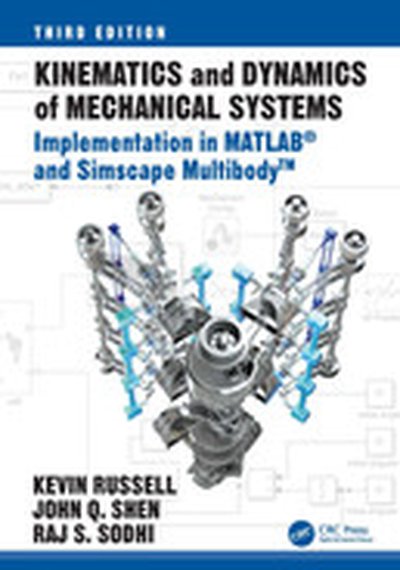
Kinematics and Dynamics of Mechanical Systems, 3rd Edition

Updated throughout for the third edition, Kinematics and Dynamics of Mechanical Systems: Implementation in MATLAB® and Simscape Multibody™ offers step-by-step instruction on the fundamentals of mechanism kinematics, synthesis, statics and dynamics, alongside demonstrating its real-world applications.

Beginning MATLAB and Simulink: From Beginner to Pro

Employ essential tools and functions of the MATLAB and Simulink packages, which are explained and demonstrated via interactive examples and case studies. This revised edition covers features from the latest MATLAB 2022b release, as well as other features that have been released since the first edition published. This book contains dozens of simulation models and solved problems via m-files/scripts and Simulink models which will help you to learn programming and modelling essentials. You’ll become efficient with many of the built-in tools and functions of MATLAB/Simulink while solving engineering and scientific computing problems. Beginning MATLAB and Simulink, Second Edition explains various practical issues of programming and modelling in parallel by comparing MATLAB and Simulink. After studying and using this book, you'll be proficient at using MATLAB and Simulink and applying the source code and models from the book's examples as templates for your own projects in data science or engineering. What You Will Learn Master the programming and modelling essentials of MATLAB and Simulink Carry out data visualization with MATLAB Build a GUI and develop App with MATLAB Work with integration and numerical root finding methods Apply MATLAB to differential equations-based models and simulations Use MATLAB and Simulink for data science projects Who This Book Is For Engineers, programmers, data scientists, and students majoring in engineering and scientific computing who are new to MATLAB and Simulink.

Introduction to Matrix Analytic Methods in Queues 1

Matrix-analytic methods (MAM) were introduced by Professor Marcel Neuts and have been applied to a variety of stochastic models since. In order to provide a clear and deep understanding of MAM while showing their power, this book presents MAM concepts and explains the results using a number of worked-out examples. This book’s approach will inform and kindle the interest of researchers attracted to this fertile field. To allow readers to practice and gain experience in the algorithmic and computational procedures of MAM, Introduction to Matrix Analytic Methods in Queues 1 provides a number of computational exercises. It also incorporates simulation as another tool for studying complex stochastic models, especially when the state space of the underlying stochastic models under analytic study grows exponentially. The book’s detailed approach will make it more accessible for readers interested in learning about MAM in stochastic models.

Practical MATLAB Deep Learning: A Projects-Based Approach

Harness the power of MATLAB for deep-learning challenges. Practical MATLAB Deep Learning, Second Edition, remains a one-of a-kind book that provides an introduction to deep learning and using MATLAB's deep-learning toolboxes. In this book, you’ll see how these toolboxes provide the complete set of functions needed to implement all aspects of deep learning. This edition includes new and expanded projects, and covers generative deep learning and reinforcement learning. Over the course of the book, you'll learn to model complex systems and apply deep learning to problems in those areas. Applications include: Aircraft navigation An aircraft that lands on Titan, the moon of Saturn, using reinforcement learning Stock market prediction Natural language processing Music creation usng generative deep learning Plasma control Earth sensor processing for spacecraft MATLAB Bluetooth data acquisition applied to dance physics What You Will Learn Explore deep learning using MATLAB and compare it to algorithms Write a deep learning function in MATLAB and train it with examples Use MATLAB toolboxes related to deep learning Implement tokamak disruption prediction Now includes reinforcement learning Who This Book Is For Engineers, data scientists, and students wanting a book rich in examples on deep learning using MATLAB.

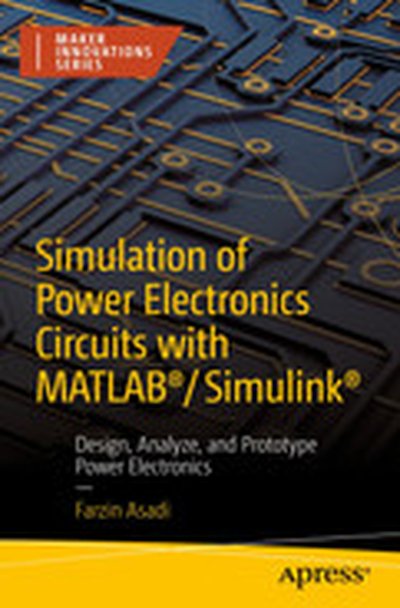
Simulation of Power Electronics Circuits with MATLAB®/Simulink®: Design, Analyze, and Prototype Power Electronics

Design and analyze electronic components and systems with the help of powerful software and effective skillsets. Balancing theory with practical exploration of the relevant software, you'll start solving power electronics problems like a pro. Using MATLAB®/Simulink®, you'll analyze the circuit in a laptop charger; interface with the power electronics converter controlling a washing machine's motor; turn on lamps with an electronic ballast; convert AC into DC power; and more! Power electronics are at the bedrock of all the wonderful devices simplifying our daily life. Designing them isn't just about understanding schematics. It also requires measuring twice and cutting once. In order to save time and money, a power electronics circuit must be simulated before construction. So you'll learn how to work with one of the most powerful simulation tools for this purpose. That way you'll know before you even go to make it whether the circuit works as expected. Learnto work with MATLAB®/Simulink® by directly applying and building the projects in this book. Or use it as a lab manual for power electronics and industrial electronics. Either way, using strong simulations and solid design theory, you'll be able to build power electronics that don't fail. What You'll Learn Simulate power electronics effectively before building them Select suitable semiconductor components for your circuit based on simulation waveforms Extract dynamic models of converters and design suitable controllers for them Who This Book Is For Engineers and students who want to simulate power electronics circuits in MATLAB®/Simulink®.

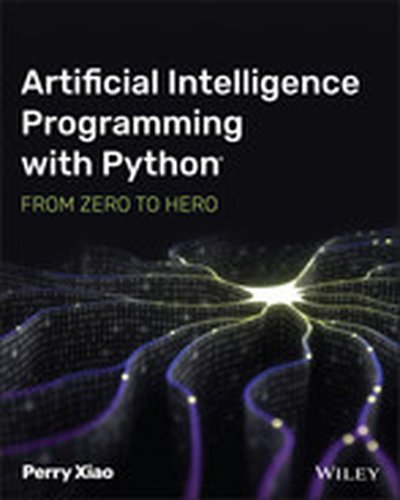
Artificial Intelligence Programming with Python

A hands-on roadmap to using Python for artificial intelligence programming In Practical Artificial Intelligence Programming with Python: From Zero to Hero, veteran educator and photophysicist Dr. Perry Xiao delivers a thorough introduction to one of the most exciting areas of computer science in modern history. The book demystifies artificial intelligence and teaches readers its fundamentals from scratch in simple and plain language and with illustrative code examples. Divided into three parts, the author explains artificial intelligence generally, machine learning, and deep learning. It tackles a wide variety of useful topics, from classification and regression in machine learning to generative adversarial networks. He also includes: Fulsome introductions to MATLAB, Python, AI, machine learning, and deep learning Expansive discussions on supervised and unsupervised machine learning, as well as semi-supervised learning Practical AI and Python “cheat sheet” quick references This hands-on AI programming guide is perfect for anyone with a basic knowledge of programming—including familiarity with variables, arrays, loops, if-else statements, and file input and output—who seeks to understand foundational concepts in AI and AI development.

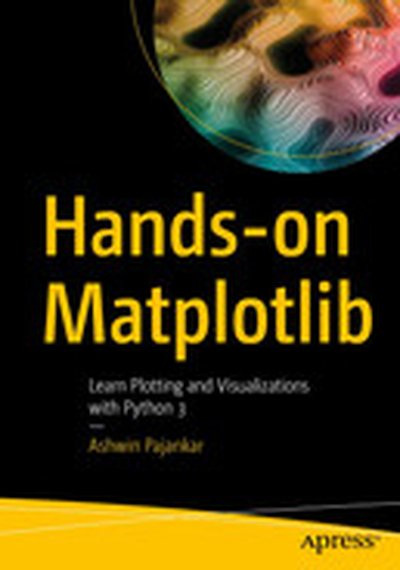
Hands-on Matplotlib: Learn Plotting and Visualizations with Python 3

Learn the core aspects of NumPy, Matplotlib, and Pandas, and use them to write programs with Python 3. This book focuses heavily on various data visualization techniques and will help you acquire expert-level knowledge of working with Matplotlib, a MATLAB-style plotting library for Python programming language that provides an object-oriented API for embedding plots into applications. You'll begin with an introduction to Python 3 and the scientific Python ecosystem. Next, you'll explore NumPy and ndarray data structures, creation routines, and data visualization. You'll examine useful concepts related to style sheets, legends, and layouts, followed by line, bar, and scatter plots. Chapters then cover recipes of histograms, contours, streamplots, and heatmaps, and how to visualize images and audio with pie and polar charts. Moving forward, you'll learn how to visualize with pcolor, pcolormesh, and colorbar, and how to visualize in 3D in Matplotlib, create simple animations, and embed Matplotlib with different frameworks. The concluding chapters cover how to visualize data with Pandas and Matplotlib, Seaborn, and how to work with the real-life data and visualize it. After reading Hands-on Matplotlib you'll be proficient with Matplotlib and able to comfortably work with ndarrays in NumPy and data frames in Pandas. What You'll Learn Understand Data Visualization and Python using Matplotlib Review the fundamental data structures in NumPy and Pandas Work with 3D plotting, visualizations, and animations Visualize images and audio data Who This Book Is For Data scientists, machine learning engineers and software professionals with basic programming skills.

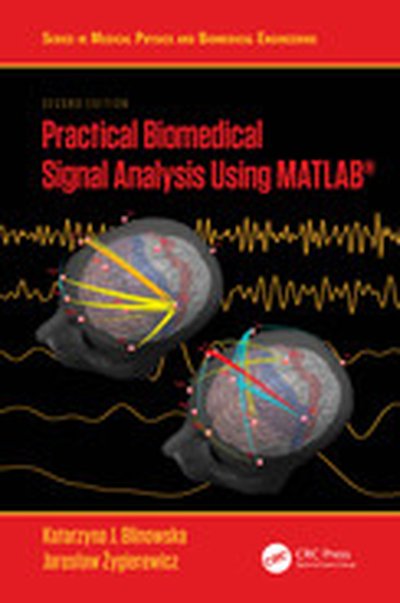
Practical Biomedical Signal Analysis Using MATLAB®, 2nd Edition

Fully updated and with exclusive new content, this second edition presents a coherent treatment of various signal processing methods and applications. The book not only covers the current techniques of biomedical signal processing, but it also offers guidance on which methods are appropriate for a given task and different types of data.

Cryptography and Cryptanalysis in MATLAB: Creating and Programming Advanced Algorithms

Master the essentials of cryptography and cryptanalysis and learn how to put them to practical use. Each chapter of this book starts with an introduction to the concepts on which cryptographic algorithms are based and how they are used in practice, providing fully working examples for each of the algorithms presented. Implementation sections will guide you through the entire process of writing your own applications and programs using MATLAB. Cryptography and Cryptanalysis in MATLAB will serve as your definitive go-to cryptography reference, whether you are a student, professional developer, or researcher, showing how a multitude of cryptographic challenges can be overcome using the powerful tools of MATLAB. What You Will Learn Discover MATLAB’s cryptography functions Work with conversion mechanisms in MATLAB Implement cryptographic algorithms using arithmetic operations Understand the classical, simple cryptosystems that form the basis of modern cryptography Develop fully working solutions (encryption/decryption operations) Study pseudo-random generators and their real-life implementations Utilize hash functions by way of practical examples Implement solutions to defend against practical cryptanalysis methods and attacks Understand asymmetric and symmetric encryption systems and how to use them Leverage visual cryptography, steganography, and chaos-based cryptography Who This Book Is For Those who are new to cryptography/analysis. Some prior exposure to MATLAB recommended.

MATLAB For Dummies, 2nd Edition

Go from total MATLAB newbie to plotting graphs and solving equations in a flash! MATLAB is one of the most powerful and commonly used tools in the STEM field. But did you know it doesn’t take an advanced degree or a ton of computer experience to learn it? MATLAB For Dummies is the roadmap you’ve been looking for to simplify and explain this feature-filled tool. This handy reference walks you through every step of the way as you learn the MATLAB language and environment inside-and-out. Starting with straightforward basics before moving on to more advanced material like Live Functions and Live Scripts, this easy-to-read guide shows you how to make your way around MATLAB with screenshots and newly updated procedures. It includes: A comprehensive introduction to installing MATLAB, using its interface, and creating and saving your first file Fully updated to include the 2020 and 2021 updates to MATLAB, with all-new screenshots and up-to-date procedures Enhanced debugging procedures and use of the Symbolic Math Toolbox Brand new instruction on working with Live Scripts and Live Functions, designing classes, creating apps, and building projects Intuitive walkthroughs for MATLAB’s advanced features, including importing and exporting data and publishing your work Perfect for STEM students and new professionals ready to master one of the most powerful tools in the fields of engineering, mathematics, and computing, MATLAB For Dummies is the simplest way to go from complete newbie to power user faster than you would have thought possible.

MATLAB Recipes: A Problem-Solution Approach

Learn from state-of-the-art examples in robotics, motors, detection filters, chemical processes, aircraft, and spacecraft. With this book you will review contemporary MATLAB coding including the latest MATLAB language features and use MATLAB as a software development environment including code organization, GUI development, and algorithm design and testing. Features now covered include the new graph and digraph classes for charts and networks; interactive documents that combine text, code, and output; a new development environment for building apps; locally defined functions in scripts; automatic expansion of dimensions; tall arrays for big data; the new string type; new functions to encode/decode JSON; handling non-English languages; the new class architecture; the Mocking framework; an engine API for Java; the cloud-based MATLAB desktop; the memoize function; and heatmap charts. MATLAB Recipes: A Problem-Solution Approach, Second Edition provides practical, hands-on code snippets and guidance for using MATLAB to build a body of code you can turn to time and again for solving technical problems in your work. Develop algorithms, test them, visualize the results, and pass the code along to others to create a functional code base for your firm. What You Will Learn Get up to date with the latest MATLAB up to and including MATLAB 2020b Code in MATLAB Write applications in MATLAB Build your own toolbox of MATLAB code to increase your efficiency and effectiveness Who This Book Is For Engineers, data scientists, and students wanting a book rich in examples using MATLAB.