talk-data.com talk-data.com

Topic

MATLAB

numerical_computing programming_language scientific_computing

140

tagged

Activity Trend

1 peak/qtr
2020-Q1 2026-Q1

Activities

140 activities · Newest first

Accelerating MATLAB Performance

The MATLAB® programming environment is often perceived as a platform suitable for prototyping and modeling but not for "serious" applications. One of the main complaints is that MATLAB is just too slow. Accelerating MATLAB Performance aims to correct this perception by describing multiple ways to greatly improve MATLAB program speed. Packed with thousands of helpful tips, it leaves no stone unturned, discussing every aspect of MATLAB. Ideal for novices and professionals alike, the book describes MATLAB performance in a scale and depth never before published. It takes a comprehensive approach to MATLAB performance, illustrating numerous ways to attain the desired speedup. The book covers MATLAB, CPU, and memory profiling and discusses various tradeoffs in performance tuning. It describes both the application of standard industry techniques in MATLAB, as well as methods that are specific to MATLAB such as using different data types or built-in functions. The book covers MATLAB vectorization, parallelization (implicit and explicit), optimization, memory management, chunking, and caching. It explains MATLAB’s memory model and details how it can be leveraged. It describes the use of GPU, MEX, FPGA, and other forms of compiled code, as well as techniques for speeding up deployed applications. It details specific tips for MATLAB GUI, graphics, and I/O. It also reviews a wide variety of utilities, libraries, and toolboxes that can help to improve performance. Sufficient information is provided to allow readers to immediately apply the suggestions to their own MATLAB programs. Extensive references are also included to allow those who wish to expand the treatment of a particular topic to do so easily. Supported by an active website, and numerous code examples, the book will help readers rapidly attain significant reductions in development costs and program run times.
Create Web Charts with D3

Create Web Charts with D3 shows how to convert your data into eye-catching, innovative, animated, and highly interactive browser-based charts. This book is suitable for developers of all experience levels and needs: if you want power and control and need to create data visualization beyond traditional charts, then D3 is the JavaScript library for you. By the end of the book, you will have a good knowledge of all the elements needed to manage data from every possible source, from high-end scientific instruments to Arduino boards, from PHP SQL databases queries to simple HTML tables, and from Matlab calculations to reports in Excel. This book contains content previously published in Beginning JavaScript Charts. Create all kinds of charts using the latest technologies available on browsers Full of step-by-step examples, Create Web Charts with D3 introduces you gradually to all aspects of chart development, from the data source to the choice of which solution to apply. This book provides a number of tools that can be the starting point for any project requiring graphical representations of data, whether using commercial libraries or your own

Optical Fiber Communication Systems with MATLAB® and Simulink® Models, 2nd Edition

Carefully structured to instill practical knowledge of fundamental issues, Optical Fiber Communication Systems with MATLABdescribes the modeling of optically amplified fiber communications systems using MATLAB ® and Simulink ® Models ® and Simulink ®. This lecture-based book focuses on concepts and interpretation, mathematical procedures, and engineering applications, shedding light on device behavior and dynamics through computer modeling. Supplying a deeper understanding of the current and future state of optical systems and networks, this Second Edition: Reflects the latest developments in optical fiber communications technology Includes new and updated case studies, examples, end-of-chapter problems, and MATLAB ® and Simulink ® models Emphasizes DSP-based coherent reception techniques essential to advancement in short- and long-term optical transmission networks Optical Fiber Communication Systems with MATLAB ® and Simulink ® Models, Second Edition is intended for use in university and professional training courses in the specialized field of optical communications. This text should also appeal to students of engineering and science who have already taken courses in electromagnetic theory, signal processing, and digital communications, as well as to optical engineers, designers, and practitioners in industry.

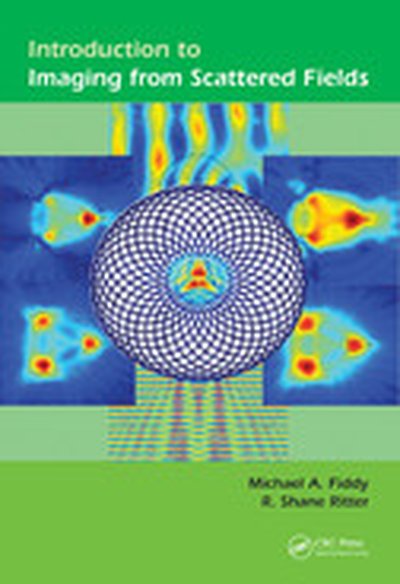
Introduction to Imaging from Scattered Fields

Obtain the Best Estimate of a Strongly Scattering Object from Limited Scattered Field Data Introduction to Imaging from Scattered Fields presents an overview of the challenging problem of determining information about an object from measurements of the field scattered from that object. It covers widely used approaches to recover information about the objects and examines the assumptions made a priori about the object and the consequences of recovering object information from limited numbers of noisy measurements of the scattered fields. The book explores the strengths and weaknesses of using inverse methods for weak scattering. These methods, including Fourier-based signal and image processing techniques, allow more straightforward inverse algorithms to be exploited based on a simple mapping of scattered field data. The authors also discuss their recent approach based on a nonlinear filtering step in the inverse algorithm. They illustrate how to use this algorithm through numerous two-dimensional electromagnetic scattering examples. MATLAB® code is provided to help readers quickly apply the approach to a wide variety of inverse scattering problems. In later chapters of the book, the authors focus on important and often forgotten overarching constraints associated with exploiting inverse scattering algorithms. They explain how the number of degrees of freedom associated with any given scattering experiment can be found and how this allows one to specify a minimum number of data that should be measured. They also describe how the prior discrete Fourier transform (PDFT) algorithm helps in estimating the properties of an object from scattered field measurements. The PDFT restores stability and improves estimates of the object even with severely limited data (provided it is sufficient to meet a criterion based on the number of degrees of freedom). Suitable for graduate students and researchers working on medical, geophysical, defense, and industrial inspection inverse problems, this self-contained book provides the necessary details for readers to design improved experiments and process measured data more effectively. It shows how to obtain the best estimate of a strongly scattering object from limited scattered field data.

MATLAB For Dummies

Plot graphs, solve equations, and write code in a flash! If you work in a STEM field, chances are you'll be using MATLAB on a daily basis. MATLAB is a popular and powerful computational tool and this book provides everything you need to start manipulating and plotting your data. MATLAB has rapidly become the premier data tool, and MATLAB For Dummies is a comprehensive guide to the fundamentals. MATLAB For Dummies guides you through this complex computational language from installation to visualization to automation. Learn MATLAB's language fundamentals including syntax, operators, and data types Understand how to use the most important window in MATLAB - the Command Window Get the basics of linear algebra to get up and running with vectors, matrices, and hyperspace Automate your work with programming scripts and functions Plot graphs in 2D and 3D to visualize your data Includes a handy guide for MATLAB's functions and plotting routines MATLAB is an essential part of the analysis arsenal and MATLAB For Dummies provides clear, thorough guidance to get the most out of your data.

MATLAB Matrix Algebra

" MATLAB is a high-level language and environment for numerical computation, visualization, and programming. Using MATLAB, you can analyze data, develop algorithms, and create models and applications. The language, tools, and built-in math functions enable you to explore multiple approaches and reach a solution faster than with spreadsheets or traditional programming languages, such as C/C++ or Java. MATLAB Matrix Algebra introduces you to the MATLAB language with practical hands-on instructions and results, allowing you to quickly achieve your goals. Starting with a look at symbolic and numeric variables, with an emphasis on vector and matrix variables, you will go on to examine functions and operations that support vectors and matrices as arguments, including those based on analytic parent functions. Computational methods for finding eigenvalues and eigenvectors of matrices are detailed, leading to various matrix decompositions. Applications such as change of bases, the classification of quadratic forms and how to solve systems of linear equations are described, with numerous examples. A section is dedicated to sparse matrices and other types of special matrices. In addition to its treatment of matrices, you will also learn how MATLAB can be used to work with arrays, lists, tables, sequences and sets."

MATLAB Optimization Techniques

MATLAB is a high-level language and environment for numerical computation, visualization, and programming. Using MATLAB, you can analyze data, develop algorithms, and create models and applications. The language, tools, and built-in math functions enable you to explore multiple approaches and reach a solution faster than with spreadsheets or traditional programming languages, such as C/C++ or Java. MATLAB Optimization Techniques introduces you to the MATLAB language with practical hands-on instructions and results, allowing you to quickly achieve your goals. It begins by introducing the MATLAB environment and the structure of MATLAB programming before moving on to the mathematics of optimization. The central part of the book is dedicated to MATLABs Optimization Toolbox, which implements state-of-the-art algorithms for solving multiobjective problems, non-linear minimization with boundary conditions and restrictions, minimax optimization, semi-infinitely constrained minimization and linear and quadratic programming. A wide range of exercises and examples are included, illustrating the most widely used optimization methods.

Digital Signal and Image Processing using MATLAB, Volume 1: Fundamentals, 2nd Edition

This fully revised and updated second edition presents the most important theoretical aspects of Image and Signal Processing (ISP) for both deterministic and random signals. The theory is supported by exercises and computer simulations relating to real applications. More than 200 programs and functions are provided in the MATLABÒ language, with useful comments and guidance, to enable numerical experiments to be carried out, thus allowing readers to develop a deeper understanding of both the theoretical and practical aspects of this subject. This fully revised new edition updates : - the introduction to MATLAB programs and functions as well as the Graphically displaying results for 2D displays - Calibration fundamentals for Discrete Time Signals and Sampling in Deterministic signals - image processing by modifying the contrast - also added are examples and exercises.

MATLAB Differential Equations

MATLAB is a high-level language and environment for numerical computation, visualization, and programming. Using MATLAB, you can analyze data, develop algorithms, and create models and applications. The language, tools, and built-in math functions enable you to explore multiple approaches and reach a solution faster than with spreadsheets or traditional programming languages, such as C/C++ or Java. MATLAB Differential Equations introduces you to the MATLAB language with practical hands-on instructions and results, allowing you to quickly achieve your goals. In addition to giving an introduction to the MATLAB environment and MATLAB programming, this book provides all the material needed to work on differential equations using MATLAB. It includes techniques for solving ordinary and partial differential equations of various kinds, and systems of such equations, either symbolically or using numerical methods (Euler’s method, Heun’s method, the Taylor series method, the Runge–Kutta method,…). It also describes how to implement mathematical tools such as the Laplace transform, orthogonal polynomials, and special functions (Airy and Bessel functions), and find solutions of finite difference equations.

MATLAB Control Systems Engineering

MATLAB is a high-level language and environment for numerical computation, visualization, and programming. Using MATLAB, you can analyze data, develop algorithms, and create models and applications. The language, tools, and built-in math functions enable you to explore multiple approaches and reach a solution faster than with spreadsheets or traditional programming languages, such as C/C++ or Java. MATLAB Control Systems Engineering introduces you to the MATLAB language with practical hands-on instructions and results, allowing you to quickly achieve your goals. In addition to giving an introduction to the MATLAB environment and MATLAB programming, this book provides all the material needed to design and analyze control systems using MATLAB’s specialized Control Systems Toolbox. The Control Systems Toolbox offers an extensive range of tools for classical and modern control design. Using these tools you can create models of linear time-invariant systems in transfer function, zero-pole-gain or state space format. You can manipulate both discrete-time and continuous-time systems and convert between various representations. You can calculate and graph time response, frequency response and loci of roots. Other functions allow you to perform pole placement, optimal control and estimates. The Control System Toolbox is open and extendible, allowing you to create customized M-files to suit your specific applications.

Advanced Electric Drives: Analysis, Control, and Modeling Using MATLAB/Simulink

With nearly two-thirds of global electricity consumed by electric motors, it should come as no surprise that their proper control represents appreciable energy savings. The efficient use of electric drives also has far-reaching applications in such areas as factory automation (robotics), clean transportation (hybrid-electric vehicles), and renewable (wind and solar) energy resource management. Advanced Electric Drives utilizes a physics-based approach to explain the fundamental concepts of modern electric drive control and its operation under dynamic conditions. Author Ned Mohan, a decades-long leader in Electrical Energy Systems (EES) education and research, reveals how the investment of proper controls, advanced MATLAB and Simulink simulations, and careful forethought in the design of energy systems translates to significant savings in energy and dollars. Offering students a fresh alternative to standard mathematical treatments of dq-axis transformation of a-b-c phase quantities, Mohan's unique physics-based approach "visualizes" a set of representative dq windings along an orthogonal set of axes and then relates their currents and voltages to the a-b-c phase quantities. Advanced Electric Drives is an invaluable resource to facilitate an understanding of the analysis, control, and modelling of electric machines. Gives readers a "physical" picture of electric machines and drives without resorting to mathematical transformations for easy visualization Confirms the physics-based analysis of electric drives mathematically Provides readers with an analysis of electric machines in a way that can be easily interfaced to common power electronic converters and controlled using any control scheme Makes the MATLAB/Simulink files used in examples available to anyone in an accompanying website Reinforces fundamentals with a variety of discussion questions, concept quizzes, and homework problems

Discrete and Continuous Simulation

When it comes to discovering glitches inherent in complex systems—be it a railway or banking, chemical production, medical, manufacturing, or inventory control system—developing a simulation of a system can identify problems with less time, effort, and disruption than it would take to employ the original. Advantageous to both academic and industrial practitioners, Discrete and Continuous Simulation: Theory and Practice offers a detailed view of simulation that is useful in several fields of study. This text concentrates on the simulation of complex systems, covering the basics in detail and exploring the diverse aspects, including continuous event simulation and optimization with simulation. It explores the connections between discrete and continuous simulation, and applies a specific focus to simulation in the supply chain and manufacturing field. It discusses the Monte Carlo simulation, which is the basic and traditional form of simulation. It addresses future trends and technologies for simulation, with particular emphasis given to .NET technologies and cloud computing, and proposes various simulation optimization algorithms from existing literature. Includes chapters on input modeling and hybrid simulation Introduces general probability theory Contains a chapter on Microsoft ® Excel ™ and MATLAB ®/Simulink ® Discusses various probability distributions required for simulation Describes essential random number generators Discrete and Continuous Simulation: Theory and Practice defines the simulation of complex systems. This text benefits academic researchers in industrial/manufacturing/systems engineering, computer sciences, operations research, and researchers in transportation, operations management, healthcare systems, and human–machine systems.

Hedge Fund Modelling and Analysis using MATLAB

The second book in Darbyshire and Hampton's Hedge Fund Modelling and Analysis series, Hedge Fund Modelling and Analysis Using MATLAB® takes advantage of the huge library of built-in functions and suite of financial and analytic packages available to MATLAB®. This allows for a more detailed analysis of some of the more computationally intensive and advanced topics, such as hedge fund classification, performance measurement and mean-variance optimisation. Darbyshire and Hampton's first book in the series, Hedge Fund Modelling and Analysis Using Excel & and VBA, is seen as a valuable supplementary text to this book. Starting with an overview of the hedge fund industry the book then looks at a variety of commercially available hedge fund data sources. After covering key statistical techniques and methods, the book discusses mean-variance optimisation, hedge fund classification and performance with an emphasis on risk-adjusted return metrics. Finally, common hedge fund market risk management techniques, such as traditional Value-at-Risk methods, modified extensions and expected shortfall are covered. The book's dedicated website, www.darbyshirehampton.com provides free downloads of all the data and MATLAB® source code, as well as other useful resources. Hedge Fund Modelling and Analysis Using MATLAB® serves as a definitive introductory guide to hedge fund modelling and analysis and will provide investors, industry practitioners and students alike with a useful range of tools and techniques for analysing and estimating alpha and beta sources of return, performing manager ranking and market risk management.

Introduction to Numerical Electrostatics Using MATLAB

Readers are guided step by step through numerous specific problems and challenges, covering all aspects of electrostatics with an emphasis on numerical procedures. The author focuses on practical examples, derives mathematical equations, and addresses common issues with algorithms. Introduction to Numerical Electrostatics contains problem sets, an accompanying web site with simulations, and a complete list of computer codes. Computer source code listings on accompanying web site Problem sets included with book Readers using MATLAB or other simulation packages will gain insight as to the inner workings of these packages, and how to account for their limitations Example computer code is provided in MATLAB Solutions Manual The first book of its kind uniquely devoted to the field of computational electrostatics

Explorations of Mathematical Models in Biology with MATLAB

Explore and analyze the solutions of mathematical models from diverse disciplines As biology increasingly depends on data, algorithms, and models, it has become necessary to use a computing language, such as the user-friendly MATLAB, to focus more on building and analyzing models as opposed to configuring tedious calculations. Explorations of Mathematical Models in Biology with MATLAB provides an introduction to model creation using MATLAB, followed by the translation, analysis, interpretation, and observation of the models. With an integrated and interdisciplinary approach that embeds mathematical modeling into biological applications, the book illustrates numerous applications of mathematical techniques within biology, ecology, and environmental sciences. Featuring a quantitative, computational, and mathematical approach, the book includes: Examples of real-world applications, such as population dynamics, genetics, drug administration, interacting species, and the spread of contagious diseases, to showcase the relevancy and wide applicability of abstract mathematical techniques Discussion of various mathematical concepts, such as Markov chains, matrix algebra, eigenvalues, eigenvectors, first-order linear difference equations, and nonlinear first-order difference equations Coverage of difference equations to model a wide range of real-life discrete time situations in diverse areas as well as discussions on matrices to model linear problems Solutions to selected exercises and additional MATLAB codes Explorations of Mathematical Models in Biology with MATLAB is an ideal textbook for upper-undergraduate courses in mathematical models in biology, theoretical ecology, bioeconomics, forensic science, applied mathematics, and environmental science. The book is also an excellent reference for biologists, ecologists, mathematicians, biomathematicians, and environmental and resource economists.

MATLAB: An Introduction with Applications 5th Edition

More college students use Amos Gilat's MATLAB: An Introduction with Applications than any other MATLAB textbook. This concise book is known for its just-in-time learning approach that gives students information when they need it. The new edition gradually presents the latest MATLAB functionality in detail. Equally effective as a freshmen-level text, self-study tool, or course reference, the book is generously illustrated through computer screen shots and step-by-step tutorials, with abundant and motivating applications to problems in mathematics, science, and engineering.

MATLAB for Neuroscientists, 2nd Edition

MATLAB for Neuroscientists serves as the only complete study manual and teaching resource for MATLAB, the globally accepted standard for scientific computing, in the neurosciences and psychology. This unique introduction can be used to learn the entire empirical and experimental process (including stimulus generation, experimental control, data collection, data analysis, modeling, and more), and the 2nd Edition continues to ensure that a wide variety of computational problems can be addressed in a single programming environment. This updated edition features additional material on the creation of visual stimuli, advanced psychophysics, analysis of LFP data, choice probabilities, synchrony, and advanced spectral analysis. Users at a variety of levels—advanced undergraduates, beginning graduate students, and researchers looking to modernize their skills—will learn to design and implement their own analytical tools, and gain the fluency required to meet the computational needs of neuroscience practitioners. The first complete volume on MATLAB focusing on neuroscience and psychology applications Problem-based approach with many examples from neuroscience and cognitive psychology using real data Illustrated in full color throughout Careful tutorial approach, by authors who are award-winning educators with strong teaching experience

Bistatic SAR/GISAR/FISAR Geometry, Signal Models and Imaging Algorithms

Bistatic radar consists of a radar system which comprises a transmitter and receiver which are separated by a distance comparable to the expected target distance. This book provides a general theoretical description of such bistatic technology in the context of synthetic aperture, inverse synthetic aperture and forward scattering radars from the point of view of analytical geometrical and signal formation as well as processing theory. Signal formation and image reconstruction algorithms are developed with the application of high informative linear frequency and phase code modulating techniques, and numerical experiments that confirm theoretical models are carried out. The authors suggest the program implementation of developed algorithms. A theoretical summary of the latest results in the field of bistatic radars is provided, before applying an analytical geometrical description of scenarios of bistatic synthetic aperture, inverse synthetic aperture and forward scattering radars with cooperative and non-cooperative transmitters. Signal models with linear frequency and phase code modulation are developed, and special phase modulations with C/A (coarse acquisition) and P (precision) of GPS satellite transmitters are considered. The authors suggest Matlab implementations of all geometrical models and signal formation and processing algorithms. Contents 1. Bistatic Synthetic Aperture Radar (BSAR) Survey. 2. BSAR Geometry. 3. BSAR Waveforms and Signal Models. 4. BSAR Image Reconstruction Algorithms. 5. Analytical Geometrical Determination of BSAR Resolution. 6. BSAR Experimental Results. 7. BSAR Matlab Implementation. A general theoretical description of bistatic technology within the scope of synthetic aperture, inverse synthetic aperture and forward scattering radars from the point of view of analytical geometrical and signal formation and processing theory. Signal formation and image reconstruction algorithms are developed in this title, with application of high informative linear frequency and phase code modulating techniques. Numerical experiments that confirm theoretical models are carried out and the authors suggest program implementation for the algorithms developed.

Programming in MATLAB ®

MATLAB ® provides an interactive programming interface for numerical computation and data visualization making it the default framework used for analysis, design and research in many domains of science and industry. Programming in MATLAB ®: A problem-solving approach is intended as an aid to engineers and scientists with no prior programming expertise. The book focuses on the systematic development of practical programming skills through MATLAB language constructs, backed by several well-designed examples and exercises. Designed to be as much a MATLAB reference tool for researchers in varied fields as it is a guide for undergraduate readers, the book builds on the concepts sequentially as it progresses through the chapters. Each chapter is complete, independent of the book's remaining contents. Thus, for teaching purposes, one can suitably the relevant portions.

Accelerating MATLAB with GPU Computing

Beyond simulation and algorithm development, many developers increasingly use MATLAB even for product deployment in computationally heavy fields. This often demands that MATLAB codes run faster by leveraging the distributed parallelism of Graphics Processing Units (GPUs). While MATLAB successfully provides high-level functions as a simulation tool for rapid prototyping, the underlying details and knowledge needed for utilizing GPUs make MATLAB users hesitate to step into it. Accelerating MATLAB with GPUs offers a primer on bridging this gap. Starting with the basics, setting up MATLAB for CUDA (in Windows, Linux and Mac OS X) and profiling, it then guides users through advanced topics such as CUDA libraries. The authors share their experience developing algorithms using MATLAB, C++ and GPUs for huge datasets, modifying MATLAB codes to better utilize the computational power of GPUs, and integrating them into commercial software products. Throughout the book, they demonstrate many example codes that can be used as templates of C-MEX and CUDA codes for readers’ projects. Download example codes from the publisher's website: http://booksite.elsevier.com/9780124080805/ Shows how to accelerate MATLAB codes through the GPU for parallel processing, with minimal hardware knowledge Explains the related background on hardware, architecture and programming for ease of use Provides simple worked examples of MATLAB and CUDA C codes as well as templates that can be reused in real-world projects