talk-data.com talk-data.com

Topic

microsoft-sql-server

9

tagged

Activity Trend

1 peak/qtr
2020-Q1 2026-Q1

Activities

Showing filtered results

Filtering by: Brian Knight ×
Professional Microsoft SQL Server 2014 Administration

Learn to take advantage of the opportunities offered by SQL Server 2014 Microsoft's SQL Server 2014 update means big changes for database administrators, and you need to get up to speed quickly because your methods, workflow, and favorite techniques will be different from here on out. The update's enhanced support of large-scale enterprise databases and significant price advantage mean that SQL Server 2014 will become even more widely adopted across the industry. The update includes new backup and recovery tools, new AlwaysOn features, and enhanced cloud capabilities. In-memory OLTP, Buffer Pool Extensions for SSDs, and a new Cardinality Estimator can improve functionality and smooth out the workflow, but only if you understand their full capabilities. Professional Microsoft SQL Server 2014 is your comprehensive guide to working with the new environment. Authors Adam Jorgensen, Bradley Ball, Ross LoForte, Steven Wort, and Brian Knight are the dream team of the SQL Server community, and they put their expertise to work guiding you through the changes. Improve oversight with better management and monitoring Protect your work with enhanced security features Upgrade performance tuning, scaling, replication, and clustering Learn new options for backup and recovery Professional Microsoft SQL Server 2014 includes a companion website with sample code and efficient automation utilities, plus a host of tips, tricks, and workarounds that will make your job as a DBA or database architect much easier. Stop getting frustrated with administrative issues and start taking control. Professional Microsoft SQL Server 2014 is your roadmap to mastering the update and creating solutions that work.

Professional Microsoft SQL Server 2014 Integration Services

Fill the gap between planning and doing with SSIS 2014 The 2014 release of Microsoft's SQL Server Integration Services provides enhancements for managing extraction, transformation, and load operations, plus expanded in-memory capabilities, improved disaster recovery, increased scalability, and much more. The increased functionality will streamline your ETL processes and smooth out your workflow, but the catch is that your workflow must change. New tools come with new best practices, and Professional Microsoft SQL Server 2014 Integration Services will keep you ahead of the curve. SQL Server MVP Brian Knight is the most respected name in the business, and your ultimate guide to navigating the changes to use Microsoft SQL Server Integration Services 2014 to your utmost advantage. Implement new best practices for effective use of SSIS Work through tutorials for hands-on learning of complex techniques Read case studies that illustrate the more advanced concepts Learn directly from the foremost authority on SSIS SQL Server Integration Services is a complex tool, but it's the lifeblood of your work. You need to know it inside out, and you must understand the full potential of its capabilities in order to use it effectively. You need to make sure the right architecture is in place. Professional Microsoft SQL Server 2014 Integration Services is your roadmap to understanding SSIS on a fundamental level, and setting yourself up for success.

Knight's Microsoft SQL Server 2012 Integration Services 24-Hour Trainer

Book-and-video package gets novices up to speed on Microsoft SQL Server 2012 If you need a practical, hands-on introduction, especially to SQL Server Integration Services (SSIS), this book-and-video package from authority Brian Knight is the perfect solution. Each lesson includes three major components: a description of how each SSIS feature or process works, a tutorial that walks you through the process or technique, and an accompanying video lesson. It's a complete learning package that will give you the confidence you need to start your first SSIS project. Guides novice database administrators and developers who are learning Microsoft SQL Server 2012 and SQL Server Integration Services (SSIS) Provides expert instruction from leading SQL Server authority and author, Brian Knight Includes a book and a video, complete instruction that includes lessons, hands-on tutorials, and video demonstrations by the author Covers the very latest changes and updates in the SQL Server 2012 release Microsoft SQL Server 2012 Integration Services 24-Hour Trainer makes SQL Server 2012 and SSIS much less intimidating. Note: CD-ROM/DVD and other supplementary materials are not included as part of the e-book file, but are available for download after purchase.

Professional Microsoft SQL Server 2012 Administration

An essential how-to guide for experienced DBAs on the most significant product release since 2005! Microsoft SQL Server 2012 will have major changes throughout the SQL Server and will impact how DBAs administer the database. With this book, a team of well-known SQL Server experts introduces the many new features of the most recent version of SQL Server and deciphers how these changes will affect the methods that administrators have been using for years. Loaded with unique tips, tricks, and workarounds for handling the most difficult SQL Server admin issues, this how-to guide deciphers topics such as performance tuning, backup and recovery, scaling and replication, clustering, and security. Serves as a must-have how-to guide on the new features of the 2012 release of Microsoft SQL Server Walks you through ways to manage and monitor SQL Server and automate administration Guides you through SQL Azure for cloud computing, data replication, and data warehouse performance improvements Addresses client-connectivity enhancements, new features that ensure high availability of mission-critical applications, and tighter integration with Excel and SharePoint for data analysis and reporting Highlights major changes to the suite of SQL Server BI tools, including integration, reporting, and analysis services Includes real-world case examples and best practices from Microsoft insiders If you're a database administrator eager to get started with the newest version of SQL Server, then this book is essential reading.

Professional Microsoft SQL Server 2012 Integration Services

An in-depth look at the radical changes to the newest release of SISS Microsoft SQL Server 2012 Integration Services (SISS) builds on the revolutionary database product suite first introduced in 2005. With this crucial resource, you will explore how this newest release serves as a powerful tool for performing extraction, transformation, and load operations (ETL). A team of SQL Server experts deciphers this complex topic and provides detailed coverage of the new features of the 2012 product release. In addition to technical updates and additions, the authors present you with a new set of SISS best practices, based on years of real-world experience that have transpired since the previous edition was published. Details the newest features of the 2012 SISS product release, which is the most significant release since 2005 Addresses the keys to a successful ETL solution, such as using the right enterprise ETL tool and employing the right ETL architecture in order to meet the system requirements Includes additional case studies and tutorial examples to illustrate advanced concepts and techniques Professional Microsoft SQL Server 2012 Integration Services is a valuable resource that meets the demands and high expectations of experienced SSIS professionals.

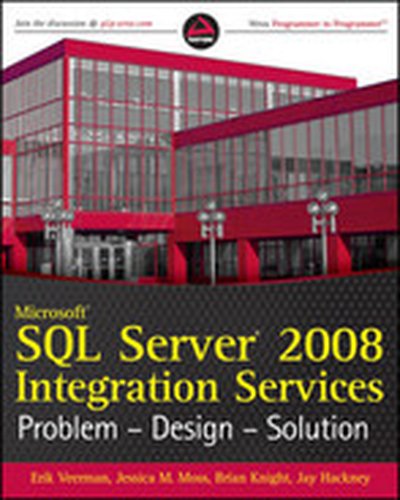
Microsoft® SQL Server® 2008 Integration Services: Problem-Design-Solution

An authoritative guide to designing effective solutions for data cleansing, ETL, and file management with SQL Server 2008 Integration Services SQL Server Integration Services (SSIS) is the leading tool in the data warehouse industry, used for performing extraction, transformation, and load operations. After an overview of SSIS architecture, the authors walk you a series of real-world problems and show various techniques for handling them. Shows you how to design SSIS solutions for data cleansing, ETL and file management Demonstrates how to integrate data from a variety of data sources, Shows how to monitor SSIS performance, Demonstrates how to avoid common pitfalls involved with SSIS deployment Explains how to ensure performance of the deployed solution and effectively handle unexpected system failures and outages The companion Web site provides sample code and database scripts that readers can directly implement This book shows you how to design, build, deploy, and manage solutions to real-world problems that SSIS administrators and developers face day-to-day.

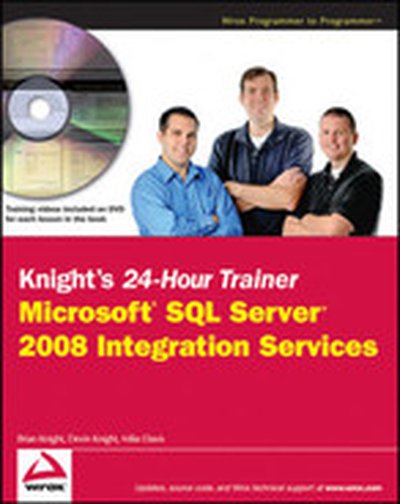
Knight's 24-Hour Trainer: Microsoft® SQL Server® 2008 Integration Services

A unique book-and-video package for Knight's 24-Hour Trainer: Microsoft® SQL Server® 2008 Integration Services If you need a practical, hands-on introduction to Microsoft SQL Server 2008 Integration Services (SSIS), this book and video package from foremost SSIS authority Brian Knight gets you thoroughly up to speed. Each lesson in the book includes three major components: a thorough description of how each SSIS feature or process works; a tutorial that walks you through the process or technique; and a video lesson that demonstrates it. If you take full advantage of this comprehensive package, you will gain enough experience to tackle your first SSIS project with confidence. SQL Server Integration Services 2008 (SSIS) builds on the revolutionary database product suite first introduced by Microsoft in 2005 and is a powerful tool for performing extraction, transformation, and load (ETL) operations essential to data warehousing If you're just learning SSIS, the step-by-step tutorials in this book and video training package will ready you to tackle your own first project Note: CD-ROM/DVD and other supplementary materials are not included as part of eBook file.

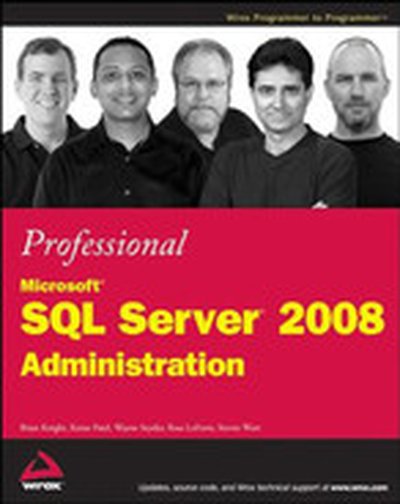
Professional Microsoft® SQL Server® 2008 Administration

SQL Server 2008 represents a sizable jump forward in scalability, performance, and usability for the DBA, developer, and business intelligence (BI) developer. It is no longer unheard of to have 20-terabyte databases running on a SQL Server. SQL Server administration used to just be the job of a database administrator (DBA), but as SQL Server proliferates throughout smaller companies, many developers have begun to act as administrators as well. Additionally, some of the new features in SQL Server are more developer-centric, and poor configuration of these features can result in poor performance. SQL Server now enables you to manage the policies on hundreds of SQL Servers in your environment as if you were managing a single instance. We've provided a comprehensive, tutorial-based book to get you over the learning curve of how to configure and administer SQL Server 2008. Whether you're an administrator or developer using SQL Server, you can't avoid wearing a DBA hat at some point. Developers often have SQL Server on their own workstations and must provide guidance to the administrator about how they'd like the production configured. Oftentimes, they're responsible for creating the database tables and indexes. Administrators or DBAs support the production servers and often inherit the database from the developer. This book is intended for developers, DBAs, and casual users who hope to administer or may already be administering a SQL Server 2008 system and its business intelligence features, such as Integration Services. This book is a professional book, meaning the authors assume that you know the basics about how to query a SQL Server and have some rudimentary concepts of SQL Server already. For example, this book does not show you how to create a database or walk you through the installation of SQL Server using the wizard. Instead, the author of the installation chapter may provide insight into how to use some of the more advanced concepts of the installation. Although this book does not cover how to query a SQL Server database, it does cover how to tune the queries you've already written. The first ten chapters of the book are about administering the various areas of SQL Server, including the developer and business intelligence features. Chapter 1 briefly covers the architecture of SQL Server and the changing role of the DBA. Chapters 2 and 3 dive into best practices on installing and upgrading to SQL Server 2008. Managing your SQL Server database instance is talked about in Chapter 4. This chapter also describes some of the hidden tools you may not even know you have. Once you know how to manage your SQL Server, you can learn in Chapter 5 how to automate many of the redundant monitoring and maintenance tasks. This chapter also discusses best practices on configuring SQL Server Agent. Chapters 6 and 7 cover how to properly administer and automate many tasks inside of the Microsoft business intelligence products, such as Integration Services and Analysis Services. Developers will find that Chapter 8 is very useful, as it covers how to administer the development features, such as SQL CLR. Chapter 9 explains how to secure your SQL Server from many common threats and how to create logins and users. Chapter 10 covers how to create a SQL Server project and do proper change management in promoting your scripts through the various environments. It also covers the Policy-Based Management framework in SQL Server. Chapters 11 through 15 make up the performance tuning part of the book. Chapter 11 discusses how to choose the right hardware configuration for your SQL Server in order to achieve optimal performance. After the hardware and operating system is configured, Chapter 12 shows you how to optimize your SQL Server instance for the best performance. Chapter 13 describes how to monitor your SQL Server instance for problematic issues such as blocking and locking. Chapters 14 and 15 discuss how to optimize the T-SQL that accesses your tables and then how to index your tables appropriately. Chapters 16 through 20 consist of the high-availability chapters of the book. Chapter 16 covers how to use the various forms of replication, while database mirroring is covered in Chapter 17. Classic issues and best practices with backing up and recovering your database are discussed in Chapter 18. Chapter 19 dives deeply into the role of log shipping in your high-availability strategy, and Chapter 20 presents a step-by-step guide to clustering your SQL Server and Windows 2008 server. This edition of the book covers all the same great information we covered in the last book, and we've added loads of new content for SQL Server 2008, which adds numerous new features to improve the DBA's life. In short, the new version of SQL Server focuses on improving your efficiency, the scale of your server, and the performance of your environment, so you can do more in much less time, and with fewer resources and people. This means you can manage many servers at one time using Policy-Based Management, scale your I/O load using compression, and collect valuable information about your environment using data collectors, to name just a few key new features. To follow the examples in this book, you will need to have SQL Server 2008 installed. If you wish to learn how to administer the business intelligence features, you need to have Analysis Services and the Integration Services components installed. You need a machine that can support the minimum hardware requirements to run SQL Server 2008; and you also need the AdventureWorks2008 and AdventureWorksDW2008 databases installed. Instructions for accessing these databases can be found in the ReadMe file on this book's Web site. Some features in this book (especially in the high-availability part) require the Enterprise or Developer Edition of SQL Server. If you do not have this edition, you will still be able to follow through some of the examples in the chapter with Standard Edition.

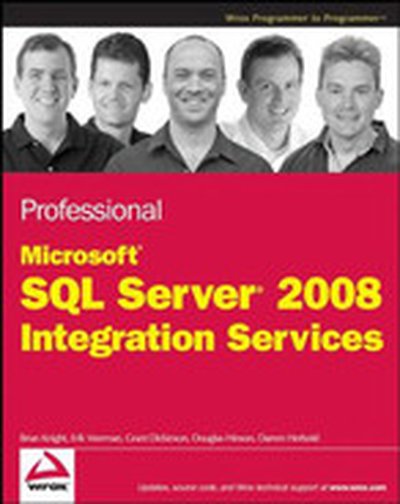
Professional SQL Server® 2008 Integration Services

The new edition of the successful previous version is 25 percent revised and packed with more than 200 pages of new material on the 2008 release of SQL Server Integration Services (SSIS) Renowned author Brian Knight and his expert coauthors show developers how to master the 2008 release of SSIS, which is both more powerful and more complex than ever Case studies and tutorial examples acquired over the three years since the previous edition will contribute to helping illustrate advanced concepts and techniques New chapters include coverage of data warehousing using SSIS, new methods for managing the SSIS platform, and improved techniques for ETL operations