talk-data.com talk-data.com

Topic

microsoft-sql-server

156

tagged

Activity Trend

1 peak/qtr
2020-Q1 2026-Q1

Activities

Showing filtered results

Filtering by: O'Reilly Data Engineering Books ×
Expert Performance Indexing in Azure SQL and SQL Server 2022: Toward Faster Results and Lower Maintenance Both on Premises and in the Cloud

Take a deep dive into perhaps the single most important facet of query performance—indexes—and how to best use them. Newly updated for SQL Server 2022 and Azure SQL, this fourth edition includes new guidance and features related to columnstore indexes, improved and consolidated content on Query Store, deeper content around Intelligent Query Processing, and other updates to help you optimize query execution and make performance improvements to even the most challenging workloads. The book begins with explanations of the types of indexes and how they are stored in a database. Moving further into the book, you will learn how statistics are critical for optimal index usage and how the Index Advisor can assist in reviewing and optimizing index health. This book helps you build a clear understanding of how indexes work, how to implement and use them, and the many options available to tame even the most large and complex workloads. What You Will Learn Properly index row store, columnstore, and memory-optimized tables Make use of Intelligent Query Processing for faster query results Review statistics to understand indexing choices made by the optimizer Apply indexing strategies such as covering indexes, included columns, and index intersections Recognize and remove unnecessary indexes Design effective indexes for full-text, spatial, and XML data types Who This Book Is For Azure SQL and SQL Server administrators and developers who are ready to improve the performance of their database environment by thoughtfully building indexes to speed up queries that matter the most and make a difference to the business
Pro SQL Server 2022 Administration: A Guide for the Modern DBA

Get your daily work done efficiently using this comprehensive guide for SQL Server DBAs that covers all that a practicing database administrator needs to know. Updated for SQL Server 2022, this edition includes coverage of new features, such as Ledger, which provides an immutable record of table history to protect you against malicious data tampering, and integration with cloud providers to support hybrid cloud scenarios. You’ll also find new content on performance optimizations, such as query pan feedback, and security controls, such as new database roles, which are restructured for modern ways of working. Coverage also includes Query Store, installation on Linux, and the use of containerized SQL. Pro SQL Server 2022 Administration takes DBAs on a journey that begins with planning their SQL Server deployment and runs through installing and configuring the instance, administering and optimizing database objects, and ensuring that data issecure and highly available. Readers will learn how to perform advanced maintenance and tuning techniques, and discover SQL Server's hybrid cloud functionality. This book teaches you how to make the most of new SQL Server 2022 functionality, including integration for hybrid cloud scenarios. The book promotes best-practice installation, shows how to configure for scalability and high availability, and demonstrates the gamut of database-level maintenance tasks, such as index maintenance, database consistency checks, and table optimizations. What You Will Learn Integrate SQL Server with Azure for hybrid cloud scenarios Audit changes and prevent malicious data changes with SQL Server’s Ledger Secure and encrypt data to protect against embarrassing data breaches Ensure 24 x 7 x 365 access through high availability and disaster recovery features in today’s hybrid world Use Azure tooling, including Arc, to gain insight into and manage your SQL Server enterprise Install and configure SQL Server on Windows, Linux, and in containers Perform routine maintenance tasks, such as backups and database consistency checks Optimize performance and undertake troubleshooting in the Database Engine Who This Book Is For SQL Server DBAs who manage on-premise installations of SQL Server. This book is also useful for DBAs who wish to learn advanced features, such as integration with Azure, Query Store, Extended Events, and Policy-Based Management, or those who need to install SQL Server in a variety of environments.

SQL Server 2022 Revealed: A Hybrid Data Platform Powered by Security, Performance, and Availability

Know how to use the new capabilities and cloud integrations in SQL Server 2022. This book covers the many innovative integrations with the Azure Cloud that make SQL Server 2022 the most cloud-connected edition ever. The book covers cutting-edge features such as the blockchain-based Ledger for creating a tamper-evident record of changes to data over time that you can rely on to be correct and reliable. You'll learn about built-in Query Intelligence capabilities to help you to upgrade with confidence that your applications will perform at least as fast after the upgrade than before. In fact, you'll probably see an increase in performance from the upgrade, with no code changes needed. Also covered are innovations such as contained availability groups and data virtualization with S3 object storage. New cloud integrations covered in this book include Microsoft Azure Purview and the use of Azure SQL for high availability and disaster recovery. The bookcovers Azure Synapse Link with its built-in capabilities to take changes and put them into Synapse automatically. Anyone building their career around SQL Server will want this book for the valuable information it provides on building SQL skills from edge to the cloud. ​ What You Will Learn Know how to use all of the new capabilities and cloud integrations in SQL Server 2022 Connect to Azure for disaster recovery, near real-time analytics, and security Leverage the Ledger to create a tamper-evident record of data changes over time Upgrade from prior releases and achieve faster and more consistent performance with no code changes Access data and storage in different and new formats, such as Parquet and S3, without moving the data and using your existing T-SQL skills Explore new application scenarios using innovations with T-SQL in areassuch as JSON and time series Who This Book Is For SQL Server professionals who want to upgrade their skills to the latest edition of SQL Server; those wishing to take advantage of new integrations with Microsoft Azure Purview (governance), Azure Synapse (analytics), and Azure SQL (HA and DR); and those in need of the increased performance and security offered by Query Intelligence and the new Ledger

Practical Database Auditing for Microsoft SQL Server and Azure SQL: Troubleshooting, Regulatory Compliance, and Governance

Know how to track changes and key events in your SQL Server databases in support of application troubleshooting, regulatory compliance, and governance. This book shows how to use key features in SQL Server ,such as SQL Server Audit and Extended Events, to track schema changes, permission changes, and changes to your data. You’ll even learn how to track queries run against specific tables in a database. Not all changes and events can be captured and tracked using SQL Server Audit and Extended Events, and the book goes beyond those features to also show what can be captured using common criteria compliance, change data capture, temporal tables, or querying the SQL Server log. You will learn how to audit just what you need to audit, and how to audit pretty much anything that happens on a SQL Server instance. This book will also help you set up cloud auditing with an emphasis on Azure SQL Database, Azure SQL Managed Instance, and AWS RDS SQL Server. You don’t need expensive, third-party auditing tools to make auditing work for you, and to demonstrate and provide value back to your business. This book will help you set up an auditing solution that works for you and your needs. It shows how to collect the audit data that you need, centralize that data for easy reporting, and generate audit reports using built-in SQL Server functionality for use by your own team, developers, and organization’s auditors. What You Will Learn Understand why auditing is important for troubleshooting, compliance, and governance Track changes and key events using SQL Server Audit and Extended Events Track SQL Server configuration changes for governance and troubleshooting Utilize change data capture and temporal tables to track data changes in SQL Server tables Centralize auditing data from all yourdatabases for easy querying and reporting Configure auditing on Azure SQL, Azure SQL Managed Instance, and AWS RDS SQL Server Who This Book Is For Database administrators who need to know what’s changing on their database servers, and those who are making the changes; database-savvy DevOps engineers and developers who are charged with troubleshooting processes and applications; developers and administrators who are responsible for generating reports in support of regulatory compliance reporting and auditing

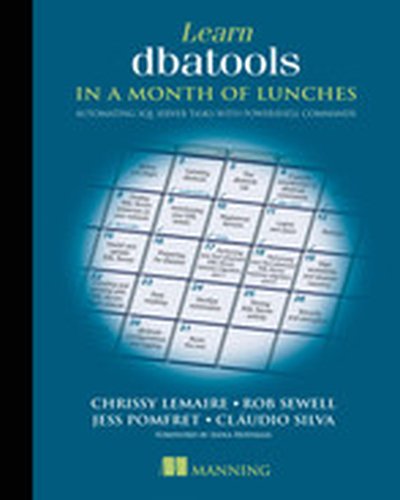
Learn dbatools in a Month of Lunches

If you work with SQL Server, dbatools is a lifesaver. This book will show you how to use this free and open source PowerShell module to automate just about every SQL server task you can imagine—all in just one month! In Learn dbatools in a Month of Lunches you will learn how to: Perform instance-to-instance and customized migrations Automate security audits, tempdb configuration, alerting, and reporting Schedule and monitor PowerShell tasks in SQL Server Agent Bulk-import any type of data into SQL Server Install dbatools in secure environments Written by a group of expert authors including dbatools creator Chrissy LeMaire, Learn dbatools in a Month of Lunches teaches you techniques that will make you more effective—and efficient—than you ever thought possible. In twenty-eight lunchbreak lessons, you’ll learn the most important use cases of dbatools and the favorite functions of its core developers. Stabilize and standardize your SQL server environment, and simplify your tasks by building automation, alerting, and reporting with this powerful tool. About the Technology For SQL Server DBAs, automation is the key to efficiency. Using the open-source dbatools PowerShell module, you can easily execute tasks on thousands of database servers at once—all from the command line. dbatools gives you over 500 pre-built commands, with countless new options for managing SQL Server at scale. There’s nothing else like it. About the Book Learn dbatools in a Month of Lunches teaches you how to automate SQL Server using the dbatools PowerShell module. Each 30-minute lesson introduces a new automation that will make your daily duties easier. Following the expert advice of dbatools creator Chrissy LeMaire and other top community contributors, you’ll learn to script everything from backups to disaster recovery. What's Inside Performing instance-to-instance and customized migrations Automating security audits, best practices, and standardized configurations Administering SQL Server Agent including running PowerShell scripts effectively Bulk-importing many types of data into SQL Server Executing advanced tasks and increasing efficiency for everyday administration About the Reader For DBAs, accidental DBAs, and systems engineers who manage SQL Server. About the Authors Chrissy LeMaire is a GitHub Star and the creator of dbatools. Rob Sewell is a data engineer and a passionate automator. Jess Pomfret and Cláudio Silva are data platform architects. All are Microsoft MVPs. Quotes All SQL Server professionals should learn dbatools. With its combination of knowledge transfer, anecdotes, and hands-on labs, this book is the perfect way. - From the Foreword by Anna Hoffman, Databases Product Management, Microsoft Excellent guide for dbatools with lots of practical tips! Required reading for anyone interested in dbatools. - Ruben Vandeginste, PeopleWare A must-have for any SQL server developer. - Raushan Kumar Jha, Microsoft If you want to automate all vital aspects of SQL Server, wait no more! Learn dbatools in a month, with guidance from the best minds in the business. - Ranjit Sahai, RAM Consulting

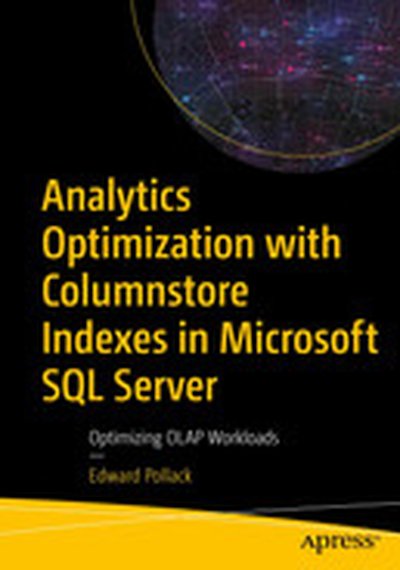
Analytics Optimization with Columnstore Indexes in Microsoft SQL Server: Optimizing OLAP Workloads

Meet the challenge of storing and accessing analytic data in SQL Server in a fast and performant manner. This book illustrates how columnstore indexes can provide an ideal solution for storing analytic data that leads to faster performing analytic queries and the ability to ask and answer business intelligence questions with alacrity. The book provides a complete walk through of columnstore indexing that encompasses an introduction, best practices, hands-on demonstrations, explanations of common mistakes, and presents a detailed architecture that is suitable for professionals of all skill levels. With little or no knowledge of columnstore indexing you can become proficient with columnstore indexes as used in SQL Server, and apply that knowledge in development, test, and production environments. This book serves as a comprehensive guide to the use of columnstore indexes and provides definitive guidelines. You will learn when columnstore indexes shouldbe used, and the performance gains that you can expect. You will also become familiar with best practices around architecture, implementation, and maintenance. Finally, you will know the limitations and common pitfalls to be aware of and avoid. As analytic data can become quite large, the expense to manage it or migrate it can be high. This book shows that columnstore indexing represents an effective storage solution that saves time, money, and improves performance for any applications that use it. You will see that columnstore indexes are an effective performance solution that is included in all versions of SQL Server, with no additional costs or licensing required. What You Will Learn Implement columnstore indexes in SQL Server Know best practices for the use and maintenance of analytic data in SQL Server Use metadata to fully understand the size and shape of data stored in columnstore indexes Employ optimal ways to load, maintain, and delete data from large analytic tables Know how columnstore compression saves storage, memory, and time Understand when a columnstore index should be used instead of a rowstore index Be familiar with advanced features and analytics Who This Book Is For Database developers, administrators, and architects who are responsible for analytic data, especially for those working with very large data sets who are looking for new ways to achieve high performance in their queries, and those with immediate or future challenges to analytic data and query performance who want a methodical and effective solution

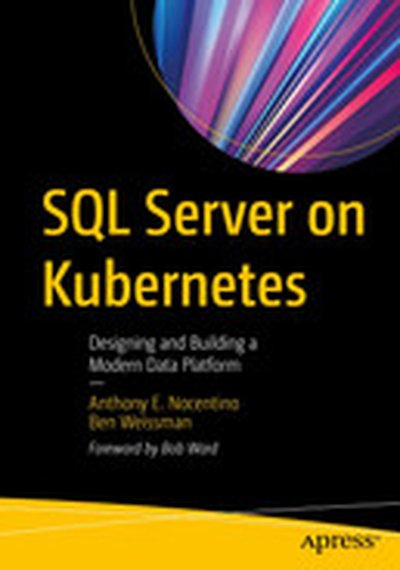
SQL Server on Kubernetes: Designing and Building a Modern Data Platform

Build a modern data platform by deploying SQL Server in Kubernetes. Modern application deployment needs to be fast and consistent to keep up with business objectives and Kubernetes is quickly becoming the standard for deploying container-based applications, fast. This book introduces Kubernetes and its core concepts. Then it shows you how to build and interact with a Kubernetes cluster. Next, it goes deep into deploying and operationalizing SQL Server in Kubernetes, both on premises and in cloud environments such as the Azure Cloud. You will begin with container-based application fundamentals and then go into an architectural overview of a Kubernetes container and how it manages application state. Then you will learn the hands-on skill of building a production-ready cluster. With your cluster up and running, you will learn how to interact with your cluster and perform common administrative tasks. Once you can admin the cluster, you will learn how to deploy applications and SQL Server in Kubernetes. You will learn about high-availability options, and about using Azure Arc-enabled Data Services. By the end of this book, you will know how to set up a Kubernetes cluster, manage a cluster, deploy applications and databases, and keep everything up and running. What You Will Learn Understand Kubernetes architecture and cluster components Deploy your applications into Kubernetes clusters Manage your containers programmatically through API objects and controllers Deploy and operationalize SQL Server in Kubernetes Implement high-availability SQL Server scenarios on Kubernetes using Azure Arc-enabled Data Services Make use of Kubernetes deployments for Big Data Clusters Who This Book Is For DBAs and IT architects who are ready to begin planning their next-generation data platform and want to understand what it takes to run SQL Server in a container in Kubernetes. SQL Server on Kubernetes is an excellent choice for those who want to understand the big picture of why Kubernetes is the next-generation deployment method for SQL Server but also want to understand the internals, or the how, of deploying SQL Server in Kubernetes. When finished with this book, you will have the vision and skills to successfully architect, build and maintain a modern data platform deploying SQL Server on Kubernetes.

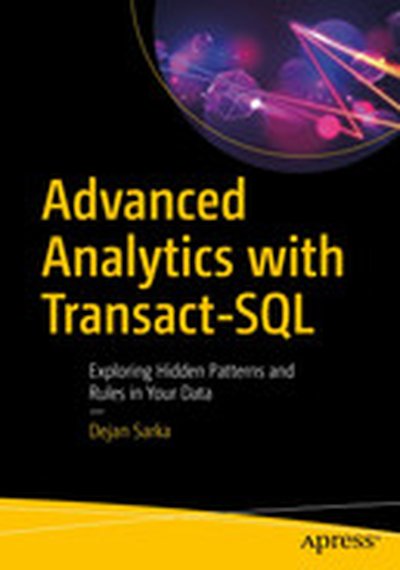
Advanced Analytics with Transact-SQL: Exploring Hidden Patterns and Rules in Your Data

Learn about business intelligence (BI) features in T-SQL and how they can help you with data science and analytics efforts without the need to bring in other languages such as R and Python. This book shows you how to compute statistical measures using your existing skills in T-SQL. You will learn how to calculate descriptive statistics, including centers, spreads, skewness, and kurtosis of distributions. You will also learn to find associations between pairs of variables, including calculating linear regression formulas and confidence levels with definite integration. No analysis is good without data quality. Advanced Analytics with Transact-SQL introduces data quality issues and shows you how to check for completeness and accuracy, and measure improvements in data quality over time. The book also explains how to optimize queries involving temporal data, such as when you search for overlapping intervals. More advanced time-oriented information in the book includes hazard and survival analysis. Forecasting with exponential moving averages and autoregression is covered as well. Every web/retail shop wants to know the products customers tend to buy together. Trying to predict the target discrete or continuous variable with few input variables is important for practically every type of business. This book helps you understand data science and the advanced algorithms use to analyze data, and terms such as data mining, machine learning, and text mining. Key to many of the solutions in this book are T-SQL window functions. Author Dejan Sarka demonstrates efficient statistical queries that are based on window functions and optimized through algorithms built using mathematical knowledge and creativity. The formulas and usage of those statistical procedures are explained so you can understand and modify the techniques presented. T-SQL is supported in SQL Server,Azure SQL Database, and in Azure Synapse Analytics. There are so many BI features in T-SQL that it might become your primary analytic database language. If you want to learn how to get information from your data with the T-SQL language that you already are familiar with, then this is the book for you. What You Will Learn Describe distribution of variables with statistical measures Find associations between pairs of variables Evaluate the quality of the data you are analyzing Perform time-series analysis on your data Forecast values of a continuous variable Perform market-basket analysis to predict customer purchasing patterns Predict target variable outcomes from one or more input variables Categorize passages of text by extracting and analyzing keywords Who This Book Is For Database developers and database administrators who want to translate their T-SQL skills into the world of business intelligence (BI) and data science. For readers who want to analyze large amounts of data efficiently by using their existing knowledge of T-SQL and Microsoft’s various database platforms such as SQL Server and Azure SQL Database. Also for readers who want to improve their querying by learning new and original optimization techniques.

Azure Data Factory by Example: Practical Implementation for Data Engineers

Data engineers who need to hit the ground running will use this book to build skills in Azure Data Factory v2 (ADF). The tutorial-first approach to ADF taken in this book gets you working from the first chapter, explaining key ideas naturally as you encounter them. From creating your first data factory to building complex, metadata-driven nested pipelines, the book guides you through essential concepts in Microsoft’s cloud-based ETL/ELT platform. It introduces components indispensable for the movement and transformation of data in the cloud. Then it demonstrates the tools necessary to orchestrate, monitor, and manage those components. The hands-on introduction to ADF found in this book is equally well-suited to data engineers embracing their first ETL/ELT toolset as it is to seasoned veterans of Microsoft’s SQL Server Integration Services (SSIS). The example-driven approach leads you through ADF pipeline construction from the ground up, introducing important ideas and making learning natural and engaging. SSIS users will find concepts with familiar parallels, while ADF-first readers will quickly master those concepts through the book’s steady building up of knowledge in successive chapters. Summaries of key concepts at the end of each chapter provide a ready reference that you can return to again and again. What You Will Learn Create pipelines, activities, datasets, and linked services Build reusable components using variables, parameters, and expressions Move data into and around Azure services automatically Transform data natively using ADF data flows and Power Query data wrangling Master flow-of-control and triggers for tightly orchestrated pipeline execution Publish and monitor pipelines easily and with confidence Who This Book Is For Data engineers and ETL developers taking their first steps in Azure Data Factory, SQL Server Integration Services users making the transition toward doing ETL in Microsoft’s Azure cloud, and SQL Server database administrators involved in data warehousing and ETL operations

High Performance SQL Server: Consistent Response for Mission-Critical Applications

Design and configure SQL Server instances and databases in support of high-throughput, mission-critical applications providing consistent response times in the face of variations in numbers of users and query volumes. In this new edition, with over 100 pages of additional content, every original chapter has been updated for SQL Server 2019, and the book also includes two new chapters covering SQL Server on Linux and Intelligent Query Processing. This book shows you how to configure SQL Server and design your databases to support a given instance and workload. You will learn advanced configuration options, in-memory technologies, storage and disk configuration, and more, all aimed toward enabling your desired application performance and throughput. Configuration doesn’t stop with implementation. Workloads change over time, and other impediments can arise to thwart desired performance. High Performance SQL Server covers monitoring and troubleshooting to aid you in detecting and fixing production performance problems and minimizing application outages. You will learn about a variety of tools, ranging from the traditional wait analysis methodology to the query store or indexing, and you will learn how improving performance is an iterative process. This book is an excellent complement to query performance tuning books and provides the other half of what you need to know by focusing on configuring the instances on which mission-critical queries are executed. What You Will Learn Understand SQL Server's database engine and how it processes queries Configure instances in support of high-throughput applications Provide consistent response times to varying user numbers and query volumes Design databases for high-throughput applications with focus on performance Record performance baselines and monitor SQL Server instances against them Troubleshot and fix performance problems Who This Book Is For SQL Server database administrators, developers, and data architects. The book is also of use to system administrators who are managing and are responsible for the physical servers on which SQL Server instances are run.

SQL Server 2019 AlwaysOn: Supporting 24x7 Applications with Continuous Uptime

Get a fast start to using AlwaysOn, the SQL Server solution to high-availability and disaster recovery. This third edition is newly-updated to cover the 2019 editions of both SQL Server and Windows Server and includes strong coverage of implementing AlwaysOn Availability Groups on both Windows and Linux operating systems. The book provides a solid and accurate understanding of how to implement systems requiring consistent and continuous uptime, as well as how to troubleshoot those systems in order to keep them running and reliable. This edition is updated to account for all new major functionality and also includes coverage of implementing atypical configurations, such as clusterless and domain-independent Availability Groups, distributed Availability Groups, and implementing Availability Groups on Azure. The book begins with an introduction to high-availability and disaster recovery concepts such as Recovery Point Objectives (RPOs), Recovery Time Objectives (RTOs), availability levels, and the cost of downtime. You’ll then move into detailed coverage of implementing and configuring the AlwaysOn feature set in order to meet the business objectives set by your organization. Content includes coverage on implementing clusters, building AlwaysOn failover clustered instances, and configuring AlwaysOn Availability Groups. SQL Server 2019 AlwaysOn is chock full of real-world advice on how to build and configure the most appropriate topology to meet the high-availability and disaster recovery requirements you are faced with, as well as how to use AlwaysOn Availability Groups to scale-out read-only workloads. This is a practical and hands-on book to get you started quickly in using one of the most talked-about SQL Server feature sets. What You Will Learn Understand high availability and disaster recovery in SQL Server 2019 Build and configure a Windows Cluster in Windows Server 2019 Create and configure an AlwaysOn failover clustered instance Implement AlwaysOn Availability Groups and appropriately configure them Implement AlwaysOn Availability Groups on Linux servers Configure Availability Groups on Azure IaaS Administer AlwaysOn technologies post implementation Understand typical configurations, such as clusterless and distributed Availability Groups Who This Book Is For For Microsoft SQL Server database administrators who interested in growing their knowledge and skills in SQL Server’s high-availability and disaster recovery feature set.

Azure SQL Revealed: A Guide to the Cloud for SQL Server Professionals

Access detailed content and examples on Azure SQL, a set of cloud services that allows for SQL Server to be deployed in the cloud. This book teaches the fundamentals of deployment, configuration, security, performance, and availability of Azure SQL from the perspective of these same tasks and capabilities in SQL Server. This distinct approach makes this book an ideal learning platform for readers familiar with SQL Server on-premises who want to migrate their skills toward providing cloud solutions to an enterprise market that is increasingly cloud-focused. If you know SQL Server, you will love this book. You will be able to take your existing knowledge of SQL Server and translate that knowledge into the world of cloud services from the Microsoft Azure platform, and in particular into Azure SQL. This book provides information never seen before about the history and architecture of Azure SQL. Author Bob Ward is a leading expert with access to and support fromthe Microsoft engineering team that built Azure SQL and related database cloud services. He presents powerful, behind-the-scenes insights into the workings of one of the most popular database cloud services in the industry. What You Will Learn Know the history of Azure SQL Deploy, configure, and connect to Azure SQL Choose the correct way to deploy SQL Server in Azure Migrate existing SQL Server instances to Azure SQL Monitor and tune Azure SQL’s performance to meet your needs Ensure your data and application are highly available Secure your data from attack and theft Who This Book Is For This book is designed to teach SQL Server in the Azure cloud to the SQL Server professional. Anyone who operates, manages, or develops applications for SQL Server will benefit from this book. Readers will be able to translate their current knowledge of SQL Server—especially of SQL Server 2019—directly to Azure. This book is ideal for database professionals looking to remain relevant as their customer base moves into the cloud.

Hands-On SQL Server 2019 Analysis Services

"Hands-On SQL Server 2019 Analysis Services" is a comprehensive guide to mastering data analysis using SQL Server Analysis Services (SSAS). This book provides you with step-by-step directions on creating and deploying tabular and multi-dimensional models, as well as using tools like MDX and DAX to query and analyze data. By the end, you'll be confident in designing effective data models for business analytics. What this Book will help me do Understand how to create and optimize both tabular and multi-dimensional models with SQL Server Analysis Services. Learn to use MDX and DAX to query and manipulate your data for enhanced insights. Integrate SSAS models with visualization tools like Excel and Power BI for effective decision-making. Implement robust security measures to safeguard data within your SSAS deployments. Master scaling and optimizing best practices to ensure high-performance analytical models. Author(s) Steven Hughes is a data analytics expert with extensive experience in business intelligence and SQL Server technologies. With years of practical experience in using SSAS and teaching data professionals, Steven has a knack for breaking down complex concepts into actionable knowledge. His approach to writing involves combining clear explanations with real-world examples. Who is it for? This book is intended for BI professionals, data analysts, and database developers who want to gain hands-on expertise with SQL Server 2019 Analysis Services. Ideal readers should have familiarity with database querying and a basic understanding of business intelligence tools like Power BI and Excel. It's perfect for those aiming to refine their skills in modeling and deploying robust analytics solutions.

SQL Server Data Automation Through Frameworks: Building Metadata-Driven Frameworks with T-SQL, SSIS, and Azure Data Factory

Learn to automate SQL Server operations using frameworks built from metadata-driven stored procedures and SQL Server Integration Services (SSIS). Bring all the power of Transact-SQL (T-SQL) and Microsoft .NET to bear on your repetitive data, data integration, and ETL processes. Do this for no added cost over what you’ve already spent on licensing SQL Server. The tools and methods from this book may be applied to on-premises and Azure SQL Server instances. The SSIS framework from this book works in Azure Data Factory (ADF) and provides DevOps personnel the ability to execute child packages outside a project—functionality not natively available in SSIS. Frameworks not only reduce the time required to deliver enterprise functionality, but can also accelerate troubleshooting and problem resolution. You'll learn in this book how frameworks also improve code quality by using metadata to drive processes. Much of the work performed by data professionals can be classified as “drudge work”—tasks that are repetitive and template-based. The frameworks-based approach shown in this book helps you to avoid that drudgery by turning repetitive tasks into "one and done" operations. Frameworks as described in this book also support enterprise DevOps with built-in logging functionality. What You Will Learn Create a stored procedure framework to automate SQL process execution Base your framework on a working system of stored procedures and execution logging Create an SSIS framework to reduce the complexity of executing multiple SSIS packages Deploy stored procedure and SSIS frameworks to Azure Data Factory environments in the cloud Who This Book Is For Database administrators and developers who are involved in enterprise data projects built around stored procedures and SQL Server Integration Services (SSIS). Readersshould have a background in programming along with a desire to optimize their data efforts by implementing repeatable processes that support enterprise DevOps.

SQL Server 2019 Administrator's Guide - Second Edition

SQL Server 2019 Administrator's Guide provides a complete walkthrough of administering, managing, and optimizing SQL Server 2019. You'll gain the expertise needed to implement secure and efficient database solutions suitable for enterprise-scale environments. This book systematically explores the tools, techniques, and best practices essential to mastering SQL Server 2019. What this Book will help me do Optimize database queries and design using indexing techniques to resolve performance issues effectively. Implement robust backup and recovery mechanisms following advanced security policies. Utilize SQL Server 2019 tools for automation in monitoring, maintaining, and managing health checks. Integrate SQL Server with Azure for Big Data processing and scalability. Set up highly available and stable Always-On environments for enterprise databases. Author(s) Marek Chmel and Vladimír Mužný are seasoned database administrators with years of hands-on experience in SQL Server and database infrastructure. Their collaborative writing approach emphasizes real-world scenarios and examples that make technical concepts accessible. With accolades in professional database education and a passion for teaching, they provide a guiding hand through complex database subjects. Who is it for? This book is ideal for database administrators, developers, and IT professionals who seek to enhance their expertise with SQL Server 2019. Readers should have a basic understanding of database principles and familiarity with prior versions of SQL Server. Whether you're stepping into advanced administration or seeking to fine-tune your enterprise database infrastructure, this book is tailored for you.

SQL Server 2019 Administration Inside Out

Conquer SQL Server 2019 administration–from the inside out Dive into SQL Server 2019 administration–and really put your SQL Server DBA expertise to work. This supremely organized reference packs hundreds of timesaving solutions, tips, and workarounds–all you need to plan, implement, manage, and secure SQL Server 2019 in any production environment: on-premises, cloud, or hybrid. Six experts thoroughly tour DBA capabilities available in SQL Server 2019 Database Engine, SQL Server Data Tools, SQL Server Management Studio, PowerShell, and Azure Portal. You’ll find extensive new coverage of Azure SQL, big data clusters, PolyBase, data protection, automation, and more. Discover how experts tackle today’s essential tasks–and challenge yourself to new levels of mastery. Explore SQL Server 2019’s toolset, including the improved SQL Server Management Studio, Azure Data Studio, and Configuration Manager Design, implement, manage, and govern on-premises, hybrid, or Azure database infrastructures Install and configure SQL Server on Windows and Linux Master modern maintenance and monitoring with extended events, Resource Governor, and the SQL Assessment API Automate tasks with maintenance plans, PowerShell, Policy-Based Management, and more Plan and manage data recovery, including hybrid backup/restore, Azure SQL Database recovery, and geo-replication Use availability groups for high availability and disaster recovery Protect data with Transparent Data Encryption, Always Encrypted, new Certificate Management capabilities, and other advances Optimize databases with SQL Server 2019’s advanced performance and indexing features Provision and operate Azure SQL Database and its managed instances Move SQL Server workloads to Azure: planning, testing, migration, and post-migration

Refactoring Legacy T-SQL for Improved Performance: Modern Practices for SQL Server Applications

Breathe new life into older applications by refactoring T-SQL queries and code using modern techniques. This book shows you how to significantly improve the performance of older applications by finding common anti-patterns in T-SQL code, then rewriting those anti-patterns using new functionality that is supported in current versions of SQL Server, including SQL Server 2019. The focus moves through the different types of database objects and the code used to create them, discussing the limitations and anti-patterns commonly found for each object type in your database. Legacy code isn’t just found in queries and external applications. It’s also found in the definitions of underlying database objects such as views and tables. This book helps you quickly find problematic code throughout the database and points out where and how modern solutions can replace older code, thereby making your legacy applications run faster and extending their lifetimes. Author Lisa Bohm explains the logic behind each anti-pattern, helping you understand why each pattern is a problem and showing how it can be avoided. Good coding habits are discussed, including guidance on topics such as readability and maintainability. What You Will Learn Find specific areas in code to target for performance gains Identify pain points quickly and understand why they are problematic Rewrite legacy T-SQL to reduce or eliminate hidden performance issues Write modern code with an awareness of readability and maintainability Recognize and correlate T-SQL anti-patterns with techniques for better solutions Make a positive impact on application user experience in your organization Who This Book Is For Database administrators or developers who maintain older code, those frustrated with complaints about slow codewhen there is so much of it to fix, and those who want a head start in making a positive impact on application user experience in their organization

Expert Performance Indexing in SQL Server 2019: Toward Faster Results and Lower Maintenance

Take a deep dive into perhaps the single most important facet of good performance: indexes, and how to best use them. Recent updates to SQL Server have made it possible to create indexes in situations that in the past would have prevented their use. Other improvements covered in this book include new dynamic management views, the ability to pause and resume index maintenance, and the ability to more easily recover from failures during index creation and maintenance operations. This new edition also brings new content around the indexing of columnstore and in-memory tables, showing how these new types of tables and the queries that execute against them can also benefit from good indexing practices. The book begins with explanations of the types of indexes and how they are stored in databases. Moving deeper into the topic, and further into the book, you will look at the statistics that are accumulated both by indexes and on indexes. You will better understand what indexes are doing in the database and what can be done to mitigate and improve their effect on performance. You will get a look at the Index Advisor now available in Azure SQL Database, and learn how to review and maintain the health of your indexes. The final chapters present a guided tour through a number of scenarios showing approaches you can take to investigate, mitigate, and improve the performance of your database. What You Will Learn Properly index row store, columnstore, and in-memory tables Review statistics to understand indexing choices made by the optimizer Apply indexing strategies such as covering indexes, included columns, and index intersections Recognize and remove unnecessary indexes Design effective indexes for full-text, spatial, and XML data types Manage the big picture: Encompass all indexes in adatabase, and all database instances on a server Who This Book Is For Database administrators and developers who are ready to lift the performance of their database environment by thoughtfully building indexes to speed up queries that matter the most and make a difference to the business
Expert T-SQL Window Functions in SQL Server 2019: The Hidden Secret to Fast Analytic and Reporting Queries

Become an expert who can use window functions to solve T-SQL query problems. Replace slow cursors and self-joins with queries that are easy to write and perform better. This new edition provides expanded examples, including a chapter from the world of sports, and covers the latest performance enhancements through SQL Server 2019. Window functions are useful in analytics and business intelligence reporting. They came into full blossom with SQL Server 2012, yet they are not as well known and used as often as they ought to be. This group of functions is one of the most notable developments in SQL, and this book shows how every developer and DBA can benefit from their expressive power in solving day-to-day business problems. Once you begin using window functions, such as ROW_NUMBER and LAG, you will discover many ways to use them. You will approach SQL Server queries in a different way, thinking about sets of data instead of individual rows. Your querieswill run faster, be easier to write, and easier to deconstruct, maintain, and enhance in the future. Just knowing and using these functions is not enough. You also need to understand how to tune the queries. Expert T-SQL Window Functions in SQL Server clearly explains how to get the best performance. The book also covers the rare cases when older techniques are the best bet. What You Will Learn Solve complex query problems without cumbersome self-joins that run slowly and are difficult to read Create sliding windows in a result set for computing such as running totals and moving averages Return aggregate and detail data simultaneously from the same SELECT statement Compute lag and lead and other values that access data from multiple rows in a result set Understand the OVER clause syntax and how to control the window Avoid framing errors that can lead to unexpected results Who This Book Is For Anyone who writes T-SQL queries, including database administrators, developers, business analysts, and data scientists. Before reading this book, you should understand how to join tables, write WHERE clauses, and build aggregate queries.

Pro SQL Server 2019 Administration: A Guide for the Modern DBA

Use this comprehensive guide for the SQL Server DBA, covering all that practicing database administrators need to know to get their daily work done. Updated for SQL Server 2019, this edition includes coverage of new features such as Memory-optimized TempDB Metadata, and Always Encrypted with Secure Enclaves. Other new content includes coverage of Query Store, resumable index operations, installation on Linux, and containerized SQL. Pro SQL Server 2019 Administration takes DBAs on a journey that begins with planning their SQL Server deployment and runs through installing and configuring the instance, administering and optimizing database objects, and ensuring that data is secure and highly available. Finally, readers will learn how to perform advanced maintenance and tuning techniques. This book teaches you to make the most of new SQL Server 2019 functionality, including Data Discovery and Classification. The bookpromotes best-practice installation, shows how to configure for scalability and high workloads, and demonstrates the gamut of database-level maintenance tasks such as index maintenance, database consistency checks, and table optimizations. What You Will Learn Install and configure SQL Server on Windows through the GUI and with PowerShell Install and configure SQL Server on Linux and in Containers Optimize tables through in-memory OLTP, table partitioning, and the creation of indexes Secure and encrypt data to protect against embarrassing data breaches Ensure 24x7x365 access through high-availability and disaster recovery features Back up your data to ensure against loss, and recover data when needed Perform routine maintenance tasks such as database consistency checks Troubleshoot and solve performance problems inSQL queries and in the database engine Who This Book Is For SQL Server DBAs who manage on-premise installations of SQL Server. This book is also useful for DBAs who wish to learn advanced features such as Query Store, Extended Events, Distributed Replay, and Policy-Based Management, or those who need to install SQL Server in a variety of environments.