talk-data.com talk-data.com

Topic

MySQL

relational_database open_source sql

153

tagged

Activity Trend

27 peak/qtr
2020-Q1 2026-Q1

Activities

Showing filtered results

Filtering by: O'Reilly Data Engineering Books ×
Learning PHP & MySQL, 2nd Edition

PHP and MySQL are quickly becoming the de facto standard for rapid development of dynamic, database-driven web sites. This book is perfect for newcomers to programming as well as hobbyists who are intimidated by harder-to-follow books. With concepts explained in plain English, the new edition starts with the basics of the PHP language, and explains how to work with MySQL, the popular open source database. You then learn how to put the two together to generate dynamic content. If you come from a web design or graphics design background and know your way around HTML, Learning PHP & MySQL is the book you've been looking for. The content includes: PHP basics such as strings and arrays, and pattern matching A detailed discussion of the variances in different PHP versions MySQL data fundamentals like tables and statements Information on SQL data access for language A new chapter on XHTML Error handling, security, HTTP authentication, and more Learning PHP & MySQL explains everything from fundamental concepts to the nuts and bolts of performing specific tasks. As part of O'Reilly's bestselling Learning series, the book is an easy-to-use resource designed specifically for beginners. It's a launching pad for future learning, providing you with a solid foundation for more advanced development.
MySQL Pocket Reference, 2nd Edition

To help you be more efficient in your work, this handy pocket reference gives you instant reminders on how to use important MySQL functions, especially in conjunction with key parts of the LAMP open source infrastructure. This powerful database system is so rich in features that no administrator or programmer can stay familiar with all of them. MySQL Pocket Reference is an ideal on-the-job companion, well organized to help you find and adapt the statements you need -- quickly. Updated for the latest versions of this popular database, this edition covers many complex features that have been added to MySQL 5.0 and 5.1, including a section dedicated to stored procedures and triggers. After a brief introduction on installation and initial setup, the book explains: You don't have time to stop and thumb through an exhaustive reference when you're hard at work. This portable and affordable guide is small enough to fit into your pocket, and gives you a convenient reference that you can consult anywhere. When you reach a sticking point and need to get to a solution quickly, the How to configure MySQL, such as setting the root password MySQL data types, including numerics, strings, dates, and complex types SQL syntax, commands, data types, operators, and functions Arithmetic, comparison and logical operators Aggregate and general functions Stored procedures and triggers, including procedure definition, procedure calls, procedure management, cursors, and triggers MySQL Pocket Reference is the book you want to have.

SQL for MySQL Developers: A Comprehensive Tutorial and Reference

The Most Complete and Practical Guide to MySQL Version 5’s Powerful SQL Dialect MySQL version 5 offers a SQL dialect with immense power. In SQL for MySQL Developers, Rick F. van der Lans helps you master this version ofSQL and take advantage of its full potential. Using case study examplesand hands-on exercises, van der Lans illuminates every key concept,technique, and statement–including advanced features that make iteasier to create even the most complex statements and programs. Drawing on decades of experience as an SQL standards team member and enterprise consultant, he reveals exactly why MySQL’s dialect works as it does–and how to get the most out of it. You’ll gain powerful insight into everything from basic queries to stored procedures, transactions to data security. Whether you’re a programmer, Web developer, analyst, DBA, or database user, this book can take you from “apprentice” to true SQL expert. If you’ve used SQL in older versions of MySQL, you’ll become dramatically more effective–and if you’re migrating from other database platforms, you’ll gain practical mastery fast. Coverage includes Writing queries, including joins, functions, and subqueries Updating data Creating tables, views, and other database objects Specifying keys and other integrity constraints Improving efficiency with indexes Enforcing security via passwords and privileges Embedding SQL statements within PHP programs Building stored procedures and triggers Using transactions, locking, rollback, and isolation levels Utilizing MySQL’s catalog All of the book’s sample programs are available for download from www.r20.nl. About the Author Rick F. van der Lans is author of the classic Introduction to SQL, the definitive SQL guide that database developers have relied on for more than 20 years. He is a consultant, author, and lecturer specializing in database technology, development tools, data warehousing, and XML. As managing director of the Netherlands-based R20/Consultancy, he has advised many large companies on defining their IT architectures. He chairs the European Meta Data Conference, and writes columns for several magazines. Contents About the Author Preface PART I Introduction CHAPTER 1 Introduction to MySQL CHAPTER 2 The Tennis Club Sample Database CHAPTER 3 Installing the Software CHAPTER 4 SQL in a Nutshell PART II Querying and Updating Data CHAPTER 5 SELECT Statement: Common Elements CHAPTER 6 SELECT Statements, Table Expressions, and Subqueries CHAPTER 7 SELECT Statement:The FROM Clause CHAPTER 8 SELECT Statement: The WHERE Clause CHAPTER 9 SELECT Statement: SELECT Clause and Aggregation Functions CHAPTER 10 SELECT Statement: The GROUP BY Clause CHAPTER 11 SELECT Statement: The HAVING Clause CHAPTER 12 SELECT Statement: The ORDER BY Clause CHAPTER 13 SELECT Statement: The LIMIT Clause CHAPTER 14 Combining Table Expressions CHAPTER 15 The User Variable and the SET Statement CHAPTER 16 The HANDLER Statement CHAPTER 17 Updating Tables CHAPTER 18 Loading and Unloading Data CHAPTER 19 Working with XML Documents PART III Creating Database Objects CHAPTER 20 Creating Tables CHAPTER 21 Specifying Integrity Constraints CHAPTER 22 Character Sets and Collations CHAPTER 23 The ENUM and SET Types CHAPTER 24 Changing and Dropping Tables CHAPTER 25 Using Indexes CHAPTER 26 Views CHAPTER 27 Creating Databases CHAPTER 28 Users and Data Security CHAPTER 29 Statements for Table Maintenance CHAPTER 30 The SHOW, DESCRIBE, and HELP Statements PART IV Procedural Database Objects CHAPTER 31 Stored Procedures CHAPTER 32 Stored Functions CHAPTER 33 Triggers CHAPTER 34 Events PART V Programming with SQL CHAPTER 35 MySQL and PHP CHAPTER 36 Dynamic SQL with Prepared Statement CHAPTER 37 Transactions and Multiuser Usage APPENDIX A Syntax of SQL APPENDIX B Scalar Functions APPENDIX C System Variables APPENDIX D Bibliography Index

Understanding MySQL Internals

Although MySQL's source code is open in the sense of being publicly available, it's essentially closed to you if you don't understand it. In this book, Sasha Pachev -- a former member of the MySQL Development Team -- provides a comprehensive tour of MySQL 5 that shows you how to figure out the inner workings of this powerful database. You'll go right to heart of the database to learn how data structures and convenience functions operate, how to add new storage engines and configuration options, and much more. The core of Understanding MySQL Internals begins with an Architecture Overview that provides a brief introduction of how the different components of MySQL work together. You then learn the steps for setting up a working compilable copy of the code that you can change and test at your pleasure. Other sections of the book cover: Core server classes, structures, and API The communication protocol between the client and the server Configuration variables, the controls of the server; includes a tutorial on how to add your own Thread-based request handling -- understanding threads and how they are used in MySQL An overview of MySQL storage engines The storage engine interface for integrating third-party storage engines The table lock manager The parser and optimizer for improving MySQL's performance Integrating a transactional storage engine into MySQL The internals of replication Understanding MySQL Internals provides unprecedented opportunities for developers, DBAs, database application programmers, IT departments, software vendors, and computer science students to learn about the inner workings of this enterprise-proven database. With this book, you will soon reach a new level of comprehension regarding database development that will enable you to accomplish your goals. It's your guide to discovering and improving a great database.

Expert MySQL

Since the enormous number of features made available with MySQL release 5.0, MySQL has been gaining steam as a viable alternative to database behemoths like Oracle and IBM DB2. MySQL users now have the ability to extend MySQL with new SQL commands, optimize query execution, and embed MySQL within low-resource environments like embedded devices and kiosks. Expert MySQL, by Dr. Charles A. Bell, is the first book to examine these opportunities in detail, showing you how to wield maximum control over this powerful open source database. You'll learn how to create your own custom storage handlers, ensuring maximum flexibility and speed within your specialized applications. You'll also gain valuable insight into MySQLs architecture and learn how to tweak its behavior through custom changes to the source code.

MySQL Cookbook, 2nd Edition

Along with MySQL's popularity has come a flood of questions about solving specific problems, and that's where this Cookbook is essential. Designed as a handy resource when you need quick solutions or techniques, the book offers dozens of short, focused pieces of code and hundreds of worked-out examples for programmers of all levels who don't have the time (or expertise) to solve MySQL problems from scratch. The new edition covers MySQL 5.0 and its powerful new features, as well as the older but still widespread MySQL 4.1. One major emphasis of this book is how to use SQL to formulate queries for particular kinds of questions, using the mysql client program included in MySQL distributions. The other major emphasis is how to write programs that interact with the MySQL server through an API. You'll find plenty of examples using several language APIs in multiple scenarios and situations, including the use of Ruby to retrieve and format data. There are also many new examples for using Perl, PHP, Python, and Java as well. Other recipes in the book teach you to: Access data from multiple tables at the same time Use SQL to select, sort, and summarize rows Find matches or mismatches between rows in two tables Determine intervals between dates or times, including age calculations Store images into MySQL and retrieve them for display in web pages Get LOAD DATA to read your data files properly or find which values in the file are invalid Use strict mode to prevent entry of bad data into your database Copy a table or a database to another server Generate sequence numbers to use as unique row identifiers Create database events that execute according to a schedule And a lot more MySQL Cookbook doesn't attempt to develop full-fledged, complex applications. Instead, it's intended to assist you in developing applications yourself by helping you get past problems that have you stumped.

Creating your MySQL Database: Practical Design Tips and Techniques

This book is your guide to efficiently designing and structuring databases using MySQL. Through practical insights, you will learn how to organize data effectively and design with an emphasis on future growth and performance. By following this book's tips, you'll be able to streamline the backend of your applications and improve their robustness and scalability. What this Book will help me do Understand how to collect and organize data for a MySQL database. Master structuring database schemas for optimal performance. Learn about data security and applying privileges and views. Gain techniques to document and visualize data effectively. Develop and validate relational database structure with SQL queries. Author(s) Marc Delisle is an experienced database practitioner and an advocate for practical database design. With years of expertise in MySQL, Marc has helped numerous organizations optimize their data handling strategies. His writing simplifies complex concepts and focuses on empowering readers to apply lessons directly to real projects. Who is it for? This book is intended for software developers or IT professionals who handle applications with MySQL databases. It suits those with beginner to intermediate SQL and MySQL knowledge aiming to enhance their database design skills. Readers seeking practical, hands-on techniques for efficient database structuring will find this book invaluable. By learning the provided methods, readers can ensure their databases perform reliably in production environments.

SQL Hacks

Whether you're running Access, MySQL, SQL Server, Oracle, or PostgreSQL, this book will help you push the limits of traditional SQL to squeeze data effectively from your database. The book offers 100 hacks -- unique tips and tools -- that bring you the knowledge of experts who apply what they know in the real world to help you take full advantage of the expressive power of SQL. You'll find practical techniques to address complex data manipulation problems. Learn how to: Wrangle data in the most efficient way possible Aggregate and organize your data for meaningful and accurate reporting Make the most of subqueries, joins, and unions Stay on top of the performance of your queries and the server that runs them Avoid common SQL security pitfalls, including the dreaded SQL injection attack Let SQL Hacks serve as your toolbox for digging up and manipulating data. If you love to tinker and optimize, SQL is the perfect technology and SQL Hacks is the must-have book for you.

Learning MySQL

Whether you're running a business, keeping track of members andmeetings for a club, or just trying to organize a large and diversecollection of information, you'll find the MySQL database engineuseful for answering questions such as: Which are my top ten fastest-selling products? How frequently does this person come to our facility? What was the highest, lowest, and average score of the team last season? MySQL, the most popular open-source database, offers the power ofa relational database in a package that's easy to set up andadminister, and Learning MySQL provides all the tools you need toget started. This densely packed tutorial includes detailedinstructions to help you set up and design an effective database,create powerful queries using SQL, configure MySQL for improvedsecurity, and squeeze information out of your data. After covering the basics, the book travels far into MySQL'ssubtleties, including complex queries and joins, how to interact withthe database over the Web using PHP or Perl, and importanthouse-keeping such as backups and security. Topic include: Installation on Linux, Windows, and Mac OS X Basic and advanced querying using SQL User management and security Backups and recovery Tuning for improved efficiency Developing command-line and web database applications using thePHP and Perl programming languages The authors, Saied Tahaghoghi and Hugh E. Williams, have careers inacademia and business, and share a keen interest in research intosearch technologies. Whether you've never touched a database or have already completedsome MySQL projects, you'll find insights in Learning MySQLthat will last a career.

Negus Live Linux Series Practical PHP and MySQL

"Practical PHP and MySQL reflects Jono's commitment to the spirit of making open source subjects accessible to everyone. The book carefully walks you through the code for eight useful, dynamic Web applications. Projects are presented in a playful way, like the forum project that touts horror movies that make you 'hide behind the couch.'" -From the Foreword by Christopher Negus, Series Editor, Negus Live Linux Series Build Dynamic Web Sites Fast, with PHP and MySQL... Learn from Eight Ready-to-Run Applications! Suddenly, it’s easy to build commercial-quality Web applications using free and open source software. With this book, you’ll learn from eight ready-to-run, real-world applications—all backed by clear diagrams and screenshots, well-documented code, and simple, practical explanations. Leading open source author Jono Bacon teaches the core skills you’ll need to build virtually any application. You’ll discover how to connect with databases, upload content, perform cascading deletes, edit records, validate registrations, specify user security, create reusable components, use PEAR extensions, and even build Ajax applications. Working from complete examples on the CD-ROM, you’ll create Generic dynamic Web sites Blogs Discussion forums Shopping carts Auction sites Calendars FAQ systems Reusable components Content management systems News sites JONO BACON is Ubuntu community manager for Canonical, Ubuntu’s sponsor. He is an established speaker, author, and contributor to the open source community. Bacon co-authored Linux Desktop Hacks and The Official Ubuntu Book; has served as a columnist for Linux Format, Linux User & Developer, and PC Plus; and is an O’Reilly Networkweblog author. He is a lead developer onthe Jokosher (www.jokosher.org) project,and co-founder of LUGRadio—a podcastwith more than 15,000 listeners, andan annual event that attracts visitorsfrom around the world. CD-ROM Includes XAMPP for Linux: easy-to-install, preconfigured Apache distributions containing MySQL, PHP, Perl, and more Source code for all eight fully-working applications discussed in the book A remastered Ubuntu live CD, set to run all eight applications live System Requirements CPU: Pentium III, 650 MHz. RAM: 256MB (recommended 512MB). Hard disk: No space required to run live CD; 250MB of space needed to put XAMPP server and projects on installed system.

Introduction to SQL: Mastering the Relational Database Language, Fourth Edition/20th Anniversary Edition

The Classic SQL Tutorial: Fully Updated for Today’s Standards and Today’s Top Databases For twenty years, van der Lans’ Introduction to SQL has been the definitive SQL tutorial for database professionals everywhere, regardless of experience or platform. Now van der Lans has systematically updated this classic guide to reflect the latest SQL standards and the newest versions of today’s leading RDBMSs: Oracle, Microsoft SQL Server, DB2, and MySQL. Using case study examples and hands-on exercises, van der Lans illuminates every key SQL concept, technique, and statement. Drawing on decades of experience as an SQL standards team member and enterprise consultant, he reveals exactly why SQL works as it does–and how to get the most out of it. You’ll gain powerful insight into everything from basic queries to stored procedures, transactions to data security. Whether you’re a programmer or DBA, a student or veteran, this book will take you from “apprentice” to true SQL master. Writing queries and updating data: all you need to know about SELECT Working with joins, functions, and subqueries Creating database objects: tables, indexes, views, and more Specifying keys and other integrity constraints Using indexes to improve efficiency Enforcing security via passwords and privileges Building stored procedures and triggers Developing with embedded SQL and ODBC Working with transactions, including rollbacks, savepoints, isolation levels, and more Optimizing performance by reformulating SQL statements Using object-relational features: subtables, references, sets, and user-defined data types Reference section: SQL statement definitions and SQL function lists

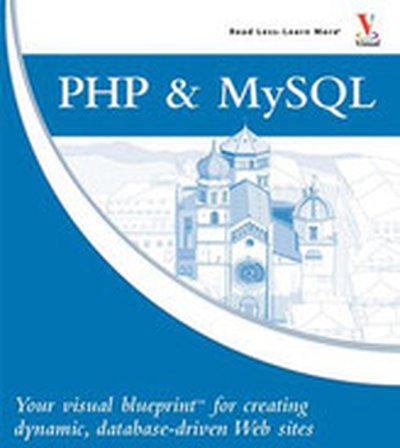
PHP & MySQL®: Your visual blueprint™ for creating dynamic, database-driven Web sites

"The expertise, thought, and effort that go into each book are obvious, and I sincerely appreciate your efforts. Keep up the wonderful work!" --Tracey Moore (Memphis, TN) Welcome to the only guidebook series that takes a visual approach to professional-level computer topics. Open the book and you will discover step-by-step screen shots that demonstrate over 140 key techniques using PHP amd MySQL, including: Configuring Apache to process PHP code Working with character strings Creating, sorting, and comparing arrays Defining and using functions Finding and replacing substrings Querying databases and retrieving data Stopping and starting the MySQL server Adding dynamic check boxes Sending new Web pages to a browser Extra / Apply It High-resolution screen shots demonstrate each task Succinct explanations walk you through step-by-step Two-page lessons break big topics into bite-sized modules "Apply It" and "Extra" sidebars highlight useful tips

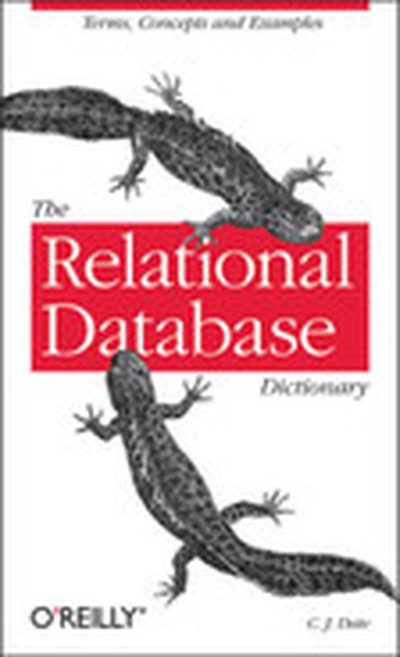
The Relational Database Dictionary

Avoid misunderstandings that can affect the design, programming, and use of database systems. Whether you're using Oracle, DB2, SQL Server, MySQL, or PostgreSQL, The Relational Database Dictionary will prevent confusion about the precise meaning of database-related terms (e.g., attribute, 3NF, one-to-many correspondence, predicate, repeating group, join dependency), helping to ensure the success of your database projects. Carefully reviewed for clarity, accuracy, and completeness, this authoritative and comprehensive quick-reference contains more than 600 terms, many with examples, covering issues and concepts arising from the relational model of data. This one-of-a-kind dictionary provides a single, compact source where DBAs, database designers, DBMS implementers, application developers, and database professors and students can find the accurate definitions they need on a daily basis, information that isn't readily available anywhere else. If you're working with or learning about relational databases, you need this pocket-sized quick-reference.

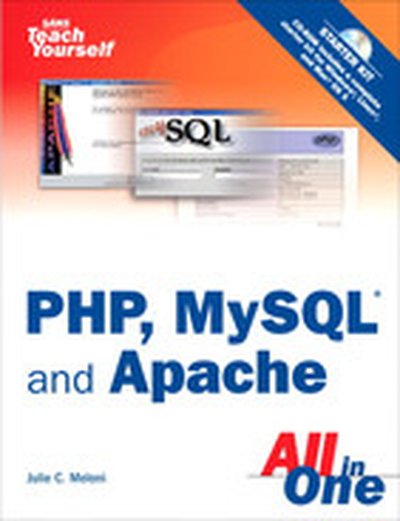
Sams Teach Yourself PHP, MySQL and Apache: All in One, Third Edition

A new edition of this title is available, ISBN-10: 067232976X ISBN-13: 9780672329760 You own your own business. You have also created a website for your business that details the products or services that you offer, but it doesn't allow potential customers to purchase anything online. Don't risk losing business-learn to create a dynamic online environment using only three programs. PHP, MySQL and Apache are three popular open-source tools that can work together to help you create a dynamic website, such as an online shopping experience. Sams Teach Yourself PHP, MySQL and Apache All in One is a complete reference manual for all three development tools. You will learn how to install, configure and set up the PHP scripting language, use the MySQL database system, and work with the Apache Web server. Then you'll take it a step further and discover how they work together to create a dynamic website. Use the book and the included CD to create a simple website, as well as a mailing list, online address book, shopping cart and storefront. Updated to reflect the most recent developments in PHP and MySQL, including the final stable release of MySQL 5.0, you will open your website to limitless possibilities with Sams Teach Yourself PHP, MySQL and Apache All in One.

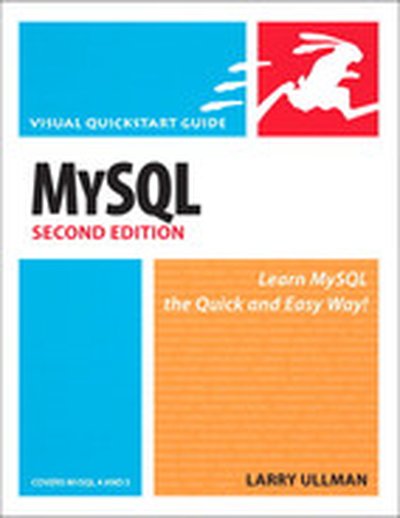
MySQL, Second Edition: Visual Quickstart Guide

Even if you've never used MySQL before, this Visual QuickStart Guide will have you up and running with the world’s most popular open source database application in no time. In this completely updated edition of our best-selling guide to MySQL, leading technology author Larry Ullman uses his trademark crystal-clear instructions and friendly prose to introduce you to everything that’s new in MySQL. Filled with step-by-step, task-based instructions and loads of visual aids, this book explains how to interact with MySQL using SQL, the language common to all databases. The interface examples show how to use MySQL’s own tools and how to use three popular programming languages (PHP, Perl, and Java). The book covers MySQL versions 3 and 4, as well as everything new in the eagerly anticipated version 5. Along the way, you'll find extensive coverage of MySQL installation, administration, database design, as well as its use with various programming languages, database programming techniques, utilities, advanced MySQL and SQL, and more! • Takes an easy, visual approach to teaching MySQL, using pictures to guide you through the software and show you what to do. • Works like a reference book—you look up what you need and then get straight to work. • No long-winded passages—concise, straightforward commentary explains what you need to know. • Affordably priced, because buying a computer book shouldn’t be an investment in itself. • Companion Web site at www.DMCInsights.com/mysql2 contains complete source code for examples in the book, online resources, extra scripts and tutorials, updates, a reader forum, and more.

MySQL® Administrator’s Guide and Language Reference

<>Written by the creators of MySQL and edited by one of the most highly respected MySQL authors, the MySQL Administrator's Guide and Language Reference is the official guide to installing MySQL, to setting up and administering MySQL databases, and to storing and retrieving data in these databases. This new edition combines into one book the MySQL Language Reference (on CD) with the practical information of the MySQL Administrator's Guide book.

SQL Pocket Guide, 2nd Edition

SQL is the language of databases. It's used to create and maintain database objects, place data into those objects, query the data, modify the data, and, finally, delete data that is no longer needed. Databases lie at the heart of many, if not most business applications. Chances are very good that if you're involved with software development, you're using SQL to some degree. And if you're using SQL, you should own a good reference or two. Now available in an updated second edition, our very popular SQL Pocket Guide is a major help to programmers, database administrators, and everyone who uses SQL in their day-to-day work. The SQL Pocket Guide is a concise reference to frequently used SQL statements and commonly used SQL functions. Not just an endless collection of syntax diagrams, this portable guide addresses the language's complexity head on and leads by example. The information in this edition has been updated to reflect the latest versions of the most commonly used SQL variants including: Oracle Database 10g, Release 2 (includingthe free Oracle Database 10g Express Edition (XE)) Microsoft SQL Server 2005 MySQL 5 IBM DB2 8.2 PostreSQL 8.1 database

MySQL Stored Procedure Programming

The implementation of stored procedures in MySQL 5.0 a hugemilestone -- one that is expected to lead to widespread enterprise adoption ofthe already extremely popular MySQL database. If you are serious aboutbuilding the web-based database applications of the future, you need toget up to speed quickly on how stored procedures work -- and how tobuild them the right way. This book, destined to be the bible of storedprocedure development, is a resource that no real MySQL programmer canafford to do without. In the decade since MySQL burst on the scene, it has become thedominant open source database, with capabilities and performancerivaling those of commercial RDBMS offerings like Oracle and SQLServer. Along with Linux and PHP, MySQL is at the heart of millions ofapplications. And now, with support for stored procedures, functions,and triggers in MySQL 5.0, MySQL offers the programming power neededfor true enterprise use. MySQL's new procedural language has a straightforward syntax, making iteasy to write simple programs. But it's not so easy to write secure,easily maintained, high-performance, and bug-free programs. Few in theMySQL world have substantial experience yet with stored procedures, butGuy Harrison and Steven Feuerstein have decades of combined expertise. In MySQL Stored Procedure Programming, they putthat hard-won experience to good use. Packed with code examples and coveringeverything from language basics to application building to advancedtuning and best practices, this highly readable book is the one-stopguide to MySQL development. It consists of four major sections: MySQL stored programming fundamentals -- tutorial, basicstatements, SQL in stored programs, and error handling Building MySQL stored programs -- transaction handling,built-in functions, stored functions, and triggers MySQL stored programs in applications -- using storedprograms with PHP, Java, Perl, Python, and .NET (C# and VB.NET) Optimizing MySQL stored programs -- security, basic andadvanced SQL tuning, optimizing stored program code, and programmingbest practices A companion web site contains many thousands of lines of code, that youcan put to use immediately. Guy Harrison is Chief Architect of Database Solutions at Quest Softwareand a frequent speaker and writer on MySQL topics. Steven Feuerstein isthe author of Oracle PL/SQL Programming, the classic reference for Oracle stored programming for more than ten years. Both have decades of experience as database developers, and between them they have authored a dozen books.

MySQL® Clustering

Clustering is the final component of MySQL that makes it truly enterprise-level and able to compete fully with proprietary databases such as Oracle and Microsoft SQL Server. The increased number of high-demand, high-productivity corporations and institutions choosing MySQL, including MIT, the Department of Homeland Security, NASA, and Nokia, to name a few, need the benefit of clustering databases for high performance and scalability. MySQL AB has stepped up to the plate to offer advanced, high-availability, reliable clustering. As this demand has increased, so has the need for information. MySQL Clustering offers thorough, authoritative instruction on setting up and administering a MySQL Cluster from the developers of the cluster itself. You will learn about everything from installation and configuration to performance and troubleshooting in this authoritative reference guide to MySQL clustering.