We will explore tidymodels, a cohesive framework for modeling and machine learning in R.
 talk-data.com
Topic
r
176
tagged
Activity Trend
8
peak/qtr
2020-Q1
2026-Q2
Top Events
O'Reilly Data Science Books
153
O'Reilly Data Visualization Books
6
EARL 2025: R & Py Tech Conference
4
Workshop - Introduction to R (Part 2)
1
O'Reilly Business Intelligence Books
1
The Data-Powered Patient: Predicting Women's Chronic Disease from Wearables
1
Tidymodels
1
Lunch&Learn with Ella Kaye: C for R users
1
Raddicts x RTE - {webr} - Shinyproxy et retour des Rencontres R 2024
1
Workshop - Introduction to R
1
Info Session on LLM Mini Bootcamp
1
Meetup#24 - OMOPisation des données de santé
1
Heart rate variability (HRV) is a well-known digital biomarker and is increasingly available in consumer wearables. However, extracting actionable predictions from HRV data, in particular for clinical use, remains challenging. Using specialized R packages, this presentation demonstrates how to model 24-hour periodic patterns in HRV metrics as non-linear circadian components to predict chronic disease flares. Grounded in real-life data from a NIH-funded longitudinal mHealth-based study of female chronic pelvic pain disorders, we will investigate how mixed-effects cosinor regression accommodates individual variation and complex interactions between circadian parameters and time-varying covariates (menstrual cycle, physical activity, sleep quality). These examples aim to illustrate how patient-generated data from everyday wearables can democratize access to predictive medicine by helping patient-users maximize the benefits of their data to gain predictive insights into their health status.
Continuation of the Introduction to R workshop series. This session covers data processing with dplyr, data visualization with ggplot2, and concepts such as loops, functions, and conditional statements. Participants are encouraged to bring their own data and follow along.
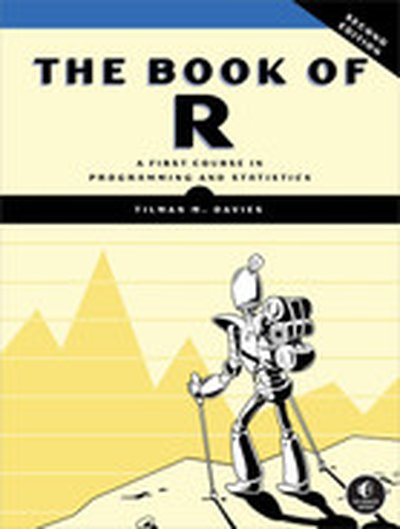
The Book of R is a comprehensive, beginner-friendly guide to R, the world’s most popular programming language for statistical analysis. Even if you have no programming experience and little more than a grounding in the basics of mathematics, you’ll find everything you need to begin writing programs in R. You’ll start with the basics, like how to handle data and write simple programs, before moving on to more advanced topics, like producing statistical summaries of your data and performing tests and modeling. You’ll even learn how to create impressive data visualizations with R’s graphics tools and contributed packages, like ggplot2, ggvis, and rgl. Dozens of hands-on exercises take you from theory to practice as you learn: The fundamentals of programming in R, including how to write data frames, create functions, and use variables, statements, and loops Statistical concepts like exploratory data analysis, probabilities, hypothesis tests, and regression modeling and how to execute them in R How to access R’s thousands of functions, libraries, and datasets How to draw valid and useful conclusions from your data and create publication-quality graphics of your results The Book of R brings both statistics and R to life. With clear explanations, practical examples, and hands-on exercises, this book opens the door to the evolving world of data analysis. New to this edition: The entire book has been revised and expanded, with nearly 100 pages of new content and exercises. You’ll find greater coverage of data plots and R graphics, guidance on using pipes to string together commands, and new ways to read and write external files, among many other lessons.
1.5-hour introductory workshop on the R programming language. Topics covered include: R as a calculator; basic data types and structures; reading data into R and exporting for external purposes; basic data processing; basic data visualization; loops, functions, and conditional statements.
Continuation of the conference with multiple advanced sessions and talks.
Conference officially opens with two keynote speakers.
R and Python workshops delivered by leading industry experts.
In this easy-going workshop, we will be building interactive website dashboards that allow teams to quickly show each other information such as numerous graphs and tables.\n\nThis tool is useful for academic research groups, business teams, or other people who meet regularly for updates. We will learn how to filter, sort, visualize data, uncover trends, and present results aesthetically.\n\nThis workshop will use the R programming language and will include some exploration in Quarto, dashboards, Shiny, markdown, and geospatial data. Some computer programming experience is preferred, but expertise is not required.
Info session about LLM Mini Bootcamp; join to ask questions and receive a discount coupon.
In this talk, I'll discuss why, as R users/programmers, we may want to learn C, and resources for doing so. I'll show examples of how C is used in the codebase of base R. I'll give an example of how, with only a little C knowledge, it was possible to add a new feature into the language (specifying colours with three-digit hex codes). Finally, I’ll discuss various initiatives from the R Contribution Working Group and show how you, too, can get involved in contributing to base R.
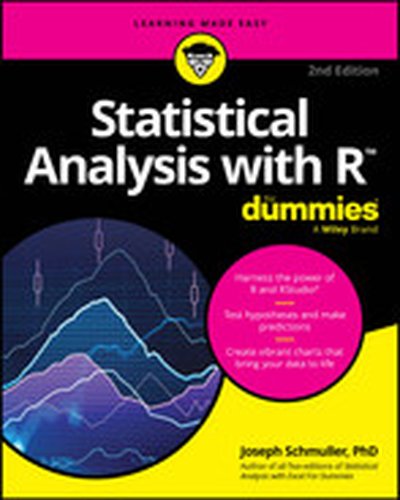
Simplify stats and learn how to graph, analyze, and interpret data the easy way Statistical Analysis with R For Dummies makes stats approachable by combining clear explanations with practical applications. You'll learn how to download and use R and RStudio—two free, open-source tools—to learn statistics concepts, create graphs, test hypotheses, and draw meaningful conclusions. Get started by learning the basics of statistics and R, calculate descriptive statistics, and use inferential statistics to test hypotheses. Then, visualize it all with graphs and charts. This Dummies guide is your well-marked path to sailing through statistics. Get clear explanations of the basics of statistics and data analysis Learn how to analyze and visualize data with R, step by step Create charts, graphs, and summaries to interpret results Explore hypothesis testing, and prediction techniques This is the perfect introduction to R for students, professionals, and the stat-curious.
Toby Dylan Hocking, Associate professor of Computer Science, will share how to rewrite R code to minimize time and memory usage. Topics include profiling code to identify lines or functions that would benefit from optimization, and comparative analysis to compare time and memory usage of different code versions using the atime package.
Toby Dylan Hocking, Associate professor of Computer Science, partagera son expertise sur la programmation R efficace en temps et en mémoire.
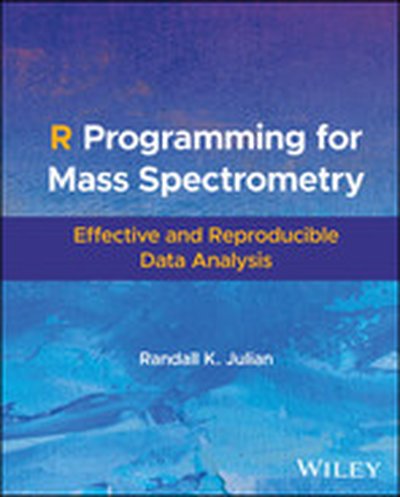
A practical guide to reproducible and high impact mass spectrometry data analysis R Programming for Mass Spectrometry teaches a rigorous and detailed approach to analyzing mass spectrometry data using the R programming language. It emphasizes reproducible research practices and transparent data workflows and is designed for analytical chemists, biostatisticians, and data scientists working with mass spectrometry. Readers will find specific algorithms and reproducible examples that address common challenges in mass spectrometry alongside example code and outputs. Each chapter provides practical guidance on statistical summaries, spectral search, chromatographic data processing, and machine learning for mass spectrometry. Key topics include: Comprehensive data analysis using the Tidyverse in combination with Bioconductor, a widely used software project for the analysis of biological data Processing chromatographic peaks, peak detection, and quality control in mass spectrometry data Applying machine learning techniques, using Tidymodels for supervised and unsupervised learning, as well as for feature engineering and selection, providing modern approaches to data-driven insights Methods for producing reproducible, publication-ready reports and web pages using RMarkdown R Programming for Mass Spectrometry is an indispensable guide for researchers, instructors, and students. It provides modern tools and methodologies for comprehensive data analysis. With a companion website that includes code and example datasets, it serves as both a practical guide and a valuable resource for promoting reproducible research in mass spectrometry.
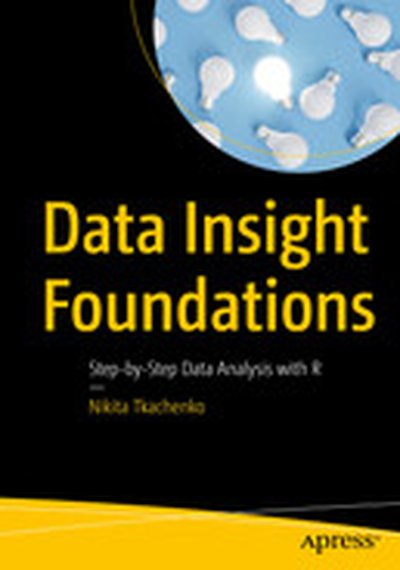
This book is an essential guide designed to equip you with the vital tools and knowledge needed to excel in data science. Master the end-to-end process of data collection, processing, validation, and imputation using R, and understand fundamental theories to achieve transparency with literate programming, renv, and Git--and much more. Each chapter is concise and focused, rendering complex topics accessible and easy to understand. Data Insight Foundations caters to a diverse audience, including web developers, mathematicians, data analysts, and economists, and its flexible structure allows enables you to explore chapters in sequence or navigate directly to the topics most relevant to you. While examples are primarily in R, a basic understanding of the language is advantageous but not essential. Many chapters, especially those focusing on theory, require no programming knowledge at all. Dive in and discover how to manipulate data, ensure reproducibility, conduct thorough literature reviews, collect data effectively, and present your findings with clarity. What You Will Learn Data Management: Master the end-to-end process of data collection, processing, validation, and imputation using R. Reproducible Research: Understand fundamental theories and achieve transparency with literate programming, renv, and Git. Academic Writing: Conduct scientific literature reviews and write structured papers and reports with Quarto. Survey Design: Design well-structured surveys and manage data collection effectively. Data Visualization: Understand data visualization theory and create well-designed and captivating graphics using ggplot2. Who this Book is For Career professionals such as research and data analysts transitioning from academia to a professional setting where production quality significantly impacts career progression. Some familiarity with data analytics processes and an interest in learning R or Python are ideal.
Workshop: Time series forecasting remains a specialty topic focusing on 'predicting the future'. You will learn about a package that is tuned for your use case and the difficulties inherent in time series forecasting. The speaker will share a simplified problem notation to survey available solution offerings, and discuss time series packages in R and Python.
by
Subhajit Das
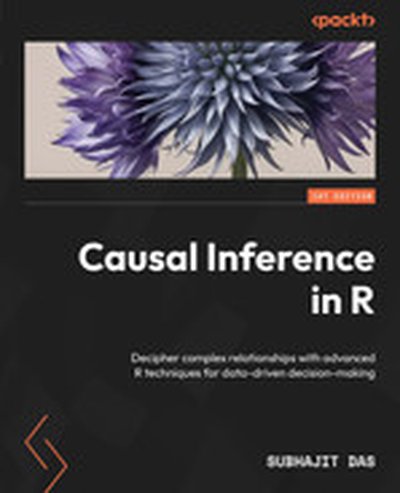
Causal Inference in R is a comprehensive guide that introduces you to the methods and practices of determining causality in data through the lens of R programming. By navigating its pages and examples, you'll master the application of causal models and statistical approaches to real-world problems, enabling more informed data-driven decisions. What this Book will help me do Understand the principles and foundations of causal inference to identify causality in data. Apply methods like propensity score matching and instrumental variables using R. Leverage real-world case studies to analyze and resolve confounding factors and make better data claims. Harness statistical methods and R tools to address real-world data challenges innovatively. Develop a strategy for integrating causal models into decision-making workflows with confidence. Author(s) Subhajit Das, the author of Causal Inference in R, is an accomplished applied scientist with over a decade of experience in causal inference methodologies and data analysis. Subhajit is passionate about empowering learners by breaking down complex concepts into manageable, clear explanations. His expertise ensures that readers not only understand the theory behind causal inference but are also able to apply it effectively using R. Who is it for? This book is ideal for data analysts, statisticians, and researchers looking to deepen their understanding of causal inference techniques using R. Whether you're a practitioner aiming to enhance your data-driven decision-making skills or a student aspiring to tackle advanced causal analysis, this book provides pathbreaking insights. It's suitable for individuals at beginner to intermediate skill levels in data analysis, especially those in public policy, economics, and the social sciences who utilize R regularly.