talk-data.com talk-data.com

Topic

r

176

tagged

Activity Trend

8 peak/qtr
2020-Q1 2026-Q1

Activities

176 activities · Newest first

R in Action, Third Edition

R is the most powerful tool you can use for statistical analysis. This definitive guide smooths R’s steep learning curve with practical solutions and real-world applications for commercial environments. In R in Action, Third Edition you will learn how to: Set up and install R and RStudio Clean, manage, and analyze data with R Use the ggplot2 package for graphs and visualizations Solve data management problems using R functions Fit and interpret regression models Test hypotheses and estimate confidence Simplify complex multivariate data with principal components and exploratory factor analysis Make predictions using time series forecasting Create dynamic reports and stunning visualizations Techniques for debugging programs and creating packages R in Action, Third Edition makes learning R quick and easy. That’s why thousands of data scientists have chosen this guide to help them master the powerful language. Far from being a dry academic tome, every example you’ll encounter in this book is relevant to scientific and business developers, and helps you solve common data challenges. R expert Rob Kabacoff takes you on a crash course in statistics, from dealing with messy and incomplete data to creating stunning visualizations. This revised and expanded third edition contains fresh coverage of the new tidyverse approach to data analysis and R’s state-of-the-art graphing capabilities with the ggplot2 package. About the Technology Used daily by data scientists, researchers, and quants of all types, R is the gold standard for statistical data analysis. This free and open source language includes packages for everything from advanced data visualization to deep learning. Instantly comfortable for mathematically minded users, R easily handles practical problems without forcing you to think like a software engineer. About the Book R in Action, Third Edition teaches you how to do statistical analysis and data visualization using R and its popular tidyverse packages. In it, you’ll investigate real-world data challenges, including forecasting, data mining, and dynamic report writing. This revised third edition adds new coverage for graphing with ggplot2, along with examples for machine learning topics like clustering, classification, and time series analysis. What's Inside Clean, manage, and analyze data Use the ggplot2 package for graphs and visualizations Techniques for debugging programs and creating packages A complete learning resource for R and tidyverse About the Reader Requires basic math and statistics. No prior experience with R needed. About the Author Dr. Robert I Kabacoff is a professor of quantitative analytics at Wesleyan University and a seasoned data scientist with more than 20 years of experience. Quotes Kabacoff has outdone himself by significantly improving on the already excellent previous edition. - Alain Lompo, ISO-Gruppe R in Action has been my go-to reference on R for years. The third edition contains timely updates on the tidyverse and other new tools. I would recommend this book without hesitation. - Daniel Kenney-Jung MD, Department of Pediatrics, Duke University Outstandingly well-written. The best book on R programming that I have ever read. - Kelvin Meeks, International Technology Ventures Takes the reader through a series of essential methods from basic to complex. The only R book you will ever need. - Martin Perry, Microsoft
R 4 Quick Syntax Reference: A Pocket Guide to the Language, API's and Library

This handy reference book detailing the intricacies of R covers version 4.x features, including numerous and significant changes to syntax, strings, reference counting, grid units, and more. Starting with the basic structure of R, the book takes you on a journey through the terminology used in R and the syntax required to make R work. You will find looking up the correct form for an expression quick and easy. Some of the new material includes information on RStudio, S4 syntax, working with character strings, and an example using the Twitter API. With a copy of the R 4 Quick Syntax Reference in hand, you will find that you are able to use the multitude of functions available in R and are even able to write your own functions to explore and analyze data. What You Will Learn Discover the modes and classes of R objects and how to use them Use both packaged and user-created functions in R Import/export data and create new data objects in R Create descriptive functions and manipulate objects in R Take advantage of flow control and conditional statements Work with packages such as base, stats, and graphics Who This Book Is For Those with programming experience, either new to R, or those with at least some exposure to R but who are new to the latest version.

Pro Data Visualization Using R and JavaScript: Analyze and Visualize Key Data on the Web

Use R 4, RStudio, Tidyverse, and Shiny to interrogate and analyze your data, and then use the D3 JavaScript library to format and display that data in an elegant, informative, and interactive way. You will learn how to gather data effectively, and also how to understand the philosophy and implementation of each type of chart, so as to be able to represent the results visually. With the popularity of the R language, the art and practice of creating data visualizations is no longer the preserve of mathematicians, statisticians, or cartographers. As technology leaders, we can gather metrics around what we do and use data visualizations to communicate that information. Pro Data Visualization Using R and JavaScript combines the power of the R language with the simplicity and familiarity of JavaScript to display clear and informative data visualizations. Gathering and analyzing empirical data is the key to truly understanding anything. We can track operational metrics to quantify the health of our products in production. We can track quality metrics of our projects, and even use our data to identify bad code. Visualizing this data allows anyone to read our analysis and easily get a deep understanding of the story the data tells. This book makes the R language approachable, and promotes the idea of data gathering and analysis mostly using web interfaces. What You Will Learn Carry out data visualization using R and JavaScript Use RStudio for data visualization Harness Tidyverse data pipelines Apply D3 and R Notebooks towards your data Work with the R Plumber API generator, Shiny, and more Who This Book Is For Programmers and data scientists/analysts who have some prior experience with R and JavaScript.

Public Policy Analytics

Public Policy Analytics teaches readers how to address complex public policy problems with data and analytics using reproducible methods in R. This book will appeal to researchers and data scientists at the intersection of data analytics and public policy, and readers who wish to understand how algorithms will affect the future of government.

CRAN Recipes: DPLYR, Stringr, Lubridate, and RegEx in R

Want to use the power of R sooner rather than later? Don’t have time to plow through wordy texts and online manuals? Use this book for quick, simple code to get your projects up and running. It includes code and examples applicable to many disciplines. Written in everyday language with a minimum of complexity, each chapter provides the building blocks you need to fit R’s astounding capabilities to your analytics, reporting, and visualization needs. CRAN Recipes recognizes how needless jargon and complexity get in your way. Busy professionals need simple examples and intuitive descriptions; side trips and meandering philosophical discussions are left for other books. Here R scripts are condensed, to the extent possible, to copy-paste-run format. Chapters and examples are structured to purpose rather than particular functions (e.g., “dirty data cleanup” rather than the R package name “janitor”). Everyday language eliminatesthe need to know functions/packages in advance. What You Will Learn Carry out input/output; visualizations; data munging; manipulations at the group level; and quick data exploration Handle forecasting (multivariate, time series, logistic regression, Facebook’s Prophet, and others) Use text analytics; sampling; financial analysis; and advanced pattern matching (regex) Manipulate data using DPLYR: filter, sort, summarize, add new fields to datasets, and apply powerful IF functions Create combinations or subsets of files using joins Write efficient code using pipes to eliminate intermediate steps (MAGRITTR) Work with string/character manipulation of all types (STRINGR) Discover counts, patterns, and how to locate whole words Do wild-card matching, extraction, and invert-match Work with dates using LUBRIDATE Fix dirty data; attractive formatting; bad habits to avoid Who This Book Is For Programmers/data scientists with at least some prior exposure to R.

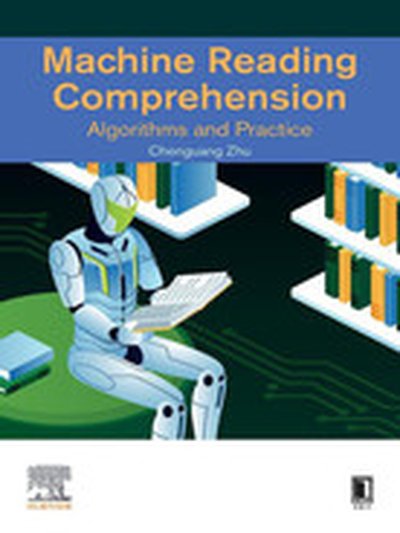
Machine Reading Comprehension

Machine reading comprehension (MRC) is a cutting-edge technology in natural language processing (NLP). MRC has recently advanced significantly, surpassing human parity in several public datasets. It has also been widely deployed by industry in search engine and quality assurance systems. Machine Reading Comprehension: Algorithms and Practice performs a deep-dive into MRC, offering a resource on the complex tasks this technology involves. The title presents the fundamentals of NLP and deep learning, before introducing the task, models, and applications of MRC. This volume gives theoretical treatment to solutions and gives detailed analysis of code, and considers applications in real-world industry. The book includes basic concepts, tasks, datasets, NLP tools, deep learning models and architecture, and insight from hands-on experience. In addition, the title presents the latest advances from the past two years of research. Structured into three sections and eight chapters, this book presents the basis of MRC; MRC models; and hands-on issues in application. This book offers a comprehensive solution for researchers in industry and academia who are looking to understand and deploy machine reading comprehension within natural language processing. Presents the first comprehensive resource on machine reading comprehension (MRC) Performs a deep-dive into MRC, from fundamentals to latest developments Offers the latest thinking and research in the field of MRC, including the BERT model Provides theoretical discussion, code analysis, and real-world applications of MRC Gives insight from research which has led to surpassing human parity in MRC

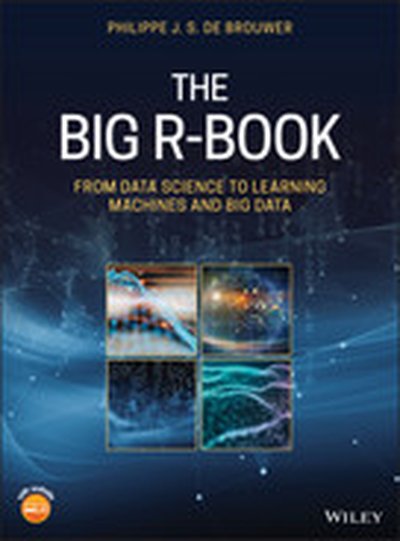
The Big R-Book

Introduces professionals and scientists to statistics and machine learning using the programming language R Written by and for practitioners, this book provides an overall introduction to R, focusing on tools and methods commonly used in data science, and placing emphasis on practice and business use. It covers a wide range of topics in a single volume, including big data, databases, statistical machine learning, data wrangling, data visualization, and the reporting of results. The topics covered are all important for someone with a science/math background that is looking to quickly learn several practical technologies to enter or transition to the growing field of data science. The Big R-Book for Professionals: From Data Science to Learning Machines and Reporting with R includes nine parts, starting with an introduction to the subject and followed by an overview of R and elements of statistics. The third part revolves around data, while the fourth focuses on data wrangling. Part 5 teaches readers about exploring data. In Part 6 we learn to build models, Part 7 introduces the reader to the reality in companies, Part 8 covers reports and interactive applications and finally Part 9 introduces the reader to big data and performance computing. It also includes some helpful appendices. Provides a practical guide for non-experts with a focus on business users Contains a unique combination of topics including an introduction to R, machine learning, mathematical models, data wrangling, and reporting Uses a practical tone and integrates multiple topics in a coherent framework Demystifies the hype around machine learning and AI by enabling readers to understand the provided models and program them in R Shows readers how to visualize results in static and interactive reports Supplementary materials includes PDF slides based on the book’s content, as well as all the extracted R-code and is available to everyone on a Wiley Book Companion Site The Big R-Book is an excellent guide for science technology, engineering, or mathematics students who wish to make a successful transition from the academic world to the professional. It will also appeal to all young data scientists, quantitative analysts, and analytics professionals, as well as those who make mathematical models.

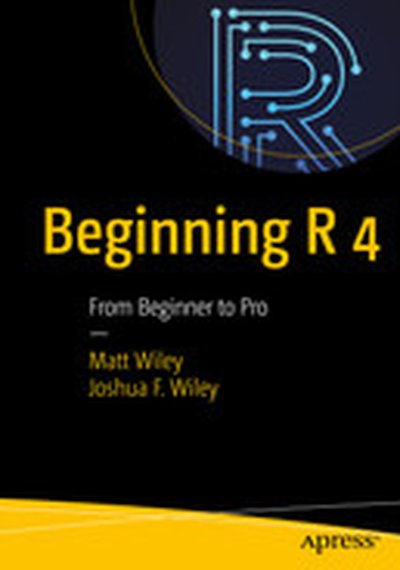
Beginning R 4: From Beginner to Pro

Learn how to use R 4, write and save R scripts, read in and write out data files, use built-in functions, and understand common statistical methods. This in-depth tutorial includes key R 4 features including a new color palette for charts, an enhanced reference counting system (useful for big data), and new data import settings for text (as well as the statistical methods to model text-based, categorical data). Each chapter starts with a list of learning outcomes and concludes with a summary of any R functions introduced in that chapter, along with exercises to test your new knowledge. The text opens with a hands-on installation of R and CRAN packages for both Windows and macOS. The bulk of the book is an introduction to statistical methods (non-proof-based, applied statistics) that relies heavily on R (and R visualizations) to understand, motivate, and conduct statistical tests and modeling. Beginning R 4 shows the use of R in specific cases such as ANOVA analysis, multiple and moderated regression, data visualization, hypothesis testing, and more. It takes a hands-on, example-based approach incorporating best practices with clear explanations of the statistics being done. You will: Acquire and install R and RStudio Import and export data from multiple file formats Analyze data and generate graphics (including confidence intervals) Interactively conduct hypothesis testing Code multiple and moderated regression solutions Who This Book Is For Programmers and data analysts who are new to R. Some prior experience in programming is recommended.

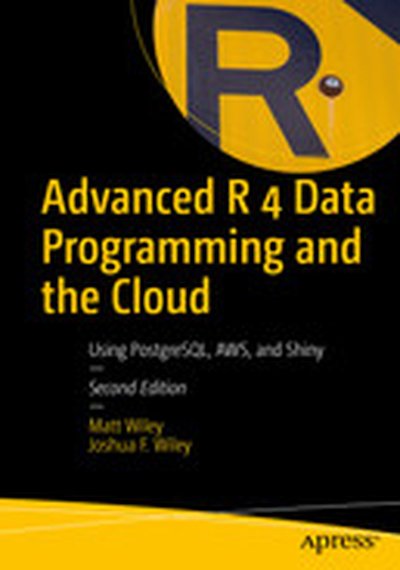
Advanced R 4 Data Programming and the Cloud: Using PostgreSQL, AWS, and Shiny

Program for data analysis using R and learn practical skills to make your work more efficient. This revised book explores how to automate running code and the creation of reports to share your results, as well as writing functions and packages. It includes key R 4 features such as a new color palette for charts, an enhanced reference counting system, and normalization of matrix and array types where matrix objects now formally inherit from the array class, eliminating inconsistencies. Advanced R 4 Data Programming and the Cloud is not designed to teach advanced R programming nor to teach the theory behind statistical procedures. Rather, it is designed to be a practical guide moving beyond merely using R; it shows you how to program in R to automate tasks. This book will teach you how to manipulate data in modern R structures and includes connecting R to databases such as PostgreSQL, cloud services such as Amazon Web Services (AWS), and digital dashboards such as Shiny. Each chapter also includes a detailed bibliography with references to research articles and other resources that cover relevant conceptual and theoretical topics. What You Will Learn Write and document R functions using R 4 Make an R package and share it via GitHub or privately Add tests to R code to ensure it works as intended Use R to talk directly to databases and do complex data management Run R in the Amazon cloud Deploy a Shiny digital dashboard Generate presentation-ready tables and reports using R Who This Book Is For Working professionals, researchers, and students who are familiar with R and basic statistical techniques such as linear regression and who want to learn how to take their R coding and programming to the next level.

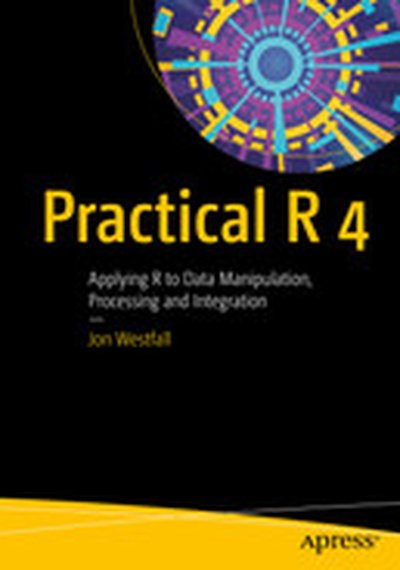
Practical R 4: Applying R to Data Manipulation, Processing and Integration

Get started with an accelerated introduction to the R ecosystem, programming language, and tools including R script and RStudio. Utilizing many examples and projects, this book teaches you how to get data into R and how to work with that data using R. Once grounded in the fundamentals, the rest of Practical R 4 dives into specific projects and examples starting with running and analyzing a survey using R and LimeSurvey. Next, you'll carry out advanced statistical analysis using R and MouselabWeb. Then, you’ll see how R can work for you without statistics, including how R can be used to automate data formatting, manipulation, reporting, and custom functions. The final part of this book discusses using R on a server; you’ll build a script with R that can run an RStudio Server and monitor a report source for changes to alert the user when something has changed. This project includes both regular email alerting and push notification. And, finally, you’ll use R to create a customized daily rundown report of a person's most important information such as a weather report, daily calendar, to-do's and more. This demonstrates how to automate such a process so that every morning, the user navigates to the same web page and gets the updated report. What You Will Learn Set up and run an R script, including installation on a new machine and downloading and configuring R Turn any machine into a powerful data analytics platform accessible from anywhere with RStudio Server Write basic R scripts and modify existing scripts to suit your own needs Create basic HTML reports in R, inserting information as needed Build a basic R package and distribute it Who This Book Is For Some prior exposure to statistics, programming, and maybe SAS is recommended but not required.

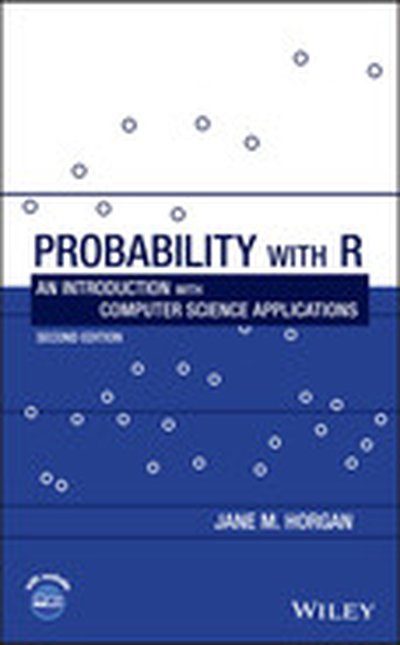
Probability with R, 2nd Edition

Provides a comprehensive introduction to probability with an emphasis on computing-related applications This self-contained new and extended edition outlines a first course in probability applied to computer-related disciplines. As in the first edition, experimentation and simulation are favoured over mathematical proofs. The freely down-loadable statistical programming language R is used throughout the text, not only as a tool for calculation and data analysis, but also to illustrate concepts of probability and to simulate distributions. The examples in Probability with R: An Introduction with Computer Science Applications, Second Edition cover a wide range of computer science applications, including: testing program performance; measuring response time and CPU time; estimating the reliability of components and systems; evaluating algorithms and queuing systems. Chapters cover: The R language; summarizing statistical data; graphical displays; the fundamentals of probability; reliability; discrete and continuous distributions; and more. This second edition includes: improved R code throughout the text, as well as new procedures, packages and interfaces; updated and additional examples, exercises and projects covering recent developments of computing; an introduction to bivariate discrete distributions together with the R functions used to handle large matrices of conditional probabilities, which are often needed in machine translation; an introduction to linear regression with particular emphasis on its application to machine learning using testing and training data; a new section on spam filtering using Bayes theorem to develop the filters; an extended range of Poisson applications such as network failures, website hits, virus attacks and accessing the cloud; use of new allocation functions in R to deal with hash table collision, server overload and the general allocation problem. The book is supplemented with a Wiley Book Companion Site featuring data and solutions to exercises within the book. Primarily addressed to students of computer science and related areas, Probability with R: An Introduction with Computer Science Applications, Second Edition is also an excellent text for students of engineering and the general sciences. Computing professionals who need to understand the relevance of probability in their areas of practice will find it useful.

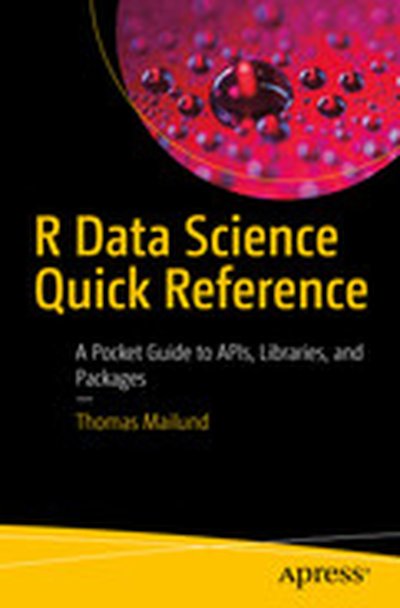
R Data Science Quick Reference: A Pocket Guide to APIs, Libraries, and Packages

In this handy, practical book you will cover each concept concisely, with many illustrative examples. You'll be introduced to several R data science packages, with examples of how to use each of them. In this book, you’ll learn about the following APIs and packages that deal specifically with data science applications: readr, dibble, forecasts, lubridate, stringr, tidyr, magnittr, dplyr, purrr, ggplot2, modelr, and more. After using this handy quick reference guide, you'll have the code, APIs, and insights to write data science-based applications in the R programming language. You'll also be able to carry out data analysis. What You Will Learn Import data with readr Work with categories using forcats, time and dates with lubridate, and strings with stringr Format data using tidyr and then transform that data using magrittr and dplyrWrite functions with R for data science, data mining, and analytics-based applications Visualize data with ggplot2 and fit data to models using modelr Who This Book Is For Programmers new to R's data science, data mining, and analytics packages. Some prior coding experience with R in general is recommended.

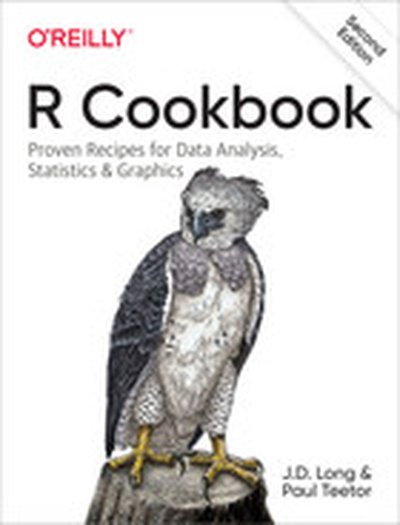
R Cookbook, 2nd Edition

Perform data analysis with R quickly and efficiently with more than 275 practical recipes in this expanded second edition. The R language provides everything you need to do statistical work, but its structure can be difficult to master. These task-oriented recipes make you productive with R immediately. Solutions range from basic tasks to input and output, general statistics, graphics, and linear regression. Each recipe addresses a specific problem and includes a discussion that explains the solution and provides insight into how it works. If you’re a beginner, R Cookbook will help get you started. If you’re an intermediate user, this book will jog your memory and expand your horizons. You’ll get the job done faster and learn more about R in the process. Create vectors, handle variables, and perform basic functions Simplify data input and output Tackle data structures such as matrices, lists, factors, and data frames Work with probability, probability distributions, and random variables Calculate statistics and confidence intervals and perform statistical tests Create a variety of graphic displays Build statistical models with linear regressions and analysis of variance (ANOVA) Explore advanced statistical techniques, such as finding clusters in your data

Applied Supervised Learning with R

Applied Supervised Learning with R equips you with the essential knowledge and practical skills to leverage machine learning techniques for solving business problems using R. With this book, you'll gain hands-on experience in implementing various supervised learning models, assessing their performance, and selecting the best-suited method for your objectives. What this Book will help me do Gain expertise in identifying and framing business problems suitable for supervised learning. Acquire skills in data wrangling and visualization using R packages like dplyr and ggplot2. Master techniques for tuning hyperparameters to optimize machine learning models. Understand methods for feature selection and dimensionality reduction to enhance model performance. Learn how to deploy machine learning models to production environments, such as AWS Lambda. Author(s) Karthik Ramasubramanian and Jojo Moolayil are both seasoned data science practitioners and educators who bring a wealth of experience in machine learning and analytics. With a deep understanding of R and its applications in real-world scenarios, they offer practical insights and actionable examples to their readers. Their teaching style focuses on clarity and practical application. Who is it for? This book is ideal for data analysts, data scientists, and data engineers at a beginner to intermediate level who aim to master supervised machine learning with R. Readers should have basic knowledge of statistics, probabilities, and R programming. It is designed for those eager to apply machine learning techniques to real-world problems and improve their decision-making capabilities.

Hands-On Exploratory Data Analysis with R

Immerse yourself in 'Hands-On Exploratory Data Analysis with R,' a comprehensive guide designed to hone your skills in data analysis using the powerful R programming language. This book walks you through all essential aspects of exploratory data analysis, from data collection and cleaning to generating insights with statistical and graphical methods, setting you up for success with any dataset. What this Book will help me do Utilize powerful R packages to accelerate your data analysis workflow. Effectively import, clean, and prepare diverse datasets for analysis. Create informative and visually appealing data visualizations using ggplot2. Generate comprehensive and sharable reports with R Markdown and knitr. Handle multi-factor, optimization, and regression data challenges. Author(s) Radhika Datar and Harish Garg are experienced data analysts and educators specializing in using R for practical data analysis. They have developed this book to share their depth of expertise, offering a detailed yet approachable learning experience. Their combined experience in teaching and applying data analysis in real-world scenarios makes this book an invaluable resource for practitioners. Who is it for? This book is perfect for data enthusiasts looking to strengthen their foundational knowledge in exploratory data analysis. Data analysts, engineers, software developers, and product managers seeking to broaden their skillset in data interpretation and visualization will find this guide extremely beneficial. Whether you're a beginner or already possess basic understanding of data analysis, this book will provide actionable insights to improve your workflow.

R Quick Syntax Reference: A Pocket Guide to the Language, APIs and Library

This handy reference book detailing the intricacies of R updates the popular first edition by adding R version 3.4 and 3.5 features. Starting with the basic structure of R, the book takes you on a journey through the terminology used in R and the syntax required to make R work. You will find looking up the correct form for an expression quick and easy. Some of the new material includes information on RStudio, S4 syntax, working with character strings, and an example using the Twitter API. With a copy of the R Quick Syntax Reference in hand, you will find that you are able to use the multitude of functions available in R and are even able to write your own functions to explore and analyze data. What You Will Learn Discover the modes and classes of R objects and how to use them Use both packaged and user-created functions in R Import/export data and create new data objects in R Create descriptive functions and manipulate objects in R Take advantage of flow control and conditional statements Work with packages such as base, stats, and graphics Who This Book Is For Those with programming experience, either new to R, or those with at least some exposure to R but who are new to the latest version.

Machine Learning with R Quick Start Guide

Machine Learning with R Quick Start Guide takes you through the foundations of machine learning using the R programming language. Starting with the basics, this book introduces key algorithms and methodologies, offering hands-on examples and applicable machine learning solutions that allow you to extract insights and create predictive models. What this Book will help me do Understand the basics of machine learning and apply them using R 3.5. Learn to clean, prepare, and visualize data with R to ensure robust data analysis. Develop and work with predictive models using various machine learning techniques. Discover advanced topics like Natural Language Processing and neural network training. Implement end-to-end pipeline solutions, from data collection to predictive analytics, in R. Author(s) None Sanz, the author of Machine Learning with R Quick Start Guide, is an expert in data science with years of experience in the field of machine learning and R programming. Known for their accessible and detailed teaching style, the author focuses on providing practical knowledge to empower readers in the real world. Who is it for? This book is ideal for graduate students and professionals, including aspiring data scientists and data analysts, looking to start their journey in machine learning. Readers are expected to have some familiarity with the R programming language but no prior machine learning experience is necessary. With this book, the audience will gain the ability to confidently navigate machine learning concepts and practices.

R Statistics Cookbook

The "R Statistics Cookbook" offers a comprehensive guide to solving statistical problems using R 3.5. Through over 100 practical recipes, you'll learn to perform essential statistical analyses, such as t-tests and regression, while mastering techniques for data modeling, nonparametric methods, and machine learning. This resource is tailored for tackling statistics-centric challenges across industries. What this Book will help me do Confidently use R 3.5 to perform statistical analyses that meet your data needs. Apply various hypothesis testing methods, such as t-tests and ANOVA, effectively. Model and forecast data using time series analysis and mixed-effects modeling. Implement regression techniques, including Bayesian regression, for actionable insights. Leverage robust statistics and the caret package for machine learning applications in R. Author(s) None Juretig, a professional statistician and experienced educator, has an extensive background in applying statistical methods to real-world problems using R. Their writing combines deep technical knowledge with an approachable teaching style, making complex statistical concepts accessible to learners of varying levels. Who is it for? If you're a statistician, data scientist, researcher, or analyst with proficiency in R programming and foundational knowledge of linear algebra, this book is crafted for you. It caters to professionals looking to solidify their statistical knowledge while exploring practical, real-world applications. Whether seeking to apply advanced methods or refine your statistical approaches, this guide provides actionable insights.