talk-data.com talk-data.com

Topic

VMware

virtualization cloud_computing data_center

53

tagged

Activity Trend

12 peak/qtr
2020-Q1 2026-Q1

Activities

53 activities · Newest first

IBM SAN and SVC Stretched Cluster and VMware Solution Implementation

This IBM® Redbooks® publication describes the IBM Storage Area Network and IBM SAN Volume Controller Stretched Cluster solution when combined with VMware. We describe guidelines, settings, and implementation steps necessary to achieve a satisfactory implementation. Business continuity and continuous application availability are among the top requirements for many organizations today. Advances in virtualization, storage, and networking have made enhanced business continuity possible. Information technology solutions can now be designed to manage both planned and unplanned outages, and the flexibility and cost efficiencies available from cloud computing models. IBM has designed a solution that offers significant functionality for maintaining business continuity in a VMware environment. This functionality provides the capability to dynamically move applications across data centers without interruption to those applications. The live application mobility across data centers relies on these products and technology: The industry-proven VMware Metro vMotion IBM System Storage® SAN Volume Controller Stretched Cluster solution A Layer 2 IP Network and storage networking infrastructure for high performance traffic management
IBM System Storage SAN Volume Controller and Storwize V7000 Replication Family Services

This IBM® Redbooks® publication describes the new features that have been added with the release of the IBM System Storage® SAN Volume Controller (SVC) and IBM System Storage Storwize® V7000 6.4.0 code, including Replication Family Services. Replication Family Services refers to the various copy services available on the SVC and Storwize V7000 including IBM FlashCopy®, Metro Mirror and Global Mirror, Global Mirror with Change Volumes, Volume Mirroring, and Stretched Cluster Volume Mirroring. The details behind the theory and practice of these services are examined, and SAN design suggestions and troubleshooting tips are provided. Planning requirements, automating copy services processed, and fabric design are explained. Multiple examples including implementation and server integration are included, along with a discussion of software solutions and services that are based on Replication Family Services. This book is intended for use by pre-sales and post-sales support, and storage administrators. Readers are expected to have an advanced knowledge of the SVC, Storwize V7000, and the SAN environment. The following publications are useful resources that provide background information: Implementing the IBM System Storage SAN Volume Controller V6.3, SG24-7933 Implementing the IBM Storwize V7000 V6.3, SG24-7938 IBM SAN Volume Controller and Brocade Disaster Recovery Solutions for VMware, REDP-4626[ IBM System Storage SAN Volume Controller Upgrade Path from Version 4.3.1 to 6.1, REDP-4716[ Real-time Compression in SAN Volume Controller and Storwize V7000, REDP-4859 SAN Volume Controller: Best Practices and Performance Guidelines, SG24-7521 Implementing the Storwize V7000 and the IBM System Storage SAN32B-E4 Encryption Switch, SG24-7977

IBM XIV Storage System: Host Attachment and Interoperability

This IBM® Redbooks® publication provides information for attaching the IBM XIV® Storage System to various host operating system platforms, including IBM i. The book provides information and references for combining the XIV Storage System with other storage platforms, host servers, or gateways, including IBM N Series, and IBM ProtecTIER®. It is intended for administrators and architects of enterprise storage systems. The book also addresses using the XIV storage with databases and other storage-oriented application software that include: IBM DB2® VMware ESX Microsoft HyperV SAP The goal is to give an overview of the versatility and compatibility of the XIV Storage System with various platforms and environments. The information that is presented here is not meant as a replacement or substitute for the Host Attachment kit publications. It is meant as a complement and to provide readers with usage guidance and practical illustrations.

IBM System Storage N series with VMware vSphere 5

This IBM® Redbooks® publication provides a basic introduction to the IBM System Storage® N series, virtualization, and VMware 5.x. It explains how to use the N series with VMware vSphere 5 environments and the benefits of doing so. Examples are given on how to install and set up VMware ESXi server with the N series. The IBM System Storage N series used as a storage foundation offers unified storage solutions that provide industry-leading technologies in the areas of storage efficiencies, instantaneous virtual machine and datastore cloning for virtual servers and virtual desktops, and virtual data center backup and business continuance solutions. The information provided can be also be used as a foundation to create dynamic cloud solutions, making full use of underlying storage features and functions. This book provides a blueprint for how clients can create a virtualized infrastructure/storage cloud that will help to address current and future data storage business requirements. IBM System Storage N series in conjunction with VMware vSphere 5 helps complete the virtualization hierarchy by providing both a server and storage virtualization solution. Although this configuration can further assist with other areas of virtualization, networks, and applications, these areas of virtualization are not covered in detail in this book.

IBM System Storage DS8000: Host Attachment and Interoperability

This IBM® Redbooks® publication addresses host attachment and interoperability considerations for the IBM System Storage® DS8000® series. Within this book, you can find information about the most popular host operating systems platforms, including Windows®, IBM AIX®, VIOS, Linux®, Solaris, HP-UX, VMware, Apple, and IBM z/OS® The topics covered in this book target administrators or other technical personnel with a working knowledge of storage systems and a general understanding of open systems. You can use this book as guidance when installing, attaching, and configuring System Storage DS8000. The practical, usage-oriented guidance provided in this book complements the IBM System Storage DS8000 Host Systems Attachment Guide, SC26-7917.

Data Hiding

As data hiding detection and forensic techniques have matured, people are creating more advanced stealth methods for spying, corporate espionage, terrorism, and cyber warfare all to avoid detection. Data Hiding provides an exploration into the present day and next generation of tools and techniques used in covert communications, advanced malware methods and data concealment tactics. The hiding techniques outlined include the latest technologies including mobile devices, multimedia, virtualization and others. These concepts provide corporate, goverment and military personnel with the knowledge to investigate and defend against insider threats, spy techniques, espionage, advanced malware and secret communications. By understanding the plethora of threats, you will gain an understanding of the methods to defend oneself from these threats through detection, investigation, mitigation and prevention. Provides many real-world examples of data concealment on the latest technologies including iOS, Android, VMware, MacOS X, Linux and Windows 7 Dives deep into the less known approaches to data hiding, covert communications, and advanced malware Includes never before published information about next generation methods of data hiding Outlines a well-defined methodology for countering threats Looks ahead at future predictions for data hiding

Implementing Systems Management of IBM PureFlex System

To meet today's complex and ever-changing business demands, you need a solid foundation of compute, storage, networking, and software resources. This system must be simple to deploy, and be able to quickly and automatically adapt to changing conditions. You also need to be able to take advantage of broad expertise and proven guidelines in systems management, applications, industry solutions, and more. IBM® PureFlex™ System combines no-compromise system designs along with built-in expertise, and integrates them into complete, optimized scalable solutions. With IBM Flex System™ Manager, multiple solution components that include compute nodes, network and storage infrastructures, storage systems, and heterogeneous virtualization environments can be managed from a single panel. This IBM Redbooks® publication introduces IBM PureFlex System and its management devices and appliances. It provides implementation guidelines for managing Linux KVM, IBM PowerVM®, VMware vSphere and Microsoft Hyper-V virtualization environments. This book is intended for the IT community of clients, Business Partners, and IBM employees who are interested in planning and implementing systems management of the IBM PureFlex System.

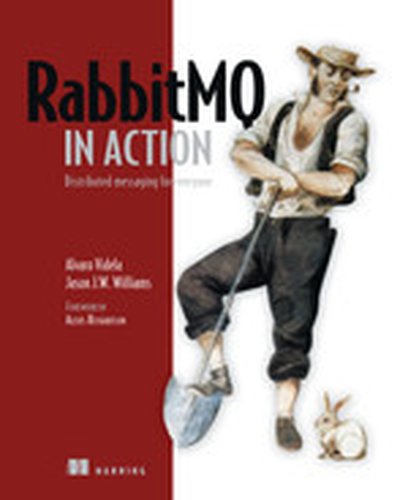
RabbitMQ in Action

RabbitMQ in Action is a fast-paced run through building and managing scalable applications using the RabbitMQ messaging server. It starts by explaining how message queuing works, its history, and how RabbitMQ fits in. Then it shows you real-world examples you can apply to your own scalability and interoperability challenges. About the Technology There's a virtual switchboard at the core of most large applications where messages race between servers, programs, and services. RabbitMQ is an efficient and easy-to-deploy queue that handles this message traffic effortlessly in all situations, from web startups to massive enterprise systems. About the Book RabbitMQ in Action teaches you to build and manage scalable applications in multiple languages using the RabbitMQ messaging server. It's a snap to get started. You'll learn how message queuing works and how RabbitMQ fits in. Then, you'll explore practical scalability and interoperability issues through many examples. By the end, you'll know how to make Rabbit run like a well-oiled machine in a 24 x 7 x 365 environment. What's Inside Learn fundamental messaging design patterns Use patterns for on-demand scalability Glue a PHP frontend to a backend written in anything Implement a PubSub-alerting service in 30 minutes flat Configure RabbitMQ's built-in clustering Monitor, manage, extend, and tune RabbitMQ About the Reader Written for developers familiar with Python, PHP, Java, .NET, or any other modern programming language. No RabbitMQ experience required. About the Authors Alvaro Videla is a developer and architect specializing in MQ-based applications. Jason J. W. Williams is CTO of DigiTar, a messaging service provider, where he directs design and development. Quotes In this outstanding work, two experts share their years of experience running large-scale RabbitMQ systems. - Alexis Richardson, VMware Well-written, thoughtful, and easy to follow. - Karsten Strøbæk, Microsoft Soup to nuts on RabbitMQ; a wide variety of in-depth examples. - Patrick Lemiuex, Voxel Internap This book will take you to a messaging wonderland. - David Dossot, Coauthor of Mule in Action

IBM System Storage N series with VMware vSphere 4.1

This IBM® Redbooks® publication provides a basic introduction to the IBM System Storage® N series, virtualization, and VMware. It explains how to use the N series with VMware vSphere 4 environments and the benefits of doing so. Examples are given on how to install and set up VMware ESXi server with the N series. This edition includes information about the Virtual Storage Console (VSC), which is another N series software product that works with VMware. VSC provides local backup and recovery capability. You have the option to replicate backups to a remote storage system by using SnapMirror relationships. Backups can be performed on individual virtual machines or on datastores with the option of updating the SnapMirror relationship as part of the backup on a per job basis. Similarly, restores can be performed at a data-store level or individual virtual machine level. IBM System Storage N series in conjunction with VMware vSphere 4 helps complete the virtualization hierarchy by providing both a server and storage virtualization solution. Although this configuration can further assist with other areas of virtualization, networks, and applications, these areas of virtualization are not covered in detail in this book.

Planning and Installing the IBM eServer X3 Architecture Servers

The IBM eServer X3 Architecture servers are the new third-generation Enterprise X-Architecture servers from IBM. The xSeries 366 was announced in February 2005, the xSeries 460 was announced in May, and the xSeries 260 was announced in August. These X3 Architecture servers are ideal for random commercial workloads with high processor and memory bandwidth requirements. Although aimed at different client sets, they share common components and options. The x460 is targeted at clients who need to implement a large single image “scale-up” configuration of up to 32 processors and 512 GB of RAM. The x366 is targeted at the high-performance environment where rack space is a premium. The x260 is for clients who need high performance but also require large amounts of internal disk storage. This IBM Redbooks publication provides a detailed technical description of the three servers and explains how to plan, install, configure, and manage these high-performance servers running 32-bit and 64-bit versions of Windows Server 2003, Red Hat Enterprise Linux, SUSE Linux Enterprise Server, and VMware ESX Server.

Azure Local and Atos customer zero story supporting internal services

Atos had a need for some services to remain on-prem and had numerous VMWare clusters coming to end of life. Azure Local was the selected solution, and in this talk we look at why Azure Local was chosen, the benefits it delivered, and how we achieved a migration off VMWare in short timescales, saving money and delivering new capabilities to our internal IT services.

Enterprise storage for Azure VMware solution: Simplify, scale and save

Discover how Pure Storage Cloud enhances Azure VMware Solution by simplifying operations and boosting agility. This session explores the technical foundations of resilient storage with enterprise features and shows how customers can reduce costs across cloud migration, disaster recovery, and hybrid deployments.

The most exciting innovations today - from AI to scientific discovery to enterprise IT optimization - all have something in common: a foundation of powerful infrastructure. Learn how enhancements to AI Hypercomputer - from TPUs and GPUs, to storage and networking, to frameworks like JAX - scale performance and cost efficiency for inference, training, and scientific computing. Discover how new workload-specific capabilities across core infrastructure services improve performance & reliability for modern applications and enterprise workloads like SAP and VMWare.