talk-data.com talk-data.com

Topic

XML

Extensible Markup Language (XML)

markup_language data_exchange data_storage file_format

241

tagged

Activity Trend

1 peak/qtr
2020-Q1 2026-Q1

Activities

Showing filtered results

Filtering by: O'Reilly Data Engineering Books ×
Using XML with Legacy Business Applications

"This volume offers relentlessly pragmatic solutions to help your business applications get the most out of XML, with a breezy style that makes the going easy. Mike has lived this stuff; he has a strong command of the solutions and the philosophy that underlies them." --Eve Maler, XML Standards Architect, Sun Microsystems Businesses running legacy applications that do not support XML can face a tough choice: Either keep their legacy applications or switch to newer, XML-enhanced applications. XML presents both challenges and opportunities for organizations as they struggle with their data. Does this dilemma sound familiar? What if you could enable a legacy application to support XML? You can. In e-commerce expert Michael C. Rawlins outlines usable techniques for solving day-to-day XML-related data exchange problems. Using an easy-to-understand cookbook approach, Rawlins shows you how to build XML support into legacy business applications using Java and C++. The techniques are illustrated by building converters for legacy formats. Converting CSV files, flat files, and X12 EDI to and from XML will never be easier! Using XML with Legacy Business Applications, Inside you'll find: A concise tutorial for learning to read W3C XML schemas An introduction to using XSLT to transform between different XML formats Simple, pragmatic advice on transporting XML documents securely over the Internet For developers working with either MSXML with Visual C++ or Java and Xerces: See Chapter 3 for a step-by-step guide to enabling existing business applications to export XML documents See Chapter 2 for a step-by-step guide to enabling existing business applications to import XML documents See Chapter 5 for code examples and tips for validating XML documents against schemas See Chapter 12 for general tips on building commerce support into an application For end users who need a simple and robust conversion utility: See Chapter 7 for converting CSV files to and from XML See Chapter 8 for converting flat files to and from XML See Chapter 9 for converting X12 EDI to and from XML See Chapter 11 for tips on how to use these techniques together for complex format conversions The resource-filled companion Web site (www.rawlinsecconsulting.com/booksupplement) includes executable versions of the utilities described in the book, full source code in C++ and Java, XSLT stylesheets, bug fixes, sample input and output files, and more. 0321154940B07142003
DB2® Universal Database™ v8 Application Development Certification Guide, 2nd Edition

You will find every skill and technique you need to build enterprise, Web, and eBusiness applications with DB2 UDB v8. This book is IBM's official guide to becoming an IBM Certified Application Developer for the DB2 Universal Database v8 Family. New to the second edition is the inclusion of the information that you will need to prepare for the Fundamentals exam, a prerequisite to the Application Development exam. This section covers information about the DB2 products, tools, connectivity, data objects, manipulation, control, security, and concurrency. The application development section has been revised and updated to reflect new powerful features of DB2. You can review the DB2 client-server environment, the role of SQL, and the basic structure of a DB2 application; compare the programming interfaces available for DB2 application development, choosing the ones most appropriate to each project; and, of course, prepare for the Application Development Exam. As a bonus, information that is not needed to become an IBM Certified Application Developer for the DB2 Universal Database v8 Family has been provided by the authors to show you how to take advantage of IBM's powerful Extenders for DB2. Using Extenders, you can build searchable indexes to quickly find elements within text, audio, image, or XML objects stored in DB2. Section 1 covers all the fundamentals of DB2 to get you started and to prepare you for the DB2 UDB v8 Family Fundamentals Exam (test 700) Section 2 covers every DB2 v8 programming interface and strategy and will help prepare you for the DB2 UDB v8 Family Application Development Exam (test 703) Section 3 contains bonus materials including information about the many Extenders that are available to create powerful indexes for text, audio, image, and XML documents The accompanying CD-ROM contains a complete trial version of DB2 UDB v8 Personal Edition along with the Application Development Client.

Modeling Business Objects with XML Schema

XML Schema is the new language standard from the W3C and the new foundation for defining data in Web-based systems. There is a wealth of information available about Schemas but very little understanding of how to use this highly formal specification for creating documents. Grasping the power of Schemas means going back to the basics of documents themselves, and the semantic rules, or grammars, that define them. Written for schema designers, system architects, programmers, and document authors, Modeling Business Objects with XML Schema guides you through understanding Schemas from the basic concepts, type systems, type derivation, inheritance, namespace handling, through advanced concepts in schema design. Reviews basic XML syntax and the Schema recommendation in detail.Builds a knowledge base model step by step (about jazz music) that is used throughout the book.*Discusses Schema design in large environments, best practice design patterns, and Schema's relation to object-oriented concepts.

Content Syndication with RSS

RSS is sprouting all over the Web, connecting weblogs and providing news feeds. Originally developed by Netscape in 1999, RSS (which can stand for RDF Site Summary, Rich Site Summary, or Really Simple Syndication) is an XML-based format that allows web developers to describe and syndicate web site content. Using RSS files allows developers to create a data feed that supplies headlines, links, and article summaries from a web site. Other sites can then incorporate them into their pages automatically. Although RSS is in widespread use, people struggle with its confusing and sometimes conflicting documentation and versions. Content Syndication with RSS is the first book to provide a comprehensive reference to the specifications and the tools that make syndication possible. Content Syndication with RSS offers webloggers, developers, and the programmers who support them a thorough explanation of syndication in general and RSS in particular. Written for web developers who want to offer XML-based feeds of their content, as well as developers who want to use the content that other people are syndicating, the book explores and explains metadata interpretation, different forms of content syndication, and the increasing use of web services in this field. This concise volume begins with an introduction to content syndication on the Internet: its purpose, limitations, and traditions, and answers the question of why would you consider "giving your content away" like this? Next, the book delves into the architecture of content syndication with an overview of the entire system, from content author to end user on another site. You'll follow the flow of data: content, referral data, publish-and-subscribe calls, with a detailed look at the protocols and standards possible at each step. Topics covered in the book include: Creating XML syndication feeds with RSS 0.9x and 2.0 Beyond headlines: creating richer feeds with RSS 1.0 and RDF metadata Using feeds to enrich a site or find information Publish and subscribe: intelligent updating News aggregators, such as Meerkat, Syndic8, and Newsisfree, and their web services Alternative industry-centric standards If you're interested in producing your own RSS feed, this step-by-step guide to implementation is the book you'll want in hand.

XML Data Management: Native XML and XML-Enabled Database Systems

"This is an excellent book that combines a practical and analytical look at the subject." —Leo Korman, Principal Software Engineer, KANA Software As organizations begin to employ XML within their information-management and exchange strategies, data management issues pertaining to storage, retrieval, querying, indexing, and manipulation increasingly arise. Moreover, new information-modeling challenges also appear. —with its contributions from experts at the forefront of the XML field—addresses these key issues and challenges, offering insights into the advantages and drawbacks of various XML solutions, best practices for modeling information with XML, and developing custom, in-house solutions. XML Data Management In this book, you will find discussions on the newest native XML databases, along with information on working with XML-enabled relational database systems. In addition, thoroughly examines benchmarks and analysis techniques for performance of XML databases. XML Data Management Topics covered include: The power of good grammar and style in modeling information to alleviate the need for redundant domain knowledge Tamino's XML storage, indexing, querying, and data access features The features and APIs of open source eXist Berkeley DB XML's ability to store XML documents natively IBM's DB2 Universal Database and its support for XML applications Xperanto's method of addressing information integration requirements Oracle's XMLType for managing document centric XML documents Microsoft SQL Server 2000's support for exporting and importing XML data A generic architecture for storing XML documents in a relational database X007, XMach-1, XMark, and other benchmarks for evaluating XML database performance Numerous case studies demonstrate real-world problems, industry-tested solutions, and creative applications of XML data management solutions. Written for both XML and relational database professionals, provides a promising new approach to data management, one that is sure to positively impact the way organizations manage and exchange information. XML Data Management 0201844524B01302003

Real World XML

Steven Holzner's friendly, easy-to-read style has turned this book (formerly known as Inside XML) into the leading reference on XML. Unlike other XML books, this one is packed with hundreds of real-world examples, fully tested and ready to use! Holzner teaches you XML like no other author can, covering every major XML topic today and detailing the ways XML is used now--connecting XML to databases (both locally and on web servers), stying XML for viewing in today's web browsers, reading and parsing XML documents in browsers, writing and using XML schemas, creating graphical XML browsers, working with the Simple Object Access Protocol (SOAP), and a great deal more. Real World XML is designed to be the standard in XML coverage--more complete, and more accessible, than any other. "The author's approach is definitely bottom up, written in a highly personable tone. He makes efficient use of example code, which sets this book apart from many I have read in the past. His examples bring to life the code without overwhelming the reader, and he does not present any examples for which the reader has not been prepared. In addition, no prior knowledge of XML is assumed. As such, this is an excellent book for both beginners and intermediate level web designers and programmers. Experts, too, will find this book of value, due to its emphasis on real world applicability. Overall, this book will benefit all web developers and programmers, with a special emphasis on beginner and intermediate developers."--Donna A. Dulo, MS, MA, Senior Systems Engineer, U.S. Department of Defense "This book will provide a brilliant basis for anyone wishing to keep up to speed with the new XML developments."--Mr. Andrew Madden, Department of Computer Science, University of Wales "I found this book's strengths to be: its exhaustive specification reference for the conscientious developer; access to the official specs, which is key; the wide variety of choices provided for all aspects of XML; several alternatives provided for each editor, browser, parser, stylesheet transform engine, and programming language; and working examples that show the power of the tools used."--Jaime Ryan, Software Developer/Documentation Manager, Blue Titan Software

XSLT Cookbook

Critical for converting XML documents, and extremely versatile, the XSLT language nevertheless has complexities that can be daunting. The XSLT Cookbook is a collection of hundreds of solutions to problems that Extensible Stylesheet Language Transformations (XSLT) developers regularly face. The recipes range from simple string-manipulation and mathematical processing to more complex topics like extending XSLT, testing and debugging XSLT stylesheets, and graphics creation with SVG. Recipes can be run directly or tweaked to fit your particular application's needs more precisely. Each recipe walks through a problem and a solution, with explanations of the choices made and techniques used in creating that solution, and many recipes include alternate solutions and explore issues like convenience and performance. Topics covered include: String manipulation Mathematical processing Date and time handling Interactions between calendar systems Selecting content in source documents Efficient tree-manipulation Conversions from XML to plain text Tweaking XML documents with stylesheets Using XSLT to query XML documents Generating HTML with XSLT Creating charts and graphs with SVG and XSLT Generating C and XSLT code using XSLT Processing Visio documents in XSLT Working with XML Topic Maps (XTM) Using XSLT to create SOAP documentation from WSDL Extending XSLT with additional functions Embedding XSLT in other processing Testing and debugging XSLT stylesheets Creating generic XSLT processors which work on many XML vocabularies The XSLT Cookbook provides an ideal companion both for developers still figuring out XSLT's template-based approach who want to learn by example, and for developers who know XSLT and want a collection of quickly reusable recipes. XSLT frequently offers a number of ways to perform a transformation, and the best solution may not always be the most straightforward. The recipes in this Cookbook demonstrate and explain XSLT's template-based logic, a frequent stumbling block for developers new to XSLT. Among the variety of XSLT books now available, none has the explicit solution-oriented approach of this Cookbook.

FileMaker Pro 6 for Windows and MacIntosh: Visual QuickStart Guide

If you recently upgraded to FileMaker Pro 6 to take advantage of its new digital image management features or its full XML support, you'll also want to upgrade to FileMaker Pro 6 for Windows and Macintosh: Visual QuickStart Guide. Revised to include all of the new features in FileMaker Pro 6, this update to the popular Visual QuickStart Guide is still the fastest and easiest way to learn FileMaker Pro. Loaded with screenshots and clear, concise explanations of database publishing techniques, FileMaker Pro 6 for Windows and Macintosh: Visual QuickStart Guide takes you from working with records and files to creating and designing databases, printing and networking with FileMaker, and Web publishing with FileMaker in no time. Step-by-step tasks show you how to use new digital image management features to organize and work with massive amounts of digital photos with minimal effort. You'll also learn to take advantage of FileMaker's new XML support to easily share and integrate data with other applications-even those not running FileMaker.

Microsoft® .NET XML Web Services Step by Step

XML Web services are the next logical step in the evolution of the Internet. Teach yourself how to write and deploy XML Web services for Microsoft® .NET?one step at a time—with this modular, accessible tutorial. It delivers expert, task-based instruction plus a real-world XML service example to help you apply what you already know about Microsoft Visual C#™, Microsoft Visual Basic® .NET, and object-oriented programming so that you can learn XML Web services development at your own pace.

Definitive VoiceXML™

The start-to-finish guide to building enterprise-class VoiceXML applications. Code examples and UML diagrams provided for each VoiceXML element Fully developed VoiceXML applications using Java servlets, JSP, and .NET Detailed coverage of text-to-speech and automatic speech recognition technologies "XML is not a spoken language, but thanks to VoiceXML, it is the language of choice for developing spoken interfaces. If you want to voice-enable your applications and Web sites, this book speaks your language." —Charles F. Goldfarb Definitive VoiceXML bridges the gap between enterprise computing and telephony engineering, demonstrating exactly how to build new enterprise-class voice applications and voice-enable existing applications. It's the first book that delivers the depth and breadth of knowledge needed by both enterprise and telephony developers, thoroughly addressing the unique challenges of building voice systems for business. VoiceXML in depth: its role, goals, and key techniques Effective ways to architect and integrate enterprise voice applications Detailed case studies utilizing VoiceXML, Java servlets, JSP, and .NET Thorough coverage of the W3C VXML 2.0 standard Speech Recognition Grammar Format (SRGF) and Speech Synthesis Markup Language (SSML) Complete VoiceXML language reference Whether you're developing systems for customer service, finance, travel, wireless commerce, or anything else, Definitive VoiceXML gives you the proven techniques you need to maximize performance, reliability, and ROI. Part of The Charles F. Goldfarb Definitive XML Series

Domino Web Service Application Development for the IBM eServer iSeries Server

"Contextual collaboration" is a new term whirling in the industry today. This phenomenal new type of business asset can be realized by two major mechanisms: the components managing mechanism and the services delivery mechanism. The component managing mechanism deals with calendar, workflow, messaging, e-mail, and so on, while the services delivery mechanism deals with receiving and responding to a request. In terms of IBM product offerings, we have Domino for the component managing mechanism and WebSphere for the services delivery mechanism. We need standards to connect the applications from different business entities: your customers, your suppliers, your business partners, and you. These business entities may run their business applications on different platforms, different application languages, different networks, and so on. To connect these un-identical entities together, we need standards. For that, we have Web Service standards such as SOAP, WSDL, XML, and UDDI. This IBM Redbooks publication provides real application scenarios which illustrate how to transform existing Domino applications into either a Web Service provider or a Web Service requester. This is achieved and served through the integration of Domino and WebSphere Application Server.

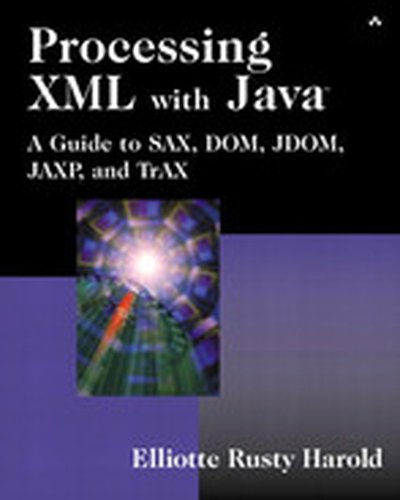
Processing XML with Java™: A Guide to SAX, DOM, JDOM, JAXP, and TrAX

Praise for Elliotte Rusty Harold’s Processing XML with Java™ “The sophistication and language are very appropriate for Java and XML application developers. You can tell by the way the author writes that he too is a developer. He delves very deeply into the topics and has really taken things apart and investigated how they work. I especially like his coverage of ‘gotchas,’ pitfalls, and limitations of the technologies.” — John Wegis, Web Engineer, Sun Microsystems, Inc. “Elliotte has written an excellent book on XML that covers a lot of ground and introduces current and emerging technologies. He helps the novice programmer understand the concepts and principles of XML and related technologies, while covering the material at a level that’s deep enough for the advanced developer. With a broad coverage of XML technologies, lots of little hints, and information I haven’t seen in any other book on the topic, this work has become a valuable addition to my technical library.” — Robert W. Husted, Member, Technical Staff, Requisite Technology, Inc. “The code examples are well structured and easy to follow. They provide real value for someone writing industrial-strength Java and XML applications. The time saved will repay the cost of this book a hundred times over. “The book also contains more of the pearls of wisdom we’ve come to expect from Elliotte Rusty Harold—the kind of pointers that will save developers weeks, if not months, of time.” — Ron Weber, Independent Software Consultant Written for Java programmers who want to integrate XML into their systems, this practical, comprehensive guide and reference shows how to process XML documents with the Java programming language. It leads experienced Java developers beyond the basics of XML, allowing them to design sophisticated XML applications and parse complicated documents. provides a brief review of XML fundamentals, including XML syntax; DTDs, schemas, and validity; stylesheets; and the XML protocols XML-RPC, SOAP, and RSS. The core of the book comprises in-depth discussions on the key XML APIs Java programmers must use to create and manipulate XML files with Java. These include the Simple API for XML (SAX), the Document Object Model (DOM), and JDOM (a Java native API). In addition, the book covers many useful supplements to these core APIs, including XPath, XSLT, TrAX, and JAXP. Processing XML with Java™ Practical in focus, is filled with over two hundred examples that demonstrate how to accomplish various important tasks related to file formats, data exchange, document transformation, and database integration. You will learn how to read and write XML documents with Java code, convert legacy flat files into XML documents, communicate with network servers that send and receive XML data, and much more. Readers will find detailed coverage of the following: Processing XML with Java™ How to choose the right API for the job Reading documents with SAX SAX filters Validation in several schema languages DOM implementations for Java The DOM Traversal Module Output from DOM Reading and writing XML documents with JDOM Searching XML documents with XPath Combining XSLT transforms with Java code TrAX, the Transformations API for XML JAXP, the Java API for XML Processing In addition, the book includes a convenient quick reference that summarizes the major elements of all the XML APIs discussed. A related Web site, located at http://www.cafeconleche.org/books/xmljava/, contains the entire book in el

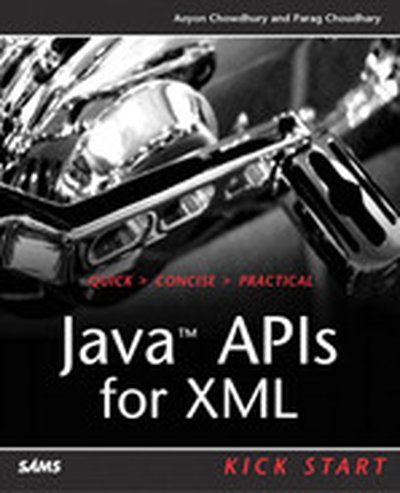
Java™ APIs for XML Kick Start

JAX: Java APIs for XML Kick Start covers the JAX APIs - fundamental for development of Java-based Web service applications as well as other e-Commerce applications requiring the exchange and manipulation of data. The book includes an overview of Web service fundamentals including SOAP, UDDI, and WSDL, all of which will be built upon in later examples. The book then covers the current set of JAX APIs for data processing, for messaging, for writing data to registries and for calling remote applications. Each API is covered from an architectural and implementation perspective, using real-world examples and case studies throughout to illustrate their usefulness. The author will demonstrate both Web service and traditional JAX applications, giving a complete picture of the uses of JAX. The final chapter looks ahead to new developments and new APIs in progress at Sun.

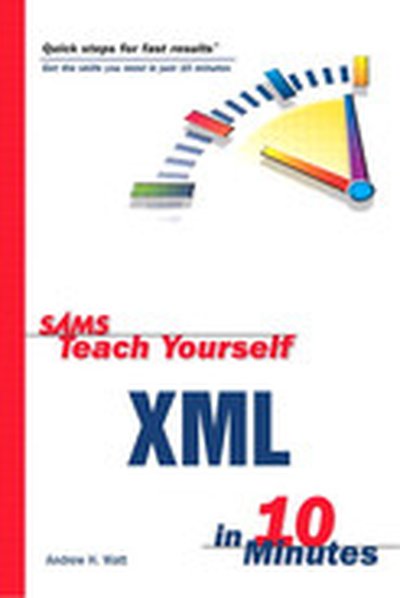
Sams Teach Yourself XML in 10 Minutes

XML is the de-facto standard for manipulating and sharing data among applications. It is supported by every major programming tool and language, including Java, Microsoft .NET, Oracle, SQL Server, etc. All professional developers and administrators - even those who don't intend to build XML applications - need a basic understanding of it just to read and maintain data they receive and process. Many of them don't have the time for a thick reference book or detailed tutorial. Sams Teach Yourself XML in 10 Minutes quickly covers the basics of XML and its family of related concepts, including basic syntax, DTDs, XML Schema, DOM, SAX, XSL, and XPath. Each topic is illustrated with an example to ensure readers' understanding.

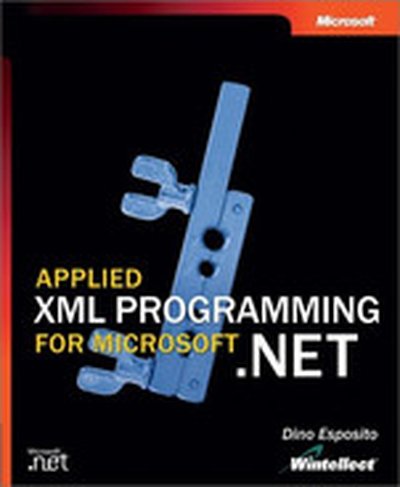
Applied XML Programming for Microsoft® .NET

Get the expert advice you need to succeed in building .NET-connected applications with XML! XML is everywhere in the Microsoft .NET Framework, from Remoting to Web services, and from data access to configuration. Learn about the extensive XML core classes in .NET and find out how to program against its parser in this in-depth guide—written by an expert programming author and consultant on cutting-edge technologies such as Microsoft ASP.NET and Microsoft ADO.NET. You'll find authoritative explanations of technologies such as schemas, transformations, and XPath, plus extensive discussion of data access issues such as synchronization and serialization, the DiffGram format, and the XML extensions in Microsoft SQL Server™ 2000. Along the way, you'll learn exactly how to get the best performance out of XML in the .NET world. You'll also get answers to common questions such as, "When should I use XML Web services instead of Remoting?".

XML Schema Complete Reference, The

With the successful implementation of XML Schema, developers are learning how to increase productivity, improve software reliability, minimize development time, and decrease time to market. This in-depth reference is an all-in-one resource designed to help developers leverage the power and potential of XML schemas by offering a complete roadmap to their creation, design, and use. This authoritative reference and tutorial is filled with practical insights and detailed examples. The book begins by providing a conceptual introduction to XML Schema. From there, coverage shifts to the W3C Schema Recommendation and how to apply schemas to specific business goals. The authors provide insight and instruction throughout on integrating XML schemas into existing technologies such as .NET, Java, Visual Basic, Oracle, and more. The book concludes with a complete case study designed to reinforce and illustrate material covered. Additional topics include: Applications for schemas Simple and complex types XML schema processing and validation Namespaces in XML Using schemas with DOM and SAX XML schema document syntax XML Information Sets XML Schema applications of XPath Whether designing a schema from scratch or integrating schemas into contemporary technologies, is the most complete and definitive sourcebook available for the XML Schema environment. The XML Schema Complete Reference 0672323745B08162002

Advanced SQL:1999

Advanced SQL:1999 - Understanding Object-Relational and Other Advanced Features is the practitioner's handbook to the standard's advanced features. It is not a re-presentation of the standard, but rather an authoritative, in-depth guide to its practical application. Like its companion, SQL:1999 - Understanding Relational Language Components, which explained the standard's basic features, this book will show you how to make your applications both effective and standard-compliant. This handy reference has a modular format so you can explore specific topics with ease. It is equally useful to those upgrading from earlier versions of SQL and those with no previous experience. Written by the standard's distinguished editor, Advanced SQL:1999 will complete your knowledge and support your skills like no other book can. Focuses entirely on the issues that matter to programmers who are connecting applications to databases. Details SQL:1999's object facilities, including structured user-defined types, typed tables, user-defined routines, and routine invocation. Examines facilities new to SQL, including those relating to on-line analytical processing (OLAP), management of external data (SQL/MED), and Java support. Covers the ongoing development of XML support. Includes appendices that cover the SQL:1999 annexes, a SQL:1999 example using UDTs, status codes, and useful information on the standardization process.

XSL-FO

No matter how flexible and convenient digital information has become, we haven't done away with the need to see information in print. Extensible Style Language-Formatting Objects, or XSL-FO, is a set of tools developers and web designers use to describe page printouts of their XML (including XHTML) documents. If you need to produce high quality printed material from your XML documents, then XSL-FO provides the bridge.XSL-FO is one of the few books to go beyond a basic introduction to the technology. While many books touch on XSL-FO in their treatment of XSLT, this book offers in-depth coverage of XSL-FO's features and strengths. Author Dave Pawson is well known in the XSLT and XSL-FO communities, and maintains the XSLT FAQ. An online version of this book has helped many developers master this technology. XSL-FO is the first time this reference is available in print.The first part of the book provides an overview of the technology and introduces the XSL-FO vocabulary. The author discusses how to choose among today's implementations, explains how to describe pages, and shows you what is going on in the processor in terms of layout. You'll learn about the basics of formatting and layout as well as readability.The second part focuses on smaller pieces: blocks, inline structures, graphics, color and character level formatting, concluding by showing how to integrate these parts into a coherent whole. XSL-FO also explores organizational aspects you'll need to consider?how to design your stylesheets strategically rather than letting them evolve on their own. XSL-FO is more than just a guide to the technology; the book teaches you how to think about the formatting of your documents and guides you through the questions you'll need to ask to ensure that your printed documents meet the same high standards as your computer-generated content. Written for experienced XML developers and web designers, no other book contains as much useful information on this practical technology.

XPath and XPointer

Referring to specific information inside an XML document is a little like finding a needle in a haystack: how do you differentiate the information you need from everything else? XPath and XPointer are two closely related languages that play a key role in XML processing by allowing developers to find these needles and manipulate embedded information. XPath describes a route for finding specific items by defining a path through the hierarchy of an XML document, abstracting only the information that's relevant for identifying the data. XPointer extends XPath to identify more complex parts of documents. The two technologies are critical for developers seeking needles in haystacks in various types of processing. XPath and XPointer fills an essential need for XML developers by focusing directly on a critical topic that has been covered only briefly. Written by John Simpson, an author with considerable XML experience, the book offers practical knowledge of the two languages that underpin XML, XSLT and XLink. XPath and XPointer cuts through basic theory and provides real-world examples that you can use right away.Written for XML and XSLT developers and anyone else who needs to address information in XML documents, the book assumes a working knowledge of XML and XSLT. It begins with an introduction to XPath basics. You'll learn about location steps and paths, XPath functions and numeric operators. Once you've covered XPath in depth, you'll move on to XPointer--its background, syntax, and forms of addressing. By the time you've finished the book, you'll know how to construct a full XPointer (one that uses an XPath location path to address document content) and completely understand both the XPath and XPointer features it uses. XPath and XPointer contains material on the forthcoming XPath 2.0 spec and EXSLT extensions, as well as versions 1.0 of both XPath and XPointer. A succinct but thorough hands-on guide, no other book on the market provides comprehensive information on these two key XML technologies in one place.

Special Edition Using XML, Second Edition

Special Edition Using XML, Second Edition gives developers a formal introduction to XML technology, starting with in-depth coverage of basic syntax and fundamental "pieces" of XML, including DTDs, Schemas, and Namespaces. The authors then cover various applications of XML, including transforming and displaying XML documents using CSS and XSL, locating data within XML documents using Xpath, Xlink and Xpointer, programming XML with SAX or DOM, including XML in Java or .NET applications, XML Scripting with Perl, XHTML and WML for presentation on traditional and hand-held Web browsers, and querying data or documents with Xquery. The final chapters cover technologies related to XML such as SVG, SMIL, and RDF, focusing on the practical features developers can put to use today.