talk-data.com talk-data.com

Topic

XML

Extensible Markup Language (XML)

markup_language data_exchange data_storage file_format

241

tagged

Activity Trend

1 peak/qtr
2020-Q1 2026-Q1

Activities

Showing filtered results

Filtering by: O'Reilly Data Engineering Books ×
Professional XML

As XML gains popularity, developers are looking to implement XML technologies in their line-of-business applications This book offers readers real-world insight into XML so that they can build the best possible applications Offers an in-depth look at XML and discusses XML tools, services (RSS, SOAP, REST, WSDL), programming (DOM, SAX, Ajax), and languages (.NET, Java, PHP)

XQuery

With the XQuery 1.0 standard, you finally have a tool that will make it much easier to search, extract and manipulate information from XML content stored in databases. This in-depth tutorial not only walks you through the XQuery specification, but also teaches you how to program with this widely anticipated query language. XQuery is for query writers who have some knowledge of XML basics, but not necessarily advanced knowledge of XML-related technologies. It can be used both as a tutorial, by reading cover to cover, and as a reference, by using the comprehensive index and appendixes. Either way, you will find the background knowledge in namespaces, schemas, built-in types and regular expressions that is relevant to writing XML queries. This book provides: A high-level overview and quick tour of XQuery Information to write sophisticated queries, without being bogged down by the details of types, namespaces, and schemas Advanced concepts for users who want to take advantage of modularity, namespaces, typing and schemas Guidelines for working with specific types of data, such as numbers, strings, dates, URIs and processing instructions A complete alphabetical reference to the built-in functions and types You will also learn about XQuery's support for filtering, sorting, and grouping data, as well as how to use FLWOR expressions, XPath, and XQuery tools for extracting and combining information. With this book, you will discover how to apply all of these tools to a wide variety of data sources, and how to recombine information from multiple sources into a single final output result. Whether you're coming from SQL, XSLT, or starting from scratch, this carefully paced tutorial takes you through the final 1.0 standard in detail.

Schematron

Schematron is a rule-based XML schema language, offering flexibility and power that W3C XML schema, RELAX NG, and DTDs simply can't match. You need Schematron and can't settle for other languages if you have to check rules that go beyond checking the document structures (i.e., checking that an element bar is included in element foo) and their datatypes. Schematron is the right tool for checking conditions such as "startDate is earlier than or equal to endDate." Schematron is also the right tool to use if you have to raise user-friendly error messages rather than depend on error messages that are generated by a schema processor and that are often obscure. Schematron builds on XPath. You will need to understand XPath to to get the most from Schematron.

Beyond Schemas: Planning Your XML Model

Have you ever wondered how to get started writing your own schema? As you prepare to create your schema, you must consider a number of factors. This guide explains each of those factors in detail and recommends an approach for documenting your schema development plan in an information model. Your information model can not only be used as a planning mechanism to develop your schema but can also be used as a training resource and as a reference guide for those using the schema after it is developed. By putting a well-thought-out information model in place, you are bound to produce a schema that you can use indefinitely and build upon easily.

Designing Forms for Microsoft Office InfoPath and Forms Services 2007

"Microsoft Office InfoPath represents a revolutionary leap in XML technologies and a new paradigm for gathering business-critical information. I am delighted that Scott Roberts and Hagen Green, two distinguished members of the InfoPath product team, decided to share their experience in this book." --From the Foreword by Jean Paoli, cocreator of XML 1.0 and Microsoft Office InfoPath Microsoft Office InfoPath 2007 offers breakthrough tools for gathering, managing, and integrating business-critical information, and creating efficient forms-driven processes. Two longtime members of Microsoft's InfoPath product team have written the first comprehensive, hands-on guide to building successful XML-based solutions with InfoPath 2007. The book opens with a practical primer on the fundamentals of InfoPath form template design for information workers and application developers at all levels of experience. It then moves into advanced techniques for customizing, integrating, and extending form templates--with all the code examples and detail needed by professional developers. Learn how to: Design form templates: create blank form templates, insert and customize controls, use advanced formatting, and construct and lay out views Work with data: start with XML data or schema, manually edit data sources, and understand design-time visuals Add custom business logic to forms, and integrate them with other applications Retrieve and query data from external data sources, including XML files, databases, SharePoint lists, Web services, and ADO.NET DataSets Submit and receive form data using ADO.NET Save, preview, and publish to e-mail, SharePoint, and more Build reusable components with template parts Create workflows with SharePoint and InfoPath E-Mail Forms Administer Forms Services and Web-enabled form templates Build advanced form templates using C# form code, custom controls, add-ins, and the new InfoPath 2007 managed object model Design form templates using Visual Studio Tools for Office (VSTO) Update, secure, and optimize your form templates List of Figures PART I: Designing Forms

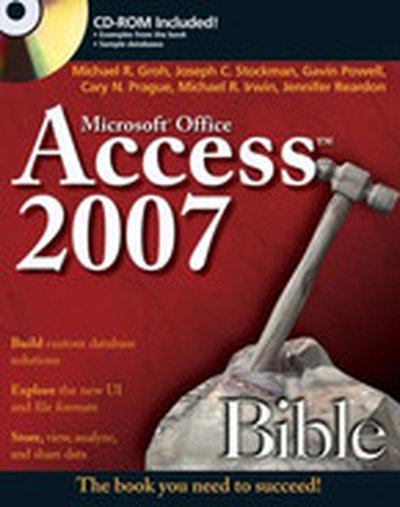
Access™ 2007 Bible

I recommend this book for anyone who wants a strong foundation in Access. —Jeff Lenamon, CIBC World Markets Updated edition with exciting new Access 2007 features! Harness the power of Access 2007 with the expert guidance in this comprehensive reference. Beginners will appreciate the thorough attention to database fundamentals and terminology. Experienced users can jump right into Access 2007 enhancements like the all-new user interface and wider use of XML and Web services. Each of the book's six parts thoroughly focuses on key elements in a logical sequence, so you have what you need, when you need it. Designed as both a reference and a tutorial, Access 2007 Bible is a powerful tool for developers needing to make the most of the new features in Access 2007. Build Access tables using good relational database techniques Construct efficient databases using a five-step design method Design efficient data-entry and data display forms Utilize the improved Access report designer Use Visual Basic(r) for Applications and the VBA Editor to automate applications Build and customize Access 2007 ribbons Seamlessly exchange Access data with SharePoint(r) Employ advanced techniques such as the Windows(r) API and object-oriented programming Add security and use data replication in your Access applications What's on the CD-ROM? Follow the examples in the book chapter by chapter using the bonus materials on the CD-ROM. You'll find separate Microsoft Access database files for each chapter and other working files, including All the examples and databases used in the book, including database files, images, data files in various formats, and icon files used in the book's examples A complete sample application file, including queries, reports, objects, and modules, that you can use as a reference See the CD-ROM appendix for details and complete system requirements. Note: CD-ROM/DVD and other supplementary materials are not included as part of eBook file.

Microsoft® Office Access 2007 on Demand

Microsoft Office Access 2007 For those who would rather be shown how than told how See How To Create databases more efficiently using a new results-oriented interface Use tools for building a database that makes information easier to find and use Import data from other programs, HTML, XML files, and other databases Use forms, filters, queries, and reports to capture and analyze data Discover ways to prevent data corruption and unauthorized access Share your data with others through interactive web pages Put your newly acquired skills to work using the online workshops Organize information and add impact with clip art, SmartArt diagrams, tables, and charts Use Groove and SharePoint Team Services to collaborate and share documents and information Prepare for the Microsoft Certified Application Specialist (MCAS) exam On the Web This book uses real-world examples to give you a context in which to use the task. This book also includes workshops to help you put together individual tasks into projects. The Access example files that you need for project tasks are available at www.perspection.com Author Bio Perspection has written and produced books on a variety of computer software–including Microsoft Office 2003 and XP, Microsoft Windows XP, Apple Mac OS X Panther, Adobe Photoshop CS2, Macromedia Flash 8, Macromedia Director MX, and Macromedia Fireworks–and Web publishing. In 1991, after working for Apple Computer and Microsoft, Steve Johnson founded Perspection, Inc. Perspection is committed to providing information and training to help people use software more effectively. Perspection has written more than 80 computer books, and sold more Includes MCAS Exam Objectives! This courseware meets the objectives for the Microsoft Certified Application Specialist (MCAS). Upon completion of this courseware, you may be prepared to take the exam for MCAS qualification. To learn more about becoming a Microsoft Certified Application Specialist, visit www.microsoft.com. Category Database Covers Microsoft Office Access 2007 User Level Beginning–Intermediate 1 Getting Started with Access 2 Touring Access Databases 3 Planning and Creating a Custom Database 4 Working with Fields 5 Working with Tables 6 Locating Specific Information Using a Query 7 Simplifying Data Entry with Forms 8 Creating Reports to Convey Information 9 Improving the Appearance of Forms and Reports 10 Working on the Web 11 Importing and Exporting Information 12 Managing a Database 13 Protecting and Securing a Database 14 Customizing Access 15 Enhancing a Database with Programming 16 Working Together on Office Documents New Features Microsoft Certified Applications Specialist Index

Informix Dynamic Server V10 . . . Extended Functionality for Modern Business

This IBM Redbooks publication provides an overview of the Informix Dynamic Server (IDS), Version 10. IDS provides the reliability, flexibility, and ease of maintenance that can enable you to adapt to new customer requirements. It is well known for its blazing online transaction processing (OLTP) performance, legendary reliability, and nearly hands-free administration for businesses of all sizes--all while simplifying and automating enterprise database deployment. Version 10 offers significant improvements in performance, availability, security, and manageability, including patent-pending technology that virtually eliminates downtime and automates many of the tasks that are associated with deploying mission-critical enterprise systems. New features speed application development, enable more robust enterprise data replication, and enable improved programmer productivity through support of IBM Rational development tools, JDBC 3.0, and Microsoft .NET as examples. Version 10 provides a robust foundation for e-business infrastructures with optimized Java support, IBM WebSphere certification, and XML and Web services support. Ready for service-oriented architecture (SOA)? This book also includes descriptions and demonstrations of support that are specific to IDS for an SOA.

Microsoft SQL Server 2005 Analysis Services

Microsoft SQL Server Analysis Services provides fast access to data by means of multidimensional data structures and the multidimensional query languag MDX. Analysis Services provides the capability to design, create, and manage multidimensional cubes based on data warehouse tables, and it serves as the foundation for the Microsoft Business Intelligence strategy. Microsoft SQL Server 2005 Analysis Services gives the reader insight into the way Analysis Services functions. It not only explains ways to design and create multidimensional objects, databases, dimensions, and cubes, but also provides invaluable information about the reasons behind design decisions made by the development team. Here's what you will find inside: Understand the key concepts of multidimensional modeling Explore the multidimensional object model and its definition language Learn the main concepts of the MDX language and gain an in-depth understanding of advanced MDX concepts Understand the mechanisms of integrating multidimensional and relational databases Learn how to build client applications to access data in Analysis Services Examine server architecture, including main data structures, data processing, and query resolution algorithms Gain a deep understanding of the internal and external protocols for data transfer, including the XML/A protocol Explore how Analysis Services manages memory Explore the security model, including role-based security, code-access security, and data security Discover how to monitor and manage Analysis Services All the code for the sample database used in the book can be found at www.informit.com/title/0672327821.

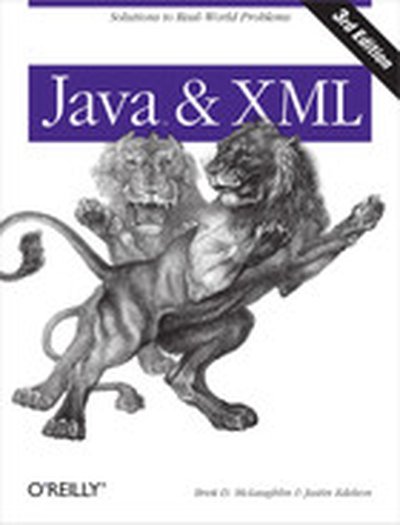
Java and XML, 3rd Edition

Java and XML, 3rd Edition, shows you how to cut through all the hype about XML and put it to work. It teaches you how to use the APIs, tools, and tricks of XML to build real-world applications. The result is a new approach to managing information that touches everything from configuration files to web sites. After two chapters on XML basics, including XPath, XSL, DTDs, and XML Schema, the rest of the book focuses on using XML from your Java applications. This third edition of Java and XML covers all major Java XML processing libraries, including full coverage of the SAX, DOM, StAX, JDOM, and dom4j APIs as well as the latest version of the Java API for XML Processing (JAXP) and Java Architecture for XML Binding (JAXB). The chapters on web technology have been entirely rewritten to focus on the today's most relevant topics: syndicating content with RSS and creating Web 2.0 applications. You'll learn how to create, read, and modify RSS feeds for syndicated content and use XML to power the next generation of websites with Ajax and Adobe Flash. Topics include: The basics of XML, including DTDs, namespaces, XML Schema, XPath, and Transformations The SAX API, including all handlers, filters, and writers The DOM API, including DOM Level 2, Level 3, and the DOM HTML module The JDOM API, including the core and a look at XPath support The StAX API, including StAX factories, producing documents and XMLPull Data Binding with JAXB, using the new JAXB 2.0 annotations Web syndication and podcasting with RSS XML on the Presentation Layer, paying attention to Ajax and Flash applications If you are developing with Java and need to use XML, or think that you will be in the future; if you're involved in the new peer-to-peer movement, messaging, or web services; or if you're developing software for electronic commerce, Java and XML will be an indispensable companion.

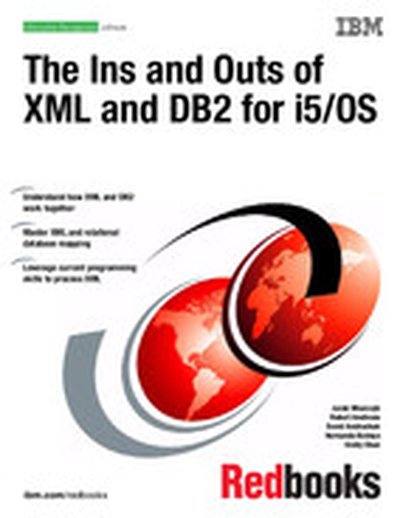
The Ins and Outs of XML and DB2 for i5/OS

XML represents a fundamental change in computing. It allows applications to move away from proprietary file and data formats to a world of open data interchange. XML has become ubiquitous not only because of its range of applications, but also because of its ease of use. Although XML solves many problems by providing a standard format for data interchange, some challenges remain. In the real world, applications need reliable services to store, retrieve, and manipulate data. These services have traditionally been offered by DB2 for i5/OS. In this IBM Redbooks publication, we discuss the challenges of representing XML hierarchies in the relational database model. We provide an in-depth explanation of the three most popular approaches to bridge the hierarchy, the relational model dichotomy: Programmatically process the XML documents and map their hierarchy into a relational database. Use database middleware to handle the XML parsing and XML-to-relational database mapping. Use Extensible Stylesheet Language (XSL) Transformation to transform inbound XML documents directly to SQL scripts. We also share best practices and techniques aimed at streamlining the XML and DB2 for i5/OS integration. Please note that the additional material referenced in the text is not available from IBM.

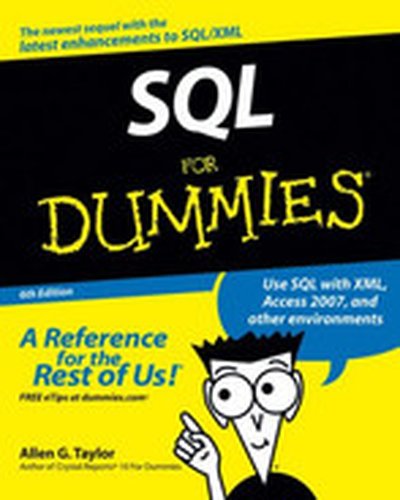
SQL For Dummies®

See how SQL interfaces with today's environments Start building and using relational databases with SQL's newest features The database may be the twenty-first century filing cabinet, but building one is a little more complex than sliding drawers into a metal box. With this book to guide you through all the newest features of SQL, you'll soon be whipping up relational databases, using SQL with XML to power data-driven Web sites, and more! Discover how to * Use SQL in a client/server system * Build a multitable relational database * Construct nested and recursive queries * Set up database security * Use SQL within applications * Map SQL to XML

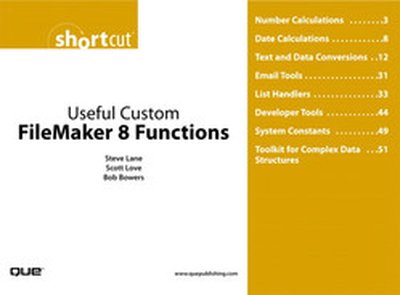
Useful Custom FileMaker 8 Functions

This Short Cut presents a sampling of custom functions that we’ve found useful, or that serve as good examples of functions in our day-to-day practice. The functions are broken into groups according to their purpose, much as FileMaker’s calculation functions are. Please note that these functions are meant as examples—although the examples were not tested exhaustively, nor is this collection meant to be comprehensive. We hope you’ll find some of them helpful directly, or that reading and analyzing others might provide a springboard for your own ideas. Table of Contents Date Calculations Text and Data Conversions Email Tools List Handlers Developer Tools System Constants Toolkit for Complex Data Structures Data API Within FileMaker Data Tree Using XML as a Data Structure Path-Based Selections The Functions

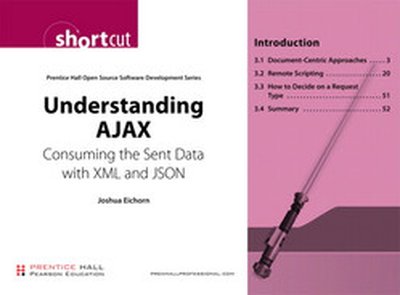
Understanding AJAX: Consuming the Sent Data with XML and JSON

Consuming the Sent Data with XML and JSON (Digital Short Cut) Joshua Eichorn ISBN 0132337932 There are two main ways that AJAX programmers can process the data received from an XMLHttpRequest object or one of the alternative fallback methods. One is known as the document-centric approach and involves parsing a Document Object Model (DOM) document. The other involves remote scripting using a subset of JavaScript called JavaScript Object Notation (JSON), which is the literal syntax for JavaScript objects. This Short Cut is a detailed examination of both techniques.

FileMaker Pro 8 for Windows and Macintosh: Visual Quickstart Guide

Need to learn FileMaker Pro fast? Try a Visual QuickStart Guide! If you've recently upgraded to FileMaker Pro 8, teach yourself this powerful database software the quick and easy way! Using pictures rather than lengthy explanations, this Visual QuickStart Guide takes you from working with records and files to creating and designing databases, printing and networking with FileMaker, and Web publishing with FileMaker in no time. Step-by-step tasks show you how to use new features like PDF and Excel makers; fast match, fast send, layout alignment, email merge, and table import tools; and popular features like digital image management to organize digital photos with minimal effort and XML support to easily share and integrate data with other applications--even those not running FileMaker. This affordably priced, reference style book also includes a companion Web site with excerpts, tips, related links, and more. You'll be up and running in no time!

A Developer’s Guide to SQL Server 2005

"I come from a T-SQL background, so when I first laid my eyes on SQL Server 2005, I was shocked--and then, I was scared! I didn't have a CLR or XML background and suddenly had an urgent need to learn it. SQL Server 2005 is too big of a release to learn from the books online. Fortunately, now there is a book for developers who need to go from SQL Server 2000 to SQL Server 2005 and to do it as painlessly as possible. Basically, it's one-stop shopping for serious developers who have to get up to speed quickly. I'll keep this one on my desk--not on my bookshelf. Well done, Bob and Dan!" --Dr. Tom Moreau SQL Server MVP and Monthly Columnist SQL Server Professional, Brockman Moreau Consulting Inc. "A SQL book truly for developers, from two authorities on the subject. I'll be turning to this book first when I need to understand a component of SQL Server 2005." --Matt Milner Instructor Pluralsight "An excellent book for those of us who need to get up to speed on what's new in SQL Server 2005. The authors made sure this book includes the final information for the release version of the product. Most other books out now are based on beta versions. It covers key areas from XML and SQLCLR to Notification Services. Although the wide variety of information is great, my favorite part was the advice given on when to use what, and how performance is affected." --Laura Blood Senior Software Developer Blue Note Computing, Inc. "SQL Server 2005 is a massive release with a large number of new features. Many of these features were designed to make SQL Server a great application development platform. This book provides comprehensive information about the SQL Server features of most interest to application developers. The lucid text and wealth of examples will give a developer a clear understanding of how to use SQL Server 2005 to a whole new class of database applications. It should be on every SQL Server developer's bookshelf." --Roger Wolter Solutions Architect Microsoft Corporation "While there will be a lot of good books on SQL Server 2005 development, when people refer to the 'bible,' they'll be talking about this book." --Dr. Greg Low Senior Consultant Readify Pty Ltd "SQL Server 2005 is loaded with new features and getting a good overview is essential to understand how you can benefit from SQL Server 2005's features as a developer. Bob and Dan's book goes beyond enumerating the new SQL Server 2005 features, and will provide you with lots of good examples. They did a good job striking a balance between overview and substance." --Michiel Wories Senior Program Manager, SQL Server Microsoft Corporation Few technologies have been as eagerly anticipated as Microsoft SQL Server 2005. Now, two SQL Server insiders deliver the definitive hands-on guide--accurate, comprehensive, and packed with examples. starts where Microsoft's documentation, white papers, and Web articles leave off, showing developers how to take full advantage of SQL Server 2005's key innovations. It draws on exceptional cooperation from Microsoft's SQL Server developers and the authors' extensive access to SQL Server 2005 since its earliest alpha releases. A Developer's Guide to SQL Server 2005 You'll find practical explanations of the new SQL Server 2005 data model, built-in .NET hosting, improved programmability, SQL:1999 compliance, and much more. Virtually every key concept is illuminated via sample code that has been fully updated for and tested with the shipping version of the product. Key coverage includes Using SQL Server 2005 as a .NET runtime host: extending the server while enhancing security, reliability, and performance Writing procedures, functions, triggers, and types in .NET languages Exploiting enhancements to T-SQL for robust error-handling, efficient queries, and improved syntax Effectively using the XML data type and XML queries Implementing native SQL Server 2005 Web Services Writing efficient, robust clients for SQL Server 2005 using ADO.NET, classic ADO, and other APIs Taking full advantage of user-defined types (UDTs), query notifications, promotable transactions, and multiple active result sets (MARS) Using SQL Management Objects (SMO), SQL Service Broker, and SQL Server Notification Services to build integrated applications

XAML in a Nutshell

When Microsoft releases Windows Vista, the new operating system will support applications that employ graphics now used by computer games--clear, stunning, and active. The cornerstone for building these new user interfaces is XAML ("Zammel"), the XML-based markup language that works with Windows Presentation Foundation (WPF), Vista's new graphics subsystem. An acronym for Extensible Application Markup Language, XAML offers a wealth of new controls and elements with exciting capabilities, including animation and rendering of 3D graphics. Windows developers are already jazzed by the possibilities of using XAML for fixed and flow format documents like PDF and HTML, 2D and 3D vector-based graphics, form development, animation, audio and video, transparent layering, and a lot more. Many feel that XAML will eliminate the need for multiple file formats or plug-ins (read: Flash), while lowering development costs and reducing time to market. The problem is, most developers don't know XAML. While it is fairly easy to understand, you still need a quick guide to bring you up to speed before Vista's release, and that's where this book's simple, no nonsense approach comes in. XAML in a Nutshell covers everything necessary to design user interfaces and .NET applications that take advantage of WPF. Prerequisites such as Microsoft's new unified build system, MSBuild, and core XAML constructs and syntax--including shortcuts--are all presented with plenty of examples to get you started. The Core XAML Reference section lets you dig even deeper into syntax rules and attributes for all XAML elements with a series of quick-reference chapters. This section divides XAML elements into logical categories of elements, controls, shapes and geometry, layout, animations, and transformations for easy reference. XAML in a Nutshell helps you learn, firsthand, how to use this XML-based markup language to implement the new generation of user interface graphics. As one reviewer noted, "Strong code examples and an efficient, conversational style take the tedium out of learning XAML and make the subject understandable--even interesting."

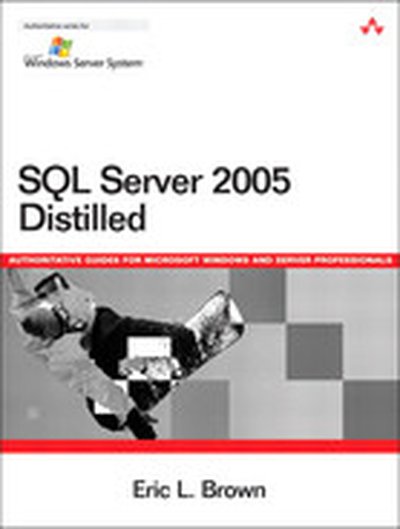
SQL Server 2005 Distilled

Need to get your arms around Microsoft SQL Server 2005 fast, without getting buried in the details? Need to make fundamental decisions about deploying, using, or administering Microsoft’s latest enterprise database? Need to understand what’s new in SQL Server 2005, and how it fits with your existing IT and business infrastructure? SQL Server 2005 Distilled delivers the answers you need–quickly, clearly, and objectively. Former SQL Server team member Eric L. Brown offers realistic insight into every significant aspect of SQL Server 2005: its new features, architecture, administrative tools, security model, data management capabilities, development environment, and much more. Brown draws on his extensive experience consulting with enterprise users, outlining realistic usage scenarios that leverage SQL Server 2005’s strengths and minimize its limitations. Coverage includes Architectural overview: how SQL Server 2005’s features work together and what it means to you Security management, policies, and permissions: gaining tighter control over your data SQL Server Management Studio: Microsoft’s new, unified tool suite for authoring, management, and operations Availability enhancements: online restoration, improved replication, shorter maintenance/recovery windows, and more Scalability improvements, including a practical explanation of SQL Server 2005’s complex table partitioning feature Data access enhancements, from ADO.NET 2.0 to XML SQL Server 2005’s built-in .NET CLR: how to use it, when to use it, and when to stay with T-SQL Business Intelligence Development Studio: leveraging major improvements in reporting and analytics Visual Studio integration: improving efficiency throughout the coding and debugging process Simple code examples demonstrating SQL Server 2005’s most significant new features

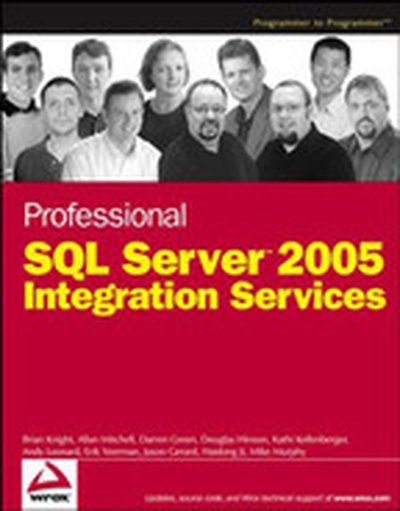
Professional SQL Server™ 2005 Integration Services

This book will help you get past the initial learning curve quickly so that you can get started using SSIS to transform data, create a workflow, or maintain your SQL Server. Offering you hands-on guidance, you'll learn a new world of integration possibilities and be able to move away from scripting complex logic to programming tasks using a full-featured language. What you will learn from this book Ways to quickly move and transform data How to configure every aspect of SSIS How to interface SSIS with web services and XML Techniques to scale the SSIS and make it more reliable How to migrate DTS packages to SSIS How to create your own custom tasks and user interfaces How to create an application that interfaces with SSIS to manage the environment A detailed usable case study for a complete ETL solution Who this book is for This book is for developers, DBAs, and users who are looking to program custom code in all of the .NET languages. It is expected that you know the basics of how to query the SQL Server and have some fundamental programming skills. Wrox Professional guides are planned and written by working programmers to meet the real-world needs of programmers, developers, and IT professionals. Focused and relevant, they address the issues technology professionals face every day. They provide examples, practical solutions, and expert education in new technologies, all designed to help programmers do a better job.

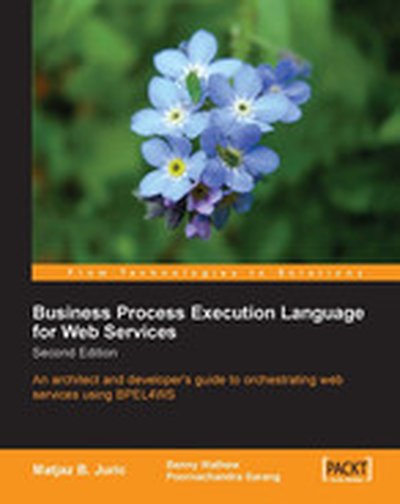
Business Process Execution Language for Web Services - Second Edition

Key Features Architecture, syntax, development and composition of Business Processes and Services using BPEL Advanced BPEL features such as compensation, concurrency, links, scopes, events, dynamic partner links, and correlations Oracle BPEL Process Manager and BPEL Designer Microsoft BizTalk Server as a BPEL server Book Description Web services provide the basic technical platform required for application interoperability. They do not, however, provide higher level control, such as which web services need to be invoked, which operations should be called and in what sequence. Nor do they provide ways to describe the semantics of interfaces, the workflows, or e-business processes. BPEL is the missing link to assemble and integrate web services into a real business process BPEL4WS standardizes process automation between web services. This applies both within the enterprise, where BPEL4WS is used to integrate previously isolated systems, and between enterprises, where BPEL4WS enables easier and more effective integration with business partners. In providing a standard descriptive structure BPEL4WS enables enterprises to define their business processes during the design phase. Wider business benefits can flow from this through business process optimization, reengineering, and the selection of most appropriate processes . Supported by major vendors - including BEA, Hewlett-Packard, IBM, Microsoft, Novell, Oracle, SAP, Sun, and others - BPEL4WS is becoming the accepted standard for business process management. This book provides detailed coverage of BPEL4WS, its syntax, and where, and how, it is used. It begins with an overview of web services, showing both the foundation of, and need for, BPEL. The web services orchestration stack is explained, including standards such as WS-Security, WS-Coordination, WS-Transaction, WS-Addressing, and others. The BPEL language itself is explained in detail, with Code snippets and complete examples illustrating both its syntax and typical construction. Having covered BPEL itself, the book then goes on to show BPEL is used in context. by providing an overview of major BPEL4WS servers. It covers the Oracle BPEL Process Manager and Microsoft BizTalk Server 2004 in detail, and shows how to write BPEL4WS solutions using these servers. What you will learn Chapter 1 provides a detailed introduction to BPEL and Service Oriented Architecture (SOA). It discusses business processes and their automation, explains the role of BPEL, web services, and Enterprise Service Buses (ESB) in SOA, provides insight into business process composition with BPEL, explains the most important features, compares BPEL to other specifications, provides an overview of BPEL servers, and discusses the future of BPEL. Chapter 2 provides a detailed introduction to the Web Services Technology Stack. It discusses the important standards and specifications for using BPEL and implementing SOA with web services, such as WS-Security, WS-Addressing, WS-Coordination, WS-AtomicTransaction, WS-BusinessActivity, WS-Reliable Messaging, etc. Chapter 3 discusses the composition of web services with BPEL. The chapter introduces the core concepts of BPEL and explains how to define synchronous and asynchronous business processes with BPEL. The reader gets familiar with BPEL process structure, partner links, sequential and parallel service invocation, variables, conditions, etc. Chapter 4 goes deeper into the BPEL specification and covers advanced features for modeling complex business processes. Advanced activities, scopes, serialization, fault handing, compensations, event handling, correlation sets, concurrent activities and links, process lifecycle, and dynamic partner links are covered in detail. Chapter 5 explains how to use the Oracle BPEL Process Manager for deploying and executing business processes defined in BPEL. It describes the server architecture, tools, features, and common approaches for managing and debugging BPEL processes. The chapter also looks at graphical development of BPEL processes using Oracle BPEL Designer for JDeveloper and for Eclipse. Chapter 6 takes a detailed look at the advanced features of the Oracle BPEL Process Manager including extension functions, dynamic parallel flows, Web Services Invocation Framework, Java embedding, Notification service, Workflow service, Identity service, and Oracle BPEL Server APIs. Chapter 7 discusses MS BizTalk Server 2004 and its support for BPEL. It explains how to develop business processes in BizTalk and export them to BPEL. It also explains how to import BPEL processes into BizTalk and how to use the Orchestration Designer tool to define processes graphically, and compares BizTalk and BPEL constructs. Appendix A provides a syntax reference for BPEL version 1.1. The appendix covers standard BPEL activities and elements, functions, attributes, and faults. Who this book is for This book is aimed at architects and developers in the design, implementation, and integration phases of advanced information systems and e-business solutions, developing business processes and dealing with the issues of composition, orchestration, transactions, coordination, and security. The book presumes knowledge of XML and web services, web services development (either on J2EE or .NET), and multi-tier architecture