talk-data.com talk-data.com

Event

O'Reilly AI & ML Books

1998-04-17 – 2026-12-25 Oreilly Visit website ↗

Activities tracked

11

Collection of O'Reilly books on AI & ML.

Filtering by: Cloud Computing ×

Sessions & talks

Showing 1–11 of 11 · Newest first

Search within this event →
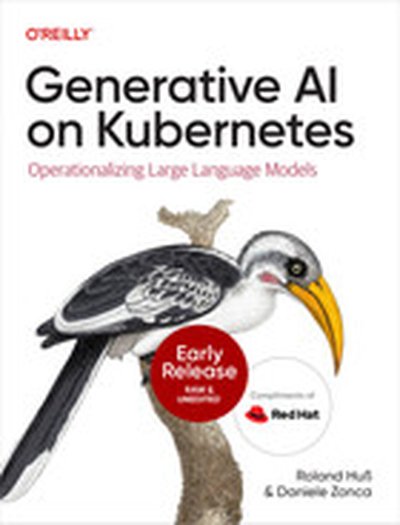
Generative AI on Kubernetes

Generative AI is revolutionizing industries, and Kubernetes has fast become the backbone for deploying and managing these resource-intensive workloads. This book serves as a practical, hands-on guide for MLOps engineers, software developers, Kubernetes administrators, and AI professionals ready to unlock AI innovation with the power of cloud native infrastructure. Authors Roland Huß and Daniele Zonca provide a clear road map for training, fine-tuning, deploying, and scaling GenAI models on Kubernetes, addressing challenges like resource optimization, automation, and security along the way. With actionable insights with real-world examples, readers will learn to tackle the opportunities and complexities of managing GenAI applications in production environments. Whether you're experimenting with large-scale language models or facing the nuances of AI deployment at scale, you'll uncover expertise you need to operationalize this exciting technology effectively. Learn to run GenAI models on Kubernetes for efficient scalability Get techniques to train and fine-tune LLMs within Kubernetes environments See how to deploy production-ready AI systems with automation and resource optimization Discover how to monitor and scale GenAI applications to handle real-world demand Uncover the best tools to operationalize your GenAI workloads Learn how to run agent-based and AI-driven applications
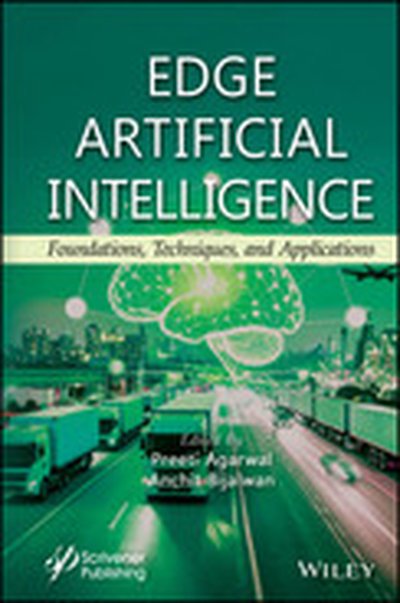
Edge Artificial Intelligence

Secure your expertise in the next wave of computing with this essential book, which provides a comprehensive guide to Edge AI, detailing its foundational concepts, deployment strategies, and real-world applications for revolutionizing performance and privacy across various industries. Edge AI has the potential to bring the computational power of AI algorithms closer to where data is generated, processed, and utilized. Traditionally, AI models are deployed in centralized cloud environments, leading to latency issues, bandwidth constraints, and privacy concerns. Edge AI addresses these limitations by enabling AI inference and decision-making directly on edge devices, such as smartphones, IoT sensors, and edge servers. Despite its challenges, edge AI presents numerous opportunities across various domains. From real-time health monitoring and predictive maintenance in industrial IoT to personalized recommendations in retail and immersive experiences in augmented reality, edge AI has the potential to revolutionize how we interact with technology. This book aims to provide a comprehensive exploration of edge AI, covering its foundational concepts, development frameworks, deployment strategies, security considerations, ethical implications, emerging trends, and real-world applications. This guide is essential for anyone pushing the boundaries to leverage edge computing for enhanced performance and efficiency. Readers will find this volume: Dives deep into the world of edge AI with a comprehensive exploration covering foundational concepts, development frameworks, deployment strategies, security considerations, ethical implications, governance frameworks, optimization techniques, and real-world applications; Offers practical guidance on implementing edge AI solutions effectively in various domains, including architecture design, development frameworks, deployment strategies, and optimization techniques; Explores concrete examples of edge AI applications across diverse domains such as healthcare, industrial IoT, smart cities, and autonomous systems, providing insights into how edge AI is revolutionizing industries and everyday life; Provides insights into emerging trends and technologies in the field of edge AI, including convergence with blockchain, augmented reality, virtual reality, autonomous systems, personalized experiences, and cybersecurity. Audience Researchers, AI experts, and industry professionals in the field of computer science, IT, and business management.

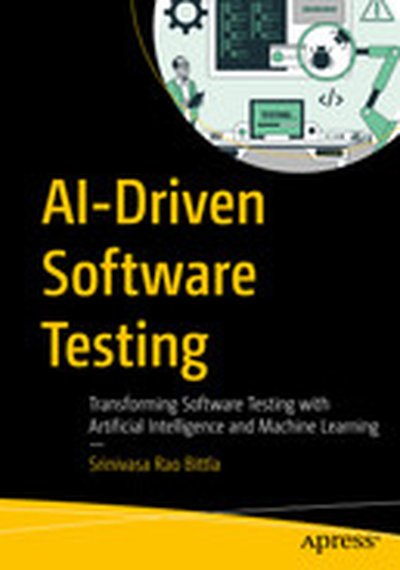
AI-Driven Software Testing : Transforming Software Testing with Artificial Intelligence and Machine Learning

AI-Driven Software Testing explores how Artificial Intelligence (AI) and Machine Learning (ML) are revolutionizing quality engineering (QE), making testing more intelligent, efficient, and adaptive. The book begins by examining the critical role of QE in modern software development and the paradigm shift introduced by AI/ML. It traces the evolution of software testing, from manual approaches to AI-powered automation, highlighting key innovations that enhance accuracy, speed, and scalability. Readers will gain a deep understanding of quality engineering in the age of AI, comparing traditional and AI-driven testing methodologies to uncover their advantages and challenges. Moving into practical applications, the book delves into AI-enhanced test planning, execution, and defect management. It explores AI-driven test case development, intelligent test environments, and real-time monitoring techniques that streamline the testing lifecycle. Additionally, it covers AI’s impact on continuous integration and delivery (CI/CD), predictive analytics for failure prevention, and strategies for scaling AI-driven testing across cloud platforms. Finally, it looks ahead to the future of AI in software testing, discussing emerging trends, ethical considerations, and the evolving role of QE professionals in an AI-first world. With real-world case studies and actionable insights, AI-Driven Software Testing is an essential guide for QE engineers, developers, and tech leaders looking to harness AI for smarter, faster, and more reliable software testing. What you will learn: • What are the key principles of AI/ML-driven quality engineering • What is intelligent test case generation and adaptive test automation • Explore predictive analytics for defect prevention and risk assessment • Understand integration of AI/ML tools in CI/CD pipelines Who this book is for: Quality Engineers looking to enhance software testing with AI-driven techniques. Data Scientists exploring AI applications in software quality assurance and engineering. Software Developers – Engineers seeking to integrate AI/ML into testing and automation workflows.

Advances in Artificial Intelligence Applications in Industrial and Systems Engineering

Comprehensive guide offering actionable strategies for enhancing human-centered AI, efficiency, and productivity in industrial and systems engineering through the power of AI. Advances in Artificial Intelligence Applications in Industrial and Systems Engineering is the first book in the Advances in Industrial and Systems Engineering series, offering insights into AI techniques, challenges, and applications across various industrial and systems engineering (ISE) domains. Not only does the book chart current AI trends and tools for effective integration, but it also raises pivotal ethical concerns and explores the latest methodologies, tools, and real-world examples relevant to today’s dynamic ISE landscape. Readers will gain a practical toolkit for effective integration and utilization of AI in system design and operation. The book also presents the current state of AI across big data analytics, machine learning, artificial intelligence tools, cloud-based AI applications, neural-based technologies, modeling and simulation in the metaverse, intelligent systems engineering, and more, and discusses future trends. Written by renowned international contributors for an international audience, Advances in Artificial Intelligence Applications in Industrial and Systems Engineering includes information on: Reinforcement learning, computer vision and perception, and safety considerations for autonomous systems (AS) (NLP) topics including language understanding and generation, sentiment analysis and text classification, and machine translation AI in healthcare, covering medical imaging and diagnostics, drug discovery and personalized medicine, and patient monitoring and predictive analysis Cybersecurity, covering threat detection and intrusion prevention, fraud detection and risk management, and network security Social good applications including poverty alleviation and education, environmental sustainability, and disaster response and humanitarian aid. Advances in Artificial Intelligence Applications in Industrial and Systems Engineering is a timely, essential reference for engineering, computer science, and business professionals worldwide.

AI and ML for Coders in PyTorch

Eager to learn AI and machine learning but unsure where to start? Laurence Moroney's hands-on, code-first guide demystifies complex AI concepts without relying on advanced mathematics. Designed for programmers, it focuses on practical applications using PyTorch, helping you build real-world models without feeling overwhelmed. From computer vision and natural language processing (NLP) to generative AI with Hugging Face Transformers, this book equips you with the skills most in demand for AI development today. You'll also learn how to deploy your models across the web and cloud confidently. Gain the confidence to apply AI without needing advanced math or theory expertise Discover how to build AI models for computer vision, NLP, and sequence modeling with PyTorch Learn generative AI techniques with Hugging Face Diffusers and Transformers

Machine Learning for Tabular Data

Business runs on tabular data in databases, spreadsheets, and logs. Crunch that data using deep learning, gradient boosting, and other machine learning techniques. Machine Learning for Tabular Data teaches you to train insightful machine learning models on common tabular business data sources such as spreadsheets, databases, and logs. You’ll discover how to use XGBoost and LightGBM on tabular data, optimize deep learning libraries like TensorFlow and PyTorch for tabular data, and use cloud tools like Vertex AI to create an automated MLOps pipeline. Machine Learning for Tabular Data will teach you how to: Pick the right machine learning approach for your data Apply deep learning to tabular data Deploy tabular machine learning locally and in the cloud Pipelines to automatically train and maintain a model Machine Learning for Tabular Data covers classic machine learning techniques like gradient boosting, and more contemporary deep learning approaches. By the time you’re finished, you’ll be equipped with the skills to apply machine learning to the kinds of data you work with every day. About the Technology Machine learning can accelerate everyday business chores like account reconciliation, demand forecasting, and customer service automation—not to mention more exotic challenges like fraud detection, predictive maintenance, and personalized marketing. This book shows you how to unlock the vital information stored in spreadsheets, ledgers, databases and other tabular data sources using gradient boosting, deep learning, and generative AI. About the Book Machine Learning for Tabular Data delivers practical ML techniques to upgrade every stage of the business data analysis pipeline. In it, you’ll explore examples like using XGBoost and Keras to predict short-term rental prices, deploying a local ML model with Python and Flask, and streamlining workflows using large language models (LLMs). Along the way, you’ll learn to make your models both more powerful and more explainable. What's Inside Master XGBoost Apply deep learning to tabular data Deploy models locally and in the cloud Build pipelines to train and maintain models About the Reader For readers experienced with Python and the basics of machine learning. About the Authors Mark Ryan is the AI Lead of the Developer Knowledge Platform at Google. A three-time Kaggle Grandmaster, Luca Massaron is a Google Developer Expert (GDE) in machine learning and AI. He has published 17 other books. Quotes

Deep Learning and AI Superhero

"Deep Learning and AI Superhero" is an extensive resource for mastering the core concepts and advanced techniques in AI and deep learning using TensorFlow, Keras, and PyTorch. This comprehensive guide walks you through topics from foundational neural network concepts to implementing real-world machine learning solutions. You will gain hands-on experience and theoretical knowledge to elevate your AI development skills. What this Book will help me do Develop a solid foundation in neural networks, their structure, and their training methodologies. Understand and implement deep learning models using TensorFlow and Keras effectively. Gain experience using PyTorch for creating, training, and optimizing advanced machine learning models. Learn advanced applications such as CNNs for computer vision, RNNs for sequential data, and Transformers for natural language processing. Deploy AI models on cloud and edge platforms through practical examples and optimized workflows. Author(s) Cuantum Technologies LLC has established itself as a pioneer in creating educational resources for advanced AI technologies. Their team consists of experts and practitioners in the field, combining years of industry and academic experience. Their books are crafted to ensure readers can practically apply cutting-edge AI techniques with clarity and confidence. Who is it for? This book is ideally suited for software developers, AI enthusiasts, and data scientists who have a basic understanding of programming and machine learning concepts. It's perfect for those seeking to enhance their skills and tackle real-world AI challenges. Whether your goals are professional development, research, or personal learning, you'll find practical and detailed guidance throughout this book.

Evolve from Infrastructure to Innovation with SAP on AWS: Strategize Beyond Infrastructure for Extending your SAP applications, Data Management, IoT & AI/ML integration and IT Operations using AWS Services

The world of SAP is undergoing a major transformation, with many customers either planning or actively modernizing their SAP landscapes as part of the S/4HANA digital transformation. Given the extensive SAP transformation efforts adopted by nearly all SAP customers in recent years and the profound impact these digital changes have had on their business models and IT organizations, the authors decided to write this book. As customers embark on their SAP on AWS journey, they face three main challenges: deciding on the overall strategy, selecting the right business use cases and implementing them effectively. This book aims to address these challenges by guiding readers through the process of identifying and executing the appropriate use cases. It will highlight how customers can harness AWS services beyond merely hosting their SAP systems on AWS, demonstrating the potential of these services to drive innovation. This book covers the entire journey, from defining strategy and identifying business use cases to their implementation, providing practical tips, strategies, and insights. It serves as an essential guide for customers planning to migrate or those who have already migrated their SAP workloads to AWS, helping them explore beyond just the infrastructure aspects of their journey. You Will : Discover how to go beyond just hosting SAP systems on AWS, using the full range of AWS services to innovate and extend your SAP applications. Learn how to identify the right business use cases and implement them effectively, with practical examples and real-world scenarios. Develop the mindset and skills needed to architect modern, cloud-native, event-driven architectures, balancing trade-offs between simplicity, efficiency, and cost. This book is for: Business leaders, IT professionals, and SAP specialists who are looking to modernize their SAP landscapes by leveraging AWS services

Google Machine Learning and Generative AI for Solutions Architects

This book teaches solutions architects how to effectively design and implement AI/ML solutions utilizing Google Cloud services. Through detailed explanations, examples, and hands-on exercises, you will understand essential AI/ML concepts, tools, and best practices while building advanced applications. What this Book will help me do Build robust AI/ML solutions using Google Cloud tools such as TensorFlow, BigQuery, and Vertex AI. Prepare and process data efficiently for machine learning workloads. Establish and apply an MLOps framework for automating ML model lifecycle management. Implement cutting-edge generative AI solutions using best practices. Address common challenges in AI/ML projects with insights from expert solutions. Author(s) Kieran Kavanagh is a seasoned principal architect with nearly twenty years of experience in the tech industry. He has successfully led teams in designing, planning, and governing enterprise cloud strategies, and his wealth of experience is distilled into the practical approaches and insights in this book. Who is it for? This book is ideal for IT professionals aspiring to design AI/ML solutions, particularly in the role of solutions architects. It assumes a basic knowledge of Python and foundational AI/ML concepts but is suitable for both beginners and seasoned practitioners. If you're looking to deepen your understanding of state-of-the-art AI/ML applications on Google Cloud, this resource will guide you.

Architecting Data and Machine Learning Platforms

All cloud architects need to know how to build data platforms that enable businesses to make data-driven decisions and deliver enterprise-wide intelligence in a fast and efficient way. This handbook shows you how to design, build, and modernize cloud native data and machine learning platforms using AWS, Azure, Google Cloud, and multicloud tools like Snowflake and Databricks. Authors Marco Tranquillin, Valliappa Lakshmanan, and Firat Tekiner cover the entire data lifecycle from ingestion to activation in a cloud environment using real-world enterprise architectures. You'll learn how to transform, secure, and modernize familiar solutions like data warehouses and data lakes, and you'll be able to leverage recent AI/ML patterns to get accurate and quicker insights to drive competitive advantage. You'll learn how to: Design a modern and secure cloud native or hybrid data analytics and machine learning platform Accelerate data-led innovation by consolidating enterprise data in a governed, scalable, and resilient data platform Democratize access to enterprise data and govern how business teams extract insights and build AI/ML capabilities Enable your business to make decisions in real time using streaming pipelines Build an MLOps platform to move to a predictive and prescriptive analytics approach

AI and Machine Learning for Coders

If you're looking to make a career move from programmer to AI specialist, this is the ideal place to start. Based on Laurence Moroney's extremely successful AI courses, this introductory book provides a hands-on, code-first approach to help you build confidence while you learn key topics. You'll understand how to implement the most common scenarios in machine learning, such as computer vision, natural language processing (NLP), and sequence modeling for web, mobile, cloud, and embedded runtimes. Most books on machine learning begin with a daunting amount of advanced math. This guide is built on practical lessons that let you work directly with the code. You'll learn: How to build models with TensorFlow using skills that employers desire The basics of machine learning by working with code samples How to implement computer vision, including feature detection in images How to use NLP to tokenize and sequence words and sentences Methods for embedding models in Android and iOS How to serve models over the web and in the cloud with TensorFlow Serving