talk-data.com talk-data.com

Event

O'Reilly AI & ML Books

1998-04-17 – 2026-12-25 Oreilly Visit website ↗

Activities tracked

12

Collection of O'Reilly books on AI & ML.

Filtering by: Cyber Security ×

Sessions & talks

Showing 1–12 of 12 · Newest first

Search within this event →
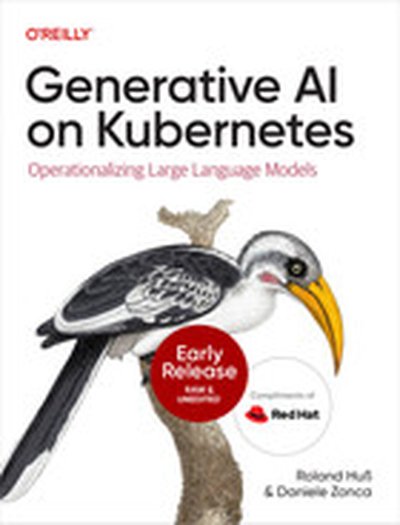
Generative AI on Kubernetes

Generative AI is revolutionizing industries, and Kubernetes has fast become the backbone for deploying and managing these resource-intensive workloads. This book serves as a practical, hands-on guide for MLOps engineers, software developers, Kubernetes administrators, and AI professionals ready to unlock AI innovation with the power of cloud native infrastructure. Authors Roland Huß and Daniele Zonca provide a clear road map for training, fine-tuning, deploying, and scaling GenAI models on Kubernetes, addressing challenges like resource optimization, automation, and security along the way. With actionable insights with real-world examples, readers will learn to tackle the opportunities and complexities of managing GenAI applications in production environments. Whether you're experimenting with large-scale language models or facing the nuances of AI deployment at scale, you'll uncover expertise you need to operationalize this exciting technology effectively. Learn to run GenAI models on Kubernetes for efficient scalability Get techniques to train and fine-tune LLMs within Kubernetes environments See how to deploy production-ready AI systems with automation and resource optimization Discover how to monitor and scale GenAI applications to handle real-world demand Uncover the best tools to operationalize your GenAI workloads Learn how to run agent-based and AI-driven applications
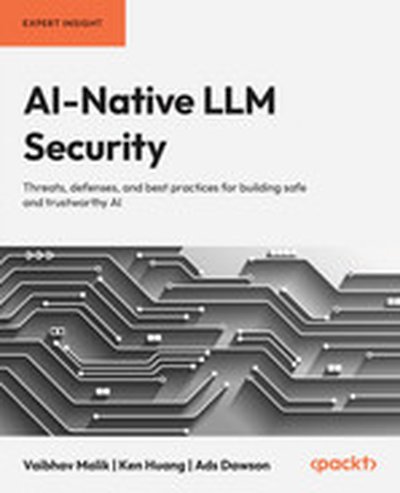
AI-Native LLM Security

"AI Native LLM Security" is your essential guide to understanding and securing large language models and AI systems. With a focus on implementing practical strategies and leveraging frameworks like OWASP Top 10, this book equips professionals to identify and mitigate risks effectively. By reading this, you'll gain the expertise to confidently manage LLM security challenges. What this Book will help me do Learn about adversarial AI attacks and methods to defend against them. Understand secure-by-design methodologies and their application to LLM systems. Gain insights on implementing MLSecOps practices for robust AI security. Navigate ethical considerations and legal aspects of AI security. Secure AI development life cycles with practical strategies and standards. Author(s) The authors, Vaibhav Malik, Ken Huang, and Adam Dawson, are experts in AI security with collective experience covering cybersecurity, AI development, and security frameworks. Their dedication to advancing trustworthy AI ensures that this book is both technically comprehensive and approachable. Who is it for? This book is perfect for cybersecurity experts, AI developers, and technology managers aiming to secure and manage AI systems. Readers should have a basic understanding of AI and security concepts. If you're a security architect, ML engineer, DevOps professional, or a leader overseeing AI initiatives, this book will help you address LLM security effectively for your field.

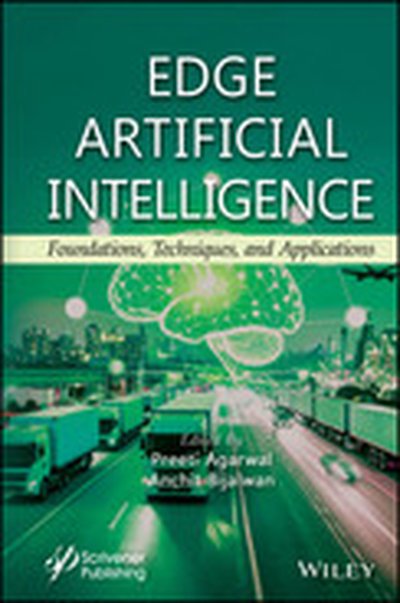
Edge Artificial Intelligence

Secure your expertise in the next wave of computing with this essential book, which provides a comprehensive guide to Edge AI, detailing its foundational concepts, deployment strategies, and real-world applications for revolutionizing performance and privacy across various industries. Edge AI has the potential to bring the computational power of AI algorithms closer to where data is generated, processed, and utilized. Traditionally, AI models are deployed in centralized cloud environments, leading to latency issues, bandwidth constraints, and privacy concerns. Edge AI addresses these limitations by enabling AI inference and decision-making directly on edge devices, such as smartphones, IoT sensors, and edge servers. Despite its challenges, edge AI presents numerous opportunities across various domains. From real-time health monitoring and predictive maintenance in industrial IoT to personalized recommendations in retail and immersive experiences in augmented reality, edge AI has the potential to revolutionize how we interact with technology. This book aims to provide a comprehensive exploration of edge AI, covering its foundational concepts, development frameworks, deployment strategies, security considerations, ethical implications, emerging trends, and real-world applications. This guide is essential for anyone pushing the boundaries to leverage edge computing for enhanced performance and efficiency. Readers will find this volume: Dives deep into the world of edge AI with a comprehensive exploration covering foundational concepts, development frameworks, deployment strategies, security considerations, ethical implications, governance frameworks, optimization techniques, and real-world applications; Offers practical guidance on implementing edge AI solutions effectively in various domains, including architecture design, development frameworks, deployment strategies, and optimization techniques; Explores concrete examples of edge AI applications across diverse domains such as healthcare, industrial IoT, smart cities, and autonomous systems, providing insights into how edge AI is revolutionizing industries and everyday life; Provides insights into emerging trends and technologies in the field of edge AI, including convergence with blockchain, augmented reality, virtual reality, autonomous systems, personalized experiences, and cybersecurity. Audience Researchers, AI experts, and industry professionals in the field of computer science, IT, and business management.

Artificial Intelligence Applications in Aeronautical and Aerospace Engineering

This book is a comprehensive guide for anyone in the aeronautical and aerospace fields who wants to understand and leverage the transformative power of artificial intelligence to enhance safety, optimize performance, and drive innovation. The field of aeronautical and aerospace engineering is on the brink of a transformative revolution driven by rapid advancements in artificial intelligence (AI). This book analyzes AI’s multifaceted impact on the industry, exploring AI’s potential to address complex challenges, optimize processes, and push technological boundaries with a focus on enhancing safety, security, innovation, and performance. By blending technical insights with practical applications, it provides readers with a roadmap for harnessing AI to solve complex challenges and improve efficiency in aeronautics. Ideal for those seeking a deeper understanding of AI’s role in aeronautical and aerospace engineering, this book offers real-world applications, case studies, and expert insights, making it a valuable resource for anyone aiming to stay at the forefront of this rapidly evolving field. Readers will find this book: Examines AI’s transformative role in aerospace and aeronautics, from enhancing safety to driving innovation and optimizing performance; Highlights real-time applications, addressing AI’s role in boosting operational efficiency and safety in the aerospace and aeronautical industries; Offers insights into emerging AI technologies shaping the future of aerospace and aeronautical systems; Features real-world case studies on AI applications in autonomous navigation, predictive maintenance of aircraft, and air traffic management. Audience Aeronautical and aerospace engineers, AI researchers, students, and industry professionals seeking to understand and apply AI solutions in areas like safety, security, and performance optimization.

Advances in Artificial Intelligence Applications in Industrial and Systems Engineering

Comprehensive guide offering actionable strategies for enhancing human-centered AI, efficiency, and productivity in industrial and systems engineering through the power of AI. Advances in Artificial Intelligence Applications in Industrial and Systems Engineering is the first book in the Advances in Industrial and Systems Engineering series, offering insights into AI techniques, challenges, and applications across various industrial and systems engineering (ISE) domains. Not only does the book chart current AI trends and tools for effective integration, but it also raises pivotal ethical concerns and explores the latest methodologies, tools, and real-world examples relevant to today’s dynamic ISE landscape. Readers will gain a practical toolkit for effective integration and utilization of AI in system design and operation. The book also presents the current state of AI across big data analytics, machine learning, artificial intelligence tools, cloud-based AI applications, neural-based technologies, modeling and simulation in the metaverse, intelligent systems engineering, and more, and discusses future trends. Written by renowned international contributors for an international audience, Advances in Artificial Intelligence Applications in Industrial and Systems Engineering includes information on: Reinforcement learning, computer vision and perception, and safety considerations for autonomous systems (AS) (NLP) topics including language understanding and generation, sentiment analysis and text classification, and machine translation AI in healthcare, covering medical imaging and diagnostics, drug discovery and personalized medicine, and patient monitoring and predictive analysis Cybersecurity, covering threat detection and intrusion prevention, fraud detection and risk management, and network security Social good applications including poverty alleviation and education, environmental sustainability, and disaster response and humanitarian aid. Advances in Artificial Intelligence Applications in Industrial and Systems Engineering is a timely, essential reference for engineering, computer science, and business professionals worldwide.

Machine Learning Algorithms in Depth

Learn how machine learning algorithms work from the ground up so you can effectively troubleshoot your models and improve their performance. Fully understanding how machine learning algorithms function is essential for any serious ML engineer. In Machine Learning Algorithms in Depth you’ll explore practical implementations of dozens of ML algorithms including: Monte Carlo Stock Price Simulation Image Denoising using Mean-Field Variational Inference EM algorithm for Hidden Markov Models Imbalanced Learning, Active Learning and Ensemble Learning Bayesian Optimization for Hyperparameter Tuning Dirichlet Process K-Means for Clustering Applications Stock Clusters based on Inverse Covariance Estimation Energy Minimization using Simulated Annealing Image Search based on ResNet Convolutional Neural Network Anomaly Detection in Time-Series using Variational Autoencoders Machine Learning Algorithms in Depth dives into the design and underlying principles of some of the most exciting machine learning (ML) algorithms in the world today. With a particular emphasis on probabilistic algorithms, you’ll learn the fundamentals of Bayesian inference and deep learning. You’ll also explore the core data structures and algorithmic paradigms for machine learning. Each algorithm is fully explored with both math and practical implementations so you can see how they work and how they’re put into action. About the Technology Learn how machine learning algorithms work from the ground up so you can effectively troubleshoot your models and improve their performance. This book guides you from the core mathematical foundations of the most important ML algorithms to their Python implementations, with a particular focus on probability-based methods. About the Book Machine Learning Algorithms in Depth dissects and explains dozens of algorithms across a variety of applications, including finance, computer vision, and NLP. Each algorithm is mathematically derived, followed by its hands-on Python implementation along with insightful code annotations and informative graphics. You’ll especially appreciate author Vadim Smolyakov’s clear interpretations of Bayesian algorithms for Monte Carlo and Markov models. What's Inside Monte Carlo stock price simulation EM algorithm for hidden Markov models Imbalanced learning, active learning, and ensemble learning Bayesian optimization for hyperparameter tuning Anomaly detection in time-series About the Reader For machine learning practitioners familiar with linear algebra, probability, and basic calculus. About the Author Vadim Smolyakov is a data scientist in the Enterprise & Security DI R&D team at Microsoft. Quotes I love this book! It shows you how to implement common ML algorithms in plain Python with only the essential libraries, so you can see how the computation and math works in practice. - Junpeng Lao, Senior Data Scientist at Google I highly recommend this book. In the era of ChatGPT real knowledge of algorithms is invaluable. - Vatsal Desai, InfoDesk Explains algorithms so well that even a novice can digest it. - Harsh Raval, Zymr

Applying Artificial Intelligence in Cybersecurity Analytics and Cyber Threat Detection

APPLYING ARTIFICIAL INTELLIGENCE IN CYBERSECURITY ANALYTICS AND CYBER THREAT DETECTION Comprehensive resource providing strategic defense mechanisms for malware, handling cybercrime, and identifying loopholes using artificial intelligence (AI) and machine learning (ML) Applying Artificial Intelligence in Cybersecurity Analytics and Cyber Threat Detection is a comprehensive look at state-of-the-art theory and practical guidelines pertaining to the subject, showcasing recent innovations, emerging trends, and concerns as well as applied challenges encountered, and solutions adopted in the fields of cybersecurity using analytics and machine learning. The text clearly explains theoretical aspects, framework, system architecture, analysis and design, implementation, validation, and tools and techniques of data science and machine learning to detect and prevent cyber threats. Using AI and ML approaches, the book offers strategic defense mechanisms for addressing malware, cybercrime, and system vulnerabilities. It also provides tools and techniques that can be applied by professional analysts to safely analyze, debug, and disassemble any malicious software they encounter. With contributions from qualified authors with significant experience in the field, Applying Artificial Intelligence in Cybersecurity Analytics and Cyber Threat Detection explores topics such as: Cybersecurity tools originating from computational statistics literature and pure mathematics, such as nonparametric probability density estimation, graph-based manifold learning, and topological data analysis Applications of AI to penetration testing, malware, data privacy, intrusion detection system (IDS), and social engineering How AI automation addresses various security challenges in daily workflows and how to perform automated analyses to proactively mitigate threats Offensive technologies grouped together and analyzed at a higher level from both an offensive and defensive standpoint Providing detailed coverage of a rapidly expanding field, Applying Artificial Intelligence in Cybersecurity Analytics and Cyber Threat Detection is an essential resource for a wide variety of researchers, scientists, and professionals involved in fields that intersect with cybersecurity, artificial intelligence, and machine learning.

Machine Learning for High-Risk Applications

The past decade has witnessed the broad adoption of artificial intelligence and machine learning (AI/ML) technologies. However, a lack of oversight in their widespread implementation has resulted in some incidents and harmful outcomes that could have been avoided with proper risk management. Before we can realize AI/ML's true benefit, practitioners must understand how to mitigate its risks. This book describes approaches to responsible AI—a holistic framework for improving AI/ML technology, business processes, and cultural competencies that builds on best practices in risk management, cybersecurity, data privacy, and applied social science. Authors Patrick Hall, James Curtis, and Parul Pandey created this guide for data scientists who want to improve real-world AI/ML system outcomes for organizations, consumers, and the public. Learn technical approaches for responsible AI across explainability, model validation and debugging, bias management, data privacy, and ML security Learn how to create a successful and impactful AI risk management practice Get a basic guide to existing standards, laws, and assessments for adopting AI technologies, including the new NIST AI Risk Management Framework Engage with interactive resources on GitHub and Colab

Artificial Intelligence in Healthcare

Artificial Intelligence (AI) in Healthcare is more than a comprehensive introduction to artificial intelligence as a tool in the generation and analysis of healthcare data. The book is split into two sections where the first section describes the current healthcare challenges and the rise of AI in this arena. The ten following chapters are written by specialists in each area, covering the whole healthcare ecosystem. First, the AI applications in drug design and drug development are presented followed by its applications in the field of cancer diagnostics, treatment and medical imaging. Subsequently, the application of AI in medical devices and surgery are covered as well as remote patient monitoring. Finally, the book dives into the topics of security, privacy, information sharing, health insurances and legal aspects of AI in healthcare. Highlights different data techniques in healthcare data analysis, including machine learning and data mining Illustrates different applications and challenges across the design, implementation and management of intelligent systems and healthcare data networks Includes applications and case studies across all areas of AI in healthcare data

Security with AI and Machine Learning

For security professionals seeking reliable ways to combat persistent threats to their networks, there’s encouraging news. Tools that employ AI and machine learning have begun to replace the older rules- and signature-based tools that can no longer combat today’s sophisticated attacks. In this ebook, Oracle’s Laurent Gil and Recorded Future’s Allan Liska look at the strengths (and limitations) of AI- and ML-based security tools for dealing with today’s threat landscape. This high-level overview demonstrates how these new tools use AI and ML to quickly identify threats, connect attack patterns, and allow operators and analysts to focus on their core mission. You’ll also learn how managed security service providers (MSSPs) use AI and ML to identify patterns from across their customer base. This ebook explains: Why rules-based, signature-based, and firewall solutions have fallen short How automated bots enable cybercriminals and nation-state actors to attack your network The evolution of the botnet: how threat actors constantly change their attack strategy How AI and ML techniques in web applications help you observe, quantify, and classify inbound requests How to detect insider threats and advanced persistent threat actors with AI and ML tools Case studies that show how a media company, an airline, and a university use AL and ML in security

Machine Learning and Security

Can machine learning techniques solve our computer security problems and finally put an end to the cat-and-mouse game between attackers and defenders? Or is this hope merely hype? Now you can dive into the science and answer this question for yourself. With this practical guide, you’ll explore ways to apply machine learning to security issues such as intrusion detection, malware classification, and network analysis. Machine learning and security specialists Clarence Chio and David Freeman provide a framework for discussing the marriage of these two fields, as well as a toolkit of machine-learning algorithms that you can apply to an array of security problems. This book is ideal for security engineers and data scientists alike. Learn how machine learning has contributed to the success of modern spam filters Quickly detect anomalies, including breaches, fraud, and impending system failure Conduct malware analysis by extracting useful information from computer binaries Uncover attackers within the network by finding patterns inside datasets Examine how attackers exploit consumer-facing websites and app functionality Translate your machine learning algorithms from the lab to production Understand the threat attackers pose to machine learning solutions