talk-data.com talk-data.com

Event

O'Reilly Data Science Books

2013-08-09 – 2026-02-25 Oreilly Visit website ↗

Activities tracked

333

Collection of O'Reilly books on Data Science.

Filtering by: AI/ML ×

Sessions & talks

Showing 326–333 of 333 · Newest first

Search within this event →
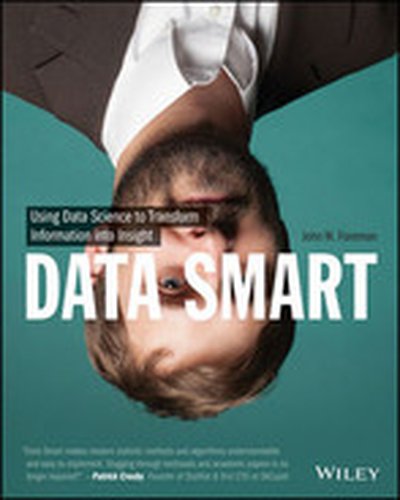
Data Smart: Using Data Science to Transform Information into Insight

Data Science gets thrown around in the press like it's magic. Major retailers are predicting everything from when their customers are pregnant to when they want a new pair of Chuck Taylors. It's a brave new world where seemingly meaningless data can be transformed into valuable insight to drive smart business decisions. But how does one exactly do data science? Do you have to hire one of these priests of the dark arts, the "data scientist," to extract this gold from your data? Nope. Data science is little more than using straight-forward steps to process raw data into actionable insight. And in Data Smart, author and data scientist John Foreman will show you how that's done within the familiar environment of a spreadsheet. Why a spreadsheet? It's comfortable! You get to look at the data every step of the way, building confidence as you learn the tricks of the trade. Plus, spreadsheets are a vendor-neutral place to learn data science without the hype. But don't let the Excel sheets fool you. This is a book for those serious about learning the analytic techniques, the math and the magic, behind big data. Each chapter will cover a different technique in a spreadsheet so you can follow along: Mathematical optimization, including non-linear programming and genetic algorithms Clustering via k-means, spherical k-means, and graph modularity Data mining in graphs, such as outlier detection Supervised AI through logistic regression, ensemble models, and bag-of-words models Forecasting, seasonal adjustments, and prediction intervals through monte carlo simulation Moving from spreadsheets into the R programming language You get your hands dirty as you work alongside John through each technique. But never fear, the topics are readily applicable and the author laces humor throughout. You'll even learn what a dead squirrel has to do with optimization modeling, which you no doubt are dying to know.
Handbook of Statistics

Statistical learning and analysis techniques have become extremely important today, given the tremendous growth in the size of heterogeneous data collections and the ability to process it even from physically distant locations. Recent advances made in the field of machine learning provide a strong framework for robust learning from the diverse corpora and continue to impact a variety of research problems across multiple scientific disciplines. The aim of this handbook is to familiarize beginners as well as experts with some of the recent techniques in this field. The Handbook is divided in two sections: Theory and Applications, covering machine learning, data analytics, biometrics, document recognition and security. very relevant to current research challenges faced in various fields self-contained reference to machine learning emphasis on applications-oriented techniques

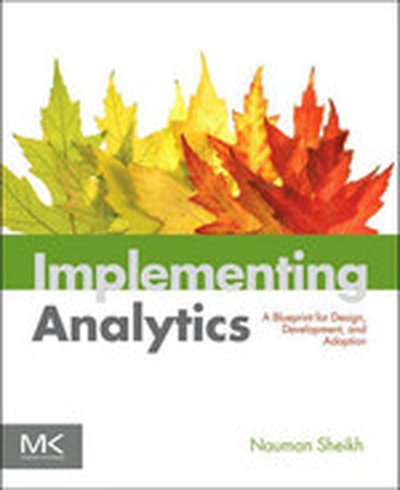
Implementing Analytics

Implementing Analytics demystifies the concept, technology and application of analytics and breaks its implementation down to repeatable and manageable steps, making it possible for widespread adoption across all functions of an organization. Implementing Analytics simplifies and helps democratize a very specialized discipline to foster business efficiency and innovation without investing in multi-million dollar technology and manpower. A technology agnostic methodology that breaks down complex tasks like model design and tuning and emphasizes business decisions rather than the technology behind analytics. Simplifies the understanding of analytics from a technical and functional perspective and shows a wide array of problems that can be tackled using existing technology Provides a detailed step by step approach to identify opportunities, extract requirements, design variables and build and test models. It further explains the business decision strategies to use analytics models and provides an overview for governance and tuning Helps formalize analytics projects from staffing, technology and implementation perspectives Emphasizes machine learning and data mining over statistics and shows how the role of a Data Scientist can be broken down and still deliver the value by building a robust development process

Service-Oriented Distributed Knowledge Discovery

A new approach to distributed large-scale data mining, service-oriented knowledge discovery extracts useful knowledge from often unmanageable volumes of data by exploiting data mining and machine learning distributed models and techniques in service-oriented infrastructures. Service-Oriented Distributed Knowledge Discovery presents techniques, algorithms, and systems based on the service-oriented paradigm. It explains how to design services for data analytics, describes real systems for implementing distributed knowledge discovery applications, and explores mobile data mining models.

Statistical Learning and Data Science

Driven by a vast range of applications, data analysis and learning from data are vibrant areas of research. Various methodologies, including unsupervised data analysis, supervised machine learning, and semi-supervised techniques, have continued to develop to cope with the increasing amount of data collected through modern technology. With a focus on applications, this volume presents contributions from some of the leading researchers in the different fields of data analysis. Synthesizing the methodologies into a coherent framework, the book covers a range of topics, from large-scale machine learning to synthesis objects analysis.

The Power of Appreciative Inquiry, 2nd Edition

The Power of Appreciative Inquiry describes the internationally embraced approach to organizational change that dramatically improves performance by engaging people to study, discuss, and build upon what's working – strengths – rather than trying to fix what's not. Diana Whitney and Amanda Trosten-Bloom, pioneers in the development and practice of Appreciative Inquiry (AI), provide a menu of eight results-oriented applications, along with case examples from a wide range of organizations to illustrate Appreciative Inquiry in action. A how-to book, this is the most authoritative and accessible guide to the newest ideas and practices in the field of Appreciative Inquiry since its inception in 1985. The second edition includes new examples, tools, and tips for using AI to create an enduring capacity for positive change, along with a totally new chapter on award-winning community applications of Appreciative Inquiry.

Practical RDF

The Resource Description Framework (RDF) is a structure for describing and interchanging metadata on the Web--anything from library catalogs and worldwide directories to bioinformatics, Mozilla internal data structures, and knowledge bases for artificial intelligence projects. RDF provides a consistent framework and syntax for describing and querying data, making it possible to share website descriptions more easily. RDF's capabilities, however, have long been shrouded by its reputation for complexity and a difficult family of specifications. Practical RDF breaks through this reputation with immediate and solvable problems to help you understand, master, and implement RDF solutions. Practical RDF explains RDF from the ground up, providing real-world examples and descriptions of how the technology is being used in applications like Mozilla, FOAF, and Chandler, as well as infrastructure you can use to build your own applications. This book cuts to the heart of the W3C's often obscure specifications, giving you tools to apply RDF successfully in your own projects.The first part of the book focuses on the RDF specifications. After an introduction to RDF, the book covers the RDF specification documents themselves, including RDF Semantics and Concepts and Abstract Model specifications, RDF constructs, and the RDF Schema. The second section focuses on programming language support, and the tools and utilities that allow developers to review, edit, parse, store, and manipulate RDF/XML. Subsequent sections focus on RDF's data roots, programming and framework support, and practical implementation and use of RDF and RDF/XML.If you want to know how to apply RDF to information processing, Practical RDF is for you. Whether your interests lie in large-scale information aggregation and analysis or in smaller-scale projects like weblog syndication, this book will provide you with a solid foundation for working with RDF.

Mining the Web

Mining the Web: Discovering Knowledge from Hypertext Data is the first book devoted entirely to techniques for producing knowledge from the vast body of unstructured Web data. Building on an initial survey of infrastructural issues—including Web crawling and indexing—Chakrabarti examines low-level machine learning techniques as they relate specifically to the challenges of Web mining. He then devotes the final part of the book to applications that unite infrastructure and analysis to bring machine learning to bear on systematically acquired and stored data. Here the focus is on results: the strengths and weaknesses of these applications, along with their potential as foundations for further progress. From Chakrabarti's work—painstaking, critical, and forward-looking—readers will gain the theoretical and practical understanding they need to contribute to the Web mining effort. * A comprehensive, critical exploration of statistics-based attempts to make sense of Web Mining. * Details the special challenges associated with analyzing unstructured and semi-structured data. * Looks at how classical Information Retrieval techniques have been modified for use with Web data. * Focuses on today's dominant learning methods: clustering and classification, hyperlink analysis, and supervised and semi-supervised learning. * Analyzes current applications for resource discovery and social network analysis. * An excellent way to introduce students to especially vital applications of data mining and machine learning technology.