talk-data.com talk-data.com

Event

O'Reilly Data Science Books

2013-08-09 – 2026-02-25 Oreilly Visit website ↗

Activities tracked

326

Collection of O'Reilly books on Data Science.

Filtering by: data-science-tools ×

Sessions & talks

Showing 51–75 of 326 · Newest first

Search within this event →
Introduction to Matrix Analytic Methods in Queues 1

Matrix-analytic methods (MAM) were introduced by Professor Marcel Neuts and have been applied to a variety of stochastic models since. In order to provide a clear and deep understanding of MAM while showing their power, this book presents MAM concepts and explains the results using a number of worked-out examples. This book’s approach will inform and kindle the interest of researchers attracted to this fertile field. To allow readers to practice and gain experience in the algorithmic and computational procedures of MAM, Introduction to Matrix Analytic Methods in Queues 1 provides a number of computational exercises. It also incorporates simulation as another tool for studying complex stochastic models, especially when the state space of the underlying stochastic models under analytic study grows exponentially. The book’s detailed approach will make it more accessible for readers interested in learning about MAM in stochastic models.

The R Book, 3rd Edition

A start-to-finish guide to one of the most useful programming languages for researchers in a variety of fields In the newly revised Third Edition of The R Book, a team of distinguished teachers and researchers delivers a user-friendly and comprehensive discussion of foundational and advanced topics in the R software language, which is used widely in science, engineering, medicine, economics, and other fields. The book is designed to be used as both a complete text—readable from cover to cover—and as a reference manual for practitioners seeking authoritative guidance on particular topics. This latest edition offers instruction on the use of the RStudio GUI, an easy-to-use environment for those new to R. It provides readers with a complete walkthrough of the R language, beginning at a point that assumes no prior knowledge of R and very little previous knowledge of statistics. Readers will also find: A thorough introduction to fundamental concepts in statistics and step-by-step roadmaps to their implementation in R; Comprehensive explorations of worked examples in R; A complementary companion website with downloadable datasets that are used in the book; In-depth examination of essential R packages. Perfect for undergraduate and postgraduate students of science, engineering, medicine economics, and geography, The R Book will also earn a place in the libraries of social sciences professionals.

SOFR Futures and Options

SOFR Futures and Options is the practical guide through the maze of the transition from LIBOR. In the first section, it provides an in-depth explanation of the concepts involved: The repo market and the construction of SOFR SOFR-based lending markets and the term rate The secured-unsecured basis SOFR futures and options and their spread contracts Margin and convexity Applying these insights, the second section offers detailed worked-through examples of hedging loans, swaps, bonds, and floors with SOFR futures and options, supported by interactive spreadsheets accessible on the web. The gold standard resource for professionals working at financial institutions, SOFR Futures and Options also belongs in the libraries of students of finance and business, as well as those preparing for the Chartered Financial Analyst exam.

Practical MATLAB Deep Learning: A Projects-Based Approach

Harness the power of MATLAB for deep-learning challenges. Practical MATLAB Deep Learning, Second Edition, remains a one-of a-kind book that provides an introduction to deep learning and using MATLAB's deep-learning toolboxes. In this book, you’ll see how these toolboxes provide the complete set of functions needed to implement all aspects of deep learning. This edition includes new and expanded projects, and covers generative deep learning and reinforcement learning. Over the course of the book, you'll learn to model complex systems and apply deep learning to problems in those areas. Applications include: Aircraft navigation An aircraft that lands on Titan, the moon of Saturn, using reinforcement learning Stock market prediction Natural language processing Music creation usng generative deep learning Plasma control Earth sensor processing for spacecraft MATLAB Bluetooth data acquisition applied to dance physics What You Will Learn Explore deep learning using MATLAB and compare it to algorithms Write a deep learning function in MATLAB and train it with examples Use MATLAB toolboxes related to deep learning Implement tokamak disruption prediction Now includes reinforcement learning Who This Book Is For Engineers, data scientists, and students wanting a book rich in examples on deep learning using MATLAB.

Simulation of Power Electronics Circuits with MATLAB®/Simulink®: Design, Analyze, and Prototype Power Electronics

Design and analyze electronic components and systems with the help of powerful software and effective skillsets. Balancing theory with practical exploration of the relevant software, you'll start solving power electronics problems like a pro. Using MATLAB®/Simulink®, you'll analyze the circuit in a laptop charger; interface with the power electronics converter controlling a washing machine's motor; turn on lamps with an electronic ballast; convert AC into DC power; and more! Power electronics are at the bedrock of all the wonderful devices simplifying our daily life. Designing them isn't just about understanding schematics. It also requires measuring twice and cutting once. In order to save time and money, a power electronics circuit must be simulated before construction. So you'll learn how to work with one of the most powerful simulation tools for this purpose. That way you'll know before you even go to make it whether the circuit works as expected. Learnto work with MATLAB®/Simulink® by directly applying and building the projects in this book. Or use it as a lab manual for power electronics and industrial electronics. Either way, using strong simulations and solid design theory, you'll be able to build power electronics that don't fail. What You'll Learn Simulate power electronics effectively before building them Select suitable semiconductor components for your circuit based on simulation waveforms Extract dynamic models of converters and design suitable controllers for them Who This Book Is For Engineers and students who want to simulate power electronics circuits in MATLAB®/Simulink®.

The Pandas Workshop

The Pandas Workshop offers a detailed journey into the world of data analysis using Python and the pandas library. Throughout the book, you'll build skills in accessing, transforming, visualizing, and modeling data, all while focusing on real-world data science challenges. You will gain the knowledge and confidence needed to dissect and derive insights from complex datasets. What this Book will help me do Understand how to access and load data from various formats including databases and web-based sources. Manipulate and transform data for analysis using efficient pandas techniques. Create insightful visualizations using Matplotlib integrated with pandas for clearer data presentation. Build predictive and descriptive data models and glean data-driven insights. Handle and analyze time-series data to uncover trends and seasonal effects in data patterns. Author(s) Blaine Bateman, Saikat Basak, Thomas Joseph, and William So collectively bring diverse expertise in data analysis, programming, and teaching. Their goal is to make cutting-edge data science techniques accessible through clear explanations and practical exercises, helping learners from varied backgrounds master the pandas library. Who is it for? This book is best suited for novice to intermediate programmers and data enthusiasts who are already familiar with Python but are new to the pandas library. Ideal readers are those interested in honing their skills in data analysis and visualization, as well as leveraging data for informed decision-making. Whether you're an analyst, aspiring data scientist, or business professional seeking to strengthen your analytical toolkit, this book provides beneficial insights and techniques.

R in Action, Third Edition

R is the most powerful tool you can use for statistical analysis. This definitive guide smooths R’s steep learning curve with practical solutions and real-world applications for commercial environments. In R in Action, Third Edition you will learn how to: Set up and install R and RStudio Clean, manage, and analyze data with R Use the ggplot2 package for graphs and visualizations Solve data management problems using R functions Fit and interpret regression models Test hypotheses and estimate confidence Simplify complex multivariate data with principal components and exploratory factor analysis Make predictions using time series forecasting Create dynamic reports and stunning visualizations Techniques for debugging programs and creating packages R in Action, Third Edition makes learning R quick and easy. That’s why thousands of data scientists have chosen this guide to help them master the powerful language. Far from being a dry academic tome, every example you’ll encounter in this book is relevant to scientific and business developers, and helps you solve common data challenges. R expert Rob Kabacoff takes you on a crash course in statistics, from dealing with messy and incomplete data to creating stunning visualizations. This revised and expanded third edition contains fresh coverage of the new tidyverse approach to data analysis and R’s state-of-the-art graphing capabilities with the ggplot2 package. About the Technology Used daily by data scientists, researchers, and quants of all types, R is the gold standard for statistical data analysis. This free and open source language includes packages for everything from advanced data visualization to deep learning. Instantly comfortable for mathematically minded users, R easily handles practical problems without forcing you to think like a software engineer. About the Book R in Action, Third Edition teaches you how to do statistical analysis and data visualization using R and its popular tidyverse packages. In it, you’ll investigate real-world data challenges, including forecasting, data mining, and dynamic report writing. This revised third edition adds new coverage for graphing with ggplot2, along with examples for machine learning topics like clustering, classification, and time series analysis. What's Inside Clean, manage, and analyze data Use the ggplot2 package for graphs and visualizations Techniques for debugging programs and creating packages A complete learning resource for R and tidyverse About the Reader Requires basic math and statistics. No prior experience with R needed. About the Author Dr. Robert I Kabacoff is a professor of quantitative analytics at Wesleyan University and a seasoned data scientist with more than 20 years of experience. Quotes Kabacoff has outdone himself by significantly improving on the already excellent previous edition. - Alain Lompo, ISO-Gruppe R in Action has been my go-to reference on R for years. The third edition contains timely updates on the tidyverse and other new tools. I would recommend this book without hesitation. - Daniel Kenney-Jung MD, Department of Pediatrics, Duke University Outstandingly well-written. The best book on R programming that I have ever read. - Kelvin Meeks, International Technology Ventures Takes the reader through a series of essential methods from basic to complex. The only R book you will ever need. - Martin Perry, Microsoft

R 4 Quick Syntax Reference: A Pocket Guide to the Language, API's and Library

This handy reference book detailing the intricacies of R covers version 4.x features, including numerous and significant changes to syntax, strings, reference counting, grid units, and more. Starting with the basic structure of R, the book takes you on a journey through the terminology used in R and the syntax required to make R work. You will find looking up the correct form for an expression quick and easy. Some of the new material includes information on RStudio, S4 syntax, working with character strings, and an example using the Twitter API. With a copy of the R 4 Quick Syntax Reference in hand, you will find that you are able to use the multitude of functions available in R and are even able to write your own functions to explore and analyze data. What You Will Learn Discover the modes and classes of R objects and how to use them Use both packaged and user-created functions in R Import/export data and create new data objects in R Create descriptive functions and manipulate objects in R Take advantage of flow control and conditional statements Work with packages such as base, stats, and graphics Who This Book Is For Those with programming experience, either new to R, or those with at least some exposure to R but who are new to the latest version.

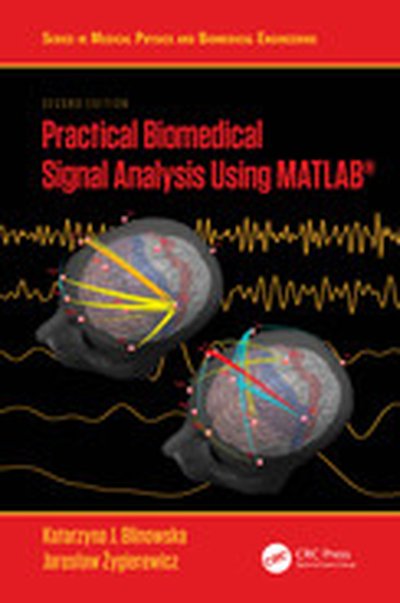
Practical Biomedical Signal Analysis Using MATLAB®, 2nd Edition

Fully updated and with exclusive new content, this second edition presents a coherent treatment of various signal processing methods and applications. The book not only covers the current techniques of biomedical signal processing, but it also offers guidance on which methods are appropriate for a given task and different types of data.

Pandas in Action

Take the next steps in your data science career! This friendly and hands-on guide shows you how to start mastering Pandas with skills you already know from spreadsheet software. In Pandas in Action you will learn how to: Import datasets, identify issues with their data structures, and optimize them for efficiency Sort, filter, pivot, and draw conclusions from a dataset and its subsets Identify trends from text-based and time-based data Organize, group, merge, and join separate datasets Use a GroupBy object to store multiple DataFrames Pandas has rapidly become one of Python's most popular data analysis libraries. In Pandas in Action, a friendly and example-rich introduction, author Boris Paskhaver shows you how to master this versatile tool and take the next steps in your data science career. You’ll learn how easy Pandas makes it to efficiently sort, analyze, filter and munge almost any type of data. About the Technology Data analysis with Python doesn’t have to be hard. If you can use a spreadsheet, you can learn pandas! While its grid-style layouts may remind you of Excel, pandas is far more flexible and powerful. This Python library quickly performs operations on millions of rows, and it interfaces easily with other tools in the Python data ecosystem. It’s a perfect way to up your data game. About the Book Pandas in Action introduces Python-based data analysis using the amazing pandas library. You’ll learn to automate repetitive operations and gain deeper insights into your data that would be impractical—or impossible—in Excel. Each chapter is a self-contained tutorial. Realistic downloadable datasets help you learn from the kind of messy data you’ll find in the real world. What's Inside Organize, group, merge, split, and join datasets Find trends in text-based and time-based data Sort, filter, pivot, optimize, and draw conclusions Apply aggregate operations About the Reader For readers experienced with spreadsheets and basic Python programming. About the Author Boris Paskhaver is a software engineer, Agile consultant, and online educator. His programming courses have been taken by 300,000 students across 190 countries. Quotes Of all the introductory pandas books I’ve read—and I did read a few—this is the best, by a mile. - Erico Lendzian, idibu.com This approachable guide will get you up and running quickly with all the basics you need to analyze your data. - Jonathan Sharley, SiriusXM Media Understanding and putting in practice the concepts of this book will help you increase productivity and make you look like a pro. - Jose Apablaza, Steadfast Networks Teaches both novice and expert Python users the essential concepts required for data analysis and data science. - Ben McNamara, DataGeek

Cryptography and Cryptanalysis in MATLAB: Creating and Programming Advanced Algorithms

Master the essentials of cryptography and cryptanalysis and learn how to put them to practical use. Each chapter of this book starts with an introduction to the concepts on which cryptographic algorithms are based and how they are used in practice, providing fully working examples for each of the algorithms presented. Implementation sections will guide you through the entire process of writing your own applications and programs using MATLAB. Cryptography and Cryptanalysis in MATLAB will serve as your definitive go-to cryptography reference, whether you are a student, professional developer, or researcher, showing how a multitude of cryptographic challenges can be overcome using the powerful tools of MATLAB. What You Will Learn Discover MATLAB’s cryptography functions Work with conversion mechanisms in MATLAB Implement cryptographic algorithms using arithmetic operations Understand the classical, simple cryptosystems that form the basis of modern cryptography Develop fully working solutions (encryption/decryption operations) Study pseudo-random generators and their real-life implementations Utilize hash functions by way of practical examples Implement solutions to defend against practical cryptanalysis methods and attacks Understand asymmetric and symmetric encryption systems and how to use them Leverage visual cryptography, steganography, and chaos-based cryptography Who This Book Is For Those who are new to cryptography/analysis. Some prior exposure to MATLAB recommended.

Pandas Brain Teasers

This book contains 25 short programs that will challenge your understanding of Pandas. Like any big project, the Pandas developers had to make some design decisions that at times seem surprising. This book uses those quirks as a teaching opportunity. By understanding the gaps in your knowledge, you'll become better at what you do. Some of the teasers are from the author's experience shipping bugs to production, and some from others doing the same. Teasers and puzzles are fun, and learning how to solve them can teach you to avoid programming mistakes and maybe even impress your colleagues and future employers. Working with data is central to nearly everything we do, from disease contact tracing and analyzing health records to smart meters that track utility consumption behavior. With the power of Python's pandas library, you can process and analyze this data in a highly efficient and simple-to-understand way. And with 25 brain teasers designed to turn this technology's quirks into a teaching opportunity, you'll be honing your data science skills while having fun at the same time. Following a simple format, you'll challenge yourself and your understanding of pandas. Read a short Python program that uses pandas, try to guess the output, run the code yourself, and then go to the next page for an explanation of the solution. From common pitfalls and hidden gotchas to unexpected twists and turns, you'll deepen your understanding of pandas, learn to write more efficient code, and reduce the number of bugs in the software you develop. You may even impress your colleagues and your employers, both present and future. Learn the tricks of the trade with Python's pandas, in one of the most fun and creative ways around. What You Need: To run the code you'll need Python version 3.8 or upper and Pandas version 1.0 or upper installed. We use Python version 3.8.3 and Pandas version 1.0.5; the output might change in future versions.

MATLAB For Dummies, 2nd Edition

Go from total MATLAB newbie to plotting graphs and solving equations in a flash! MATLAB is one of the most powerful and commonly used tools in the STEM field. But did you know it doesn’t take an advanced degree or a ton of computer experience to learn it? MATLAB For Dummies is the roadmap you’ve been looking for to simplify and explain this feature-filled tool. This handy reference walks you through every step of the way as you learn the MATLAB language and environment inside-and-out. Starting with straightforward basics before moving on to more advanced material like Live Functions and Live Scripts, this easy-to-read guide shows you how to make your way around MATLAB with screenshots and newly updated procedures. It includes: A comprehensive introduction to installing MATLAB, using its interface, and creating and saving your first file Fully updated to include the 2020 and 2021 updates to MATLAB, with all-new screenshots and up-to-date procedures Enhanced debugging procedures and use of the Symbolic Math Toolbox Brand new instruction on working with Live Scripts and Live Functions, designing classes, creating apps, and building projects Intuitive walkthroughs for MATLAB’s advanced features, including importing and exporting data and publishing your work Perfect for STEM students and new professionals ready to master one of the most powerful tools in the fields of engineering, mathematics, and computing, MATLAB For Dummies is the simplest way to go from complete newbie to power user faster than you would have thought possible.

Hands-On Data Analysis with Pandas - Second Edition

'Hands-On Data Analysis with Pandas' guides you to gain expertise in the Python pandas library for data analysis and manipulation. With practical, real-world examples, you'll learn to analyze datasets, visualize data trends, and implement machine learning models for actionable insights. What this Book will help me do Understand and implement data analysis techniques with Python. Develop expertise in data manipulation using pandas and NumPy. Visualize data effectively with pandas visualization tools and seaborn. Apply machine learning techniques with Python libraries. Combine datasets and handle complex data workflows efficiently. Author(s) Stefanie Molin is a software engineer and data scientist with extensive experience in analytics and Python. She has worked with large data-driven systems and has a strong focus on teaching data analysis effectively. Stefanie's books are known for their practical, hands-on approach to solving real data problems. Who is it for? This book is perfect for aspiring data scientists, data analysts, and Python developers. Readers with beginner to intermediate skill levels in Python will find it accessible and informative. It is designed for those seeking to build practical data analysis skills. If you're looking to add data science and pandas to your toolkit, this book is ideal.

CRAN Recipes: DPLYR, Stringr, Lubridate, and RegEx in R

Want to use the power of R sooner rather than later? Don’t have time to plow through wordy texts and online manuals? Use this book for quick, simple code to get your projects up and running. It includes code and examples applicable to many disciplines. Written in everyday language with a minimum of complexity, each chapter provides the building blocks you need to fit R’s astounding capabilities to your analytics, reporting, and visualization needs. CRAN Recipes recognizes how needless jargon and complexity get in your way. Busy professionals need simple examples and intuitive descriptions; side trips and meandering philosophical discussions are left for other books. Here R scripts are condensed, to the extent possible, to copy-paste-run format. Chapters and examples are structured to purpose rather than particular functions (e.g., “dirty data cleanup” rather than the R package name “janitor”). Everyday language eliminatesthe need to know functions/packages in advance. What You Will Learn Carry out input/output; visualizations; data munging; manipulations at the group level; and quick data exploration Handle forecasting (multivariate, time series, logistic regression, Facebook’s Prophet, and others) Use text analytics; sampling; financial analysis; and advanced pattern matching (regex) Manipulate data using DPLYR: filter, sort, summarize, add new fields to datasets, and apply powerful IF functions Create combinations or subsets of files using joins Write efficient code using pipes to eliminate intermediate steps (MAGRITTR) Work with string/character manipulation of all types (STRINGR) Discover counts, patterns, and how to locate whole words Do wild-card matching, extraction, and invert-match Work with dates using LUBRIDATE Fix dirty data; attractive formatting; bad habits to avoid Who This Book Is For Programmers/data scientists with at least some prior exposure to R.

Advancing into Analytics

Data analytics may seem daunting, but if you're an experienced Excel user, you have a unique head start. With this hands-on guide, intermediate Excel users will gain a solid understanding of analytics and the data stack. By the time you complete this book, you'll be able to conduct exploratory data analysis and hypothesis testing using a programming language. Exploring and testing relationships are core to analytics. By using the tools and frameworks in this book, you'll be well positioned to continue learning more advanced data analysis techniques. Author George Mount, founder and CEO of Stringfest Analytics, demonstrates key statistical concepts with spreadsheets, then pivots your existing knowledge about data manipulation into R and Python programming. This practical book guides you through: Foundations of analytics in Excel: Use Excel to test relationships between variables and build compelling demonstrations of important concepts in statistics and analytics From Excel to R: Cleanly transfer what you've learned about working with data from Excel to R From Excel to Python: Learn how to pivot your Excel data chops into Python and conduct a complete data analysis

Machine Reading Comprehension

Machine reading comprehension (MRC) is a cutting-edge technology in natural language processing (NLP). MRC has recently advanced significantly, surpassing human parity in several public datasets. It has also been widely deployed by industry in search engine and quality assurance systems. Machine Reading Comprehension: Algorithms and Practice performs a deep-dive into MRC, offering a resource on the complex tasks this technology involves. The title presents the fundamentals of NLP and deep learning, before introducing the task, models, and applications of MRC. This volume gives theoretical treatment to solutions and gives detailed analysis of code, and considers applications in real-world industry. The book includes basic concepts, tasks, datasets, NLP tools, deep learning models and architecture, and insight from hands-on experience. In addition, the title presents the latest advances from the past two years of research. Structured into three sections and eight chapters, this book presents the basis of MRC; MRC models; and hands-on issues in application. This book offers a comprehensive solution for researchers in industry and academia who are looking to understand and deploy machine reading comprehension within natural language processing. Presents the first comprehensive resource on machine reading comprehension (MRC) Performs a deep-dive into MRC, from fundamentals to latest developments Offers the latest thinking and research in the field of MRC, including the BERT model Provides theoretical discussion, code analysis, and real-world applications of MRC Gives insight from research which has led to surpassing human parity in MRC

MATLAB Recipes: A Problem-Solution Approach

Learn from state-of-the-art examples in robotics, motors, detection filters, chemical processes, aircraft, and spacecraft. With this book you will review contemporary MATLAB coding including the latest MATLAB language features and use MATLAB as a software development environment including code organization, GUI development, and algorithm design and testing. Features now covered include the new graph and digraph classes for charts and networks; interactive documents that combine text, code, and output; a new development environment for building apps; locally defined functions in scripts; automatic expansion of dimensions; tall arrays for big data; the new string type; new functions to encode/decode JSON; handling non-English languages; the new class architecture; the Mocking framework; an engine API for Java; the cloud-based MATLAB desktop; the memoize function; and heatmap charts. MATLAB Recipes: A Problem-Solution Approach, Second Edition provides practical, hands-on code snippets and guidance for using MATLAB to build a body of code you can turn to time and again for solving technical problems in your work. Develop algorithms, test them, visualize the results, and pass the code along to others to create a functional code base for your firm. What You Will Learn Get up to date with the latest MATLAB up to and including MATLAB 2020b Code in MATLAB Write applications in MATLAB Build your own toolbox of MATLAB code to increase your efficiency and effectiveness Who This Book Is For Engineers, data scientists, and students wanting a book rich in examples using MATLAB.

Beginning Mathematica and Wolfram for Data Science: Applications in Data Analysis, Machine Learning, and Neural Networks

Enhance your data science programming and analysis with the Wolfram programming language and Mathematica, an applied mathematical tools suite. The book will introduce you to the Wolfram programming language and its syntax, as well as the structure of Mathematica and its advantages and disadvantages. You’ll see how to use the Wolfram language for data science from a theoretical and practical perspective. Learning this language makes your data science code better because it is very intuitive and comes with pre-existing functions that can provide a welcoming experience for those who use other programming languages. You’ll cover how to use Mathematica where data management and mathematical computations are needed. Along the way you’ll appreciate how Mathematica provides a complete integrated platform: it has a mixed syntax as a result of its symbolic and numerical calculations allowing it to carry out various processes without superfluous lines of code. You’ll learn to use its notebooks as a standard format, which also serves to create detailed reports of the processes carried out. What You Will Learn Use Mathematica to explore data and describe the concepts using Wolfram language commands Create datasets, work with data frames, and create tables Import, export, analyze, and visualize data Work with the Wolfram data repository Build reports on the analysis Use Mathematica for machine learning, with different algorithms, including linear, multiple, and logistic regression; decision trees; and data clustering Who This Book Is For Data scientists new to using Wolfram and Mathematica as a language/tool to program in. Programmers should have some prior programming experience, but can be new to the Wolfram language.

Modern Power System Analysis with MATLAB® Applications by Pearson

Modern power system analysis with MATLAB applications aims to cater to the curriculum requirements of the undergraduate students and faculties of electrical and Electronics.Engineering for the course on power system analysis. Spread across ten chapters, The book aims to provide an in-depth understanding of the necessary theories. Special care has been taken to explain the development of mathematical models required for the power system analysis problems. Wherever required, MATLAB programs and the corresponding solutions are presented to motivate the students to use the MATLAB programs for small, medium and large size power system problems

The Big R-Book

Introduces professionals and scientists to statistics and machine learning using the programming language R Written by and for practitioners, this book provides an overall introduction to R, focusing on tools and methods commonly used in data science, and placing emphasis on practice and business use. It covers a wide range of topics in a single volume, including big data, databases, statistical machine learning, data wrangling, data visualization, and the reporting of results. The topics covered are all important for someone with a science/math background that is looking to quickly learn several practical technologies to enter or transition to the growing field of data science. The Big R-Book for Professionals: From Data Science to Learning Machines and Reporting with R includes nine parts, starting with an introduction to the subject and followed by an overview of R and elements of statistics. The third part revolves around data, while the fourth focuses on data wrangling. Part 5 teaches readers about exploring data. In Part 6 we learn to build models, Part 7 introduces the reader to the reality in companies, Part 8 covers reports and interactive applications and finally Part 9 introduces the reader to big data and performance computing. It also includes some helpful appendices. Provides a practical guide for non-experts with a focus on business users Contains a unique combination of topics including an introduction to R, machine learning, mathematical models, data wrangling, and reporting Uses a practical tone and integrates multiple topics in a coherent framework Demystifies the hype around machine learning and AI by enabling readers to understand the provided models and program them in R Shows readers how to visualize results in static and interactive reports Supplementary materials includes PDF slides based on the book’s content, as well as all the extracted R-code and is available to everyone on a Wiley Book Companion Site The Big R-Book is an excellent guide for science technology, engineering, or mathematics students who wish to make a successful transition from the academic world to the professional. It will also appeal to all young data scientists, quantitative analysts, and analytics professionals, as well as those who make mathematical models.

Beginning R 4: From Beginner to Pro

Learn how to use R 4, write and save R scripts, read in and write out data files, use built-in functions, and understand common statistical methods. This in-depth tutorial includes key R 4 features including a new color palette for charts, an enhanced reference counting system (useful for big data), and new data import settings for text (as well as the statistical methods to model text-based, categorical data). Each chapter starts with a list of learning outcomes and concludes with a summary of any R functions introduced in that chapter, along with exercises to test your new knowledge. The text opens with a hands-on installation of R and CRAN packages for both Windows and macOS. The bulk of the book is an introduction to statistical methods (non-proof-based, applied statistics) that relies heavily on R (and R visualizations) to understand, motivate, and conduct statistical tests and modeling. Beginning R 4 shows the use of R in specific cases such as ANOVA analysis, multiple and moderated regression, data visualization, hypothesis testing, and more. It takes a hands-on, example-based approach incorporating best practices with clear explanations of the statistics being done. You will: Acquire and install R and RStudio Import and export data from multiple file formats Analyze data and generate graphics (including confidence intervals) Interactively conduct hypothesis testing Code multiple and moderated regression solutions Who This Book Is For Programmers and data analysts who are new to R. Some prior experience in programming is recommended.