talk-data.com talk-data.com

Event

O'Reilly Data Science Books

2013-08-09 – 2026-02-25 Oreilly Visit website ↗

Activities tracked

245

Collection of O'Reilly books on Data Science.

Filtering by: SAS ×

Sessions & talks

Showing 101–125 of 245 · Newest first

Search within this event →
Business Statistics Made Easy in SAS

Learn or refresh core statistical methods for business with SAS® and approach real business analytics issues and techniques using a practical approach that avoids complex mathematics and instead employs easy-to-follow explanations.

Business Statistics Made Easy in SAS® is designed as a user-friendly, practice-oriented, introductory text to teach businesspeople, students, and others core statistical concepts and applications. It begins with absolute core principles and takes you through an overview of statistics, data and data collection, an introduction to SAS®, and basic statistics (descriptive statistics and basic associational statistics). The book also provides an overview of statistical modeling, effect size, statistical significance and power testing, basics of linear regression, introduction to comparison of means, basics of chi-square tests for categories, extrapolating statistics to business outcomes, and some topical issues in statistics, such as big data, simulation, machine learning, and data warehousing.

The book steers away from complex mathematical-based explanations, and it also avoids basing explanations on the traditional build-up of distributions, probability theory and the like, which tend to lose the practice-oriented reader. Instead, it teaches the core ideas of statistics through methods such as careful, intuitive written explanations, easy-to-follow diagrams, step-by-step technique implementation, and interesting metaphors.

With no previous SAS experience necessary, Business Statistics Made Easy in SAS® is an ideal introduction for beginners. It is suitable for introductory undergraduate classes, postgraduate courses such as MBA refresher classes, and for the business practitioner. It is compatible with SAS® University Edition.
Sharpening Your Advanced SAS Skills

This guide presents sophisticated SAS programming techniques, procedures, and tools, such as Proc SQL, hash tables, and SAS Macro programming, for any industry. It empowers both advanced programmers who need a quick refresher and programmers interested in learning new techniques. It shows how to take advantage of the latest SAS options and new SAS procedures. The book illustrates syntax with simple, common task-oriented examples and prepares readers for the advanced SAS certification exam. Mindmaps and process flowcharts are available on the author's website.

SAS Essentials: Mastering SAS for Data Analytics, 2nd Edition

A step-by-step introduction to using SAS statistical software as a foundational approach to data analysis and interpretation Presenting a straightforward introduction from the ground up, SAS Essentials: Mastering SAS for Data Analytics, Second Edition illustrates SAS using hands-on learning techniques and numerous real-world examples. Keeping different experience levels in mind, the highly-qualified author team has developed the book over 20 years of teaching introductory SAS courses. Divided into two sections, the first part of the book provides an introduction to data manipulation, statistical techniques, and the SAS programming language. The second section is designed to introduce users to statistical analysis using SAS Procedures. Featuring self-contained chapters to enhance the learning process, the Second Edition also includes: Programming approaches for the most up-to-date version of the SAS platform including information on how to use the SAS University Edition Discussions to illustrate the concepts and highlight key fundamental computational skills that are utilized by business, government, and organizations alike New chapters on reporting results in tables and factor analysis Additional information on the DATA step for data management with an emphasis on importing data from other sources, combining data sets, and data cleaning Updated ANOVA and regression examples as well as other data analysis techniques A companion website with the discussed data sets, additional code, and related PowerPoint slides SAS Essentials: Mastering SAS for Data Analytics, Second Edition is an ideal textbook for upper-undergraduate and graduate-level courses in statistics, data analytics, applied SAS programming, and statistical computer applications as well as an excellent supplement for statistical methodology courses. The book is an appropriate reference for researchers and academicians who require a basic introduction to SAS for statistical analysis and for preparation for the Basic SAS Certification Exam.

SAS 9.4 SQL Procedure User's Guide, Second Edition, 2nd Edition

Describes the basics of using the SQL procedure and provides comprehensive reference information. The usage information includes retrieving data from single and multiple tables; selecting specific data from tables; subsetting, ordering, and summarizing data; updating tables; combining tables to create new tables and useful reports; performing queries on database management system (DBMS) tables; using PROC SQL with the SAS macro facility; and debugging and optimizing PROC SQL code. The reference information includes statements, dictionary components, and system options.

Exercises and Projects for The Little SAS Book, Fifth Edition

The best-selling Little SAS Book just got even better. Readers worldwide study this easy-to-follow book to help them learn the basics of SAS programming. Now Rebecca Ottesen has teamed up with the original authors, Lora Delwiche and Susan Slaughter, to provide a new way to challenge and improve your SAS skills through thought-provoking questions, exercises, and projects. Each chapter in Exercises and Projects for The Little SAS Book is matched to a chapter in The Little SAS Book, Fifth Edition. This hands-on workbook is designed to hone your SAS skills whether you are a

student or a professional.

This book covers DATA step programming, report writing, statistical and graphical procedures, the Output Delivery System, macros, and more; contains a mixture of multiple-choice questions, open-ended discussion topics, and programming exercises with selected answers and hints; and includes comprehensive programming projects that are designed to encourage self-study and to test the skills developed by The Little SAS Book.

PROC TABULATE by Example, Second Edition

An abundance of real-world examples highlights Lauren Haworth Lake’s and Julie McKnight's PROC TABULATE by Example, Second Edition. Beginning and intermediate SAS® users will find this step-by-step guide to producing tables and reports using the TABULATE procedure both convenient and inviting. Topics are presented in order of increasing complexity, making this an excellent training manual or self-tutorial. The concise format also makes this a quick reference guide for specific applications for more advanced users. A very handy section on common problems and their solutions is also included. With this book, you will quickly learn how to generate tables using macros, handle percentages and missing data, modify row and column headings, and produce one-, two-, and three-dimensional tables using PROC TABULATE. Also provided are more advanced tips on complex formatting with the Output Delivery System (ODS) and exporting PROC TABULATE output to other applications.

Elementary Statistics Using SAS

Bridging the gap between statistics texts and SAS documentation, Elementary Statistics Using SAS is written for those who want to perform analyses to solve problems. The first section of the book explains the basics of SAS data sets and shows how to use SAS for descriptive statistics and graphs. The second section discusses fundamental statistical concepts, including normality and hypothesis testing. The remaining sections of the book show analyses for comparing two groups, comparing multiple groups, fitting regression equations, and exploring contingency tables. For each analysis, author Sandra Schlotzhauer explains assumptions, statistical approach, and SAS methods and syntax, and makes conclusions from the results. Statistical methods covered include two-sample t-tests, paired-difference t-tests, analysis of variance, multiple comparison techniques, regression, regression diagnostics, and chi-square tests. Elementary Statistics Using SAS is a thoroughly revised and updated edition of Ramon Littell and Sandra Schlotzhauer's SAS System for Elementary Statistical Analysis. This book is part of the SAS Press program.

Analyzing Receiver Operating Characteristic Curves with SAS

As a diagnostic decision-making tool, receiver operating characteristic (ROC) curves provide a comprehensive and visually attractive way to summarize the accuracy of predictions. They are used extensively in medical diagnosis and increasingly in fields such as data mining, credit scoring, weather forecasting, and psychometry. In Analyzing Receiver Operating Characteristic Curves with SAS, author Mithat Gonen illustrates the many existing SAS procedures that can be tailored to produce ROC curves and expands upon further analyses using other SAS procedures and macros. Both parametric and nonparametric methods for analyzing ROC curves are covered in detail. Topics addressed include: Appropriate methods for binary, ordinal, and continuous measures Computations using PROC FREQ, PROC LOGISTIC, PROC NLMIXED, and macros Comparing the ROC curves of several markers and adjusting them for covariates ROC curves with censored data Using the ROC curve for evaluating multivariable prediction models via bootstrap and cross-validation ROC curves in SAS Enterprise Miner And more! Written for any statistician interested in learning more about ROC curve methodology, the book assumes readers have a basic understanding of regression procedures and moderate familiarity with Base SAS and SAS/STAT. Some familiarity with SAS/GRAPH is helpful but not essential. This book is part of the SAS Press program.

Cody's Data Cleaning Techniques Using SAS, Second Edition

Thoroughly updated for SAS 9, Cody's Data Cleaning Techniques Using SAS, Second Edition, addresses tasks that nearly every SAS programmer needs to do - that is, make sure that data errors are located and corrected. Written in Ron Cody's signature informal, tutorial style, this book develops and demonstrates data cleaning programs and macros that you can use as written or modify for your own special data cleaning needs. Each topic is developed through specific examples, and every program and macro is explained in detail.

Statistical Programming in SAS

In Statistical Programming in SAS, author A. John Bailer integrates SAS tools with interesting statistical applications and uses SAS 9.2 as a platform to introduce programming ideas for statistical analysis, data management, and data display and simulation. Written using a reader-friendly and narrative style, the book includes extensive examples and case studies to present a well-structured introduction to programming issues.

Exchanging Data between SAS and Microsoft Excel

Master simple-to-complex techniques for transporting and managing data between SAS and Excel William Benjamin's Exchanging Data between SAS and Microsoft Excel: Tips and Techniques to Transfer and Manage Data More Efficiently describes many of the options and methods that enable a SAS programmer to transport data between SAS and Excel. The book includes examples that all levels of SAS and Excel users can apply to their everyday programming tasks. Because the book makes no assumptions about the skill levels of either SAS or Excel users, it has a wide-ranging application, providing detailed instructions about how to apply the techniques shown. It contains sections that gather instructional and syntactical information together that are otherwise widely dispersed, and it provides detailed examples about how to apply the software to everyday applications. These examples enable novice users and power developers alike the chance to expand their capabilities and enhance their skillsets. By moving from simple-to-complex applications and examples, the layout of the book allows it to be used as both a training and a reference tool. Excel users and SAS programmers are presented with tools that will assist in the integration of SAS and Excel processes in order to automate reporting and programming interfaces. This enables programming staff to request their own reports or processes and, in turn, support a much larger community.

Practical Business Analytics Using SAS: A Hands-on Guide

Practical Business Analytics Using SAS: A Hands-on Guide shows SAS users and businesspeople how to analyze data effectively in real-life business scenarios. The book begins with an introduction to analytics, analytical tools, and SAS programming. The authors—both SAS, statistics, analytics, and big data experts—first show how SAS is used in business, and then how to get started programming in SAS by importing data and learning how to manipulate it. Besides illustrating SAS basic functions, you will see how each function can be used to get the information you need to improve business performance. Each chapter offers hands-on exercises drawn from real business situations. The book then provides an overview of statistics, as well as instruction on exploring data, preparing it for analysis, and testing hypotheses. You will learn how to use SAS to perform analytics and model using both basic and advanced techniques like multiple regression, logistic regression, and time series analysis, among other topics. The book concludes with a chapter on analyzing big data. Illustrations from banking and other industries make the principles and methods come to life. Readers will find just enough theory to understand the practical examples and case studies, which cover all industries. Written for a corporate IT and programming audience that wants to upgrade skills or enter the analytics field, this book includes: More than 200 examples and exercises, including code and datasets for practice. Relevant examples for all industries. Case studies that show how to use SAS analytics to identify opportunities, solve complicated problems, and chart a course. Practical Business Analytics Using SAS: A Hands-on Guide gives you the tools you need to gain insight into the data at your fingertips, predict business conditions for better planning, and make excellent decisions. Whether you are in retail, finance, healthcare, manufacturing, government, or any other industry, this book will help your organization increase revenue, drive down costs, improve marketing, and satisfy customers better than ever before.

Developing Credit Risk Models Using SAS Enterprise Miner and SAS/STAT

Combine complex concepts facing the financial sector with the software toolsets available to analysts.

The credit decisions you make are dependent on the data, models, and tools that you use to determine them. Developing Credit Risk Models Using SAS Enterprise Miner and SAS/STAT: Theory and Applications combines both theoretical explanation and practical applications to define as well as demonstrate how you can build credit risk models using SAS Enterprise Miner and SAS/STAT and apply them into practice.

The ultimate goal of credit risk is to reduce losses through better and more reliable credit decisions that can be developed and deployed quickly. In this example-driven book, Dr. Brown breaks down the required modeling steps and details how this would be achieved through the implementation of SAS Enterprise Miner and SAS/STAT.

Users will solve real-world risk problems as well as comprehensively walk through model development while addressing key concepts in credit risk modeling. The book is aimed at credit risk analysts in retail banking, but its applications apply to risk modeling outside of the retail banking sphere. Those who would benefit from this book include credit risk analysts and managers alike, as well as analysts working in fraud, Basel compliancy, and marketing analytics. It is targeted for intermediate users with a specific business focus and some programming background is required.

Efficient and effective management of the entire credit risk model lifecycle process enables you to make better credit decisions. Developing Credit Risk Models Using SAS Enterprise Miner and SAS/STAT: Theory and Applications demonstrates how practitioners can more accurately develop credit risk models as well as implement them in a timely fashion.

This book is part of the SAS Press Program.

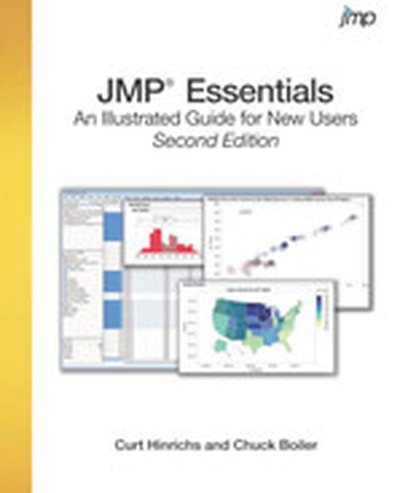
JMP Essentials, 2nd Edition

Grasp essential steps in order to generate meaningful results quickly with JMP.

JMP Essentials: An Illustrated Step-by-Step Guide for New Users, Second Edition is designed for the new or occasional JMP user who needs to generate meaningful graphs or results quickly. Drawing on their own experience working with these customers, the authors provide essential steps for what new users typically need to carry out with JMP. This newest edition has all new instructions and screen shots reflecting the latest release of JMP software. In addition, it has eight new detailed sections and 10 new subsections that include creating maps, filtering data, creating dashboards, and working with Excel data, all of which highlight new, useful and basic level enhancements to JMP.

The format of the book is unique. It adopts a show-and-tell design with essential step-by-step instructions and corresponding screen illustrations, which help users quickly see how to generate the desired results. In most cases, each section completes a JMP task, which maximizes the book's utility as a reference. In addition, each chapter contains a family of features that are carefully crafted to first introduce you to basic features and then on to more advanced ones. JMP Essentials: An Illustrated Step-by-Step Guide for New Users, Second Edition is the quickest and most accessible reference book available.

This is part of the SAS Press program.

SAS Certification Prep Guide, 4th Edition
Businesses rely on career professionals with strong SAS knowledge and skills. Set yourself apart from the competition by earning the only globally recognized credential endorsed by SAS.

The SAS Certification Prep Guide: Advanced Programming for SAS 9, Fourth Edition, prepares you to take the Advanced Programming for SAS 9 exam. Major topics include SQL processing with SAS, the SAS macro language, advanced SAS programming techniques, and optimizing SAS programs, as well as a new chapter on creating functions with PROC FCMP. You will also become familiar with the enhancements and new functionality that are available in SAS 9.

New or experienced SAS users will find this guide to be an invaluable resource that covers the objectives tested on the exam. The text contains quizzes that enable you to test your understanding of material in each chapter. Quiz solutions are included at the end of the book. Candidates must earn the SAS Certified Base Programmer for SAS 9 Credential before taking the SAS Advanced Programming for SAS 9 exam.

You’ll find instructions on how to obtain sample data when accessing SAS through SAS Enterprise Guide, SAS Studio, SAS University Edition, and the SAS windowing environment. This edition provides significant improvements to numerous examples, making the code even more efficient.

Experience is a critical component to becoming a SAS Certified Professional. This comprehensive guide along with training in SAS SQL1, SAS Macro Language 1, and SAS Programming 3 are valuable resources designed to help you prepare for the Advanced SAS Certification exam.

Test Scoring and Analysis Using SAS

Develop your own multiple-choice tests, score students, produce student rosters (in print form or Excel), and explore item response theory (IRT).

Aimed at nonstatisticians working in education or training, Test Scoring and Analysis Using SAS describes item analysis and test reliability in easy-to-understand terms, and teaches you SAS programming to score tests, perform item analysis, and estimate reliability. Maximizing flexibility, the scoring and analysis programs enable you to analyze tests with multiple versions, define alternate correct responses for selected items, and repeat the scoring with selected items deleted.

You will be guided step-by-step on how to design multiple-choice items, use analysis to improve your tests, and even detect cheating on students’ submitted multiple-choice tests. Other subjects addressed include reading in data from a variety of sources (text files and Excel workbooks, for example), detecting errors in the input data, and producing class rosters in printed form or Excel workbooks. Also included is a chapter on IRT—widely used in education to calibrate and evaluate items in tests in education such as the SAT and GRE—with instructions for running the new SAS procedure PROC IRT.

This book is part of the SAS Press program.

The Essential Guide to SAS Dates and Times, Second Edition, 2nd Edition

Why does SAS use January 1, 1960 as its arbitrary reference date? How do you convert a value such as 27 January 2003 into a SAS date? How do you put a date into a filename, or label an Excel worksheet with the date?

You'll find the answers to these questions and much more in Derek Morgan's Essential Guide to SAS Dates and Times, Second Edition, which makes it easy to understand how to use and manipulate dates, times, and datetimes in SAS. Updated for SAS 9.4, with additional functions, formats, and capabilities, the Second Edition has a new chapter dedicated to the ISO 8601 standard and the formats and functions that are new to SAS, including how SAS works with Universal Coordinated Time (UTC).

Novice users will appreciate the new "Troubleshooting" appendix, which discusses questions common to newer SAS users in a conversational way and provides clear examples of simple solutions to these questions. Both novice and intermediate users will find the clear, task-based examples on how to accomplish date-related tasks and the detailed explanations of standard formats and functions invaluable. Users working with intervals will appreciate the expanded discussion of the topic, which details the new custom interval capability, among other enhancements to intervals.

Users working with international dates and times will benefit from the detailed discussion of the NLS facility as it relates to dates and times. Included are bonus "Quick Reference Guides" that list both the standard date and time formats and the NLS date and time formats with examples. These guides illustrate how each format displays the same date, time, or datetime, so you can find the format you want to use at a glance.

The Essential Guide to SAS Dates and Times, Second Edition is the most complete and up-to-date collection of examples on how to write complex programs involving dates, times, or datetime values.

This book is part of the SAS Press Program.

Statistical Graphics Procedures by Example

Sanjay Matange and Dan Heath's Statistical Graphics Procedures by Example: Effective Graphs Using SAS shows the innumerable capabilities of SAS Statistical Graphics (SG) procedures. The authors begin with a general discussion of the principles of effective graphics, ODS Graphics, and the SG procedures. They then move on to show examples of the procedures' many features. The book is designed so that you can easily flip through it, find the graph you need, and view the code right next to the example. Among the topics included are how to combine plot statements to create custom graphs; customizing graph axes, legends, and insets; advanced features, such as annotation and attribute maps; tips and tricks for creating the optimal graph for the intended usage; real-world examples from the health and life sciences domain; and ODS styles. The procedures in Statistical Graphics Procedures by Example are specifically designed for the creation of analytical graphs. That makes this book a must-read for analysts and statisticians in the health care, clinical trials, financial, and insurance industries. However, you will find that the examples here apply to all fields. This book is part of the SAS Press program.

Text Mining and Analysis

Big data: It's unstructured, it's coming at you fast, and there's lots of it. In fact, the majority of big data is text-oriented, thanks to the proliferation of online sources such as blogs, emails, and social media.

However, having big data means little if you can't leverage it with analytics. Now you can explore the large volumes of unstructured text data that your organization has collected with Text Mining and Analysis: Practical Methods, Examples, and Case Studies Using SAS.

This hands-on guide to text analytics using SAS provides detailed, step-by-step instructions and explanations on how to mine your text data for valuable insight. Through its comprehensive approach, you'll learn not just how to analyze your data, but how to collect, cleanse, organize, categorize, explore, and interpret it as well. Text Mining and Analysis also features an extensive set of case studies, so you can see examples of how the applications work with real-world data from a variety of industries.

Text analytics enables you to gain insights about your customers' behaviors and sentiments. Leverage your organization's text data, and use those insights for making better business decisions with Text Mining and Analysis.

This book is part of the SAS Press program.