talk-data.com talk-data.com

Event

O'Reilly Business Intelligence Books

2001-05-23 – 2025-11-14 Oreilly Visit website ↗

Activities tracked

58

Collection of O'Reilly books on Business Intelligence.

Filtering by: business-intelligence ×

Sessions & talks

Showing 26–50 of 58 · Newest first

Search within this event →
Pro SharePoint 2013 Business Intelligence Solutions

To get ahead in today's hyper-competitive marketplace, your business has to take advantage of the data you already have and mine that data to give you new insight, metrics, and clues to what drives successful customer interactions. In Pro SharePoint 2013 Business Intelligence Solutions, you'll learn exactly how to unlock that magic, build business intelligence facilities on SharePoint, and glean insights from data to propel your business to the next level. To understand the various business intelligence offerings in SharePoint 2013, you need to understand the core SQL Server business intelligence concepts, and the first part of the book presents a comprehensive tutorial on those fundamentals. Pro SharePoint 2013 Business Intelligence Solutions then focuses on specific SharePoint business intelligence investments including: Visio Services Excel Services SQL Server Reporting Services Business Connectivity Services Power View and PerformancePoint Services Authors Manpreet Singh, Sha Anandan, Sahil Malik, and Steve Wright walk you through all of this material comprehensively in practical, hands-on format, with plenty of examples to empower you to use these products in your real-life projects. As compelling as SharePoint and SQL Server business intelligence are together, the challenge always has been finding people who understand both SharePoint and SQL Server well enough to deliver such business intelligence solutions. With this book in hand, you become part of that select group. Get your copy of Pro SharePoint 2013 Business Intelligence Solutions today!
Developing Business Intelligence Apps for SharePoint

Create dynamic business intelligence (BI) solutions for SharePoint faster and with more capabilities than previously possible. With this book, you’ll learn the entire process—from high-level concepts to development and deployment—for building data-rich BI applications with Visual Studio LightSwitch, SQL Server 2012, and a host of related Microsoft technologies. You’ll learn practical techniques and patterns necessary to use all of these technologies together as you build an example application through the course of the book, step by step. Discover how to solve real problems, using BI solutions that will evolve to meet future needs. Learn the fundamentals of SharePoint, LightSwitch, and SQL Server 2012 Get a solid grounding in BI application basics and database design principles Use LightSwitch to build a help desk app, including data model design and SharePoint data integration Build a tabular cube with Microsoft’s Business Intelligence Semantic Model (BISM) Dive into the data visualization stack, including Excel and SQL Server Reporting Services Create reports with Excel Services, Report Builder, and PowerView Use tips and tricks for setting up your BI application development environment

Oracle Business Intelligence Applications

Implement Oracle Business Intelligence Applications Provide actionable business intelligence across the enterprise to enable informed decision-making and streamlined business processes. Oracle Business Intelligence Applications: Deliver Value Through Rapid Implementations shows how to justify, configure, customize, and extend this complete package of BI solutions. You'll get a technical walkthrough of Oracle Business Intelligence Applications architecture--from the dashboard to the data source--followed by best practices for maximizing the powerful features of each application. You will also find out about stakeholders critical to project approval and success. Optimize performance using Oracle Exalytics In-Memory Machine Deliver timely financial information to managers with Oracle Financial Analytics Enable a streamlined, demand-driven supply chain via Oracle Supply Chain and Order Management Analytics Provide end-to-end visibility into manufacturing operations with Oracle Manufacturing Analytics Optimize supply-side performance through Oracle Procurement and Spend Analytics Use Oracle Human Resources Analytics to provide key workforce information to managers and HR professionals Track the costs and labor required to maintain and operate assets with Oracle Enterprise Asset Management Analytics Maintain visibility into project performance via Oracle Project Analytics Provide actionable insight into sales opportunities using Oracle Sales Analytics Enable superior customer service with Oracle Service Analytics

Business Intelligence in Microsoft SharePoint 2013

Dive into the business intelligence features in SharePoint 2013—and use the right combination of tools to deliver compelling solutions. Take control of business intelligence (BI) with the tools offered by SharePoint 2013 and Microsoft SQL Server 2012. Led by a group of BI and SharePoint experts, you’ll get step-by-step instructions for understanding how to use these technologies best in specific BI scenarios—whether you’re a SharePoint administrator, SQL Server developer, or business analyst. Discover how to: Manage the entire BI lifecycle, from determining key performance indicators to building dashboards Use web-based Microsoft Excel services and publish workbooks on a SharePoint Server Mash up data from multiple sources and create Data Analysis Expressions (DAX) using PowerPivot Create data-driven diagrams that provide interactive processes and context with Microsoft Visio Services Use dashboards, scorecards, reports, and key performance indicators to monitor and analyze your business Use SharePoint to view BI reports side by side, no matter which tools were used to produced them

IBM Cognos Business Intelligence

This comprehensive guide to IBM Cognos 10 Business Intelligence tools provides practical, hands-on learning to help you improve your business's data management and analysis capabilities. By mastering key features such as Report Studio, Analysis Studio, and Business Insight, you will be able to make smarter decisions, achieve better results, and gain a deeper understanding of your organization's data. What this Book will help me do Develop advanced reporting skills using IBM Cognos 10 Report Studio and Query Studio. Analyze data effectively with a thorough understanding of Analysis Studio features. Integrate statistical and real-time information into business reports for critical insights. Implement modern strategies to enhance business collaboration and decision-making. Master delivering high-impact business intelligence presentations to broader audiences. Author(s) The authors of this book are experienced IBM Cognos professionals who bring years of business intelligence development and consultancy expertise. They are committed to teaching in a practical and results-driven manner, providing readers with actionable skills. Their insight into IBM Cognos stems from years of real-world application, ensuring the book is rich with valuable advice. Who is it for? This book is ideal for IBM Cognos developers, business intelligence consultants, and analysts with foundational knowledge of Cognos 10 and some experience with Cognos 8. Readers who aim to deepen their understanding of reporting, administration, and analytics will find this guide valuable. It serves as both a learning resource for upgrading skills and a reference for optimizing IBM Cognos environments in professional settings.

Big Data, Big Analytics: Emerging Business Intelligence and Analytic Trends for Today's Businesses

Unique prospective on the big data analytics phenomenon for both business and IT professionals The availability of Big Data, low-cost commodity hardware and new information management and analytics software has produced a unique moment in the history of business. The convergence of these trends means that we have the capabilities required to analyze astonishing data sets quickly and cost-effectively for the first time in history. These capabilities are neither theoretical nor trivial. They represent a genuine leap forward and a clear opportunity to realize enormous gains in terms of efficiency, productivity, revenue and profitability. The Age of Big Data is here, and these are truly revolutionary times. This timely book looks at cutting-edge companies supporting an exciting new generation of business analytics. Learn more about the trends in big data and how they are impacting the business world (Risk, Marketing, Healthcare, Financial Services, etc.) Explains this new technology and how companies can use them effectively to gather the data that they need and glean critical insights Explores relevant topics such as data privacy, data visualization, unstructured data, crowd sourcing data scientists, cloud computing for big data, and much more.

Business Intelligence, 2nd Edition

Business Intelligence: The Savvy Managers Guide, Second Edition, discusses the objectives and practices for designing and deploying a business intelligence (BI) program. It looks at the basics of a BI program, from the value of information and the mechanics of planning for success to data model infrastructure, data preparation, data analysis, integration, knowledge discovery, and the actual use of discovered knowledge. Organized into 21 chapters, this book begins with an overview of the kind of knowledge that can be exposed and exploited through the use of BI. It then proceeds with a discussion of information use in the context of how value is created within an organization, how BI can improve the ways of doing business, and organizational preparedness for exploiting the results of a BI program. It also looks at some of the critical factors to be taken into account in the planning and execution of a successful BI program. In addition, the reader is introduced to considerations for developing the BI roadmap, the platforms for analysis such as data warehouses, and the concepts of business metadata. Other chapters focus on data preparation and data discovery, the business rules approach, and data mining techniques and predictive analytics. Finally, emerging technologies such as text analytics and sentiment analysis are considered. This book will be valuable to data management and BI professionals, including senior and middle-level managers, Chief Information Officers and Chief Data Officers, senior business executives and business staff members, database or software engineers, and business analysts. Guides managers through developing, administering, or simply understanding business intelligence technology Keeps pace with the changes in best practices, tools, methods and processes used to transform an organization’s data into actionable knowledge Contains a handy, quick-reference to technologies and terminology

Business Intelligence Applied: Implementing an Effective Information and Communications Technology Infrastructure

Expert guidance for building an information communication and technology infrastructure that provides best in business intelligence Enterprise performance management (EPM) technology has been rapidly advancing, especially in the areas of predictive analysis and cloud-based solutions. Business intelligence caught on as a concept in the business world as the business strategy application of data warehousing in the early 2000s. With the recent surge in interest in data analytics and big data, it has seen a renewed level of interest as the ability of a business to find the valuable data in a timely—and competitive—fashion. Business Intelligence Applied reveals essential information for building an optimal and effective information and communication technology (ICT) infrastructure. Defines ICT infrastructure Examines best practices for documenting business change and for documenting technology recommendations Includes examples and cases from Europe and Asia Written for business intelligence staff, CIOs, CTOs, and technology managers With examples and cases from Europe and Asia, Business Intelligence Applied expertly covers business intelligence, a hot topic in business today as a key element to business and data analytics.

Business Intelligence Cookbook: A Project Lifecycle Approach Using Oracle Technology

Business Intelligence Cookbook: A Project Lifecycle Approach Using Oracle Technology is an expert guide for enhancing your data warehousing and business intelligence skills, specifically targeted at Oracle Database 11g. With over 80 advanced step-by-step recipes, this book walks you through creating, optimizing, and managing actionable business intelligence solutions. What this Book will help me do Understand practical project management approaches specific to business intelligence and data warehousing. Learn to effectively estimate efforts for DW/BI projects using structured methodologies. Model data using Oracle Database and Oracle SQL Data Modeler while aligning it with business requirements. Discover best practices for transitioning BI solutions from development to deployment. Master techniques to secure organizational data as a critical asset. Author(s) John Heaton is an experienced IT professional specializing in data warehousing and business intelligence projects. With extensive knowledge of Oracle technologies, John brings deep technical insights along with a clear writing style, making complex concepts accessible to readers. He is passionate about helping professionals in the IT industry enhance their skills. Who is it for? This book is ideal for IT professionals, data warehouse developers, and project managers working with Oracle Database who seek to advance their expertise in business intelligence. If you have foundational knowledge of DW/BI concepts and want to professionally manage complete lifecycle projects leveraging Oracle tools, this guide is tailored for you.

Business Intelligence in Microsoft® SharePoint® 2010

Dive into the business intelligence (BI) features in SharePoint 2010—and use the right combination of tools to deliver compelling solutions. This practical guide helps you explore several BI application services available in SharePoint 2010 and Microsoft SQL Server 2008 R2. You’ll learn each technology with step-by-step instructions, and determine which ones work best in specific BI scenarios—whether you’re a SharePoint administrator, SQL Server developer, or business analyst. Choose the BI tools that meet your needs—and learn how they work together Examine the BI lifecycle, from determining key performance indicators to building dashboards Take Microsoft Excel further—gain more control and functionality with web-based Excel Services Mash up data from multiple sources using PowerPivot for Excel 2010 Create data visualizations with objects, context, and metrics using Microsoft Visio Services Build dashboards, scorecards, and other monitoring and analysis tools with PerformancePoint Services Use SharePoint to view BI reports side by side, no matter which tools were used to produced them Your companion web content includes: Interactive exercises that help you try out concepts or techniques Code samples that enable you to work with the exercises

Business Intelligence

This book is about using business intelligence as a management information system for supporting managerial decision making. It concentrates primarily on practical business issues and demonstrates how to apply data warehousing and data analytics to support business decision making. This book progresses through a logical sequence, starting with data model infrastructure, then data preparation, followed by data analysis, integration, knowledge discovery, and finally the actual use of discovered knowledge. All examples are based on the most recent achievements in business intelligence. Finally this book outlines an overview of a methodology that takes into account the complexity of developing applications in an integrated business intelligence environment. This book is written for managers, business consultants, and undergraduate and postgraduates students in business administration.

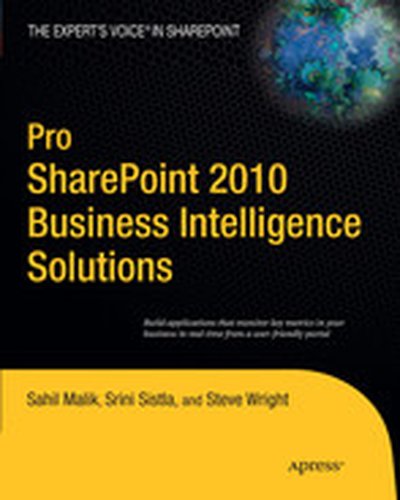
Pro SharePoint 2010 Business Intelligence Solutions

Business Intelligence (BI) software is everywhere. It is the code and tools that allow you to view different components of a business using a single visual platform, making comprehending mountains of data easier. With SharePoint 2010, Microsoft has married one of the most-used team collaboration tools with its business intelligence products, including PerformancePoint Services and Excel Services. Now, users of SharePoint can have a single place to get a view of their business, its organization and processes, and its financial performance. Constructing this type of portal is a process unique to each business. With Pro SharePoint 2010 Business Intelligence Solutions, authors Sahil Malik and Srini Sistla take you through the different tools, services, and frameworks available for building a BI portal atop SharePoint 2010. With comprehensive coverage of Visio Services, PerformancePoint, Excel Services, and a practical look at building scorecards, dashboards, and other reporting solutions, this book answers the fundamental questions about why and how BI can work for your business.

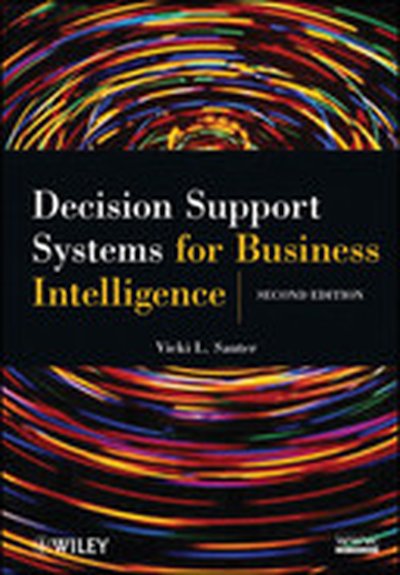
Decision Support Systems for Business Intelligence, Second Edition

This book examines decision making in general, the translation of knowledge about decision making into a DSS model, and the actual programming of a DSS. In addition, it combines the theoretical underpinnings of the topic with practical application using tools and technology currently available. Topics are discussed on three levels: general theory, implications for DSS design, and code development. This approach provides readers with practical examples than can be adopted into systems design. The Second Edition has been completely updated to reflect new technologies as well as the demands upon technology that have evolved since the publication of the First Edition in 1996. The book utilizes a combination of Dreamweaver and Cold Fusion, which are both popular software products that follow industry standards. (The First Edition utilized Level 5 Object, but all references to the software have been removed as it is not deemed a viable tool any longer.) In light of the numerous advances in the field of DSS over the years, there are many topics throughout the book that have updated and revised. For example, data warehousing has increased substantially in importance since the First Edition, and this section has been completely revised. The topic of business intelligence has been added, and similarly, data mining coverage has been increased via additional discussion and examples. In addition, transnational corporations have become more prevalent and are addressed accordingly.

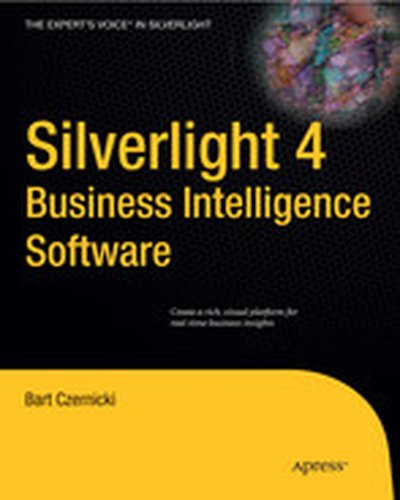
Silverlight 4 Business Intelligence Software

Business Intelligence (BI) software allows you to view different components of a business using a single visual platform, which makes comprehending mountains of data easier. BI is everywhere. Applications that include reports, analytics, statistics, and historical and predictive modeling are all examples of BI. Currently, we are in the second generation of BI software—called BI 2.0—which is focused on writing BI software that is predictive, adaptive, simple, and interactive. As computers and software have evolved, more data can be presented to end users with increasingly visually rich techniques. Rich Internet Application (RIA) technologies such as Microsoft Silverlight can be used to transform traditional user-interfaces filled with boring data into fully interactive analytical applications that quickly deliver insight from large data sets. Furthermore, RIA applications now include 3D spatial-design capabilities that move beyond a simple list or grid and allow for interesting layouts of aggregated data. BI 2.0 implemented via an RIA technology can truly bring out the power of BI and deliver it to an average user on the Web. Next-Generation Business Intelligence Software with Silverlight 4 provides developers, designers, and architects with a solid foundation in BI design and architecture concepts for Microsoft Silverlight. This book covers key BI design concepts and how they can be applied without an existing BI infrastructure. Author Bart Czernicki provides you with examples of how to build small BI applications that are interactive, highly visual, statistical, predictive—and most importantly—intuitive to the end-user. BI isn't just for the executive branch of a Fortune 500 company—it is for the masses. Let Next-Generation Business Intelligence Software with Silverlight 4 show you how to unlock the rich intelligence you already have.

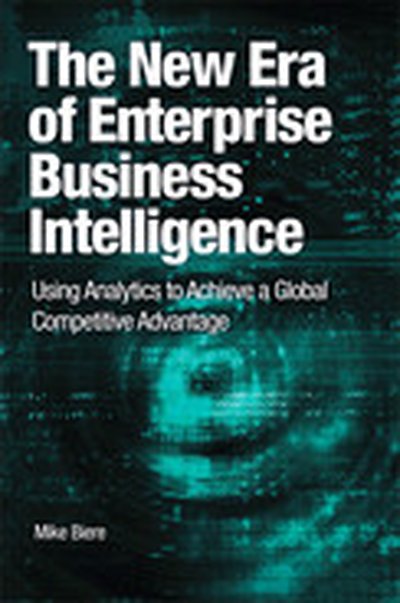
The New Era of Enterprise Business Intelligence: Using Analytics to Achieve a Global Competitive Advantage

A Complete Blueprint for Maximizing the Value of Business Intelligence in the Enterprise The typical enterprise recognizes the immense potential of business intelligence (BI) and its impact upon many facets within the organization–but it’s not easy to transform BI’s potential into real business value. In top BI expert Mike Biere presents a complete blueprint for creating winning BI strategies and infrastructure, and systematically maximizing the value of information throughout the enterprise. The New Era of Enterprise Business Intelligence, This product-independent guide brings together start-to-finish guidance and practical checklists for every senior IT executive, planner, strategist, implementer, and the actual business users themselves. Drawing on thousands of hours working with enterprise customers, Biere helps decision-makers choose from today’s unprecedented spectrum of options, including the latest BI platform suites and appliances. He offers practical, “in-the-trenches” insights on a wide spectrum of planning and implementation issues, from segmenting and supporting users to working with unstructured data. Coverage includes • Understanding the scope of today’s BI solutions and how they fit into existing infrastructure • Assessing new options such as SaaS and cloud-based technologies • Avoiding technology biases and other “project killers” • Developing effective RFIs/RFPs and proofs of concept • Setting up competency centers and planning for skills development • Crafting a better experience for all your business users • Supporting the requirements of senior executives, including performance management • Cost-justifying BI solutions and measuring success • Working with enterprise content management, text analytics, and search • Planning and constructing portals, mashups, and other user interfaces • Previewing the future of BI

The Profit Impact of Business Intelligence

The Profit Impact of Business Intelligence presents an A-to-Z approach for getting the most business intelligence (BI) from a company's data assets or data warehouse. BI is not just a technology or methodology, it is a powerful new management approach that – when done right – can deliver knowledge, efficiency, better decisions, and profit to almost any organization that uses it. When BI first came on the scene, it promised a lot but often failed to deliver. The missing element was the business-centric focus explained in this book. It shows how you can achieve the promise of BI by connecting it to your organization’s strategic goals, culture, and strengths while correcting your BI weaknesses. It provides a practical, process-oriented guide to achieve the full promise of BI; shows how world-class companies used BI to become leaders in their industries; helps senior business and IT executives understand the strategic impact of BI and how they can ensure a strong payoff from their BI investments; and identifies the most common mistakes organizations make in implementing BI. The book also includes a helpful glossary of BI terms; a BI readiness assessment for your organization; and Web links and extensive references for more information. A practical, process-oriented book that will help organizations realize the promise of BI Written by Nancy and Steve Williams, veteran consultants and instructors with hands-on, "in the trenches" experience in government and corporate business intelligence applications Will help senior business and IT executives understand the strategic impact of BI and how they can help ensure a strong payoff on BI investments

Business Analytics for Managers: Taking Business Intelligence beyond Reporting

"While business analytics sounds like a complex subject, this book provides a clear and non-intimidating overview of the topic. Following its advice will ensure that your organization knows the analytics it needs to succeed, and uses them in the service of key strategies and business processes. You too can go beyond reporting!"—Thomas H. Davenport, President's Distinguished Professor of IT and Management, Babson College; coauthor, Analytics at Work: Smarter Decisions, Better Results Deliver the right decision support to the right people at the right time Filled with examples and forward-thinking guidance from renowned BA leaders Gert Laursen and Jesper Thorlund, Business Analytics for Managers offers powerful techniques for making increasingly advanced use of information in order to survive any market conditions. Take a look inside and find: Proven guidance on developing an information strategy Tips for supporting your company's ability to innovate in the future by using analytics Practical insights for planning and implementing BA How to use information as a strategic asset Why BA is the next stepping-stone for companies in the information age today Discussion on BA's ever-increasing role Improve your business's decision making. Align your business processes with your business's objectives. Drive your company into a prosperous future. Taking BA from buzzword to enormous value-maker, Business Analytics for Managers helps you do it all with workable solutions that will add tremendous value to your business.

Microsoft® Business Intelligence For Dummies®

Learn to create an effective business strategy using Microsoft's BI stack Microsoft Business Intelligence tools are among the most widely used applications for gathering, providing access to, and analyzing data to enable the enterprise to make sound business decisions. The tools include SharePoint Server, the Office Suite, PerformancePoint Server, and SQL Server, among others. With so much jargon and so many technologies involved, Microsoft Business Intelligence For Dummies provides a much-needed step-by-step explanation of what's involved and how to use this powerful package to improve your business. Microsoft Business Intelligence encompasses a broad collection of tools designed to help business owners and managers direct the enterprise effectively This guide provides an overview of SharePoint, PerformancePoint, the SQL Server suite, Microsoft Office, and the BI development technologies Explains how the various technologies work together to solve functional problems Translates the buzzwords and shows you how to create your business strategy Examines related technologies including data warehousing, data marts, Online Analytical Processing (OLAP), data mining, reporting, dashboards, and Key Performance Indicators (KPIs) Simplifies this complex package to get you up and running quickly Microsoft Business Intelligence For Dummies demystifies these essential tools for enterprise managers, business analysts, and others who need to get up to speed.

Business Intelligence Success Factors: Tools for Aligning Your Business in the Global Economy

Praise for Business Intelligence Success Factors: Tools for Aligning your business in the Global Economy "Olivia Parr Rud does a remarkable job of weaving together many topics in a strategic way. As 'quants,' we're fascinated with data and fact-based decision-making. But success only comes when you consider the human factor, especially effective communications. Making topics like evolutionary biology, complexity science, and systems thinking relevant for business success is a unique and compelling view. As Max Frisch said, 'We hired workers and human beings came instead.'" —Anne Milley, Senior Director, Technology Product Marketing, SAS "Business Intelligence Success Factors is a must-read for anyone implementing BI on an organizational level. This book explains the business landscape and the underlying reasons for our current volatility, offering clear guidance on navigating our information rich global economy." —Ron Powell, Editorial Director, Business Intelligence Network Transform challenges into opportunities with emerging Business Intelligence technologies Written by an expert in data mining and statistical analysis, this valuable resource unveils the connection between the increased use of BI and the need for new, proven theories and models in BI, as well as the guidance to implement them successfully in your organization. Are you ready to become adaptable? Learn how to harness today's rapidly evolving global economy with Business Intelligence Success Factors.

Business Intelligence

"This readable, practical book helps business people quickly understand what business intelligence is, how it works, where it's used, and why and when to use it-all illustrated by real case studies, not just theory." Nigel Pendse Author of The OLAP Report www.olapreport.com So much information, so little time. All too often, business data is hard to get at and use-thus slowing decision-making to a crawl. This insightful book illustrates how organizations can make better, faster decisions about their customers, partners, and operations by turning mountains of data into valuable business information that's always at the fingertips of decision makers. You'll learn what's involved in using business intelligence to bring together information, people, and technology to create successful business strategies-and how to execute those strategies with confidence. Topics covered include: • THE BUSINESS INTELLIGENCE MINDSET: Discover the basics behind business intelligence, such as how it's defined, why and how to use it in your organization, and what characteristics, components, and general architecture most business intelligence solutions share. • THE CASE FOR BUSINESS INTELLIGENCE: Read how world leaders in finance, manufacturing, and retail have successfully implemented business intelligence solutions and see what benefits they have reaped. • THE PRACTICE OF BUSINESS INTELLIGENCE: Find out what's involved in implementing a business intelligence solution in your organization, including how to identify your business intelligence opportunities, what decisions you must make to get a business intelligence project going, and what to do to sustain the momentum so that you can continue to make sense of all the data you gather.

Business Intelligence with Microsoft® Office PerformancePoint™ Server 2007

Deliver BI Solutions with Microsoft Office PerformancePoint Server 2007 Maximize the powerful BI tools available in PerformancePoint 2007 with help from this practical guide. You will learn how to collect and store data, monitor progress, analyze performance, distribute dynamic reports, and create maintainable projects and forecasts. Business Intelligence with Microsoft Office PerformancePoint Server 2007 provides full details on creating scorecards and dashboards, performing advanced analysis on data, and setting up business plans. You will also learn how to integrate PerformancePoint with ProClarity, Excel 2007, and SQL Server Reporting Services. Configure, deploy, and secure all the PerformancePoint components Create KPIs, scorecards, reports, and dashboards with the Dashboard Designer Create business models with the Planning Business Modeler and create budgets and forecasts with Excel 2007 Enable advanced data analysis with PerformancePoint Server and ProClarity tools Take advantage of the enhanced analytic capabilities of Excel 2007 Use SQL Server Reporting Services for analytics Align performance with organizational objectives

Business Intelligence For Dummies®

You're intelligent, right? So you've already figured out that Business Intelligence can be pretty valuable in making the right decisions about your business. But you’ve heard at least a dozen definitions of what it is, and heard of at least that many BI tools. Where do you start? Business Intelligence For Dummies makes BI understandable! It takes you step by step through the technologies and the alphabet soup, so you can choose the right technology and implement a successful BI environment. You'll see how the applications and technologies work together to access, analyze, and present data that you can use to make better decisions about your products, customers, competitors, and more. You’ll find out how to: Understand the principles and practical elements of BI Determine what your business needs Compare different approaches to BI Build a solid BI architecture and roadmap Design, develop, and deploy your BI plan Relate BI to data warehousing, ERP, CRM, and e-commerce Analyze emerging trends and developing BI tools to see what else may be useful Whether you’re the business owner or the person charged with developing and implementing a BI strategy, checking out Business Intelligence For Dummies is a good business decision.

Successful Business Intelligence: Secrets to Making BI a Killer App

Praise for Successful Business Intelligence "If you want to be an analytical competitor, you've got to go well beyond business intelligence technology. Cindi Howson has wrapped up the needed advice on technology, organization, strategy, and even culture in a neat package. It's required reading for quantitatively oriented strategists and the technologists who support them." --Thomas H. Davenport, President's Distinguished Professor, Babson College and co-author, Competing on Analytics "When used strategically, business intelligence can help companies transform their organization to be more agile, more competitive, and more profitable. Successful Business Intelligence offers valuable guidance for companies looking to embark upon their first BI project as well as those hoping to maximize their current deployments." --John Schwarz, CEO, Business Objects "A thoughtful, clearly written, and carefully researched examination of all facets of business intelligence that your organization needs to know to run its business more intelligently and exploit information to its fullest extent." --Wayne Eckerson, Director, TDWI Research "Using real-world examples, Cindi Howson shows you how to use business intelligence to improve the performance, and the quality, of your company." --Bill Baker, Distinguished Engineer & GM, Business Intelligence Applications, Microsoft Corporation "This book outlines the key steps to make BI an integral part of your company's culture and demonstrates how your company can use BI as a competitive differentiator." --Robert VanHees, CFO, Corporate Express "Given the trend to expand the business analytics user base, organizations are faced with a number of challenges that affect the success rate of these projects. This insightful book provides practical advice on improving that success rate." --Dan Vesset, Vice President, Business Analytics Solution Research, IDC

Microsoft ® Office 2007 Business Intelligence

Extract and analyze mission-critical enterprise data using Microsoft Office 2007 This authoritative volume is a practical guide to the powerful new collaborative Business Intelligence tools available in Office 2007. Using real-world examples and clear explanations, Microsoft Office 2007 Business Intelligence: Reporting, Analysis, and Measurement from the Desktop shows you how to use Excel, Excel Services, SharePoint, and PerformancePoint with a wide range of stand-alone and external data in today's networked office. You will learn how to analyze data and generate reports, scorecards, and dashboards with the Office tools you're already using to help you in your everyday work. Create Excel PivotTables and PivotCharts and apply Conditional Formatting Convert Excel spreadsheets into Excel Tables with Conditional Formatting and Charting Connect external data to Excel using Office Data Connections and SharePoint Create SharePoint dashboards that display data from multiple sources Add Key Performance Indicators and Excel Services reports to your dashboards Harness advanced SQL Server 2005 data analysis tools with the Excel Data Mining Add-In and Visio Cluster Diagrams Generate integrated PerformancePoint Scorecards Create Visio PivotDiagrams and Windows Mobile spreadsheets

Improving Business Performance Insight . . . with Business Intelligence and Business Process Management

In this IBM Redbooks publication, we describe and demonstrate how to implement enterprise performance insight. This is an initiative that has a primary focus on the integration of Business Process Management and Business Intelligence. With this capability, management has an enterprise-wide view of their business that can enable proactive business management. We discuss the techniques, architectures, and processes used to define and implement such an environment. Among the specific techniques and technologies used are key performance indicators, process alerts, management dashboards, analytic applications, application integration, process modeling and monitoring, and real-time business intelligence. The products featured are DB2 UDB, DB2 Alphablox, WebSphere Information Integrator, WebSphere Portal, WebSphere Business Monitor, and WebSphere Business Modeler. Performance insight is an element of a more global initiative called business innovation and optimization (BIO). With this, we can enable business performance management, an initiative for the effective use of people, processes, assets, and technology to proactively achieve business goals and measurements. It enables strategic alignment of business and technology, resulting in real-time access to data and continuous process and data flow, for proactive business management, and business goal attainment.