talk-data.com talk-data.com

Dipti Borkar

Speaker

Dipti Borkar

6

talks

Vice President & GM, Microsoft OneLake & Fabric ISVs Microsoft

Dipti Borkar, Vice President & GM, Microsoft, is responsible for Fabric OneLake and Fabric ISV product & engineering. Dipti is a senior technology executive and entrepreneur with over 20 years of experience in cloud, AI, distributed systems, and database tech. Prior to Microsoft, she founded Ahana (acquired by IBM) and created a cloud managed service for SQL on data lakes. Prior to Ahana, she held various executive roles across product, engineering, and world-wide solutions engineering teams at various organizations including Couchbase and IBM. She is very passionate about empowering and mentoring women in tech, and women in open source.

Bio from: Microsoft Ignite 2025

Frequent Collaborators

Filter by Event / Source

Talks & appearances

6 activities · Newest first

Search activities →
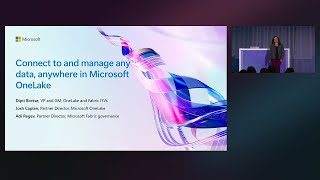
Connect to and manage any data, anywhere in Microsoft OneLake

Frontier firms aiming to build custom agents and foster data rich cultures need a single, unified access point for all their data that everyone can use. This session will explore how Microsoft OneLake can help you connect to any data, anywhere without ETL or data duplication. We'll also show how Fabric users and admins alike can manage and secure that data using tools like the OneLake catalog and OneLake security.

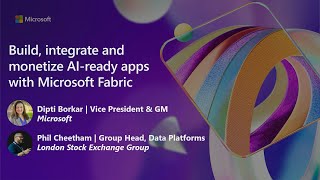
Build integrate and monetize AI-ready apps with Microsoft Fabric | BRK200

Microsoft Fabric has continued to grow as a platform of choice for building applications for enterprises and ISVs. Learn how large enterprises like LSEG are building data distribution platforms, and how industry leading ISVs are harnessing the power of Fabric’s unified data management and workload dev APIs to accelerate app development. The session includes a high-level demo of Fabric’s Workload Development Kit and monetization guidance via Azure Marketplace.

𝗦𝗽𝗲𝗮𝗸𝗲𝗿𝘀: * Dipti Borkar * Phil Cheetham

𝗦𝗲𝘀𝘀𝗶𝗼𝗻 𝗜𝗻𝗳𝗼𝗿𝗺𝗮𝘁𝗶𝗼𝗻: This is one of many sessions from the Microsoft Ignite 2024 event. View even more sessions on-demand and learn about Microsoft Ignite at https://ignite.microsoft.com

BRK200 | English (US) | Data

MSIgnite

Summary

Data lakehouse architectures have been gaining significant adoption. To accelerate adoption in the enterprise Microsoft has created the Fabric platform, based on their OneLake architecture. In this episode Dipti Borkar shares her experiences working on the product team at Fabric and explains the various use cases for the Fabric service.

Announcements

Hello and welcome to the Data Engineering Podcast, the show about modern data management Data lakes are notoriously complex. For data engineers who battle to build and scale high quality data workflows on the data lake, Starburst is an end-to-end data lakehouse platform built on Trino, the query engine Apache Iceberg was designed for, with complete support for all table formats including Apache Iceberg, Hive, and Delta Lake. Trusted by teams of all sizes, including Comcast and Doordash. Want to see Starburst in action? Go to dataengineeringpodcast.com/starburst and get $500 in credits to try Starburst Galaxy today, the easiest and fastest way to get started using Trino. Your host is Tobias Macey and today I'm interviewing Dipti Borkar about her work on Microsoft Fabric and performing analytics on data withou

Interview

Introduction How did you get involved in the area of data management? Can you describe what Microsoft Fabric is and the story behind it? Data lakes in various forms have been gaining significant popularity as a unified interface to an organization's analytics. What are the motivating factors that you see for that trend? Microsoft has been investing heavily in open source in recent years, and the Fabric platform relies on several open components. What are the benefits of layering on top of existing technologies rather than building a fully custom solution?

What are the elements of Fabric that were engineered specifically for the service? What are the most interesting/complicated integration challenges?

How has your prior experience with Ahana and Presto informed your current work at Microsoft? AI plays a substantial role in the product. What are the benefits of embedding Copilot into the data engine?

What are the challenges in terms of safety and reliability?

What are the most interesting, innovative, or unexpected ways that you have seen the Fabric platform used? What are the most interesting, unexpected, or challenging lessons that you have learned while working on data lakes generally, and Fabric specifically? When is Fabric the wrong choice? What do you have planned for the future of data lake analytics?

Contact Info

LinkedIn

Parting Question

From your perspective, what is the biggest gap in the tooling or technology for data management today?

Closing Announcements

Thank you for listening! Don't forget to check out our other shows. Podcast.init covers the Python language, its community, and the innovative ways it is being used. The Machine Learning Podcast helps you go from idea to production with machine learning. Visit the site to subscribe to the show, sign up for the mailing list, and read the show notes. If you've learned something or tried out a project from the show then tell us about it! Email [email protected] with your story.

Links

Microsoft Fabric Ahana episode DB2 Distributed Spark Presto Azure Data MAD Landscape

Podcast Episode ML Podcast Episode

Tableau dbt Medallion Architecture Microsoft Onelake ORC Parquet Avro Delta Lake Iceberg

Podcast Episode

Hudi

Podcast Episode

Hadoop PowerBI

Podcast Episode

Velox Gluten Apache XTable GraphQL Formula 1 McLaren

The intro and outro music is from The Hug by The Freak Fandango Orchestra / CC BY-SA Sponsored By: Starburst: Starburst Logo

This episode is brought to you by Starburst - an end-to-end data lakehouse platform for data engineers who are battling to build and scale high quality data pipelines on the data lake. Powered by T

Build ISV apps with Microsoft Fabric in the Intelligent Data Platform | BRK222H

The Microsoft Intelligent Data Platform empowers organizations to invest more time creating value rather than integrating and managing their data estate. Open at every level, it provides a rich set of capabilities for ISVs to further enrich the ecosystem with Microsoft Fabric. Join this demo-rich session, including conversations with industry leading ISV execs, to learn how you can accelerate your own application development, and grow your business with a huge base of Fabric customers.

To learn more, please check out these resources: * https://aka.ms/Ignite23CollectionsBRK222H * https://info.microsoft.com/ww-landing-contact-me-for-events-m365-in-person-events.html?LCID=en-us&ls=407628-contactme-formfill * https://aka.ms/azure-ignite2023-dataaiblog

𝗦𝗽𝗲𝗮𝗸𝗲𝗿𝘀: * Dipti Borkar * Dmitri Sedov * Hillary Ashton * Jack Dangermond * Jared Peterson * Rik Tamm-Daniels * Jeeva Akr * Rajeev Jain * Ed Donahue * KESHAVA SASTRY POKKULURI * Mahesh Prakriya

𝗦𝗲𝘀𝘀𝗶𝗼𝗻 𝗜𝗻𝗳𝗼𝗿𝗺𝗮𝘁𝗶𝗼𝗻: This video is one of many sessions delivered for the Microsoft Ignite 2023 event. View sessions on-demand and learn more about Microsoft Ignite at https://ignite.microsoft.com

BRK222H | English (US) | Data

MSIgnite

Summary The Presto project has become the de facto option for building scalable open source analytics in SQL for the data lake. In recent months the community has focused their efforts on making it the fastest possible option for running your analytics in the cloud. In this episode Dipti Borkar discusses the work that she and her team are doing at Ahana to simplify the work of running your own PrestoDB environment in the cloud. She explains how they are optimizin the runtime to reduce latency and increase query throughput, the ways that they are contributing back to the open source community, and the exciting improvements that are in the works to make Presto an even more powerful option for all of your analytics.

Announcements

Hello and welcome to the Data Engineering Podcast, the show about modern data management When you’re ready to build your next pipeline, or want to test out the projects you hear about on the show, you’ll need somewhere to deploy it, so check out our friends at Linode. With their managed Kubernetes platform it’s now even easier to deploy and scale your workflows, or try out the latest Helm charts from tools like Pulsar and Pachyderm. With simple pricing, fast networking, object storage, and worldwide data centers, you’ve got everything you need to run a bulletproof data platform. Go to dataengineeringpodcast.com/linode today and get a $100 credit to try out a Kubernetes cluster of your own. And don’t forget to thank them for their continued support of this show! Schema changes, missing data, and volume anomalies caused by your data sources can happen without any advanced notice if you lack visibility into your data-in-motion. That leaves DataOps reactive to data quality issues and can make your consumers lose confidence in your data. By connecting to your pipeline orchestrator like Apache Airflow and centralizing your end-to-end metadata, Databand.ai lets you identify data quality issues and their root causes from a single dashboard. With Databand.ai, you’ll know whether the data moving from your sources to your warehouse will be available, accurate, and usable when it arrives. Go to dataengineeringpodcast.com/databand to sign up for a free 30-day trial of Databand.ai and take control of your data quality today. Atlan is a collaborative workspace for data-driven teams, like Github for engineering or Figma for design teams. By acting as a virtual hub for data assets ranging from tables and dashboards to SQL snippets & code, Atlan enables teams to create a single source of truth for all their data assets, and collaborate across the modern data stack through deep integrations with tools like Snowflake, Slack, Looker and more. Go to dataengineeringpodcast.com/atlan today and sign up for a free trial. If you’re a data engineering podcast listener, you get credits worth $3000 on an annual subscription Your host is Tobias Macey and today I’m interviewing Dipti Borkar, cofounder Ahana about Presto and Ahana, SaaS managed service for Presto

Interview

Introduction How did you get involved in the area of data management? Can you describe what Ahana is and the story behind it? There has been a lot of recent activity in the Presto community. Can you give an overview of the options that are available for someone wanting to use its SQL engine for querying their data?

What is Ahana’s role in the community/ecosystem? (happy to skip this question if it’s too contentious) What are some of the notable differences that have emerged over the past couple of years between the Trino (formerly PrestoSQL) and PrestoDB projects?

Another area that has been seeing a lot of activity is data lakes and projects to make them more manageable and feature complete (e.g. Hudi, Delta Lake, Iceberg, Nessie, LakeFS, etc.). How has that influenced your product focus and capabilities?

How does this activity change the calculus for organizations who are deciding on a lake or warehouse for their data architecture?

Can y

Summary The scale and complexity of the systems that we build to satisfy business requirements is increasing as the available tools become more sophisticated. In order to bridge the gap between legacy infrastructure and evolving use cases it is necessary to create a unifying set of components. In this episode Dipti Borkar explains how the emerging category of data orchestration tools fills this need, some of the existing projects that fit in this space, and some of the ways that they can work together to simplify projects such as cloud migration and hybrid cloud environments. It is always useful to get a broad view of new trends in the industry and this was a helpful perspective on the need to provide mechanisms to decouple physical storage from computing capacity.

Announcements

Hello and welcome to the Data Engineering Podcast, the show about modern data management When you’re ready to build your next pipeline, or want to test out the projects you hear about on the show, you’ll need somewhere to deploy it, so check out our friends at Linode. With 200Gbit private networking, scalable shared block storage, and a 40Gbit public network, you’ve got everything you need to run a fast, reliable, and bullet-proof data platform. If you need global distribution, they’ve got that covered too with world-wide datacenters including new ones in Toronto and Mumbai. And for your machine learning workloads, they just announced dedicated CPU instances. Go to dataengineeringpodcast.com/linode today to get a $20 credit and launch a new server in under a minute. And don’t forget to thank them for their continued support of this show! This week’s episode is also sponsored by Datacoral, an AWS-native, serverless, data infrastructure that installs in your VPC. Datacoral helps data engineers build and manage the flow of data pipelines without having to manage any infrastructure, meaning you can spend your time invested in data transformations and business needs, rather than pipeline maintenance. Raghu Murthy, founder and CEO of Datacoral built data infrastructures at Yahoo! and Facebook, scaling from terabytes to petabytes of analytic data. He started Datacoral with the goal to make SQL the universal data programming language. Visit dataengineeringpodcast.com/datacoral today to find out more. You listen to this show to learn and stay up to date with what’s happening in databases, streaming platforms, big data, and everything else you need to know about modern data management. For even more opportunities to meet, listen, and learn from your peers you don’t want to miss out on this year’s conference season. We have partnered with organizations such as O’Reilly Media, Dataversity, Corinium Global Intelligence, Alluxio, and Data Council. Upcoming events include the combined events of the Data Architecture Summit and Graphorum, the Data Orchestration Summit, and Data Council in NYC. Go to dataengineeringpodcast.com/conferences to learn more about these and other events, and take advantage of our partner discounts to save money when you register today. Your host is Tobias Macey and today I’m interviewing Dipti Borkark about data orchestration and how it helps in migrating data workloads to the cloud

Interview

Introduction How did you get involved in the area of data management? Can you start by describing what you mean by the term "Data Orchestration"?

How does it compare to the concept of "Data Virtualization"? What are some of the tools and platforms that fit under that umbrella?

What are some of the motivations for organizations to use the cloud for their data oriented workloads?

What are they giving up by using cloud resources in place of on-premises compute?

For businesses that have invested heavily in their own datacenters, what are some ways that they can begin to replicate some of the benefits of cloud environments? What are some of the common patterns for cloud migration projects and what challenges do they present?

Do you have advice on useful metrics to track for determining project completion or success criteria?

How do businesses approach employee education for designing and implementing effective systems for achieving their migration goals? Can you talk through some of the ways that different data orchestration tools can be composed together for a cloud migration effort?

What are some of the common pain points that organizations encounter when working on hybrid implementations?

What are some of the missing pieces in the data orchestration landscape?

Are there any efforts that you are aware of that are aiming to fill those gaps?

Where is the data orchestration market heading, and what are some industry trends that are driving it?

What projects are you most interested in or excited by?

For someone who wants to learn more about data orchestration and the benefits the technologies can provide, what are some resources that you would recommend?

Contact Info

LinkedIn @dborkar on Twitter

Parting Question

From your perspective, what is the biggest gap in the tooling or technology for data management today?

Closing Announcements

Thank you for listening! Don’t forget to check out our other show, Podcast.init to learn about the Python language, its community, and the innovative ways it is being used. Visit the site to subscribe to the show, sign up for the mailing list, and read the show notes. If you’ve learned something or tried out a project from the show then tell us about it! Email [email protected]) with your story. To help other people find the show please leave a review on iTunes and tell your friends and co-workers Join the community in the new Zulip chat workspace at dataengineeringpodcast.com/chat

Links

Alluxio

Podcast Episode

UC San Diego Couchbase Presto

Podcast Episode

Spark SQL Data Orchestration Data Virtualization PyTorch

Podcast.init Episode

Rook storage orchestration PySpark MinIO

Podcast Episode

Kubernetes Openstack Hadoop HDFS Parquet Files

Podcast Episode

ORC Files Hive Metastore Iceberg Table Format

Podcast Episode

Data Orchestration Summit Star Schema Snowflake Schema Data Warehouse Data Lake Teradata

The intro and outro music is from The Hug by The Freak Fandango Orchestra / CC BY-SA

Support Data Engineering Podcast