Database code often works well in a test environment, but end up causing significant performance issues when rolled out to production. In turn, these performance issues lead to lost productivity, excess resource consumption, and lost time spent troubleshooting the issue. But what if we could catch those issues during development? Join Kevin Kline to learn how SolarWind's SQL Sentry can shift performance tuning left to the dev cycle so those issues never occur on production systems in the first place.
 talk-data.com
K
Speaker
Kevin Kline
7
talks
Database expert and software industry veteran
Kevin Kline is a seasoned database expert and software industry veteran. A Microsoft Data Platform MVP for over 20 years, he is a founder and former president of PASS. He is the author of popular IT books, including the bestseller SQL in a Nutshell, and writes a monthly column for Database Trends & Applications. His database-tool product designs have won numerous industry awards, and he is a frequent speaker at trade shows worldwide; he also shares insights on his blog and on social media at @kekline.
Bio from: Shift-Left: A DevOps and Database Story
Filter by Event / Source
Talks & appearances
7 activities · Newest first
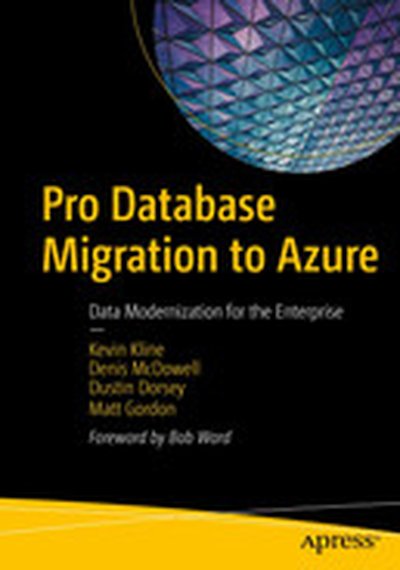
Migrate your existing, on-premises applications into the Microsoft Azure cloud platform. This book covers the best practices to plan, implement, and operationalize the migration of a database application from your organization’s data center to Microsoft’s Azure cloud platform. Data modernization and migration is a technologically complex endeavor that can also be taxing from a leadership and operational standpoint. This book covers not only the technology, but also the most important aspects of organization culture, communication, and politics that so frequently derail such projects. You will learn the most important steps to ensuring a successful migration and see battle-tested wisdom from industry veterans. From executive sponsorship, to executing the migration, to the important steps following migration, you will learn how to effectively conduct future migrations and ensure that your team and your database application delivers on the expected business value of the project. This book is unlike any other currently in the market. It takes you through the most critical business and technical considerations and workflows for moving your data and databases into the cloud, with special attention paid to those who are deploying to the Microsoft Data Platform in Azure, especially SQL Server. Although this book focuses on migrating on-premises SQL Server enterprises to hybrid or fully cloud-based Azure SQL Database and Azure SQL Managed Instances, it also cover topics involving migrating non-SQL Server database platforms such as Oracle, MySQL, and PostgreSQL applications to Microsoft Azure. What You Will Learn Plan a database migration that ensures smooth project progress, optimal performance, low operating cost, and minimal downtime Properly analyze and manage non-technical considerations, such as legal compliance, privacy, and team execution Perform athorough architectural analysis to select the best Azure services, performance tiers, and cost-containment features Avoid pitfalls and common reasons for failure relating to corporate culture, intra-office politics, and poor communications Secure the proper executive champions who can execute the business planning needed for success Apply proven criteria to determine your future-state architecture and your migration method Execute your migration using a process proven by the authors over years of successful projects Who This Book Is For IT leadership, strategic IT decision makers, project owners and managers, and enterprise and application architects. For anyone looking toward cloud migration projects as the next stage of growth in their careers. Also useful for enterprise DBAs and consultants who might be involved in such projects. Readers should have experience and be competent in designing, coding, implementing, and supporting database applications in an on-premises environment.
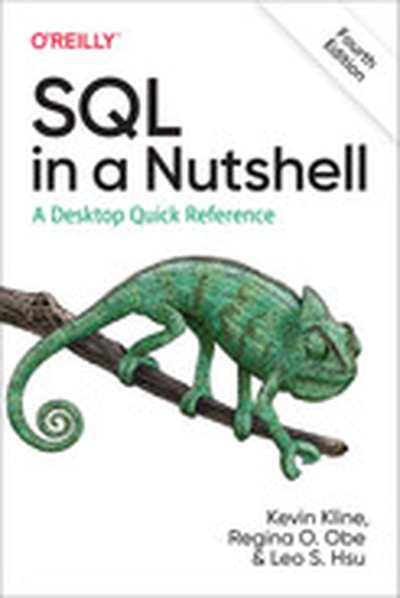
For programmers, analysts, and database administrators, this Nutshell guide is the essential reference for the SQL language used in today's most popular database products. This new fourth edition clearly documents SQL commands according to the latest ANSI/ISO standard and details how those commands are implemented in Microsoft SQL Server 2019 and Oracle 19c, as well as in the MySQL 8, MariaDB 10.5, and PostgreSQL 14 open source database products. You'll also get a concise overview of the relational database management system (RDBMS) model and a clear-cut explanation of foundational RDBMS concepts--all packed into a succinct, comprehensive, and easy-to-use format. Sections include: Background on the relational database model, including current and previous SQL standards Fundamental concepts necessary for understanding relational databases and SQL commands An alphabetical command reference to SQL statements, according to the SQL:2016 ANSI standard The implementation of each command by MySQL, Oracle, PostgreSQL, and SQL Server An alphabetical reference of the ANSI SQL:2016 functions and constructs as well as the vendor implementations Platform-specific functions unique to each implementation
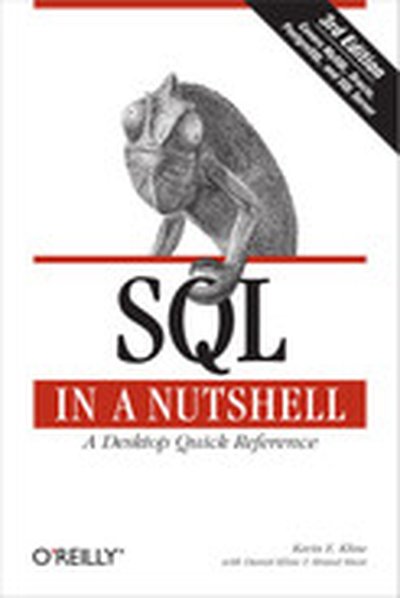
For programmers, analysts, and database administrators, SQL in a Nutshell is the essential reference for the SQL language used in today's most popular database products. This new edition clearly documents every SQL command according to the latest ANSI standard, and details how those commands are implemented in Microsoft SQL Server 2008, Oracle 11g, and the MySQL 5.1 and PostgreSQL 8.3 open source database products. You'll also get a concise overview of the Relational Database Management System (RDBMS) model, and a clear-cut explanation of foundational RDBMS concepts -- all packed into a succinct, comprehensive, and easy-to-use format. This book provides: Background on the Relational Database Model, including current and previous SQL standards Fundamental concepts necessary for understanding relational databases and SQL commands An alphabetical command reference to SQL statements, according to the SQL2003 ANSI standard The implementation of each command by MySQL, Oracle, PostgreSQL, and SQL Server An alphabetical reference of the ANSI SQL2003 functions, as well as the vendor implementations Platform-specific functions unique to each implementation Beginning where vendor documentation ends, SQL in a Nutshell distills the experiences of professional database administrators and developers who have used SQL variants to support complex enterprise applications. Whether SQL is new to you, or you've been using SQL since its earliest days, you'll get lots of new tips and techniques in this book.
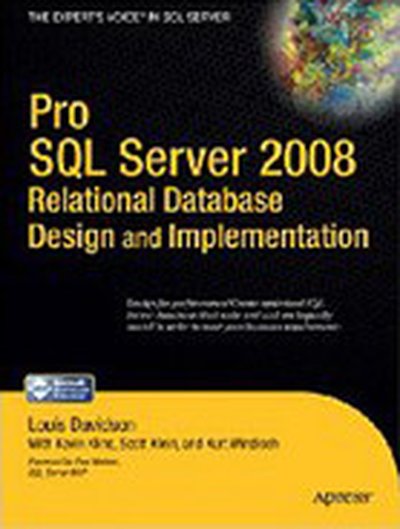
Learn effective and scalable database design techniques in a SQL Server environment. Pro SQL Server 2008 Relational Database Design and Implementation covers everything from design logic that business users will understand, all the way to the physical implementation of the design in a SQL Server database. Grounded in best practices and a solid understanding of the underlying theory, authors Louis Davidson, Kevin Kline, Scott Klein, and Kurt Windisch show how to 'get it right' in SQL Server database design and lay a solid groundwork for the future use of valuable business data. Solid foundation in best practices and relational theory Maximize SQL Server features to enhance security, performance, scalability Thorough treatment from conceptual design to an effective, physical implementation What you'll learn Develop conceptual models of client data using interviews and client documentation Normalize data models to enhance scalability and the long term use of valuable data Translate conceptual models into high-performing SQL Server databases Secure and protect the integrity of data as part of meeting regulatory requirements Take full advantage of new SQL Server features such as the spatial datatype, XML support, transparent data encryption, and more Create effective indexing to speed query performance Who this book is for Pro SQL Server 2008 Relational Database Design and Implementation is designed for programmers of all types who want to use SQL Server 2008 to store data. Rookie database programmers will find a complete course on the fundamentals of database design that includes conceptual designs and physical implementation. Seasoned veterans will find many tips and tricks for implementing database systems that will be well worth the time invested in reading this book.
SQL in a Nutshell applies the eminently useful "Nutshell" format to Structured Query Language (SQL), the elegant--but complex--descriptive language that is used to create and manipulate large stores of data. For SQL programmers, analysts, and database administrators, the new second edition of SQL in a Nutshell is the essential date language reference for the world's top SQL database products. SQL in a Nutshell is a lean, focused, and thoroughly comprehensive reference for those who live in a deadline-driven world.This invaluable desktop quick reference drills down and documents every SQL command and how to use it in both commercial (Oracle, DB2, and Microsoft SQL Server) and open source implementations (PostgreSQL, and MySQL). It describes every command and reference and includes the command syntax (by vendor, if the syntax differs across implementations), a clear description, and practical examples that illustrate important concepts and uses. And it also explains how the leading commercial and open sources database product implement SQL. This wealth of information is packed into a succinct, comprehensive, and extraordinarily easy-to-use format that covers the SQL syntax of no less than 4 different databases.When you need fast, accurate, detailed, and up-to-date SQL information, SQL in a Nutshell, Second Edition will be the quick reference you'll reach for every time. SQL in a Nutshell is small enough to keep by your keyboard, and concise (as well as clearly organized) enough that you can look up the syntax you need quickly without having to wade through a lot of useless fluff. You won't want to work on a project involving SQL without it.
SQL (Structured Query Language) is a standardized query language for requesting information from a database. Historically, SQL has been the choice for database management systems running on minicomputers and mainframes. Increasingly, however, SQL is being adapted to PC database systems because it supports distributed databases--databases that are spread out over several computer systems, so that several users on a local-area network can access the same database simultaneously. Although there are different dialects of SQL, it is the closest thing to a standard query language that currently exists. SQL in a Nutshell is a practical and useful command reference to the latest release of the Structured Query Language (SQL99), helping readers learn how their favorite database product supports any standard SQL command. This book presents each of the SQL commands and describes its use in both commercial (Microsoft SQL Server 2000 and Oracle 8 i) and open source (MySQL, PostgreSQL 7.0) implementations. Each command reference includes the command syntax (by vendor, if the syntax differs across implementations), a description, and informative examples that illustrate important concepts and uses. SQL in a Nutshell is more than a convenient reference guide for experienced SQL programmers, analysts, and database administrators. It's also a great learning resource for novice and auxiliary SQL users such as system administrators, users of packaged client/server products, and consultants who need to be familiar with the various SQL dialects across many platforms.