 talk-data.com
Topic
AI/ML
Artificial Intelligence/Machine Learning
data_science
algorithms
predictive_analytics
9014
tagged
Activity Trend
1532
peak/qtr
2020-Q1
2026-Q1
Top Events
Google Cloud Next '25
761
Microsoft Ignite 2025
699
Google Cloud Next '24
553
Data + AI Summit 2025
425
O'Reilly Data Science Books
333
Databricks DATA + AI Summit 2023
287
Data Engineering Podcast
271
O'Reilly Data Engineering Books
240
DataFramed
239
Making Data Simple
223
AWS re:Invent 2024
223
DATA MINER Big Data Europe Conference 2020
215
What happens when AI becomes your coworker, not your replacement? In this episode, we sit down with Sadie St. Lawrence, founder of HMCI, to explore the rapidly evolving future of work, where AI isn't just a tool, but a teammate. We dig into how blue-collar and white-collar jobs will be shifting as AI and automation move from the periphery into our daily workflows. From analysts to factory floors, from dashboards to shop floors, what will it actually feel like to work alongside intelligent machines? Sadie also shares the deeply personal story of her 18-month journey exiting Women in Data, what she learned in building a global community, and how she's now thinking about the next wave of human + AI collaboration. If you're wondering what your job will look like in 5 years, this one's for you. What You'll Learn: What it really means to work with AI as a teammate How analysts can stay relevant in the age of automation The different futures ahead for blue- vs. white-collar roles How Sadie built, scaled, and thoughtfully exited Women in Data What makes a career resilient in an AI-driven economy Register for free to be part of the next live session: https://bit.ly/3XB3A8b Follow us on Socials: LinkedIn YouTube Instagram (Mavens of Data) Instagram (Maven Analytics) TikTok Facebook Medium X/Twitter
Introduction to Apache Doris and its role in AI-era data workloads.
Discussion on the data requirements of AI workloads and how Doris aligns with them.
Rationale for Doris as a preferred infrastructure for AI-era analytics and search.
Artificial intelligence is rapidly transforming how we diagnose, treat, and manage health.
Artificial intelligence is rapidly transforming how we diagnose, treat, and manage health.
Artificial intelligence is rapidly transforming how we diagnose, treat, and manage health.
We have built AI-driven tools to automate the assessment of key heart parameters from point-of-care ultrasound, including Right Atrial Pressure (RAP) and Ejection Fraction (EF). In collaboration with UCSF, we trained deep learning models on a proprietary dataset of over 15,000 labeled ultrasound studies and deployed the full pipeline in a real-time iOS app integrated with the Butterfly probe. A UCSF-led clinical trial has validated the RAP workflow, and we are actively expanding the system to support EF prediction using both A4C and PLAX views. This talk will present our end-to-end pipeline, from dataset development and model training to mobile deployment—demonstrating how AI can enable real-time heart assessments directly at the point of care.
In hospitals, direct patient observation is limited–nurses spend only 37% of their shift engaged in patient care, and physicians average just 10 visits per hospital stay. LookDeep Health’s AI-driven platform enables continuous and passive monitoring of individual patients, and has been deployed “in the wild” for nearly 3 years. They recently published a study validating this system, titled “Continuous Patient Monitoring with AI”. This talk is a technical dive into said paper, focusing on the intersection of AI and real-world application.
We present a multimodal AI pipeline to streamline patient selection and quality assessment for radiology AI development. Our system evaluates patient clinical histories, imaging protocols, and data quality, embedding results into imaging metadata. Using FiftyOne researchers can rapidly filter and assemble high-quality cohorts in minutes instead of weeks, freeing radiologists for clinical work and accelerating AI tool development.
In this solo episode, Cynozure CEO Jason Foster explores what it really means to create value with data and AI and why it can't be treated as a nice-to-have outcome at the end of a project. Jason breaks down a practical, repeatable approach to designing value in from the start, with clear intent, strong foundations, and input-focused delivery. He shares real-world examples and analogies to show how organisations can shift from vague goals to measurable, meaningful impact. This episode is packed with actionable insights for data and business leaders who want to move from theory to practice and ensure their data work truly makes a difference.
Cynozure is a leading data, analytics and AI company that helps organisations to reach their data potential. It works with clients on data and AI strategy, data management, data architecture and engineering, analytics and AI, data culture and literacy, and data leadership. The company was named one of The Sunday Times' fastest-growing private companies in both 2022 and 2023 and recognised as The Best Place to Work in Data by DataIQ in 2023 and 2024. Cynozure is a certified B Corporation.
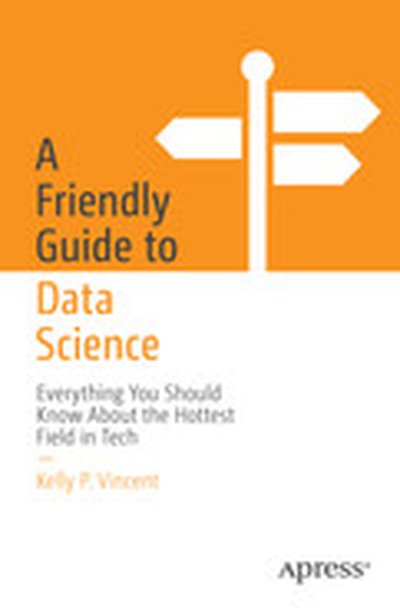
Unlock the world of data science—no coding required. Curious about data science but not sure where to start? This book is a beginner-friendly guide to what data science is and how people use it. It walks you through the essential topics—what data analysis involves, which skills are useful, and how terms like “data analytics” and “machine learning” connect—without getting too technical too fast. Data science isn’t just about crunching numbers, pulling data from a database, or running fancy algorithms. It’s about asking the right questions, understanding the process from start to finish, and knowing what’s possible (and what’s not). This book teaches you all of that, while also introducing important topics like ethics, privacy, and security—because working with data means thinking about people, too. Whether you're a student exploring new skills, a professional navigating data-driven decisions, or someone considering a career change, this book is your friendly gateway into the world of data science, one of today’s most exciting fields. No coding or programming experience? No problem. You'll build a solid foundation and gain the confidence to engage with data science concepts— just as AI and data become increasingly central to everyday life. What You Will Learn Grasp foundational statistics and how it matters in data analysis and data science Understand the data science project life cycle and how to manage a data science project Examine the ethics of working with data and its use in data analysis and data science Understand the foundations of data security and privacy Collect, store, prepare, visualize, and present data Identify the many types of machine learning and know how to gauge performance Prepare for and find a career in data science Who This Book is for A wide range of readers who are curious about data science and eager to build a strong foundation. Perfect for undergraduates in the early semesters of their data science degrees, as it assumes no prior programming or industry experience. Professionals will find particular value in the real-world insights shared through practitioner interviews. Business leaders can use it to better understand what data science can do for them and how their teams are applying it. And for career changers, this book offers a welcoming entry point into the field—helping them explore the landscape before committing to more intensive learning paths like degrees or boot camps.
by
Cristina Garita
,
Roberto Contreras
,
Jyothish Jayaraman
,
Carla Molgora
,
Sergio Soliz
,
Dr. Shivani Rai Gupta
,
Oscar Narvaez
,
Andres Tenorio
,
Carlos Alarcón
,
Almudena Claudio
,
Abraham Jacob Montoya
,
Daniel Esteban Vesga
,
Martin Sciarrillo
,
Ana Lía Villarreal
,
Esteban Bertuccio
,
Leandro Mora
(Sportian)
,
Avijeet Dutta
,
Nacho Vuotto
Welcome to the Data & AI NXT Conference! 🎉 This year, we explore the next frontier in analytics: Agentic AI.
🔍 Next-Generation Agentic Analytics Artificial Intelligence is pushing analytics beyond static dashboards and reports. At this event, discover how next-gen AI Agents transform fragmented, siloed data, both historical and real-time, into optimized, actionable intelligence.
Learn how businesses are evolving from reactive analytics to self-improving decision systems that span the entire enterprise.
🗓️ Agenda & Chapters
0:00 Start 7:37 Opening 23:15 The Unseen Sportian’s Playbook: Redefining Sports through Data and AI | Leandro Mora 1:06:16 Ethical implications of self-driving intelligence | Avijeet Dutta, Dr Shivani Rai Gupta, Jyothish Jayaraman, and Andres Tenorio 1:59:54 Governance in the age of AI Agents | Roberto Contreras 2:48:11 Synthetic data, digital twins & the future of testing | Carla Molgora, Ana Lía Villarreal and Cristina Garita 3:44:34 Future of BI: from dashboards to autonomous intelligence | Nacho Vuotto, Esteban Bertuccio, Carlos Alarcón, and Sergio Soliz 4:43:02 Real-Time vs. historical: balancing speed and context | Daniel Esteban Vesga, Oscar Narvaez, Martin Sciarrillo, and Abraham Jacob Montoya 5:38:16 AI Agents and the future of Human-Tech | Almudena Claudio
🙌 Thanks for joining us! Don't forget to like, comment, and subscribe for more tech insights from Globant.
💚
Learn how to use AI to craft a compelling story in any genre; fantasy, sci-fi, classics, you name it! We’ll cover the structure of what makes a good story then go into how to build autonomous agents that will assist you in creating a new universe with places and characters that convincingly interact with each other. I’ll also share how my learnings from working on video games shaped my thinking and why I wanted to build this system.
A Inteligência Artificial já não se limita a algoritmos que processam dados; estamos a entrar na era dos Agentes de IA—entidades digitais inteligentes que atuam, raciocinam e colaboram para resolver desafios complexos. Estes agentes estão a transformar indústrias, a aumentar a produtividade e a desbloquear possibilidades criativas que nunca imaginámos. Nesta sessão, vamos explorar como os Agentes de IA estão a moldar o futuro, desde a tomada de decisões autónoma até interações fluídas entre humanos e máquinas. Iremos aprofundar aplicações práticas, considerações éticas e as vastas oportunidades que oferecem a todos os setores—seja nos negócios, na saúde ou nas artes. Mais importante ainda, vamos questionar o status quo: Como podemos aproveitar os Agentes de IA para amplificar a engenhosidade humana, em vez de a substituir? O que significa desenvolver sistemas de IA responsáveis e impactantes que potenciem, em vez de limitarem, as nossas capacidades? Participa nesta sessão envolvente e descobre como os Agentes de IA irão liderar um futuro colaborativo, onde a tecnologia se tornará uma verdadeira parceira na criação de um mundo de possibilidades ilimitadas.
Send us a text From Elephant Butts to Ethical AI — Duncan Curtis on De-Risking GenAI at Sama Episode intro Duncan Curtis, SVP for GenAI & AI Product + Technology at Sama, has shipped everything from autonomous-vehicle platforms at Zoox to game-changing data products at Google. Today he leads a 160-person team that’s reinventing how training data is curated, labeled, and audited so enterprises can ship production-ready GenAI—without the lurking model risk. Sama’s newest release, Sama Automate, is already cutting annotation time by 40 percent while keeping quality above SLAs, and Duncan says they’re “aiming for a 10× improvement by 2025.” (aiuserconference.com, sama.com) If you want the inside track on AI ROI, ethical guardrails, and why A’s hire A’s (but B’s hire C’s!), lean in—this one’s for you. (And yes, we do get to elephant butts.) Timestamped roadmap 00:46 Meet Duncan Curtis03:51 The Duncan Brand05:52 Making Time for Yourself08:47 Autonomous Cars — 9× Safer12:21 Favorite Jobs13:24 Inside Sama14:39 Data & LLM Training16:04 De-Risking Models19:08 Ethical AI22:43 Stopping Hallucinations27:18 Data Labeling Deep-Dive31:56 Production-Ready GenAI33:44 AGI Horizons35:34 What Makes Sama Different36:31 Calculating AI ROI38:50 State of the LLMs44:48 Elephant Butts & Closing ThoughtsQuick links LinkedIn: https://www.linkedin.com/in/duncan-curtis/Sama: https://www.sama.com/Latest blog: “Sama Introduces New Data Automation Platform” (sama.com)Hear more: Duncan on “Human Guardrails in Generative AI” (DataCamp podcast) (datacamp.com)Hashtags
MakingDataSimple #AIProduct #GenAI #DataLabeling #EthicalAI #AIROI #AutonomousVehicles #Podcast
Want to be featured as a guest on Making Data Simple? Reach out to us at [email protected] and tell us why you should be next. The Making Data Simple Podcast is hosted by Al Martin, WW VP Technical Sales, IBM, where we explore trending technologies, business innovation, and leadership ... while keeping it simple & fun.
Está no ar, o Data Hackers News !! Os assuntos mais quentes da semana, com as principais notícias da área de Dados, IA e Tecnologia, que você também encontra na nossa Newsletter semanal, agora no Podcast do Data Hackers !! Aperte o play e ouça agora, o Data Hackers News dessa semana ! Para saber tudo sobre o que está acontecendo na área de dados, se inscreva na Newsletter semanal: https://www.datahackers.news/ Links mencionados: Breaking Data Hackers - com a Snowflake Conheça nossos comentaristas do Data Hackers News: Monique Femme Paulo Vasconcellos Demais canais do Data Hackers: Site Linkedin Instagram Tik Tok You Tube
In this episode, we track how Strongyloides stercoralis — a human-infective nematode — uses carbon dioxide sensing to navigate both outside and inside its host. This tiny parasite shifts its response to CO₂ depending on life stage: repelled when searching for a host, but attracted once inside.
We explore:
Life-stage-specific behaviour: iL3s flee CO₂, iL3as chase it How Ss-BAG neurons detect CO₂ via the Ss-GCY-9 receptor CRISPR-generated mutants that lose their ability to sense CO₂ A new method for creating stable knockout lines in S. stercoralis How CO₂ helps worms navigate through the bloodstream, lungs, and gut during infection
📖 Based on the research article: “Carbon dioxide shapes parasite-host interactions in a human-infective nematode” Banerjee et al., 2025, Current Biology 🔗 https://doi.org/10.1016/j.cub.2024.11.036
🎧 Subscribe to the WOrM Podcast for more full-organism discoveries in parasitism, behaviour, and neurobiology!
This podcast is generated with artificial intelligence and curated by Veeren. If you’d like your publication featured on the show, please get in touch.
📩 More info: 🔗 www.veerenchauhan.com 📧 [email protected]
In 2024, the Ctrl-labs team at Meta Reality Labs published a preprint, introducing the science behind a new neural input device worn on the wrist. This talk will cover the custom Kubernetes-based platform underlying both the research/ML workloads and the data collection. We'll talk about the challenges of serving 'only' hundreds of internal scientists and engineers, while also supporting data collection from thousands of participants. We'll cover the evolution of the services and codebase, the reliability tradeoffs, the growing pains and the custom tools that we had to build.