talk-data.com talk-data.com

Topic

business

6

tagged

Activity Trend

1 peak/qtr
2020-Q1 2026-Q1

Activities

6 activities · Newest first

Artificial Intelligence for Risk Mitigation in the Financial Industry

Artificial Intelligence for Risk Mitigation in the Financial Industry This book extensively explores the implementation of AI in the risk mitigation process and provides information for auditing, banking, and financial sectors on how to reduce risk and enhance effective reliability. The applications of the financial industry incorporate vast volumes of structured and unstructured data to gain insight into the financial and non-financial performance of companies. As a result of exponentially increasing data, auditors and management professionals need to enhance processing capabilities while maintaining the effectiveness and reliability of the risk mitigation process. The risk mitigation and audit procedures are processes involving the progression of activities to “transform inputs into output.” As AI systems continue to grow mainstream, it is difficult to imagine an aspect of risk mitigation in the financial industry that will not require AI-related assurance or AI-assisted advisory services. AI can be used as a strong tool in many ways, like the prevention of fraud, money laundering, and cybercrime, detection of risks and probability of NPAs at early stages, sound lending, etc. Audience This is an introductory book that provides insights into the advantages of risk mitigation by the adoption of AI in the financial industry. The subject is not only restricted to individuals like researchers, auditors, and management professionals, but also includes decision-making authorities like the government. This book is a valuable guide to the utilization of AI for risk mitigation and will serve as an important standalone reference for years to come.

The Staff Engineer's Path

For years, companies have rewarded their most effective engineers with management positions. But treating management as the default path for an engineer with leadership ability doesn't serve the industry well--or the engineer. The staff engineer's path allows engineers to contribute at a high level as role models, driving big projects, determining technical strategy, and raising everyone's skills. This in-depth book shows you how to understand your role, manage your time, master strategic thinking, and set the standard for technical work. You'll read about how to be a leader without direct authority, how to plan ahead to make the right technical decisions, and how to make everyone around you better, while still growing as an expert in your domain. By exploring the three pillars of a staff engineer's job, Tanya Reilly, a veteran of the staff engineer track, shows you how to: Take a broad, strategic view when thinking about your work Dive into practical tactics for making projects succeed Determine what "good engineering" means in your organization

Econometrics and Data Science: Apply Data Science Techniques to Model Complex Problems and Implement Solutions for Economic Problems

Get up to speed on the application of machine learning approaches in macroeconomic research. This book brings together economics and data science. Author Tshepo Chris Nokeri begins by introducing you to covariance analysis, correlation analysis, cross-validation, hyperparameter optimization, regression analysis, and residual analysis. In addition, he presents an approach to contend with multi-collinearity. He then debunks a time series model recognized as the additive model. He reveals a technique for binarizing an economic feature to perform classification analysis using logistic regression. He brings in the Hidden Markov Model, used to discover hidden patterns and growth in the world economy. The author demonstrates unsupervised machine learning techniques such as principal component analysis and cluster analysis. Key deep learning concepts and ways of structuring artificial neural networks are explored along with training them and assessing their performance. The Monte Carlo simulation technique is applied to stimulate the purchasing power of money in an economy. Lastly, the Structural Equation Model (SEM) is considered to integrate correlation analysis, factor analysis, multivariate analysis, causal analysis, and path analysis. After reading this book, you should be able to recognize the connection between econometrics and data science. You will know how to apply a machine learning approach to modeling complex economic problems and others beyond this book. You will know how to circumvent and enhance model performance, together with the practical implications of a machine learning approach in econometrics, and you will be able to deal with pressing economic problems. What You Will Learn Examine complex, multivariate, linear-causal structures through the path and structural analysis technique, including non-linearity and hidden states Be familiar with practical applications of machine learning and deep learning in econometrics Understand theoretical framework and hypothesis development, and techniques for selecting appropriate models Develop, test, validate, and improve key supervised (i.e., regression and classification) and unsupervised (i.e., dimension reduction and cluster analysis) machine learning models, alongside neural networks, Markov, and SEM models Represent and interpret data and models Who This Book Is For Beginning and intermediate data scientists, economists, machine learning engineers, statisticians, and business executives

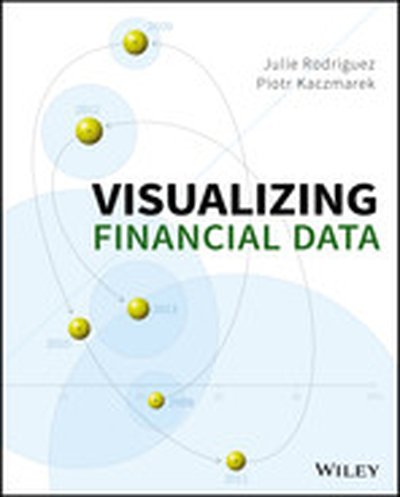
Visualizing Financial Data

A fresh take on financial data visualization for greater accuracy and understanding Your data provides a snapshot of the state of your business and is key to the success of your conversations, decisions, and communications. But all of that communication is lost — or incorrectly interpreted — without proper data visualizations that provide context and accurate representation of the numbers. In Visualizing Financial Data, authors Julie Rodriguez and Piotr Kaczmarek draw upon their understanding of information design and visual communication to show you how to turn your raw data into meaningful information. Coverage includes current conventions paired with innovative visualizations that cater to the unique requirements across financial domains, including investment management, financial accounting, regulatory reporting, sales, and marketing communications. Presented as a series of case studies, this highly visual guide presents problems and solutions in the context of real-world scenarios. With over 250 visualizations, you’ll have access to relevant examples that serve as a starting point to your implementations. • Expand the boundaries of data visualization conventions and learn new approaches to traditional charts and graphs • Optimize data communications that cater to you and your audience • Provide clarity to maximize understanding • Solve data presentation problems using efficient visualization techniques • Use the provided companion website to follow along with examples The companion website gives you the illustration files and the source data sets, and points you to the types of resources you need to get started.

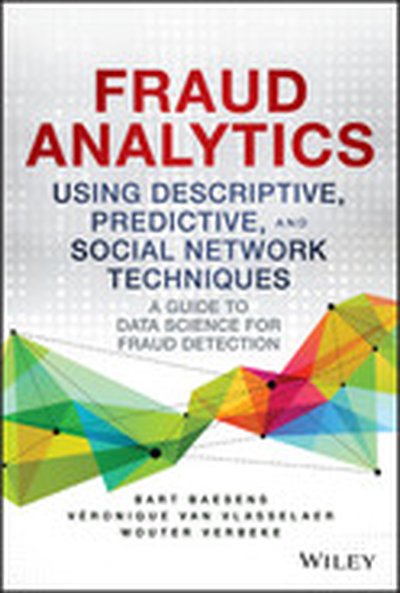
Fraud Analytics Using Descriptive, Predictive, and Social Network Techniques: A Guide to Data Science for Fraud Detection

Detect fraud earlier to mitigate loss and prevent cascading damage Fraud Analytics Using Descriptive, Predictive, and Social Network Techniques is an authoritative guidebook for setting up a comprehensive fraud detection analytics solution. Early detection is a key factor in mitigating fraud damage, but it involves more specialized techniques than detecting fraud at the more advanced stages. This invaluable guide details both the theory and technical aspects of these techniques, and provides expert insight into streamlining implementation. Coverage includes data gathering, preprocessing, model building, and post-implementation, with comprehensive guidance on various learning techniques and the data types utilized by each. These techniques are effective for fraud detection across industry boundaries, including applications in insurance fraud, credit card fraud, anti-money laundering, healthcare fraud, telecommunications fraud, click fraud, tax evasion, and more, giving you a highly practical framework for fraud prevention. It is estimated that a typical organization loses about 5% of its revenue to fraud every year. More effective fraud detection is possible, and this book describes the various analytical techniques your organization must implement to put a stop to the revenue leak. Examine fraud patterns in historical data Utilize labeled, unlabeled, and networked data Detect fraud before the damage cascades Reduce losses, increase recovery, and tighten security The longer fraud is allowed to go on, the more harm it causes. It expands exponentially, sending ripples of damage throughout the organization, and becomes more and more complex to track, stop, and reverse. Fraud prevention relies on early and effective fraud detection, enabled by the techniques discussed here. Fraud Analytics Using Descriptive, Predictive, and Social Network Techniques helps you stop fraud in its tracks, and eliminate the opportunities for future occurrence.

Data Warehousing And Business Intelligence For e-Commerce

You go online to buy a digital camera. Soon, you realize you've bought a more expensive camera than intended, along with extra batteries, charger, and graphics software-all at the prompting of the retailer. Happy with your purchases? The retailer certainly is, and if you are too, you both can be said to be the beneficiaries of "customer intimacy" achieved through the transformation of data collected during this visit or stored from previous visits into real business intelligence that can be exercised in real time. Data Warehousing and Business Intelligence for e-Commerce is a practical exploration of the technological innovations through which traditional data warehousing is brought to bear on this and other less modest e-commerce applications, such as those at work in B2B, G2C, B2G, and B2E models. The authors examine the core technologies and commercial products in use today, providing a nuts-and-bolts understanding of how you can deploy customer and product data in ways that meet the unique requirements of the online marketplace-particularly if you are part of a brick-and-mortar company with specific online aspirations. In so doing, they build a powerful case for investment in and aggressive development of these approaches, which are likely to separate winners from losers as e-commerce grows and matures. * Includes the latest from successful data warehousing consultants whose work has encouraged the field's new focus on e-commerce. * Presents information that is written for both consultants and practitioners in companies of all sizes. * Emphasizes the special needs and opportunities of traditional brick-and-mortar businesses that are going online or participating in B2B supply chains or e-marketplaces. * Explains how long-standing assumptions about data warehousing have to be rethought in light of emerging business models that depend on customer intimacy. * Provides advice on maintaining data quality and integrity in environments marked by extensive customer self-input. * Advocates careful planning that will help both old economy and new economy companies develop long-lived and successful e-commerce strategies. * Focuses on data warehousing for emerging e-commerce areas such as e-government and B2E environments.