talk-data.com talk-data.com

Topic

data-engineering

3377

tagged

Activity Trend

1 peak/qtr
2020-Q1 2026-Q1

Activities

Showing filtered results

Filtering by: O'Reilly Data Engineering Books ×
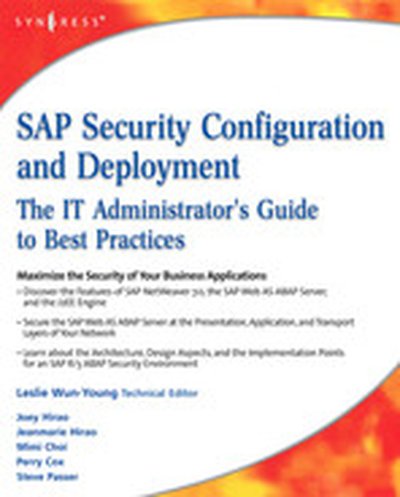
SAP Security Configuration and Deployment

Throughout the world, high-profile large organizations (aerospace and defense, automotive, banking, chemicals, financial service providers, healthcare, high tech, insurance, oil and gas, pharmaceuticals, retail, telecommunications, and utilities) and governments are using SAP software to process their most mission-critical, highly sensitive data. With more than 100,000 installations, SAP is the world's largest enterprise software company and the world's third largest independent software supplier overall. Despite this widespread use, there have been very few books written on SAP implementation and security, despite a great deal of interest. (There are 220,000 members in an on-line SAP 'community' seeking information, ideas and tools on the IT Toolbox Website alone.) Managing SAP user authentication and authorizations is becoming more complex than ever, as there are more and more SAP products involved that have very different access issues. It's a complex area that requires focused expertise. This book is designed for these network and systems administrator who deal with the complexity of having to make judgmental decisions regarding enormously complicated and technical data in the SAP landscape, as well as pay attention to new compliance rules and security regulations. Most SAP users experience significant challenges when trying to manage and mitigate the risks in existing or new security solutions and usually end up facing repetitive, expensive re-work and perpetuated compliance challenges. This book is designed to help them properly and efficiently manage these challenges on an ongoing basis. It aims to remove the 'Black Box' mystique that surrounds SAP security. The most comprehensive coverage of the essentials of SAP security currently available: risk and control management, identity and access management, data protection and privacy, corporate governance, legal and regulatory compliance This book contains information about SAP security that is not available anywhere else to help the reader avoid the "gotchas" that may leave them vulnerable during times of upgrade or other system changes Companion Web site provides custom SAP scripts, which readers can download to install, configure and troubleshoot SAP

Data Mining with Microsoft® SQL Server® 2008

Understand how to use the new features of Microsoft SQL Server 2008 for data mining by using the tools in Data Mining with Microsoft SQL Server 2008, which will show you how to use the SQL Server Data Mining Toolset with Office 2007 to mine and analyze data. Explore each of the major data mining algorithms, including naive bayes, decision trees, time series, clustering, association rules, and neural networks. Learn more about topics like mining OLAP databases, data mining with SQL Server Integration Services 2008, and using Microsoft data mining to solve business analysis problems.

Beginning SQL Server 2008 Express for Developers: From Novice to Professional

Beginning SQL Server 2008 Express for Developers: From Novice to Professional takes a developer, and even a database administrator, from knowing nothing about SQL Server 2008 Express Edition to being ready to design and build a fully functioning system that is secure, reliable, maintainable, and robust. The Express Edition of SQL Server is a free resource commonly used by students, developers of small systems, and those transferring skills from other databases. This book focuses on the features within the Express Edition and therefore will not confuse readers with coverage of features found only in the Development Edition. By the end of the book, readers will be ready to move on to Accelerated SQL Server 2008 as well as other books within the Apress SQL Server lineup such as Pro SQL Server 2008 Reporting Services. Covers using the free Express Edition of SQL Server Describes creating a database from scratch and builds on this Provides an understanding of SQL Server Express 2008, allowing you to build future solutions for you and your business

Transforming Infoglut! A Pragmatic Strategy for Oracle Enterprise Content Management

Control Intellectual Property, and Avoid Information Overload Glean actionable business information from your "digital landfill" by deploying a flexible, cost-effective content management framework across your entire organization. Transforming Infoglut!: A Pragmatic Strategy for Oracle Enterprise Content Management details, step-by-step, how to rein in the current data explosion and gain the competitive edge. Get tips for building an enterprise content management (ECM) team, centralizing storage, finding and managing information, incorporating legacy systems, and handling unstructured content. You'll also learn how to secure your system, optimize performance, and ensure regulatory compliance. Design and manage a dynamic Oracle ECM infrastructure Consolidate corporate data using Oracle Universal Content Management Implement a flexible, scalable, and extensible middleware layer Centralize storage with Oracle Universal Records Management Suite Encrypt and secure data enterprise-wide using Oracle Information Rights Management Integrate Oracle WebCenter Services and Oracle Secure Enterprise Search Enhance structured enterprise applications with unstructured content Extend ECM functionality using cutting-edge Enterprise 2.0 tools

Microsoft® SQL Server® 2008 Step by Step

Teach yourself SQL Server 2008—one step at a time. Get the practical guidance you need to build database solutions that solve real-world business problems. Learn to integrate SQL Server data in your applications, write queries, develop reports, and employ powerful business intelligence systems. Discover how to: Install and work with core components and tools Create tables and index structures Manipulate and retrieve data Secure, manage, back up, and recover databases Apply tuning plus optimization techniques to generate high-performing database applications Optimize availability through clustering, database mirroring, and log shipping Tap business intelligence tools—Reporting, Analysis, and Integration Services CD features: Practice exercises and code samples Fully searchable eBook For customers who purchase an ebook version of this title, instructions for downloading the CD files can be found in the ebook.

Intelligent Mentoring: How IBM Creates Value through People, Knowledge, and Relationships

How to Use Mentoring to Drive Maximum Competitive Advantage Techniques and lessons from IBM’s world-class mentoring programs—for every business and HR leader, strategist, Chief Learning Officer, consultant, trainer, and scholar “A crucial part of my job is to help develop and retain the more than 200,000 members of IBM’s global technical community. Over the years, I have found that the true spirit of any organization is its people, and unique, world-class mentoring programs play a crucial role in their success. What I really like about Intelligent Mentoring is that it is not an academic treatise on the theory of mentoring, but a series of practical solutions that can be used by virtually any organization to gain productivity, increase retention, and improve bottom-line results.” — Nick Donofrio, Executive Vice President, Innovation and Technology, IBM Corporation “We have known about the importance of mentoring in developing people for decades. Yet few organizations have successfully leveraged it as part of their HR strategy. IBM is one of those companies. Intelligent Mentoring is about more than the mentoring initiative successfully implemented at IBM. It is a guide for how companies can leverage mentoring in a way that aligns with company strategy and supports organizational and individual development. It is a must-read for any executive considering a mentoring initiative as part of the firm’s HR strategy. IBM’s mentoring effort combined the best of what we know from mentoring research, career development theory, and change management to create a highly successful effort. There is much here for practitioners and scholars to learn.” — David A. Thomas, Ph.D., Naylor Fitzhugh Professor of Business Administration, Harvard Business School “Performance is the ultimate driver of this company. Even back in our earliest days, one of the keys to IBM’s greatness was performance, along with top-notch technology. Since arriving at IBM in 2000, my goal has been to identify, develop, train, reward, and retain high-performing people, and one of the best ways to support these high performers is through mentoring. I believe that Intelligent Mentoring has done a phenomenal job of capturing the innovative and varied mentoring initiatives that IBM has used over the years. The authors really take you inside the company and show how mentoring has helped IBM preserve its corporate culture by passing on knowledge, not only between generations, but in all directions throughout our global community. This book is a must-read for anyone who wants to use the powerful tool of mentoring to its best and most productive advantage, and I recommend it highly.” — Randy MacDonald, Senior Vice President, Human Resources, IBM Corporation For today’s enterprises, few challenges are as daunting as preparing tomorrow’s leaders. Mentoring is one of the most powerful tools at their disposal. But not all mentoring programs are equally effective, and not all companies have learned how to sustain mentoring. One company has: IBM. Intelligent Mentoring reveals how IBM has done it–and offers specific guidance and best practices you can use to achieve equally powerful results. Intelligent Mentoring shows how IBM has fully integrated a diverse portfolio of formal mentoring initiatives into both talent development and innovation promotion. Whether you’re a business leader, strategist, Chief Learning Officer, training specialist, coach, or consultant, this book presents a state-of-the-art framework for making mentoring work. Drawing on IBM’s experience, the authors demonstrate how to build a diverse portfolio of effective mentoring programs...use mentoring to strengthen organizational intelligence...build sustainable communities of mentors and mentees...promote collaboration across differences... and above all, link mentoring to strategy and use it to sustain competitive advantage. • Use mentoring to develop tomorrow’s world-class business leaders Actionable solutions and best practices from IBM’s breakthrough mentoring program • Embrace mentoring as a high-performance work practice Maximizing, capturing, and communicating the value-added impact of mentoring • Set the right goals for mentoring: then achieve them Utilize mentoring to strengthen organizational learning, improve retention, promote innovation, and more • Use mentoring to solve your organization’s most “wicked” problems How mentoring can help you respond to complex, tangled challenges you’ve never faced before

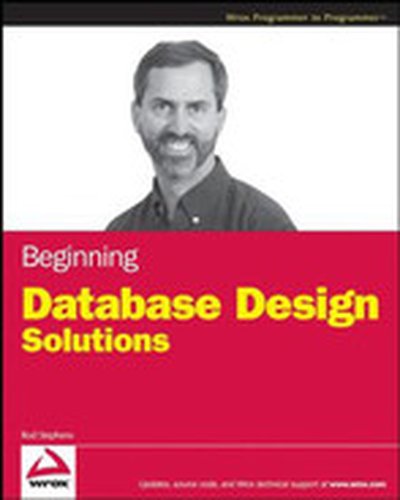
Beginning Database Design Solutions

This book is intended for IT professionals and students who want to learn how to design, analyze, and understand databases. The material will benefit those who want a better high-level understanding of databases such as proposal managers, architects, project managers, and even customers. The material will also benefit those who will actually design, build, and work with databases such as database designers, database administrators, and programmers. In many projects, these roles overlap so the same person may be responsible for working on the proposal, managing part of the project, and designing and creating the database. This book is aimed at IT professionals and students of all experience levels. It does not assume that you have any previous experience with databases or programs that use them. It doesn't even assume that you have experience with computers. All you really need is a willingness and desire to learn. This book explains database design. It tells how to plan a database's structure so the database will be robust, resistant to errors, and flexible enough to accommodate a reasonable amount of future change. It explains how to discover database requirements, build data models to study data needs, and refine those models to improve the database's effectiveness. The book solidifies these concepts by working through a detailed example that designs a realistic database. Later chapters explain how to actually build databases using two common database products: Access 2007 and MySQL. The book finishes by describing some of the topics you need to understand to keep a database running effectively such as database maintenance and security. This book explains database design. It tells how to determine what should go in a database and how the database should be structured to give the best results. This book does not focus on actually creating the database. The details of database construction are different for different database tools so, to remain as generally as useful as possible, this book doesn't concentrate on any particular database system. You can apply the techniques described here equally to whatever database tool you use whether it's Access, SQL Server, Oracle, MySQL, or some other database product. Most database products include free editions that you can use for smaller projects. For example, SQL Server Express Edition, Oracle Express Edition, and MySQL Community Server are all free. To remain database neutral, the book does not assume you are using a particular database so you don't need any particular software or hardware. To work through the Exercises, all you really need is a pencil and some paper. You are welcome to type solutions into your computer if you like but you may actually find working with pencil and paper easier than using a graphical design tool to draw pictures, at least until you are comfortable with database design and are ready to pick a computerized design tool. "Goals of Effective Database Design," explains the reasons why people and organizations use databases. It explains a database's purpose and conditions that it must satisfy to be useful. This also describes the basic ACID (Atomicity, Consistency, Isolation, Durability) and CRUD (Create, Read, Update, Delete) features that any good database should have. It explains in high-level general terms what makes a good database and what makes a bad database. "Database Types," explains some of the different types of databases that you might decide to use. These include flat files, spreadsheets, hierarchical databases (XML), object databases, and relational databases. The relational database is one of the most powerful and most commonly used forms of database so it is the focus of this book, but it is important to realize that there are alternatives that may be more appropriate under certain circumstances. This gives some tips on deciding which kind of database might be best for a particular project. "Relational Database Fundamentals," explains basic relational database concepts such as tables, rows, and columns. It explains the common usage of relational database terms in addition to the more technical terms that are sometimes used by database theorists. It describes different kinds of constraints that databases use to guarantee that the data is stored safely and consistently. "Understanding User Needs," explains how to learn about the users' needs and gather user requirements. It tells how to study the users' current operations, existing databases (if any), and desired improvements. It describes common questions that you can ask to learn about users' operations, desires, and needs, and how to build the results into requirements documents and specifications. This explains what use cases are and tells how to use them and the requirements to guide database design and to measure success. "Translating User Needs into Data Models," introduces data modeling. It explains how to translate the user's conceptual model and the requirements into other more precise models that define the database design rigorously. This describes several database modeling techniques including user-interface models, semantic object models, entity-relationship diagrams, and relational models. "Extracting Business Rules," explains how a database can handle business rules. It explains what business rules are, how they differ from database structure requirements, and how you can identify business rules. This explains the benefits of separating business rules from the database structure and tells how achieve that separation. "Normalizing Data," explains one of the biggest tools in database design: normalization. Normalization techniques allow you to restructure a database to increase its flexibility and make it more robust. This explains the various forms of normalization, emphasizing the stages that are most common and important: first, second, and third normal forms (1NF, 2NF, and 3NF). It explains how each of these kinds of normalization helps prevent errors and tells why it is sometimes better to leave a database slightly less normalized to improve performance. "Designing Databases to Support Software Applications," explains how databases fit into the larger context of application design and lifecycle. This explains how later development depends on the underlying database design. It discusses multi-tier architectures that can help decouple the application and database design so there can be at least some changes to either without requiring changes to the other. "Common Design Patterns," explains some common patterns that are useful in many applications. Some of these techniques include implementing various kinds of relationships among objects, storing hierarchical and network data, recording temporal data, and logging and locking. "Common Design Pitfalls," explains some common design mistakes that occur in database development. It describes problems that can arise from insufficient planning, incorrect normalization, and obsession with ID fields and performance. "User Needs and Requirements," walks through the steps required to analyze the users' problem, define requirements, and create use cases. It describes interviews with fictitious customers that are used to identify the application's needs and translate them into database requirements. "Building a Data Model," translates the requirements gathered in the previous into a series of data models that precisely define the database's structure. This builds user-interface models, entity-relationship diagrams, semantic object models, and relational models to refine the database's initial design. The final relational models match the structure of a relational database fairly closely so they are easy to implement. "Extracting Business Rules," identifies the business rules embedded in the relational model. It shows how to extract those rules in order to separate them logically from the database's structure. This makes the database more robust in the face of future changes to the business rules. "Normalization and Refinement," refines the relational model by normalizing it. It walks through several versions of the database that are in different normal forms. It then selects the degree of normalization that provides a reasonable tradeoff between robust design and acceptable performance. "Microsoft Access," explains how to build a database with Microsoft Access 2007. This explains enough to get started and to use Access to build non-trivial databases. You can use other versions of Access to work through this, although the locations of menus, buttons, and other Access features are different in different versions. "MySQL," explains how to build a database with MySQL. This tells where to download a free version of MySQL. It explains how to use the MySQL Command Line Client as well as some useful graphical tools including MySQL Query Browser and MySQL Workbench. "Introduction to SQL," provides an introduction to SQL (Structured Query Language). It explains how to use SQL commands to add, insert, update, and delete data. By using SQL, you can help insulate a program from the idiosyncrasies of the particular database product that it uses to store data. "Building Databases with SQL Scripts," explains how to use SQL scripts to build a database. It explains the advantages of this technique, such as the ability to create scripts to initialize a database before performing tests. It also explains some of the restrictions on this method, such as the fact that the user must create and delete tables in specific orders to satisfy table relationships. "Database Maintenance," describes some of the database maintenance issues that are part of any database application. Though performing and restoring backups, compressing tables, rebuilding indexes, and populating data warehouses are strictly not database design tasks, they are essential to any working application. "Database Security," explains database security issues. It explains the kinds of security that some database products provide. It also explains some additional techniques that can enhance database security such as using database views to appropriately restrict the users' access to data.

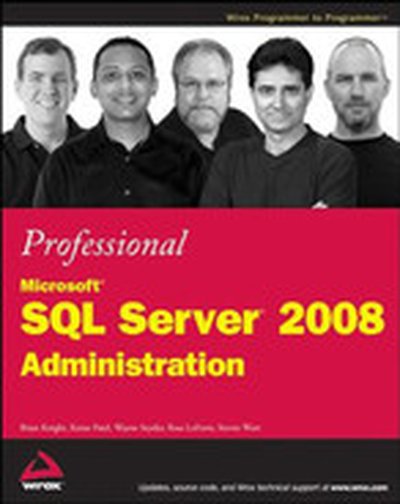
Professional Microsoft® SQL Server® 2008 Administration

SQL Server 2008 represents a sizable jump forward in scalability, performance, and usability for the DBA, developer, and business intelligence (BI) developer. It is no longer unheard of to have 20-terabyte databases running on a SQL Server. SQL Server administration used to just be the job of a database administrator (DBA), but as SQL Server proliferates throughout smaller companies, many developers have begun to act as administrators as well. Additionally, some of the new features in SQL Server are more developer-centric, and poor configuration of these features can result in poor performance. SQL Server now enables you to manage the policies on hundreds of SQL Servers in your environment as if you were managing a single instance. We've provided a comprehensive, tutorial-based book to get you over the learning curve of how to configure and administer SQL Server 2008. Whether you're an administrator or developer using SQL Server, you can't avoid wearing a DBA hat at some point. Developers often have SQL Server on their own workstations and must provide guidance to the administrator about how they'd like the production configured. Oftentimes, they're responsible for creating the database tables and indexes. Administrators or DBAs support the production servers and often inherit the database from the developer. This book is intended for developers, DBAs, and casual users who hope to administer or may already be administering a SQL Server 2008 system and its business intelligence features, such as Integration Services. This book is a professional book, meaning the authors assume that you know the basics about how to query a SQL Server and have some rudimentary concepts of SQL Server already. For example, this book does not show you how to create a database or walk you through the installation of SQL Server using the wizard. Instead, the author of the installation chapter may provide insight into how to use some of the more advanced concepts of the installation. Although this book does not cover how to query a SQL Server database, it does cover how to tune the queries you've already written. The first ten chapters of the book are about administering the various areas of SQL Server, including the developer and business intelligence features. Chapter 1 briefly covers the architecture of SQL Server and the changing role of the DBA. Chapters 2 and 3 dive into best practices on installing and upgrading to SQL Server 2008. Managing your SQL Server database instance is talked about in Chapter 4. This chapter also describes some of the hidden tools you may not even know you have. Once you know how to manage your SQL Server, you can learn in Chapter 5 how to automate many of the redundant monitoring and maintenance tasks. This chapter also discusses best practices on configuring SQL Server Agent. Chapters 6 and 7 cover how to properly administer and automate many tasks inside of the Microsoft business intelligence products, such as Integration Services and Analysis Services. Developers will find that Chapter 8 is very useful, as it covers how to administer the development features, such as SQL CLR. Chapter 9 explains how to secure your SQL Server from many common threats and how to create logins and users. Chapter 10 covers how to create a SQL Server project and do proper change management in promoting your scripts through the various environments. It also covers the Policy-Based Management framework in SQL Server. Chapters 11 through 15 make up the performance tuning part of the book. Chapter 11 discusses how to choose the right hardware configuration for your SQL Server in order to achieve optimal performance. After the hardware and operating system is configured, Chapter 12 shows you how to optimize your SQL Server instance for the best performance. Chapter 13 describes how to monitor your SQL Server instance for problematic issues such as blocking and locking. Chapters 14 and 15 discuss how to optimize the T-SQL that accesses your tables and then how to index your tables appropriately. Chapters 16 through 20 consist of the high-availability chapters of the book. Chapter 16 covers how to use the various forms of replication, while database mirroring is covered in Chapter 17. Classic issues and best practices with backing up and recovering your database are discussed in Chapter 18. Chapter 19 dives deeply into the role of log shipping in your high-availability strategy, and Chapter 20 presents a step-by-step guide to clustering your SQL Server and Windows 2008 server. This edition of the book covers all the same great information we covered in the last book, and we've added loads of new content for SQL Server 2008, which adds numerous new features to improve the DBA's life. In short, the new version of SQL Server focuses on improving your efficiency, the scale of your server, and the performance of your environment, so you can do more in much less time, and with fewer resources and people. This means you can manage many servers at one time using Policy-Based Management, scale your I/O load using compression, and collect valuable information about your environment using data collectors, to name just a few key new features. To follow the examples in this book, you will need to have SQL Server 2008 installed. If you wish to learn how to administer the business intelligence features, you need to have Analysis Services and the Integration Services components installed. You need a machine that can support the minimum hardware requirements to run SQL Server 2008; and you also need the AdventureWorks2008 and AdventureWorksDW2008 databases installed. Instructions for accessing these databases can be found in the ReadMe file on this book's Web site. Some features in this book (especially in the high-availability part) require the Enterprise or Developer Edition of SQL Server. If you do not have this edition, you will still be able to follow through some of the examples in the chapter with Standard Edition.

Mule 2: A Developer's Guide

Published with the developer in mind, firstPress technical briefs explore emerging technologies that have the potential to be critical for tomorrow's industry. Apress keeps developers one step ahead by presenting key information as early as possible in a PDF of 150 pages or less. Explore the future through Apress... Mule 2: A Developer's Guide introduces the Mule 2.0 integration platform for developers of enterprise integration applications who wish to leverage the latest Mule as a lightweight messaging framework that contains a distributable object broker for managing communication between applications. The book is based on insight, knowledge, and experience resulting from working with Mule. The text provides support, consulting, and training to developers implementing Mule in a broad range of scenarios ranging from small projects through to large corporations developing major deployments. The author(s) have also developed the official training materials for Mule.

Googlepedia: The Ultimate Google Resource, Third Edition

Googlepedia® Third Edition The all-encompassing book about everything Google. Not only will you learn advanced search techniques, but you also will learn how to master Google’s web and software tools. It’s all inside! Google Chrome Google’s new web browser Google Gadgets create your own gadgets Google Gears turn web applications into desktop applications Android use Google’s phone Blogger create your own personal blog Gmail Google’s web-based email service Google Web Search the most popular search on the Internet Google AdSense put profit-making ads on their own website Google AdWords buy keyword advertising on the Google site Google Product Search find hot deals without ever leaving your office chair Google Calendar a web-based scheduling and public calendar service Google Desktop search documents and emails on your PC’s hard drive Google Docs create and share web-based word processing and spreadsheet documents Google Earth a fun way to view 3D maps of any location on Earth YouTube view and share videos over the Web Google Groups a collection of user-created message forums Google Maps maps, satellite images, and driving directions for any location GOOGLE MAY BE THE INTERNET’S MOST POPULAR SEARCH SITE, BUT IT’S ALSO MORE THAN JUST SIMPLE WEB SEARCHES. • Use Google developer tools and APIs • Create MySpace and Facebook applications with OpenSocial • Use Google Gears to turn web-based applications into desktop applications • Use Google to search for news headlines, scholarly articles, and the best prices on the Web • Read and respond to blog postings and create your own blogs with Blogger • View the latest viral videos with YouTube • Use Android, the new Google phone • Use Google with the Apple iPhone and iPod Touch • Create maps and driving directions with Google Maps • Use Google’s free web-based email service Gmail • Create your own custom Google Maps mashups–and put customized Google search on your own website Michael Miller has written more than 80 nonfiction how-to books, including Que’s Absolute Beginner’s Guide to Computer Basics, YouTube for Business, and Photopedia: The Ultimate Digital Photography Resource. Category: Internet Covers: Google User Level: Intermediate to Advanced

Programming Microsoft® SQL Server™ 2008

Extend your programming skills with a comprehensive study of the key features of SQL Server 2008. Delve into the new core capabilities, get practical guidance from expert developers, and put their code samples to work. This is a must-read for Microsoft .NET and SQL Server developers who work with data access—at the database, business logic, or presentation levels. Discover how to: Query complex data with powerful Transact-SQL enhancements Use new, non-relational features: hierarchical tables, native file streaming, and geospatial capabilities Exploit XML inside the database to design XML-aware applications Consume and deliver your data using Microsoft LINQ, Entity Framework, and data binding Implement database-level encryption and server auditing Build and maintain data warehouses Use Microsoft Excel to build front ends for OLAP cubes, and MDX to query them Integrate data mining into applications quickly and effectively. Get code samples on the Web.

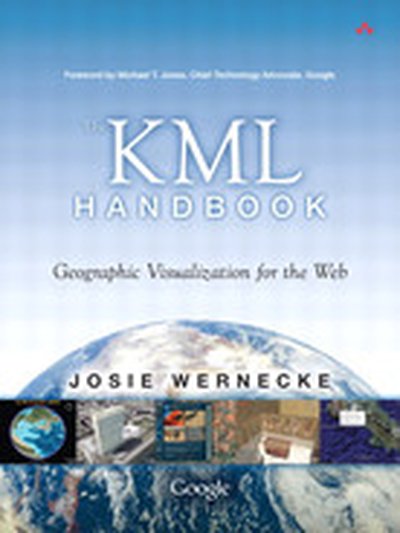
The KML Handbook: Geographic Visualization for the Web

“The way the information is presented appeals to teachers, hobbyists, web designers—anyone looking for a way to enhance their content by using customized maps.” —Warren Kelly, Pastor “It could become the de-facto tutorial volume for the subject, as well as the classic reference guide.” —Thomas Duff, Lead Developer “This book is written so well and is so easy to follow it’s a joy to go through.” — Daniel McKinnon, Software Engineer KML began as the file format for Google Earth, but it has evolved into a full-fledged international standard for describing any geographic content—the “HTML of geography.” It’s already supported by applications ranging from Microsoft Virtual Earth and NASA WorldWind to Photoshop and AutoCAD. You can do amazing things with KML, and this book will show you how, using practical examples drawn from today’s best online mapping applications. Drawing on her extensive experience with the creators of KML, Wernecke teaches techniques that can be used by everyone from programmers to real estate agents, scientists, students, architects, virtual explorers, and more. Highlights include Incorporating rich content in Placemark balloons Creating overlays that superimpose your images on standard Earth browsers Generating animations that move through Placemarks, Overlays, and Models Controlling and updating map content across the Web Managing large data sets using regions and custom data types Complete KML language reference: elements, types, syntax, file structure, and conventions

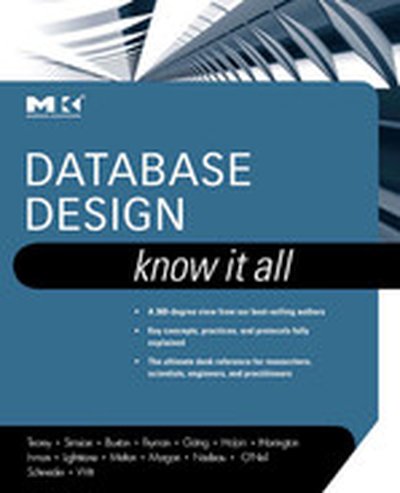
Database Design: Know It All

This book brings all of the elements of database design together in a single volume, saving the reader the time and expense of making multiple purchases. It consolidates both introductory and advanced topics, thereby covering the gamut of database design methodology ? from ER and UML techniques, to conceptual data modeling and table transformation, to storing XML and querying moving objects databases. The proposed book expertly combines the finest database design material from the Morgan Kaufmann portfolio. Individual chapters are derived from a select group of MK books authored by the best and brightest in the field. These chapters are combined into one comprehensive volume in a way that allows it to be used as a reference work for those interested in new and developing aspects of database design. This book represents a quick and efficient way to unite valuable content from leading database design experts, thereby creating a definitive, one-stop-shopping opportunity for customers to receive the information they would otherwise need to round up from separate sources. Chapters contributed by various recognized experts in the field let the reader remain up to date and fully informed from multiple viewpoints. Details multiple relational models and modeling languages, enhancing the reader’s technical expertise and familiarity with design-related requirements specification. Coverage of both theory and practice brings all of the elements of database design together in a single volume, saving the reader the time and expense of making multiple purchases.

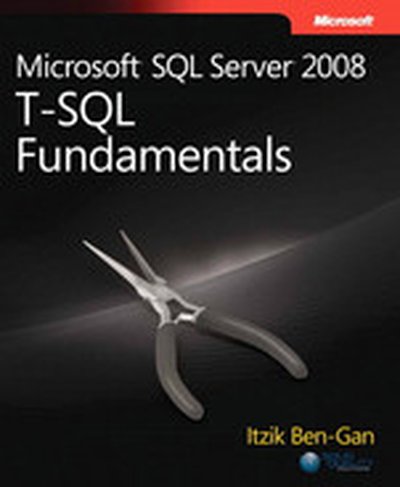
Microsoft® SQL Server® 2008 T-SQL Fundamentals

Master the foundations of T-SQL with the right balance of conceptual and practical content. Get hands-on guidance—including exercises and code samples—that show you how to develop code to query and modify data. You’ll gain a solid understanding of the T-SQL language and good programming practices, and learn to write more efficient and powerful queries. Discover how to: Apply T-SQL fundamentals, create tables, and define data integrity Understand logical query processing Query multiple tables using joins and subqueries Simplify code and improve maintainability with table expressions Explore pivoting techniques and how to handle grouping sets Write code that modifies data Isolate inconsistent data and address deadlock and blocking scenarios

The Garmin Nüvi Pocket Guide

Here is your essential companion to the nuvi. The Garmin nuvi Pocket Guide steers you through how to: Set up and quickly start using your nuvi. Personalize nuvi. Find your destinations and points of interest (POIs). Master multiple-point routing. Create proximity alerts for speed traps, safety cameras, and school zones. Receive traffic, weather, and news. Master hands-free and POI dialing via Bluetooth Tune in with the built-in FM transmitter. Use the nuvi's travel features: its currency and unit converters, World Clock, and the Language Guide. Listen to music and audiobooks, view photos, and play games. Keep your nuvi software and maps up to date.

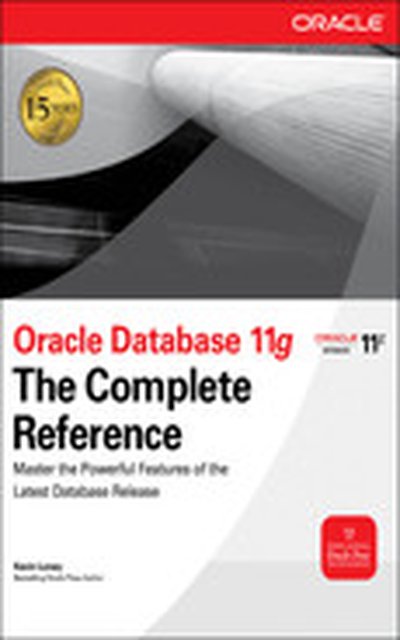
Oracle Database 11g The Complete Reference

The Definitive Guide to Oracle Database 11 g Get full details on the powerful features of Oracle Database 11 g from this thoroughly updated Oracle Press guide. Oracle Database 11g: The Complete Reference explains how to use all the new features and tools, execute powerful SQL queries, construct PL/SQL and SQLPlus statements, and work with large objects and object-relational databases. Learn how to implement the latest security measures, tune database performance, and deploy grid computing techniques. An invaluable cross-referenced appendix containing Oracle commands, keywords, features, and functions is also included. Install Oracle Database 11 g or upgrade from an earlier version Create database tables, sequences, indexes, views, and user accounts Construct SQL statements, procedures, queries, and subqueries Optimize security using virtual private databases and transparent data encryption Import and export data using SQLLoader and Oracle Data Pump Use SQL replay, change management, and result caching Avoid human errors using flashback and automatic undo management Build and tune PL/SQL triggers, functions, and packages Develop database applications using Java, JDBC, and XML Optimize availability and scalability with Oracle Real Application Clusters

Googling Security: How Much Does Google Know About You?

What Does Google Know about You? And Who Are They Telling? When you use Google’s “free” services, you pay, big time–with personal information about yourself. Google is making a fortune on what it knows about you…and you may be shocked by just how much Google does know. Googling Security is the first book to reveal how Google’s vast information stockpiles could be used against you or your business–and what you can do to protect yourself. Unlike other books on Google hacking, this book covers information you disclose when using all of Google’s top applications, not just what savvy users can retrieve via Google’s search results. West Point computer science professor Greg Conti reveals the privacy implications of Gmail, Google Maps, Google Talk, Google Groups, Google Alerts, Google’s new mobile applications, and more. Drawing on his own advanced security research, Conti shows how Google’s databases can be used by others with bad intent, even if Google succeeds in its pledge of “don’t be evil.” Uncover the trail of informational “bread crumbs” you leave when you use Google search How Gmail could be used to track your personal network of friends, family, and acquaintances How Google’s map and location tools could disclose the locations of your home, employer, family and friends, travel plans, and intentions How the information stockpiles of Google and other online companies may be spilled, lost, taken, shared, or subpoenaed and later used for identity theft or even blackmail How the Google AdSense and DoubleClick advertising services could track you around the Web How to systematically reduce the personal information you expose or give away This book is a wake-up call and a “how-to” self-defense manual: an indispensable resource for everyone, from private citizens to security professionals, who relies on Google. Preface xiii Acknowledgments xix About the Author xxi Chapter 1: Googling 1 Chapter 2: Information Flows and Leakage 31 Chapter 3: Footprints, Fingerprints, and Connections 59 Chapter 4: Search 97 Chapter 5: Communications 139 Chapter 6: Mapping, Directions, and Imagery 177 Chapter 7: Advertising and Embedded Content 205 Chapter 8: Googlebot 239 Chapter 9: Countermeasures 259 Chapter 10: Conclusions and a Look to the Future 299 Index 317

Release 2.0: Issue 10

The Geospatial Web (aka the GeoWeb) is a rapidly evolving Web 2.0 market of innovative data and software applications--including location-based services, social software, and even augmented reality--for both the web and mobile devices. Propelled by the new location-aware iPhone, the GeoWeb is hurtling into the mainstream. This special issue lays out the new generation of geo products and services, identify the major players, and show how your business can leverage the power of Where 2.0.

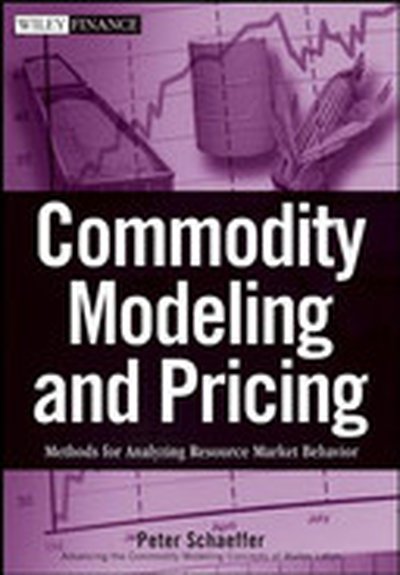
Commodity Modeling and Pricing: Methods for Analyzing Resource Market Behavior

Commodity Modeling and Pricing provides extensions and applications of state-of-the-art methods for analyzing resource commodity behavior. Drawing from the seminal work of Professor Walter Labys on the development of econometric methods for forecasting commodity prices, this collection of essays features expert contributors ranging from practitioners in private industry, public sector, and nongovernmental organizations to scholars in higher education-all of whom were Labys's former students or collaborators. Filled with in-depth insights and expert advice, Commodity Modeling and Pricing contains the information you need to excel in this demanding environment.

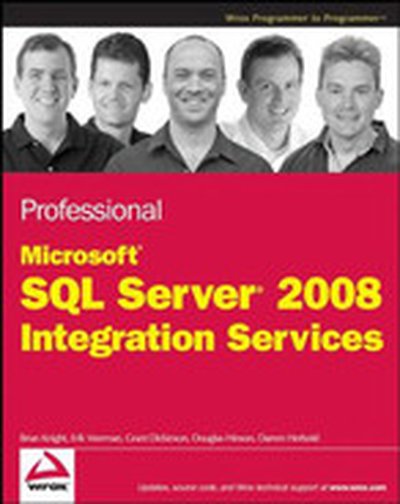
Professional SQL Server® 2008 Integration Services

The new edition of the successful previous version is 25 percent revised and packed with more than 200 pages of new material on the 2008 release of SQL Server Integration Services (SSIS) Renowned author Brian Knight and his expert coauthors show developers how to master the 2008 release of SSIS, which is both more powerful and more complex than ever Case studies and tutorial examples acquired over the three years since the previous edition will contribute to helping illustrate advanced concepts and techniques New chapters include coverage of data warehousing using SSIS, new methods for managing the SSIS platform, and improved techniques for ETL operations