talk-data.com talk-data.com

Topic

data-engineering

3395

tagged

Activity Trend

1 peak/qtr
2020-Q1 2026-Q1

Activities

3395 activities · Newest first

Smarter Business: Dynamic Information with IBM InfoSphere Data Replication CDC

To make better informed business decisions, better serve clients, and increase operational efficiencies, you must be aware of changes to key data as they occur. In addition, you must enable the immediate delivery of this information to the people and processes that need to act upon it. This ability to sense and respond to data changes is fundamental to dynamic warehousing, master data management, and many other key initiatives. A major challenge in providing this type of environment is determining how to tie all the independent systems together and process the immense data flow requirements. IBM® InfoSphere® Change Data Capture (InfoSphere CDC) can respond to that challenge, providing programming-free data integration, and eliminating redundant data transfer, to minimize the impact on production systems. In this IBM Redbooks® publication, we show you examples of how InfoSphere CDC can be used to implement integrated systems, to keep those systems updated immediately as changes occur, and to use your existing infrastructure and scale up as your workload grows. InfoSphere CDC can also enhance your investment in other software, such as IBM DataStage® and IBM QualityStage®, IBM InfoSphere Warehouse, and IBM InfoSphere Master Data Management Server, enabling real-time and event-driven processes. Enable the integration of your critical data and make it immediately available as your business needs it.
IBM System Storage N series with VMware vSphere 4.1

This IBM® Redbooks® publication provides a basic introduction to the IBM System Storage® N series, virtualization, and VMware. It explains how to use the N series with VMware vSphere 4 environments and the benefits of doing so. Examples are given on how to install and set up VMware ESXi server with the N series. This edition includes information about the Virtual Storage Console (VSC), which is another N series software product that works with VMware. VSC provides local backup and recovery capability. You have the option to replicate backups to a remote storage system by using SnapMirror relationships. Backups can be performed on individual virtual machines or on datastores with the option of updating the SnapMirror relationship as part of the backup on a per job basis. Similarly, restores can be performed at a data-store level or individual virtual machine level. IBM System Storage N series in conjunction with VMware vSphere 4 helps complete the virtualization hierarchy by providing both a server and storage virtualization solution. Although this configuration can further assist with other areas of virtualization, networks, and applications, these areas of virtualization are not covered in detail in this book.

Data Migration to IBM Disk Storage Systems

Data migration has become a mandatory and regular activity for most data centers. Companies need to migrate data not only when technology needs to be replaced, but also for consolidation, load balancing, and disaster recovery. This IBM Redbooks® publication addresses the aspects of data migration efforts while focusing on the IBM System Storage® as the target system. Data migration is a critical and complex operation, and this book provides the phases and steps to ensure a smooth migration. Topics range from planning and preparation to execution and validation. The book also reviews products and describes available IBM data migration services offerings. It explains, from a generic standpoint, the appliance-based, storage-based, and host-based techniques that can be used to accomplish the migration. Each method is explained including the use of the various products and techniques with different migration scenarios and various operating system platforms. This document targets storage administrators, storage network administrators, system designers, architects, and IT professionals who design, administer or plan data migrations in large data Centers. The aim is to ensure that you are aware of the current thinking, methods, tools, and products that IBM can make available to you. These items are provided to ensure a data migration process that is as efficient and problem-free as possible. The material presented in this book was developed with versions of the referenced products as of June 2011.

Getting Started with Fluidinfo

Imagine a public storage system that has a place online for structured data about everything that exists—or that could exist. This book introduces Fluidinfo, a system that enables you to store information about anything, real or imaginary, in any digital form. You’ll learn how to organize and search for data, and decide who can use, modify, and extend what you’ve contributed. This guide demonstrates Fluidinfo’s potential to create social data, with facilities that encourage users and applications to share, remix, and reuse data in ways they may not have anticipated. You’ll learn how to use tools for reading and writing data, and how to use Fluidinfo in your own applications by working with its writable API and simple query language. Read and write Fluidinfo data from web applications—and reuse and build upon each other’s data Discover Fluidinfo’s permissions system for tags and namespaces Learn how to use Fish, the command-line tool for interacting with Fluidinfo data Delve into Fluidinfo’s RESTful API, and learn how to make HTTP requests Use Fluidinfo client libraries to build a simple Python utility or a JavaScript web application

Integrating IBM Security and SAP Solutions

Many large and medium-sized organizations have made strategic investments in the SAP NetWeaver technology platform as their primary application platform. In fact, SAP software is used to manage many core business processes and data. As a result, it is critical for all organizations to manage the life cycle of user access to the SAP applications while adhering to security and risk compliance requirements. In this IBM® Redbooks® publication, we discuss the integration points into SAP solutions that are supported by the IBM Security access and identity management product capabilities. IBM Security software offers a range of identity management (IdM) adapters and access management components for SAP solutions that are available with IBM Tivoli® Identity Manager, IBM Tivoli Directory Integrator, IBM Tivoli Directory Server, IBM Access Manager for e-business, IBM Tivoli Access Manager for Enterprise Single Sign-On, and IBM Tivoli Federated Identity Manager. This book is a valuable resource for security officers, consultants, administrators, and architects who want to understand and implement an identity management solution for an SAP environment.

Implementing the Storwize V7000 and the IBM System Storage SAN32B-E4 Encryption Switch

In this IBM® Redbooks® publication, we describe how these products can be combined to provide an encryption and virtualization solution: IBM System Storage® SAN32B-E4 Encryption Switch IBM Storwize® V7000 IBM Tivoli® Key Lifecycle Manager This book is intended for anyone who needs to understand and implement the IBM System Storage SAN32B-E4 Encryption Switch, IBM Storwize V7000, IBM Tivoli Key Lifecycle Manager, and encryption.

Microsoft® SQL Server® 2012: Pocket Consultant

Portable and precise, this pocket-sized guide delivers ready answers for the day-to-day administration of SQL Server. Zero in on core support and maintenance tasks using quick-reference tables, instructions, and lists. You’ll get the focused information you need to save time and get the job done—whether at your desk or in the field! Get fast facts to: Manage SQL Server services and clients Configure, manage, and tune servers Implement policy-based management Administer security and access Monitor server activity and tune performance Automate maintenance Perform backups and recovery

Advanced Networking Concepts Applied Using Linux on IBM System z

This IBM® Redbooks® publication describes important networking concepts and industry standards that are used to support high availability on IBM System z®. Some of the networking standards described here are VLANs, VLAN trunking, link aggregation, virtual switches, VNICs, and load-balancing. We examine the various aspects of network setups and introduce the main Linux on System z networking commands and configuration files. We describe the management of network interface parameters, assignment of addresses to a network interface, and usage of the ifconfig command to configure network interfaces. We provide an overview of connectivity options available on the System z platform. We also describe high availability concepts and building a high availability solution using IBM Tivoli® System Automation. We also provide the implementation steps necessary to build a redundant network connections set up between an IBM z/VM® system and the external network switches using two Open Systems Adapter-Express 3 (OSA-Express 3) adapters with 10 Gb Ethernet ports. We describe the tests performed in our lab environment. The objectives of these tests were to gather information about performance and failover from the perspective of a real scenario, where the concepts of described in this book were applied. This book is focused on information that is practical and useful for readers with experience in network analysis and engineering networks, System z and Linux systems administrators, especially for readers that administer networks in their day-to-day activities. For additional reading: A Technote is availalble that explains changes to using channel bonding interfaces introduced with SLES 11 SP 2. It can be found at: http://www.redbooks.ibm.com/abstracts/tips1000.html?Open

MySQL Troubleshooting

Stuck with bugs, performance problems, crashes, data corruption, and puzzling output? If you’re a database programmer or DBA, they’re part of your life. The trick is knowing how to quickly recover from them. This unique, example-packed book shows you how to handle an array of vexing problems when working with MySQL. Written by a principal technical support engineer at Oracle, MySQL Troubleshooting provides the background, tools, and expert steps for solving problems from simple to complex—whether data you thought you inserted doesn’t turn up in a query, or the entire database is corrupt because of a server failure. With this book in hand, you’ll work with more confidence. Understand the source of a problem, even when the solution is simple Handle problems that occur when applications run in multiple threads Debug and fix problems caused by configuration options Discover how operating system tuning can affect your server Use troubleshooting techniques specific to replication issues Get a reference to additional troubleshooting techniques and tools, including third-party solutions Learn best practices for safe and effective troubleshooting—and for preventing problems

Implementing the IBM Storwize V7000 V6.3

Continuing its commitment to developing and delivering industry-leading storage technologies, IBM® introduces the IBM Storwize® V7000 solution, an innovative new storage offering that delivers essential storage efficiency technologies and exceptional ease of use and performance, all integrated into a compact, modular design that is offered at a competitive, midrange price. The IBM Storwize V7000 solution incorporates some of the top IBM technologies typically found only in enterprise-class storage systems, raising the standard for storage efficiency in midrange disk systems. This cutting-edge storage system extends the comprehensive storage portfolio from IBM and can help change the way organizations address the ongoing information explosion. This IBM Redbooks® publication introduces the features and functions of the IBM Storwize V7000 system through several examples. This book is aimed at pre- and post-sales technical support and marketing, storage administrators, and will help you understand the architecture of the Storwize V7000, how to implement it, and take advantage of the industry leading functions and features.

Mastering phpMyAdmin 3.4 for Effective MySQL Management

This book, 'Mastering phpMyAdmin 3.4 for Effective MySQL Management', acts as a comprehensive guide to learning phpMyAdmin 3.4 and maximizing its potential. By reading this book, you will gain a solid understanding of MySQL management via phpMyAdmin, including database setups, administration, and advanced features like performance tuning and user management. What this Book will help me do Set up and customize phpMyAdmin for your specific MySQL administrative needs. Secure your MySQL databases through robust authentication and access controls. Efficiently manage complex relational data models using advanced phpMyAdmin tools. Perform advanced MySQL operations quickly using built-in features and custom queries. Diagnose and resolve common database management issues to enhance stability and performance. Author(s) The author is an experienced software developer and database administrator with years of expertise in MySQL and its management tools. They are passionate about teaching technology in an accessible way, catering to a wide range of skill levels. Their step-by-step instructional methods make complex topics easy to understand and actionable for readers. Who is it for? This book is designed for web developers, system administrators, or anyone involved in database management looking to streamline MySQL operations. It is suitable for individuals who have a foundational understanding of MySQL and wish to leverage phpMyAdmin for more efficient and effective database administration. Whether you're working on a team or managing personal projects, this resource will be invaluable in improving your database management skills.

XPages Portable Command Guide: A Compact Resource to XPages Application Development and the XSP Language

A Practical Primer for XPages Application Development, Debugging, and Performance Using XPages, Lotus® Notes® and Domino® developers can quickly create state-of-the-art web, mobile, and Notes client business applications using standard technologies like HTML, JavaScript, CSS, and XML. Now, there’s a perfect portable XPages quick reference for every working developer. Straight from the experts at IBM®, XPages Portable Command Guide offers fast access to working code, tested solutions, expert tips, and example-driven best practices. Drawing on their unsurpassed experience as IBM XPages lead developers and customer consultants, the authors explore many lesser known facets of the XPages runtime, illuminating these capabilities with dozens of examples that solve specific XPages development problems. Using their easy-to-adapt code examples, you can develop XPages solutions with outstanding performance, scalability, flexibility, efficiency, reliability, and value. Covers lots of commands and parameters related to XPages behavior modification through xsp.properties Notes/Domino configuration files XSP Command Manager and OSGi Console The XSP Client-Side JavaScript Object Server Side JavaScript scripting Server Side JavaScript debugging via global functions, simple programming constructs, and logging Instantly access all XPages commands: Use this book as your quick offline solutions resource Logical how-to topic groupings provide one-stop research Compact size makes it easy to carry with you—wherever you go “Create Your Own Journal” section with blank, lined pages makes it easy to personalize this book for your needs “What Do You Want to Do?” chart inside the front cover helps you quickly find specific tasks Designed for all Lotus and Domino developers with at least some XPages experience, XPages Portable Command Guide is the ideal companion and follow-up to Mastering XPages from IBM Press, the world’s #1 book on XPages technology.

Getting Started with CouchDB

CouchDB is a new breed of database for the Internet, geared to meet the needs of today’s dynamic web applications. With this concise introduction, you’ll learn how CouchDB’s simple model for storing, processing, and accessing data makes it ideal for the type of data and rapid response users now demand from your applications—and how easy CouchDB is to set up, deploy, maintain, and scale. The code-packed examples in this book will help you learn how to work with documents, populate a simple database, replicate data from one database to another, and a host of other tasks. Install CouchDB on Linux, Mac OS X, Windows, or (if you must) from the source code Interact with data through CouchDB’s RESTful API, and use standard HTTP operations, such as PUT, GET, POST, and DELETE Use Futon—CouchDB’s web-based interface— to manage databases and documents, and to configure replications Learn how to create, update, and delete documents in JSON format, and how to create and delete databases Work with design documents to get the formatting and indexing your application requires

Introduction to IBM Real-time Compression Appliances

Continuing its commitment to developing and delivering industry-leading storage technologies, IBM® is introducing the IBM Real-time Compression Appliances for NAS, an innovative new storage offering that delivers essential storage efficiency technologies, combined with exceptional ease of use and performance. In an era when the amount of information, particularly in unstructured files, is exploding, but budgets for storing that information are stagnant, IBM Real-time Compression technology offers a powerful tool for better information management, protection, and access. IBM Real-time Compression can help slow the growth of storage acquisition, reducing storage costs while simplifying both operations and management. It also enables organizations to keep more data available for use rather than storing it offsite or on harder-to-access tape, so they can support improved analytics and decision making. IBM Real-time Compression Appliances provide on-line storage optimization through real-time data compression, delivering dramatic cost reduction without performance degradation. This IBM Redbooks® publication is an easy-to-follow guide that describes how to design solutions successfully using IBM Real-time Compression Appliances (IBM RTCAs). It provides practical installation examples, ease of use, remote management, high availability, and administration techniques. Furthermore, it explains best practices for RTCA solution design, application integration, and practical RTCA use cases.

PowerHA SystemMirror for IBM i Cookbook

IBM® PowerHA™ SystemMirror for i is the IBM high-availability disk-based clustering solution for the IBM i 7.1 operating system. When combined with IBM i clustering technology, PowerHA for i delivers a complete high-availability and disaster-recovery solution for your business applications running in the IBM System i® environment. PowerHA for i enables you to support high-availability capabilities with either native disk storage or IBM DS8000® or DS6000™ storage servers or IBM Storwize V7000 and SAN Volume Controllers. The latest release of IBM PowerHA SystemMirror for i delivers a brand-new web-based PowerHA graphical user interface that effectively combines the solution-based and task-based activities for your HA environment, all in a single user interface. This IBM Redbooks® publication provides a broad understanding of PowerHA for i. This book is intended for all IBM i professionals who are planning on implementing a PowerHA solution on IBM i.

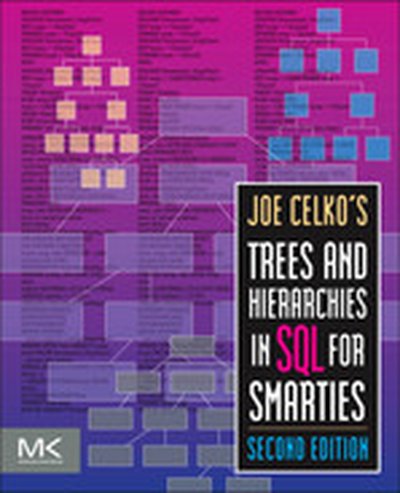
Joe Celko's Trees and Hierarchies in SQL for Smarties, 2nd Edition

The demand for SQL information and training continues to grow with the need for a database behind every website capable of offering web-based information queries. SQL is the de facto standard for database retrieval, and if you need to access, update, or utilize data in a modern database management system, you will need SQL to do it. The Second Edition of Joe Celko's Trees and Hierarchies in SQL for Smarties covers two new sets of extensions over three entirely new chapters and expounds upon the changes that have occurred in SQL standards since the previous edition's publication. Benefit from mastering the challenging aspects of these database applications in SQL as taught by Joe Celko, one of the most-read SQL authors in the world. Expert advice from a noted SQL authority and award-winning columnist who has given 10 years of service to the ANSI SQL standards committee Teaches scores of advanced techniques that can be used with any product, in any SQL environment Offers graph theory and programming techniques for working around deficiencies and gives insight into real-world challenges

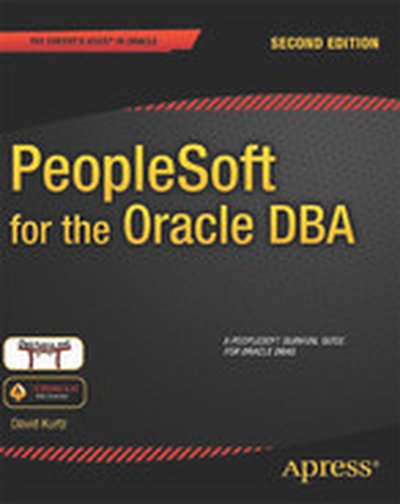
PeopleSoft for the Oracle DBA

PeopleSoft for the Oracle DBA, Second Edition stands on the boundary between the PeopleSoft application and the Oracle database. This new edition of David Kurtz's book is freshly revised, showing how to tame the beast and manage Oracle successfully in a PeopleSoft environment. You'll learn about PeopleSoft's Internet architecture and its use of Oracle's Tuxedo Application Server. You'll find full coverage of key database issues such as indexing, connectivity, and tablespace usage as they apply to PeopleSoft. Kurtz also provides some of the best advice and information to be found anywhere on managing and troubleshooting performance issues in a PeopleSoft environment. The solid coverage of performance troubleshooting is enough by itself to make PeopleSoft for the Oracle DBA a must-have book for any Oracle Database administrator working in support of a PeopleSoft environment. Explains PeopleSoft's technical architecture as it relates to Oracle Database Demonstrates how to instrument and measure the performance of PeopleSoft Provides techniques to troubleshoot and resolve performance problems What you'll learn Understand PeopleSoft's technical architecture and the structure of a PeopleSoft database Measure performance of the various tiers in the application Pinpoint and resolve performance problems within the code Configure server processes for optimal performance Monitor and manage your PeopleSoft installation using Oracle Enterprise Manager Take full advantage of the PeopleTools Performance Monitor that is new in version 8.44 Who this book is for PeopleSoft for the Oracle DBA is written for database administrators charged with supporting a PeopleSoft system, and especially those administrators responsible for troubleshooting and resolving PeopleSoft performance issues. PeopleSoft for the Oracle DBA also appeals to PeopleSoft administrators and developers who desire a better understanding of how PeopleSoft functions in an Oracle Database environment.

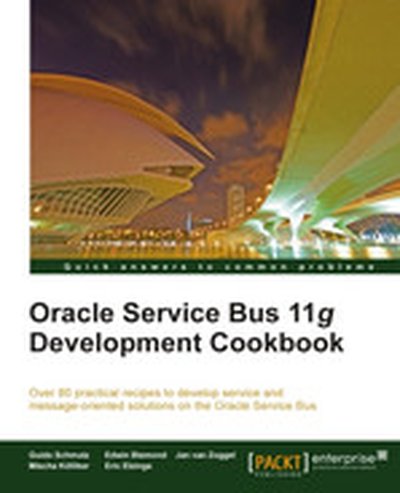
Oracle Service Bus 11g Development Cookbook

Discover how to navigate the intricacies of Oracle Service Bus 11g with this comprehensive cookbook. With practical recipes and hands-on exercises, this guide will help you quickly gain proficiency in leveraging Oracle Service Bus for developing service and message-oriented solutions. Master integration techniques and facilitate efficient service orchestration in your SOA projects. What this Book will help me do Confidently navigate and utilize Oracle Service Bus 11g's development environment. Efficiently design and deploy service-oriented and message-oriented solutions. Implement secure and reliable messaging with built-in configuration settings. Integrate Oracle Service Bus with various transports and heterogeneous systems. Apply best practices for effective service governance within Oracle SOA Suite. Author(s) The authors of this cookbook are seasoned professionals in software integration and development, with years of hands-on experience working with Oracle Service Bus and Oracle SOA Suite. They have a clear and practical approach to teaching, offering readers expert insights and actionable steps. Through their work, they strive to make complex concepts accessible to developers of all backgrounds. Who is it for? This book is perfect for Intermediate SOA developers who aim to enhance their skills in utilizing Oracle Service Bus for developing service and message-oriented solutions. Readers should have a foundational understanding of SOA concepts and Oracle Service Bus to best benefit from the topics covered. It is also ideal for developers striving to deepen their knowledge of integration technologies. If you aim to build scalable and secure integration solutions, this book will be your guide.

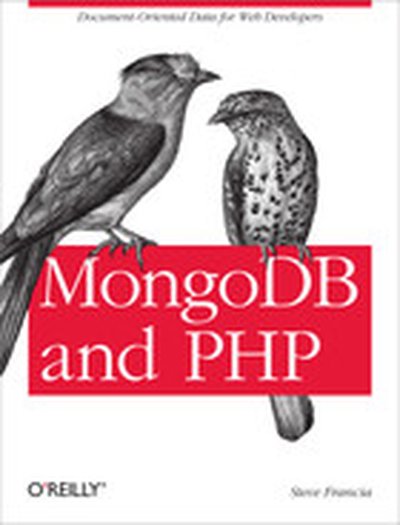
MongoDB and PHP

What would happen if you optimized a data store for the operations application developers actually use? You’d arrive at MongoDB, the reliable document-oriented database. With this concise guide, you’ll learn how to build elegant database applications with MongoDB and PHP. Written by the Chief Solutions Architect at 10gen—the company that develops and supports this open source database—this book takes you through MongoDB basics such as queries, read-write operations, and administration, and then dives into MapReduce, sharding, and other advanced topics. Get out of the relational database rut, and take advantage of a high-performing system optimized for operations and scale. Learn step-by-step the tools you need to build PHP applications with MongoDB Perform Create, Read, Update, and Delete (CRUD) operations, and learn how to perform queries to retrieve data Administer your database, and access and manipulate data with the MongoDB Shell Use functions to work with sets, arrays, and multiple documents to perform synchronous, asynchronous, and atomic operations Discover PHP’s community tools and libraries, and why they’re valuable Work with regular expressions, aggregation, MapReduce, replication, and sharding

Oracle Database 11gR2 Performance Tuning Cookbook

Unlock the full potential of your Oracle Database 11gR2 with "Oracle Database 11gR2 Performance Tuning Cookbook." This comprehensive guide provides over 80 practical recipes designed to enhance the performance of your database systems. By following these steps, you'll acquire the skills to not only identify and address performance-related issues but also prevent them proactively, ensuring your database operates at peak efficiency. What this Book will help me do Optimize application design to achieve top-tier performance. Deploy efficient and scalable SQL and PL/SQL for enhanced data handling. Implement proper data structures for optimal storage and indexing. Diagnose and address memory, I/O, and contention bottlenecks. Master database tuning techniques to maintain high performance under varying loads. Author(s) Ciro Fiorillo is an experienced database administrator and performance tuning expert specializing in Oracle databases. With a rich background in database architecture and optimization, Ciro conveys practical knowledge through an engaging and hands-on approach. His teaching focuses on empowering professionals to effectively tackle challenges within database environments. Who is it for? This book is designed for database administrators (DBAs), software developers, and system architects aiming to optimize Oracle Database performance. It suits professionals with varying experience levels, providing accessible insights for newcomers and advanced tips for seasoned practitioners. If you aspire to solve performance issues systematically or design high-performing Oracle-based applications, this book aligns with those goals.