talk-data.com talk-data.com

Topic

data-engineering

3395

tagged

Activity Trend

1 peak/qtr
2020-Q1 2026-Q1

Activities

3395 activities · Newest first

Sams Teach Yourself PHP, MySQL™ and Apache in 24 Hours

Sams Teach Yourself PHP, MySQL, and Apache in 24 Hours combines coverage of three popular open-source Web development tools into one easy-to-understand book -- and it comes with one easy-to-use Starter Kit CD-ROM for Windows or Linux. You will learn to install, configure and set up the PHP scripting language, the MySQL database system and the Apache Web server. By the end of the book, you will understand how these technologies work, and -- more importantly -- how they can work together to create a dynamic Web site. After creating a simple website using these tools, you will be able to manage a simple mailing list and create an online address book, shopping cart and storefront. You will also know how to fine tune Apache and MySQL and cover simple Web server security.

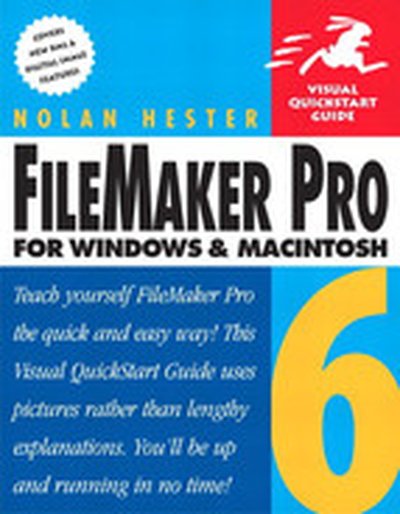
FileMaker Pro 6 for Windows and MacIntosh: Visual QuickStart Guide

If you recently upgraded to FileMaker Pro 6 to take advantage of its new digital image management features or its full XML support, you'll also want to upgrade to FileMaker Pro 6 for Windows and Macintosh: Visual QuickStart Guide. Revised to include all of the new features in FileMaker Pro 6, this update to the popular Visual QuickStart Guide is still the fastest and easiest way to learn FileMaker Pro. Loaded with screenshots and clear, concise explanations of database publishing techniques, FileMaker Pro 6 for Windows and Macintosh: Visual QuickStart Guide takes you from working with records and files to creating and designing databases, printing and networking with FileMaker, and Web publishing with FileMaker in no time. Step-by-step tasks show you how to use new digital image management features to organize and work with massive amounts of digital photos with minimal effort. You'll also learn to take advantage of FileMaker's new XML support to easily share and integrate data with other applications-even those not running FileMaker.

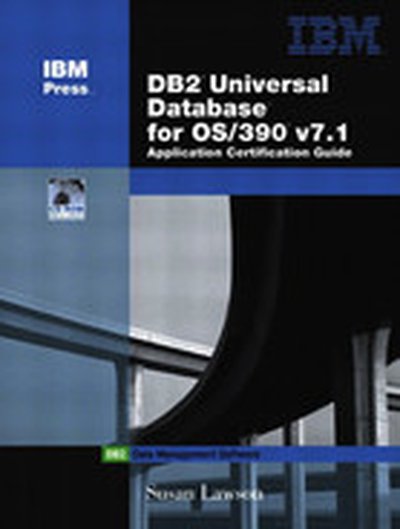
DB2® Universal Database™ for OS/390™ v7.1 Application Certification Guide

IBM's definitive DB2 UDB V7.1 application development reference and exam study guide for the OS/390 and z/OS platforms An official IBM self-study guide for the DB2 UDB V7.1 Family Application Development Exam (#514) Expert DB2 programming tips, techniques, and guidelines from application development experts Covers data structures, SQL, stored procedures, programming/language environments, debugging, tuning, and more CD-ROM contains complete DB2 application development sample exam The definitive, authoritative guide to DB2 OS/390 application development certification Covers data structures, SQL, stored procedures, programming/language environments, debugging, tuning, and much more Includes a full section on object-relational programming and other advanced techniques Sample test questions help you prepare for the IBM DB2 UDB V7.1 Family Application Development Exam (#514) About the CD The CD-ROM included with this book contains a complete DB2 UDB V7.1 Family Application Development Exam (#514) sample exam. IBM DB2 UDB Version 7.1 for OS/390 and z/OS delivers unparalleled performance, scalability, and reliability in today's enterprise business environments. Now, there's a complete, authoritative guide to developing applications with DB2 UDB V7.1 in both OS/390 and z/OS environments—and preparing for the IBM DB2 UDB V7.1 Family Application Development Exam (#514). This comprehensive day-to-day guide to DB2 UDB application development is also the only book that delivers the depth of knowledge professionals need to pass IBM's challenging application development exam for the OS/390 and z/OS platforms. IBM Gold Consultant Susan Lawson presents hundreds of useful tips, practical techniques, and expert guidelines for every facet of DB2 UDB application development and every stage of the development process for both OS/390 and z/OS platforms Coverage includes: Foundations for effective DB2 development, including an overview of the DB2 UDB product family and DB2 for OS/390 data structures SQL: basic concepts and coding techniques through advanced OLAP features, star schemas, and star joins Stored procedures, including the SQL procedure language and IBM's Stored Procedure Builder Best practices for application testing, debugging, and performance tuning The full range of DB2 development tools, including ODBC/CLI, Java(tm), COBOL, C, C++, REXX, CAF, CICS, and RRSAF Object-relational programming, including user-defined functions, user-defined data types, and triggers In-depth coverage of locking and concurrency Whether you're developing for DB2 UDB V7.1 in an OS/390 or z/OS environment, managing DB2 UDB V7.1 application development, preparing for DB2 UDB V7.1 Family Application Development, or all three, DB2 UDB for OS/390 Version 7.1 Application Certification Guide will be your single most valuable resource. IBM DB2 Series

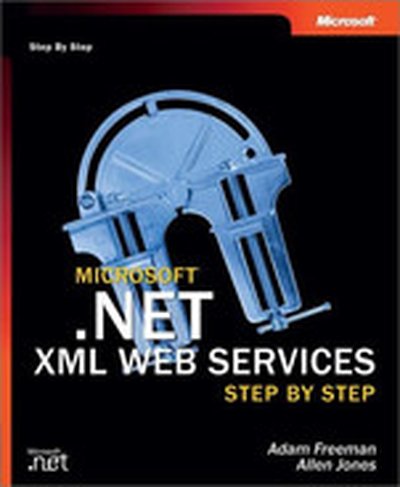
Microsoft® .NET XML Web Services Step by Step

XML Web services are the next logical step in the evolution of the Internet. Teach yourself how to write and deploy XML Web services for Microsoft® .NET?one step at a time—with this modular, accessible tutorial. It delivers expert, task-based instruction plus a real-world XML service example to help you apply what you already know about Microsoft Visual C#™, Microsoft Visual Basic® .NET, and object-oriented programming so that you can learn XML Web services development at your own pace.

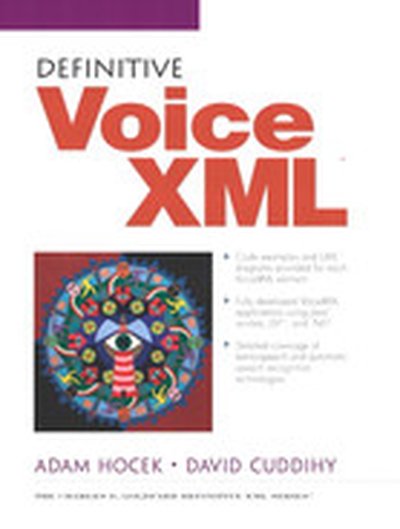
Definitive VoiceXML™

The start-to-finish guide to building enterprise-class VoiceXML applications. Code examples and UML diagrams provided for each VoiceXML element Fully developed VoiceXML applications using Java servlets, JSP, and .NET Detailed coverage of text-to-speech and automatic speech recognition technologies "XML is not a spoken language, but thanks to VoiceXML, it is the language of choice for developing spoken interfaces. If you want to voice-enable your applications and Web sites, this book speaks your language." —Charles F. Goldfarb Definitive VoiceXML bridges the gap between enterprise computing and telephony engineering, demonstrating exactly how to build new enterprise-class voice applications and voice-enable existing applications. It's the first book that delivers the depth and breadth of knowledge needed by both enterprise and telephony developers, thoroughly addressing the unique challenges of building voice systems for business. VoiceXML in depth: its role, goals, and key techniques Effective ways to architect and integrate enterprise voice applications Detailed case studies utilizing VoiceXML, Java servlets, JSP, and .NET Thorough coverage of the W3C VXML 2.0 standard Speech Recognition Grammar Format (SRGF) and Speech Synthesis Markup Language (SSML) Complete VoiceXML language reference Whether you're developing systems for customer service, finance, travel, wireless commerce, or anything else, Definitive VoiceXML gives you the proven techniques you need to maximize performance, reliability, and ROI. Part of The Charles F. Goldfarb Definitive XML Series

Domino Web Service Application Development for the IBM eServer iSeries Server

"Contextual collaboration" is a new term whirling in the industry today. This phenomenal new type of business asset can be realized by two major mechanisms: the components managing mechanism and the services delivery mechanism. The component managing mechanism deals with calendar, workflow, messaging, e-mail, and so on, while the services delivery mechanism deals with receiving and responding to a request. In terms of IBM product offerings, we have Domino for the component managing mechanism and WebSphere for the services delivery mechanism. We need standards to connect the applications from different business entities: your customers, your suppliers, your business partners, and you. These business entities may run their business applications on different platforms, different application languages, different networks, and so on. To connect these un-identical entities together, we need standards. For that, we have Web Service standards such as SOAP, WSDL, XML, and UDDI. This IBM Redbooks publication provides real application scenarios which illustrate how to transform existing Domino applications into either a Web Service provider or a Web Service requester. This is achieved and served through the integration of Domino and WebSphere Application Server.

IMS DataPropagator Implementation Guide

IMS DataPropagator (IMS DPROP) is a licensed program that maintains consistency between two copies of the same data, where one copy of the data is stored in an IMS Database Manager (IMS DB) database and the other copy is stored in a DB2 database. IMS DPROP is a key component of IBM's Data Replication Solution and IBM's Business Intelligence Solution. Please note that the additional material referenced in the text is not available from IBM.

Lotus Discovery Server 2.0 Deployment, Planning, and Integration

The Lotus Discovery Server is a knowledge server. It provides search and expertise location solutions designed to ensure that the relevant knowledge and collective experience of an organization is readily available to help individuals and teams solve everyday business problems. In this IBM Redbooks publication we provide an in-depth discussion of the architecture and capabilities of the newest release of the Discovery Server - Discovery Server 2.0. We discuss the key aspects involved in planning for the deployment of this product, from both organizational and technical viewpoints. We also discuss: the key elements of a solid infrastructure design to ensure scalability and reliability, development and maintenance of an enterprise taxonomy, integration of Discovery Server into your existing environment and applications, use of the Discovery Server API toolkit, and ongoing Discovery Server maintenance. This book is appropriate for technologists and project managers who are involved with Lotus Discovery Server-related projects. Please note that the additional material referenced in the text is not available from IBM.

Processing XML with Java™: A Guide to SAX, DOM, JDOM, JAXP, and TrAX

Praise for Elliotte Rusty Harold’s Processing XML with Java™ “The sophistication and language are very appropriate for Java and XML application developers. You can tell by the way the author writes that he too is a developer. He delves very deeply into the topics and has really taken things apart and investigated how they work. I especially like his coverage of ‘gotchas,’ pitfalls, and limitations of the technologies.” — John Wegis, Web Engineer, Sun Microsystems, Inc. “Elliotte has written an excellent book on XML that covers a lot of ground and introduces current and emerging technologies. He helps the novice programmer understand the concepts and principles of XML and related technologies, while covering the material at a level that’s deep enough for the advanced developer. With a broad coverage of XML technologies, lots of little hints, and information I haven’t seen in any other book on the topic, this work has become a valuable addition to my technical library.” — Robert W. Husted, Member, Technical Staff, Requisite Technology, Inc. “The code examples are well structured and easy to follow. They provide real value for someone writing industrial-strength Java and XML applications. The time saved will repay the cost of this book a hundred times over. “The book also contains more of the pearls of wisdom we’ve come to expect from Elliotte Rusty Harold—the kind of pointers that will save developers weeks, if not months, of time.” — Ron Weber, Independent Software Consultant Written for Java programmers who want to integrate XML into their systems, this practical, comprehensive guide and reference shows how to process XML documents with the Java programming language. It leads experienced Java developers beyond the basics of XML, allowing them to design sophisticated XML applications and parse complicated documents. provides a brief review of XML fundamentals, including XML syntax; DTDs, schemas, and validity; stylesheets; and the XML protocols XML-RPC, SOAP, and RSS. The core of the book comprises in-depth discussions on the key XML APIs Java programmers must use to create and manipulate XML files with Java. These include the Simple API for XML (SAX), the Document Object Model (DOM), and JDOM (a Java native API). In addition, the book covers many useful supplements to these core APIs, including XPath, XSLT, TrAX, and JAXP. Processing XML with Java™ Practical in focus, is filled with over two hundred examples that demonstrate how to accomplish various important tasks related to file formats, data exchange, document transformation, and database integration. You will learn how to read and write XML documents with Java code, convert legacy flat files into XML documents, communicate with network servers that send and receive XML data, and much more. Readers will find detailed coverage of the following: Processing XML with Java™ How to choose the right API for the job Reading documents with SAX SAX filters Validation in several schema languages DOM implementations for Java The DOM Traversal Module Output from DOM Reading and writing XML documents with JDOM Searching XML documents with XPath Combining XSLT transforms with Java code TrAX, the Transformations API for XML JAXP, the Java API for XML Processing In addition, the book includes a convenient quick reference that summarizes the major elements of all the XML APIs discussed. A related Web site, located at http://www.cafeconleche.org/books/xmljava/, contains the entire book in el

Oracle® PL/SQL® Interactive Workbook, Second Edition

Build Oracle PL/SQL applications—now. Fully updated for Oracle 9i No Oracle PL/SQL experience necessary. Real-life labs and "Test Your Thinking" Q&As Start developing applications with Oracle PL/SQL—fast. This integrated book-and-Web learning solution teaches all the Oracle PL/SQL skills you need, hands on, through real-world labs, exercises, projects, and a complete Web-based training site. Completely updated for Oracle 9i, it covers all the fundamentals—and a whole lot more. Master PL/SQL syntax, iterative and conditional control, scoping, anchored datatypes, cursors, triggers, security, tables, and packaging—plus powerful new techniques for working with exceptions, cursors, collections, and records. Your free Web-based training module includes a Virtual Study Lounge where you can interact with other learners, work on new projects, and get updates. Totally integrated with a FREE, state-of-the-art Oracle 9i learning Web site. Every Prentice Hall Oracle Interactive Workbook is fully integrated with its own exclusive Web site, giving you all this and more: "Test Your Thinking" project solutions and detailed explanations Additional self-review exercises with instant feedback and explanations An exclusive Virtual Study Lounge where you can interact with other students. Just the facts. No endless, boring discussions here. You'll learn hands on through practical exercises, self-review questions, and real-world answers. Exclusive "Test Your Thinking" projects guarantee you'll go beyond rote knowledge to really master the subject. It's an integrated learning system that's proven to work. Dozens of exercises cover the real-world tasks that matter most. Hundreds of self-review questions and answers make sure you understand.

MySQL Cookbook

While MySQL has turned up among high profile users such as Yahoo!, NASA and the U.S. Census Bureau, the rising popularity of this open source database is especially keen among users with little database experience. These days, even a small organization or web site has uses for a database, and MySQL is an obvious choice. Affordable and easy to use, MySQL packs the power, speed and efficiency that enable it to rival expensive, proprietary database solutions. Yet, even if you know the basics, anyone without practical MySQL experience--novices and skilled DBAs alike--might stumble over common database-related tasks. Fortunately, there's a sensible shortcut. MySQL Cookbook provides a unique problem-and-solution format that offers practical examples for everyday programming dilemmas. For every problem addressed in the book, there's a worked-out solution or "recipe"--short, focused pieces of code that you can insert directly into your applications. But MySQL Cookbook is more than a collection of cut-and-paste code. You also get explanations of how and why the code works, so you can learn to adapt the techniques to similar situations. The book covers a lot of ground. Solutions for typical MySQL dilemmas range from simple ways to find all records that contain a given string, to more difficult problems, such as finding matching/non-matching records in two tables. Whether you use MySQL on Unix, Linux, Windows or the Mac OS X platform, the book will show you how to: Import data from external sources Export data for use by external programs Access MySQL from your web server Use scripts with MySQL to read queries from a file Access MySQL from within client programs that use Perl, PHP, Java, Python and other languages Construct queries that solve commonly-occurring questions Interact with the server This learn-as-you-go resource will help users of all levels exploit MySQL more fully. MySQL Cookbook supplies you with an armory of ready-made techniques for specific problems so that, even if you're an experienced MySQL user, you don't have to write everything from scratch.

Java™ APIs for XML Kick Start

JAX: Java APIs for XML Kick Start covers the JAX APIs - fundamental for development of Java-based Web service applications as well as other e-Commerce applications requiring the exchange and manipulation of data. The book includes an overview of Web service fundamentals including SOAP, UDDI, and WSDL, all of which will be built upon in later examples. The book then covers the current set of JAX APIs for data processing, for messaging, for writing data to registries and for calling remote applications. Each API is covered from an architectural and implementation perspective, using real-world examples and case studies throughout to illustrate their usefulness. The author will demonstrate both Web service and traditional JAX applications, giving a complete picture of the uses of JAX. The final chapter looks ahead to new developments and new APIs in progress at Sun.

IMS Version 8 Implementation Guide A Technical Overview of the New Features

In this IBM Redbooks publication, we describe the new features and functions in IMS Version 8. We document the tasks necessary to exploit the features, and identify migration, coexistence, and fallback considerations. We also identify specific hardware and software requirements that are needed to exploit certain enhancements. First we provide an overview, where we have grouped the various enhancements and their discussion into the categories availability and recoverability, performance and capacity, systems management, and application enablement. Then we have more detailed chapters for describing the individual enhancements. The base enhancements part of the book describes the base product enhancements that apply to all users migrating to IMS Version 8. The Parallel Sysplex enhancements part of the book describes enhancements in IMS Version 8 that apply to both existing users of IMS Version 6 or IMS Version 7 in a Parallel Sysplex environment and users that are considering sysplex functionality. The Common Service Layer part documents the Common Service Layer (CSL), new in IMS Version 8, which is the next step in IMS Parallel Sysplex evolution. The CSL enables IMS systems to operate in unison in an OS/390 Parallel Sysplex. The CSL components provide the infrastructure for an IMSplex. Please note that the additional material referenced in the text is not available from IBM.

Sams Teach Yourself XML in 10 Minutes

XML is the de-facto standard for manipulating and sharing data among applications. It is supported by every major programming tool and language, including Java, Microsoft .NET, Oracle, SQL Server, etc. All professional developers and administrators - even those who don't intend to build XML applications - need a basic understanding of it just to read and maintain data they receive and process. Many of them don't have the time for a thick reference book or detailed tutorial. Sams Teach Yourself XML in 10 Minutes quickly covers the basics of XML and its family of related concepts, including basic syntax, DTDs, XML Schema, DOM, SAX, XSL, and XPath. Each topic is illustrated with an example to ensure readers' understanding.

Sams Teach Yourself SQL in 21 Days, Fourth Edition

Sams Teach Yourself SQL in 21 Days, Fourth Edition provides a sold foundation in understanding the fundamentals of SQL (Structured Query Language). SQL is the query language used by relational databases such a Oracle, Microsoft Access, and Microsoft SQL Server. The new edition covers object-oriented programming with SQL, ODBC, JDBC, embedded SQL, accessing remote databases, and constructs. All new examples based on an open source database such as MySQL enhance this new edition by making the examples readily useable for readers.

Microsoft® SQL Server™ 2000 DBA Survival Guide, Second Edition

Microsoft SQL Server 2000 DBA Survival Guide is organized into several parts that comprise the various jobs and tasks the DBA performs. Each chapter is presented with the goal of providing knowledge and "know-how" to Database Administrators of a SQL Server database. The chapters also offer real-world insight and experience by passing on tips, tricks, and suggestions based on what the authors have learned the hard way. The book also takes time to provide checklists and examples for various SQL Server DBA tasks. The book also provides insight into the tasks that make-up a DBA's job including discussions of topics such as the creation of naming standards and conventions which are essential for efficient administration.

Applied XML Programming for Microsoft® .NET

Get the expert advice you need to succeed in building .NET-connected applications with XML! XML is everywhere in the Microsoft .NET Framework, from Remoting to Web services, and from data access to configuration. Learn about the extensive XML core classes in .NET and find out how to program against its parser in this in-depth guide—written by an expert programming author and consultant on cutting-edge technologies such as Microsoft ASP.NET and Microsoft ADO.NET. You'll find authoritative explanations of technologies such as schemas, transformations, and XPath, plus extensive discussion of data access issues such as synchronization and serialization, the DiffGram format, and the XML extensions in Microsoft SQL Server™ 2000. Along the way, you'll learn exactly how to get the best performance out of XML in the .NET world. You'll also get answers to common questions such as, "When should I use XML Web services instead of Remoting?".

Oracle SQL Plus Pocket Reference, 2nd Edition

SQLPlus is available at every Oracle site--from the largest data warehouse to the smallest single-user system--and it's a critical tool for virtually every Oracle user. Despite its wide use, few developers and DBAs know how powerful a tool SQLPlus can be. This pocket reference provides quick reference information that will help you use SQLPlus, Oracle's interactive query tool. It summarizes all of the SQLPlus syntax, including the syntax for the Oracle9i release. This book boils down the most vital information from Gennick's best-selling book, "Oracle SQL8Plus: The Definitive Guide", into an accessible summary and works as a vital companion to the larger book. It concisely describes interacting with SQLPlus, selecting data, formatting reports with SQLPlus, and tuning SQL queries. It also contains quick references to the SQLPlus commands and format elements. The new 2nd edition of our Oracle SQLPlus Pocket Reference includes many new features for Oracle9i (e.g., COALESCE function, searched CASE expressions, new table join syntax, partition operations, MERGE statement, and syntax changes in existing SQLPlus statements such as ACCEPT, DESRIBE, HELP, and SET) It also adds sections on basic SQL (a much-requested feature): INSERT, DELETE, UPDATE, SELECT, and transaction management. The pocket reference size is especially appropriate for this particular subject, since Oracle SQLPlus is used on every possible platform, it's particularly convenient to be able to carry a small book around from office computer to home computer to laptop.

XML Schema Complete Reference, The

With the successful implementation of XML Schema, developers are learning how to increase productivity, improve software reliability, minimize development time, and decrease time to market. This in-depth reference is an all-in-one resource designed to help developers leverage the power and potential of XML schemas by offering a complete roadmap to their creation, design, and use. This authoritative reference and tutorial is filled with practical insights and detailed examples. The book begins by providing a conceptual introduction to XML Schema. From there, coverage shifts to the W3C Schema Recommendation and how to apply schemas to specific business goals. The authors provide insight and instruction throughout on integrating XML schemas into existing technologies such as .NET, Java, Visual Basic, Oracle, and more. The book concludes with a complete case study designed to reinforce and illustrate material covered. Additional topics include: Applications for schemas Simple and complex types XML schema processing and validation Namespaces in XML Using schemas with DOM and SAX XML schema document syntax XML Information Sets XML Schema applications of XPath Whether designing a schema from scratch or integrating schemas into contemporary technologies, is the most complete and definitive sourcebook available for the XML Schema environment. The XML Schema Complete Reference 0672323745B08162002

Oracle PL/SQL Programming, Third Edition

Nearly a quarter-million PL/SQL programmers--novices and experienced developers alike--have found the first and second editions of Oracle PL/SQL Programming to be indispensable references to this powerful language. Packed with examples and recommendations, this book has helped everyone, from Oracle Forms developers to database administrators, make the most of PL/SQL. This new edition is a comprehensive update of the original book, covering all versions of PL/SQL through Oracle9i Release 2. It adds much-requested new chapters on how to create and run PL/SQL programs, call Java methods from within PL/SQL, and define and use database triggers. An extensive new chapter--designed especially for experienced PL/SQL developers--describes PL/SQL's runtime architecture and how to use knowledge of Oracle internals to get the best performance from PL/SQL. The book contains information about the latest Oracle9i PL/SQL features, including: Record-based DML: You can now use records in INSERT and DELETE statements. Table functions: These are functions that return a result set (in the form of a PL/SQL collection). Such functions existed in Oracle8i but they are now much expanded. New and improved datatypes: Oracle now offers dramatically improved support for timestamps, time zone management, and interval calculations. In addition, the XMLType datatype has now been implemented. Inheritance for object types: You can now define a hierarchy of object types (which were first introduced in Oracle8). Enhancements to PL/SQL collections. PL/SQL now supports multiple-level collections (nesting collections within collections), as well as associative arrays (previously called index-by tables), which allow you to index by PLS_INTEGER and VARCHAR2. Native compilation of PL/SQL code: PL/SQL source code can now optionally be compiled into native object code that is linked into Oracle. Part I, Programming in PL/SQL Part II, PL/SQL Program Structure Part III, PL/SQL Program Data Part IV, SQL in PL/SQL Part V, PL/SQL Application Construction Part VI, Advanced PL/SQL Topics The book is divided into six parts: Even if you've been a PL/SQL developer for years, you'll find an enormous amount of new and revised information in this third edition and on its companion web site. If you're new to PL/SQL, you'll find Oracle PL/SQL Programming an invaluable companion on the road to mastery.